A new twist in tapware design
The Watermark Collection, CEA, Dornbracht and Gessi: materials, finishes and technical keys of four high-end tapware brands for bathroom and kitchen.
Products7 min read
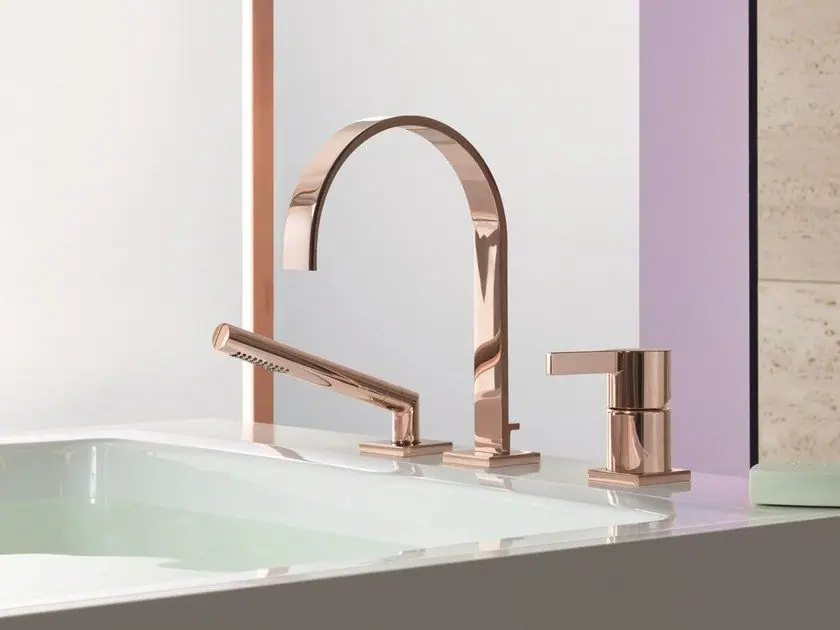
In the world of design there is no shortage of tapware solutions. Today we present four brands with very high quality standards —The Watermark Collection, CEA, Dornbracht and Gessi— and look at their treatments, their materials and the technical features that set them apart.
All four start from different ideas: hand-worked brass in Brooklyn, AISI 316L stainless steel in northern Italy, the German industrial tradition and the bathroom understood as a space for wellbeing. We look at what each one brings to a project, how they compare and what to bear in mind when specifying designer tapware.
Four brands, four ways of understanding tapware
The table summarises the origin of each brand and the feature that weighs most when choosing it. The data come from each manufacturer's official websites and documents.
The Watermark Collection: handmade brass from Brooklyn
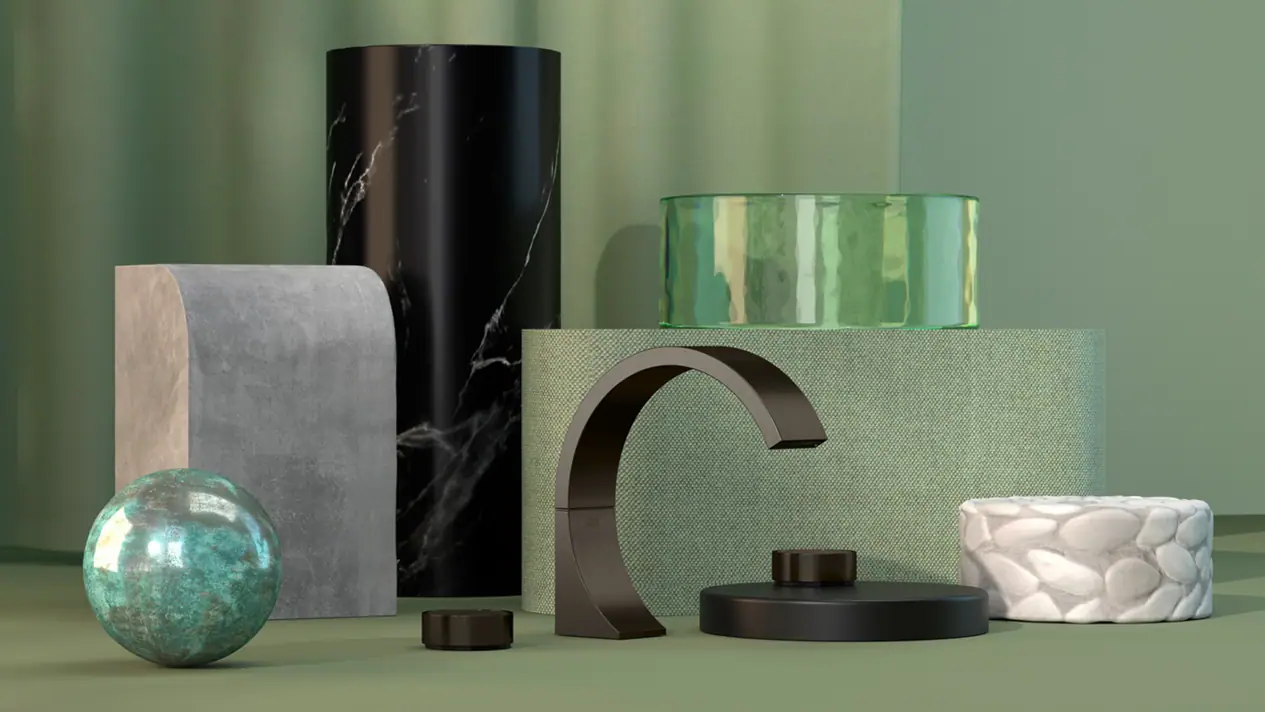
The Watermark Collection is the first of them. Established in 1976, the company identifies with the passion for metal finishes instilled by its founder, Herman Abel, which has endured over time at the heart of the brand: according to the company itself, some of its finishes are still prepared using Abel's original formulas.
Its designs are inspired by the architectural details and engineering structures of its surroundings, the New York borough of Brooklyn, and are often developed with architects and designers from the neighbourhood. They are manufactured and finished in the United States, at the brand's own factory, with a hand finish that attends to every last detail.
Production starts from solid brass made from lead-free material. The brand explains that it is harder to work, but that it chooses it to guarantee the purity of the water, and that it increases the wall thickness of its spouts and applies two coats of lacquer to its finishes to ensure the durability of the product.
Configurable designs: finishes and materials
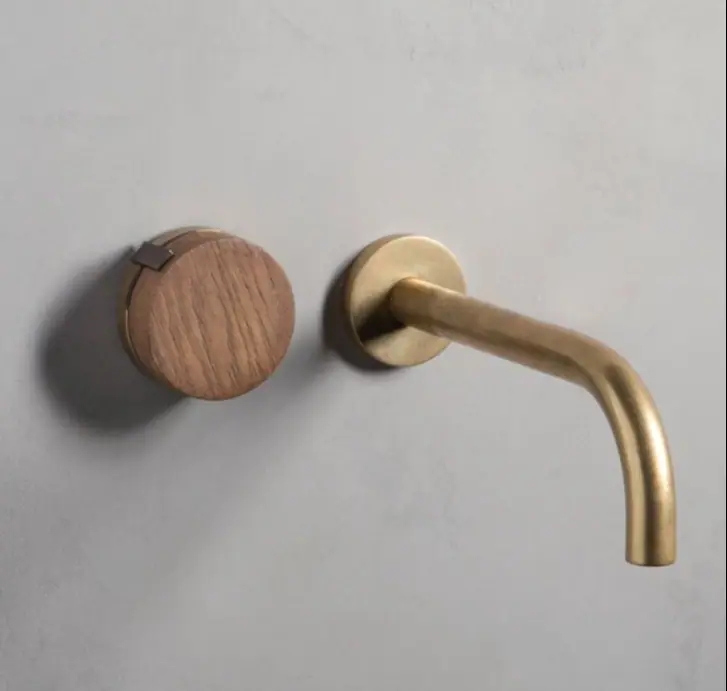
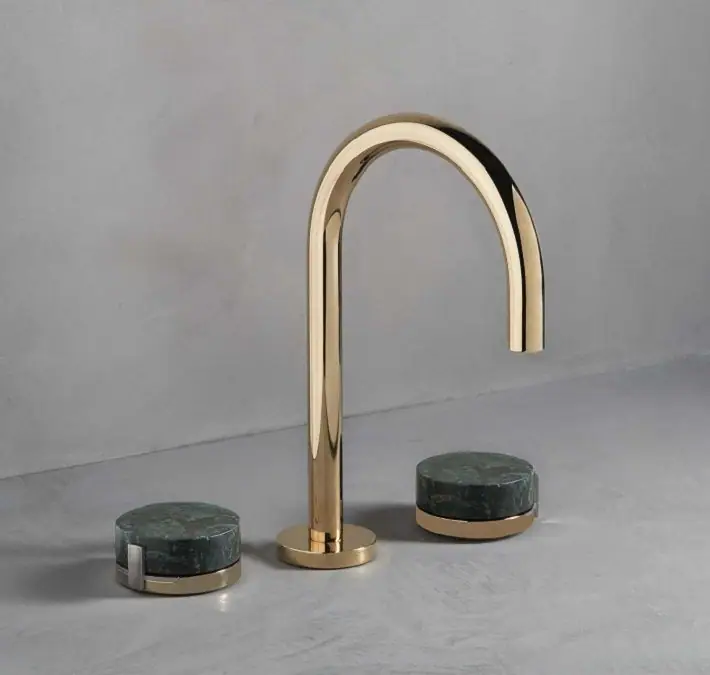
Another of the brand's most distinctive features is the possibility of configuring multiple designs by combining materials and colours. Its catalogue works to order, and the brand allows any of its metal finishes —more than twenty, including brasses, nickels, bronzes, coppers, blacks and golds, several of them in PVD— to be applied to any of its products.
The Elements collection takes this idea to the handle: its caps are offered in other materials —hand-worked stones and marbles, lacquered metals, terrazzo or wood— and can be freely combined with the finish of the body. In this way the tapware adapts to all kinds of interiors, from the most classic to the most unconventional.
CEA: AISI 316L stainless steel
Next comes the Italian brand CEA, an acronym for Centro Energie Alternative. It was born in 1984 in the hydrothermal and sanitary installations sector, and in 2007 it moved into the design of tapware and bathroom accessories. It was founded by Natalino Malasorti, who leads product development, and Roberta Bertacco, who runs the company.
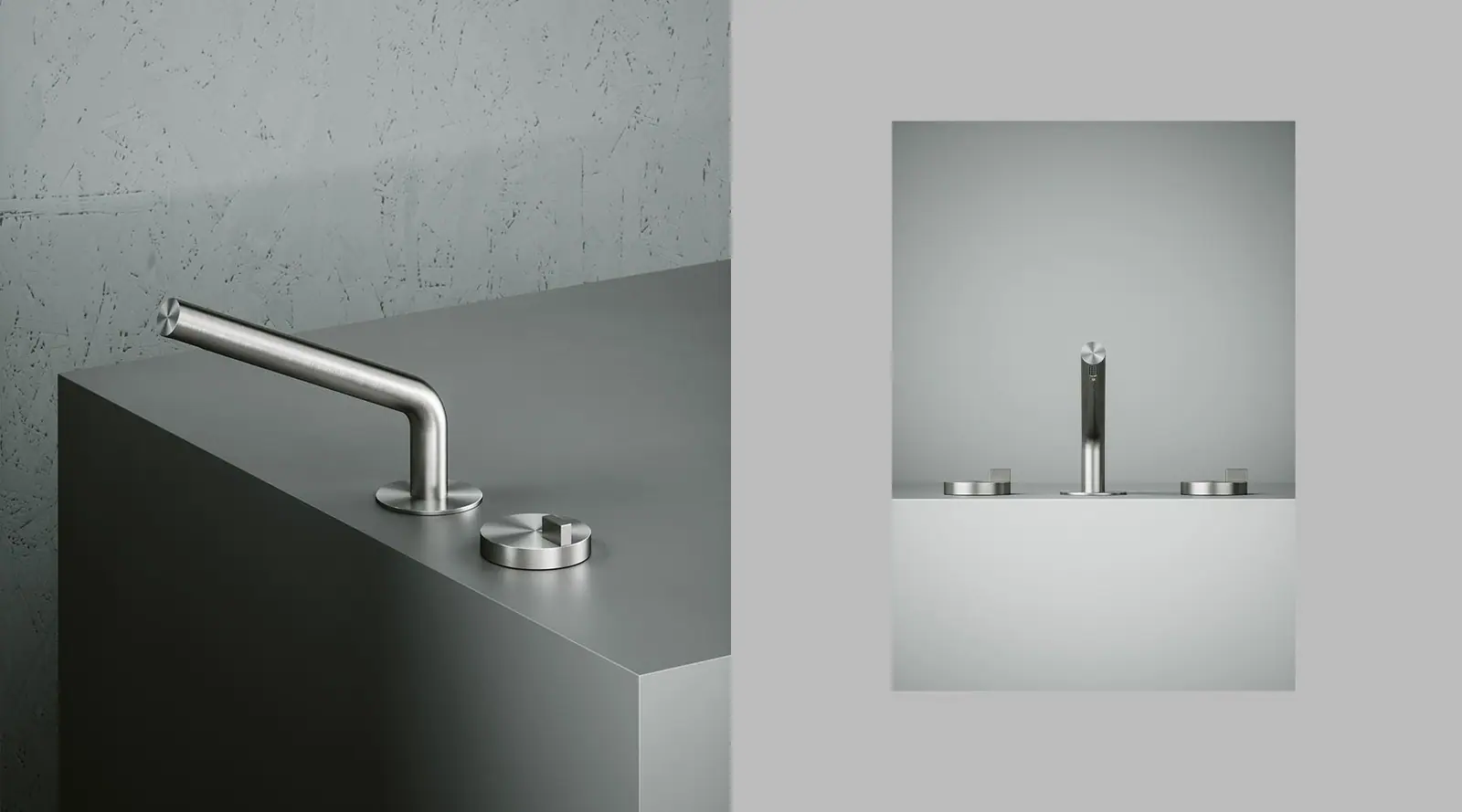
CEA is characterised by a contemporary style, with minimalist products and simple geometric forms. Its interest in reinterpreting the product and in new technical solutions is reflected in its own patents, such as the PWF (Pipe Water Fitting), a quick connection between the tap and the plumbing with which the water is mixed outside the wall.
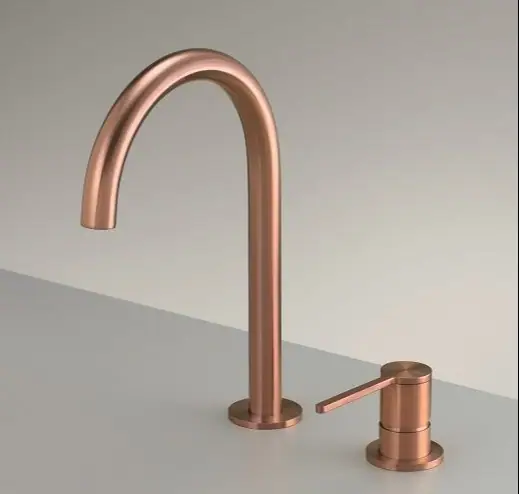
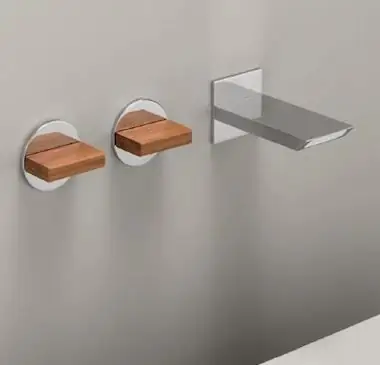
All its products are made of AISI 316L stainless steel, the base material of its entire production. The brand chooses it for its durability, its environmental credentials and its aesthetic value: it is 100% recyclable, hygienic and easy to clean.
Durability and corrosion resistance
Its mechanical strength and hardness are the basis of its durability, which is also one of the product's main guarantees of quality. According to CEA, the neutrality of AISI 316L —its resistance to corrosion by external agents such as salt spray, sulphurous water, iron dust or acids from food and solvents— means the piece remains unaltered over time, even in demanding conditions.
Production and other materials
CEA produces in the Bassano district, in the Veneto, using CNC lathes, milling machines and laser cutting. The finish is mechanical, satin and brush-polished, while assembly, leak testing and final inspection are done by hand. The brand stresses that it is a simple process with a low environmental impact, with no chemical transformations, paints or electroplating baths. Since 2014 it has also offered special vapour-deposited finishes —Copper, Bronze, Light Gold and Black Diamond— on the steel itself.
Alongside steel, the brand works with other materials according to their function: silicone rubber to carry water or as a flexible spout, acetal resin (Delrin®) in hand showers and shower heads for its lightness and because water does not adhere to its surface, and carbon fibre in its fans and air destratifiers.
Dornbracht: luxury tapware made in Germany
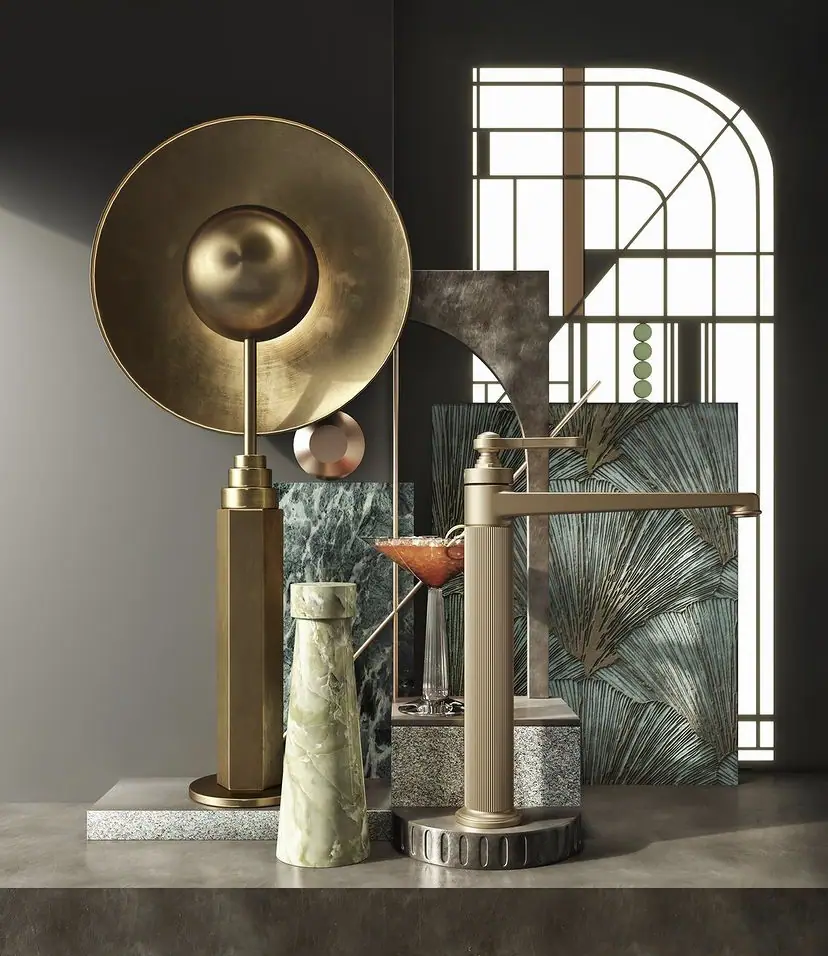
We continue with Dornbracht. Anyone familiar with high-end tapware will recognise the German firm as one of its leading exponents. Founded in 1950 in Iserlohn, in South Westphalia, the family company specialised in high-quality designer tapware and has developed solutions that give a new twist to conventional tapware systems.
Dornbracht stands out for its many sophisticated finishes and for a wide range of products covering bathrooms, kitchens, showers, spa and wellness systems and professional projects. Quality, design and precision are the hallmarks of the brand, which produces in Germany under the Made in Germany label.
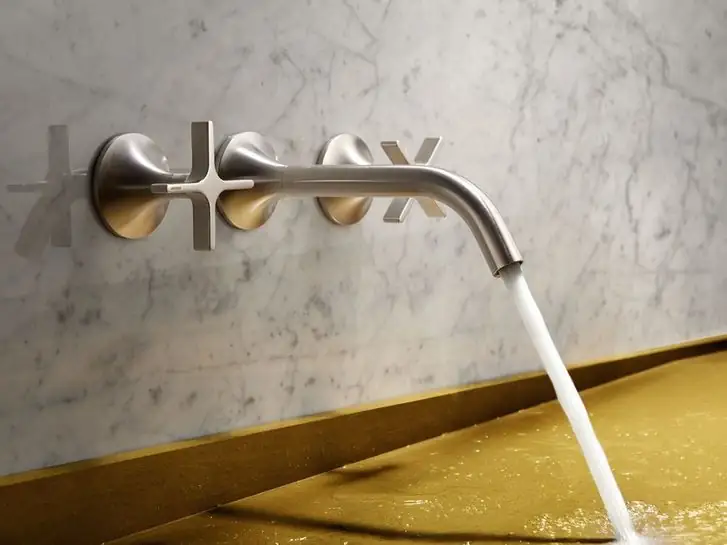
In 2020 the brand celebrated 70 years of experience, with taps and accessories adaptable to every setting and a balanced mix of design, functionality and innovation. Series such as Tara, introduced in 1992 and now a design classic with its cross handles, Vaia or Madison show that range, from the most architectural lines to the most traditional.
Its extensive catalogue makes it possible to choose the options that best suit the overall design of any bathroom or kitchen and to combine series, finishes and sizes to tailor each project as closely as possible. The firm is committed to constant innovation and states its commitment to the environment through its production systems and materials.
Gessi: from the tap to Private Wellness
Finally, we should not forget another major Italian brand that has positioned itself as one of the leading names in high-end bathroom and kitchen tapware: Gessi. The firm was born in 1992 as a small workshop, from the vision of Umberto Gessi and his son Gian Luca, and today is internationally known for its exclusive designs for private residences and commercial spaces.
The brand has become synonymous with design and technology thanks to its creative systems and production processes. Gessi describes itself as ‘technologically artisanal’: it combines high-tech production with the handwork of specialised craftsmen at its headquarters in Serravalle Sesia (Vercelli), surrounded by a park of 1.5 million square metres.
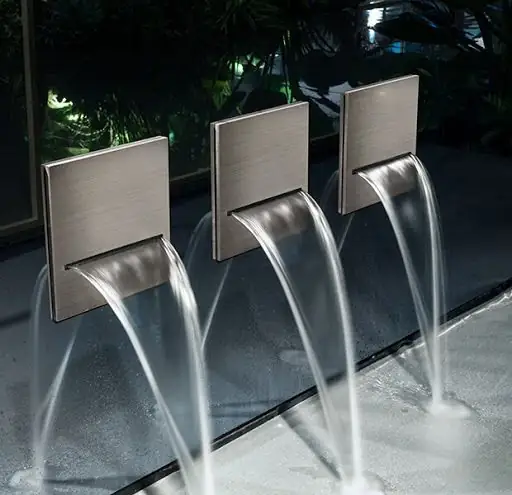
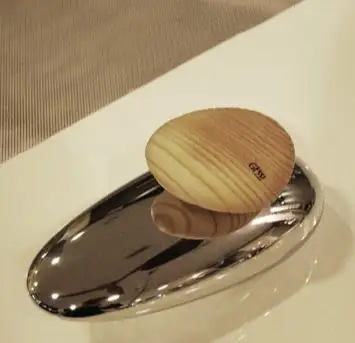
Gessi has worked to establish a line that represents the essence of the brand, based on a shared configuration, designs, colours and other features present across its tapware systems and complementary accessories.
Its ambition was to transform a traditional product such as the tap into a design object with sophisticated functions and forms. This gave rise to its Private Wellness concept: a ‘private’, personalised wellbeing that turns the bathroom, once a service space, into a place of style and regeneration. That is why the firm is associated with tapware for home spas.
Gessi's tapware systems are decorative objects with a personality of their own, breaking with tradition and contributing image and style to any setting. The brand has held ISO 9001 quality certification since 1996.
Key points when specifying designer tapware
Beyond aesthetics, these are the points best resolved at the design stage:
- Body material: solid brass (Watermark) accepts a wide variety of finishes; AISI 316L stainless steel (CEA) is left exposed or given deposition finishes and resists corrosion well.
- Setting: in coastal areas, outdoors or with aggressive water, ask the manufacturer for corrosion resistance data for the material and the finish.
- Finishes across the project: if tapware, accessories and showers are from the same brand, the tone of the finish matches. Mixing brands means comparing real samples.
- Installation: wall-mounted and concealed tapware require the installation to be defined before the walls are closed; some brands offer their own connection systems.
- Maintenance: each finish has its own cleaning recommendations; confirm with the manufacturer which products can be used before handing over the project.
Frequently asked questions
- What is the difference between brass tapware and AISI 316L stainless steel tapware?
- The Watermark Collection works with solid brass, which accepts a wide variety of finishes applied to the metal. AISI 316L stainless steel, used by CEA, can be left exposed with a satin or polished finish and, according to the manufacturer, resists corrosion from salt spray, sulphurous water or acids.
- Why is lead-free brass important?
- Because the material of the body is in contact with drinking water. The Watermark Collection makes its products from solid brass made from lead-free material to guarantee the purity of the water, even though it is harder to work.
- Can finishes and materials be combined in the same tap?
- Yes, in some collections. In Elements, by The Watermark Collection, the body is chosen from the brand's metal finishes and the handle caps in other materials, such as stone, terrazzo, lacquered metal or wood.
- What is Gessi's Private Wellness?
- It is the concept through which Gessi understands the bathroom as a space for personal wellbeing and not just a service space. It translates into tapware, showers and systems designed for body care at home.
At Matter we help you choose the tapware that best suits each project and combine it with the surfaces, sanitaryware and accessories that go with it. Come to our material library to see finishes and materials and compare them with your technical team.
Book your visit to Matter.
Book a visit