Exhibition: Contemporary Materiality - Feria Hábitat Valencia
At Feria Hábitat València 2023, Matter presented a selection of sustainable materials and a talk on life cycle and embodied carbon.
Events4 min read
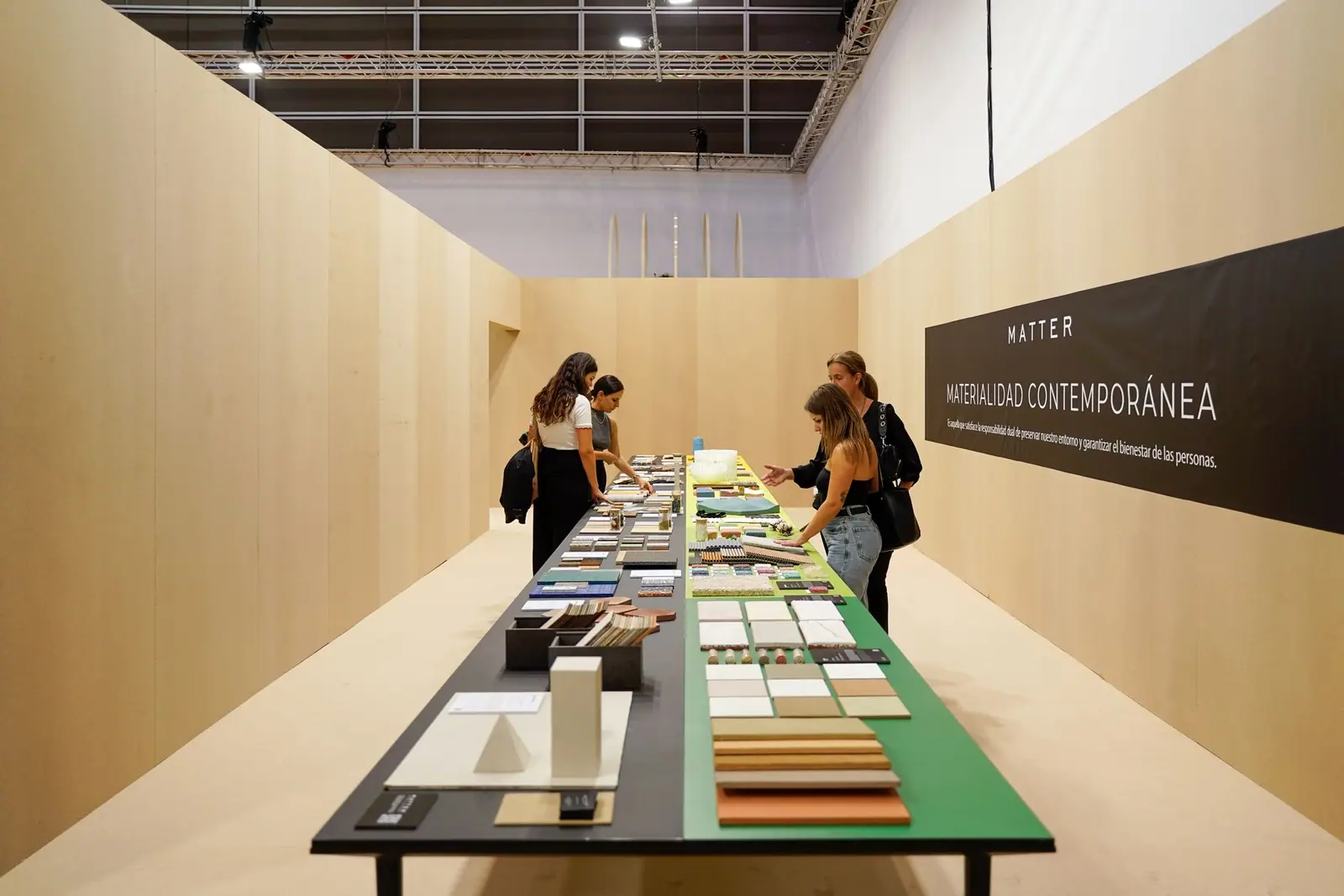
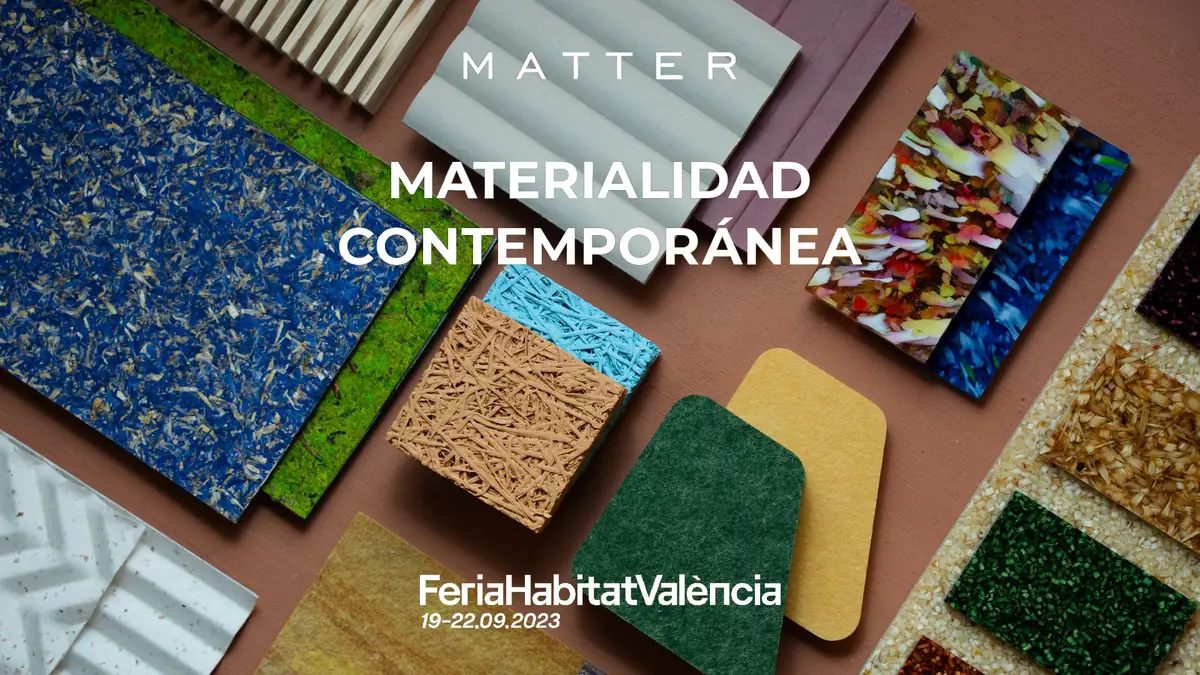
At the invitation of Feria Hábitat València, from 19 to 22 September 2023 we presented the exhibition ‘Contemporary Materiality’ at the fair: a selection of some twenty materials chosen for their positive environmental impact and for their contribution to creating interiors that promote comfort, health and sustainability.
On the first day of the fair we accompanied it with the talk ‘Contemporary Materiality for Interior Spaces’ at the Ágora nude. In this article we look at what the exhibition brought together, the ideas of the talk —the life cycle of materials and embodied carbon— and who took part.
The exhibition: a selection of materials for interiors
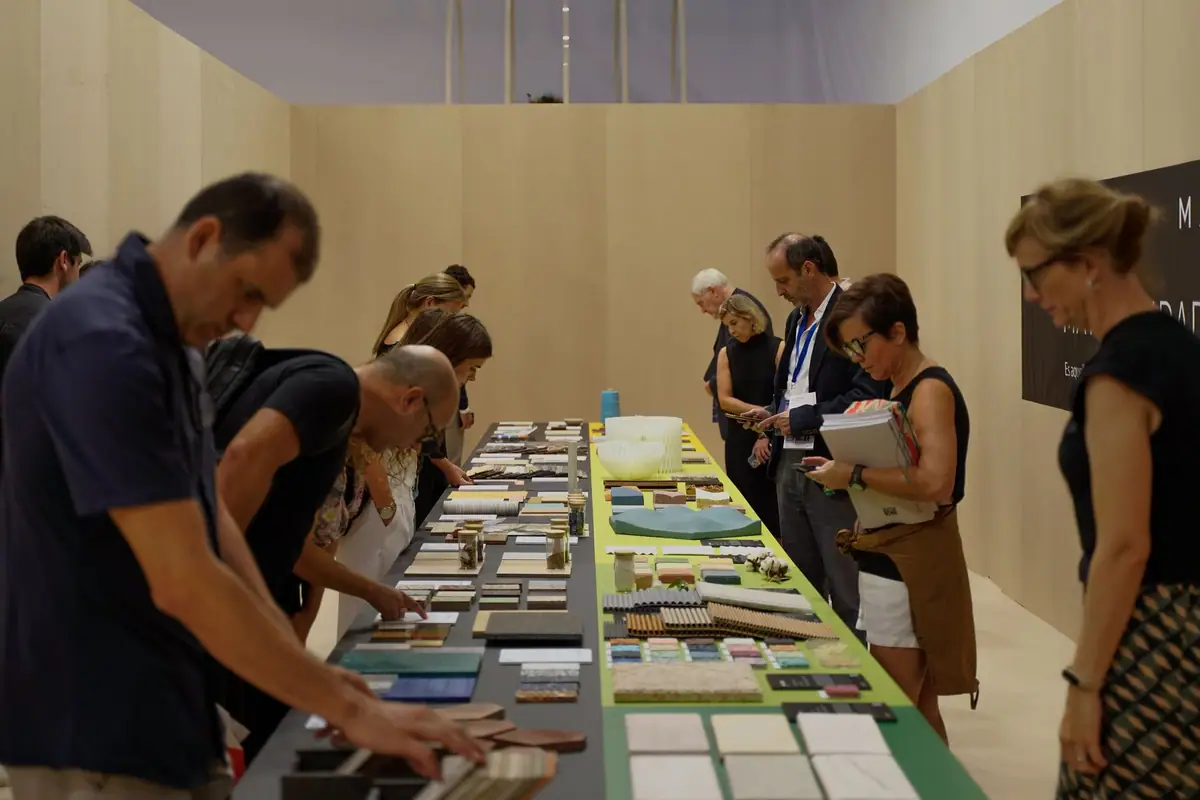
Feria Hábitat València is the leading international showcase for the Spanish home and interiors industry —furniture, lighting, decoration, upholstery and beds— and its 2023 edition announced more than 600 Spanish and international firms. In that context, we conceived the exhibition as a large table of samples to touch and compare, accompanied by the motto that summed it up: a materiality capable of preserving our environment and ensuring people's wellbeing.
The selection was organised around several families of materials:
- Low-carbon materials: with a reduced footprint in their manufacture.
- Natural and organic materials: of plant or biological origin, some with applied technology.
- Recycled materials: incorporating waste or by-products as raw material.
- Healthy materials: designed for indoor air quality and the wellbeing of those who use the space.
- Advanced-technology materials: solutions that apply state-of-the-art manufacturing processes.
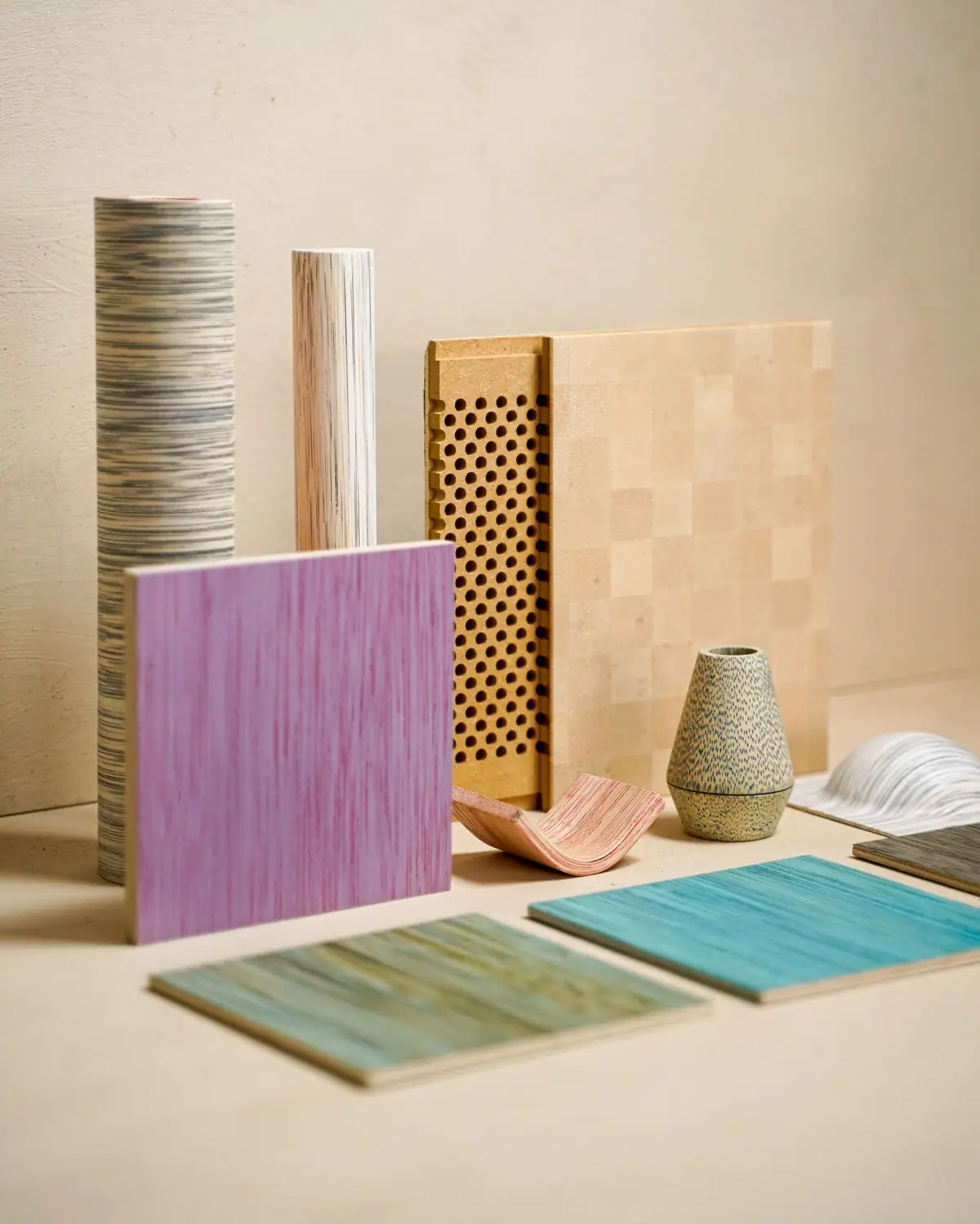
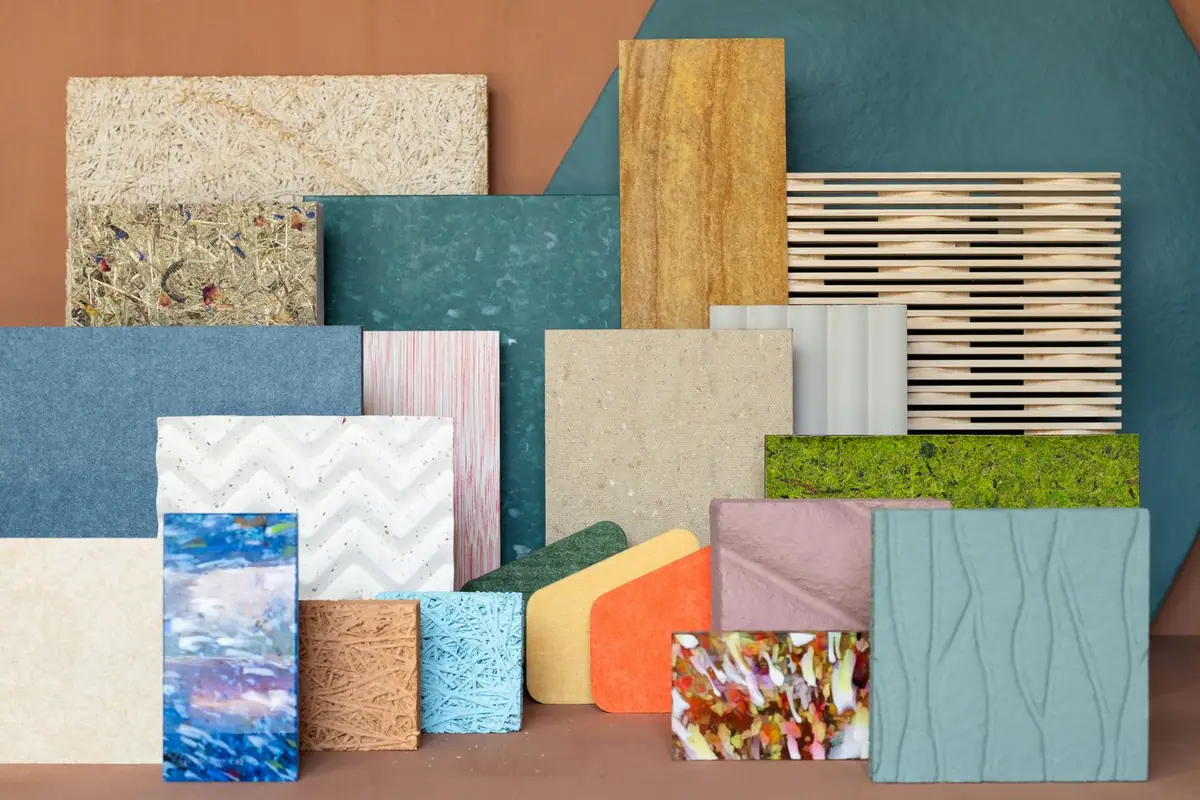
Alongside materials already available on the market, the exhibition included experimental materials contributed by Materfad, the materials centre of the FAD (Foment de les Arts i del Disseny) in Barcelona. Among the participating brands, Mogu presented its Acoustic and Floor collections, based on mycelium, according to the company.
The talk at the Ágora nude
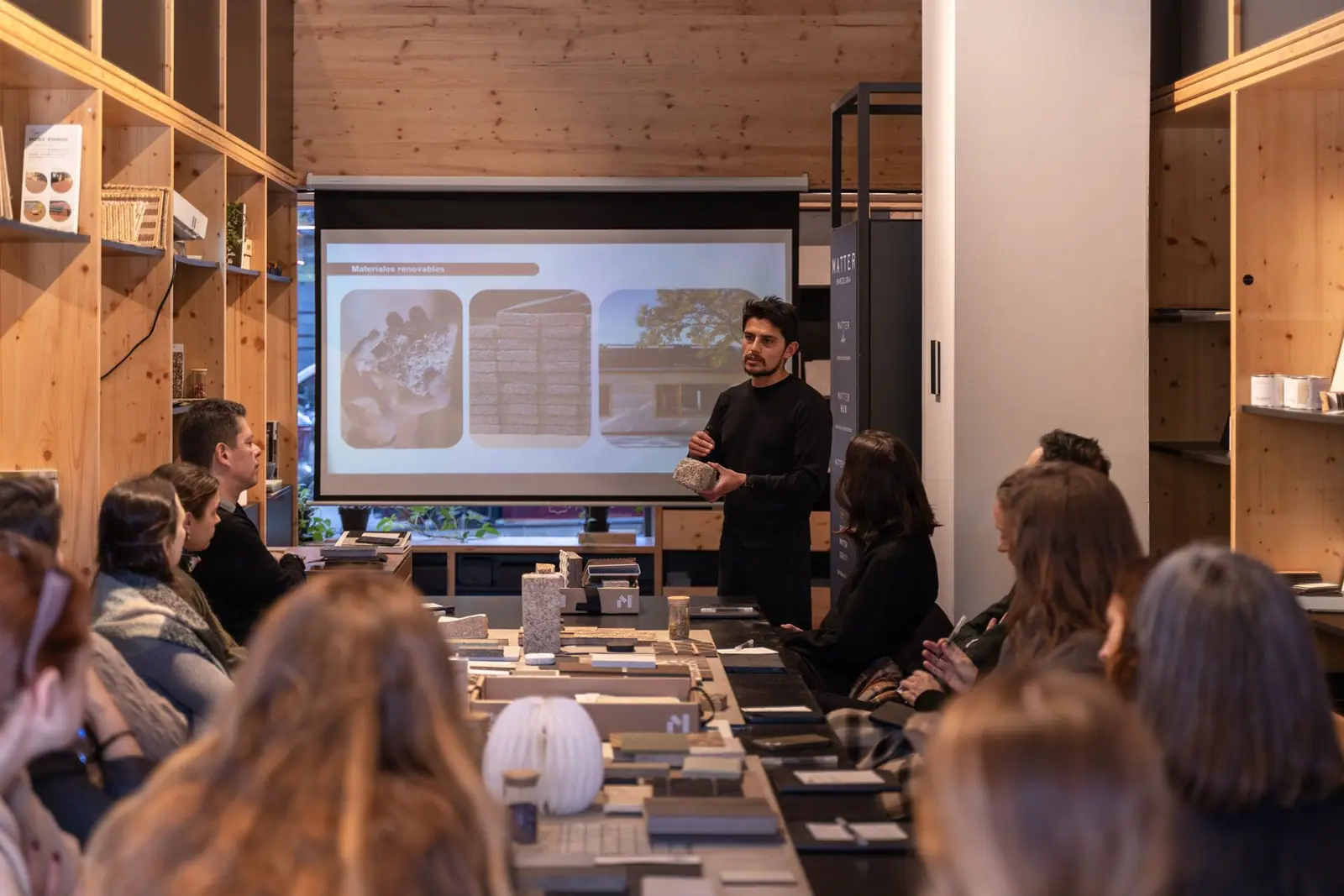
On Tuesday 19 September, on the opening morning of the fair, we gave the talk ‘Contemporary Materiality for Interior Spaces’ at the Ágora nude, Hábitat's talks stage in Pavilion 4, Level 3, next to the design and avant-garde area and the nude young talent show. The fair's programme announced it as being given by Natalia Ojeda, CMO of Matter and director of The Grey Matter Agency.
In it we reflected on the growing relevance of the impact of materials on the carbon emissions generated by architecture and interior design projects. The way we conceive and use materials has taken on unprecedented importance: contemporary materiality must not only fulfil a function but also commit to a twofold responsibility, preserving our environment and the wellbeing of those who live in these spaces.
Looking at materials across their whole life cycle
During the talk we highlighted materials that are responsible throughout their life cycle, both alternatives already available and others still at the experimental stage. And we stressed the importance of looking at the material throughout its whole process: the choice of raw materials, manufacture, installation, maintenance, reuse and the experience of the end user. Adopting this overall perspective makes it possible to identify the real environmental impacts of a product and to choose between one material and another in a more conscious and informed way.
Embodied carbon: why materials weigh ever more heavily
Embodied carbon is the emissions associated with materials and construction processes throughout the whole life cycle of a building: extraction, manufacture, transport, construction, maintenance, replacement and end of life. Its first stretch, from the extraction of the raw material until the product leaves the factory (‘cradle to gate’), is the product stage, the one usually declared in environmental product declarations (EPDs).
According to the World Green Building Council, embodied carbon accounts for around 11% of global emissions, and the emissions released before a building begins to be used (upfront carbon, modules A1-A5) will account for more than half of the footprint of all new construction between 2020 and 2050. As operational carbon falls, the relative weight of embodied carbon grows: materials are a key factor in decarbonising the sector.
That is why low-carbon materials, natural materials with applied technology, organic materials and recycled materials are some of the alternatives that contemporary materiality puts before us.
Exhibition partners
- Feria Hábitat València: invited Matter to present the exhibition and included the talk in the Ágora nude programme.
- Actiu: helped with the exhibition logistics.
- Materfad: contributed a selection of experimental materials.
- Mogu: presented its Acoustic and Floor mycelium collections.
Frequently asked questions
- What is the difference between embodied carbon and operational carbon?
- Operational carbon comes from the energy the building consumes in use (module B6 of EN 15978). Embodied carbon groups together the emissions from materials and construction processes over the whole life cycle: production, construction, maintenance, replacement and end of life.
- Where can the embodied carbon of a material be found?
- In its environmental product declaration (EPD), prepared according to standards such as EN 15804 and ISO 14044. It covers at least the product stage (A1-A3) and makes it possible to compare materials using verified data.
- What is upfront carbon?
- It is the emissions released before a building begins to be used, in the production of materials and construction (modules A1-A5). Unlike others, they are already in the atmosphere on the day the building opens.
After Hábitat
The exhibition had a sequel: in February 2025 we took ‘Contemporary Materiality’ to the Madrid Design Festival, in collaboration with Material Bank.
Events like this are part of our work as a materials consultancy for architecture and interior design projects. Book your visit to Matter to discover our Materioteca and talk about the materials for your next project.