Sustainable materiality
Low-emission materials, Energreen Design's CarbOnline tool and the Material Bank platform, at Matter Barcelona and Matter Madrid.
EventsMatter Session2 of 75 min read
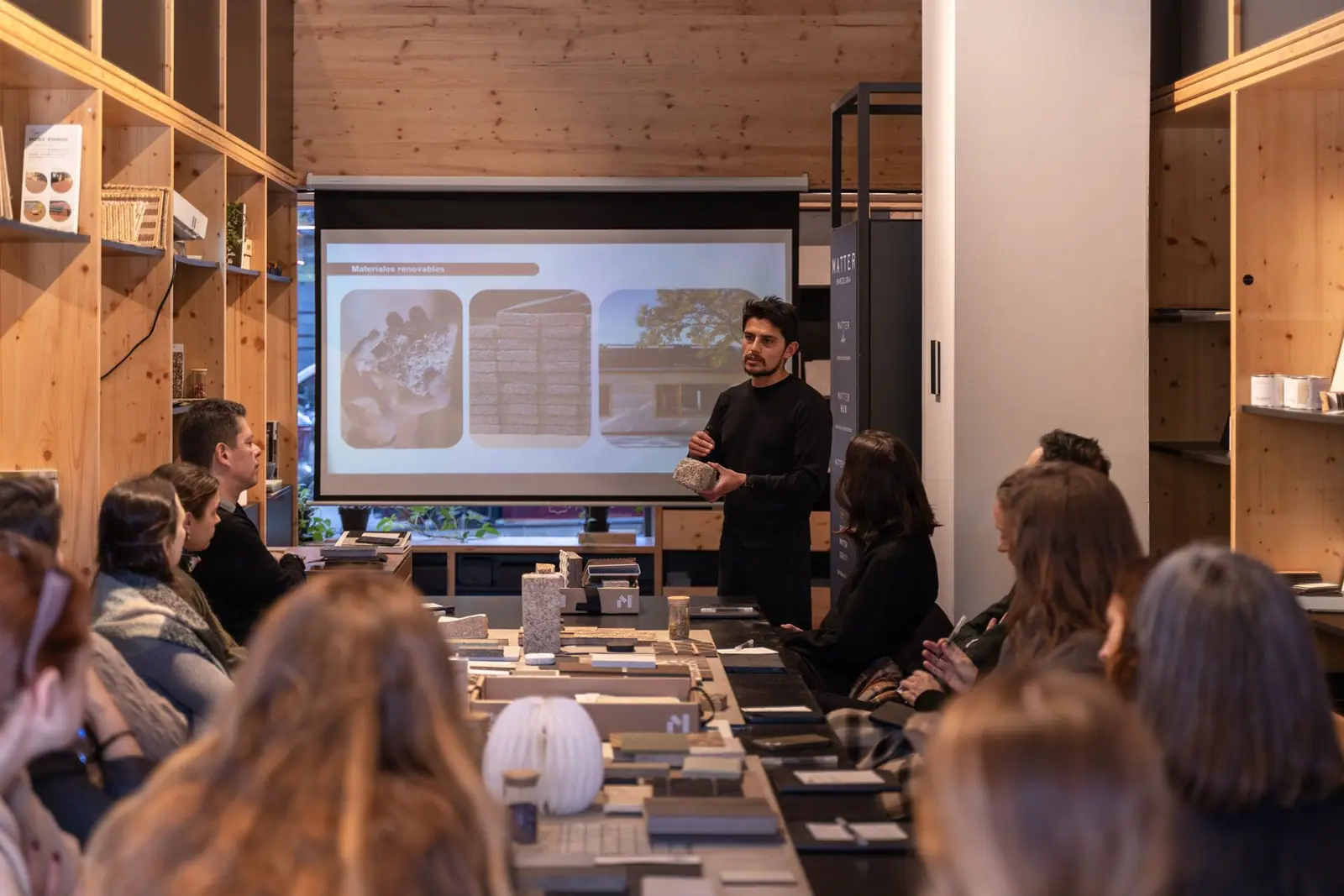
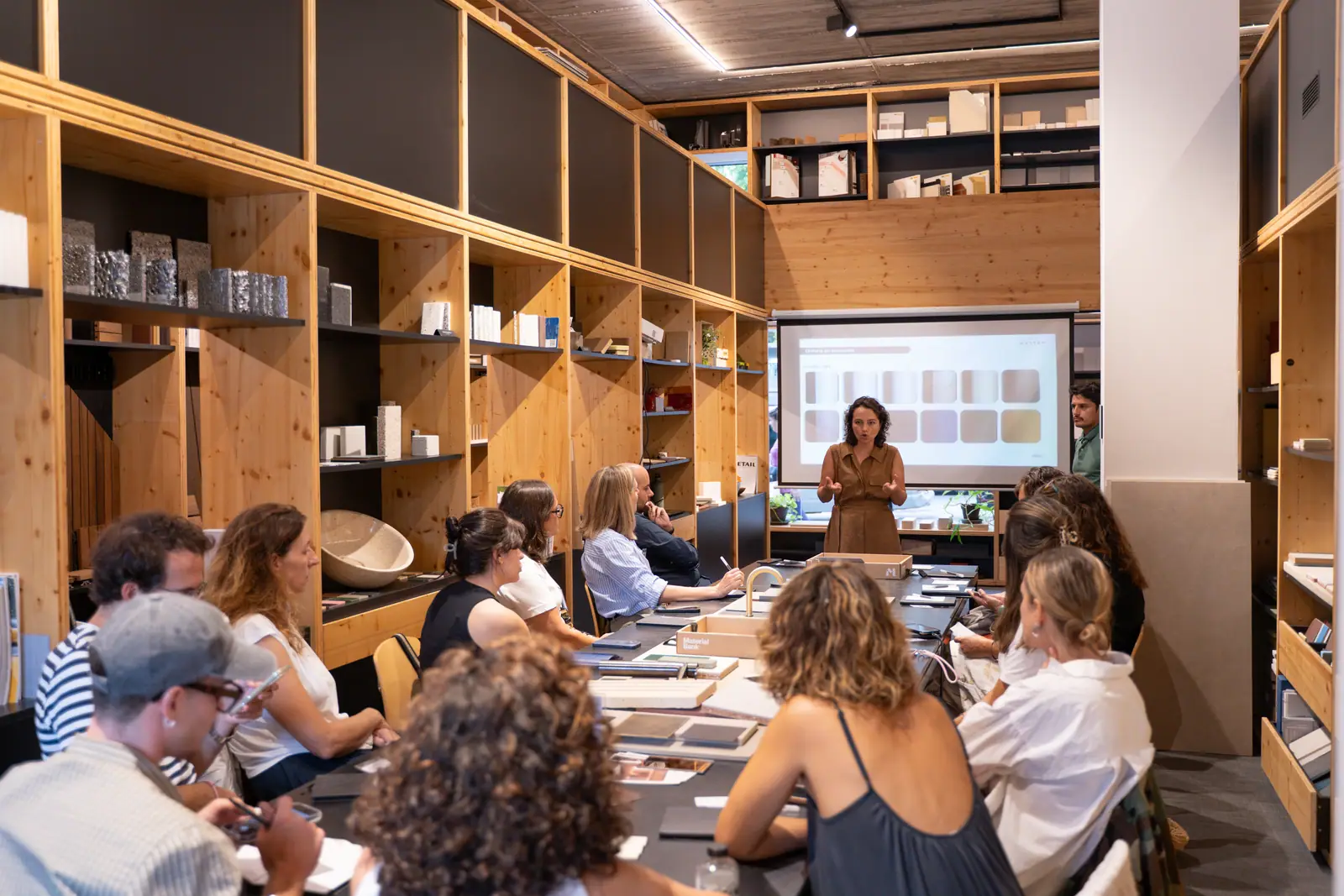
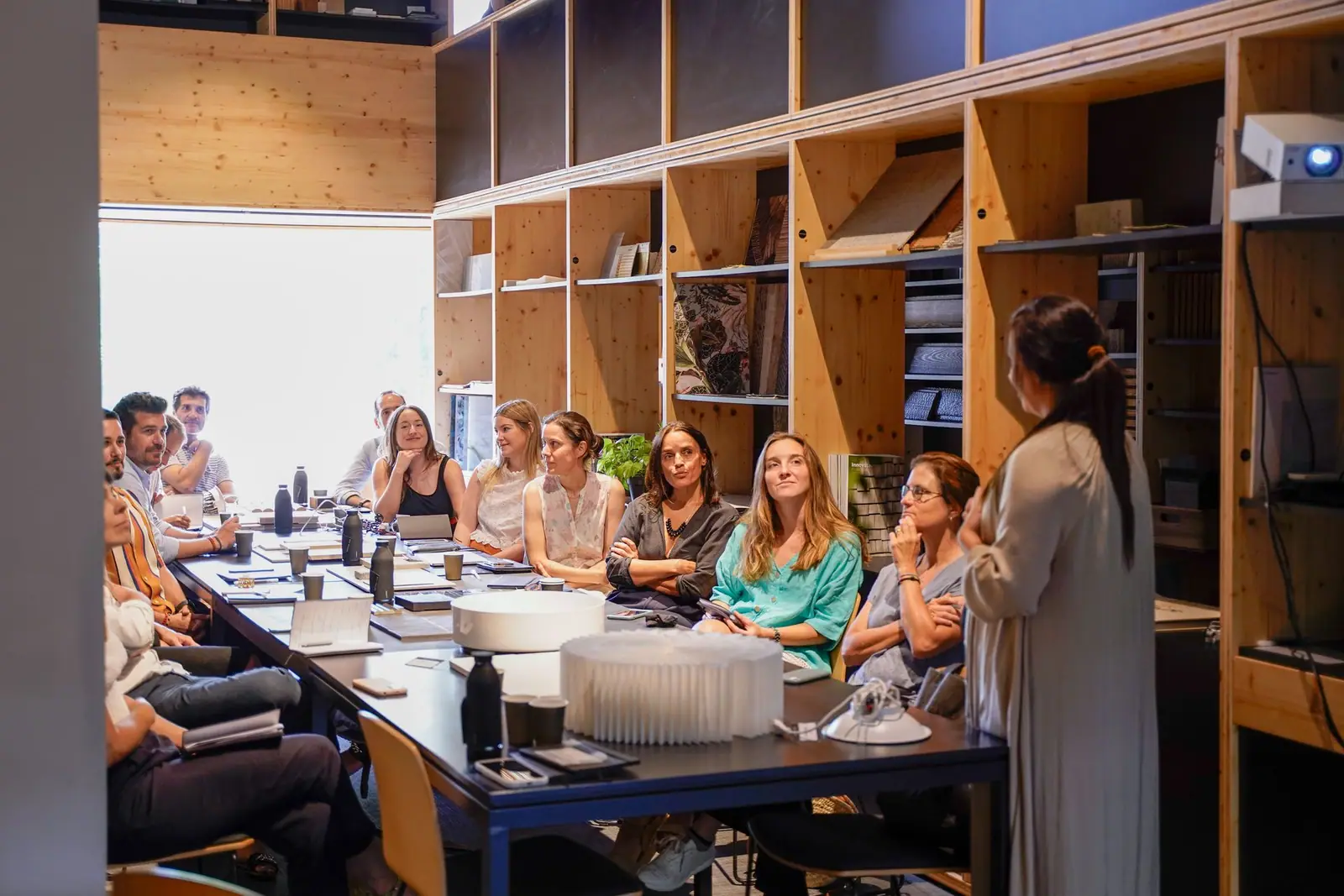
At MATTER SESSION 02: Sustainable Materiality, held at Matter Barcelona and Matter Madrid, we created a learning space focused on sustainability in building and the use of responsible materials. More than 30 interior design and architecture studios joined the two sessions to discover new sustainable solutions for their projects.
It was the second edition of the Matter Sessions and was organised around three presentations. In this article we cover each of them, together with some keys for bringing sustainable materiality into a project:
- Jorge Latorre, architect in Matter's consultancy team: a selection of materials based on sustainability criteria.
- Mauro Manca, founder of Energreen Design: key concepts and success stories in sustainable construction.
- Muriel Bourgeay, business development director of Material Bank in Spain: how to select and order samples with the Material Bank platform.
Low-emission materials and decarbonisation
Why materials weigh on a building's carbon footprint.
Attendees had the opportunity to discover innovative, sustainable, low-carbon materials at first hand, understanding their impact on the decarbonisation process and their role in meeting current and future climate targets.
A building's footprint is not limited to the energy it consumes while in use. The emissions associated with manufacturing and transporting materials, replacing them during the building's service life, and demolition and waste management – so-called embodied carbon – are part of its global warming potential (GWP) over the life cycle. That is why the choice of materials influences a building's decarbonisation from the earliest stages of the project.
The regulatory framework is moving in that direction. Directive (EU) 2024/1275 on the energy performance of buildings requires the life-cycle GWP of new buildings to be calculated and shown on their energy performance certificate: from 1 January 2028 for those with more than 1,000 m² of useful floor area and from 1 January 2030 for all of them. In addition, member states must submit a roadmap in 2027 for introducing limit values from 2030.
A selection of materials based on sustainability criteria
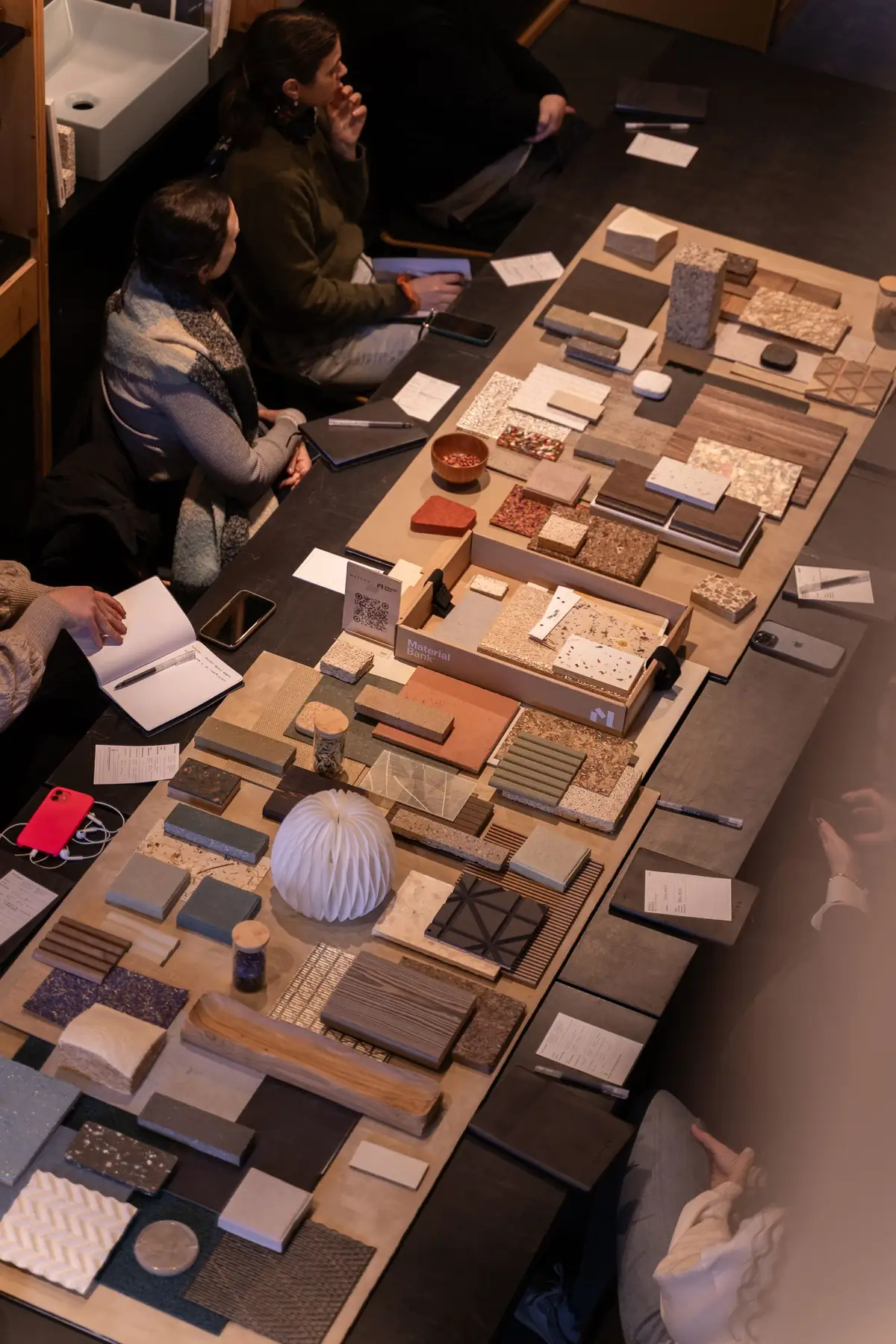
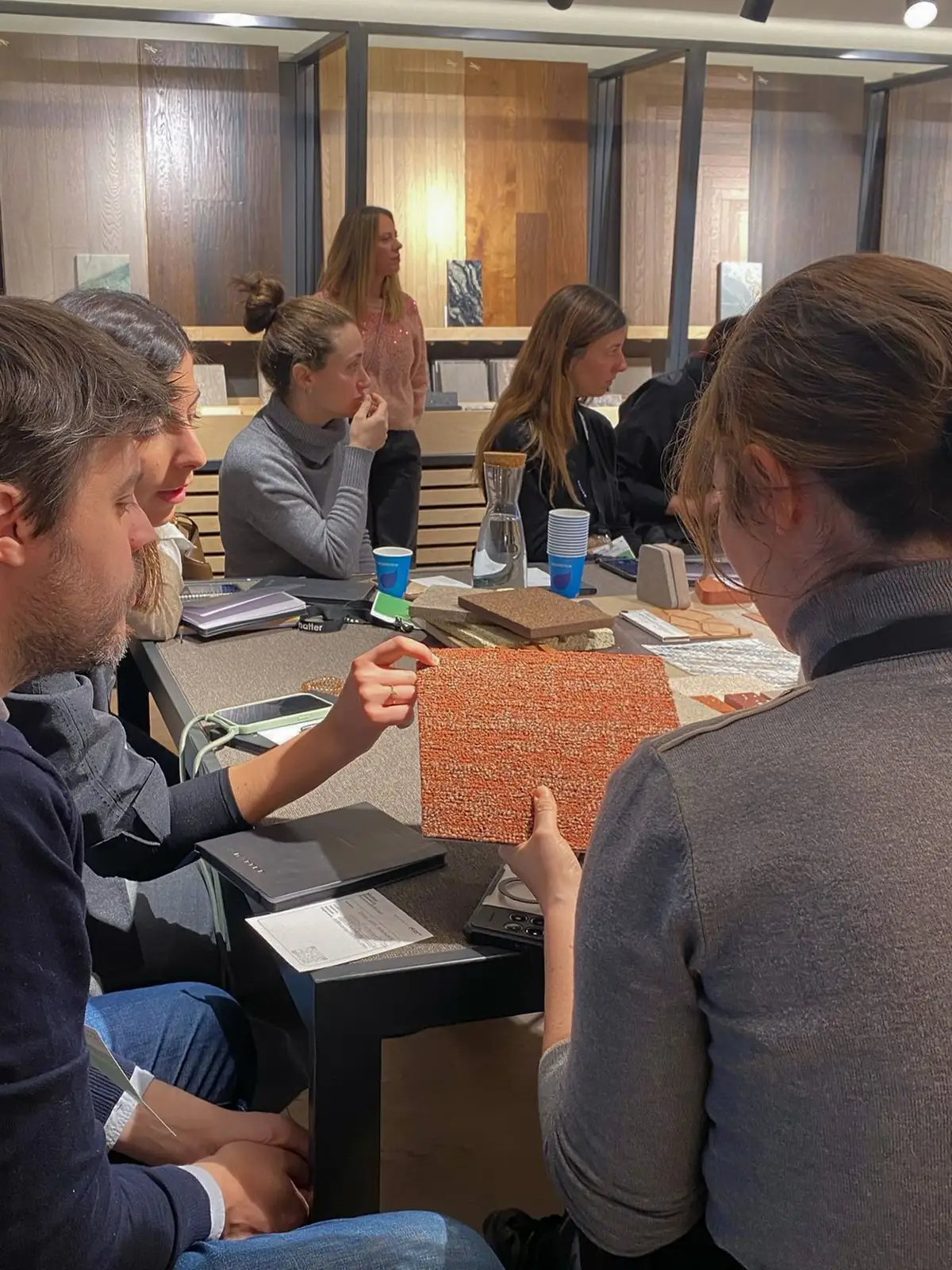
Matter's consultancy team made a selection of materials based on sustainability criteria. Inspirational moodboards were presented so that attendees could interact with and touch the suggested sustainable materials.
Jorge Latorre, architect in Matter's consultancy team, took part, explaining the properties and applications of the materials on display in a hands-on session, with the samples on the work table.
What to check in a sustainable material
To take that selection into a project, it is worth asking more of each material than a label. These are the criteria that help most when comparing:
- Origin and composition: renewable, recycled or recovered raw materials, and where they come from.
- Environmental product declaration (EPD): prepared according to EN 15804, it quantifies the product's impacts, including its carbon footprint, and allows solutions to be compared using data.
- Indoor air quality: low emissions of volatile organic compounds (VOCs), especially in finishes, adhesives and textiles.
- Durability and maintenance: a material that lasts longer and is replaced less often reduces replacement emissions over the building's service life.
- End of life: the possibility of dismantling, reusing or recycling the material when its use comes to an end.
Mauro Manca of Energreen Design: building with less carbon
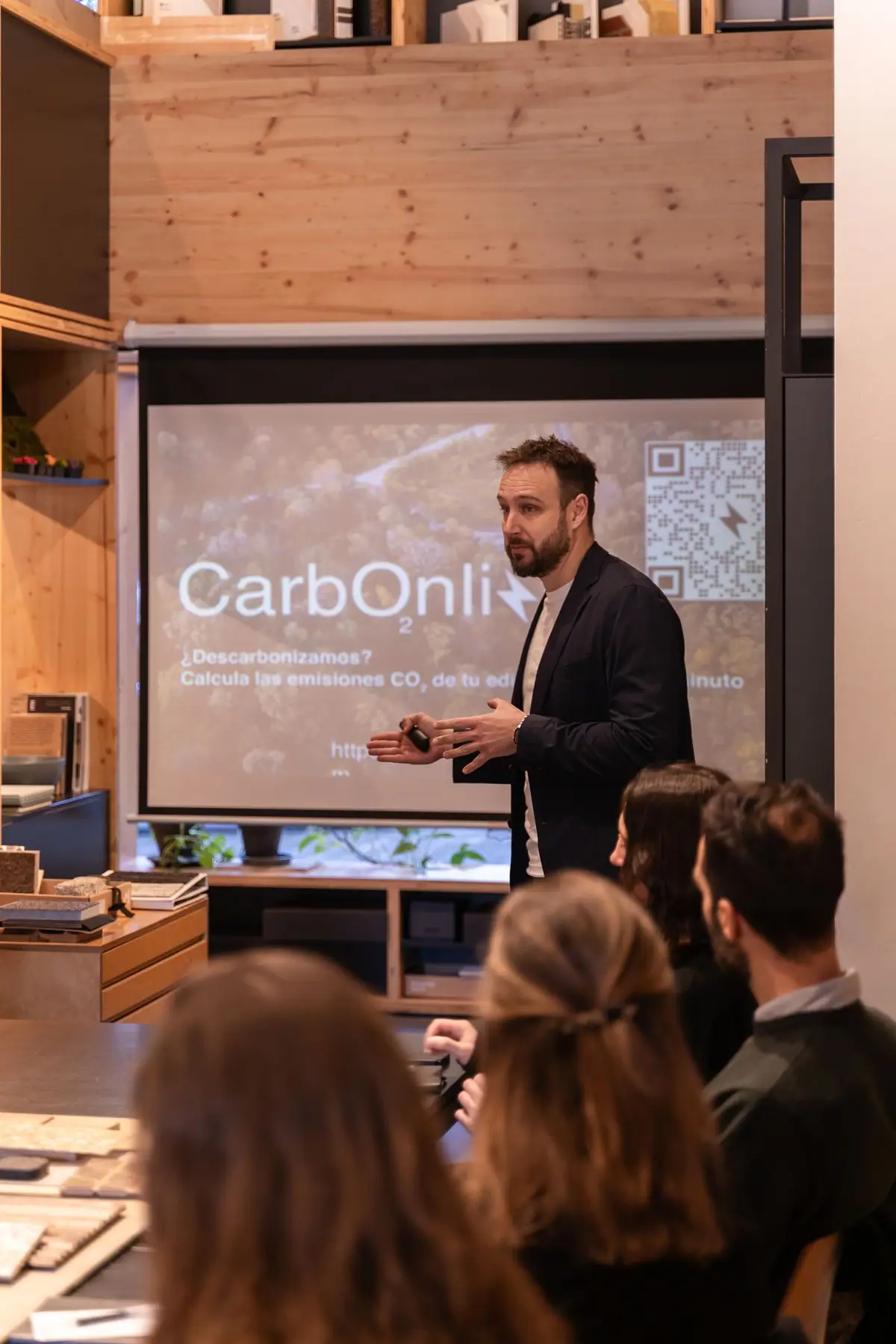
Mauro Manca of Energreen Design shared key concepts and success stories in sustainable construction with the attendees.
Manca is an architect with a PhD in Sustainable Architecture and Circular Economy, and the founder and CEO of Energreen Design, a Barcelona-based consultancy specialising in sustainable architecture, circular economy, life-cycle assessment and certifications such as LEED, BREEAM, WELL, VERDE and DGNB. He also teaches at the Universitat Internacional de Catalunya (UIC) and is a member of the circular economy working group of Green Building Council España.
During his presentation he introduced CarbOnline, the free tool Energreen Design has developed with the UIC Barcelona School of Architecture to make an initial estimate of a building's carbon footprint in the early stages of a project. According to its authors, it is aligned with the European Level(s) framework – specifically with its indicator 1.2, life-cycle global warming potential – and works with a 50-year study period.
The tool itself states its limits: it does not include foundations, building services or detail elements such as interior joinery, and it does not replace a full life-cycle assessment. Its value lies in comparing construction solutions and materials while they are still easy to change.
Material Bank: selecting and ordering samples in a single delivery
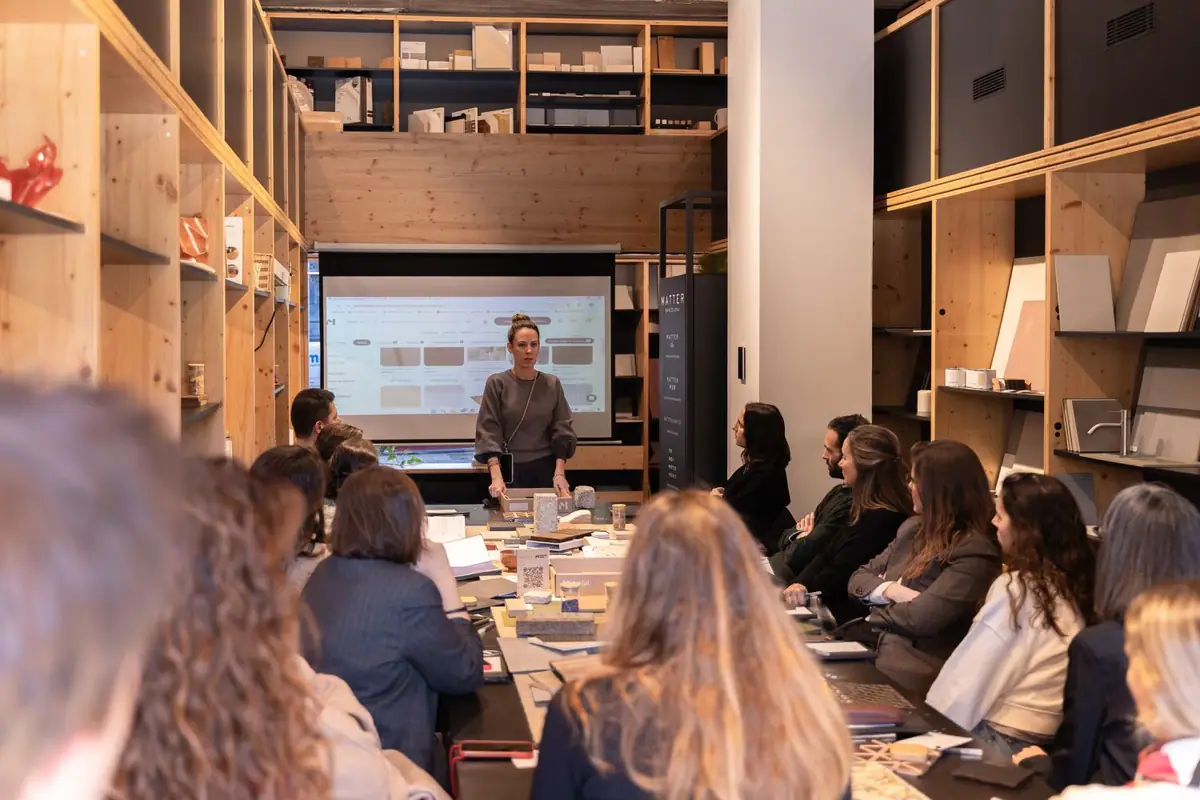
Finally, Muriel Bourgeay, business development director of Material Bank in Spain, took part. Muriel explained how to use the Material Bank platform, a quick and simple way to select and order material samples for architecture and interior design projects.
According to the platform itself, the service is free for architects and interior designers: you create a project, choose samples from more than 450 brands and, for orders placed before 18:30 (Central European Time), all the samples arrive in a single box the next morning. The trays they are sent in are reusable and can be returned.
Material Bank used the session to present its strategic alliance with Matter, officially announced on 24 February 2025, which brings together the digital platform for searching for and shipping samples with our material libraries and the advice of our team of consultants.
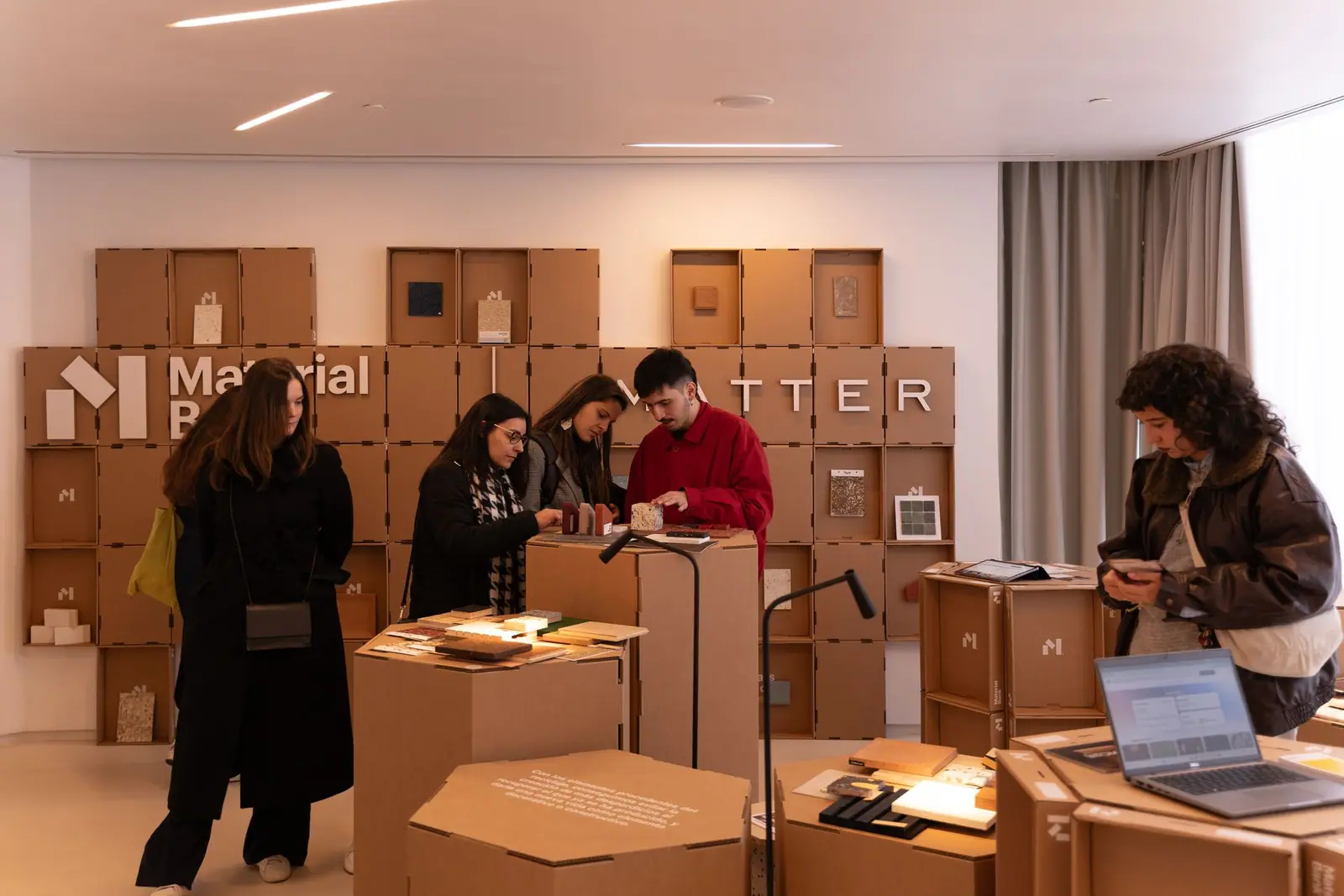
The session at Matter Madrid
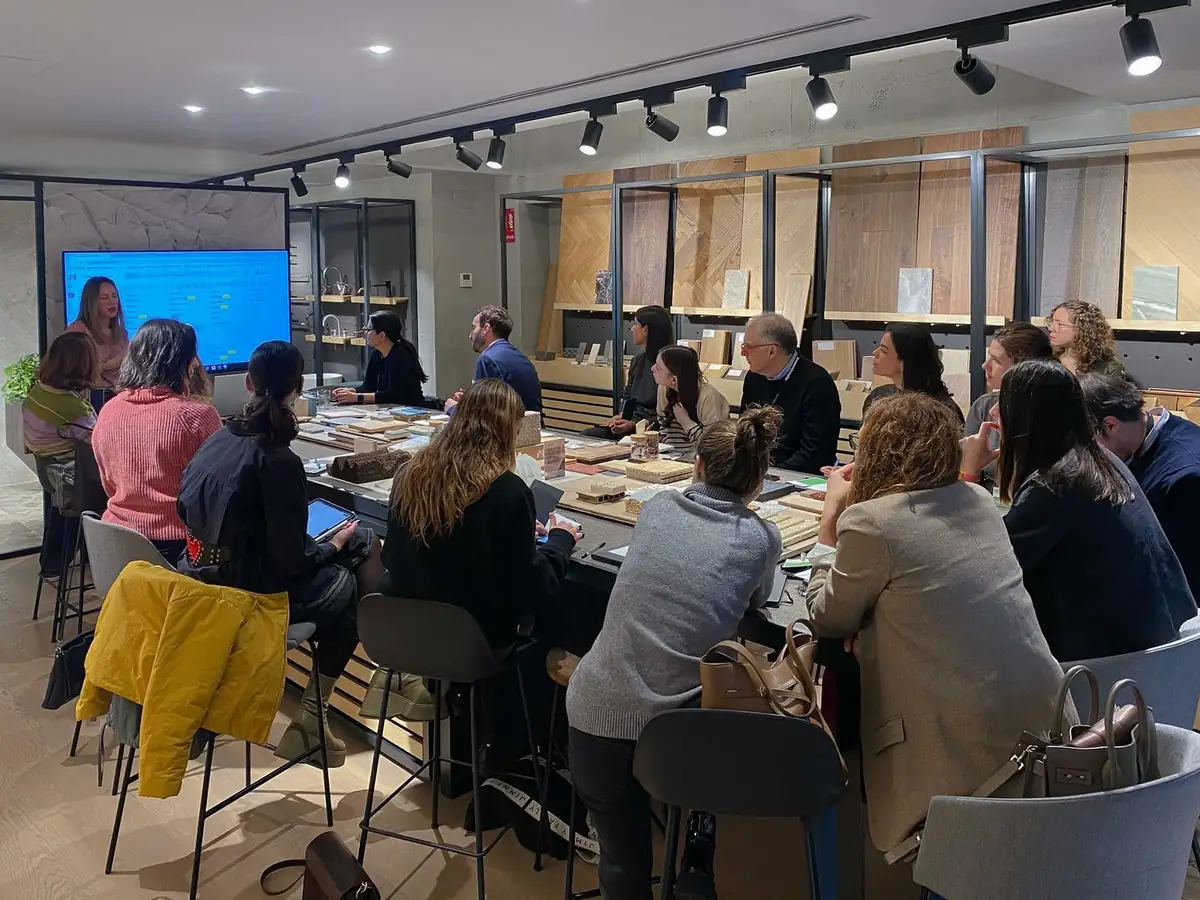
The session was repeated at Matter Madrid, with the selection of materials on the work table and the presentation of the Material Bank platform.
Frequently asked questions
- What is a building's embodied carbon?
- It is the greenhouse gas emissions associated with materials: extraction, manufacture and transport, replacements during the service life, and end of life. Together with the emissions from operational energy, they make up the building's global warming potential (GWP) over its life cycle.
- From when will the carbon footprint of new buildings have to be calculated?
- Directive (EU) 2024/1275 requires the life-cycle GWP to be calculated and shown on the energy performance certificate from 1 January 2028 for new buildings with more than 1,000 m² of useful floor area, and from 1 January 2030 for all new buildings.
- How can the carbon footprint be estimated in the early stages of a project?
- With simplified tools such as Energreen Design's CarbOnline, which makes it possible to compare construction solutions from the outset. These are indicative estimates: a complete result requires a life-cycle assessment of the building.
- How do you order samples with Material Bank?
- With a free professional account on the platform: you choose samples from different brands and, if the order is placed before 18:30 (CET), they arrive in a single delivery the next morning. At Matter you can also see and compare them in our material libraries.
Upcoming Matter Sessions
We thank everyone who took part in this session. We continue to create spaces for inspiration and learning to drive sustainability in the sector: look out for our upcoming Matter Sessions.
Book your visit to Matter to see our Materioteca and talk about the sustainable materials for your next project.
Book a visit