AISI 316L stainless steel taps: the HUM collection by QuadroDesign
HUM, by Philippe Malouin for QuadroDesign: AISI 316L stainless steel bathroom taps, their types and finishes, and the keys to specifying them.
Products8 min read
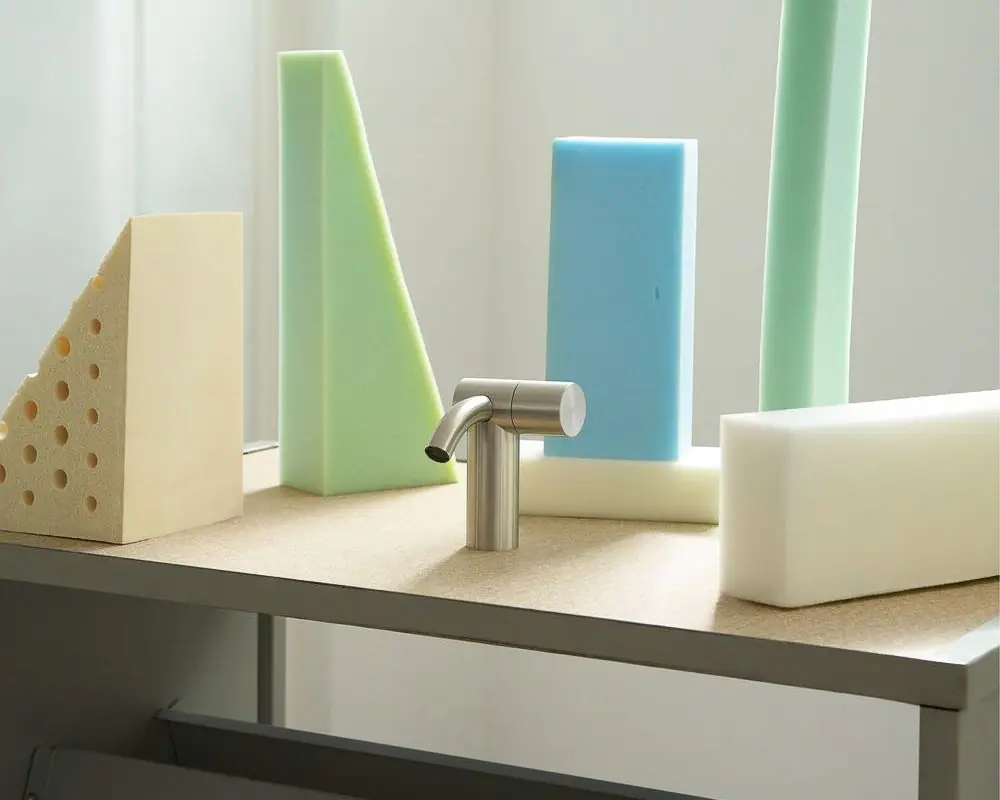
When we talk about quality in an architecture or interior design project, the conversation tends to focus on structural materials, cladding or joinery. However, taps are one of the elements with the greatest technical demands and the most direct contact with the user: they are subject to constant use, permanent moisture and daily mechanical wear. That is why the material they are made from is not an aesthetic question, but a structural one. The HUM collection, developed by QuadroDesign and designed by Philippe Malouin, starts from that premise: designing taps from the material, not from the finish.
In this article we explain what AISI 316L stainless steel offers compared with other solutions, how the design of HUM came about, which pieces and finishes the collection includes, what lies behind QuadroDesign and what to bear in mind when specifying and installing it.
The real value of AISI 316L stainless steel
The taps in the collection are made of AISI 316L stainless steel, a material particularly valued for its corrosion resistance and its stability in humid environments. Unlike many taps produced in chrome-plated brass or with surface coatings, stainless steel does not depend on an external layer to guarantee its appearance or durability: in the brushed finish, the visible material is the structural material itself.
AISI 316L (EN 1.4404 in the European standard) is an austenitic chromium-nickel steel with molybdenum. Its typical composition is around 17% chromium, 10% nickel and 2% molybdenum. Molybdenum is what sets it apart from 304, the most common grade: it improves resistance to pitting and crevice corrosion in the presence of chlorides. The "L" stands for low carbon (around 0.02%), which reduces carbide precipitation caused by heat, for example during welding.
This has direct implications for the project. The surface does not flake or lose its coating over time. Resistance to demanding environments is greater. Ageing is even and predictable. In terms of maintenance, it is simplified. In terms of service life, it is extended. QuadroDesign explains that stainless steel owes its resistance to a very thin passive layer that forms spontaneously on contact with oxygen in the air or water and which, if slightly damaged, tends to regenerate.
In high-end residential, hospitality or public space projects, where the demands of use are constant, choosing AISI 316L stainless steel taps reduces risk and provides technical stability. HUM's brushed finish is not an applied decorative effect, but the honest expression of the steel itself. That material coherence reinforces the perception of quality and solidity. For those looking for a different tone, the collection is also offered in three PVD finishes, a thin coating applied over the steel.
Designing through reduction
Philippe Malouin is a designer known for his essential approach to the object. Born in Canada and based in London, where he founded his studio in 2008, he studied at Design Academy Eindhoven, the École Nationale Supérieure de Création Industrielle in Paris and the University of Montreal. His work spans furniture, lighting and objects, and HUM was his first venture into water mechanics.
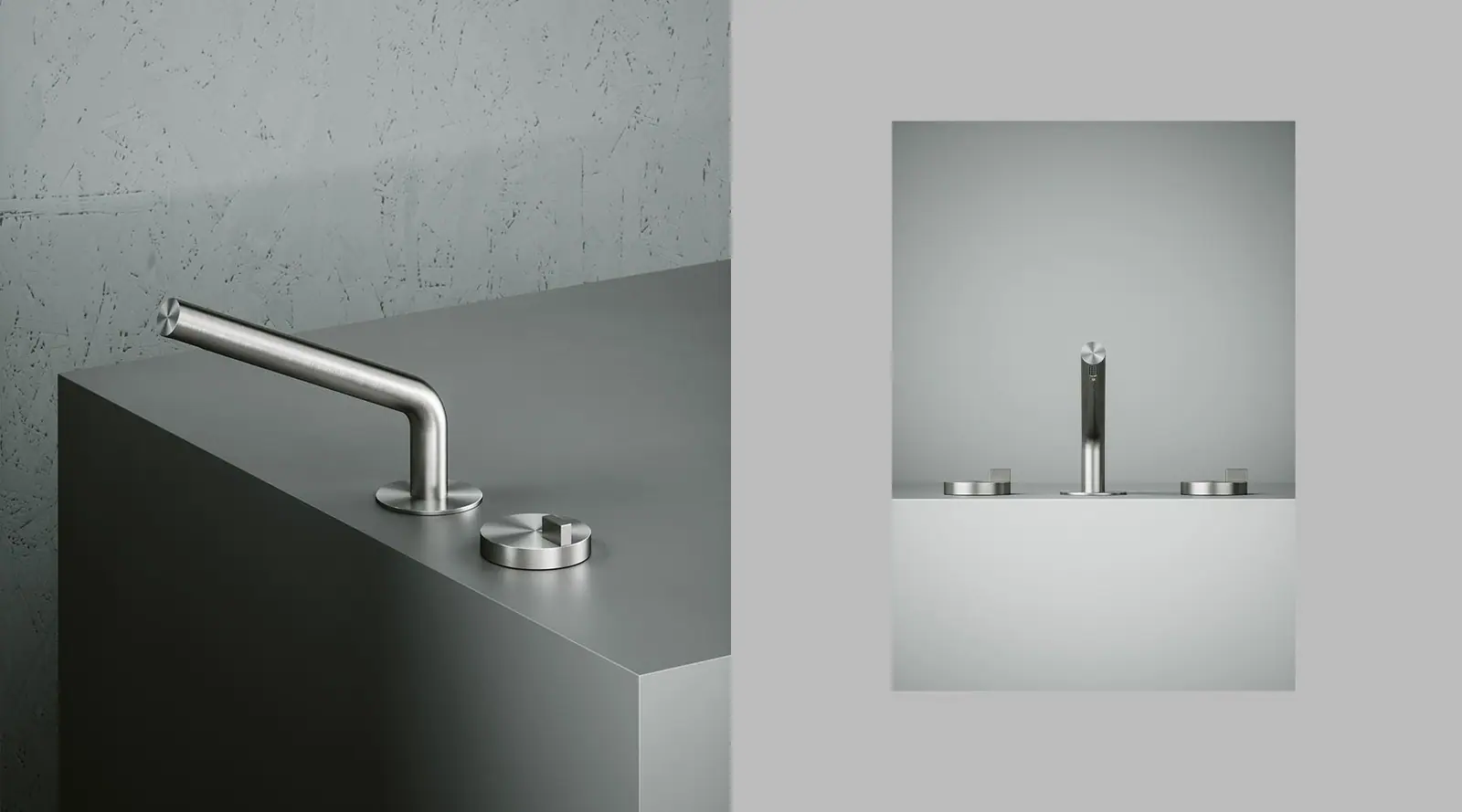
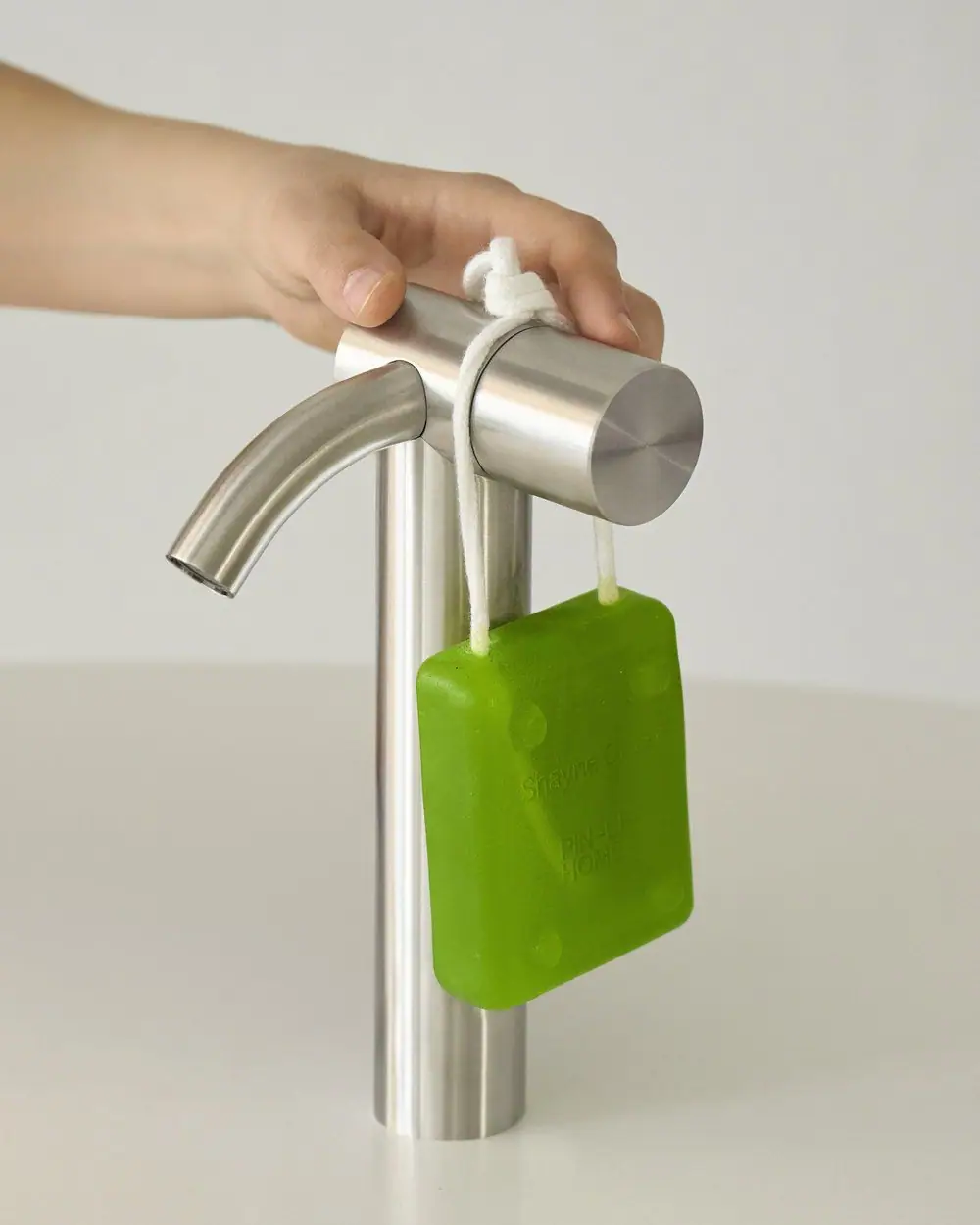
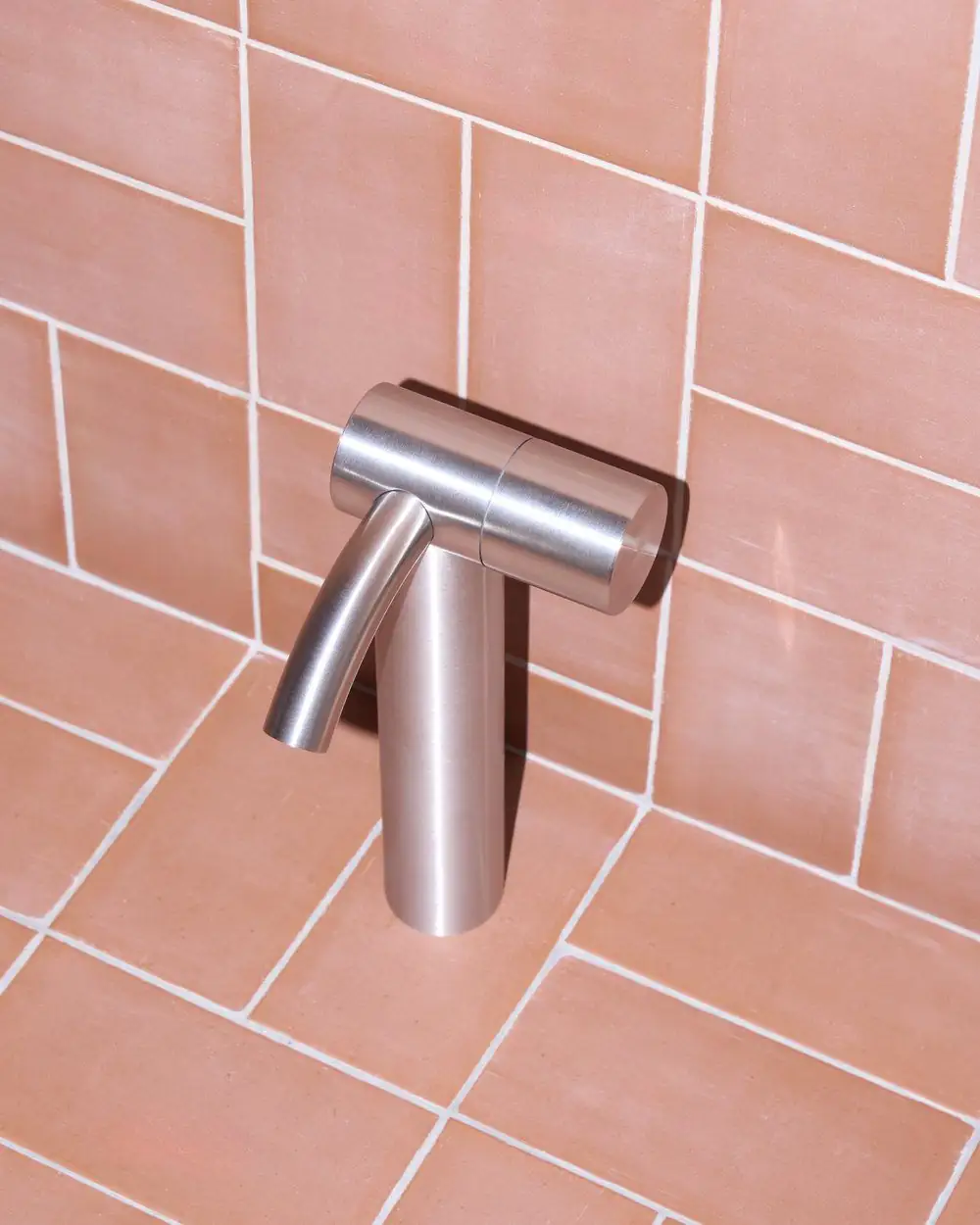
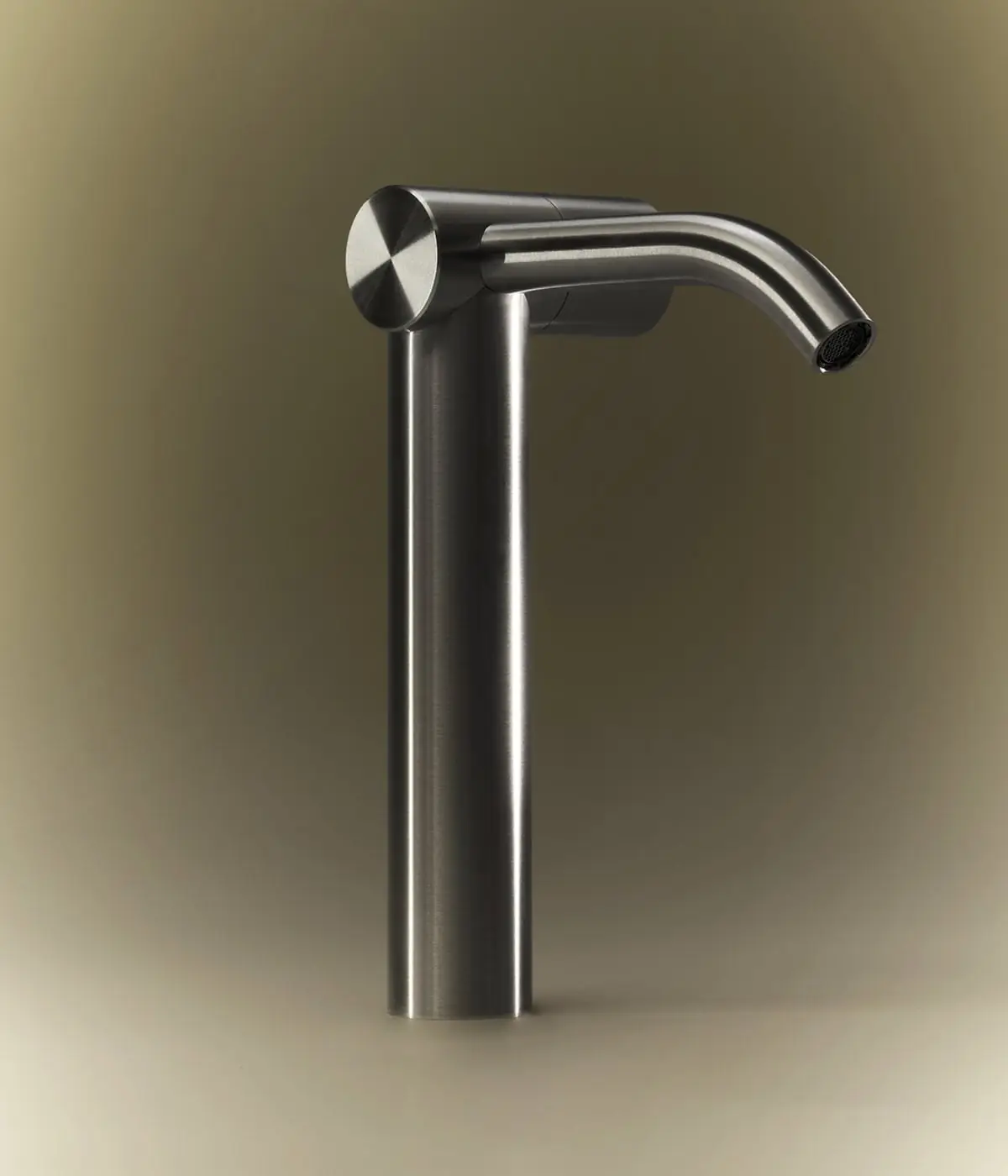
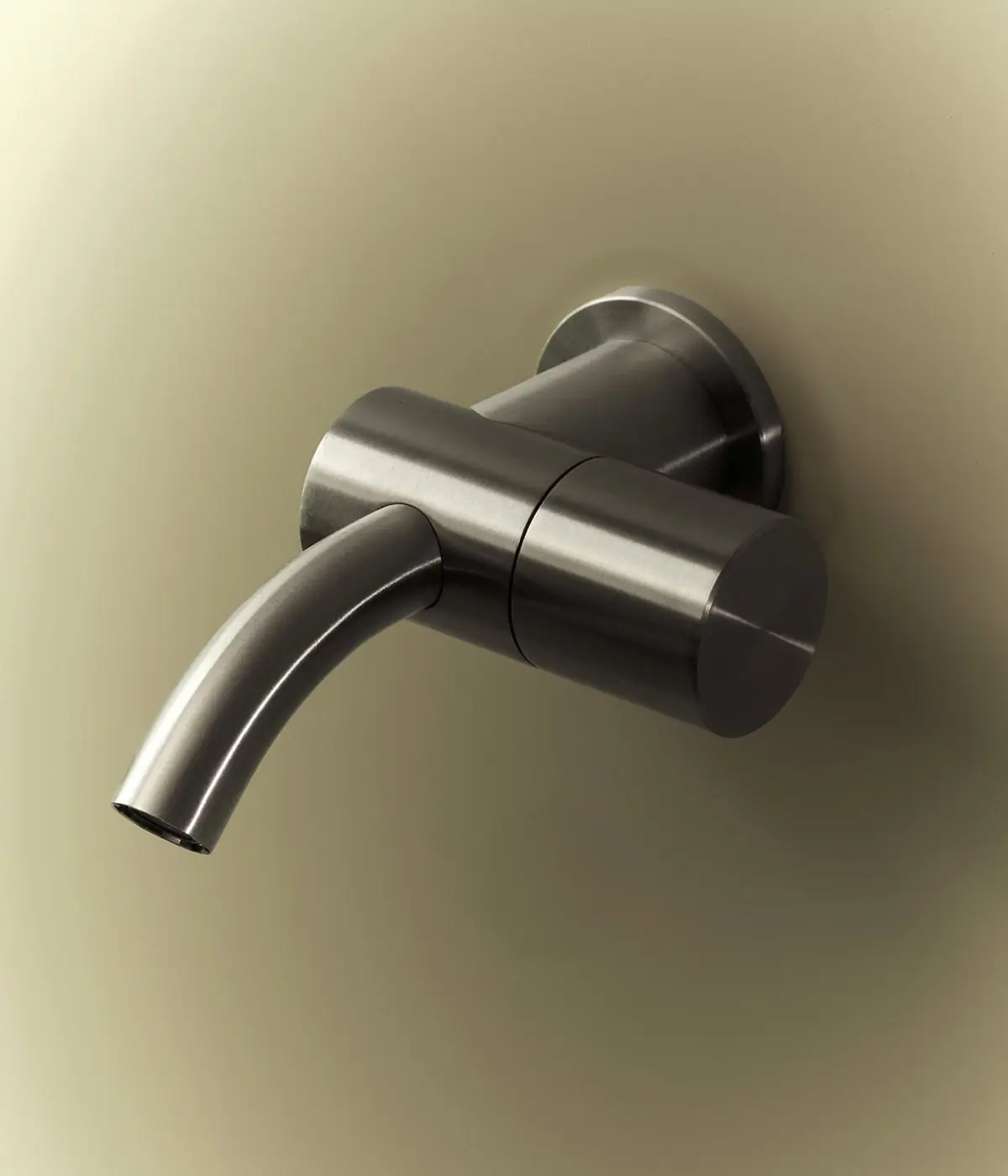
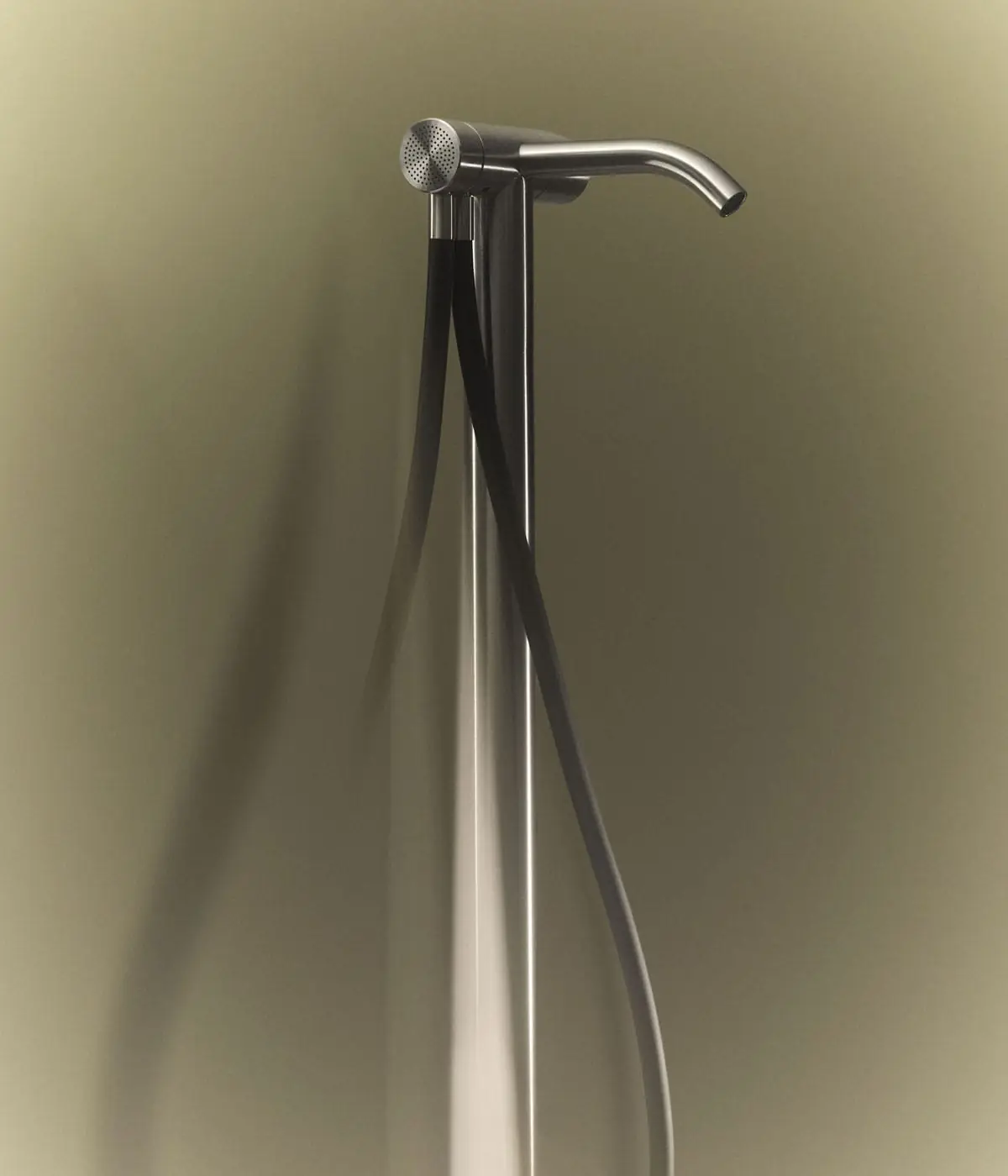
In the HUM collection, the starting point was a stainless steel cylinder. From that pure form, Malouin introduced a single contrasting curve that structures the entire collection. As the designer explains in the catalogue, the cylinder became the base of the deck-mounted mixer and, in its different versions, every control and the hand shower; the curve became the spout that recurs throughout the range. The name comes from the hummingbird, whose beak recalls that curve.
There are no unnecessary added elements or ornamental gestures. The form responds to function and material. This formal reduction does not seek to stand out, but to achieve precision. Malouin has described it as a "minimal functional sculpture" destined to be part of everyday life. The result is a range of contemporary design taps that can be integrated into multiple architectural languages without imposing an excessive formal narrative. When design eliminates the superfluous, what remains is proportion, balance and build quality.
Development took place with QuadroDesign's technical team and Enrico Magistro, who runs the company with his sister Elena. As reported by Archiproducts, one of the keys was to rationalise the body of the tap by placing it horizontally: a common component that is reconfigured to create the different pieces in the collection.
A complete bathroom collection
From washbasin to bathtub, in the same language.
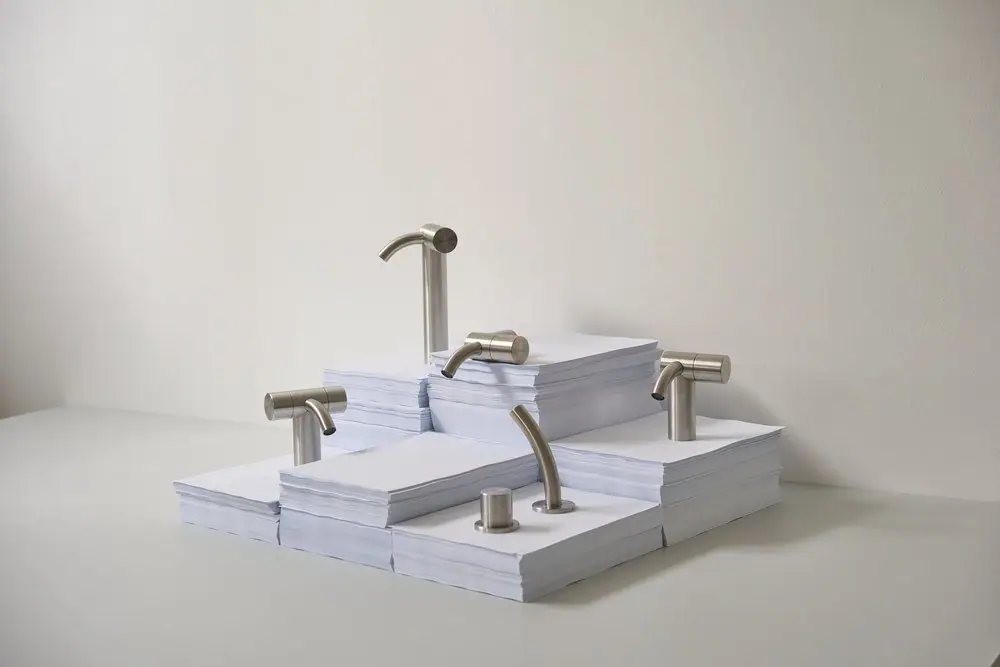
QuadroDesign previewed HUM at Milan Design Week 2024 and presented the complete collection at the 2025 edition, from 8 to 12 April, at its space at Via Molino delle Armi 14 in Milan. It now includes deck-mounted basin mixers in several heights, multi-hole versions, wall mixers with spout, bidet, bath and shower fittings, a hand shower and a shower head.
Most pieces come in three versions. The basic one is a progressive mixer: a single turn of the control opens the cold water and, as it keeps turning, gradually warms it up to hot. The T version is a traditional mixer with a conventional single-lever cartridge. The V version is a tap with two valves, one for cold and one for hot water, according to the manufacturer's technical sheets.
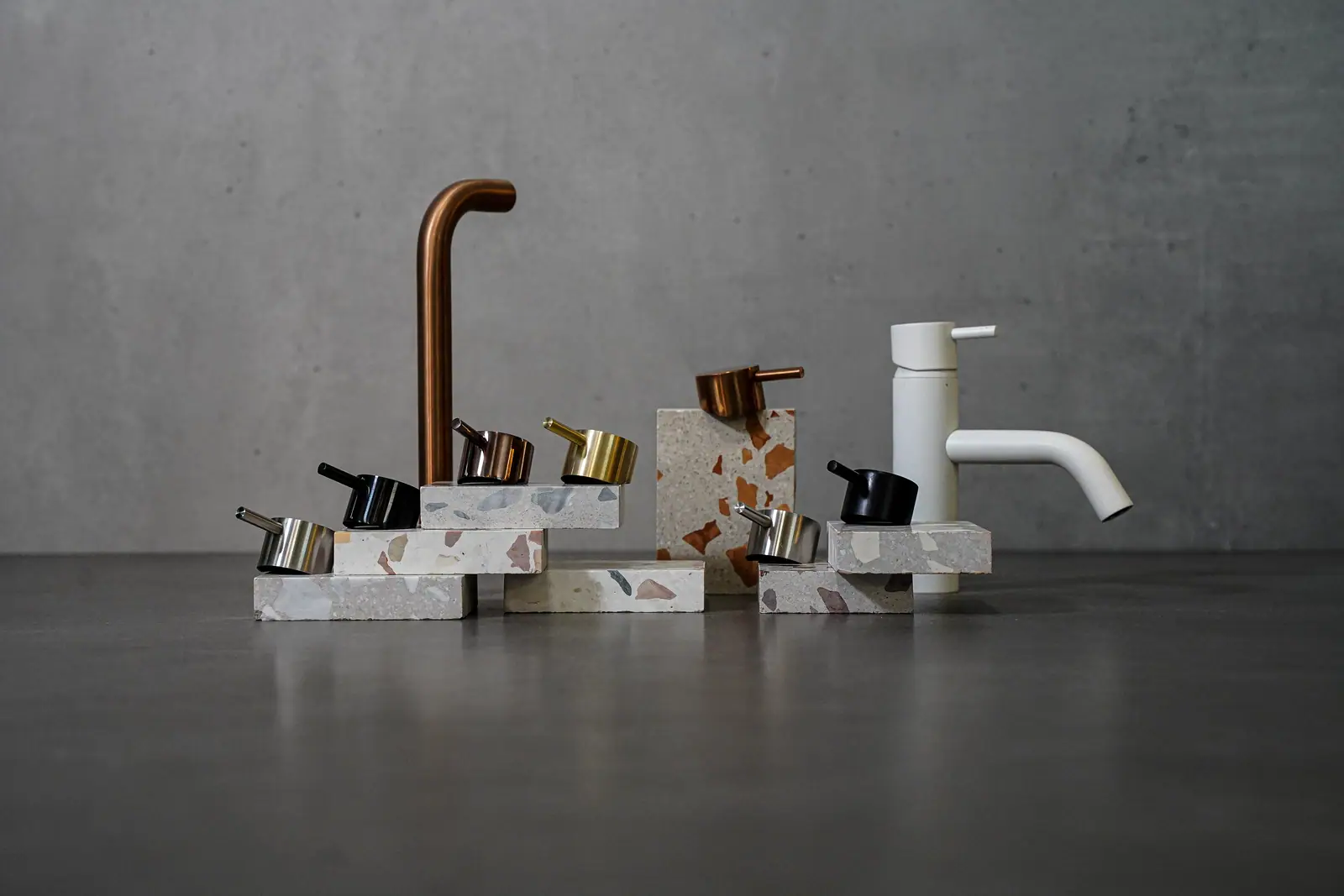
All pieces share the same material and finishes: brushed stainless steel and PVD Light Gold, PVD Black Gold and PVD Bronze Gold. According to QuadroDesign, the collection received the Casum Design Award and the Archiproducts Design Award in 2025, was a finalist in the Archello Design Awards that same year and has won the iF Design Award 2026.
QuadroDesign's commitment to lasting design
QuadroDesign has built its identity around stainless steel as an industrial decision. Based in San Maurizio d'Opaglio, on the shores of Lake Orta in northern Italy, it is run by Enrico and Elena Magistro, children of the founders of Rubinetterie Magistro (1978). Since 2001 it has designed, manufactured and distributed essential design taps made entirely of AISI 316L steel, at a time when giving up brass meant breaking with traditional tap manufacturing.
It is not a trend, but a clear position: to manufacture taps designed to last. The company attributes a low impact across its whole life cycle to uncoated stainless steel: it needs no chrome plating in production, it does not corrode or release harmful elements in contact with water, and it is recyclable at the end of its life. It also states that its products are made and assembled in Italy with components of Italian origin, and that it holds ISO 9001 certification.
The collaboration with Philippe Malouin on the HUM collection reinforces that strategy. It is not just a renowned name associated with a product, but an alliance between contemporary design and production coherence. Sustainability, in this context, is not communicated as a slogan, but translated into material decisions that reduce premature replacements and extend the life of the object. Designing from quality means thinking about time.
Keys to specifying HUM
These are the manufacturer's recommendations worth planning for at design stage:
- Version and use: choose between progressive mixer, traditional mixer (T) or two-valve tap (V) according to the user and the type of space, and set the mixer height according to the basin, countertop or built-in.
- Pressure and temperature: working pressure between 1 and 10 bar, 2 to 5 bar recommended; above 5 bar, fit a pressure reducer. Maximum temperature 80 °C, 65 °C recommended, and a maximum pressure difference of 1.5 bar between hot and cold water.
- Installation: by qualified personnel, with the system flushed before fitting, stop valves with filters upstream of the mixer and a water softener in areas with very hard water.
- Standard: according to QuadroDesign, its products comply with EN 817 for sanitary tapware (mechanical mixing valves, PN10).
- Maintenance: warm water, neutral soap and a soft cloth; diluted vinegar or citric acid for limescale. No bleach, chlorine, ammonia or scouring pads. PVD finishes need even gentler care.
What these taps bring to the project
Choosing AISI 316L stainless steel taps is not a question of image. It is a technical decision that affects the durability, maintenance and aesthetic stability of the space. The HUM collection brings material consistency, formal precision and a restrained presence that accompanies the architecture rather than competing with it.
In a market saturated with finishes and fleeting trends, opting for taps made of stainless steel means committing to an honest, structural materiality. When the material is real and the design is reduced to the essentials, the result does not depend on fashion. It depends on quality. And in architecture, quality is what endures.
Frequently asked questions
- What is the difference between AISI 304 and AISI 316L steel?
- 316L contains around 2% molybdenum, which improves resistance to pitting corrosion in the presence of chlorides, and has a lower carbon content. That is why it is considered better suited to humid, demanding environments.
- Are the coloured finishes also steel?
- Yes. The body is always AISI 316L steel; the PVD Light Gold, Black Gold and Bronze Gold finishes are a thin coating applied over the steel. The brushed finish is the steel itself, uncoated.
- What do the letters T and V in the references mean?
- Without a letter, the piece is a progressive mixer, which opens and adjusts the temperature with a single turn. T stands for the traditional mixer and V for the tap version with two valves, cold and hot.
- How should stainless steel taps be cleaned?
- With warm water, neutral soap and a soft cloth, then rinsed and dried. For limescale, a solution of vinegar and water or 5% citric acid. The manufacturer advises against bleach, chlorine, ammonia, concentrated acids and scouring pads.
- What warranty does QuadroDesign offer?
- For consumers, the statutory warranty is extended by three years, up to five in total, for stainless steel and manufacturing defects. Finishes, cartridges and wear parts carry the statutory warranty, generally two years.
At Matter we help you plan the complete bathroom: the taps, the sanitaryware and the surfaces that go with them. In our materials library you can compare materials and finishes with your technical team and ask us about the HUM collection by QuadroDesign.
Book your visit to Matter.
Book a visit