Flush plates with geometric design and sustainable material
OLI’s VORONOI: a dual-flush plate with a faceted relief inspired by the Voronoi diagram, made from Bio-ABS and available in eight colours.
Products6 min read
In architecture and interior design, technical elements are also part of the project. The flush plate, usually treated as a neutral component, can become an element that brings material judgement, formal coherence and compositional value. OLI’s VORONOI collection embodies this transition: from functional component to a piece integrated into the design of the space.
In this article we explain where its geometry comes from, what the Bio-ABS it is made of is, its technical data and compatible cisterns, the eight colours in the range and the points worth resolving when specifying it.
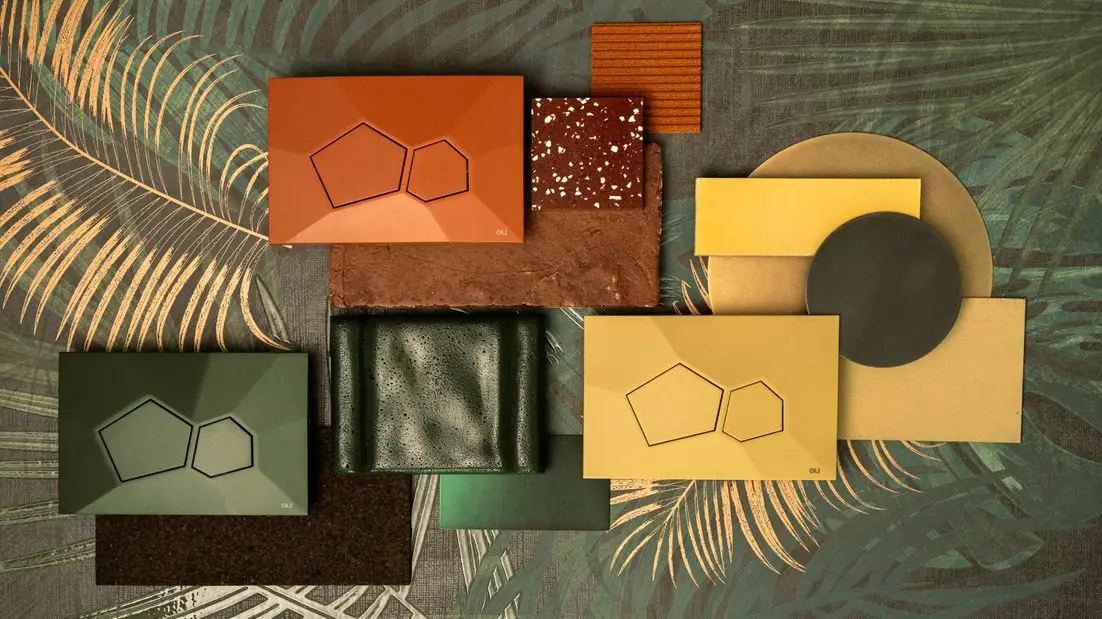
Design inspired by the Voronoi pattern
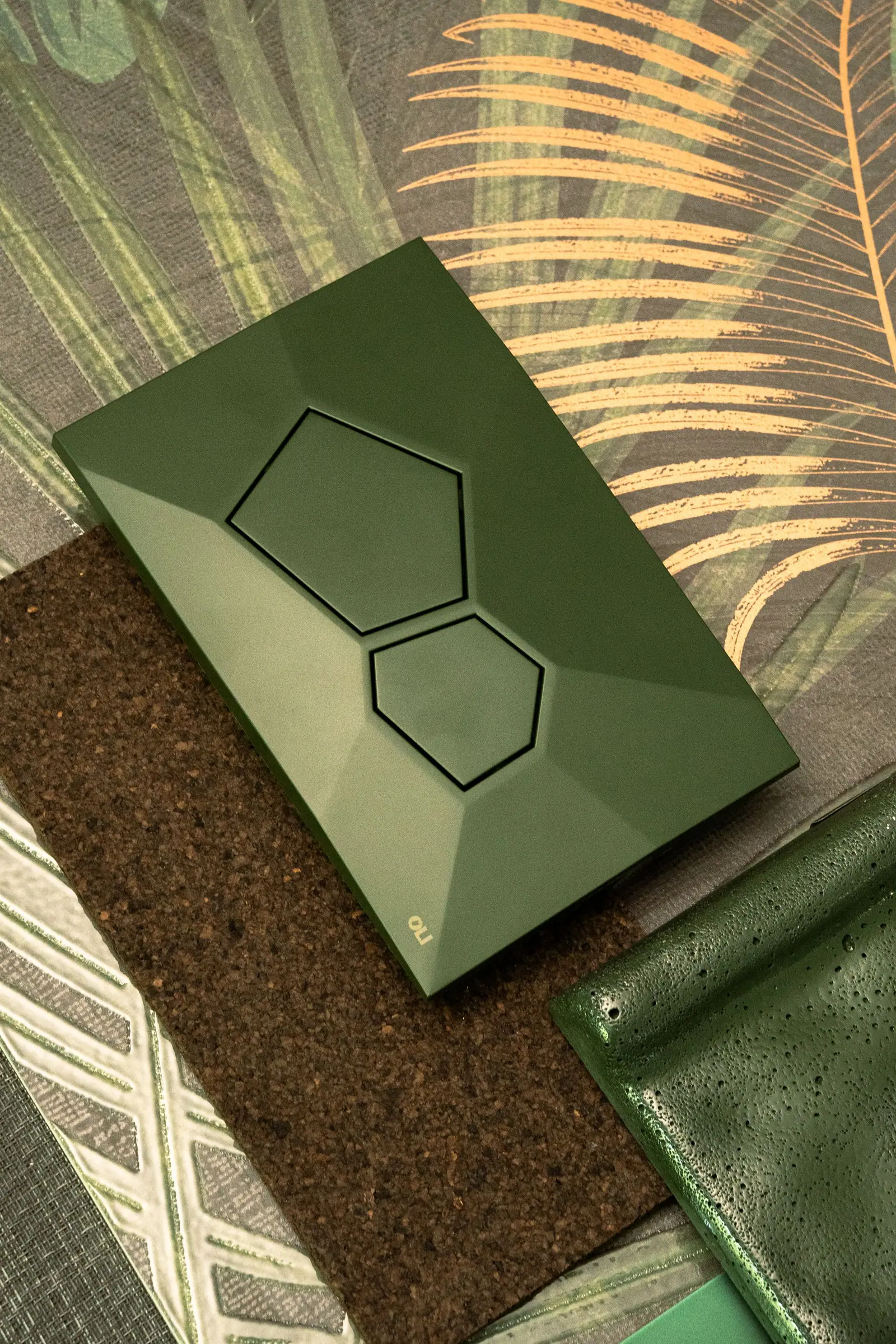
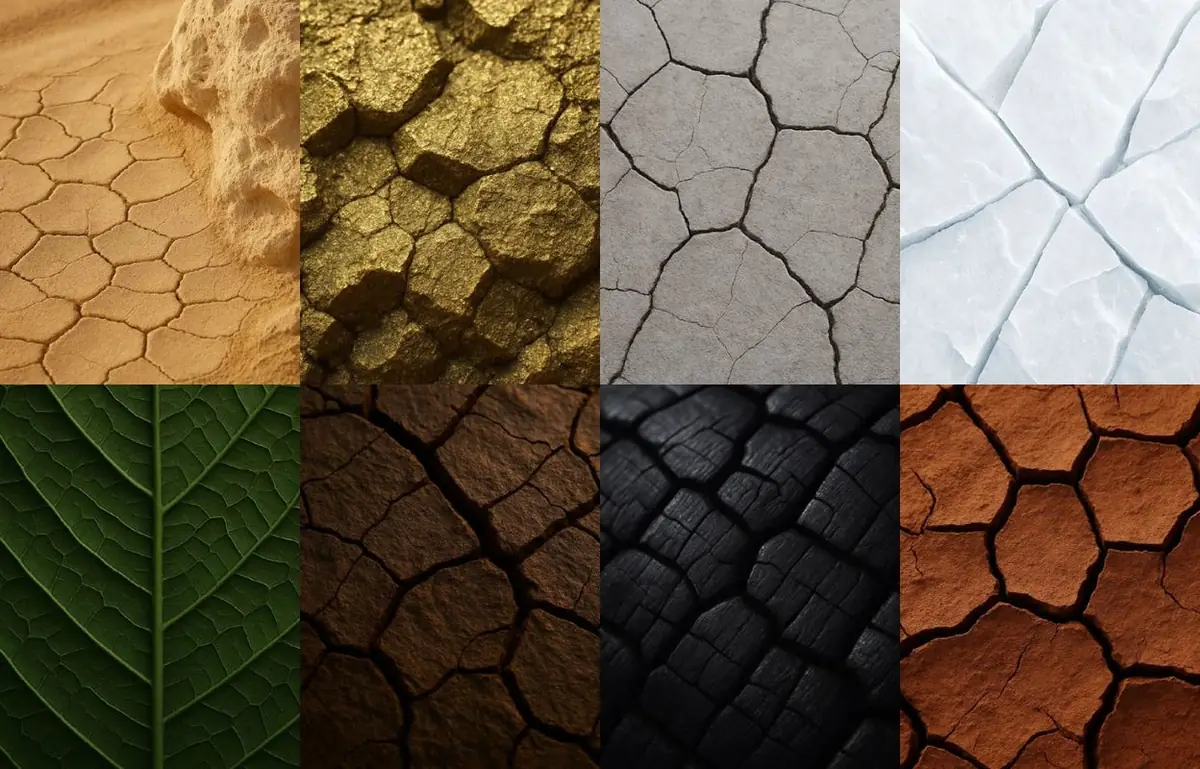
The design of VORONOI is based on a geometric pattern found in nature, the Voronoi diagram, which divides space into irregular cells according to proximity: each cell gathers the points closest to the same centre. It is the logic that can be seen in cracked earth, in the veins of a leaf or in the skin of some animals. In the flush plate, this principle translates into a faceted surface that introduces an organic reading into the bathroom plane.
Its geometry is not only decorative but also structural. According to OLI, the folds of the plate are oriented to stiffen it and allow less material to be used without losing strength, while the facets create plays of light and shadow that give depth to a flat piece. The two dual-flush buttons, a pentagon and a hexagon, are part of the same pattern and are clearly distinguishable when pressed.
The flush plate becomes part of the composition of the space:
- It builds the vertical plane: the faceted relief gives the plate presence on the wall without adding volume.
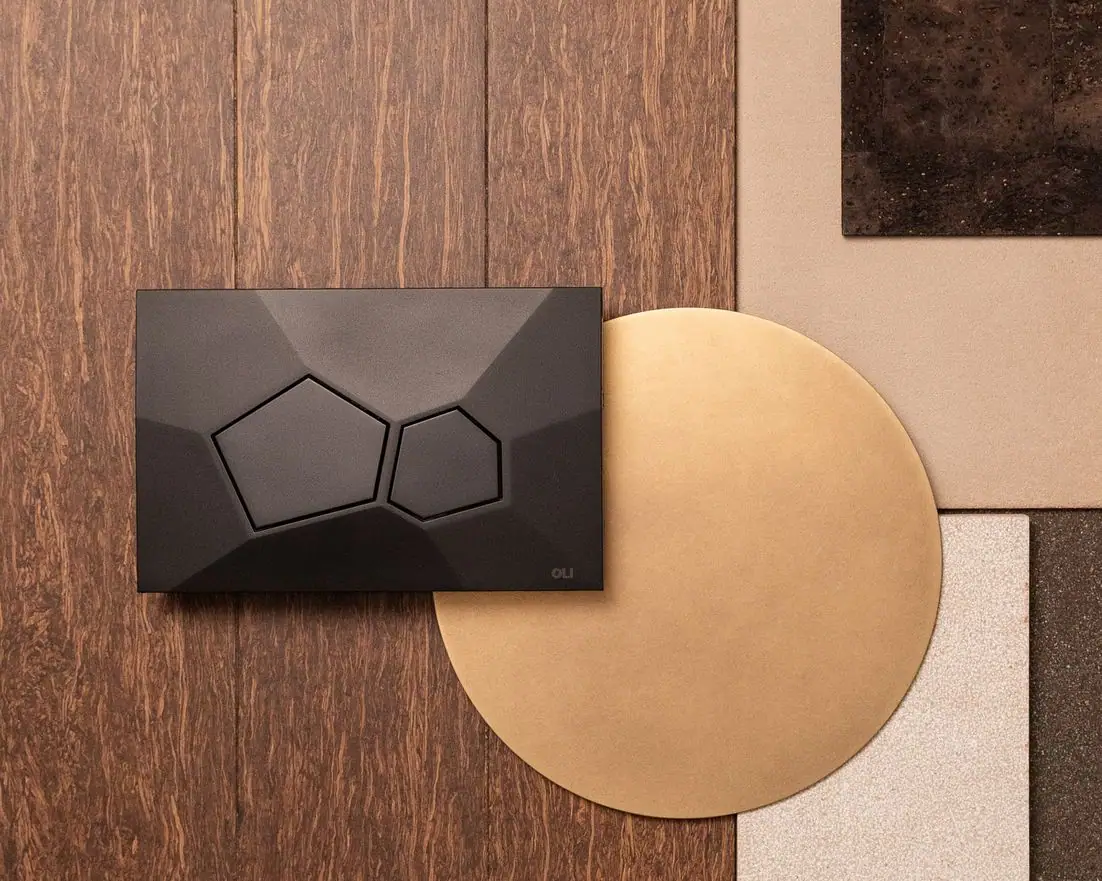
- It engages in dialogue with the surrounding materials: the matt, through-coloured shades work with stone, wood, ceramics or metal.
- It introduces a geometric reading without adding complexity: the pattern is in the plate itself, with no added parts or applied finishes.
This type of solution is particularly relevant in projects where materiality is defined in a precise and coherent way.
Sustainable material: Bio-ABS
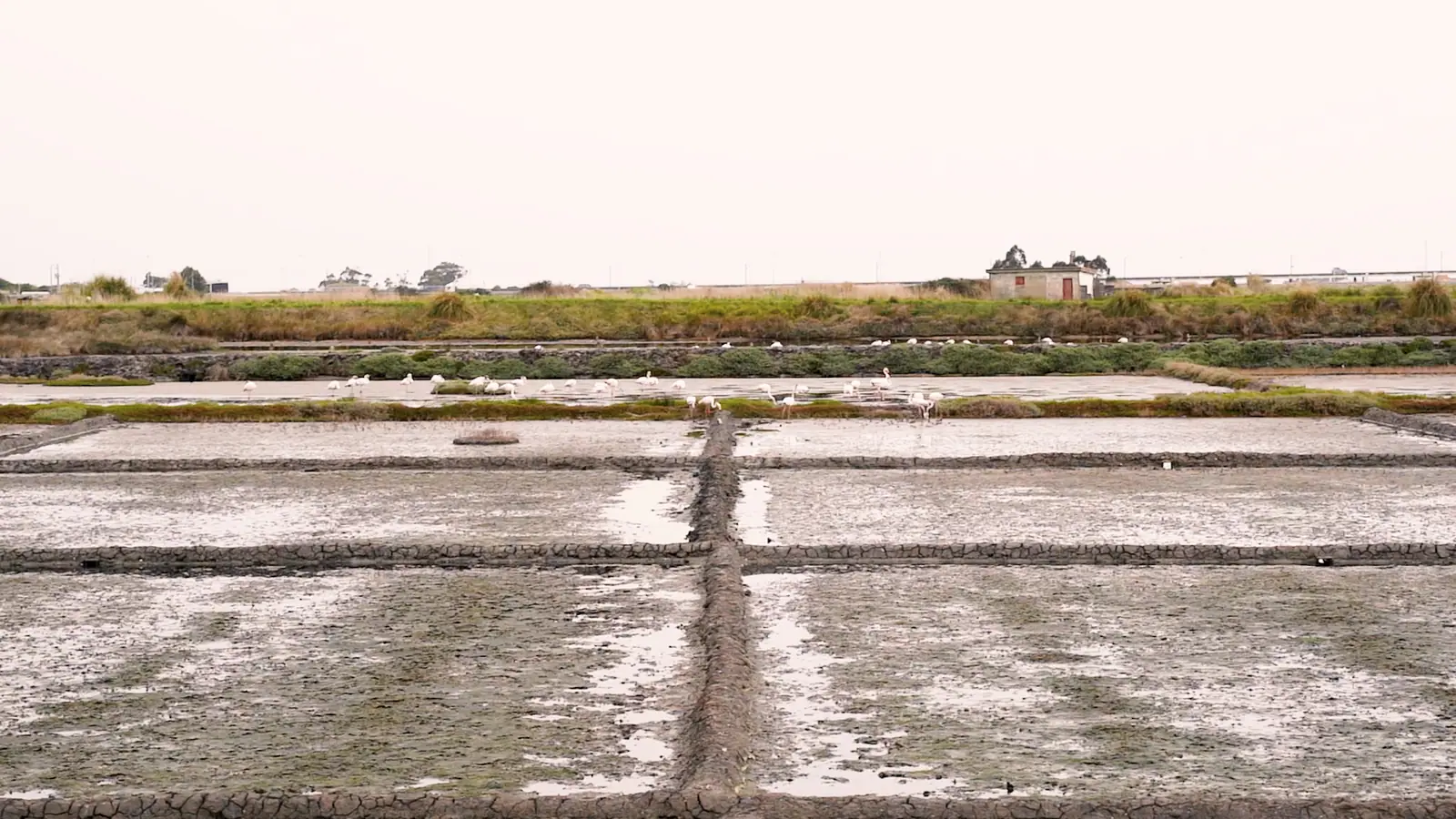
The VORONOI collection incorporates a material approach aligned with current design criteria. The plate is made from Bio-ABS, a material with 50% content from renewable sources of biological origin, such as plants, algae or organic waste, an alternative to thermoplastics derived from fossil fuels. According to the manufacturer, it retains the technical and aesthetic properties of conventional ABS with a significantly lower environmental impact. In addition, its geometry uses 20% less raw material than most ABS flush plates.
The material is the result of OLI’s collaboration with the University of Aveiro, which took part in its development and validation as a replacement for conventional ABS. The flush plate was developed within OLIPUSH, an ILLIANCE Agenda project funded by Portugal’s Recovery and Resilience Plan (PRR).
According to OLI, this makes it possible to:
- Optimise resources: half of the plate’s content comes from renewable sources, reducing dependence on fossil-based plastics.
- Reduce material impact: the structural folds cut raw material use by 20%, and the colour is integrated into the polymer, with no metallic coatings.
- Maintain strength and durability: Bio-ABS retains the mechanical performance of conventional ABS.
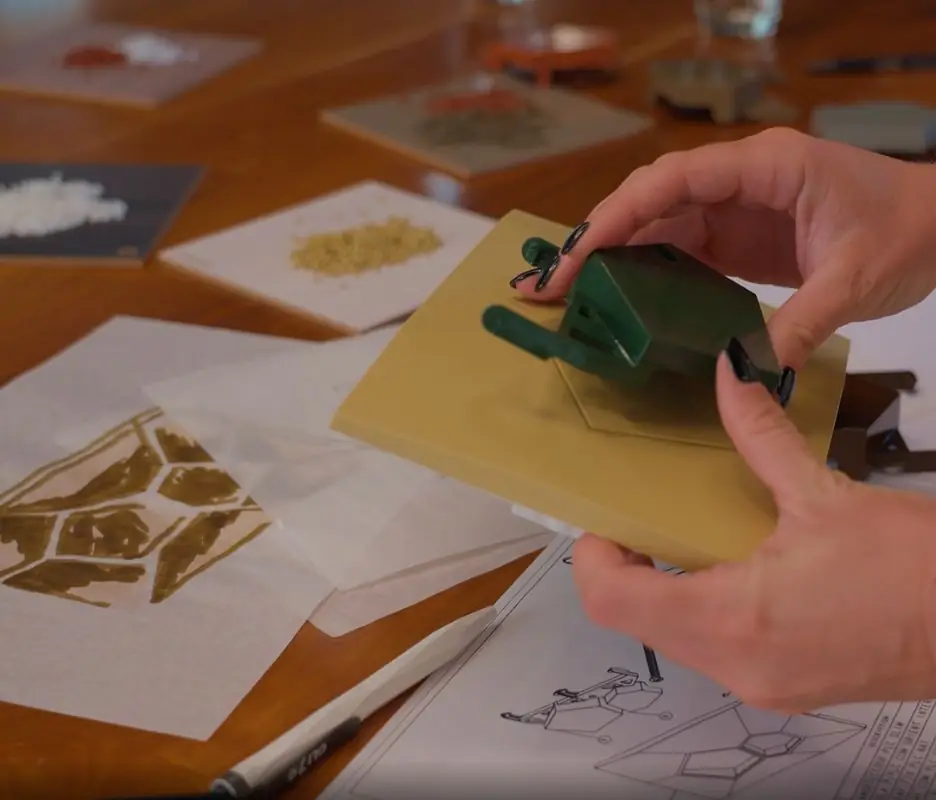
Technical data and compatible cisterns
VORONOI is a mechanical dual-flush plate for OLI in-wall cisterns. The table summarises the data from the manufacturer’s technical sheet, which is the same for all eight colours.
The plate is supplied with two Fast Fit actuation screws and two Fast Fix fixing screws. OLI notes that, although it is compatible with its in-wall cisterns, each case should be checked before ordering. Its website offers the technical sheet, assembly instructions, a DXF drawing and BIM models for Revit and Archicad.
Finish and performance in use
The flush plate has a soft-touch matt finish, uniform and easy to clean, suitable for humid environments and intensive use. OLI designed it for homes, hotels and public spaces. From a specification standpoint, this translates into:
- Ease of maintenance: the continuous matt surface is easy to clean.
- Stability over time: the colour is part of the material, not an applied coating.
- Compatibility with different uses: residential and contract, including hotels and public washrooms.
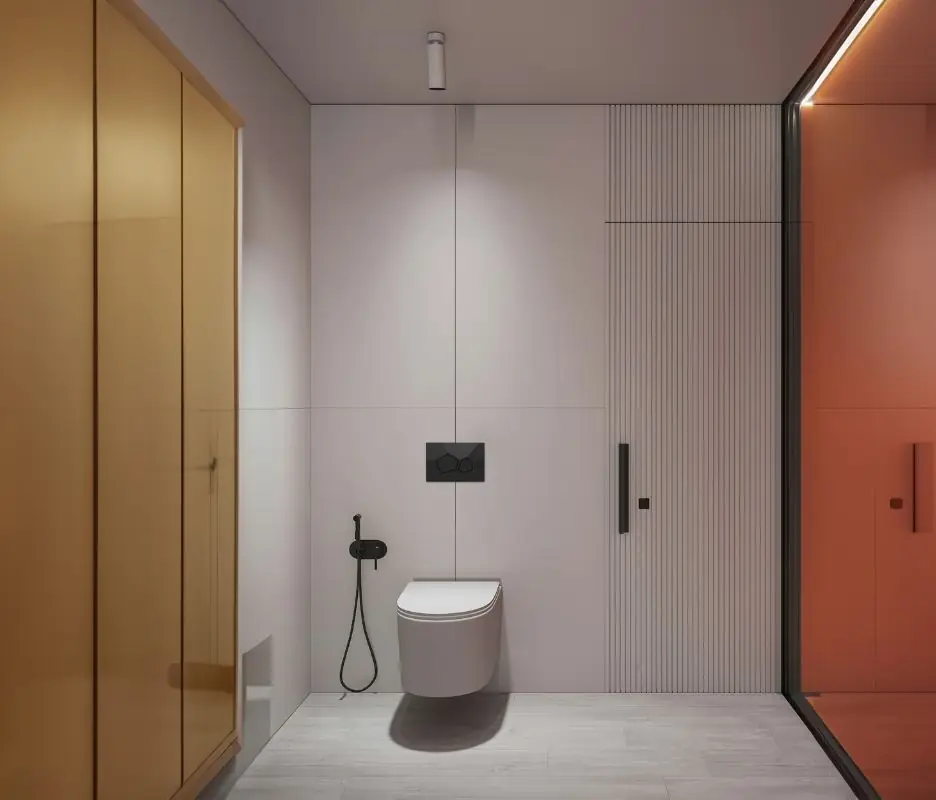
Range of finishes: eight through-coloured shades
VORONOI is offered in eight nature-inspired colours that adapt to different project approaches. The colour is integrated directly into the polymer, avoiding applied metallic finishes. By family, the range breaks down as follows:
- Neutral and mineral tones: Pure Glacier (white), Urban Concrete (grey) and Arabic Stone (sand).
- Warm finishes: Organic Gold, Burnt Terra (terracotta) and Raw Umber (brown).
- More contrasting options: Dark Carbon (black) and Forest Terra (green).
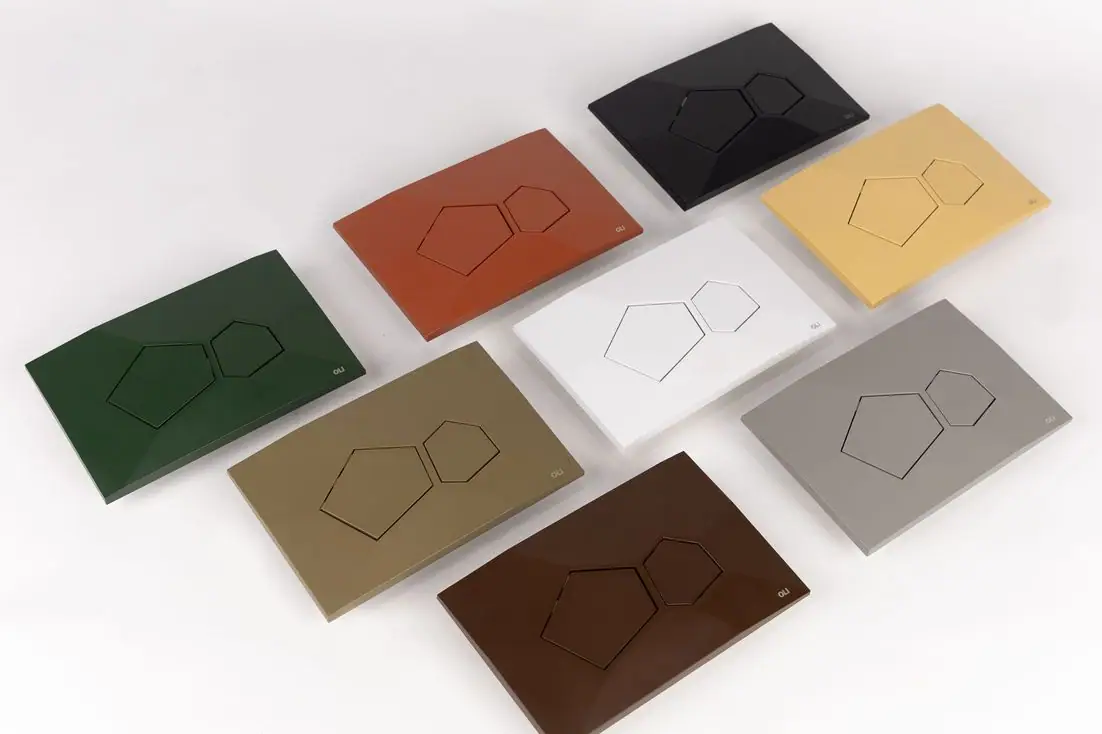
This diversity makes it easy to integrate into both understated spaces and compositions with a greater material presence: a white or grey that blends into the wall finish, or a terracotta or green that turns the flush plate into an accent of colour.
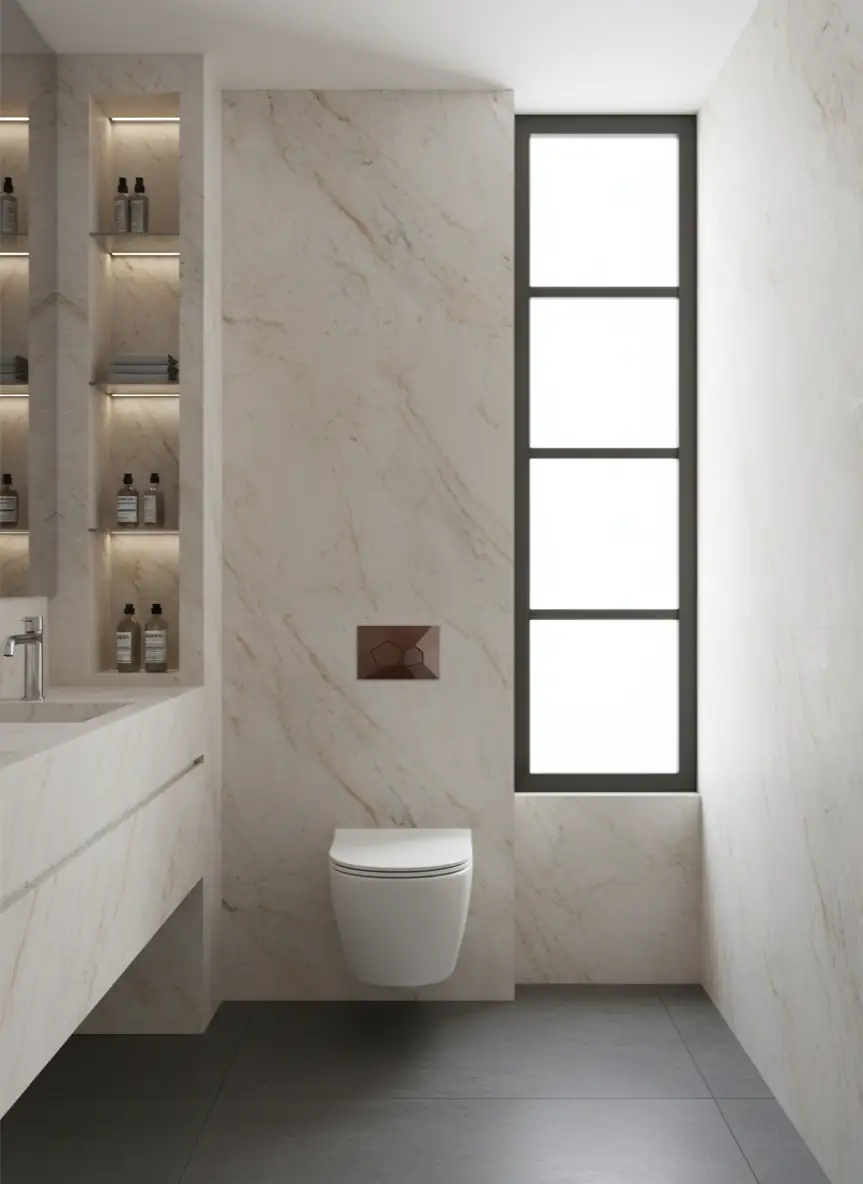
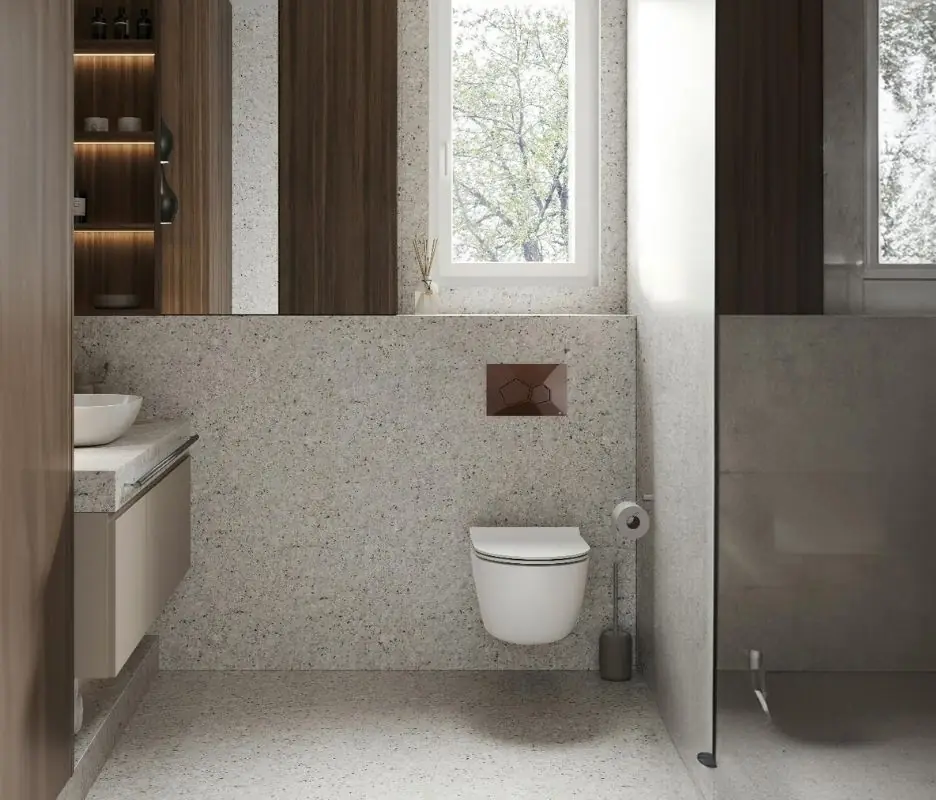
Key points for specifying VORONOI
Beyond colour, these are the points worth resolving at the design stage:
- Cistern: VORONOI is a mechanical flush plate for OLI in-wall cisterns (OLI70 Plus, OLI74 Plus, OLI120 Plus, Expert Plus and Quadra Plus). The cistern and the plate are best defined together.
- Finish thickness: the assembly instructions set a minimum wall thickness of 0 to 15 mm depending on the cistern, for example 5 mm with OLI74 Plus and 15 mm with OLI120 Plus.
- Position on the wall: the plate measures 230 × 150 mm; it is worth setting it out against the cladding layout so that it is not cut by a joint.
- Water saving: dual flush separates the short flush from the full one. According to OLI, combined with PLUS technology cisterns it can save up to 0.5 litres per use.
- Documentation: OLI’s website provides the technical sheet, DXF drawing and BIM models for Revit and Archicad for each colour.
The manufacturer: OLI
OLI is a Portuguese company founded in 1954 in Aveiro under the name Oliveira & Irmão. According to the company, it is the largest cistern manufacturer in Southern Europe, produces around two million cisterns a year and is present in 80 countries. Since 1993 it has been part of the Italian Silmar Group.
VORONOI was launched in early 2026.
Frequently asked questions
- Which cisterns is VORONOI compatible with?
- With OLI’s mechanical in-wall cisterns: OLI70 Plus, OLI74 Plus, OLI120 Plus, Expert Plus and Quadra Plus. The manufacturer recommends checking each case before ordering.
- What is Bio-ABS?
- It is an ABS in which 50% of the content comes from renewable sources of biological origin, such as plants, algae or organic waste. OLI developed it with the University of Aveiro and, according to the manufacturer, it retains the technical and aesthetic properties of conventional ABS.
- What are the dimensions of the flush plate?
- The plate measures 230 × 150 mm and is 20 mm thick. It is the same piece in all eight colours.
- Does it help save water?
- It is a dual-flush plate, allowing a choice between a short and a full flush. OLI states that, combined with its PLUS technology cisterns, it can save up to 0.5 litres per use.
- Are BIM models available?
- Yes. On OLI’s website each colour has a technical sheet, assembly instructions, a DXF drawing and BIM models for Revit and Archicad.
In architecture, quality does not depend solely on the big decisions, but on how everyday elements are resolved. The VORONOI collection makes it possible to incorporate geometry, material and sustainability into a technical component, raising the level of definition of the project without increasing its complexity. In this sense, the flush plate ceases to be a residual element and becomes an active part of the materiality of the space.
At Matter we help you define the whole bathroom, from wall and floor finishes to sanitaryware and technical elements. Book your visit to Matter to compare materials and finishes with your technical team.