Quality products for sustainable architecture
Cement-free raw earth blocks, boards and pavers: what TargaTerra is, what it brings to indoor comfort, its formats and how it is laid.
Products5 min read
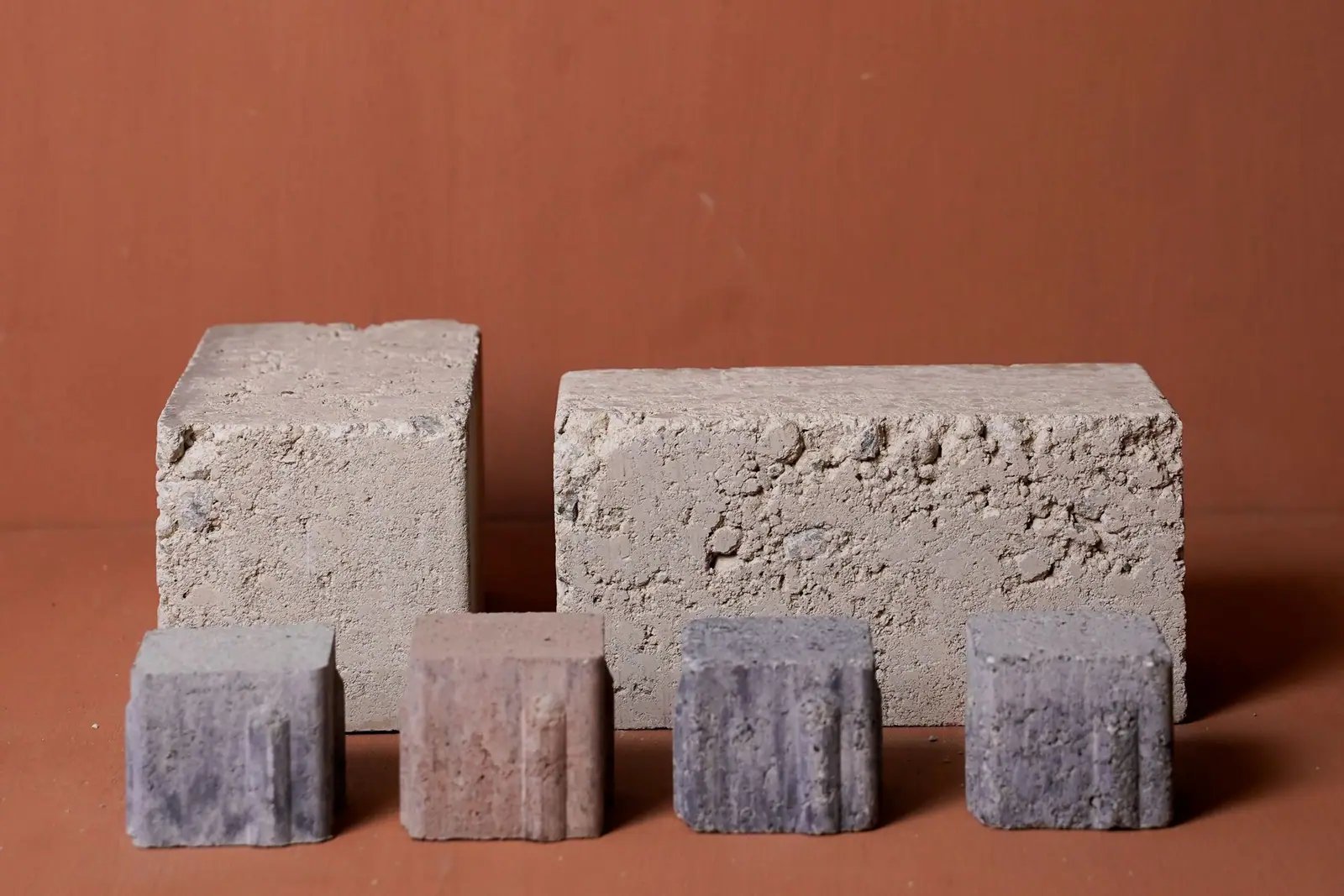
TargaTerra products are made of raw earth, a material whose use in construction offers a series of benefits for the quality of spaces and for the environment. Earth has always existed on the planet, and TargaTerra uses it as a natural, reusable element to make blocks and pieces that are easy to handle, unfired and cement-free.
In this article we explain what TargaTerra is made of, what it brings to indoor comfort and to a building's environmental balance, which formats it offers, and what the manufacturer recommends for designing, building and maintaining earth walls with its pieces.
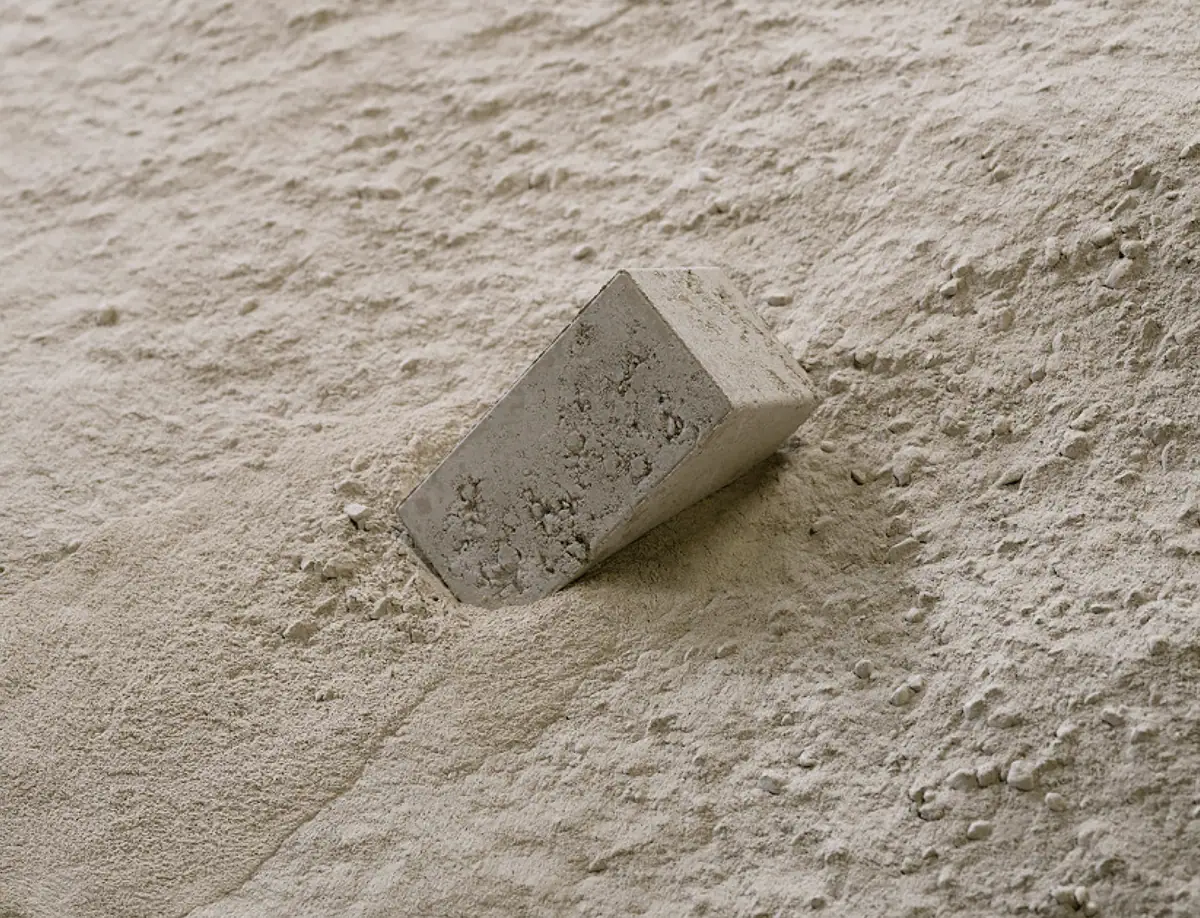
What TargaTerra is: earth, lime and locally sourced aggregates
TargaTerra is the raw earth product line of Targa, the brand of GLS Prefabricados that also produces concrete paving and urban elements. GLS is a company based in Tàrrega (Lleida) which, according to its own catalogue, has more than 50 years of experience in precast products.
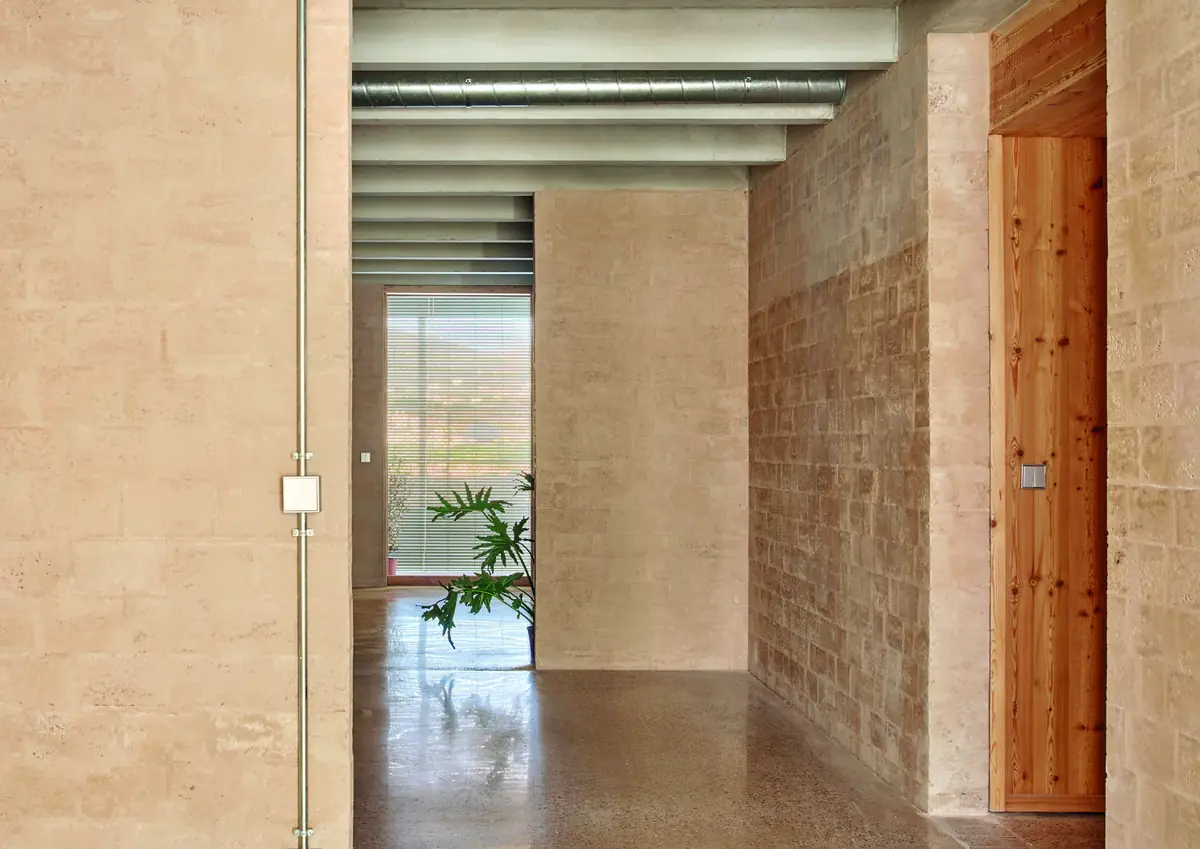
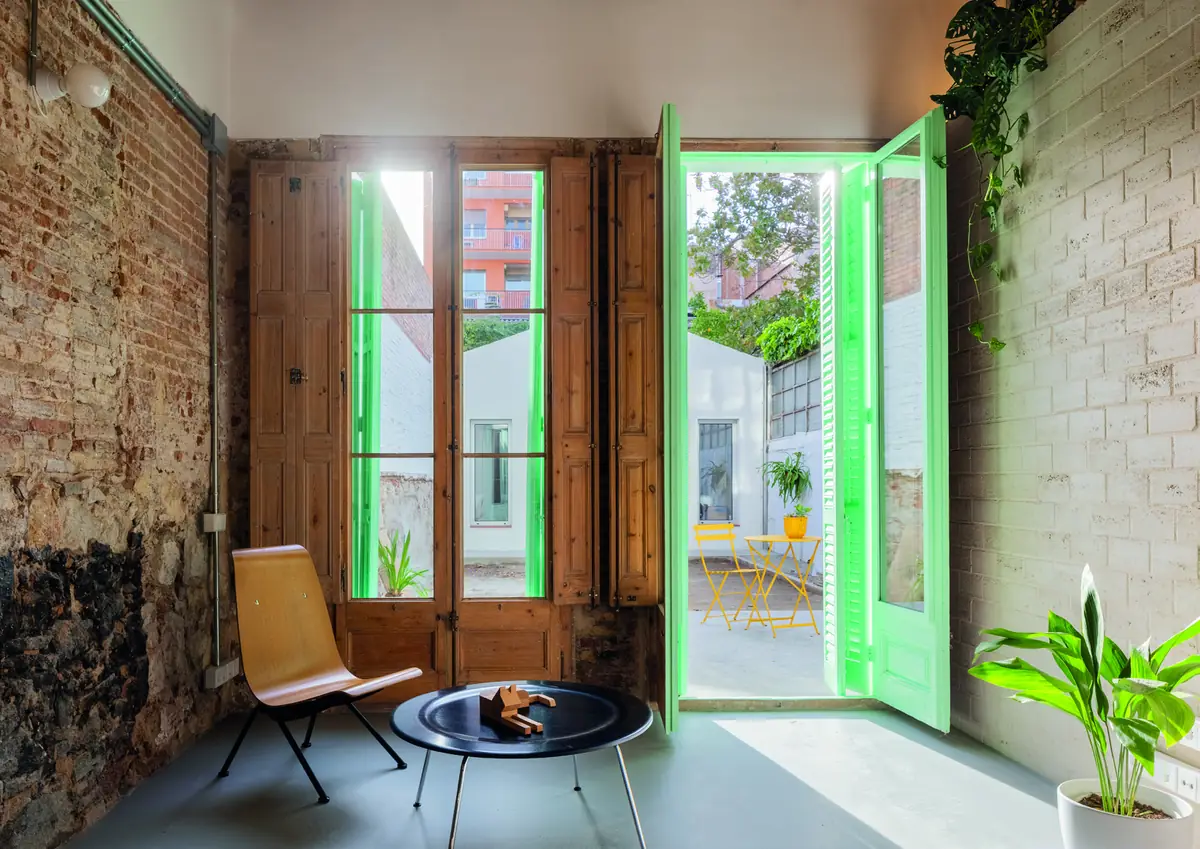
The pieces are made with clays, aggregates and lime, all locally sourced raw materials, and contain no cement and are not kiln-fired. Lime replaces cement as the binder, and the mix gives each piece an organic texture throughout its volume: it is not a surface finish but the material itself, also visible on cut faces.
Research is part of the product's development. According to Fetdeterra, a company specialising in eco-construction, GLS Prefabricados worked with its advice on the manufacture, curing and palletising of a large-format precast earth block, measuring 100 × 40 × 15 cm, conceived as an alternative to traditional rammed earth, with support from ACCIÓ's Cupons a l'ecoinnovació programme. That format is among the blocks in the range.
Indoor comfort: humidity, thermal mass and acoustics
Earth buildings improve indoor environmental quality thanks to the hygroscopic properties of clay, which absorbs and releases water vapour and keeps relative humidity more constant in both winter and summer. According to the manufacturer, TargaTerra helps to keep indoor humidity at around 50-60%.
TargaTerra elements have a density of 2,000 kg/m³. That mass gives them high thermal inertia, which helps to maintain a comfortable indoor temperature, and, according to the manufacturer, enough to provide acoustic insulation between dwellings.
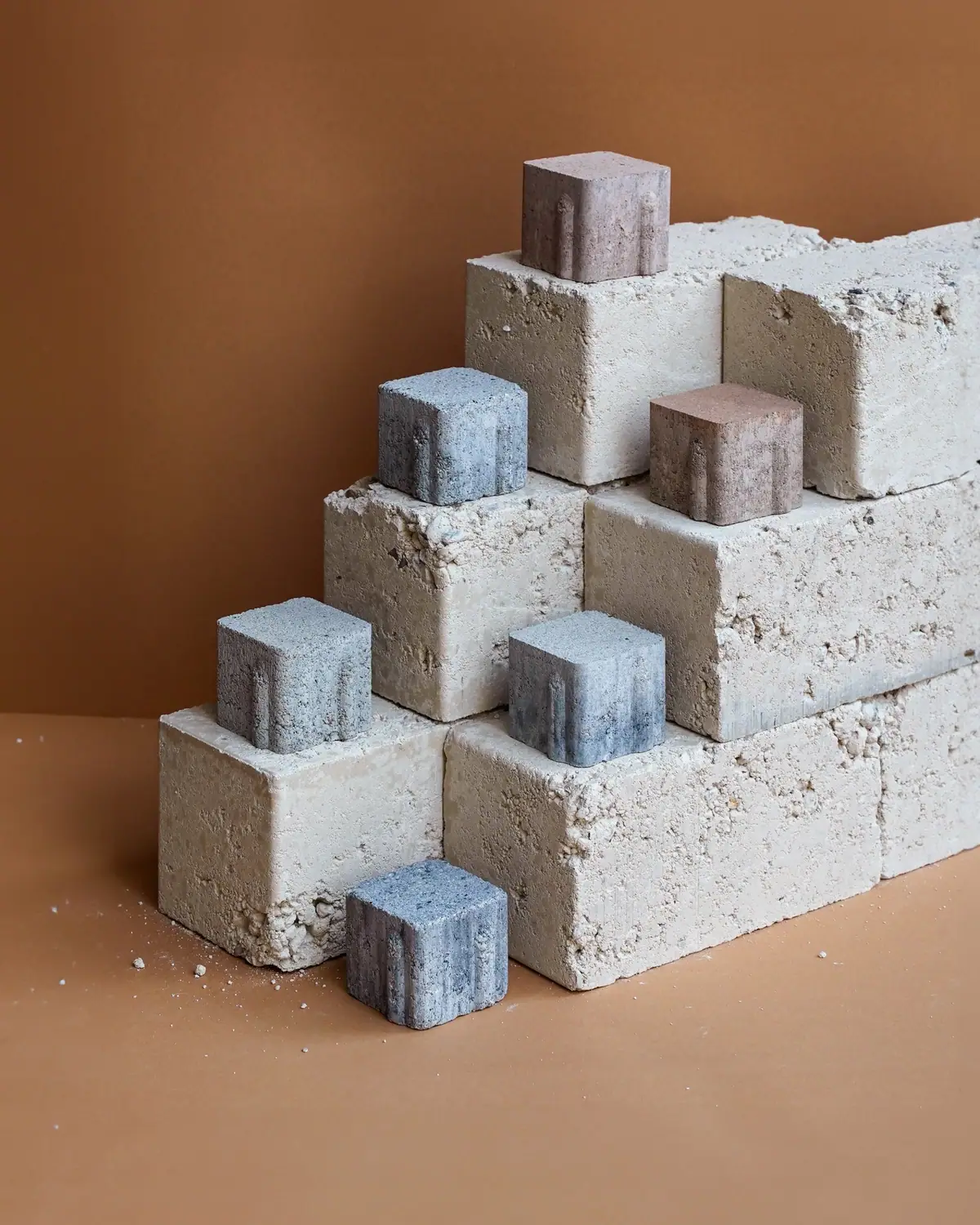
Why earth reduces environmental impact
The carbon footprint is a fundamental indicator for assessing a material's environmental impact over its life cycle. The manufacturer sums up the advantages of earth over other building materials as follows:
- Lower emissions in manufacturing: earth is not fired and TargaTerra uses lime instead of cement, so its carbon footprint is, according to the manufacturer, much lower than that of other materials.
- Locally sourced raw material: clays and aggregates from near the plant reduce transport and allow the building to blend into the landscape it comes from.
- Energy savings: humidity regulation and thermal mass reduce the need for mechanical climate control, such as air conditioning.
- Circular life cycle: earth undergoes no chemical transformation; according to the manufacturer, if the building is demolished, the material can be reused to make new elements without generating waste.
Formats: blocks, elements, boards, planks and pavers
TargaTerra has a substantial range of products, grouped into five families that meet the most common construction needs: blocks, elements, boards, planks and pavers.
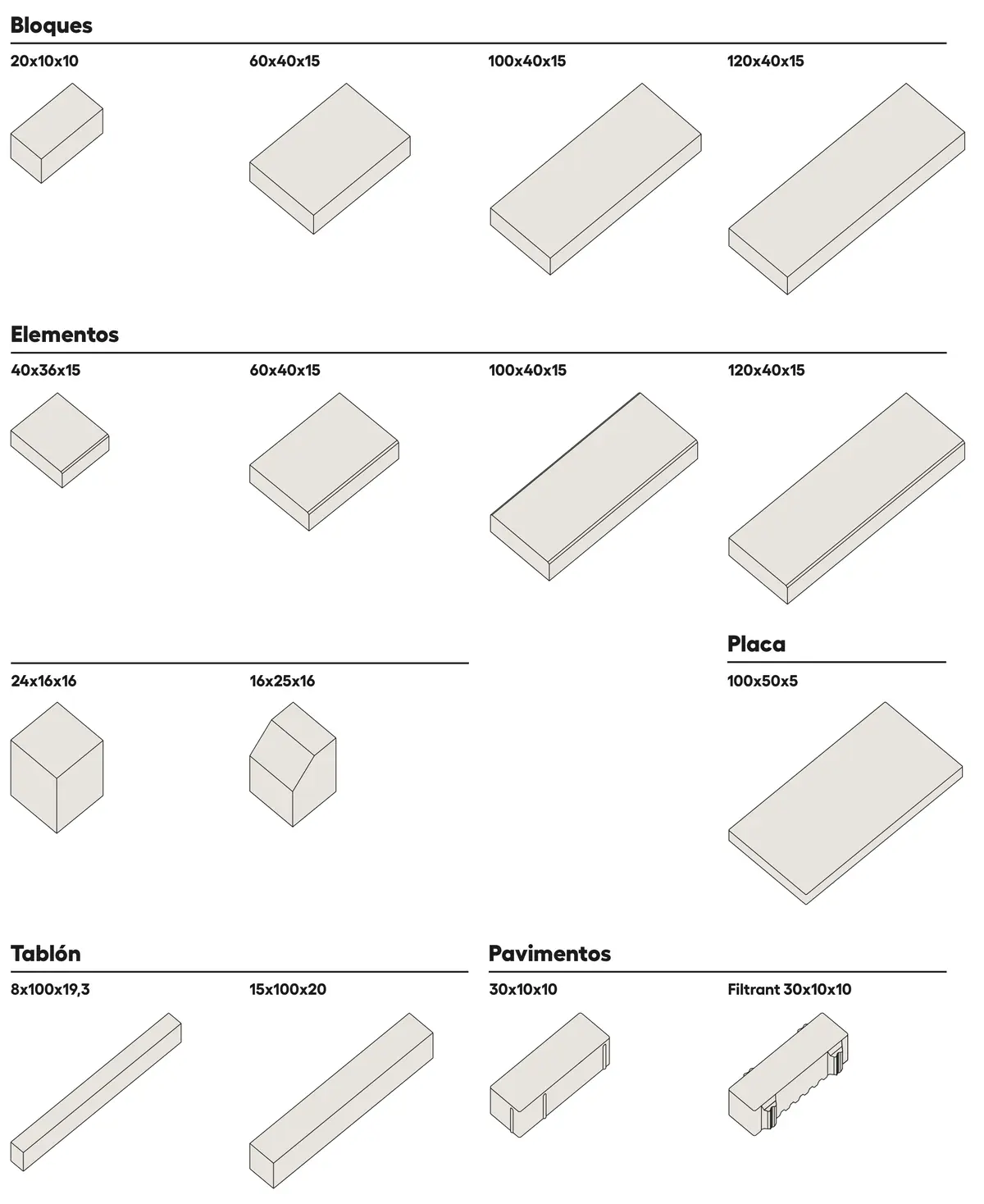
The catalogue dimensions are nominal. The small block actually measures 20 × 9.7 × 9.35 cm: with the recommended 7 mm joint, courses fall every 10 cm. Because they are solid throughout, all pieces can be cut mechanically to fit on site; the cut face is smoother than the others, something to take into account in the composition of the wall.
Key points for design and laying
The TargaTerra catalogue sets out a series of recommendations for working with its pieces. These are the ones to plan for at design stage:
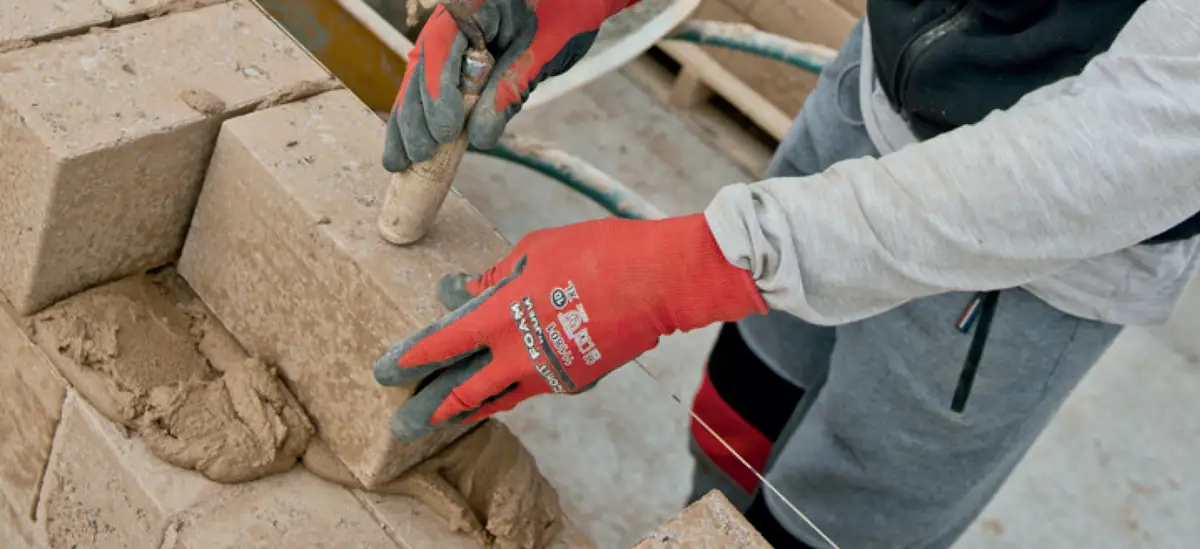
- Lime mortar: pieces are always laid on a bed of lime mortar covering the whole bearing surface, pressing them against those already laid so that no gaps remain.
- Wetting: elements are moistened before laying so that the lime mortar bonds properly.
- 7 mm joint: it can be flush, recessed or bevelled; excess mortar is cleaned off with a damp sponge before it dries.
- Bonded coursing: the wall can be built in various bonds, always interlocked; if the geometry does not bond the courses, they must be tied with reinforcement.
- Loadbearing walls: according to the manufacturer, 20 cm thick walls are loadbearing. It recommends reinforcement or ring beams to distribute loads, a flexible joint where floor slabs bear, and provision for movement joints, whose calculation is the responsibility of the project.
- Plinth: walls without water-repellent treatment must avoid direct contact with the ground by means of a joint or a 15 cm high plinth.
Values for masonry design
For wall design, the manufacturer provides these reference values for masonry of solid units with NHL-5 natural hydraulic lime mortar:
Finishes, protection and maintenance
TargaTerra's natural texture can be left exposed or treated according to the character the project is after. The manufacturer suggests several options:
- Glaze or render: a clay and lime mortar applied to the wall gives a smoother texture and fills pores without losing the hygroscopic properties; the thickness and aggregate of the mortar change the finish.
- Polishing or cutting: polishing a rendered wall gives it continuity, and cutting reveals the inside of the piece, with a smooth, glossy surface.
- Water repellent: TargaTerra can be made with a water-repellent additive depending on the type of element and the conditions of use, to be discussed with the technical department for each project.
- Repair: the organic texture disguises minor damage; scratches or superficial graffiti can be removed by rubbing the area, and missing material can be replaced with a lime mortar of similar texture.
Frequently asked questions
- Does TargaTerra contain cement?
- No. According to the manufacturer, its elements are made with clays, locally sourced aggregates and lime, which acts as the binder instead of cement, and they are not fired.
- Can loadbearing walls be built with TargaTerra?
- According to the manufacturer, 20 cm thick walls are loadbearing. It recommends using reinforcement or ring beams to distribute loads, a flexible joint where floor slabs bear and provision for movement joints. The calculation is the responsibility of the project, for which the catalogue provides reference values for the masonry.
- What mortar is it laid with?
- With lime mortar. The manufacturer's design values refer to NHL-5 natural hydraulic lime mortar, with a recommended 7 mm joint. Pieces are moistened before laying to ensure good bond.
- Can it be in contact with the ground or with water?
- Walls without water-repellent treatment must not be in direct contact with the ground: the manufacturer recommends a joint or a 15 cm plinth. Some pieces can be made with a water-repellent additive; this should be discussed with TargaTerra's technical department for each project.
- Can it be rendered or left exposed?
- Both. It can be left exposed, with its natural texture, or given a glaze of clay and lime mortar, which according to the manufacturer retains its hygroscopic properties and can be polished.
The texture of earth, the weight of a block or the look of a cut face are best understood with the pieces in your hands. You can see TargaTerra blocks at Matter and discuss with our team how to incorporate them into your project.
Book your visit to Matter.
Book a visit