BIRDMIND: a new way of thinking
RICE TAB, BIRDMIND's rice husk board: circular origin, technical data, finishes, machining and key points for specifying it in interiors.
Events7 min read
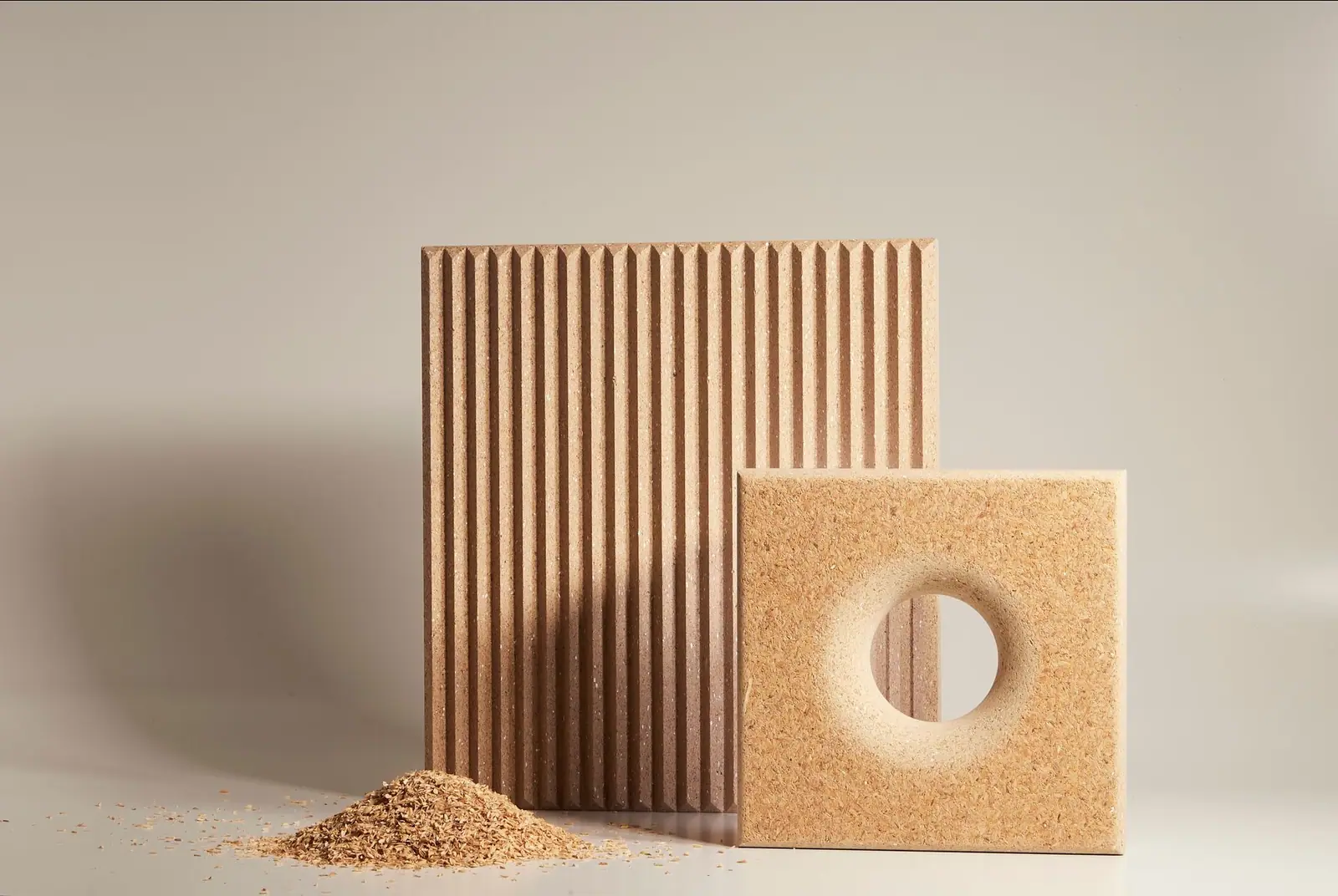
In a context that is increasingly demanding in environmental terms, innovation in materials developed from circular principles has become a priority. With this aim, BIRDMIND has created RICE TAB, a board made from rice husk, an agricultural by-product of rice production, proposed as a sustainable alternative for interior design, contract and construction.
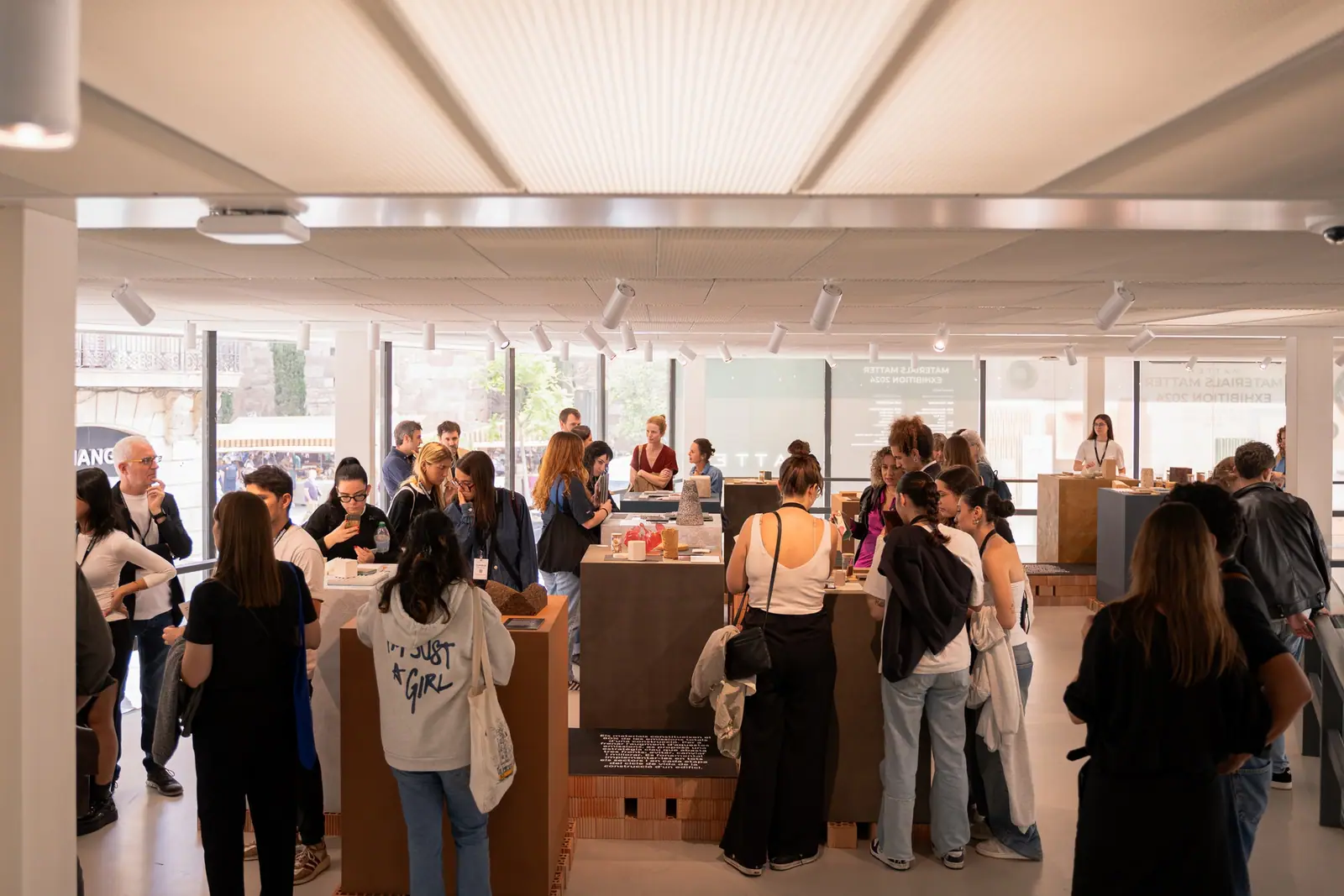
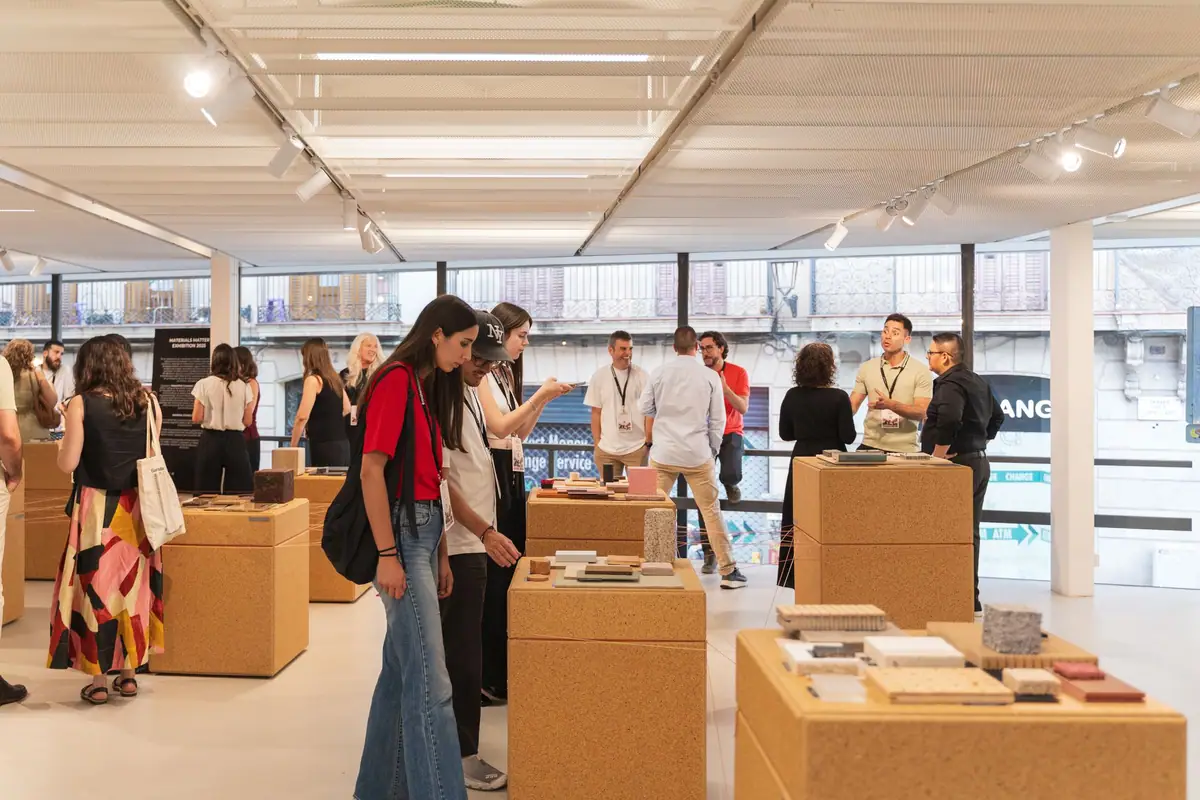
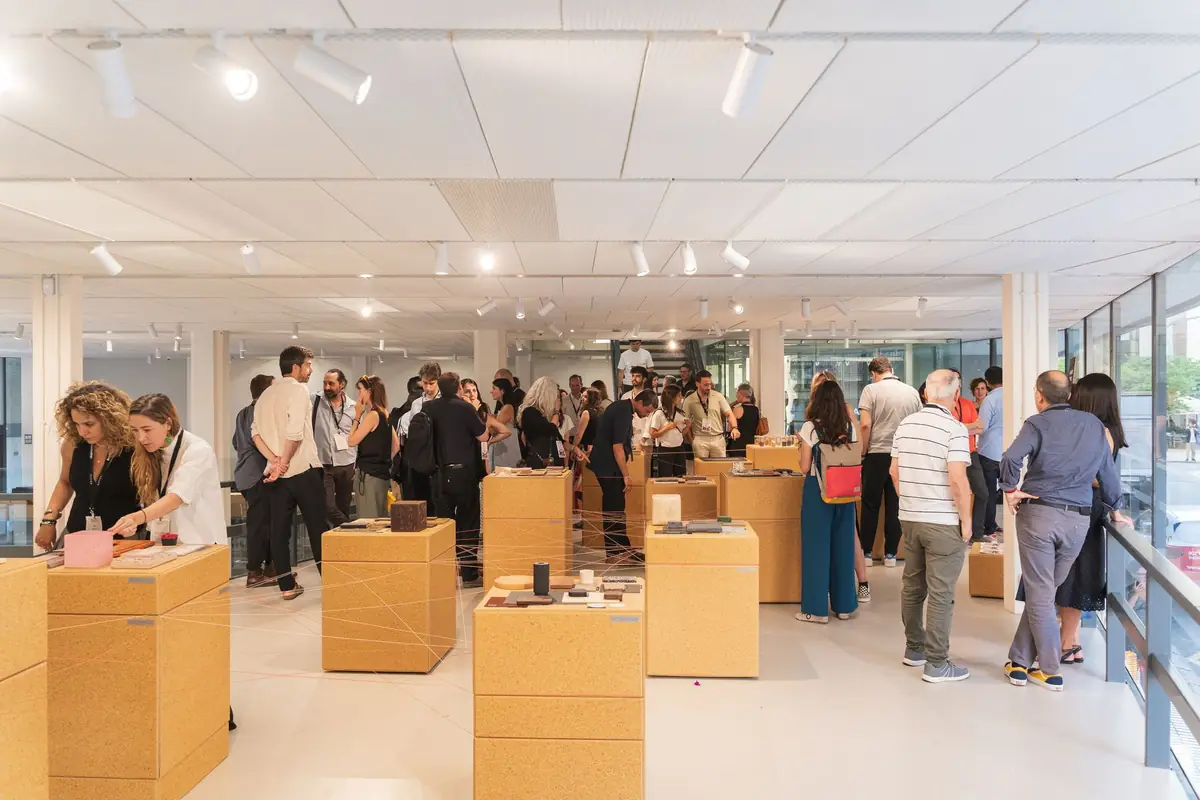
We were able to see it in use at the Materials Matter Exhibition 2025: the display totems of the Conscious Materiality exhibition, at the COAC in Barcelona, were made of RICE TAB. In this article we look at where the material comes from, what technical data the manufacturer declares, which finishes it accepts, how it is worked in the workshop and what to bear in mind when specifying it.
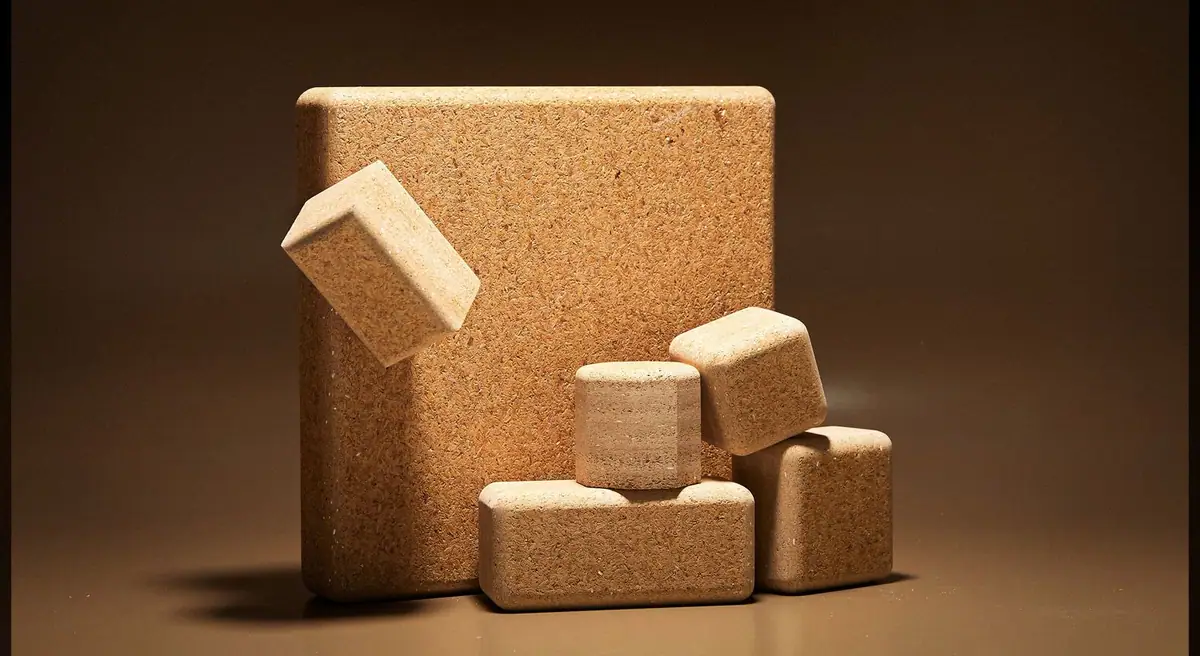
BIRDMIND: materials from agricultural waste
BIRDMIND is the trading name of IDI Ecosistemas, a Galician company with a factory in Marcón (Pontevedra). According to the company, the project began in a garage on the initiative of David Camba, a carpenter and designer, and after years of research led to RICE TAB, its first board. The name refers to birds, which build their nests with whatever they find around them: the brand proposes doing the same with agricultural waste.
The factory, of more than 2,000 m², has an automated production line developed specifically for this board. The company also has an R&D laboratory in which, it says, it has already developed materials from other waste streams, such as grape, spelt, oats, textiles, mussel shell and brewer's spent grain.
Sustainable origin and genuine circularity
RICE TAB comes from making use of an agricultural residue: rice husk. The board uses agri-food waste as its raw material instead of wood, which avoids felling trees and follows a zero-deforestation model. According to BIRDMIND, using this residue also avoids the CO₂ emissions that would result from burning it.
In BIRDMIND's case, the commitment to sustainability goes beyond the choice of materials. According to the manufacturer, the board is produced in a fully automated plant that runs on 100% renewable energy and uses no water, so its water footprint is zero. Each new board incorporates waste from in-house manufacturing, and the company offers an end-of-life collection service to shred used boards and feed them back into the production process. It is a clear example of a circular economy applied consistently.
- Formaldehyde-free: the binders contain no formaldehyde and the emission test gives a value below the limit of quantification (0.022 mg/m³). The manufacturer also states that it contains no VOCs.
- Carbon footprint: BIRDMIND's internal calculation under ISO 14067 is 6.01 kg of CO₂ equivalent per 2710 × 1360 × 19 mm board.
- Packaging: the brand uses recycled materials to pack its products.
- Post-consumer collection: for retail, it offers to collect the material at the end of a campaign to recycle it and make the material for the next one.
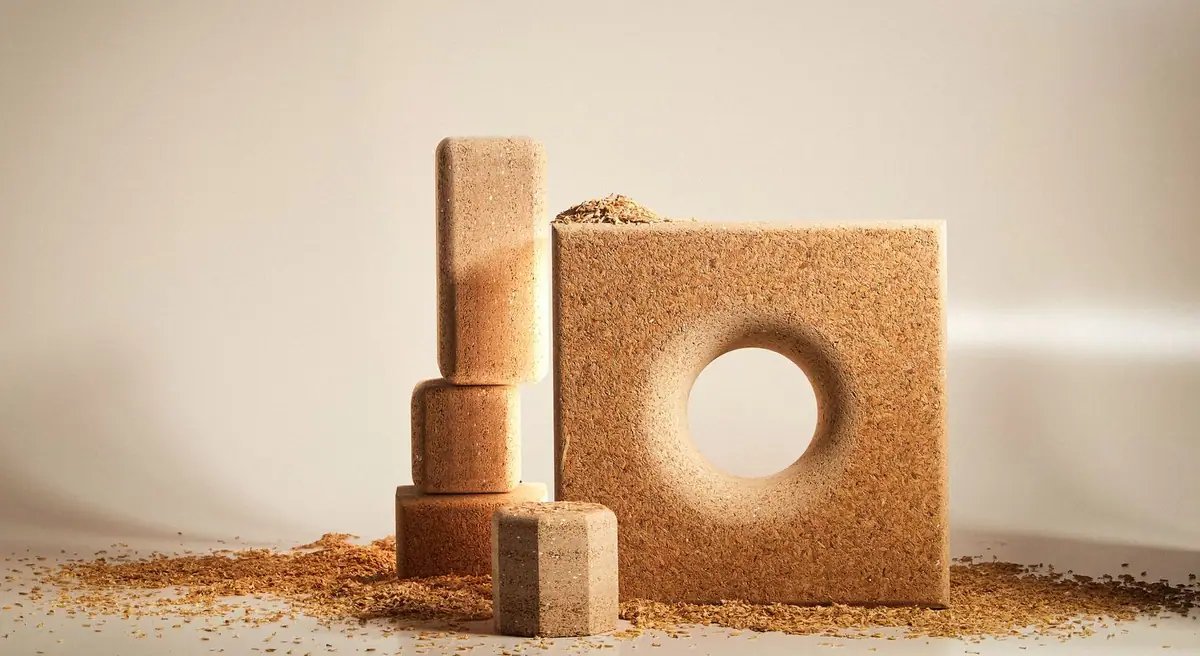
Technical characteristics of RICE TAB
RICE TAB is made in 2710 × 1360 mm boards in thicknesses of 16 and 19 mm. There are two versions: RICE TAB, made from 100% rice husk, and RICE TAB Plus, which incorporates mussel shell and improves reaction to fire and acoustic performance. Both share these technical properties:
- Fire-retardant: reaction to fire C-s1,d0 for RICE TAB and B-s1,d0 for RICE TAB Plus.
- Water-repellent: it meets EN 321 for non-structural boards in humid conditions (type P3) and its 24-hour thickness swelling in water is 3.1 to 3.3%.
- Antifungal and insect-resistant: according to the manufacturer, it has natural biological durability against fungi, termites and woodworm.
- Formaldehyde-free: no components harmful to health from adhesives.
- Machinable: it has the same density throughout all its layers, giving clean cuts and a surface that needs very little sanding.
The table summarises the main values from the technical data sheet. The board is CE marked under UNE-EN 13986 and, according to BIRDMIND, the tests were carried out in laboratories accredited by ENAC (Spain's national accreditation body).
Finishes: from natural texture to bespoke design
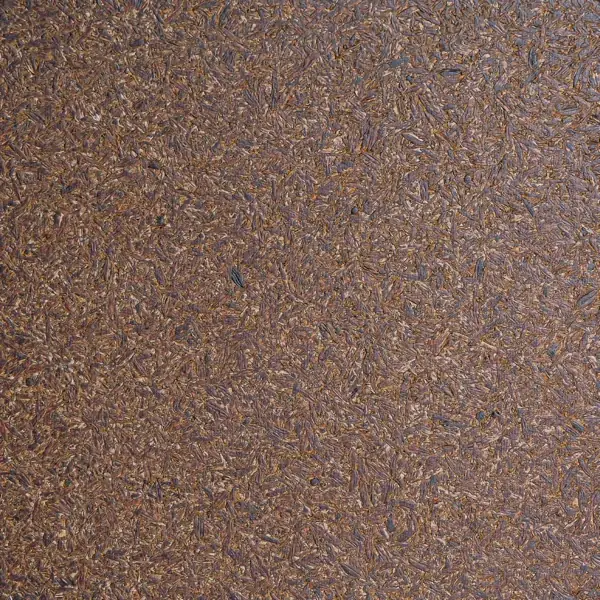
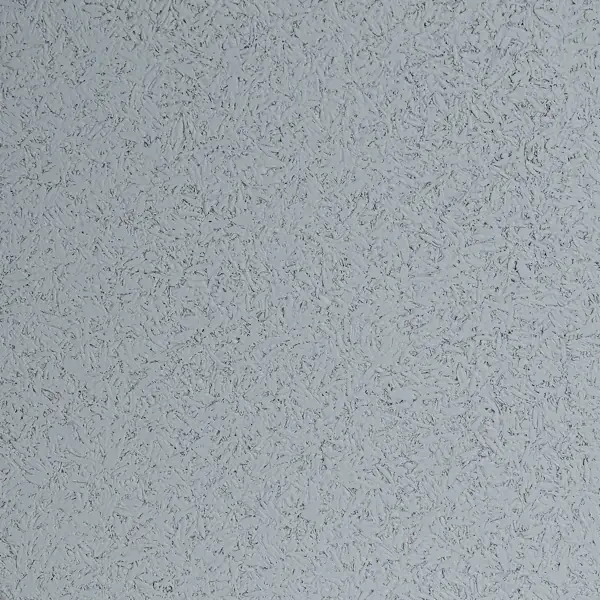
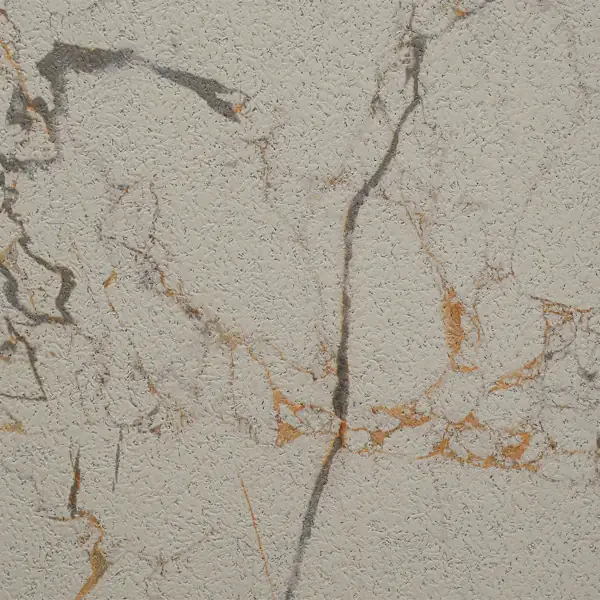
One of RICE TAB's greatest added values is its aesthetic versatility. The husk remains visible and the board accepts a wide range of finishes that respect or highlight its natural texture:
- Varnished: a clear varnish brings out the texture and natural colour of the board.
- Stained: because of the board's composition, the stain creates a pattern of different tones; water-based stains keep the pores open.
- Lacquered: it accepts any joinery lacquer and retains its original texture and pores.
- Digital printing: any pattern applied directly to the board, without adding HPL or melamine, which makes recycling easier.
- Customised: decorative elements such as leaves, flowers, branches or logos can be incorporated before pressing.
The manufacturer states that it also accepts microcement and veneers. It is an aesthetically distinctive material that can bring a different kind of finish to any architecture, interior design or contract project.
How it is worked in the workshop
Its homogeneous structure allows clean, precise machining: RICE TAB can be cut, milled, sanded, screwed, glued or laminated with conventional joinery machinery and tools. BIRDMIND's processing manual gives these guidelines:
- Cutting: circular, band or mitre saws with tungsten carbide teeth, medium-high speed and a steady feed rate; it is advisable to protect the edges to prevent chipping.
- Milling: CNC-compatible, with 2- to 4-flute cutters, between 12,000 and 18,000 rpm and a chip load comparable to that of MDF.
- Sanding: 120-150 grit for calibrating and 180-240 for fine finishing, always on both faces to avoid stresses.
- Bending: the board has a certain flexibility; for radii under 150 cm, kerfing the back face is recommended.
- Fixings: wood or chipboard screws with a pilot hole 0.5 mm smaller than the screw, and PVA, polyurethane or construction adhesives.
The boards are delivered in packs of 38 or 45 units, depending on thickness, and must be stored flat, in a dry, ventilated place and protected from the sun.
Applications and uses
Thanks to its strength, stability and natural appearance, RICE TAB is an option for many interior applications: bespoke and series-produced furniture, decorative wall cladding, panels and all kinds of customised decorative pieces. Combined with absorbent materials, it can also work as an acoustic element. It is a board designed for interiors: although it is water-repellent, BIRDMIND does not recommend prolonged exposure to sun or rain without protection.
RICE TAB at the Materials Matter Exhibition 2025
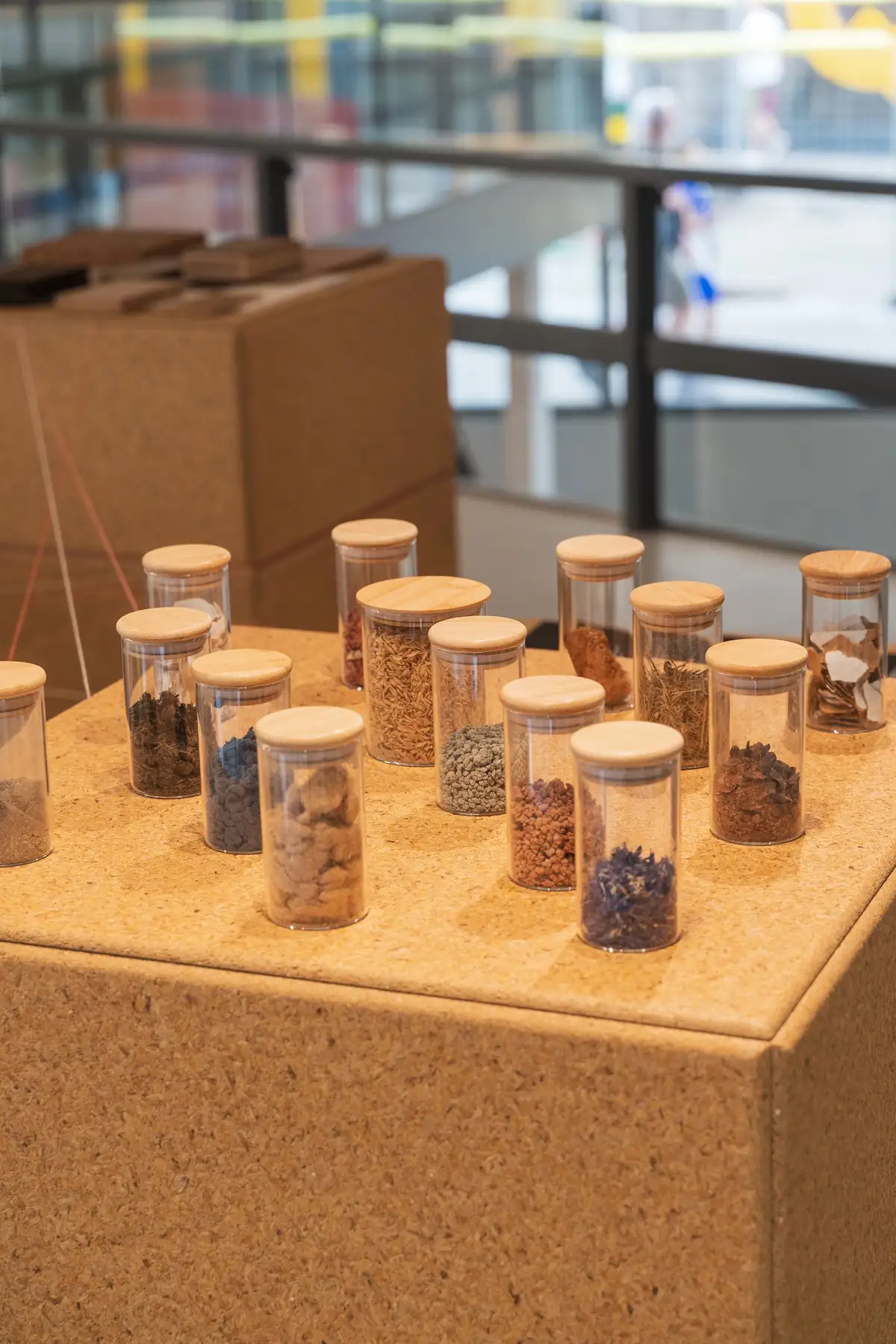
We saw a clear demonstration of its potential and aesthetic character at the Materials Matter Exhibition 2025, held on 11 and 12 June at the Col·legi d'Arquitectes de Catalunya (COAC) in Barcelona. The display totems of Conscious Materiality, the exhibition curated by Matter's consultancy department in the Altillo (mezzanine) of the COAC, were made of RICE TAB. According to the brand, BIRDMIND designed and built them to structure the whole route, so that the display support itself formed part of the discourse on circular, low-emission and healthy materials.
Key points when specifying RICE TAB
- Version and fire: choose RICE TAB (C-s1,d0) or RICE TAB Plus (B-s1,d0) according to the reaction-to-fire class required by regulations for each use and area; the Plus version also provides sound absorption.
- Format: set out cladding and furniture to the 2710 × 1360 mm board to reduce offcuts. The downloadable 2026 data sheets also list 2710 × 1300 and 2440 × 1220 mm, so confirm the format with the manufacturer when ordering.
- Non-structural use: it is declared as a non-structural board; for shelving or load-bearing furniture, check spans, thickness and fixings.
- Humidity: it is suitable for humid interior conditions; in very humid areas, the manufacturer recommends applying a protective finish.
- Documentation: BIRDMIND publishes its declarations of performance, its fire, durability and acoustic tests and its carbon footprint calculation; ask for the current version and the status of its Environmental Product Declaration (EPD).
- End of life: ask about the collection service so that offcuts and used boards go back to the factory.
Frequently asked questions
- What is RICE TAB?
- It is a technical board by BIRDMIND made from rice husk, an agricultural residue, instead of wood. It is made in 2710 × 1360 mm and in 16 and 19 mm thicknesses, is formaldehyde-free and has fire-retardant, water-repellent and antifungal properties. It is used for furniture, cladding and decorative interior pieces.
- What is the difference between RICE TAB and RICE TAB Plus?
- RICE TAB is made from 100% rice husk and has a reaction to fire of C-s1,d0. RICE TAB Plus incorporates mussel shell, achieves B-s1,d0 and has a sound absorption coefficient αw of 0.20 to 0.25 depending on the mounting. The mechanical properties declared by the manufacturer are the same for both.
- Can it be used in bathrooms or outdoors?
- It is a board for interiors. It meets the requirements for a non-structural board in humid conditions (EN 321, type P3), but the manufacturer recommends a protective finish in very humid areas and advises against prolonged exposure to sun or rain without protection.
- What maintenance does it need?
- Nothing special: simply clean it with a dry or slightly damp cloth, without abrasive products or aggressive solvents. If it has a finish, this may need renewing over time. As a natural material, its tone may vary slightly if exposed to the sun.
RICE TAB is not just a material; it is a statement of principles. Its combination of design, technical performance and environmental commitment makes it a solution for those who want to build a more responsible present without sacrificing quality or aesthetics.
At Matter we help you choose the circular materials that best suit each project and check their technical documentation. Come to our material library with your team to discover materials like this one.
Book your visit to Matter.
Book a visit