Cork wall coverings
Tatami, Bebop, Groovy and Modular: Granorte’s 3D wall panels in recycled cork, with formats, colours, technical data and key installation points.
Products7 min read
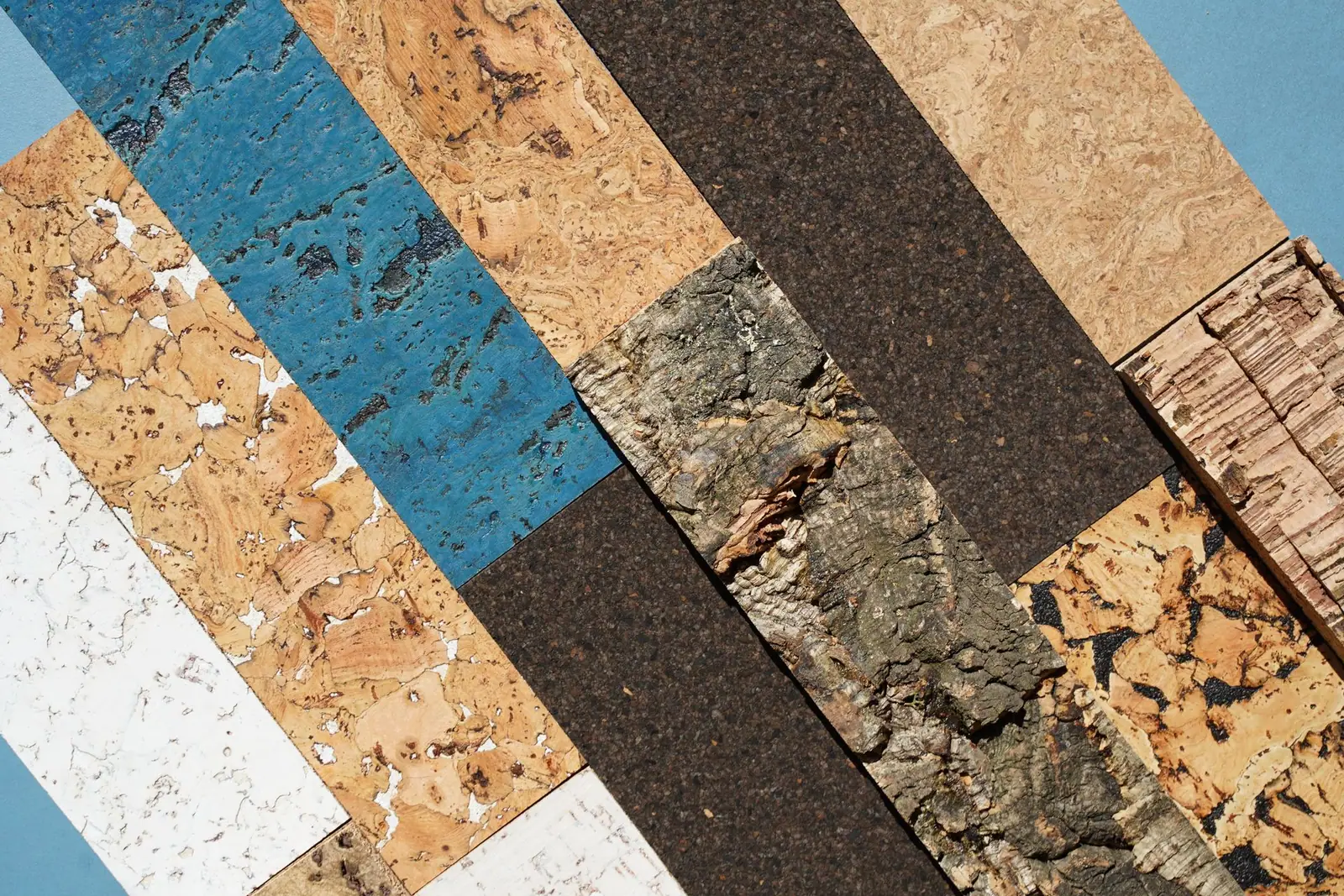
Cork is a sustainable, environmentally friendly material. That is why Granorte has embraced it for wall coverings, alongside a wide range of cork floors, also combined with wood, linoleum and leather. These are customisable, technologically advanced solutions, versatile and with many applications, that adapt to any setting and give spaces character.
In this article we look at what cork brings as a wall covering, which technical data are worth checking before specifying it, how it is installed, and four collections of 3D panels by Granorte — Tatami, Bebop, Groovy and Modular — with their formats, thicknesses and colours as presented in 2021 and 2022.
Cork as a wall covering
Cork is the bark of the cork oak, which is harvested without felling the tree and regenerates every nine years. Granorte’s wall panels do not use virgin cork but agglomerated cork: granules obtained by recycling the by-products of the cork industry, pressed into blocks and then cut, machined or moulded. It is the same principle on which the company was founded in 1972: adding value to the waste from stopper manufacturing.
According to Granorte’s technical sheets, cork accounts for around 90% or more of the composition in these four collections, and all of it comes from recycled post-industrial by-products. The panels contain no PVC, no formaldehyde-containing materials are added, and they comply with the German AgBB scheme and the French A+ VOC emissions classification.
According to Granorte’s catalogue, Tatami, Bebop and Groovy are designed by Marco Carini, and Modular by Carlos Mendonça. All are supplied with CORKGUARD, Granorte’s water-based finish that protects the cork against water, oil and stains, and all are glued in place. Granorte also states that it can develop custom colours to order.
What to consider when specifying it
Beyond its appearance, these are the data from the technical sheets worth reviewing at project stage:
- Reaction to fire: all four collections are classified as class E under EN 13501-1. The DB SI section of the CTE (Spain’s building code) exempts the interior of dwellings from this requirement, but in occupiable areas of other uses (offices, hotels, shops) it requires C-s2,d0 for wall coverings exceeding 5% of their surface, and B-s1,d0 in protected corridors and stairs. In those cases, check before specifying.
- Acoustics: the weighted sound absorption coefficients (αw) published by Granorte range from 0.05 to 0.1. These are low values, below 0.15, the minimum at which UNE-EN ISO 11654 assigns an absorption class: cork adds warmth and texture, but it is no substitute for dedicated acoustic treatment.
- Thermal comfort: with a conductivity of 0.05 W/(m·K), the panels add a thermal resistance of 0.09 to 0.14 m²·K/W to the wall, depending on the collection. Above all, Granorte highlights that cork is warm and pleasant to the touch.
- Air quality: no PVC or plasticisers, and VOC emissions within the A+ classification, according to the manufacturer. FSC-certified products are available to order.
- Maintenance: dusting or vacuuming with a soft brush is enough. Stains should be cleaned as soon as possible with a damp cloth and neutral soap; Granorte advises against solvents, bleach, abrasive cleaners and steel wool.
Installation: keys to a good result
All four collections are glued in place. Granorte insists that most problems come not from the product but from the installation: a poorly prepared substrate, lack of acclimatisation or the wrong adhesive. Its instructions sum up the key points:
- Acclimatisation: the boxes should rest on site for at least two days at the temperature and humidity of use; three to four days in winter or at low relative humidity.
- Substrate: level, smooth, dry, sound and clean. Walls with excess moisture should be avoided. A new wall should dry for two to three months and be primed; a painted wall is washed and lightly sanded with 100–120 grit.
- Contact adhesive: applied to the wall and to the back of the panels, at around 100–120 g/m², and left to dry until tacky to the touch before joining the pieces.
- Setting out and tones: start from the centre of the wall with horizontal and vertical guidelines. As it is a natural material, it is best to use a single batch per wall and to mix panels from several boxes to distribute the variations in tone.
Tatami
Raised lines inspired by Japanese mats.
The Tatami collection of 3D cork wall panels is inspired by traditional Japanese rice-straw mats. Its minimalist design creates the effect with raised lines, produced by pressure moulding, which can be laid horizontally or vertically to change how the wall reads.
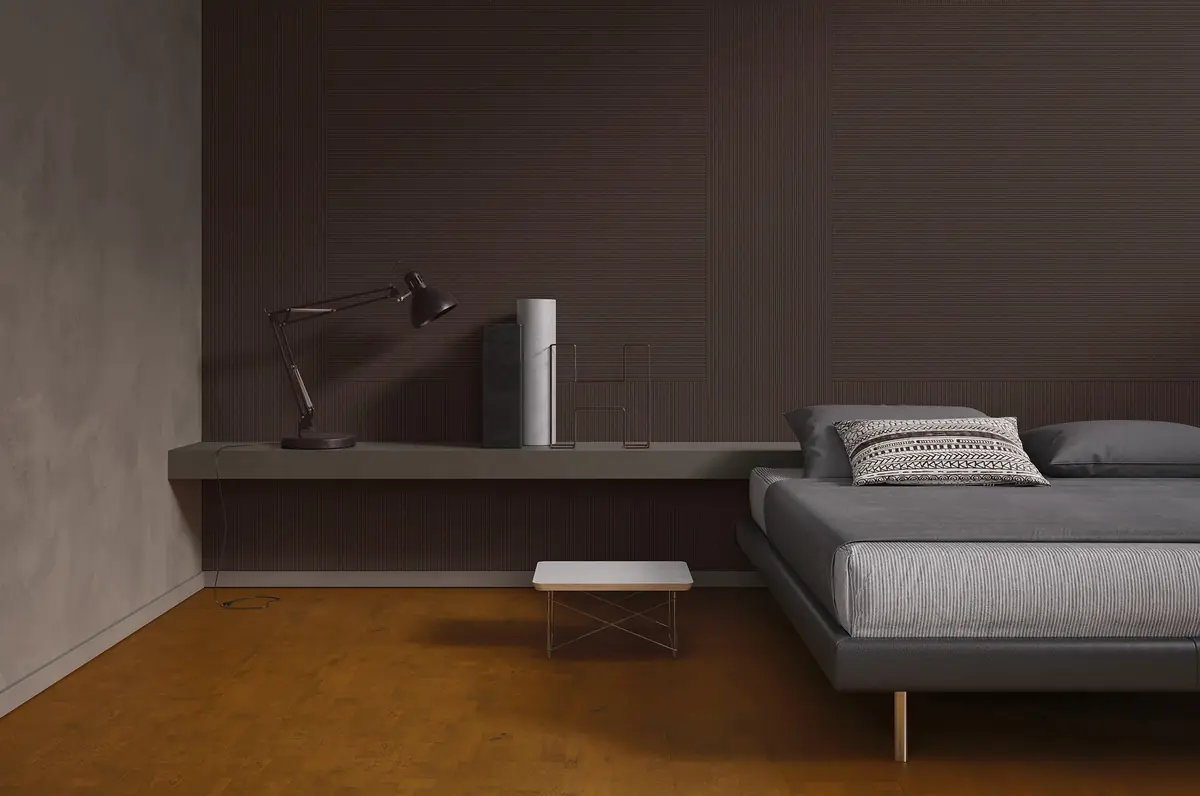
It is made from recycled post-industrial natural cork, in 600 × 300 mm panels 4 mm thick with all four edges bevelled, and is glued in place. In the 2022 catalogue it was offered in three colours — Light, Natural and Midnight — and, like the rest of the range, its colour can be customised to order.

Bebop
Toasted cork and three thicknesses to draw shadows.
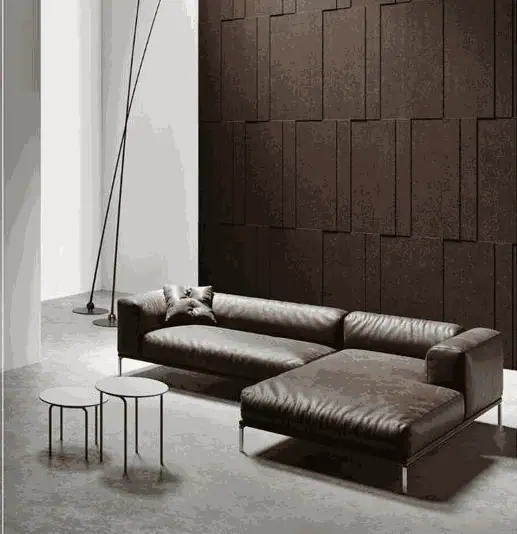
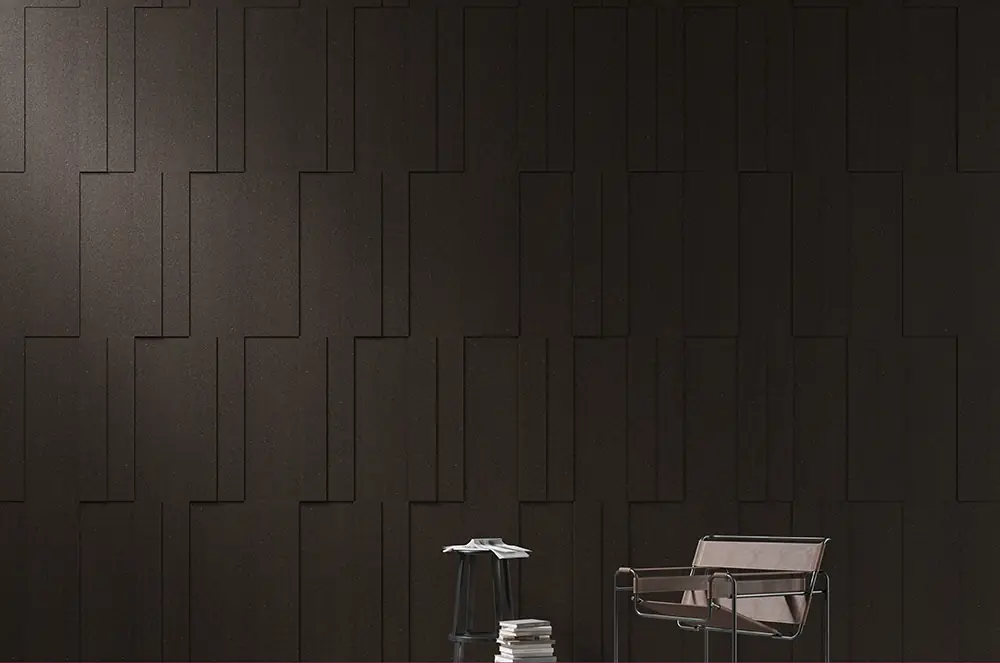
Bebop is a collection of cork panels that opts for dark tones. It is cut from blocks of toasted agglomerated cork, which give it a very dark brown colour, and its 3D effect comes not from a relief on the panel but from combining pieces of different sizes and thicknesses on the wall that cast shadows.
For this reason it is supplied in mixed boxes of 23 panels covering 4.59 m²: 8 panels of 900 × 300 × 3 mm, 3 of 900 × 300 × 6 mm, 6 of 900 × 150 × 6 mm and 6 of 900 × 150 × 9 mm. Like Tatami, it is a recycled natural cork wall covering that is glued in place.
Groovy
A honeycomb pattern engraved into the cork.
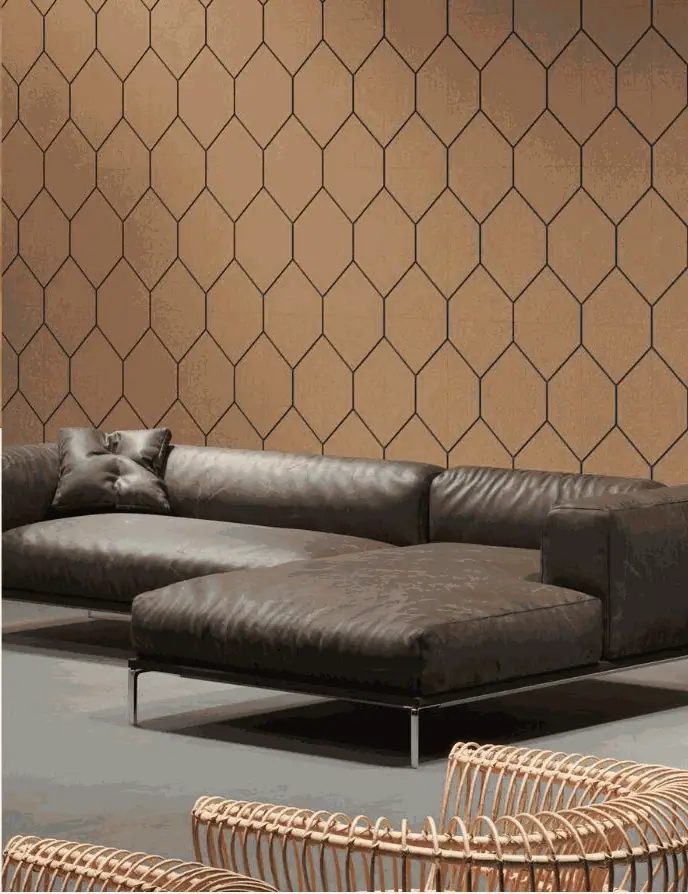
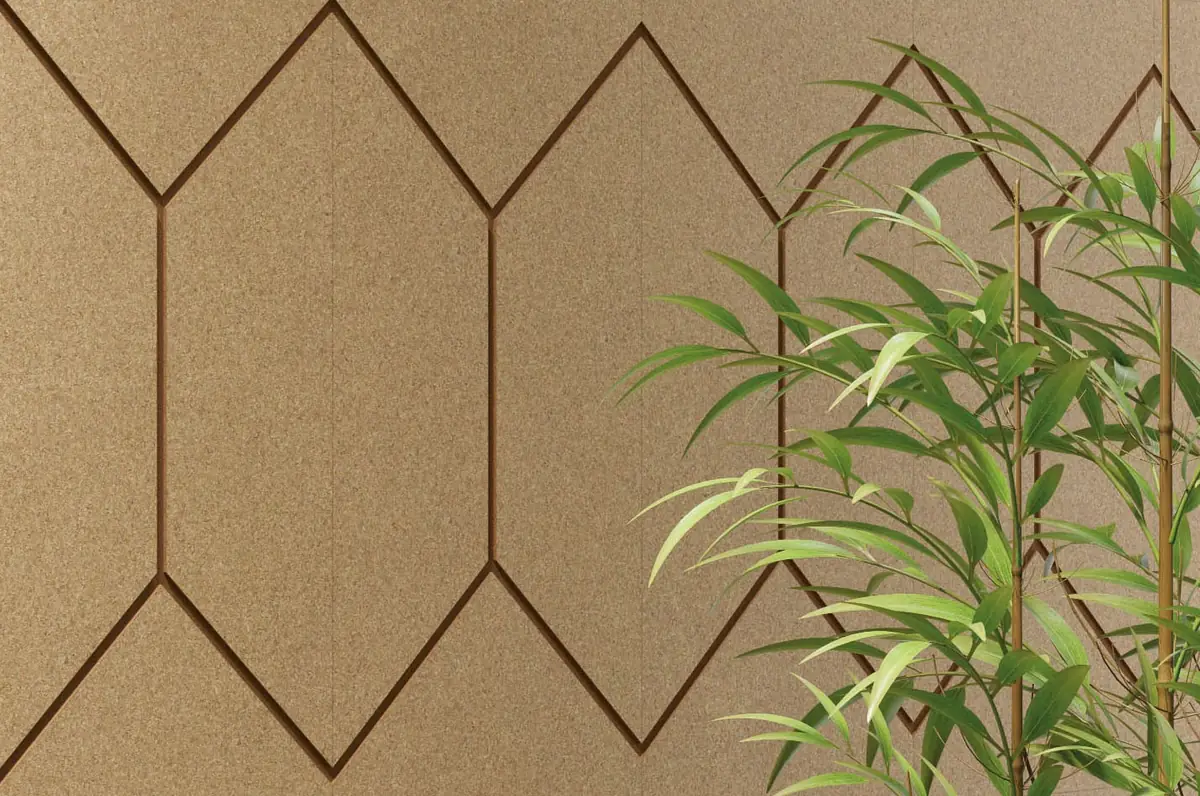
The Groovy collection features a honeycomb structure: linear grooves machined by computer numerical control (CNC) that, when the panels are joined, draw a continuous hexagonal pattern across the wall. It comes in two bases: natural cork and burnt, or toasted, cork. In the natural option, there is a choice of seven colours for the ‘veins’, which are coloured by digital printing. The 2022 catalogue lists eight references: Night, Purple, Terracotta, Sunset, Saffron, Bluemoon, Sky and Mint.
The panels measure 600 × 300 mm and are 6 mm thick, and are made from recycled natural cork. They are glued in place.
Modular
Three orthogonal designs for composing the wall.
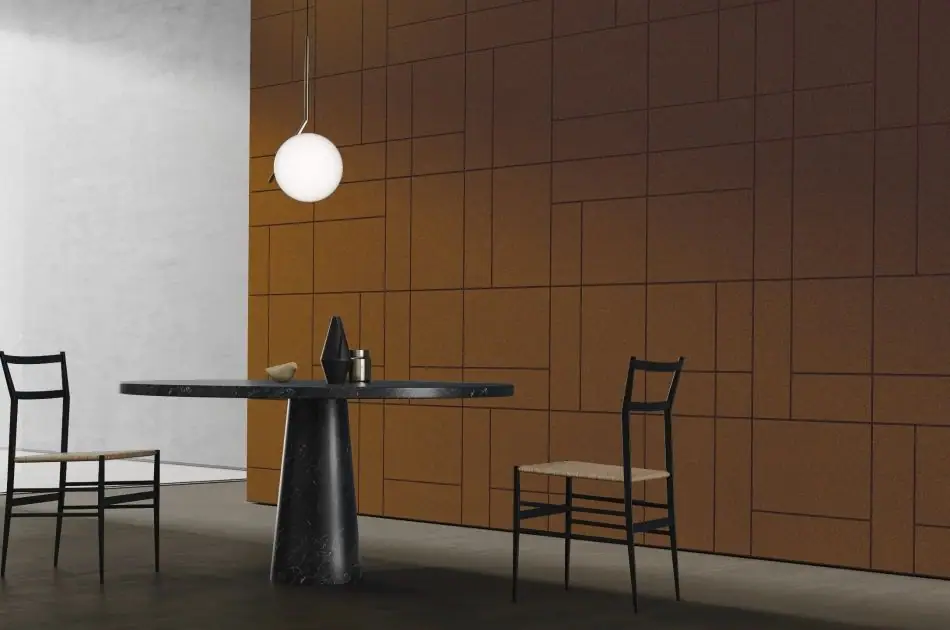
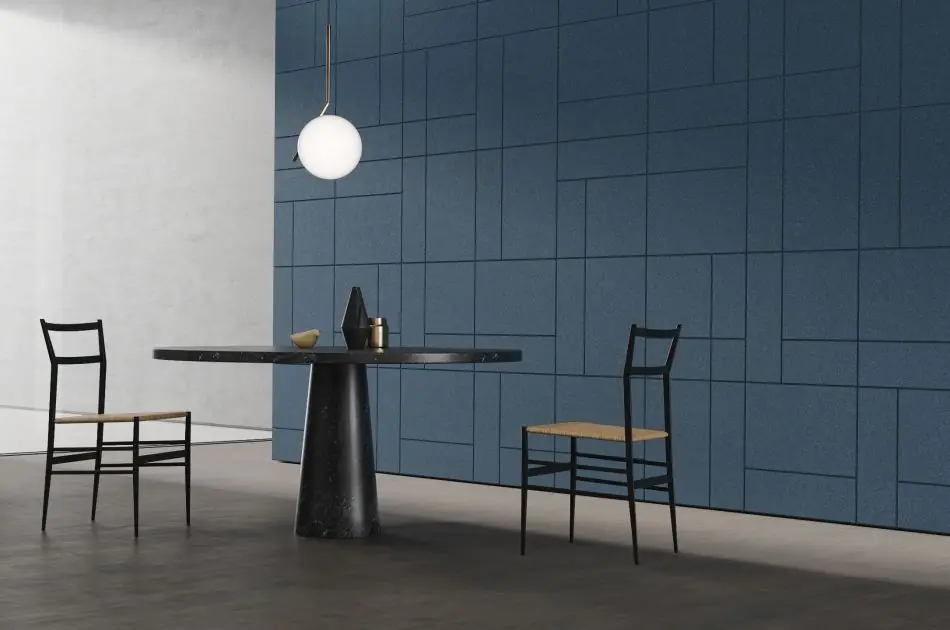
The Modular collection is an architectural design proposal for decorating interior walls, with three basic orthogonal designs with a 3D effect, inspired by the modular compositions of the architect Le Corbusier. The panels are laid by combining the three designs, so that the wall reads as a composition of rectangles of different sizes.
They are large-format panels for cork, at 580 × 580 mm and 7 mm thick, CNC-machined in natural or toasted cork. Each box contains 21 panels (11 of the first design and 5 of each of the other two) and covers 7.06 m². In the 2022 catalogue it was presented in four colours and one in toasted cork, with the references Pearl, Terracotta, Bluemoon, Smoke and Dark.
Granorte, from stopper waste to wall covering
Granorte is a Portuguese family business based in Rio Meão. Its origins lie in a small production of cork stoppers that Francisco Rocha started in 1955. In 1972, on the initiative of José, the eldest of his sons, Granorte was founded with the aim of recycling the cork waste from making wine stoppers. Since then it has moved from cork granules to floors and wall coverings, without changing its raw material: by-products of the cork industry itself.
Frequently asked questions
- Is the cork in these panels recycled?
- Yes. According to Granorte, the cork in Tatami, Bebop, Groovy and Modular comes 100% from recycled post-industrial by-products of the cork industry, and accounts for around 90% or more of the panel’s composition.
- Can they be used in a hotel, an office or a shop?
- It has to be checked case by case. The panels are classified as class E for reaction to fire, and the DB SI section of the CTE requires C-s2,d0 for wall coverings in occupiable areas when they exceed 5% of their surface. The interior of dwellings is exempt from this requirement.
- Do they improve the acoustics of a room?
- On their own, not much. Granorte publishes αw coefficients of 0.05 to 0.1, below the 0.15 threshold at which UNE-EN ISO 11654 assigns an absorption class. If the room needs reverberation control, a dedicated acoustic solution should be planned.
- How are they installed?
- Glued with contact adhesive, applied to the wall and to the back of each panel. The substrate must be dry, smooth and level, and the panels must acclimatise in the room for at least two days before installation.
- How are they cleaned?
- With a feather duster or a vacuum cleaner with a soft brush and, if there are stains, with a slightly damp cloth and neutral soap. The CORKGUARD finish repels water and stains, but solvents, bleach and abrasive products should not be used.
Cork is best understood by touch: its temperature, the relief of the grooves and the difference between natural and toasted cork do not come across in the same way in an image. At Matter we help you choose the right wall covering and compare it with the other materials and finishes in your project.
Book your visit to Matter.
Book a visit