Kairu: Timeless aesthetics for bathroom spaces
Kairu, by We Are Forms for BUTO: bathroom furniture with a 4 mm metal shell and lacquer or wood fronts, washbasins, mirrors, a totem and a towel rail.
Products6 min read
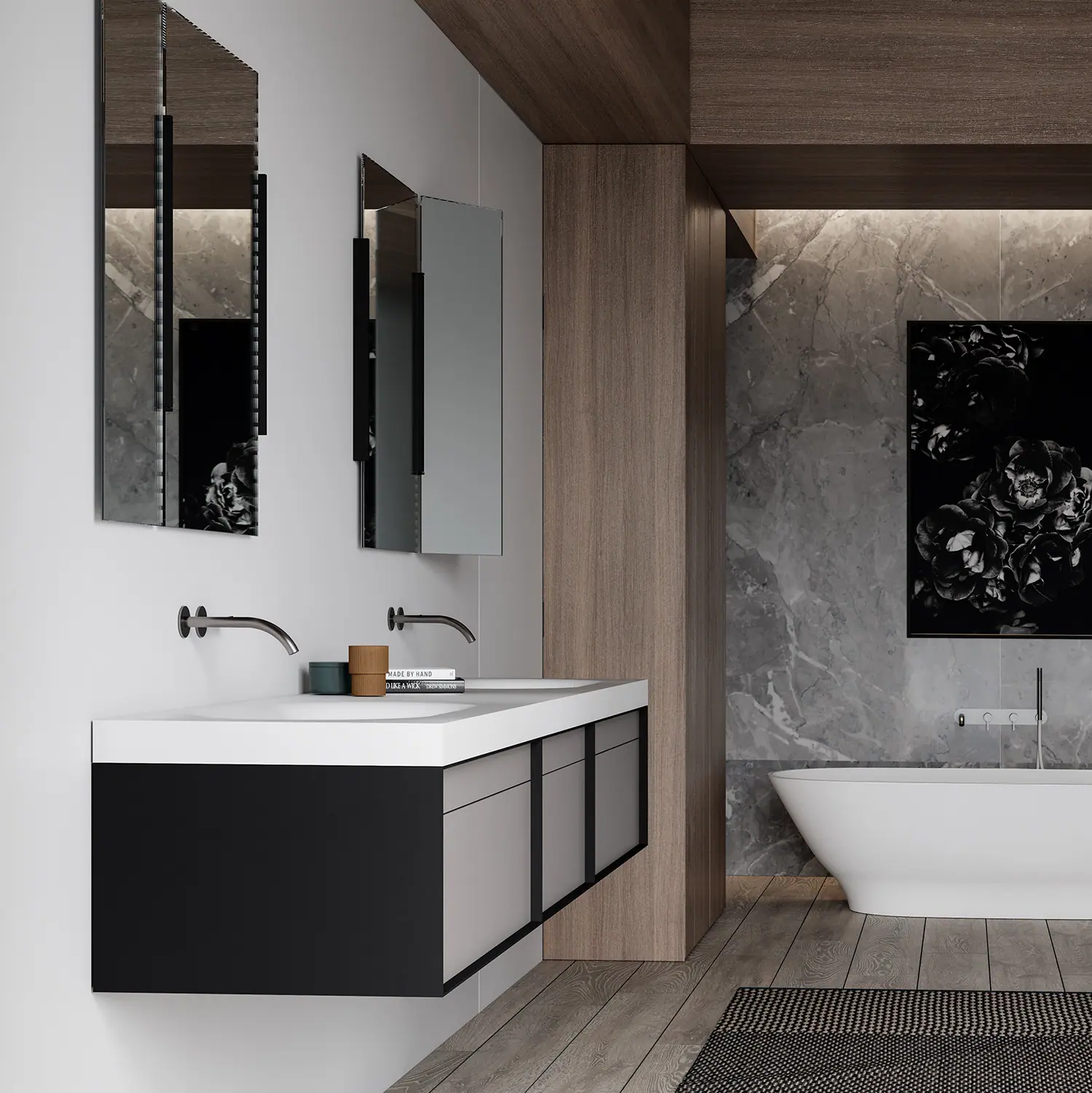
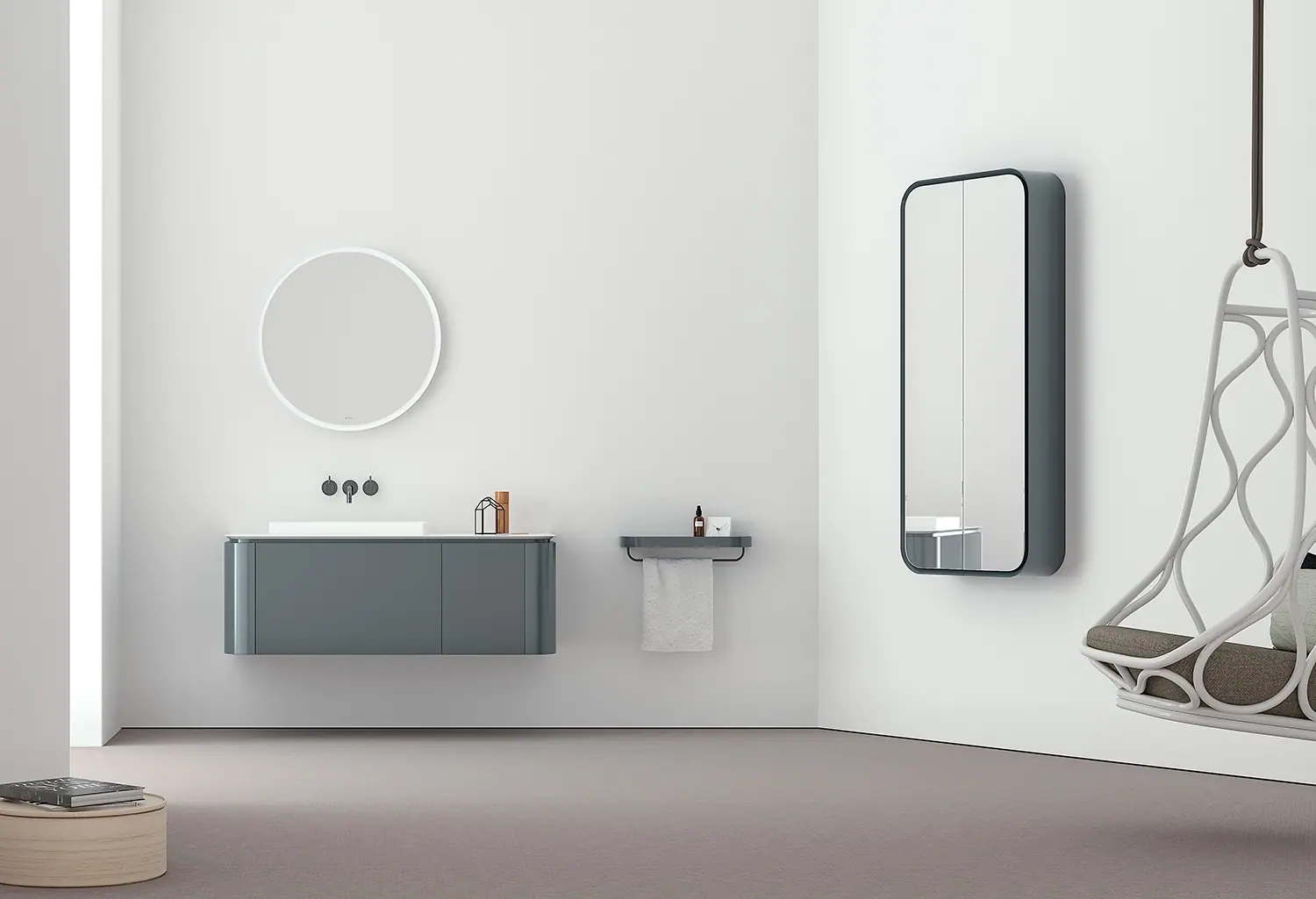
Kairu, the bathroom furniture collection designed by the studio We Are Forms for BUTO, grew out of the aim of creating elegant, functional products with character. It blends a contemporary style of geometric lines with a timeless aesthetic: pieces conceived so that the beauty of both the elements and the spaces they form endures over time. These bathroom solutions take the form of washbasins, storage units, mirrors and accessories.
In this article we look at the idea behind the collection, how it is built – a thin metal shell framing thick fronts – which pieces it comprises, the wood, lacquer, marble and metal finishes in its catalogue and what to bear in mind when specifying it.
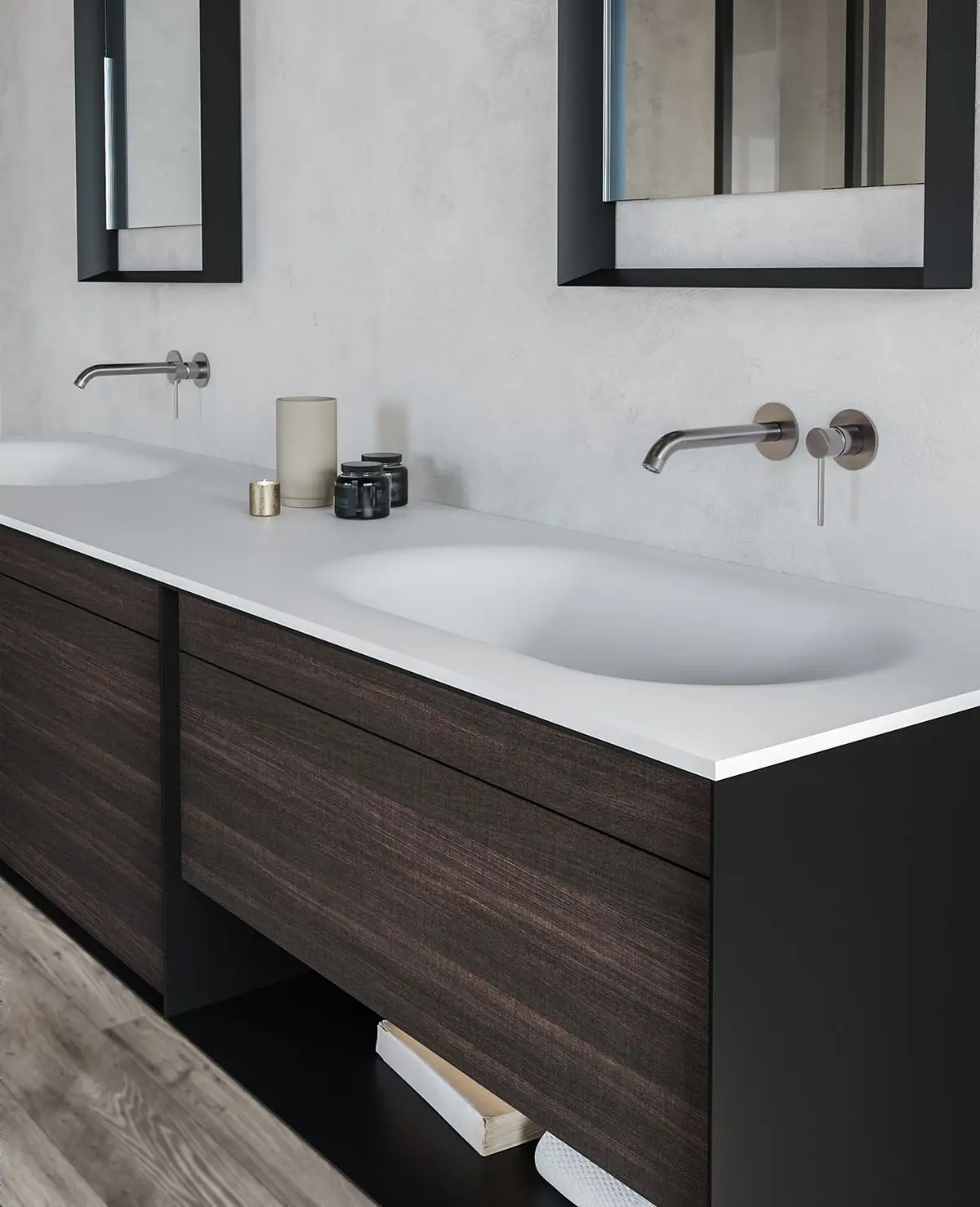
Kairu: geometric lines and soft surfaces
Kairu is the work of We Are Forms, the industrial design consultancy founded in Valencia by Carlos Tur and Elena Martínez. According to the 2020 collection catalogue, it stems from the search for a new standard in bathroom products, with a contemporary style and a beauty that transcends time. BUTO, the Spanish firm that manufactures it, summed it up in its dossier that year in a single word: “balance”.
That balance rests on contrasts. The pieces set straight, geometric lines against soft, sinuous surfaces, and fine, delicate edges against volumetric forms with a brutalist feel. The aim, in the brand’s words, is to achieve “a discreet style but with a strong character”. According to BUTO, this timeless look, with a modern appeal, makes the collection suitable for a wide variety of residential and public settings.
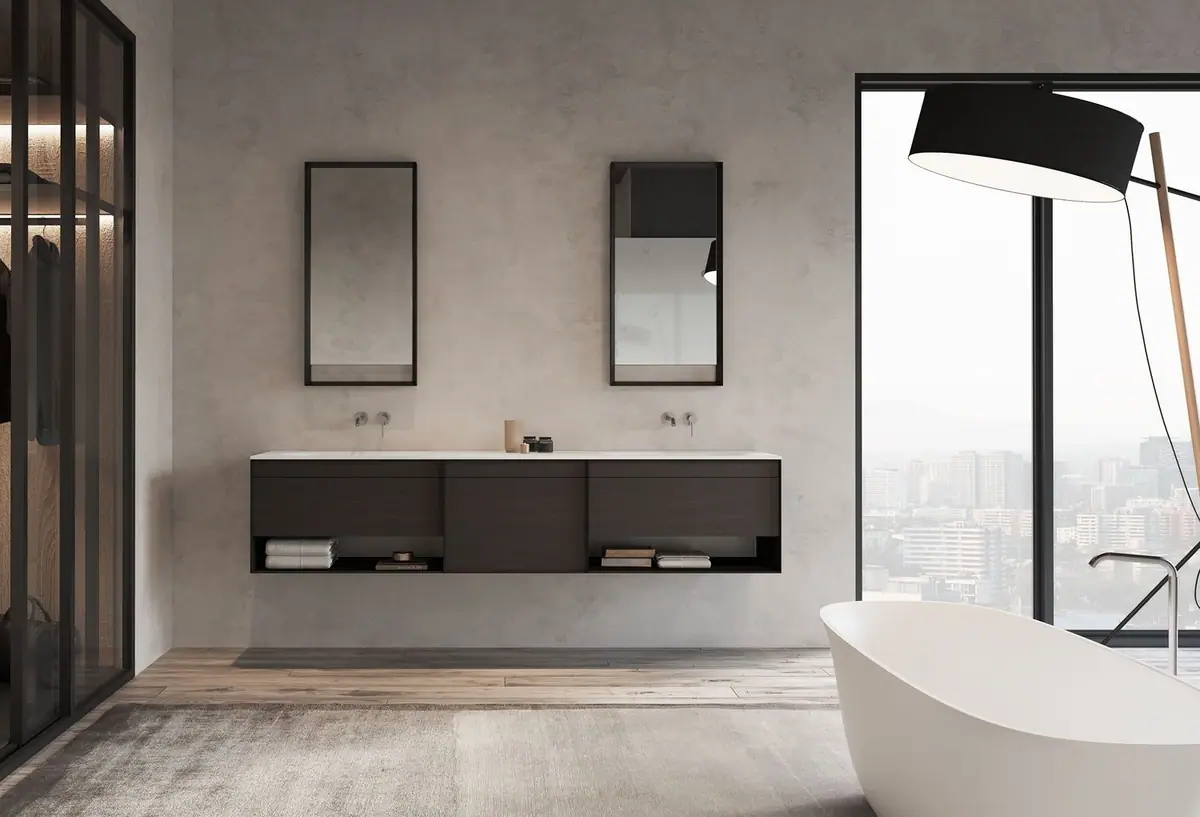
Washbasins, modules, mirrors and accessories
Kairu is a complete bathroom collection: washbasins, storage units, mirrors and accessories designed to be combined with one another. The 2020 catalogue shows wall-hung modules of different lengths, with drawers and with open recesses; tops with one or two integrated washbasins and countertop basins; mirrors with a black frame or with pivoting side panels; and freestanding pieces such as a totem with a washbasin and a freestanding towel rail.
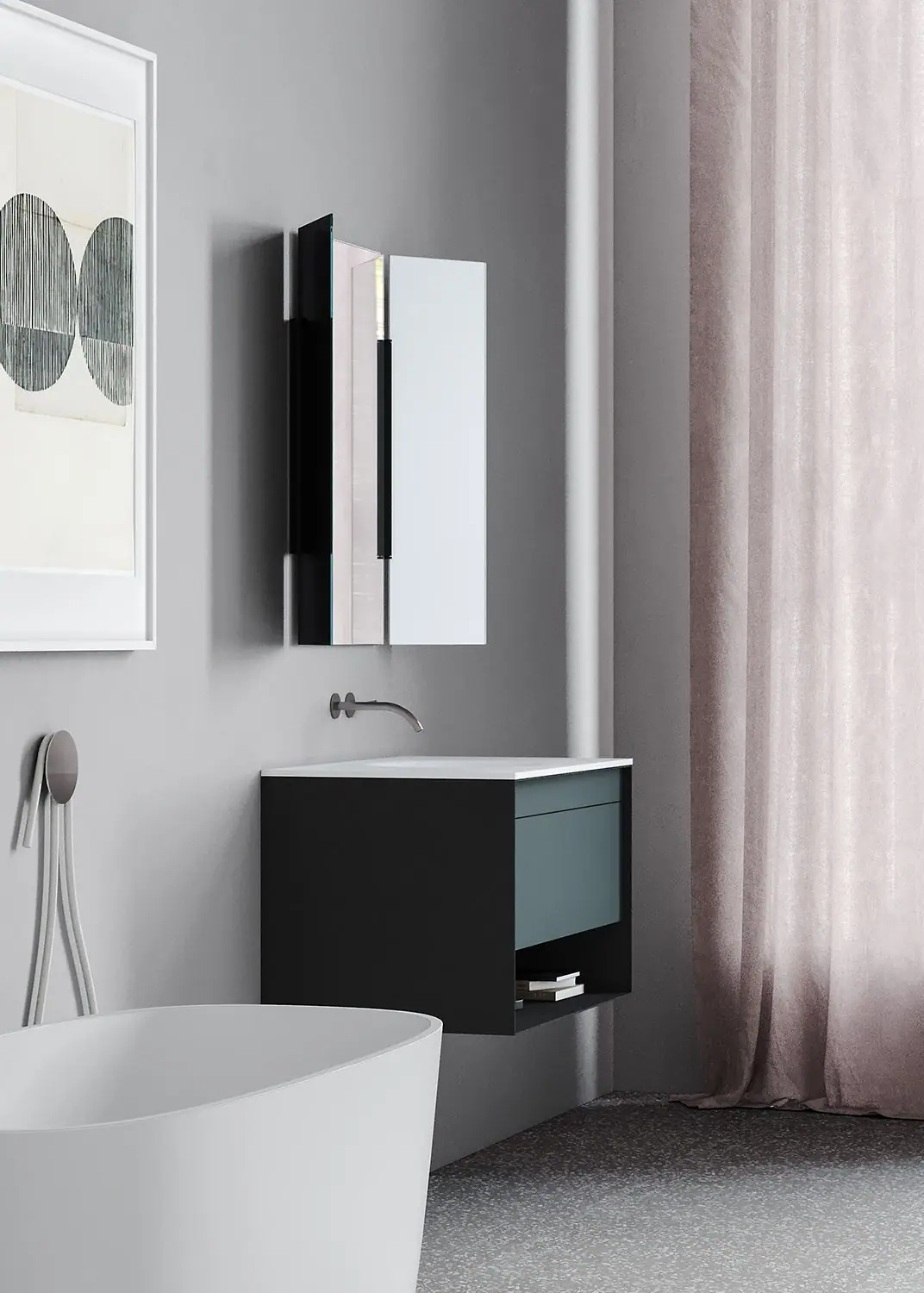
The single-piece module
One of the most recognisable pieces is the single-piece module, available in 60 and 80 cm. Below the closed front is an open recess which, according to the catalogue, lends lightness to the composition and leaves on view the metal shell that defines the whole collection.
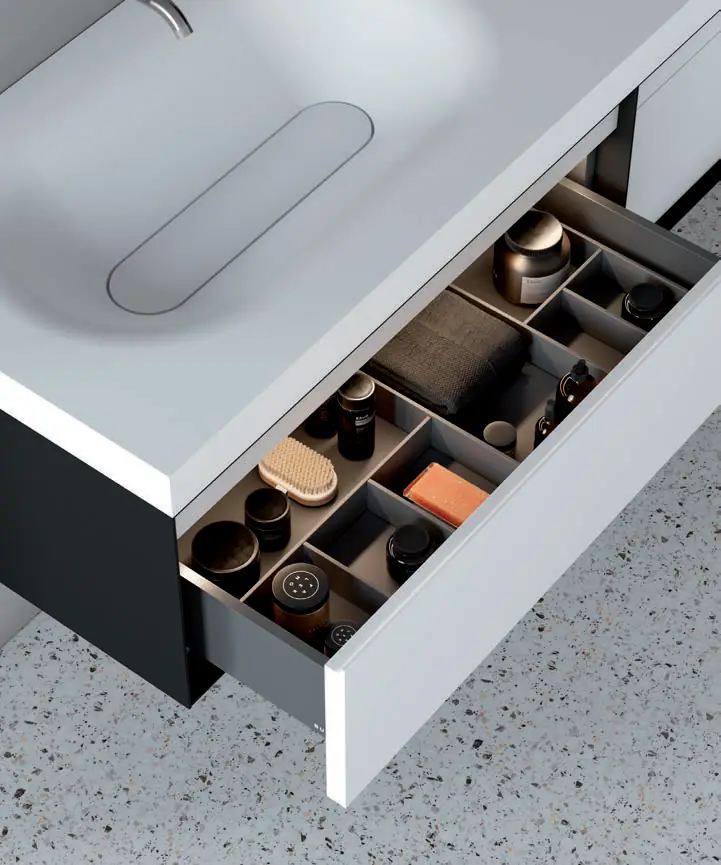
Tops and drawer lighting
The tops come in 12 and 60 mm thicknesses; according to the catalogue, they are designed to give the ensemble greater uniformity and highlight the opening system. The drawers can incorporate a lighting system activated by an internal sensor, with a choice of cool or warm light.
Metal, wood and marble: materials and finishes
What defines Kairu’s construction is the contrast in thicknesses. The catalogue describes a 4 mm metal shell lacquered in micro-textured black, framing 24 mm fronts: the robustness of the fronts contrasts with the lightness of the structure. In addition, the washbasin, the outer structure and the inner structure can be combined in different finishes.
The fronts follow BUTO’s range, in two options. The lacquer offers 24 colours in matt or gloss, spanning pastel and earth tones, blues, greens, greys and smoked shades, and RAL or NCS colours are available on request. The natural wood ranges from light to toasted oaks, such as Toasted Oak, Forest Oak or Stone Oak, and includes walnut, smoked eucalyptus and three sawn oaks: the light-toned Natural Sawn Oak, and the dark Brunette and Stone Sawn Oak. The table summarises the collection’s range:
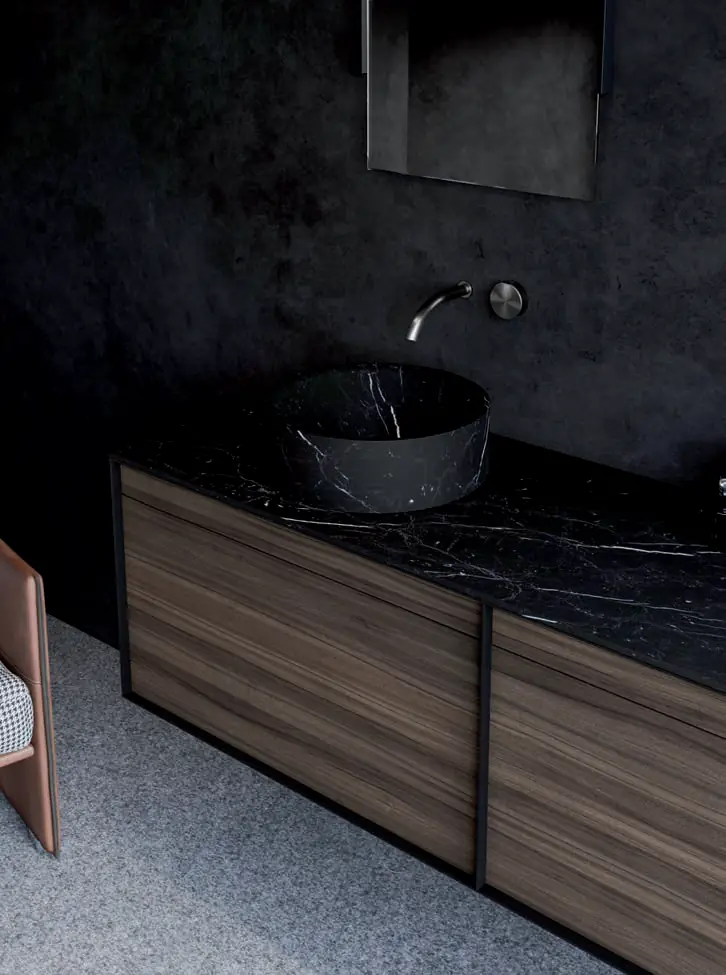
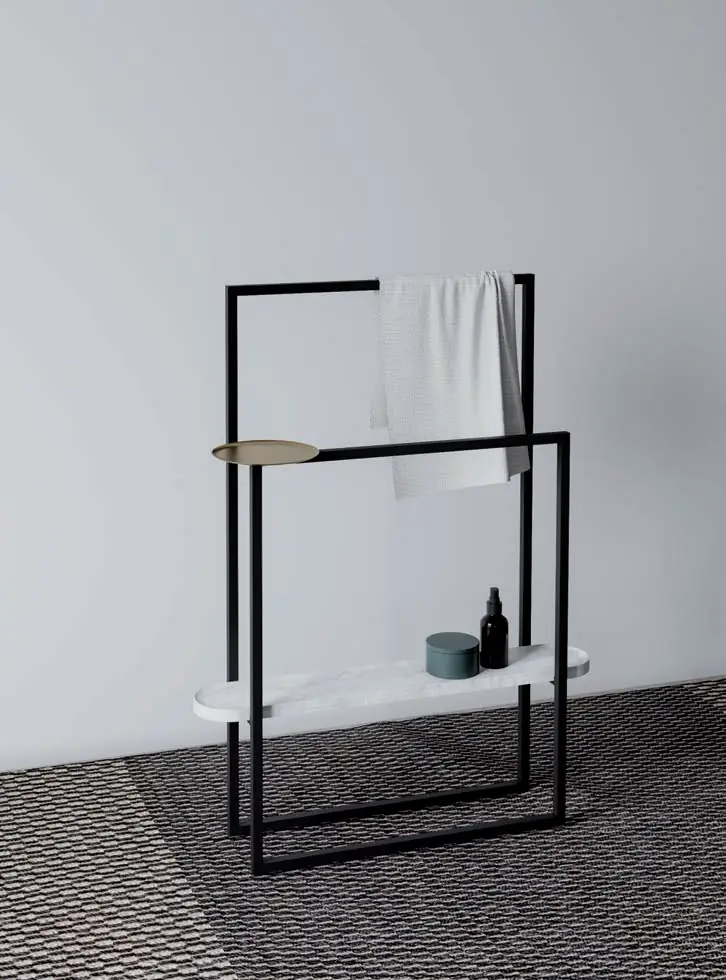
Metal and stone come into play in the accessories and tops. The freestanding towel rail combines metal plates in black nickel, matt brass or a textured black or white finish with trays in Negro Marquina or Blanco Carrara marble, and the catalogue also shows compositions with a black marble top and washbasin over natural wood fronts.
The totem and the freestanding towel rail
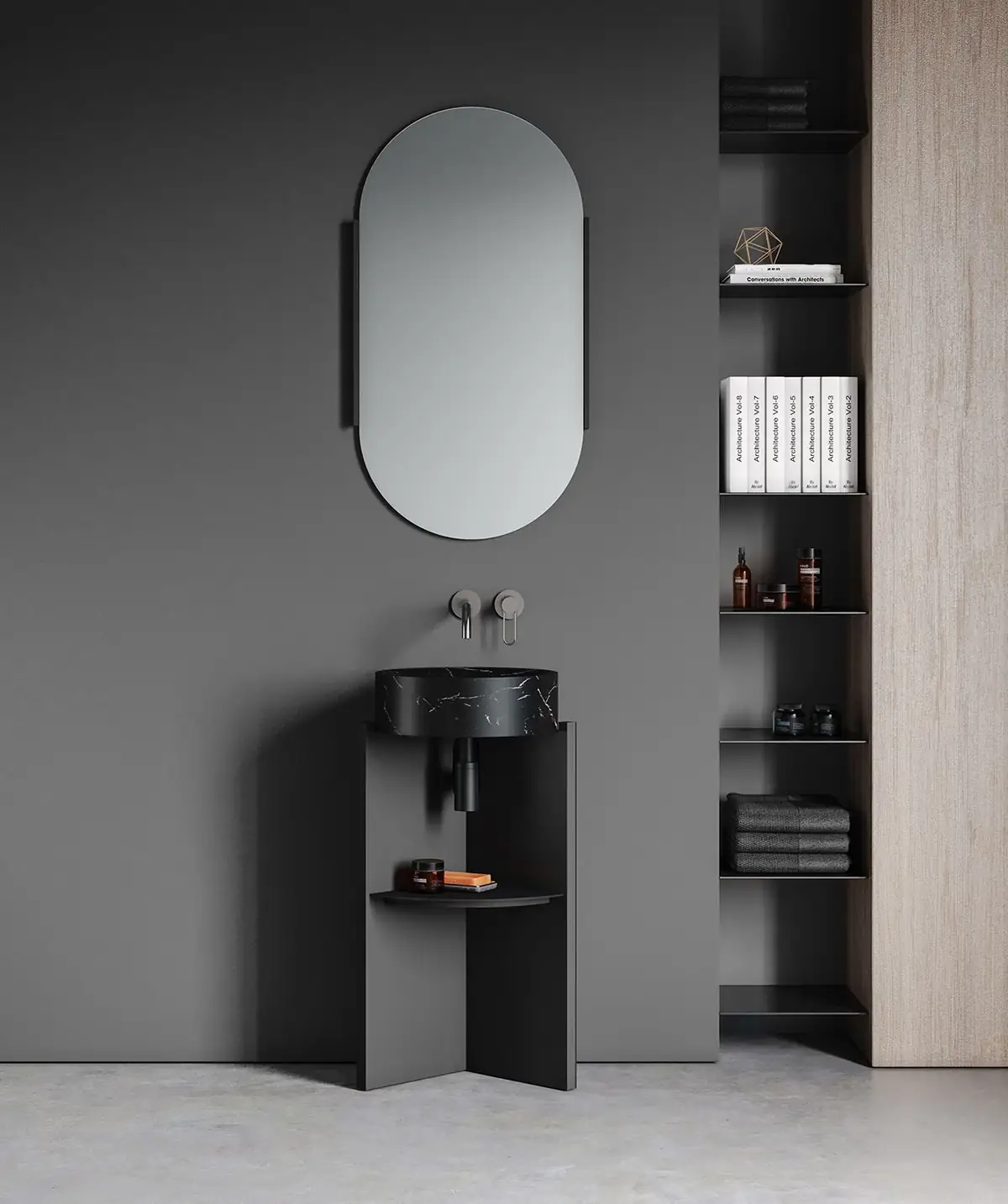
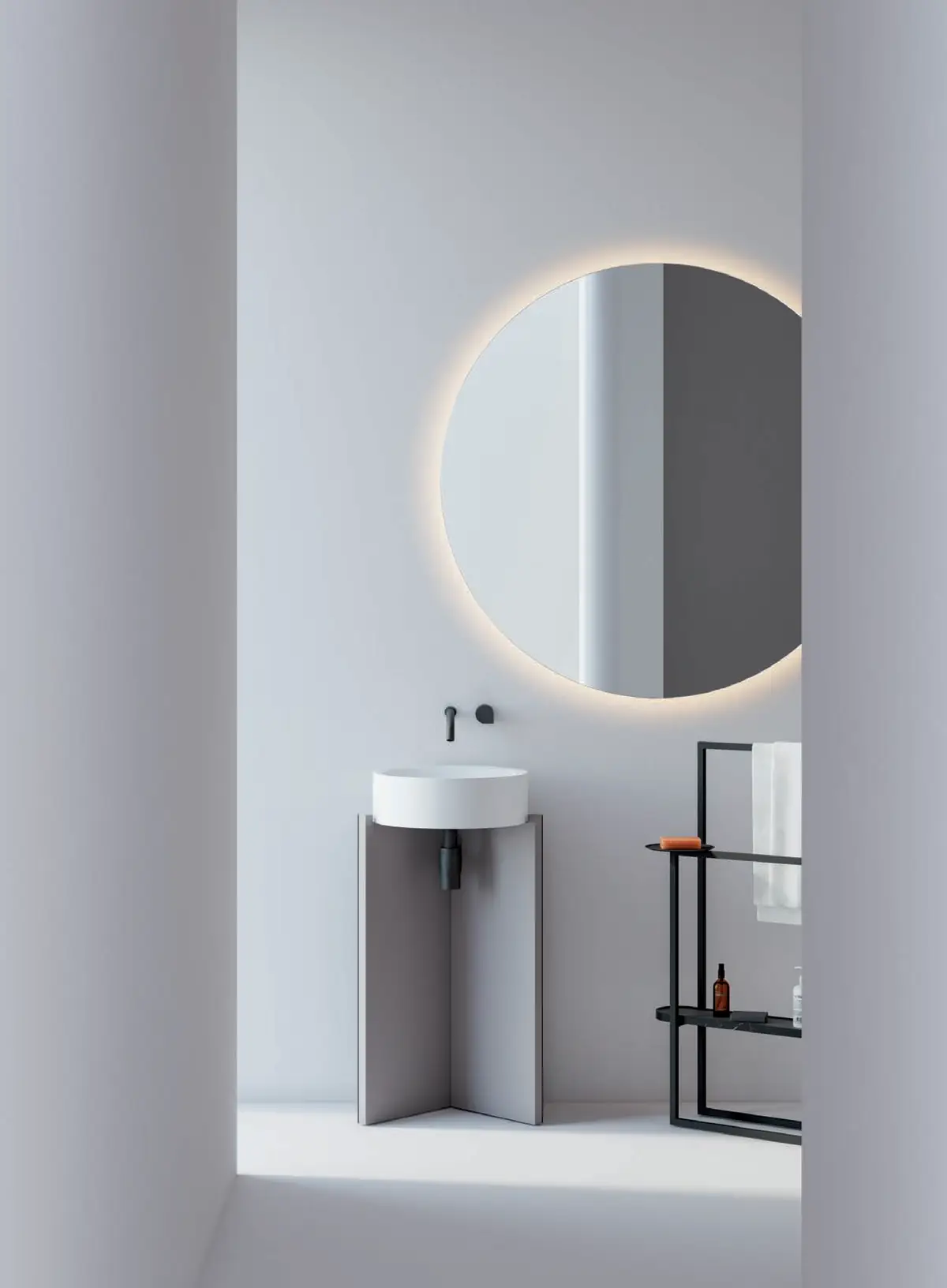
Among the accessories, two freestanding pieces stand out for taking the collection’s language beyond the cabinet. The totem is a pedestal washbasin: a support of vertical plates that holds a circular basin and accepts an auxiliary 4 mm metal tray with a lacquered MDF base. The freestanding towel rail, presented as new in the catalogue, allows numerous combinations of marble and metal finishes. As an option, BUTO also offers Corian® countertop trays.
Manufacturing and sustainability according to BUTO
The production process draws on the tradition of Spanish manufacturing and combines craftsmanship with the most advanced techniques and technology. For BUTO, high-quality materials such as wood, glass and metal, together with skilled labour, make it possible to create products designed to last, both in homes and in other settings and installations. Its 2020 dossier adds that its furniture is made with moisture-resistant boards, which prevent water, humidity or heat in the bathroom from damaging them, and that the lacquer is applied in several coats to protect the piece from knocks.
The brand places sustainability at the centre of its activity. According to BUTO, its aim is to optimise its environmental management systems to reduce its impact on the environment as far as possible, minimising the consumption of raw materials and the amount of waste and discharges at its offices and production sites. The company also states that its products comply with the main international environmental standards and certifications, although it does not specify which.
Key points for specifying Kairu
Beyond aesthetics, these are the points worth resolving at the design stage:
- Composition: define the length of the ensemble, the number of drawers and open recesses and whether the 60 or 80 cm single-piece module is used. The collection catalogue does not include dimension sheets, so dimensions and references should be confirmed with BUTO.
- Top and washbasin: choose between an integrated or countertop basin and the thickness of the top, 12 or 60 mm, which according to the brand gives the ensemble more or less uniformity.
- Combination of finishes: the washbasin, the outer structure and the inner structure accept different finishes; these should be decided together with the finish of the fronts (lacquer, Roble Color or wood) and validated with samples.
- Drawer lighting: if the system with an internal sensor is wanted, choose between cool or warm light.
- Coordinated accessories: the totem, the freestanding towel rail and the trays complete the bathroom in the same language of thin metal and plates, and make it possible to resolve areas without a cabinet.
Frequently asked questions
- Who designed the Kairu collection?
- We Are Forms, the industrial design consultancy founded in Valencia by Carlos Tur and Elena Martínez. BUTO manufactures and markets the collection.
- Which pieces make up the collection?
- Washbasins, storage modules, mirrors and accessories. Among the latter, the 2020 catalogue includes a totem with a washbasin, a freestanding towel rail, an auxiliary tray for the totem and Corian® countertop trays.
- What is the furniture structure made of?
- A 4 mm metal shell lacquered in micro-textured black, framing 24 mm fronts in lacquer or wood. According to BUTO, the washbasin, the outer structure and the inner structure can be combined in different finishes.
- Is it suitable for contract projects?
- According to BUTO, the collection is suitable for a wide variety of residential and public settings. For each project, dimensions, finishes and lead times should be confirmed with the manufacturer.
- Is Kairu still in the catalogue?
- In 2026 Kairu is still on BUTO’s website, organised into modules, washbasins, lids, tops and accessories, with tops in materials such as SolidSurface, Corian® or marble.
Kairu offers versatile, refined products that bring a contemporary and timeless touch to the bathroom. At Matter we help you plan the complete bathroom: the cabinet, the top, the taps and the wall and floor coverings that go with them. Come to our material library to compare materials and finishes with your technical team.
Book your visit to Matter.
Book a visit