A fusion of textures and colours in Elena Salmistraro’s new Chimera collection
Chimera, by Elena Salmistraro for CEDIT: 6 mm porcelain stoneware with four graphic themes, relief textures and formats of up to 120×240 cm.
Products6 min read
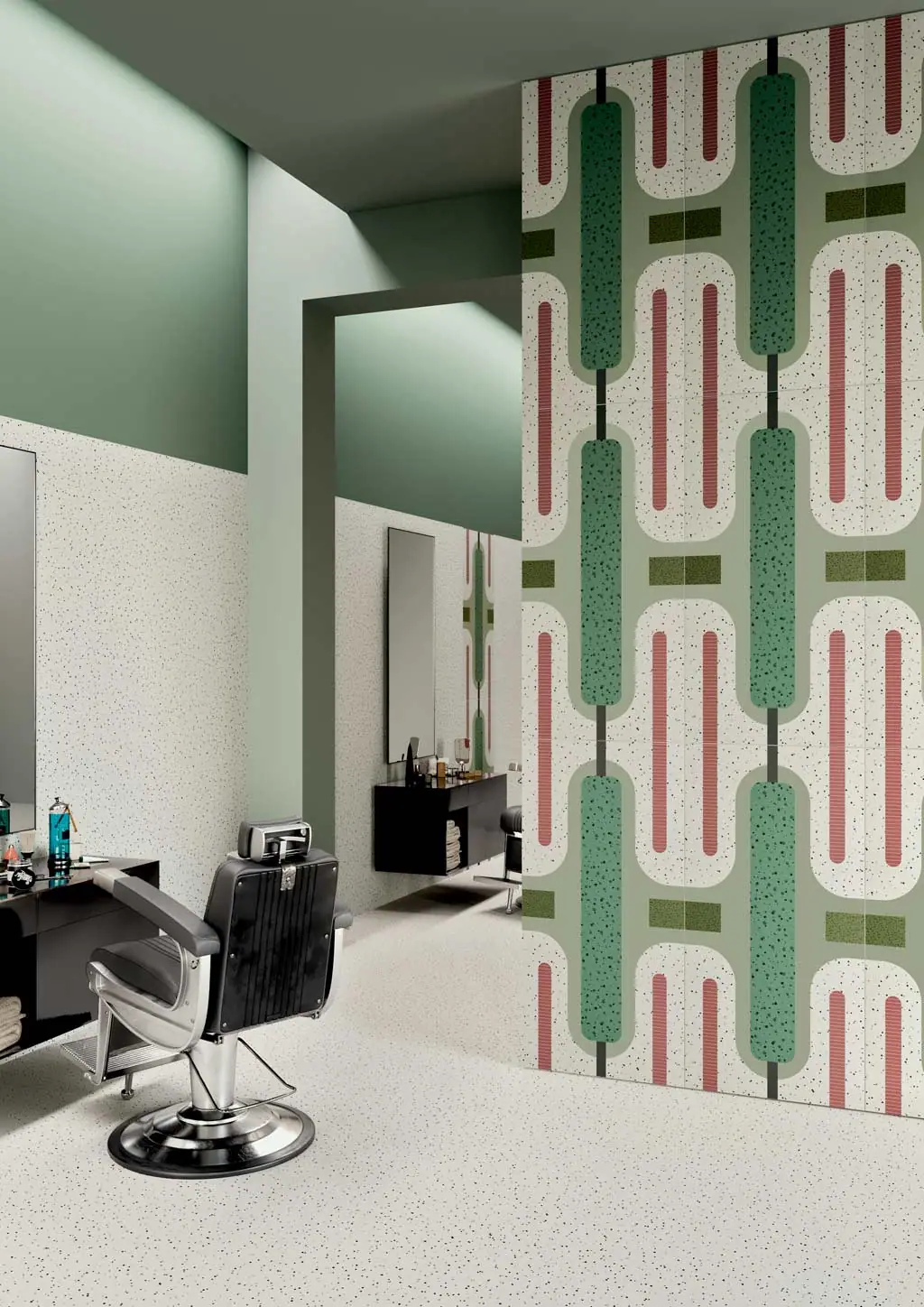
Large-format ceramic wall coverings dressed in vivid colours and warm tones that combine different geometric shapes. The Chimera collection, designed by Elena Salmistraro for CEDIT, Florim’s design brand, brings together rigour and creative talent to produce decorative elements with a strong symbolic charge.
In this article we look at where the collection comes from, how its four graphic themes are organised, the surface technique that sets it apart, the formats, thickness and finishes it offers and what to bear in mind when specifying it.
A ceramic chimera: where the collection comes from
The inspiration goes back to Greek mythology and draws on the etymology of the name. The chimera is a hybrid beast with the features of a lion, a dragon and a goat, and its name refers to the combination of originally incongruous parts that gives rise to a new identity. That is the premise with which Elena Salmistraro presents this CEDIT collection: large slabs that mix different codes of line and colour with fragments evoking the look of stone, fabric and skin.
CEDIT – Ceramiche d’Italia is a historic Italian ceramics brand. Its origins date back to 1947, and in the 20th century it worked with designers such as Marco Zanuso, Ettore Sottsass, Enzo Mari, Alessandro Mendini and Achille and Pier Giacomo Castiglioni. Florim relaunched it with collections commissioned from contemporary Italian designers, and Chimera, presented in 2020, is one of them.
Textures you can touch: the surface technique
An unusual collection created with an innovative technique for working the ceramic surface. As well as an uncommon chromatic vibrancy, the slabs feature grooved or raised decorations that create tactile sensations: according to CEDIT, they resemble small embroideries spread across the slab.
In the text accompanying the collection, design curator Silvana Annicchiarico describes a high-definition, three-dimensional decorative technique that reproduces the texture of skins and fabrics. The aim is to go beyond the flatness typical of ceramics and soften the sense of coldness and uniformity it sometimes conveys, so that the surface can be enjoyed by touch as well as by sight.
Four graphic themes, four stories
Empatia, Radici, Ritmo and Colore: four chapters of the same book.
“The Chimera collection is like a book with four very different chapters: I wanted to differentiate these graphic motifs and show four completely distinct stories.”
— Elena Salmistraro
Each theme comes in two colours and combines decorated slabs with plain slabs in the same tone, which CEDIT calls backgrounds. The wall compositions arise from combining the two.
Empatia
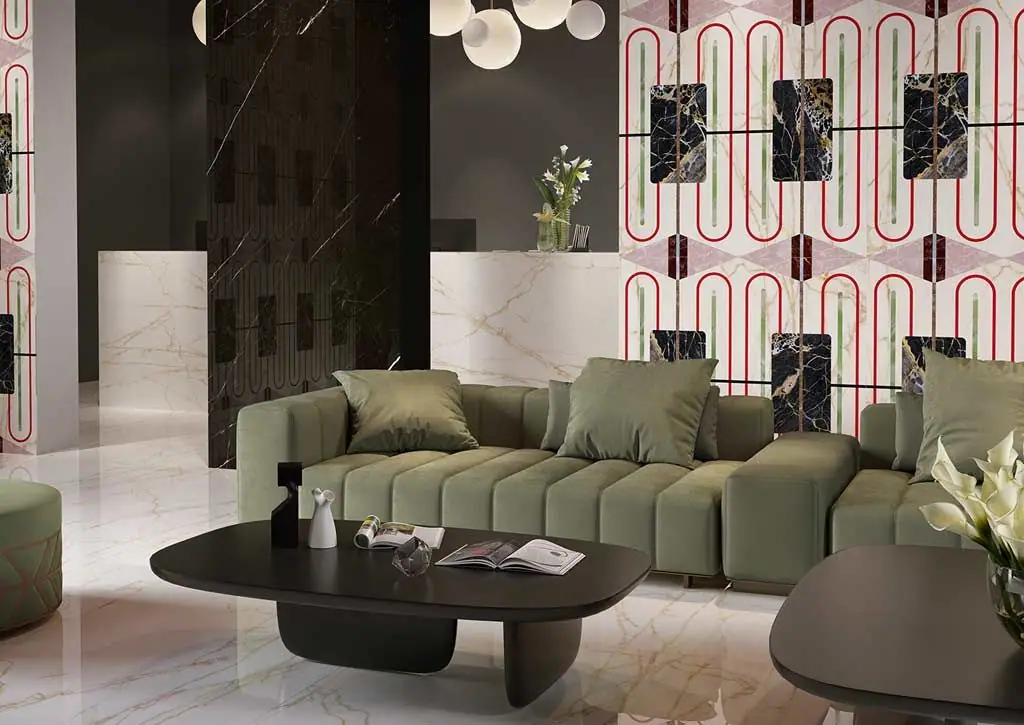
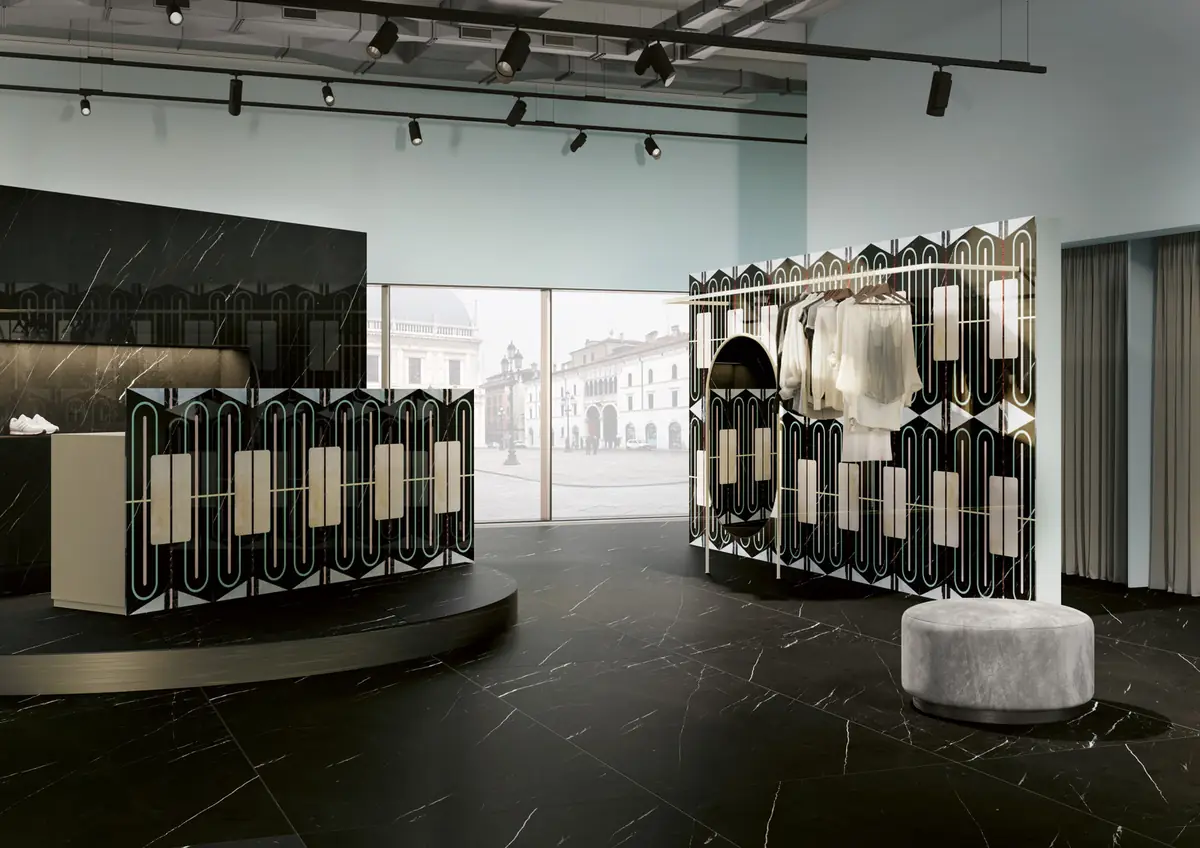
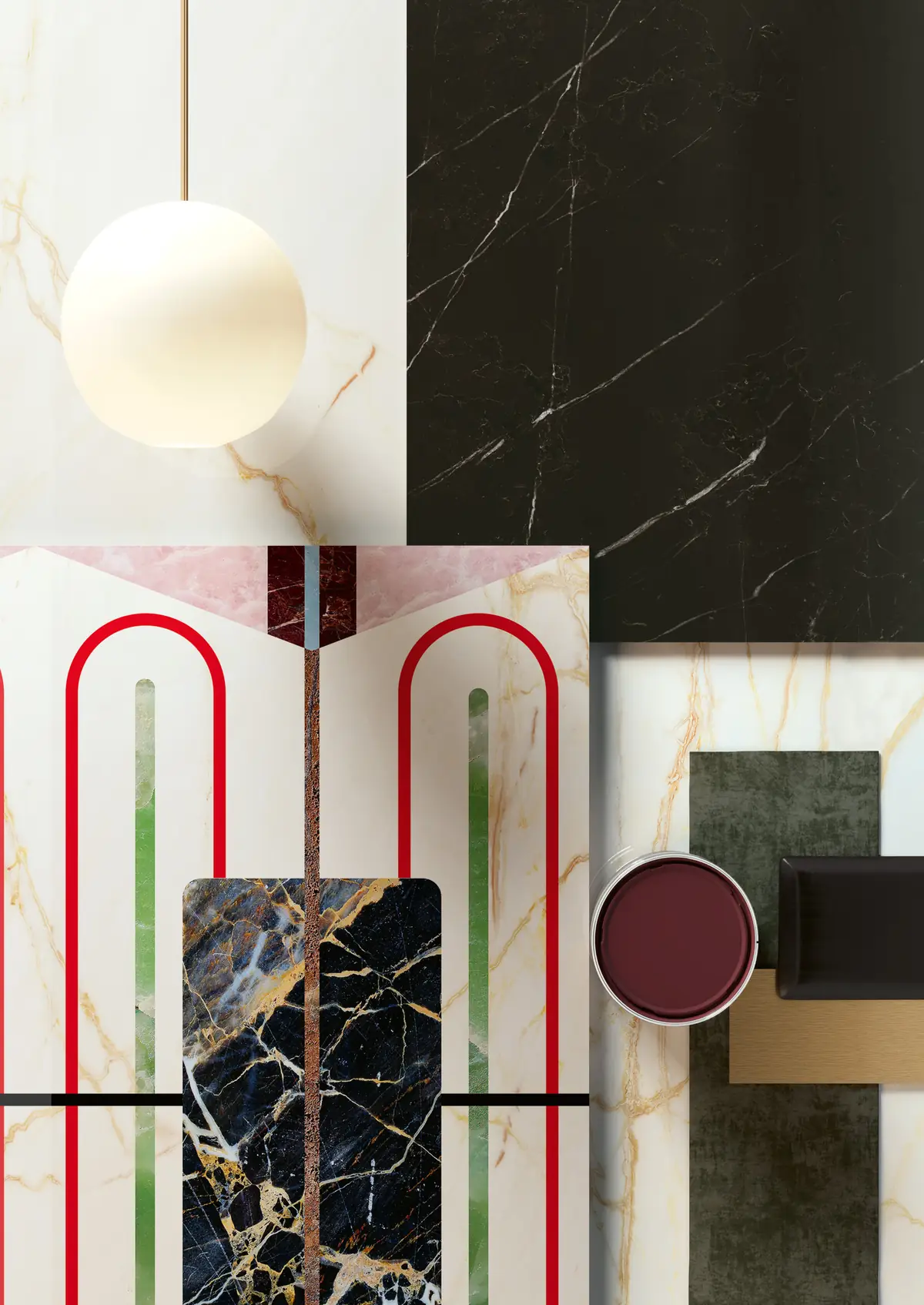
Through a very personal abstraction, Empatia interprets the stage make-up of clowns, with overlapping geometric lines and images. Annicchiarico describes it as clown faces that theatricalise the coldness and sheen of marble and blend with graphic references to Art Deco. It comes in Empatia Bianco and Empatia Nero, and is the only theme produced in a gloss as well as a matt finish.
Radici
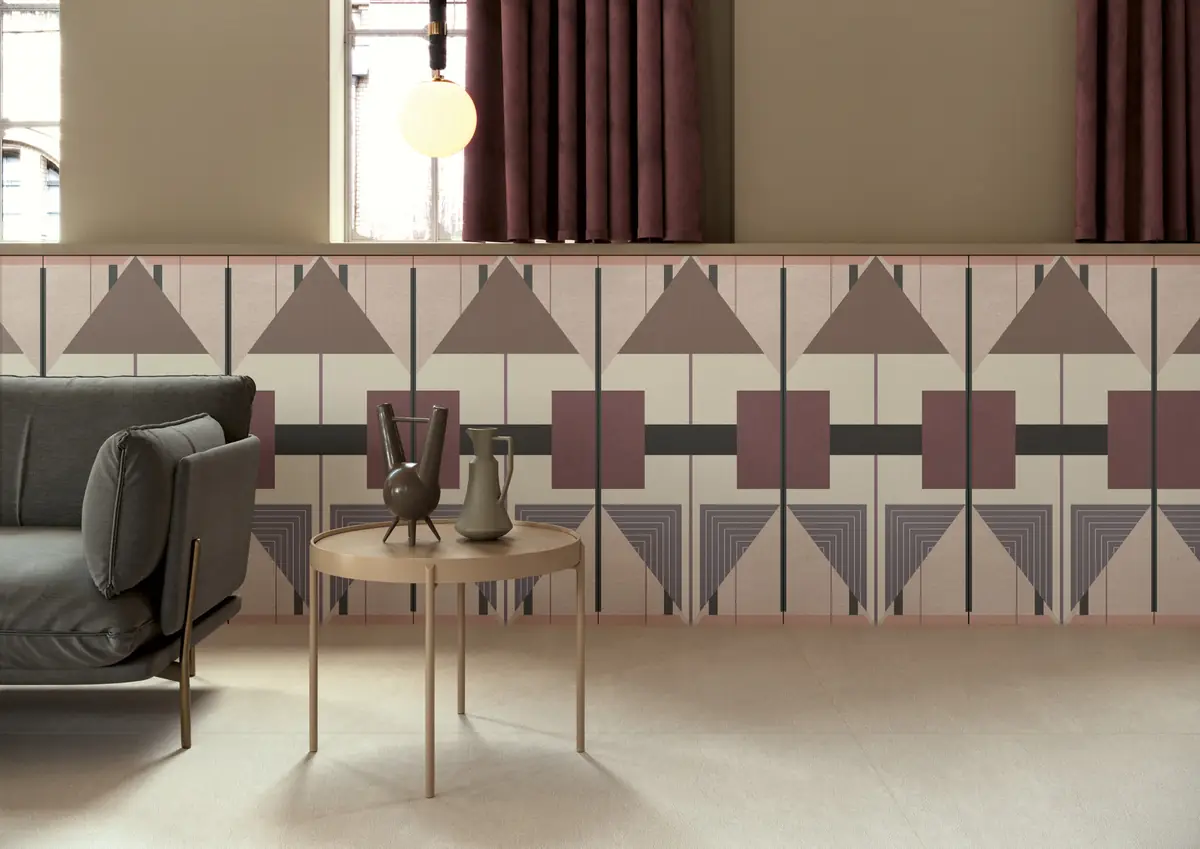
Radici is a tribal statement, a tribute to primitive ritual dress, suggested by a sequence of triangles and rectangles intersected by figurative cut-outs. According to Annicchiarico, the theme uses the textures of hides and leather, as if seeking to reconnect ceramics with other materials from the origins of human activity. It comes in Radici Beige and Radici Grigio, in a matt finish.
Ritmo
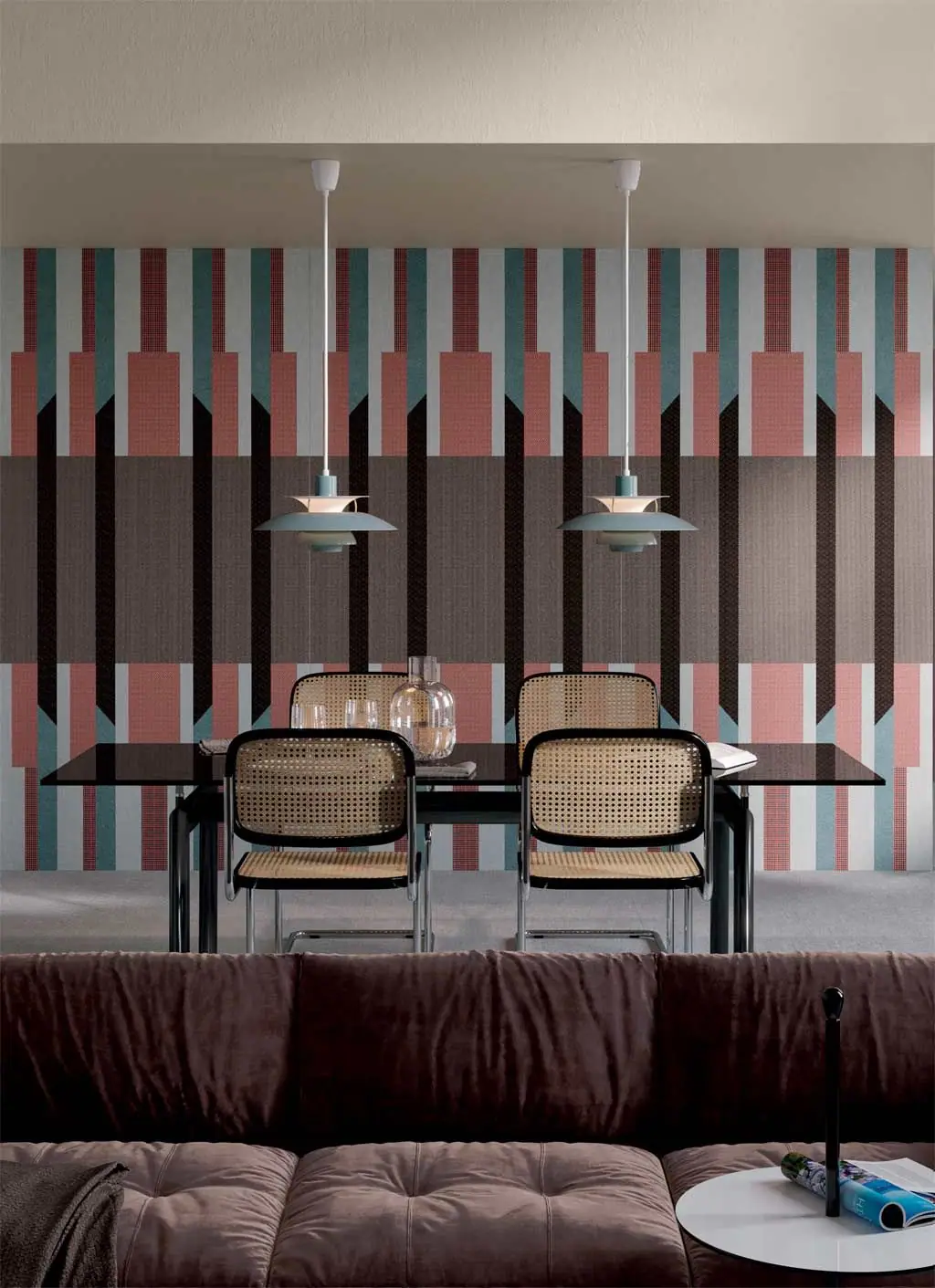
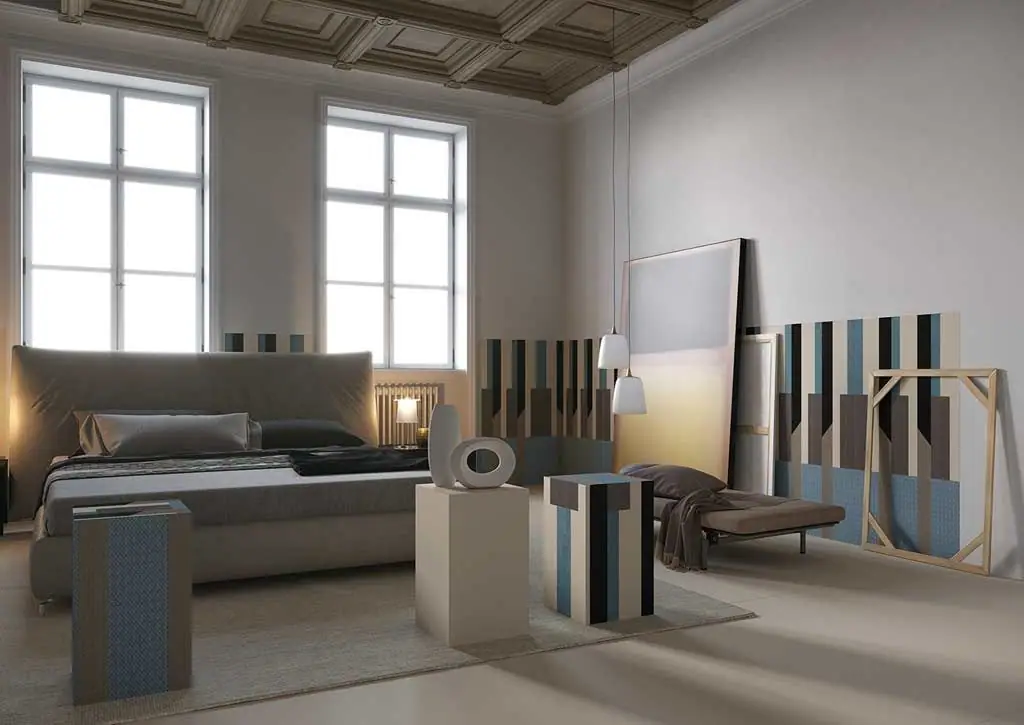
Ritmo has a textile quality: it evokes the rhythmic alternations of a woven fabric, with a predominantly linear pattern. Annicchiarico links it to the tactile rationalism of the warp and weft of Anni Albers, a Bauhaus pioneer, and the collection’s colour references include the yarns of Gunta Stölzl and Albers herself. It comes in Ritmo Beige and Ritmo Azzurro (light blue), in matt; its 60×120 cm decorated pieces come in two versions, A and B.
Colore
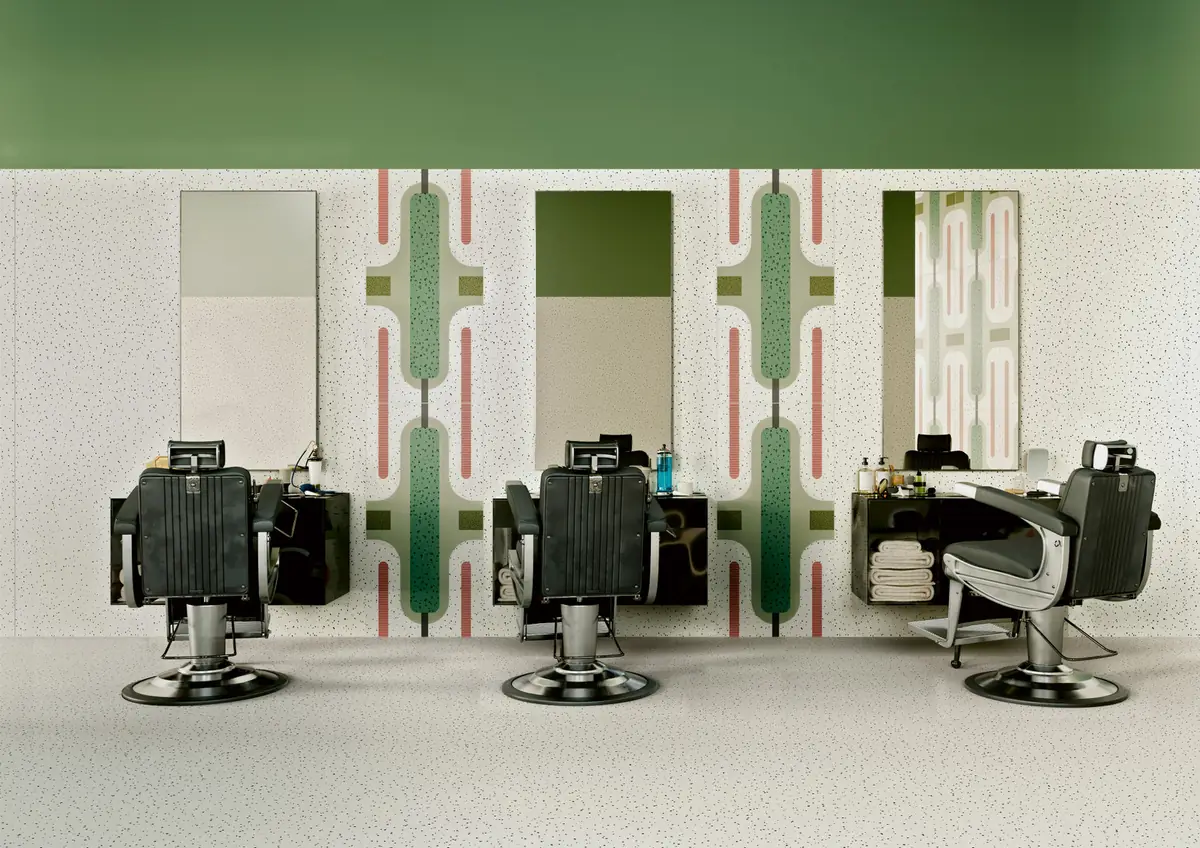
In Colore, a background of small isolated spots generated by a parametric digital program is combined with the dense presence of repeated silhouettes. For Annicchiarico, this dotted base seeks to underline the contrast between analogue and digital, between the drawn line and the material on which it is printed. It comes in Colore Bianco and Colore Grigio, in matt.
Formats, thickness and finishes
All Chimera slabs are thin, rectified 6 mm porcelain stoneware. The plain backgrounds are produced in 120×240, 120×120 and 60×120 cm and, according to the CEDIT catalogue, can be laid on walls and floors. The decorated slabs are produced in 120×240 and 60×120 cm and are intended for walls.
Florim’s technical data sheet classifies the collection in group BIa of EN 14411 and ISO 13006, with an average water absorption of 0.08%, frost resistance and class 4 stain resistance. Florim notes that these data do not apply to the decorated products.
Key points for specifying Chimera
Beyond the pattern, these are the points worth resolving at the design stage:
- Background and decoration: each theme combines decorated slabs with plain backgrounds in the same colour. The CEDIT catalogue includes composition schemes that help define the proportion between them.
- Wall or floor: according to the catalogue, the backgrounds are suitable for walls and floors; the decorated pieces for walls only.
- Finish: gloss is available only in Empatia; Radici, Ritmo and Colore are matt.
- Joint: Florim recommends a 2 mm joint in single-format compositions and 3 mm when different formats are combined.
- Grouts and paints: the designer recommends grout colours (Avorio, Ghiaccio, Antracite and Beige) and paint colours to accompany each composition.
Materials to pair it with
The collection catalogue also suggests materials to combine it with: the warm glints of metals, the luminous reflections of glass, the varied textures of fabrics, skins and leather, the natural grain of wood and composite materials. In terms of colour, it draws on the intense colours of nature, the Bauhaus palettes and flat, vivid colour.
Elena Salmistraro, the designer
Elena Salmistraro (Milan, 1983) graduated in Industrial Design from the Politecnico di Milano in 2008 and the following year founded her studio in Milan with the architect Angelo Stoli, focusing on product design and architecture. Her work sits between illustration, design and the visual arts. In 2017 she received the Salone del Mobile.Milano Award for best emerging designer, and she has worked with companies such as Apple, Disney, Vitra, Lavazza, Alessi, Bosa, De Castelli and Cc-Tapis.
Annicchiarico stresses that Salmistraro draws constantly and regards ceramics as a democratic material, for its accessibility and for the possibilities it offers for giving shape to matter. In CEDIT’s presentation video, the designer explains the collection.
Frequently asked questions
- Who designed the Chimera collection?
- The Milanese designer Elena Salmistraro, for CEDIT – Ceramiche d’Italia, a brand of the Florim group. The collection was presented in 2020.
- Can it be laid on floors?
- According to the CEDIT catalogue, the plain backgrounds can be laid on walls and floors; the decorated slabs are intended for walls only.
- What formats and thickness does it come in?
- All slabs are 6 mm and rectified. The backgrounds are produced in 120×240, 120×120 and 60×120 cm; the decorated pieces in 120×240 and 60×120 cm.
- Do all the themes come in a gloss finish?
- No. Only Empatia, in Bianco and Nero, is available in gloss and matt. Radici, Ritmo and Colore are produced in matt.
- What joint is recommended?
- Florim recommends 2 mm in single-format compositions and 3 mm when different formats are combined.
Chimera is a proposal for projects that look to the wall covering for an element with its own identity: ceramic pieces full of colour and shape that bring movement and vitality to the wall. At Matter we work with Florim and its brands: in our material library we help you and your technical team choose and combine ceramic surfaces.
Book your visit to Matter.
Book a visit