Vicenza stone, an elegant and forward-looking material
Varieties, finishes and technical data of Grassi Pietre’s Vicenza stone, with the Grigio Alpi of a villa in Waterloo as a project example.
Products6 min read
Vicenza stone is an Italian limestone much valued for its appearance: its warm, neutral tones allow it to be used in any kind of setting, classic or modern. Its particular limestone structure also means it hardens over time, which makes it suitable even for large exterior façades.
Grassi Pietre has been quarrying and working it in Nanto, in the province of Vicenza, since 1850. In this article we explain what this stone is, what its varieties and finishes are, what the technical tests on Grigio Alpi — the grey variety with macrofossils — show, and how it has been used in a villa in Waterloo (Belgium).
What Vicenza stone is
Vicenza stone (Pietra di Vicenza) is a sedimentary limestone quarried in the Colli Berici, the hills to the south of the city of Vicenza. It often contains fossil remains — algae, shells, corals — which give it its characteristic texture and distinguish one variety from another. Grassi Pietre extracts it from its own underground quarries, excavated as galleries.
It is a stone with a long building tradition. According to Grassi Pietre, the Romans already used it, and these quarries supplied the stone for many of the villas Andrea Palladio designed in the Veneto in the 16th century. Today it is still used in contemporary architecture, both inside and out.
A stone that hardens over time
When freshly quarried, Vicenza stone is relatively soft and easy to work; over time it hardens. The magazine Area attributes this to carbonation: as the stone absorbs water, calcium carbonate is deposited on the surface and forms a more solid, less porous layer that is more resistant to the weather. This is why the manufacturer also considers it suitable for large exterior façades.
Six varieties, from ivory to grey
Grassi Pietre sells Vicenza stone in six named varieties. Their differences in colour and fossil content allow solutions with slight chromatic variations for floors, stairs, cladding and decorative elements, both classic and modern.
The manufacturer describes Bianco Avorio as the traditional Vicenza stone par excellence and Grigio Alpi as the variety most used by architects today in contemporary projects. Giallo Dorato is also known as Nanto stone, and Perla dei Berici comes from strata that the manufacturer dates to between 55 and 33 million years ago.
Finishes: from smooth surfaces to split rock
With its machinery, Grassi Pietre works the surface of the stone in finishes ranging from smooth to rough. This wide range of textures makes it possible to tailor the project to each setting: the same material changes in character, feel and slip behaviour depending on how its exposed face is treated.
- Levigato (honed): smooth, matt surface.
- Spazzolato (brushed): gently undulating surface, more natural to the touch than honed.
- Rigato (grooved): parallel grooves that set a direction and add texture and shadow.
- Bocciardato (bush-hammered) and sabbiato (sandblasted): rough surfaces, produced with a bush hammer or sandblasting, with a rustic look.
- Other finishes: in 2021 the manufacturer also offered rullato, corteccia, rock finish and time worn for Grigio Alpi, and it accepts bespoke finishes.
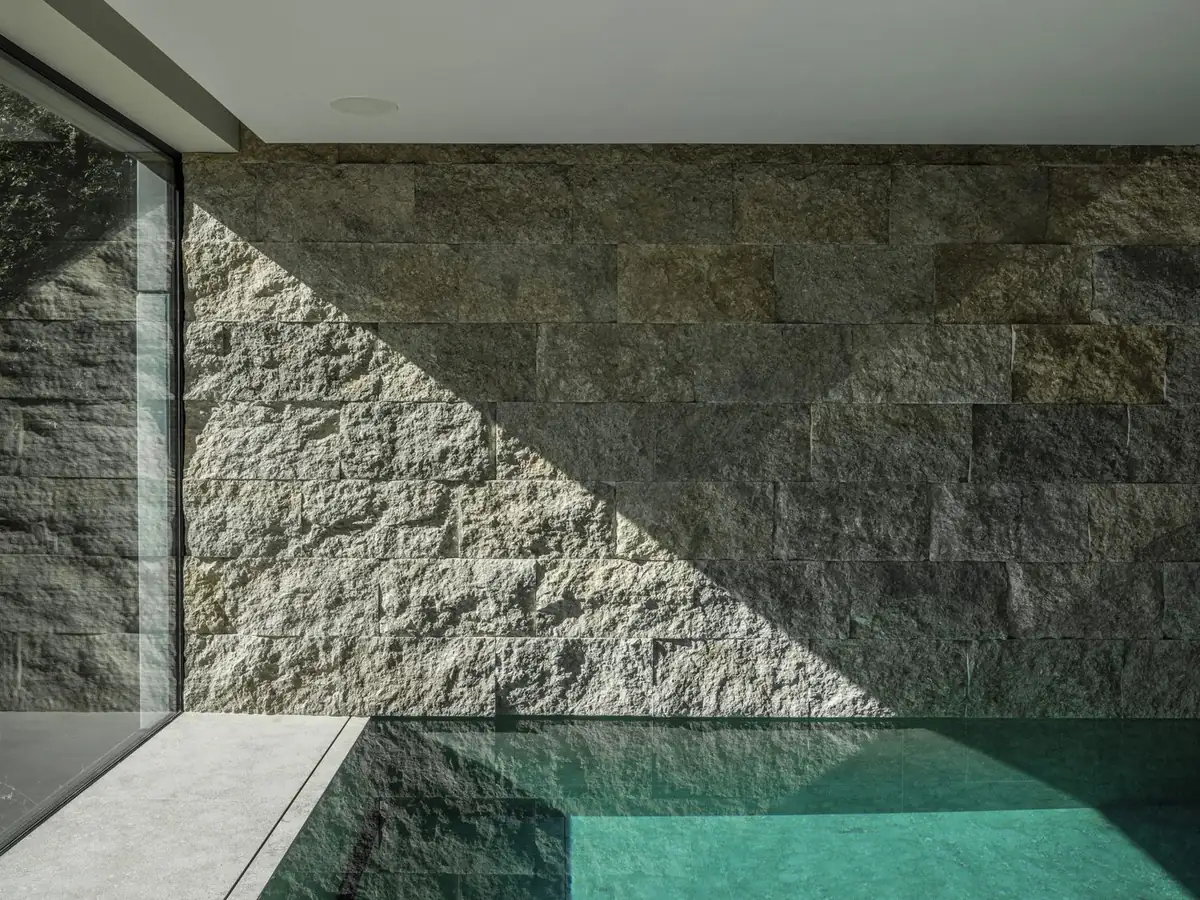
A different finish was used for the swimming pool at Villa a Waterloo: spacco, or split stone, which exposes the natural face of the break and gives the wall the look of raw rock.
Grigio Alpi: the grey stone with macrofossils
Grigio Alpi is a variety of Vicenza stone rediscovered by modern architecture, with a typical light grey colour and characterised by the presence of macrofossils. Grassi Pietre extracts it only from underground quarries in the Colli Berici, and the manufacturer singles it out as the variety most used in contemporary projects.
It is suitable for interior and exterior cladding, stairs, interior floors and any other building element. Among the grey Vicenza stones, the manufacturer also offers Grigio Argento, which is darker in tone.
Technical data
The 2018 CE test sheet declares Grigio Alpi compliant with the standards for exterior paving slabs (UNI EN 1341), cladding (UNI EN 1469), modular tiles (UNI EN 12057) and floors and stairs (UNI EN 12058). These are its declared mean values:
The slip values refer to untreated stone. The sheet also includes breaking load at dowel hole tests (UNI EN 13364) on 30 and 40 mm pieces, a figure needed to size a façade cladding.
Villa a Waterloo: Grigio Alpi in the kitchen and the pool
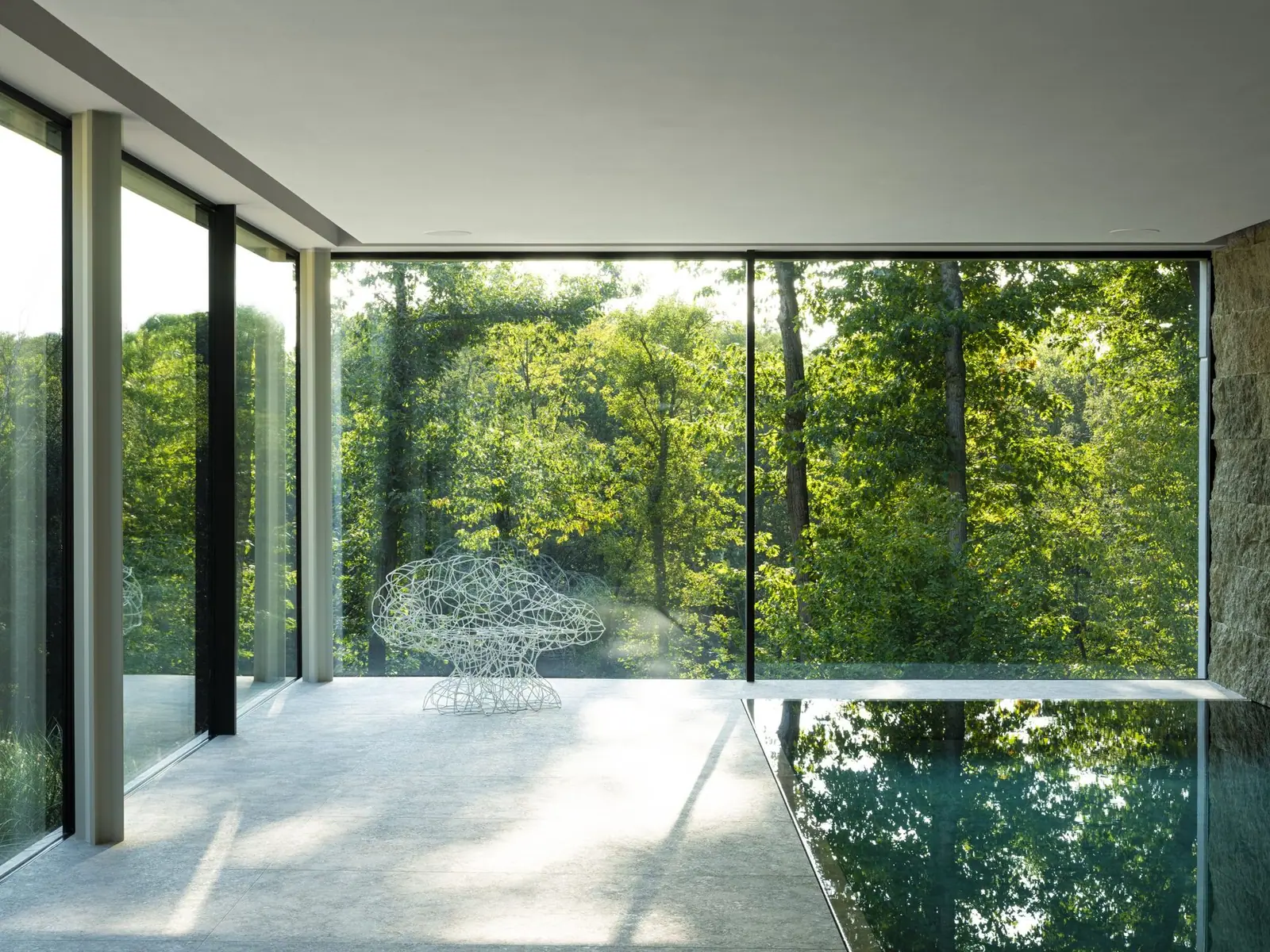
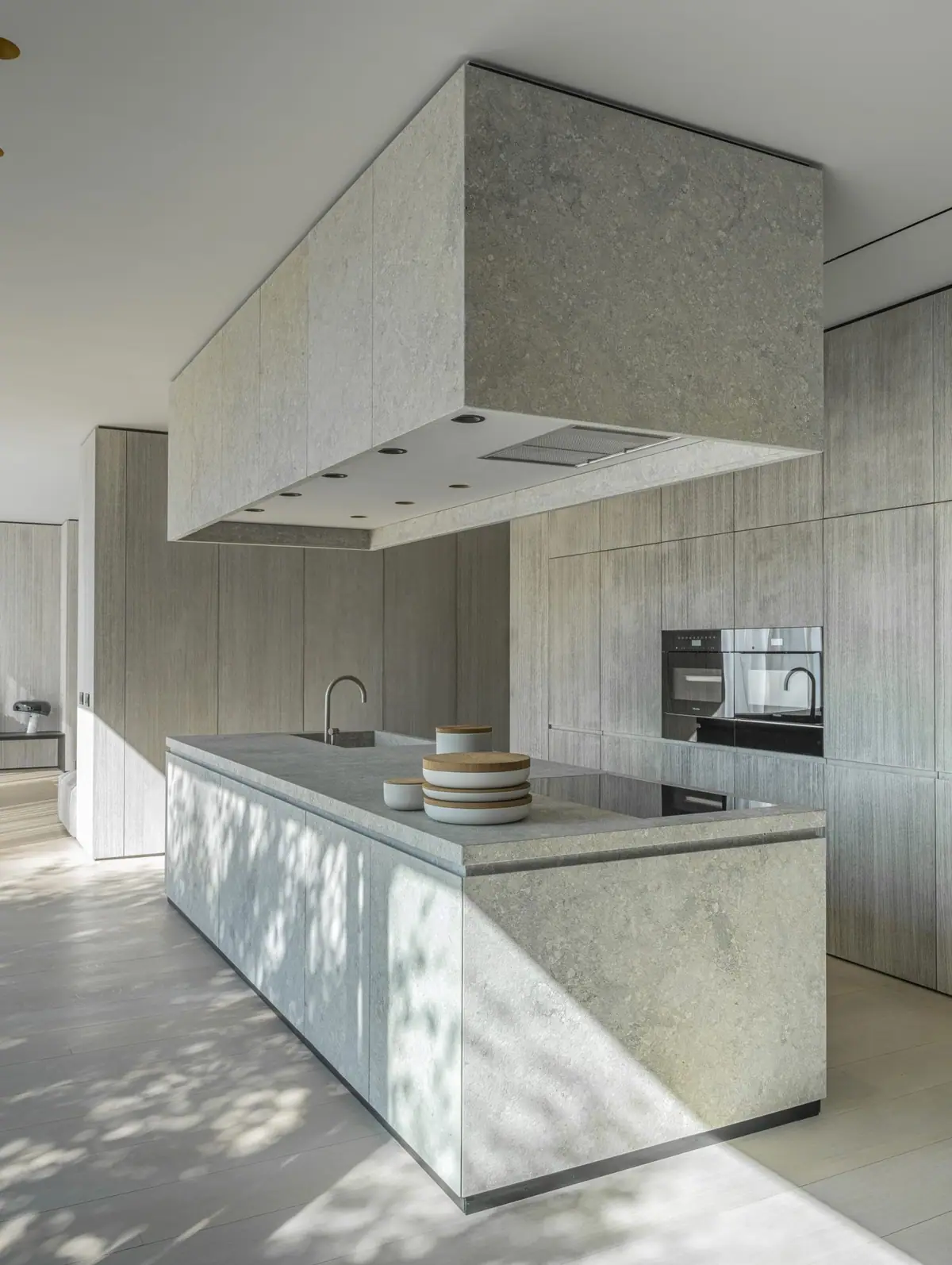
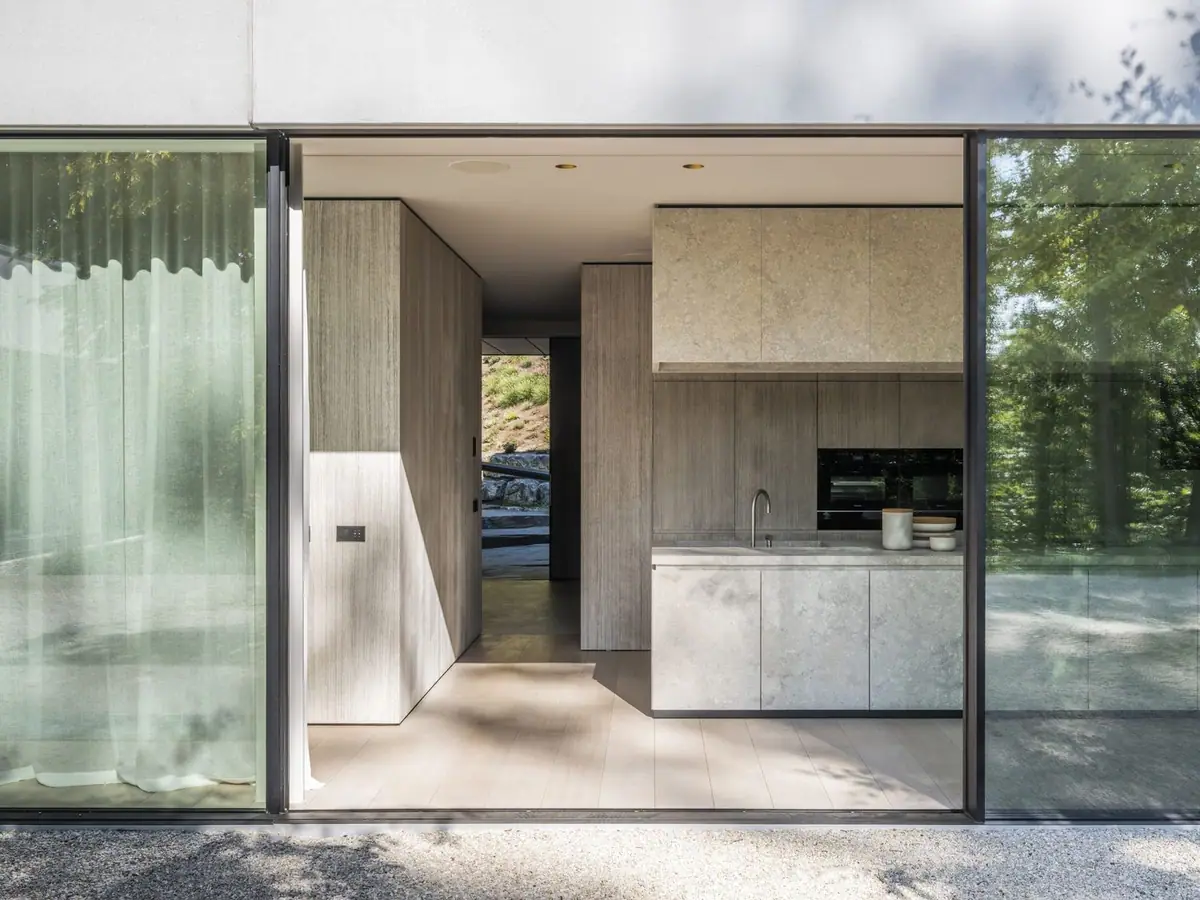
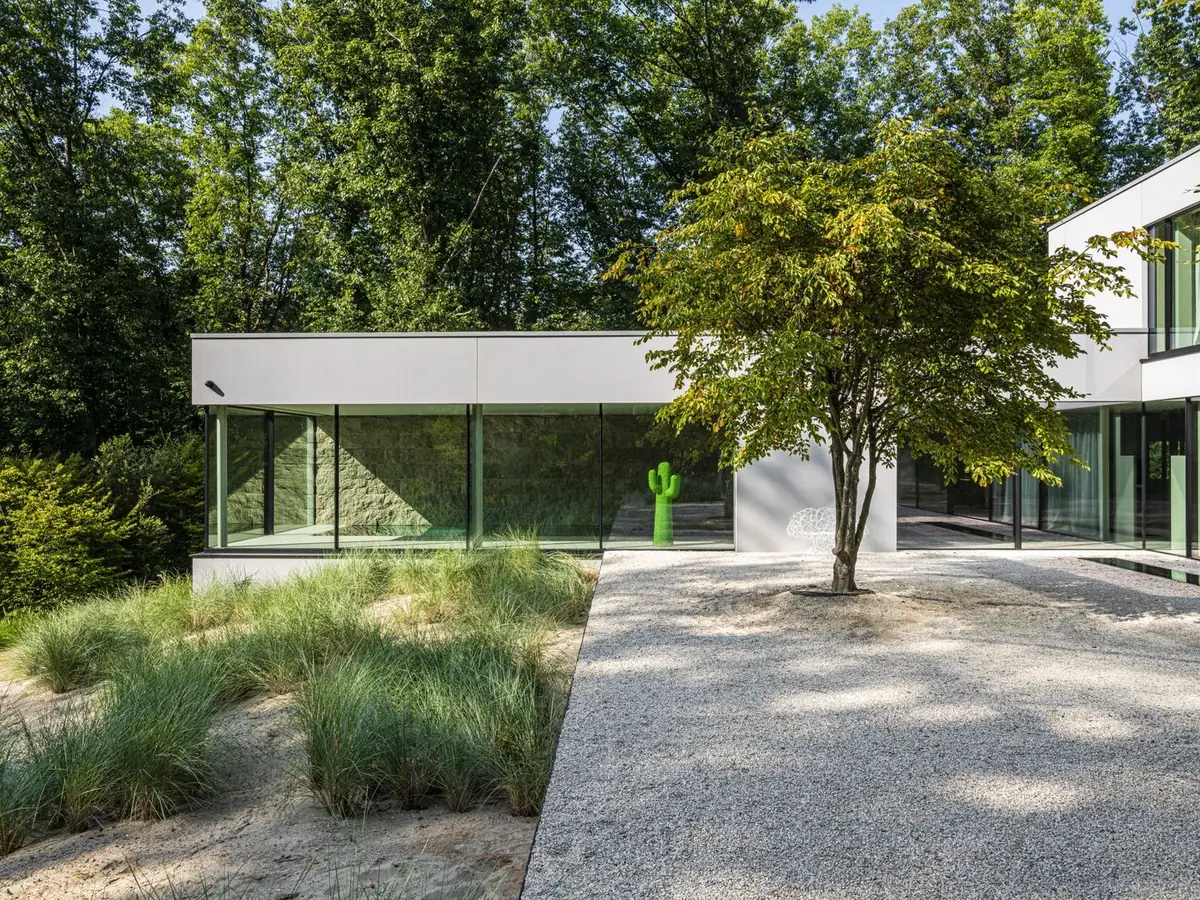
Set in the countryside around Waterloo, in Belgium, this villa was designed to reflect its natural surroundings. According to Grassi Pietre, the geometric forms and clean lines are emphasised by the play of light and shadow from its large windows, and the fossils and nuances of the Vicenza stone sit alongside the natural tones of the wood. Stone-Ideas attributes the design to Instore.
The kitchen island, one of the key pieces of the house, is clad in large pieces of Grigio Alpi to give the effect of a single monolithic block. The indoor pool works as a transitional space between inside and outside: its wall is Grigio Alpi in a spacco finish, with the look and feel of raw rock. For the pool basin, floor and surroundings, another of the company’s grey stones was chosen in a flamed finish that brings out its fossils; the project sheet identifies it as Grigio Palladio, and the note published by Stone-Ideas in 2021 as Grigio Rustik.
Key points when specifying Vicenza stone
Before specifying it, these points are worth settling with the manufacturer:
- Variety and sample: it is a natural stone with fossils and variations in tone between blocks. Ask for samples of the chosen finish and, on large projects, for the material to be preselected at the quarry, a service Grassi Pietre offers.
- Finish according to use: the finish changes the slip resistance. On wet interior floors or outdoor areas, give priority to textured finishes and check the value for the specific finish on the data sheet.
- Porosity and treatment: with an open porosity of 12% and water absorption of 5.2% (Grigio Alpi), a protective treatment is advisable. Ask the manufacturer for the recommended product and maintenance for each use.
- Exterior use and frost: Grigio Alpi loses 16% of its flexural strength after 56 freeze–thaw cycles. For exterior paving in cold climates, confirm the variety, finish and thickness with the manufacturer.
- Façades: the thickness and anchoring system are sized using the breaking load at dowel hole tests on the technical sheet.
Grassi Pietre, in Nanto since 1850
The Grassi family began working in the Nanto quarries in 1850, and the company is still family-owned. Its headquarters, factory and showroom are in Nanto (Vicenza). From there it extracts the different varieties of Vicenza stone from its own underground quarries and processes them with modern machinery and specialised craftsmen.
According to the company itself, its service covers everything from selecting the material at the quarry to sampling, project engineering, on-site assistance and installation, which it entrusts to specialist installers it has worked with for years. A product that calls for continuous research and brings elegance, innovation and modernity to interiors.
Frequently asked questions
- Can Vicenza stone be used outdoors?
- Yes. The manufacturer recommends it for exterior cladding and façades, and Pietra del Mare in particular for large façades. The CE sheet for Grigio Alpi includes the standard for exterior paving (UNI EN 1341) and a frost resistance test; for exterior floors in cold climates, it is advisable to confirm the variety, finish and thickness with Grassi Pietre.
- Why is it said to harden over time?
- It is a relatively soft limestone when quarried. Over time, calcium carbonate is deposited on the surface and forms a more compact, less porous layer that is more resistant to the weather.
- What is the difference between Grigio Alpi and Grigio Argento?
- Grigio Alpi is light grey and characterised by its macrofossils. Grigio Argento is a darker grey and shares its geological origin with Giallo Dorato; only the grey colour of the limestone matrix differs.
- Does it need treatment?
- It is a porous stone (Grigio Alpi has an open porosity of 12%), so a protective treatment is recommended, especially in kitchens, bathrooms and outdoors. In its CE sheet, Grassi Pietre tested the slip resistance of the stone treated with a water-based water- and oil-repellent from Fila and a coat of wax.
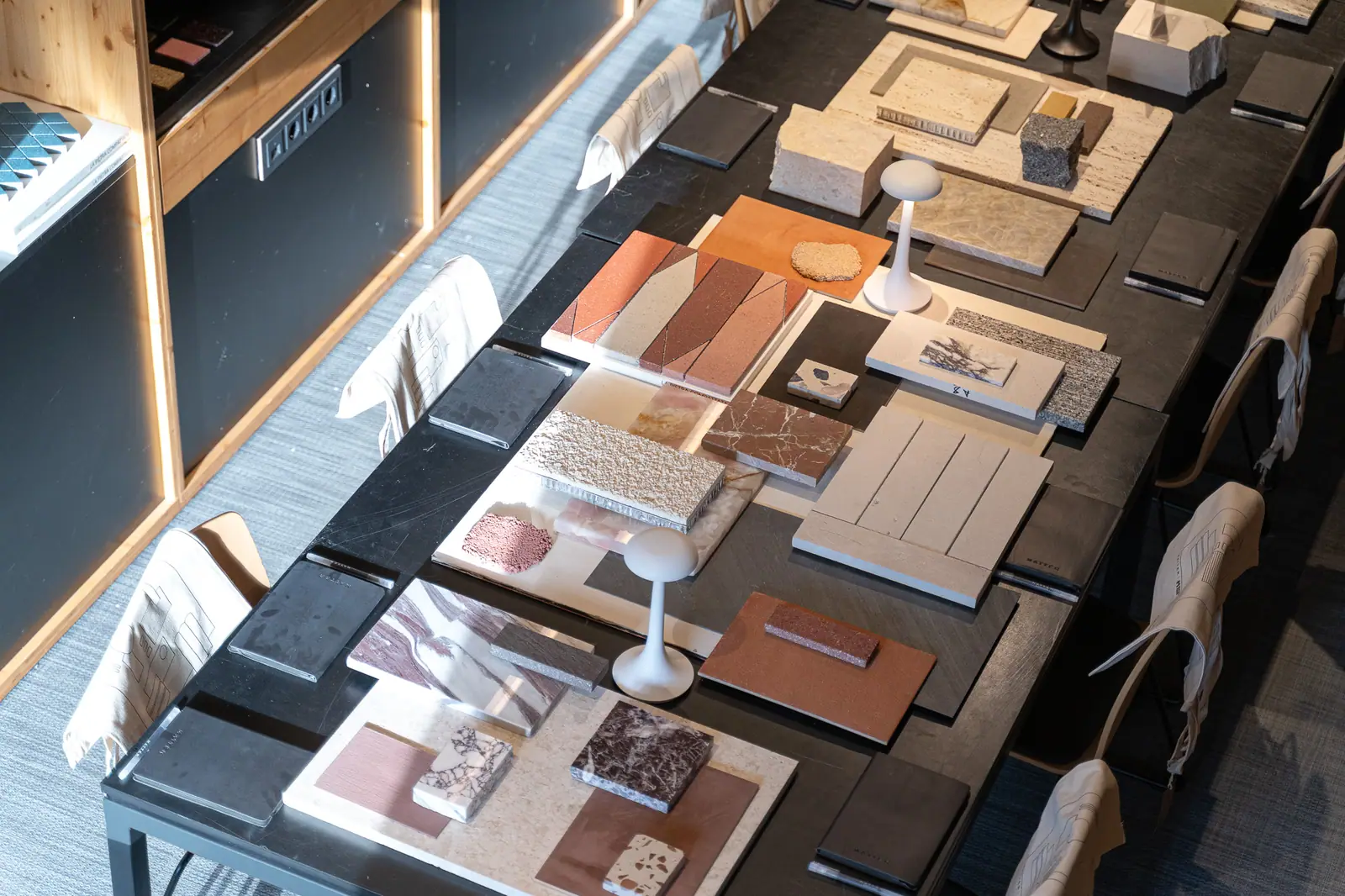
The colour variations, fossils and texture of each Vicenza stone finish are best appreciated with the pieces in your hand. At Matter we help you choose the natural stone for your project and compare materials and finishes with your technical team.
Book your visit to Matter.
Book a visit