Stone Materials
Formma's Limestone, La Pietra Compattata and Limecoat lime finishes: from natural stone to lime, at Matter Barcelona and Matter Madrid.
EventsMatter Session6 of 79 min read
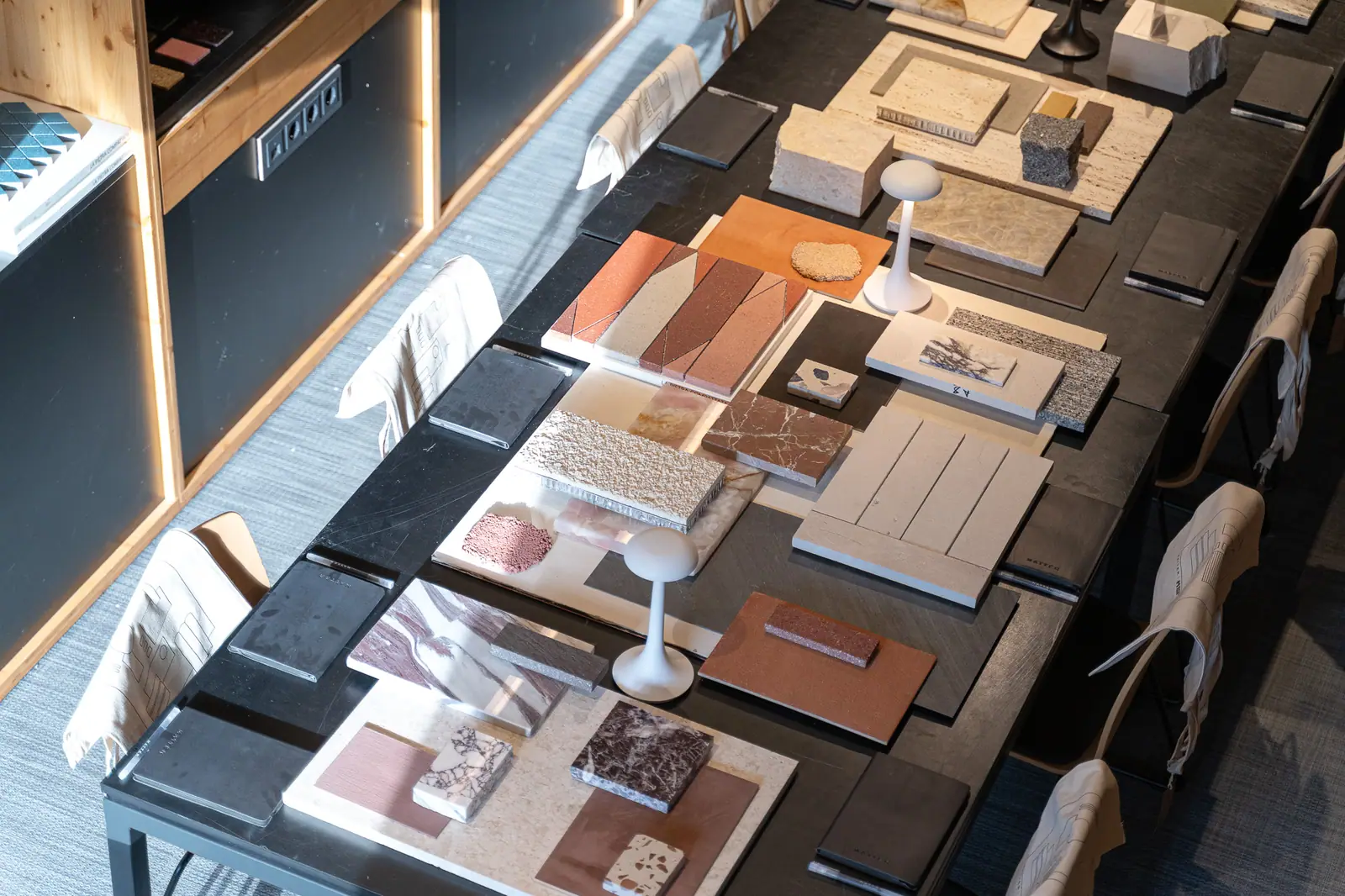
At MATTER SESSION 08: Stone materials, held at Matter Barcelona and Matter Madrid, we created a training space for architects and interior designers interested in the potential of stone and mineral-based materials: traditional materials that, even today, bring solidity, character and timelessness to contemporary projects.
We were joined by 40 heads of architecture and interior design studios across both cities. In Barcelona and Madrid alike, studio leaders wanted to learn first-hand about the properties of stone materials, their current finishes and formats, and the new solutions that technology and innovation have derived from them.
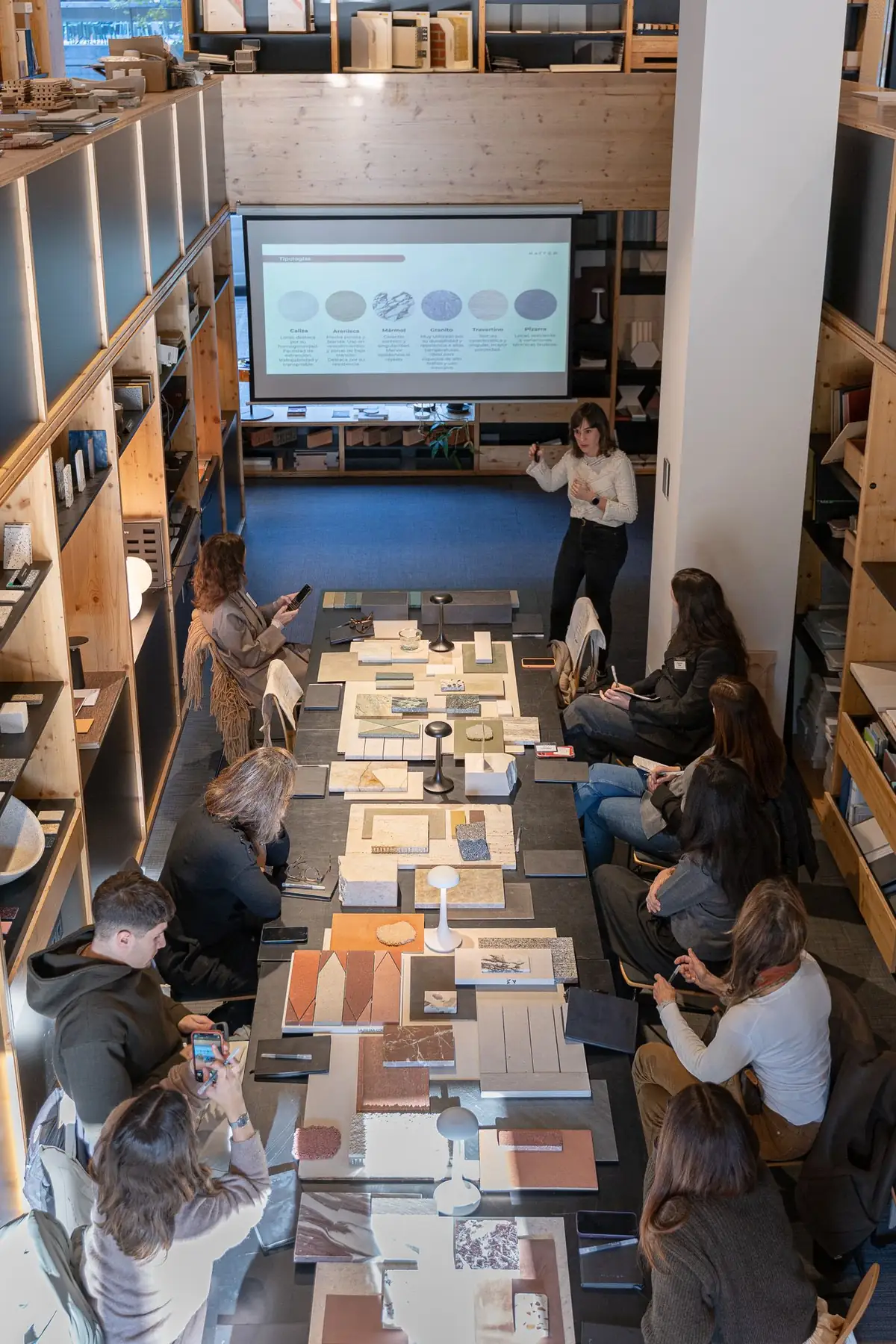
Led by the Matter team, the session followed a three-stage journey: natural stone in its purest form, with Formma's Limestone range; regenerated materials made from fragments and waste, with La Pietra Compattata; and lime, the essence of stone, turned into a wall finish with Formma's Limecoat line. In this article we cover each part and the technical data worth having to hand when specifying them.
Stone: ever-present in architecture and design
Stone has accompanied architecture since its origins. Its presence in the great historic buildings —from Stonehenge to the Gothic cathedrals— reflects a desire for permanence, solidity and transcendence over time. For centuries, people developed increasingly complex tools, transport systems and construction techniques to extract it, work it and build ever more slender and precise structures with it.
With industrialisation and the arrival of new materials in the 20th century, architecture gradually abandoned load-bearing walls in favour of steel and concrete frames. This shift transformed the way we build and also the role of stone, which went from structural element to a material for envelopes and cladding.
At the Matter Session we proposed a journey through stone materials, from natural rock in its purest state to its most essential and transformed expression: a way of understanding how materials with very different behaviours, aesthetics and applications emerge from the same mineral root.

Main types of natural stone
The session reviewed the most common types, with their composition, properties and most suitable applications:
- Limestone: one of the most widely used stones thanks to its ease of extraction, workability and versatility. Breathable, with good thermal performance and a neutral tone, it is highly valued for flooring, interior cladding and ventilated façades.
- Sandstone: a porous stone with a natural texture, formed mainly of quartz grains. Its warm appearance makes it ideal for interior wall cladding and low-traffic areas.
- Marble: a noble stone of high density and natural lustre, prized for the richness of its colours and veining. Softer than granite, it remains a leading material for interiors, bathrooms and worktops, bearing in mind its sensitivity to acids and stains.
- Granite: one of the hardest and most resistant natural stones. Its dense structure makes it particularly suitable for high-traffic floors, worktops and exteriors, where maximum durability is required.
- Travertine: a sedimentary limestone recognisable by its natural pores and veins. It brings warmth and texture to interior and exterior cladding, always with proper sealing to ensure its durability.
- Slate: a very strong metamorphic rock that splits into thin sheets. It is used for façades, roofs and non-slip flooring, and stands out for its performance under temperature changes and its expressiveness.
A practical rule for specification: limestone, travertine and marble are carbonate rocks and react with acids, so lemon, vinegar or descaling cleaners can leave marks. In fact, marble is limestone recrystallised by pressure and temperature, and a very dense limestone can behave like marble. Granite and sandstone, being silica-based, are generally less sensitive to acids.
How to read a natural stone data sheet
Two stones of the same colour can perform very differently. Before specifying a natural stone, it is worth checking its technical data sheet, based on standardised tests. These are the most informative values:
- Apparent density and open porosity (EN 1936): the lower the porosity, the less water and staining the stone absorbs and the better it performs in wet areas and outdoors.
- Compressive strength (EN 1926) and flexural strength (EN 12372): they measure the stone's ability to bear loads and determine the thickness of the pieces, especially for flooring and large formats.
- Abrasion resistance (EN 14157): expressed as the length in millimetres of the groove left by an abrasive wheel; the shorter the groove, the better the stone resists wear from foot traffic.
- Frost resistance (EN 12371): compares strength before and after freeze-thaw cycles; it is decisive for exterior paving and façades in cold climates.
- Reaction to fire: natural stone is non-combustible; the limestones presented at the session are class A1, the highest.

Natural stone in its purest form: Formma's Limestone
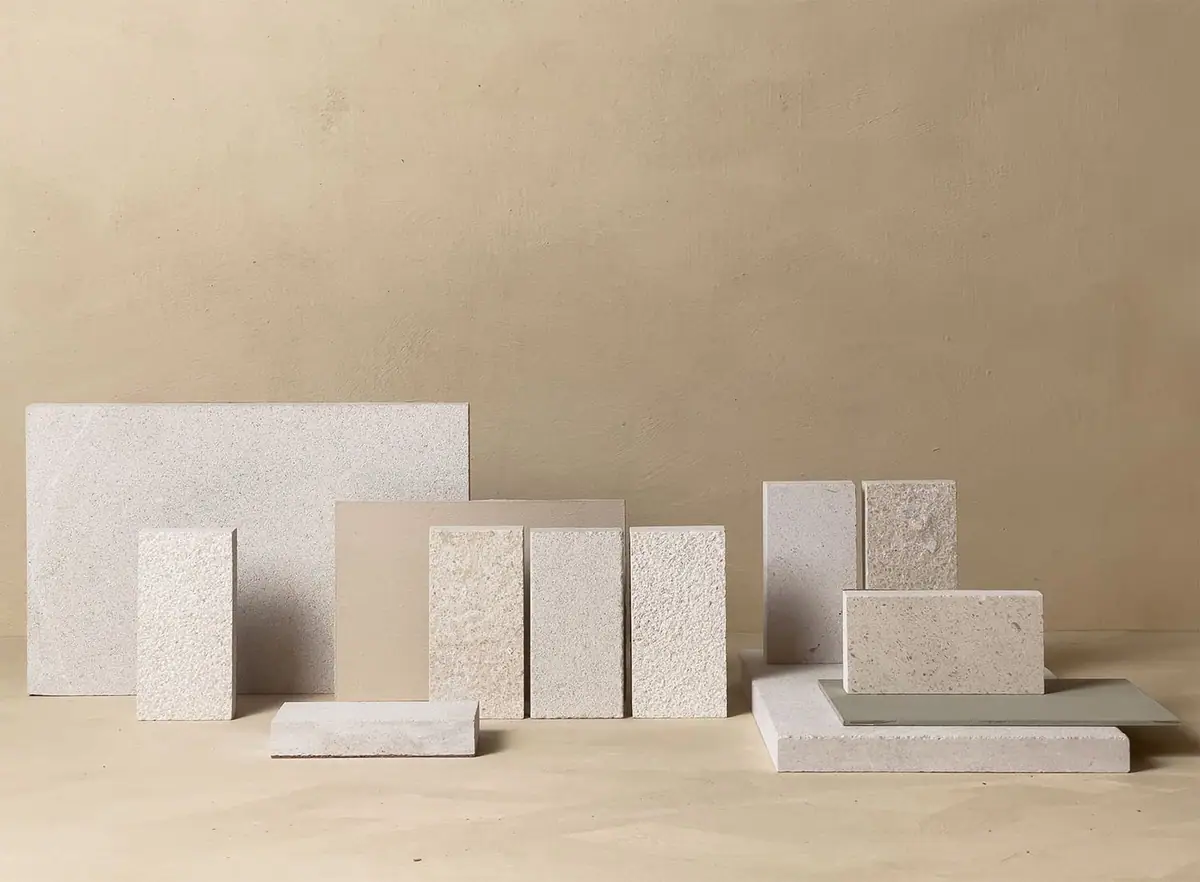
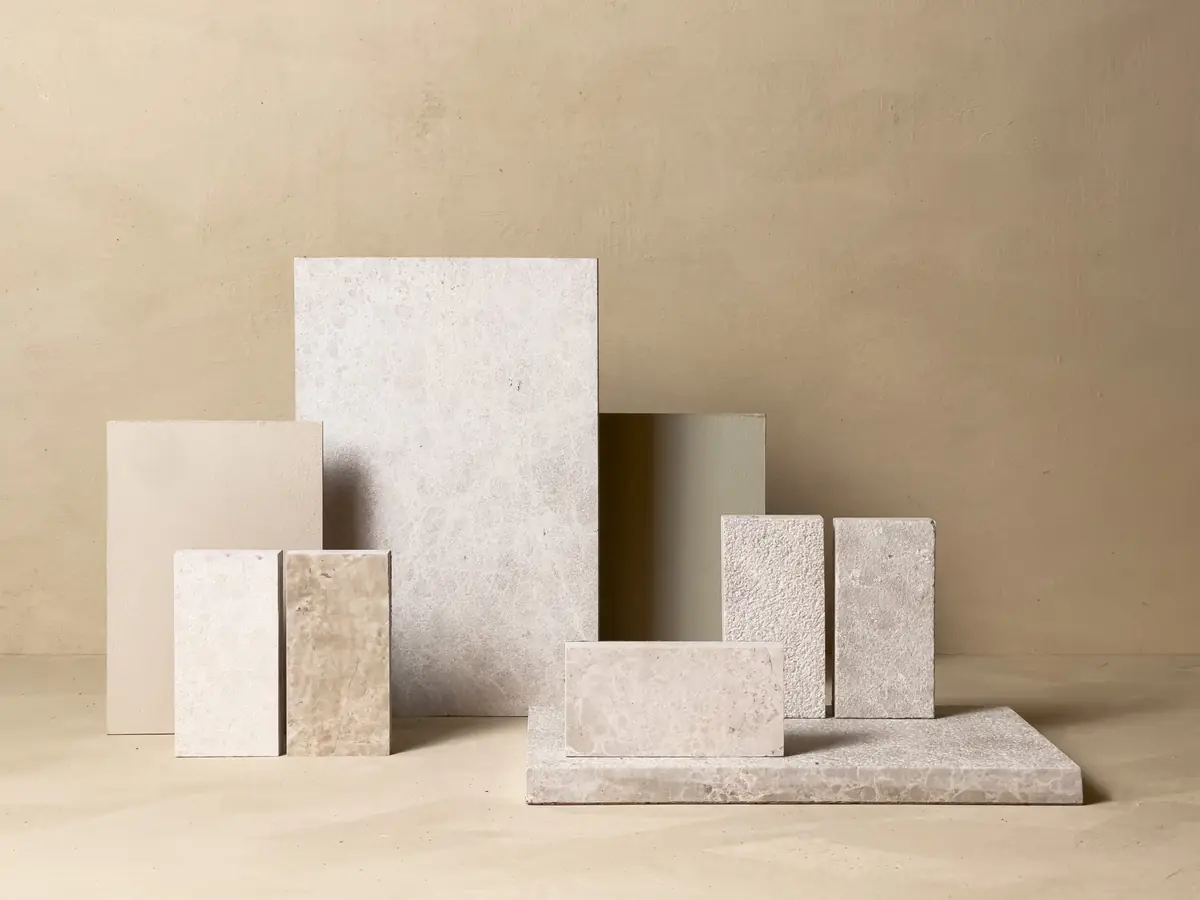
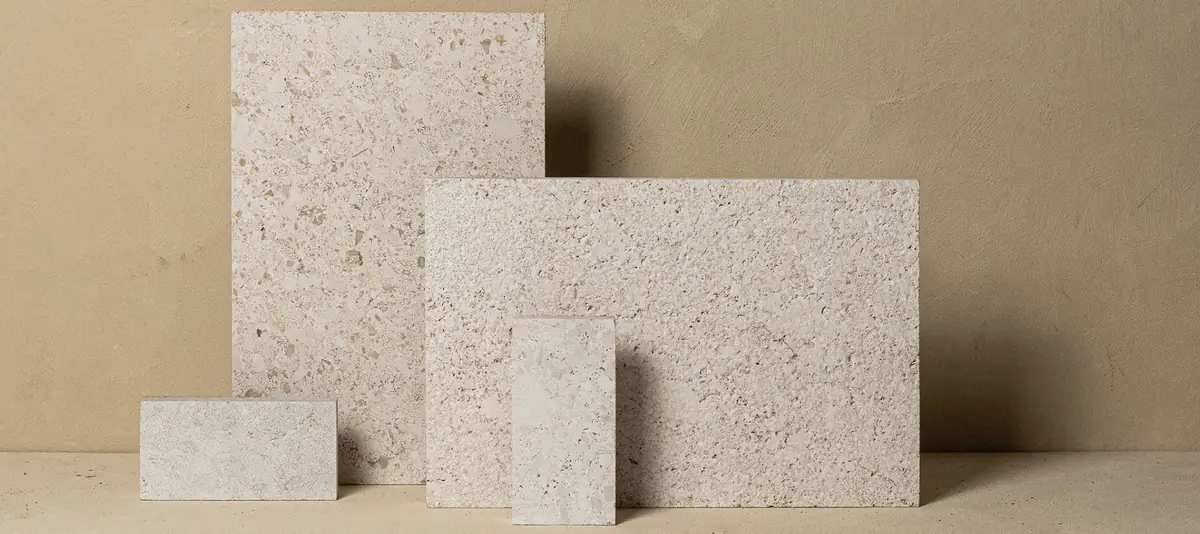
Three pale, compact, low-porosity limestones.
Formma is a mineral finishes brand created by architects and focused on lime and natural stone. With its Limestone line, a selection of limestones the brand links to vernacular architecture and locally sourced materials, we focused on how the same mineral origin can give rise to materials with very different behaviours and expressions. Sand, beige and warm grey tones, with the occasional presence of veins and fossils, give these limestones a serene, timeless aesthetic that blends naturally into the built environment.
LimeIvory is a sand-toned limestone with light greyish hues, made up mainly of calcite and quartz, which occasionally shows fossils. LimePearl, compact and fine-grained, combines a light warm grey with branching creamy-white veinlets. LimeAurea, a light beige with cream hues, is the most expressive: its visible sediments, fossils and natural cavities make every slab different.
We highlighted the technical value of these stones, the range of finishes and the importance of choosing them according to use. All three are available sawn, honed, bush-hammered and sandblasted (brushed or not), aged and antica; LimeIvory and LimePearl also come shot-blasted and brushed, and LimeIvory, in addition, flamed and brushed. According to the manufacturer's application chart, the honed finish suits cladding, interior flooring, kitchens and pool interiors, while the textured finishes —bush-hammered, sandblasted or shot-blasted— are indicated for exterior paving and wet areas.
With controlled porosity and surfaces that can be sealed in more demanding applications —in LimeAurea, for example, the pores are sealed for worktops and shower trays—, these limestones balance natural beauty, durability and functionality. After 56 freeze-thaw cycles, LimeIvory and LimePearl lose no flexural strength and LimeAurea loses 8 %. Formma supplies them in rectangular and square formats, from 30×60 to 80×80 cm and up to 60×120 cm, random lengths in widths of 30, 40 and 50 cm, composite formats and small decorative formats.
For maintenance, the manufacturer recommends a protective sealer and neutral cleaners, never acids or descalers, and advises against placing very hot objects on the stone. Stone remains a fully relevant material when it is understood and specified with knowledge.
An innovative stone material developed from circularity
La Pietra Compattata: recovered stone, pressed and never fired.
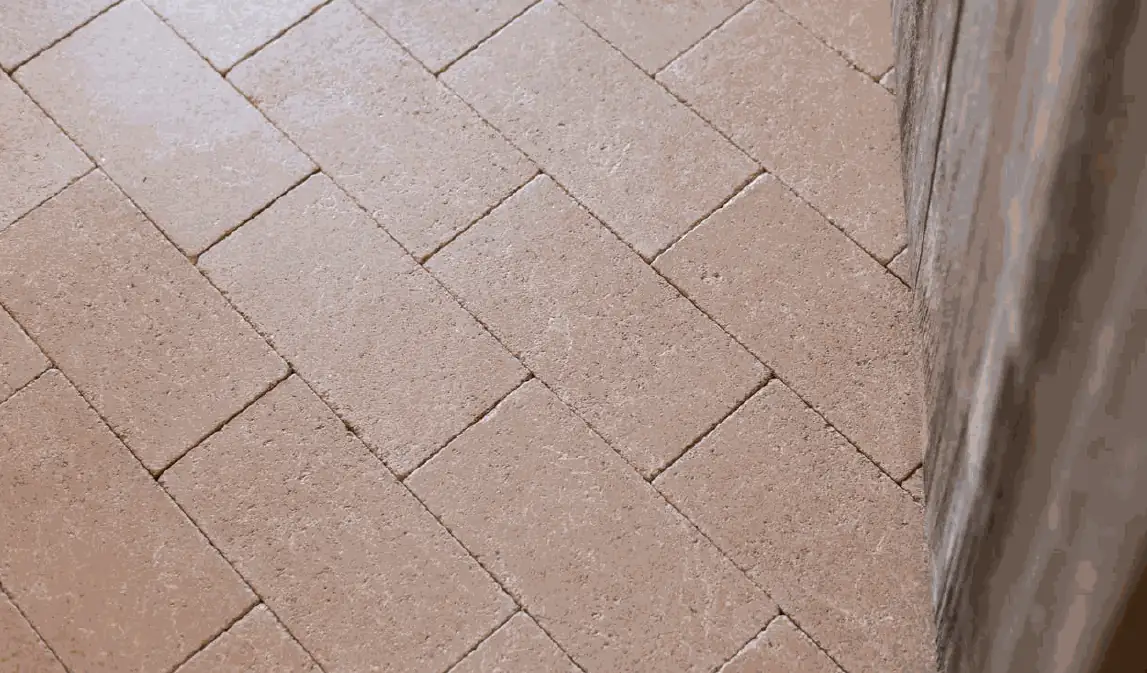
We presented La Pietra Compattata, an Italian company based in Sassuolo (Modena) that makes flooring and cladding from natural raw materials —porphyry, quartz and granite— recovered from stone processing. These offcuts are ground, mixed into a proprietary paste and compacted by wet pressing; the pieces are then dried at room temperature, without going into a kiln. According to the manufacturer, because there is no firing the process produces no CO2 emissions, and the water used for cutting and tumbling is recovered and reused.
The result is a homogeneous, resistant and stable surface in two technical versions: in_PIETRA, factory-treated and finished with wax, for interiors —kitchens and showers included—, and out_PIETRA, untreated, breathable, frost-proof, non-slip and salt-resistant, for exteriors, 22 mm thick where there is vehicle traffic. It is an interesting alternative for projects seeking durability, material coherence and a lower environmental impact, and it also stands out for its aesthetics: a carefully developed colour palette —the Cromie collection alone has 20 colours— and a wide variety of formats.
Mineral powder for healthier spaces: Formma's lime finishes
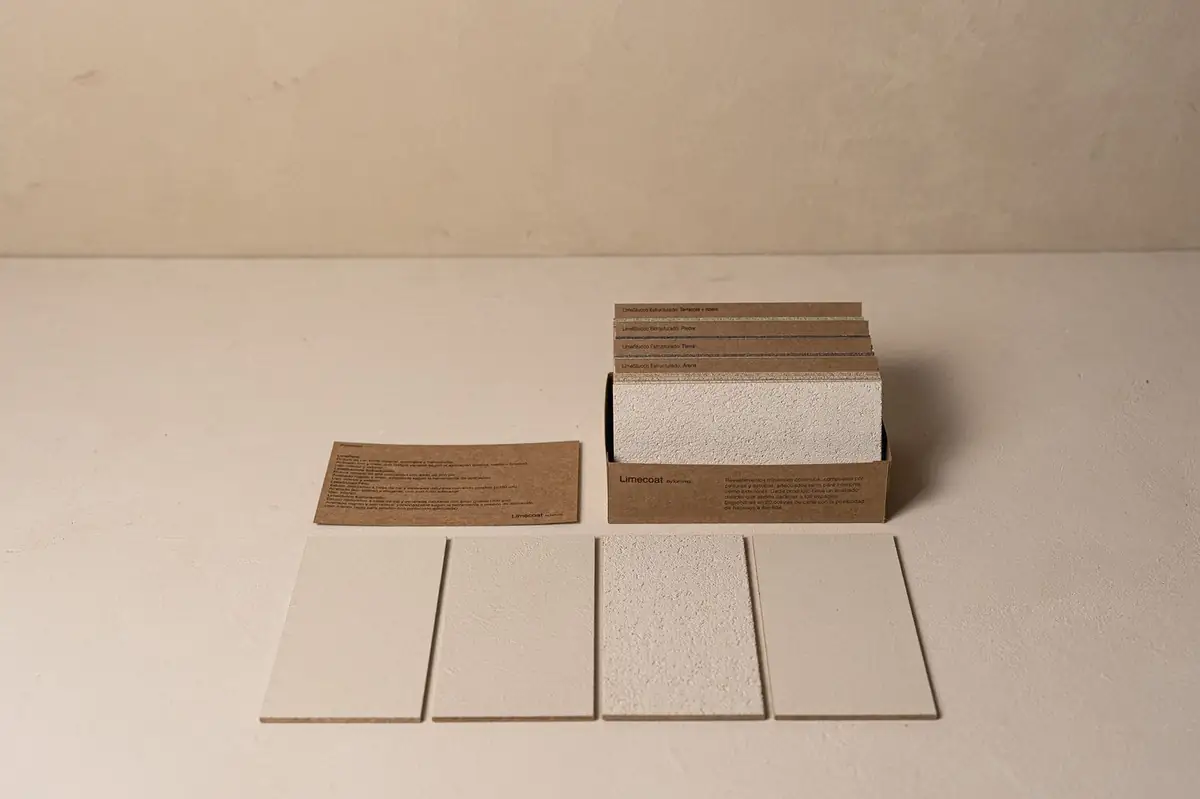
Limecoat: lime paints, stuccoes and micro-mortars.
Formma also works with 100 % mineral finishes through Limecoat, its line made from air lime, aggregates and mineral pigments. According to the brand, it is a healthy alternative to synthetic coatings, free of volatile organic compounds (VOCs). Its breathability helps regulate indoor humidity and prevent condensation, bringing comfort and well-being to spaces.
The range comprises four systems with different uses, from a paint applied by roller to a micro-mortar suitable for floors:
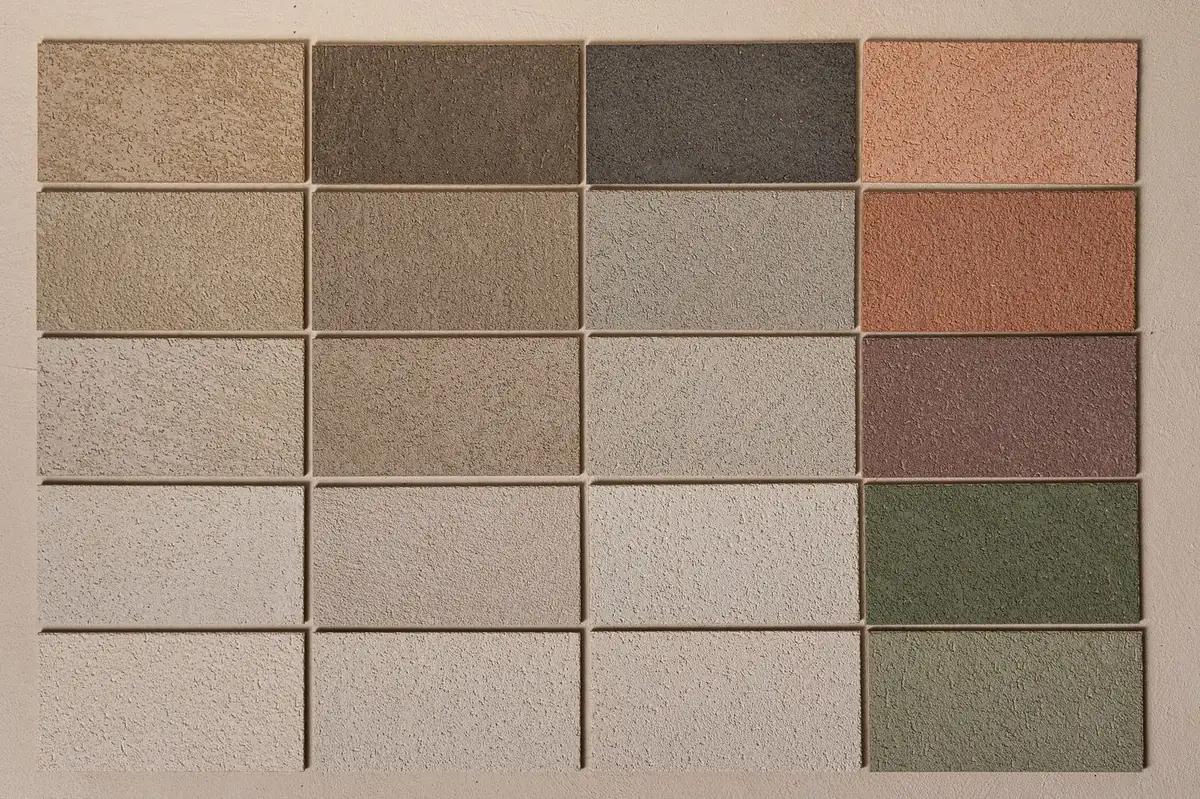
Beyond its technical performance, we also highlighted the aesthetic value of the palette: 25 colours made with mineral pigments, grouped into the Arena, Tierra, Piedra, Cal, Terracota and Abeto families, with custom colours available. The finish can be applied as a paint —LimePaint, with a fine finish, or LimeDolomite, with a rough one— or as a stucco: with LimeStucco a thin layer of about 2 mm is trowelled on in two coats, with a fine aggregate (under 100 µm) or a structured one (around 700 µm).
Lime is highly alkaline —the LimePaint data sheet gives a pH of 13—, which hinders the growth of mould and bacteria. Its durability and the possibility of renewing it with fresh coats make it particularly suitable for homes, workplaces, educational settings and heritage work. Its limits should be planned for: according to the manufacturer, LimePaint is not suitable for floors, shower interiors or kitchen splashbacks exposed to splashes and grease. Rethinking matter is also a way of designing healthier, more responsible spaces.
Key takeaways from the session
- The same mineral root: natural stone, recomposed stone and lime come from the same matter yet offer very different behaviours, aesthetics and uses.
- The finish determines the use: in the same limestone, a honed and a bush-hammered finish have different applications; the application chart matters as much as the colour.
- The data sheet before the sample: porosity, flexural strength, abrasion and frost resistance tell you where a stone can go.
- Circularity and health: recovered stone without firing and VOC-free lime finishes open up lower-impact alternatives, which should be checked against each manufacturer's documentation.
Frequently asked questions
- What is the difference between limestone and marble?
- Both are calcium carbonate. Limestone is a sedimentary rock that keeps its texture and often fossils; marble is limestone recrystallised by pressure and temperature. A very dense, low-porosity limestone can behave like marble. Both are sensitive to acids.
- Can limestone be used outdoors and in bathrooms?
- Yes, as long as the stone and finish are chosen carefully. In Formma's Limestone line, the textured finishes —bush-hammered, sandblasted or shot-blasted— are indicated for exterior paving and wet areas, and the manufacturer recommends a protective sealer and cleaning with neutral products. In cold climates, check the frost resistance on the data sheet.
- Is La Pietra Compattata natural stone?
- It is made from natural stone —porphyry, quartz and granite recovered from stone processing— which is ground, compacted by pressing and dried without firing. It is not quarried block stone but a recomposed stone, made in an indoor version (in_PIETRA) and an outdoor version (out_PIETRA).
- Can lime paint be used in bathrooms and kitchens?
- With limitations. According to Formma, LimePaint can be used in bathrooms outside the shower area and on kitchen walls not directly exposed to water, grease or intense heat. For floors and more demanding surfaces, the brand offers LimeTech, a lime micro-mortar.
Thank you for being part of the session
Once again, this was a training session aligned with Matter's mission: to facilitate decision-making on the materiality of projects. Thank you to everyone who took part. We continue to drive knowledge and innovation in the sector to create more and better projects.
Book your visit to Matter to discover our Materials Library and talk about the stone and mineral materials for your next project.
Book a visit