Clay boards by Ecoclay
Natural clay boards for dry-built partitions, wall linings and suspended ceilings: composition, technical data, installation, finishes and Ecoclay projects.
Products7 min read
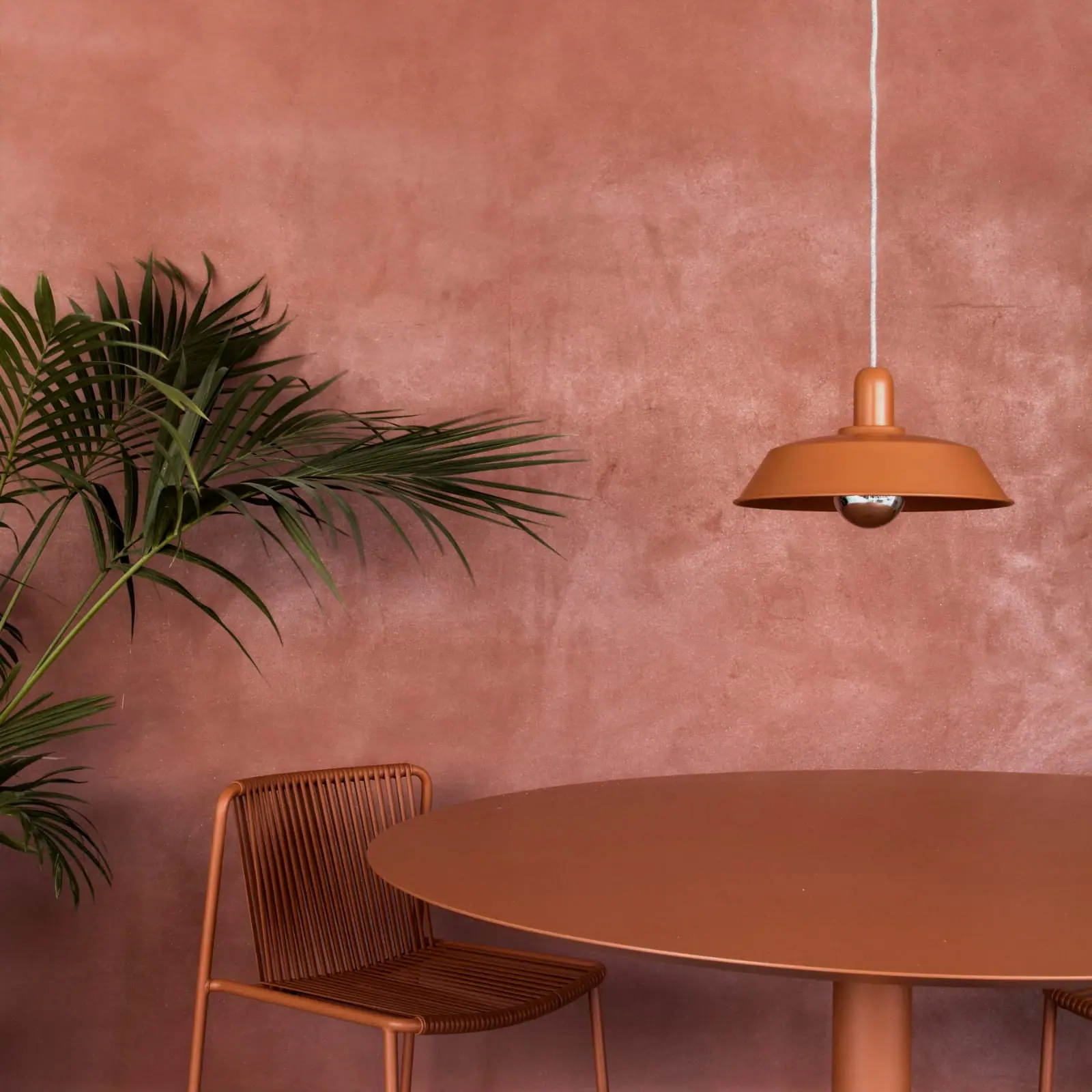
ecoclayPLAC boards are Ecoclay’s line of 100% natural clay boards for the dry construction of interior partitions, wall linings and suspended ceilings. They combine the convenience of dry construction – boards screwed to a frame and cut on site – with the qualities that have made clay one of the benchmark materials of natural building: it regulates humidity, lets water vapour through and provides thermal mass and sound absorption.
In this article we look at what the board is made of and its technical data according to the manufacturer, what it brings to an interior, where it makes sense to use it and where it does not, how it is installed and finished, and three projects in which the system has been used.
What an ecoclayPLAC clay board is
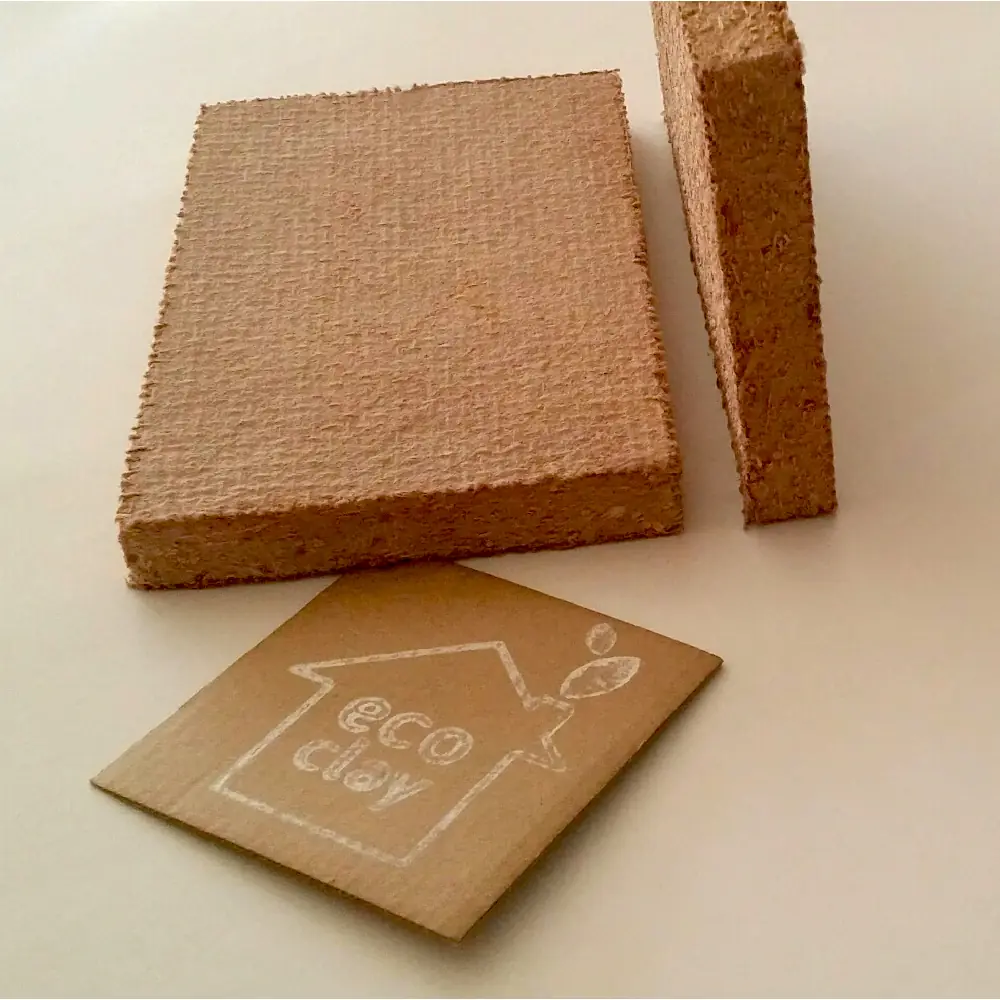
According to Ecoclay’s technical data sheet, each board consists of clay mortar with plant fibres and a jute mesh on both faces. The core of the board has a silicate treatment to prevent the growth of micro-organisms. The clay is used without additives: Ecoclay extracts it from its deposit in Teruel, formed 98 million years ago according to the company, and manufactures its products there.
The result is a rigid 2 cm board that is worked like any dry-construction board, but whose surface is the clay itself: once jointed and coated with a clay mortar or paint, the entire wall keeps the same hygroscopic properties.
Technical data
The table sets out the characteristics in the ecoclayPLAC technical data sheet current when this article was published (revision 12).
2025 update: revision 17 of the technical data sheet, published in January 2025, lists a format of 120 × 60 × 2 cm (0.72 m² per board), 34.7 kg/m² and 29 dB of sound insulation. For other sizes, the manufacturer asks to be consulted; the current format should be confirmed before setting out a partition.
What clay brings to an interior
Regulating room humidity, permeability to water vapour, low thermal conductivity, high thermal mass and acoustic performance are the properties Ecoclay highlights in its boards. For designers, they translate into the following criteria:
- Humidity regulation: clay absorbs water vapour when relative humidity rises and releases it when it falls. This hygroscopicity is the property Ecoclay regards as the secret of the material.
- Breathable walls: with a μ factor of between 4.8 and 11.2, the board lets water vapour through. Ecoclay illustrates the difference by comparing vapour diffusion in its clay mortar and in a conventional gypsum plaster and plastic paint finish.
- Thermal mass: the mass of the board, around 32 kg/m², helps dampen temperature fluctuations; the manufacturer links this to greater comfort at lower energy cost.
- Acoustics: a sound absorption coefficient α of 0.54 at 20 mm, according to the data sheet. That is why Ecoclay recommends its finishes for restaurants and auditoriums, where reverberation is a problem.
- Air quality: the manufacturer declares 0 VOCs and states that clay helps neutralise odours and toxic particles within its structure.
Ecoclay also stresses its fire performance: the board has a reaction-to-fire classification of A2-s1,d0, meaning a very limited contribution to fire, low smoke production and no flaming droplets.
Where to use it
ecoclayPLAC is a contemporary material well suited to ecological architecture. It can be used in conventional homes and in new-build, refurbished or restored buildings; the manufacturer also recommends it for the restoration of historic buildings.
Because of the benefits it attributes to clay for indoor environmental health, Ecoclay proposes its finishes for particularly sensitive spaces such as health centres, hospitals, schools, offices and museums, and, for its sound-absorbing capacity, for restaurants and auditoriums. In housing, one of the uses it suggests is internal thermal insulation (SATI in Spanish) for façades without a cavity or insulation: a lining of clay boards that is jointed and finished with clay mortar or paint.
There is one limitation worth bearing in mind: as a porous finish, Ecoclay considers it very suitable for bathrooms – it absorbs vapour and odours – but does not advise using it inside the shower or behind the WC, bidet or washbasin. In those areas it recommends a non-porous material up to the necessary height, with clay above. Its mortars should also not be applied where leaks are expected or where they may be immersed in water.
Dry installation
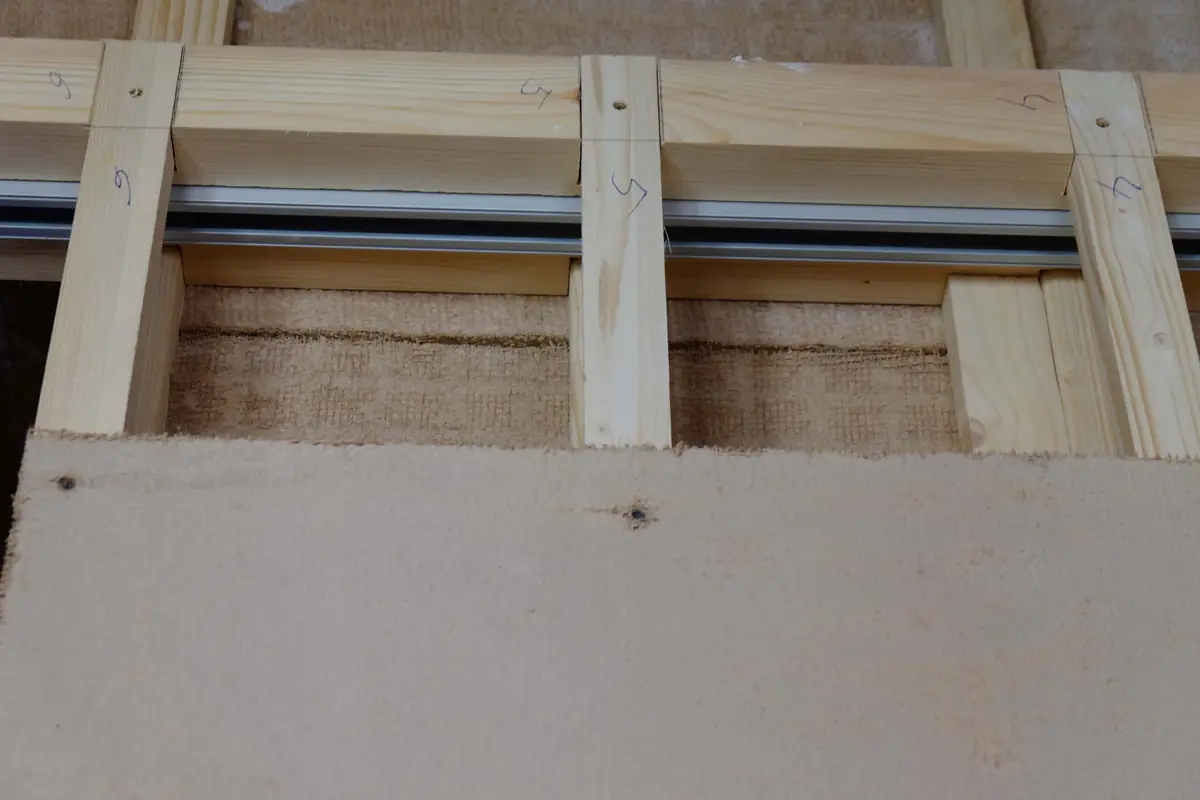
Ecoclay’s clay boards come as panels and are fixed mechanically, like any dry-construction system. The technical data sheet summarises the process in four steps:
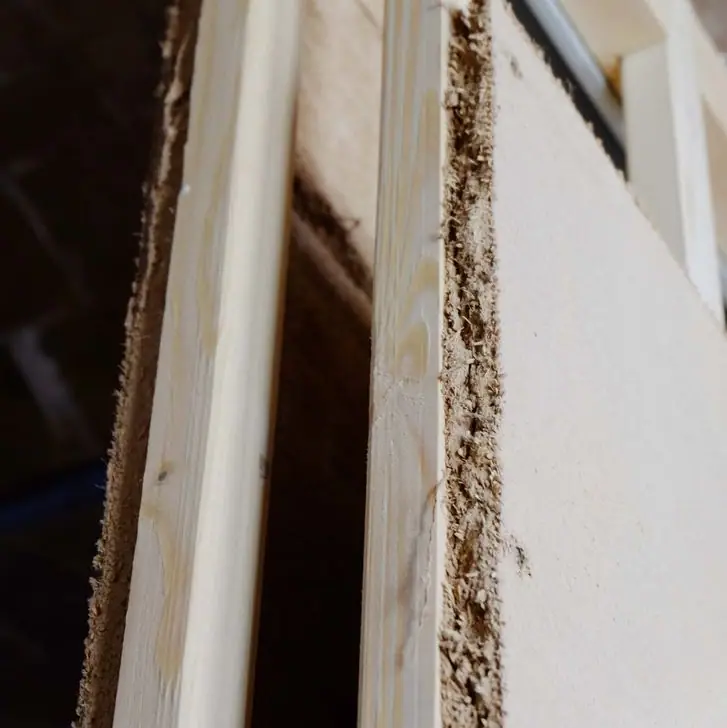
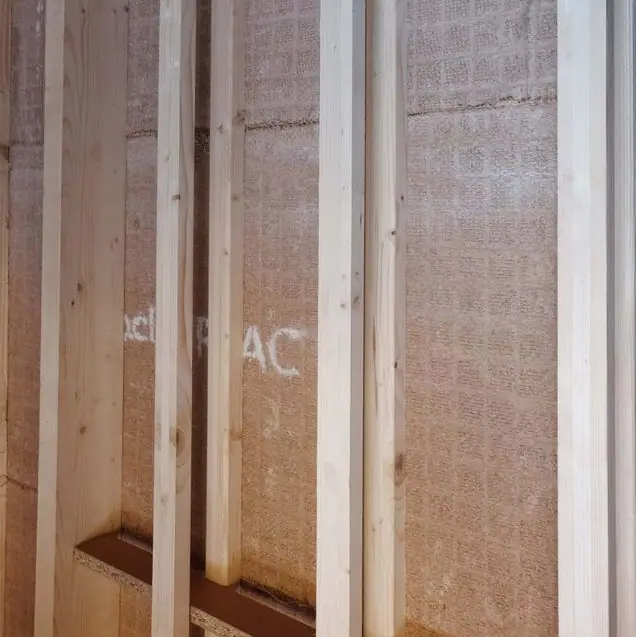
- Frame and fixing: on timber or aluminium frames, or as a wall lining, with corrosion-resistant screws. Ecoclay recommends a minimum of 15 screws per board and a spacing of 30 cm between stud centres.
- Cutting: the boards are easily cut with a utility knife or saw. The jute mesh is cut on both faces, the board is rested on a surface with an edge and snapped by hand. A mask should be worn, as cutting generates airborne dust.
- Jointing and levelling: the joints are treated with strips of jute mesh and the whole surface is smoothed with a 3 mm coat of ecoclay BASE clay mortar, lightly dampening the board before application.
- Finish: the ecoclay BASE coat can be left exposed, protected with the ecoclay XT-13 silicate fixative, or serve as a base for the fine ecoclay ACABADO mortar or the ecoclayPAINT clay paint.
Clay mortars do not set: they adhere to the substrate as they dry. For this reason the manufacturer recommends that the average temperature of the substrate during application should not fall below 5 °C.
Finishes: ecoclay ACABADO mortar or ecoclayPAINT
For the finish, the fine ecoclay ACABADO mortar, available in 14 natural colours, or the ecoclayPAINT silicate clay paint, available in 21 shades, is suggested.
ecoclay ACABADO is a fine clay mortar applied with a trowel in 2 to 3 mm coats. Its colour comes from the clays themselves, with no added colourants, and the colour range is named after landscapes: from Uluru, Atacama or Timanfaya to whites such as Mahal and Ártico. The texture depends on the technique, from a rough, matt finish to a smooth, glossy one, and while the mortar can be re-dampened, it can be corrected. Once dry, it is protected with two coats of XT-13 fixative, which includes an anti-stain treatment.
ecoclayPAINT is the other finishing option, a silicate clay paint. Its 21 shades, with names such as Aran snow, Formentera sand or Jerte cherry, combine natural clay and, in some colours, pigments.
Projects with Ecoclay clay boards
Three projects published by Ecoclay show different uses of the system: the acoustic treatment of a commercial space, the partitions of a refurbished home and a curved suspended ceiling.
NU Vila-real: acoustics in a bar-restaurant
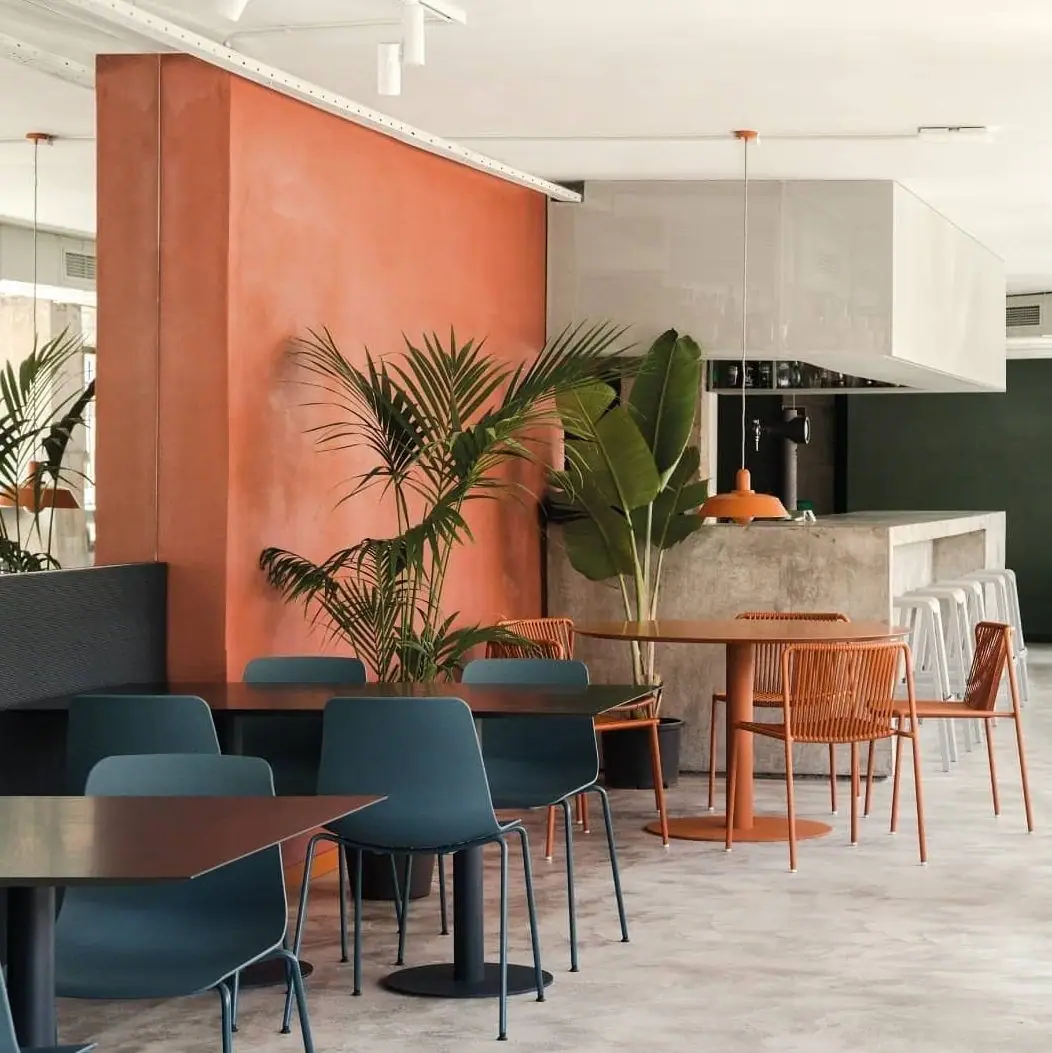
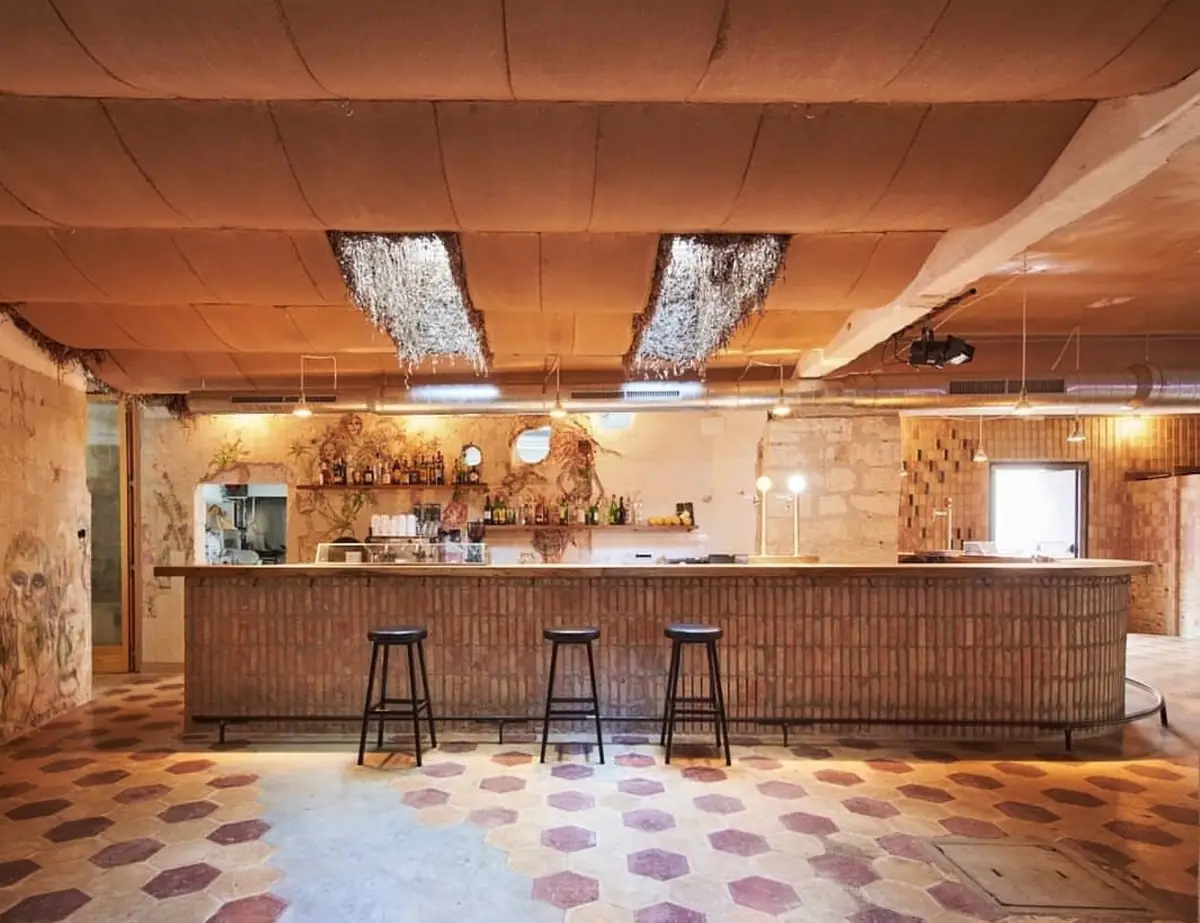
In this bar-restaurant in Vila-real (Castellón), designed by MADE Studio, the aim was to increase comfort and reduce the cocktail-party effect caused by the large glazed walls. According to Ecoclay, the clay boards, finished with Uluru clay mortar and custom colours made with natural pigments, achieved the right sound absorption and reduced reverberation. Their warmth contrasts with the brutalist character of the rest of the space.
Habitasana, Barcelona: partitions in a rental home
The developer Habitasana refurbished this rental apartment with natural materials to set it apart as a healthy home. The new partitions were built with ecoclayPLAC boards on timber studs, and the existing walls were coated with ecoclay ACABADO mortar in Ártico combined with ecoclayPAINT Aran snow. The application was carried out by TERRAM.
Can Lliró, Manacor: a curved suspended ceiling
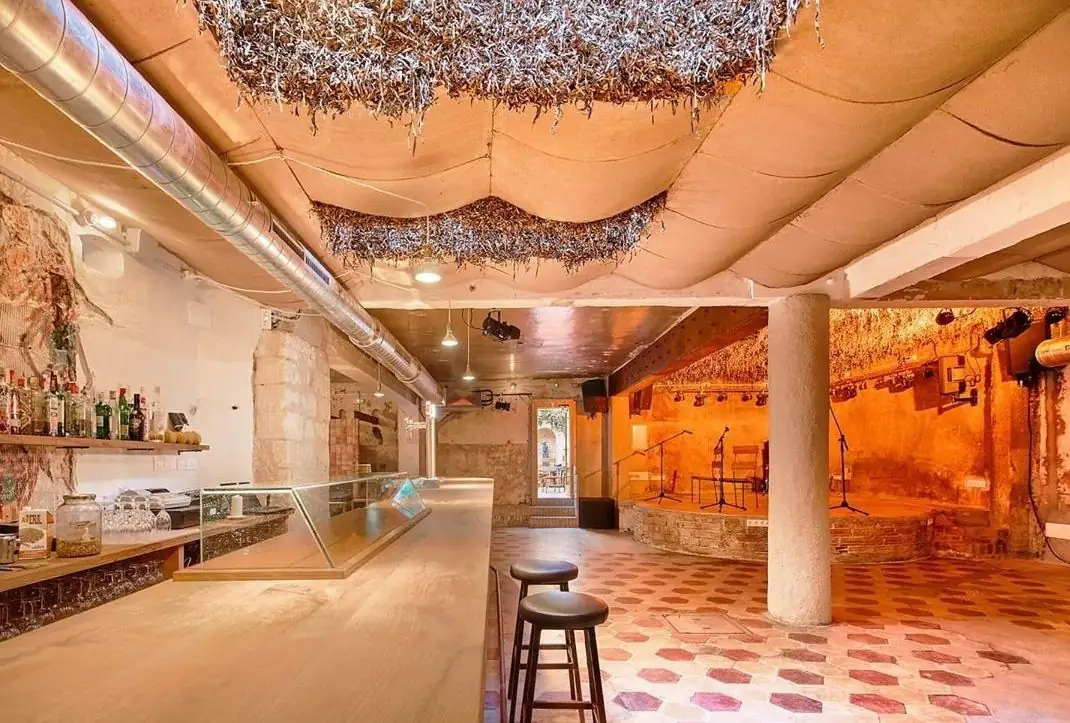
At the Cafè-concert Can Lliró, by Aulets Arquitectes, the ceiling was built with ecoclayPLACork, the clay board lightened with natural cork that Ecoclay proposes for suspended ceilings. The boards were curved to create an undulating ceiling and, according to Ecoclay, the material gives the concert hall good sound absorption and insulation.
Frequently asked questions
- What size are ecoclayPLAC boards?
- The technical data sheet current when this article was published (rev. 12) gives 130 × 60 × 2 cm, 0.78 m² per board. The 2025 revision (rev. 17) lists 120 × 60 × 2 cm. For other sizes, Ecoclay asks to be consulted.
- Can they be used in bathrooms?
- Yes, and the manufacturer considers them very suitable because they absorb vapour and odours. But it does not advise clay inside the shower or behind the WC, bidet or washbasin: there it recommends a non-porous material up to the necessary height, with clay above.
- How are the joints between boards treated?
- With strips of jute mesh and a 3 mm coat of ecoclay BASE clay mortar over the whole surface. The finish is then applied: ecoclay ACABADO mortar or ecoclayPAINT, or the BASE coat is left exposed with XT-13 fixative.
- How do they perform in a fire?
- Ecoclay’s technical data sheet classifies ecoclayPLAC as A2-s1,d0 for reaction to fire: a very limited contribution to fire, low smoke production and no flaming droplets.
- Can the board be left exposed?
- The board is not left as it is: Ecoclay specifies jointing and levelling it with a 3 mm coat of ecoclay BASE mortar. That coat can, however, be left exposed as a finish, protected with XT-13 silicate fixative, or receive ecoclay ACABADO mortar or ecoclayPAINT.
The texture of a clay board, the feel of a trowelled mortar or the difference between the colours of a natural range are best appreciated with samples in hand. At Matter we help you find natural materials for partitions, ceilings and finishes and compare them with your technical team.
Book your visit to Matter.
Book a visit