Matter and Material Bank: a strategic alliance to transform material selection in Spain
Matter and Material Bank bring together material libraries, technical advice and samples in 24 hours; seven architecture studios launched it at Matter Madrid.
Events7 min read
We have recently formalised the strategic alliance between Matter and Material Bank to redefine the way architects, designers and interior designers select and specify materials for their projects in Spain. The collaboration combines Matter's in-person, personalised experience —a materials consultancy with spaces in Barcelona, Madrid and Sotogrande— with the digital and logistical capacity of Material Bank, the international platform for searching for and shipping material samples.
Thanks to this alliance, professionals can explore, compare, select and receive physical samples within 24 hours through a digital platform, while also having the support of Matter's team of consultants, who advise on key decisions from the earliest stages of the project to the final specification. In this article we look at what the alliance offers and how we presented it in Madrid together with seven architecture studios.
Two companies, one shared vision
Making responsible, innovative and sustainable material solutions more accessible.
At Matter we have extensive experience in bringing architecture and interior design projects to life through materials consultancy. With a technical team of 50 professionals and physical material libraries in Madrid and Barcelona, we connect industry and professionals with solutions suited to the sector's current challenges: when the alliance was announced, in February 2025, we represented more than 900 international manufacturers and advised on some 4,000 projects a year.
Material Bank is an international technology platform, founded in the United States by Adam Sandow, that makes it easier to search for and ship material samples for architecture and design. It arrived in Europe in 2023, serves more than 150,000 architects, interior designers and professionals worldwide, and allows samples from different manufacturers to be ordered and received quickly and in one place. This tool complements the in-person, technical and curated approach we offer from our spaces in Madrid, Barcelona and Sotogrande: a joint proposal that combines the digital and the human in the specification of materials.
What the alliance offers specifiers
The alliance proposes a comprehensive service, from the conceptualisation of the project to the final specification, covering all kinds of materials, from textiles to ceramics and from natural to high-tech surfaces. It can be summed up in four points:
- Digital and physical access: the Material Bank platform to search and compare, and Matter's material libraries in Madrid and Barcelona to see and touch the materials.
- Speed: streamlined search and selection, with a single free shipment of samples within 24 hours.
- Personalised advice: a team of specialist consultants supports the selection so that each material meets the project's technical, aesthetic and sustainability requirements.
- Innovation and sustainability: access to materials that respond to new trends and environmental requirements.
For manufacturers, the collaboration opens a more direct channel to architecture and interior design studios interested in using innovative and sustainable materials in their projects.
“This alliance with Material Bank allows us to take the materials consultancy experience to a new level, combining physical, personalised advice with the efficiency of the best digital platform,” explained Jordi Antonijoan, CEO of Matter, when announcing the agreement. For Marc Solsona, general manager for Europe at Material Bank, “Spain is a key market, and partnering with Matter allows us to connect with architects in a more direct and effective way.”
The first steps of the alliance
Before the press presentation in Madrid, the collaboration had already been shown at several events. At the Madrid Design Festival, on 19 and 20 February 2025, we presented the exhibition ‘Contemporary Materiality’ with Material Bank, with themed moodboards that visitors could request and receive at their office. On 24 February the agreement was officially announced, and at MATCOAM's Semana de la Construcción (Construction Week) both companies showed the exhibition ‘Innovative Materiality’, with alternatives such as mineral-fibre cladding, flexible wood, cellulose panels or 3D-printed sand, and lightweight concrete.
Seven studios, seven sample boxes
The same brief for seven studios: choose their materials and explain the choice.
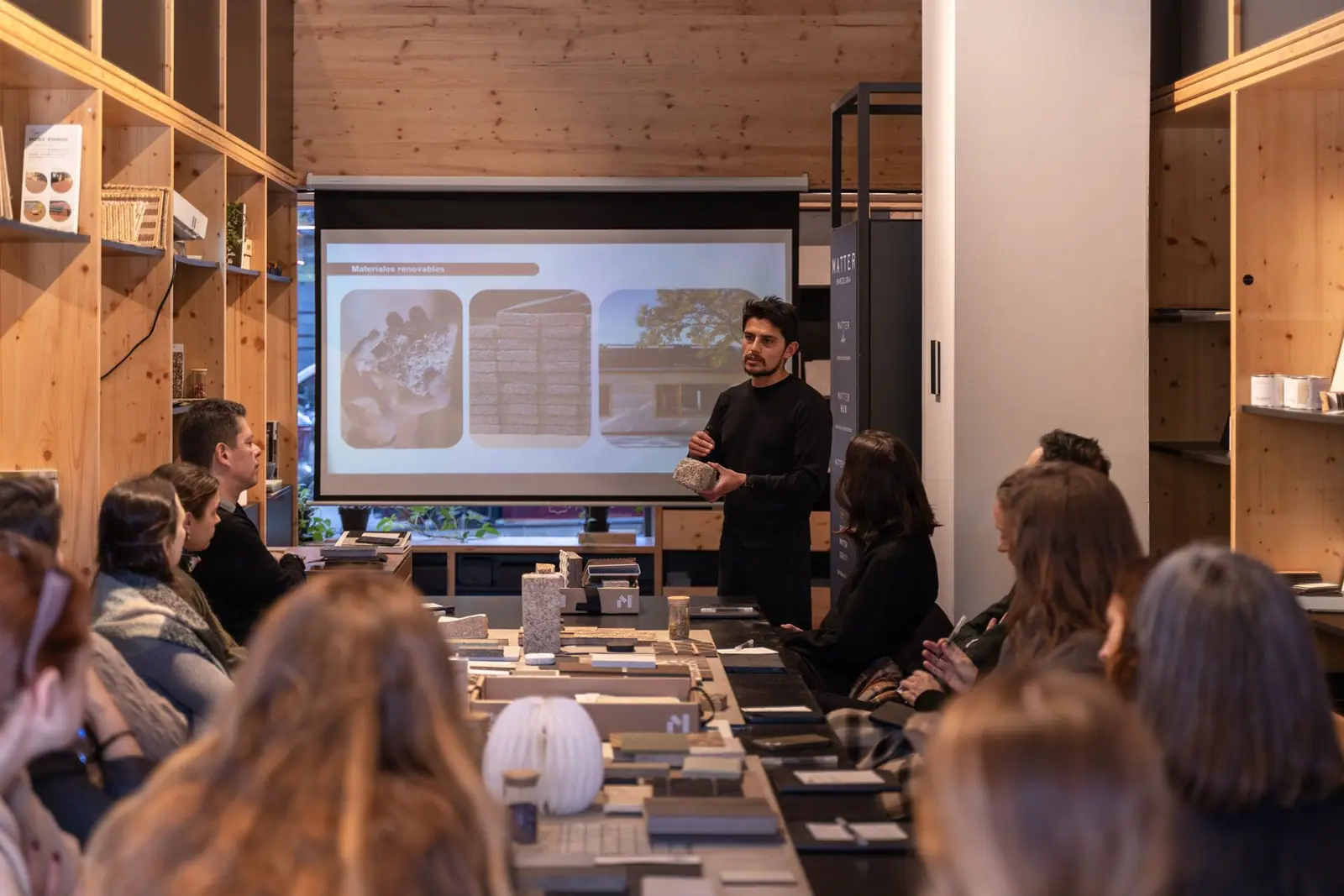
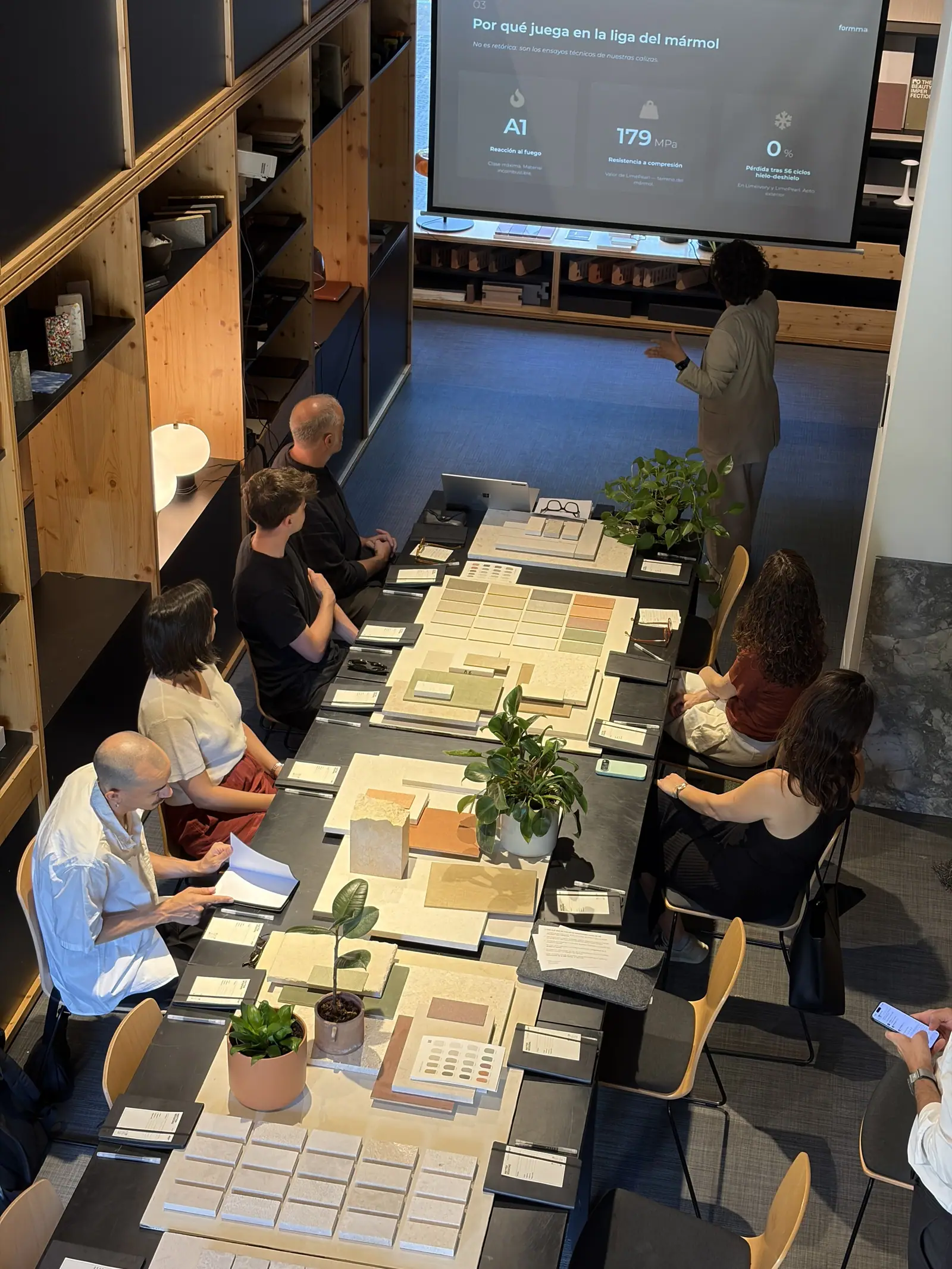
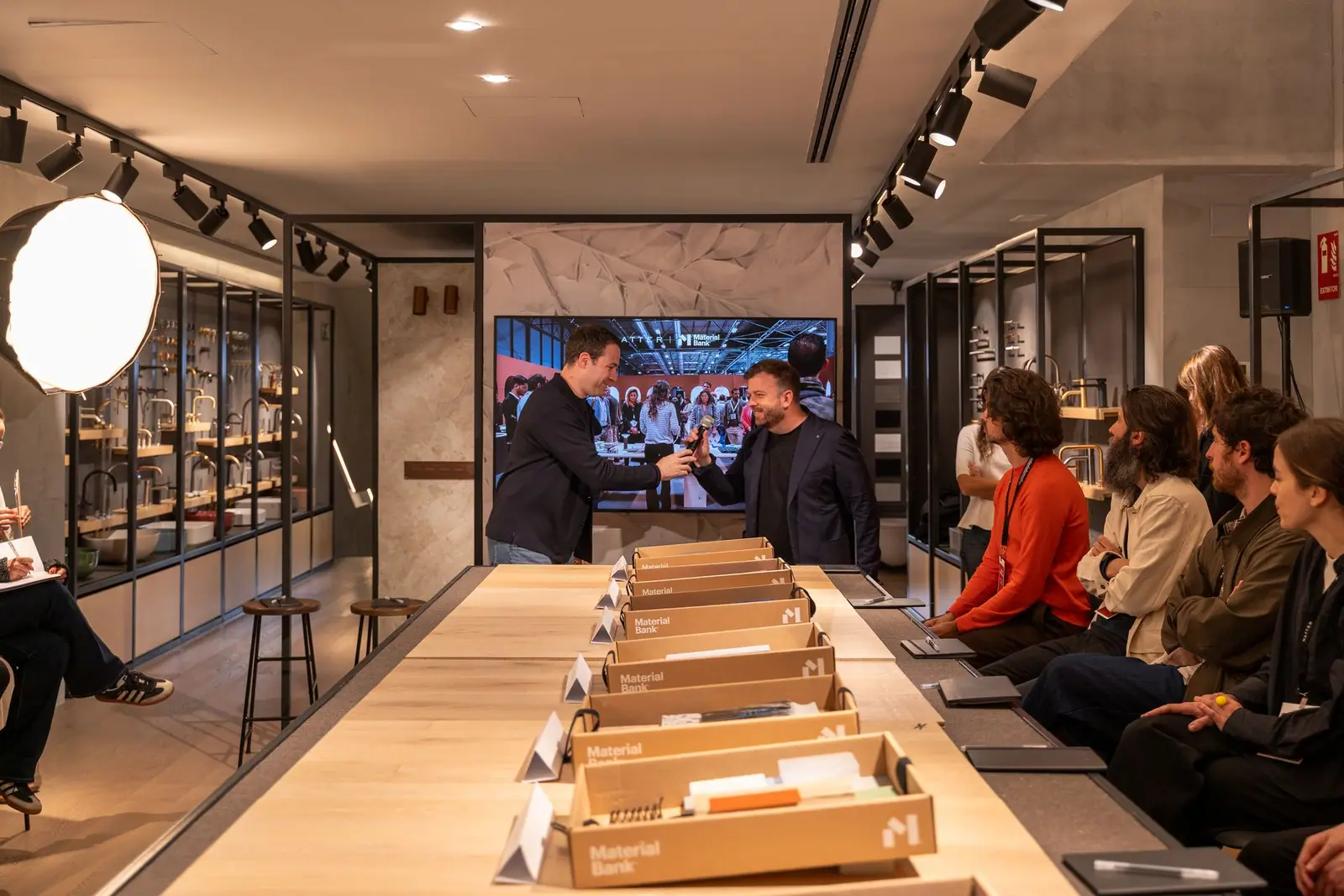
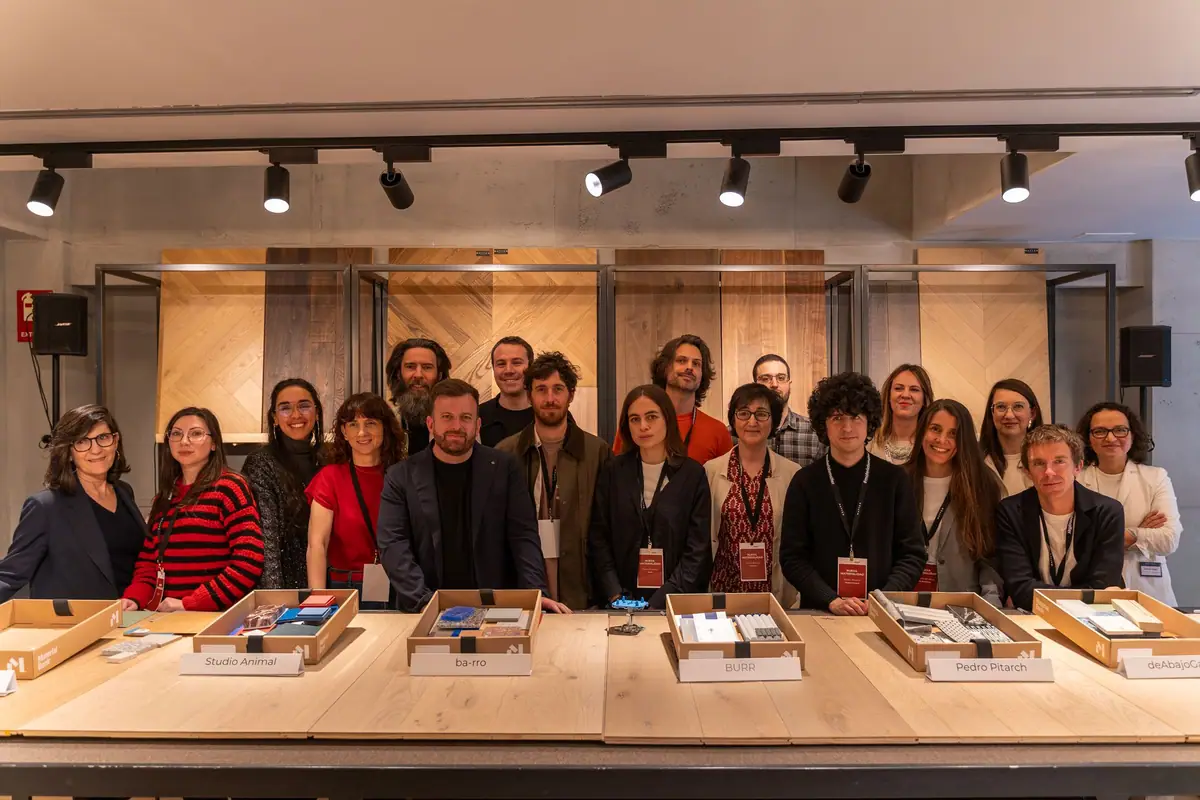
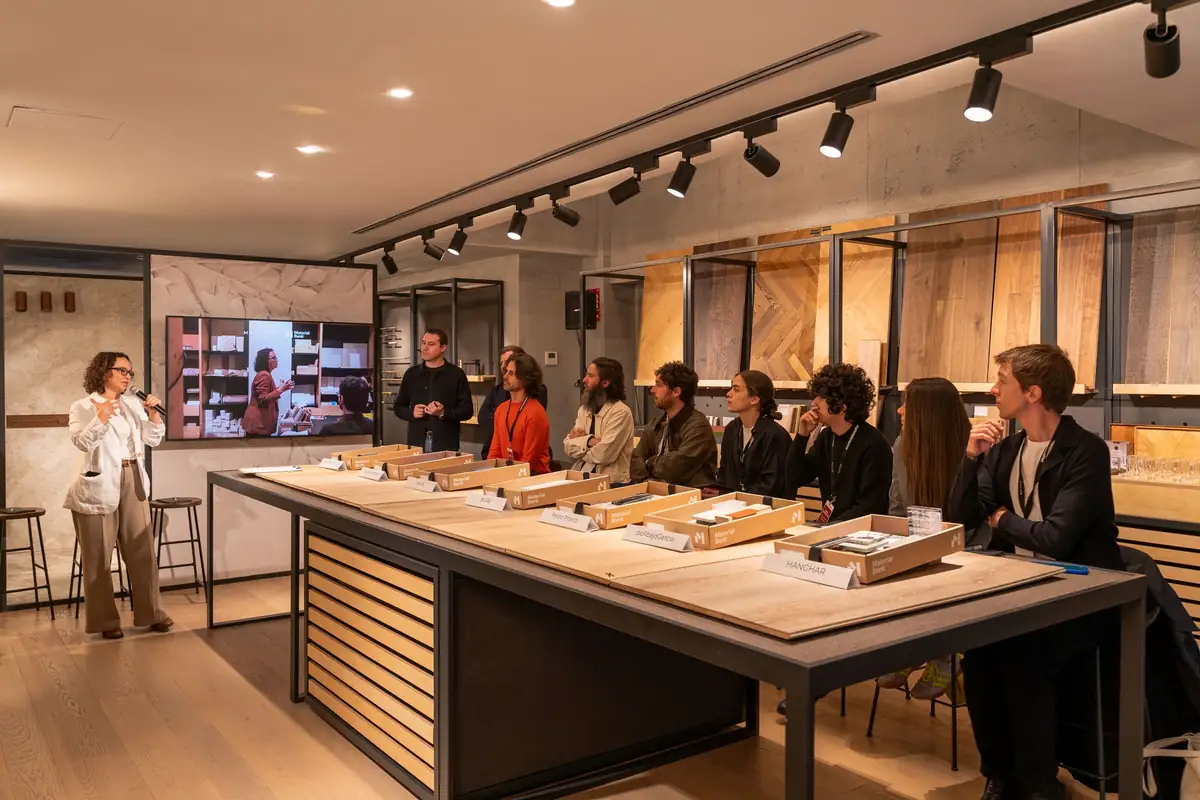
To celebrate the launch of this collaboration, Matter and Material Bank organised an event in Madrid that brought together some of the most promising studios in contemporary Spanish architecture. The presentation took place at Matter Madrid, Claudio Coello 55, with Jorge Pizarro (ba-rro), Elena Fuertes (BURR), Pedro Pitarch, Javier Jiménez Iniesta (Studio Animal), Begoña de Abajo Castrillo (deAbajoGarcía), Eduardo Mediero (HANGHAR) and Álvaro Martín Fidalgo (Ozaeta-Fidalgo).
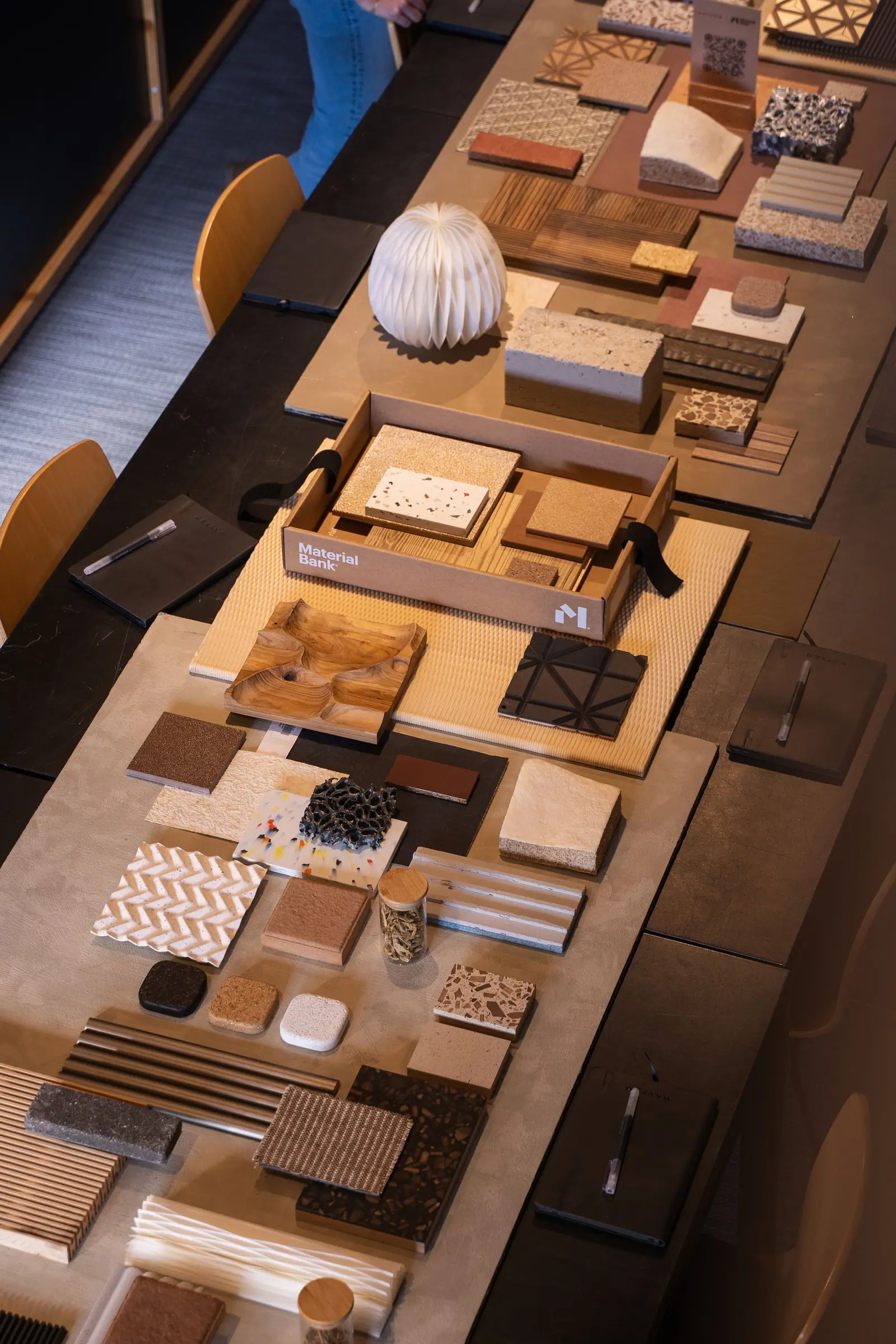
Each studio chose a sample box and explained its selection to the others. In this way they shared their vision of the new materiality: how they select materials and what impact this specification tool can have on their creative processes.
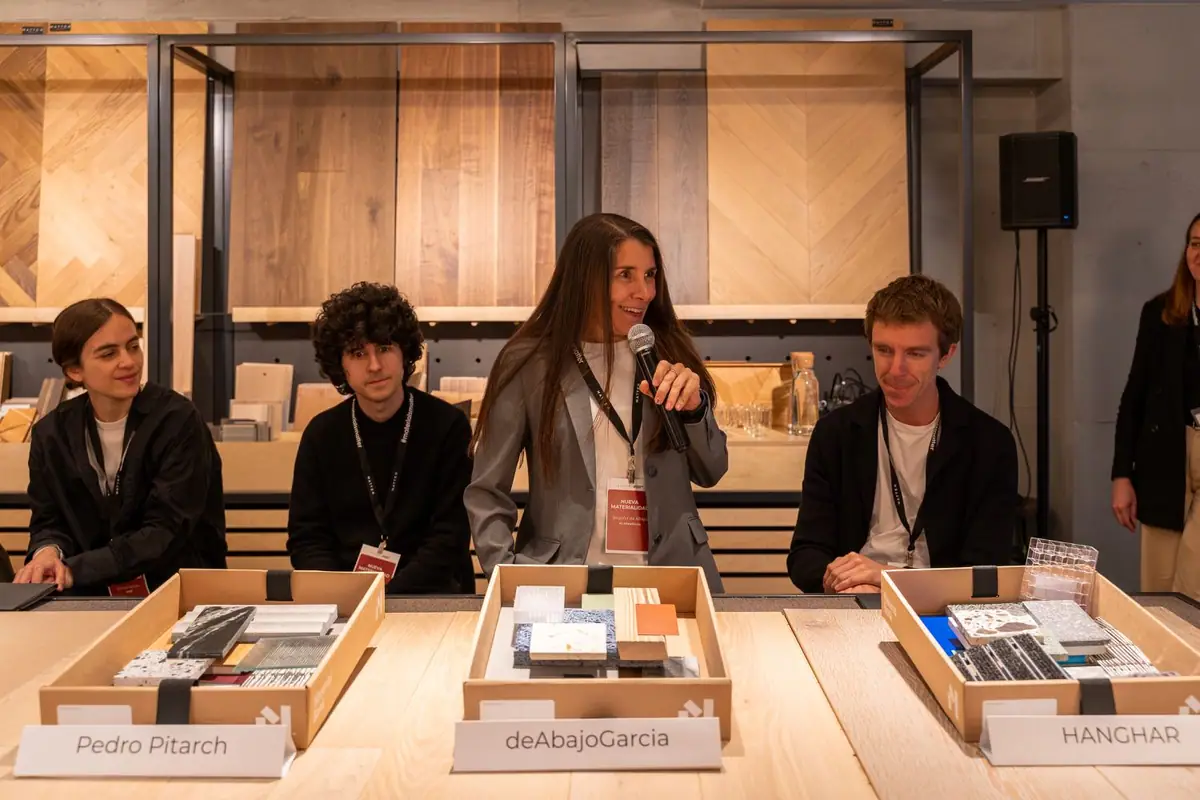
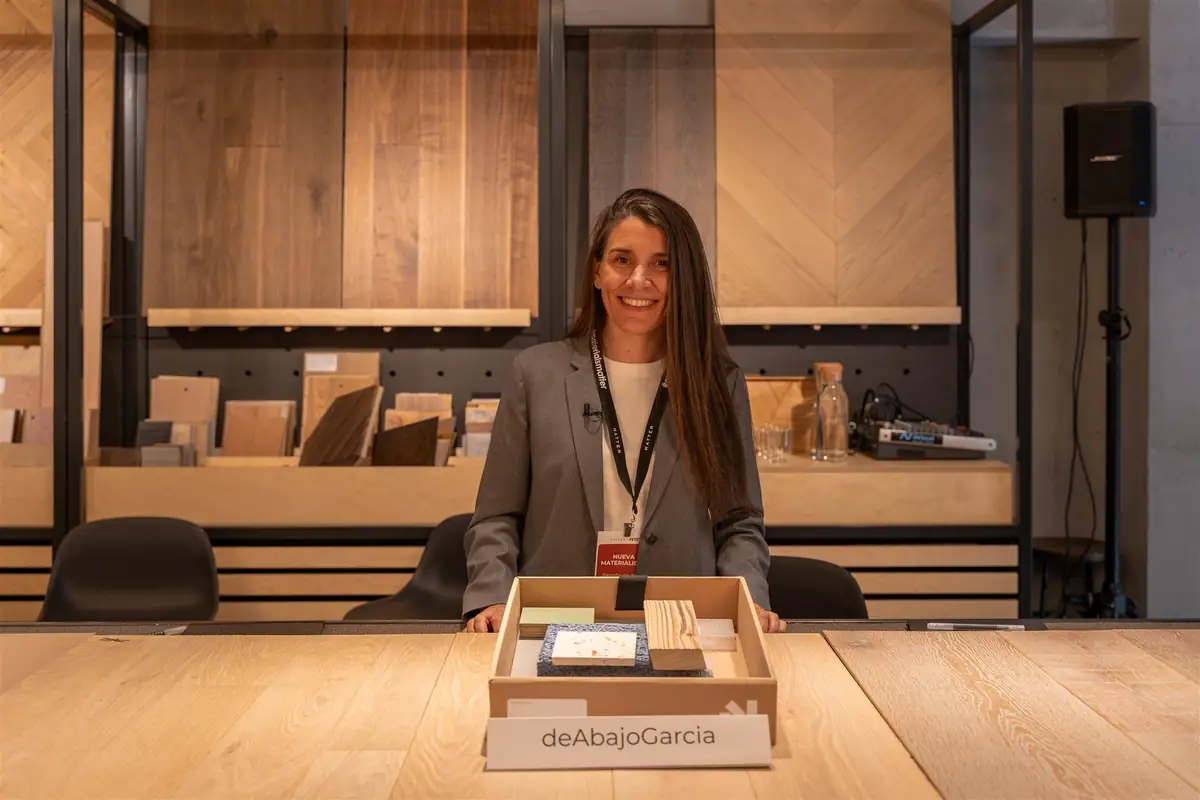
deAbajoGarcía — Begoña de Abajo
Begoña de Abajo explained that her process starts from the construction approach, which means deciding from the earliest stages which materials will go into the building. Among her samples she included wood, as a response to a responsible architecture that must provide construction solutions suited to the climate emergency, both structural —with dry construction systems— and for finishes. The idea of the future city as a materials bank, with easily replaceable elements to compose a new architecture, guided her choice.
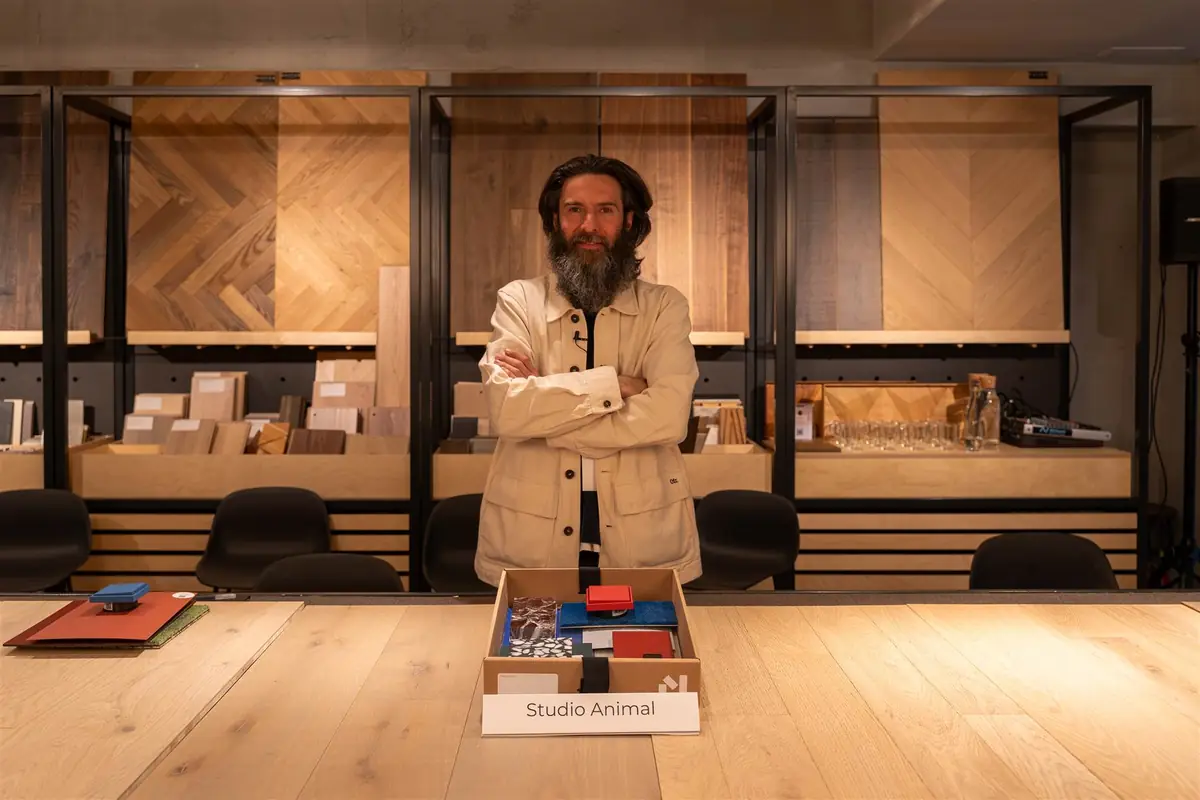
Studio Animal — Javier Jiménez Iniesta
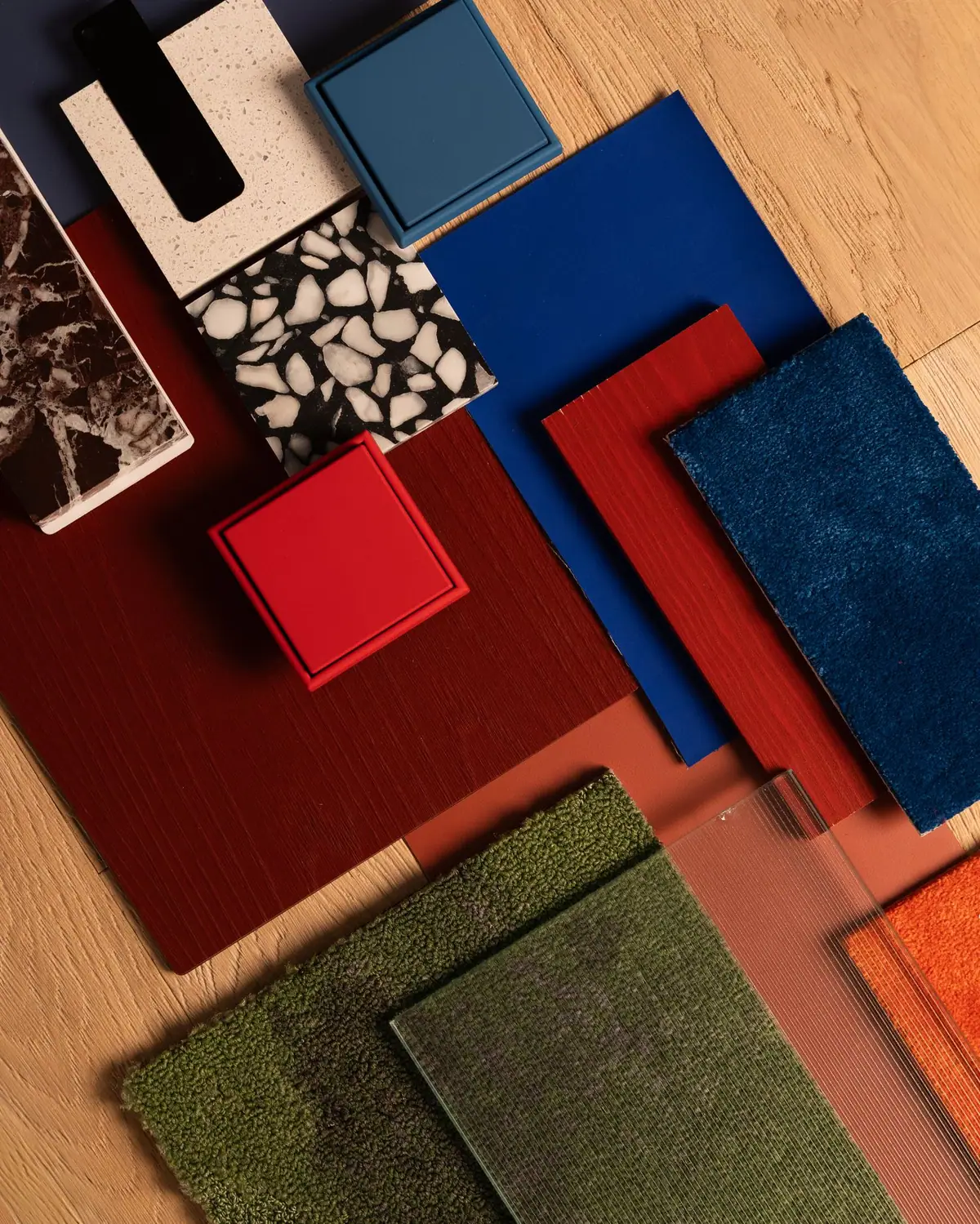
At Studio Animal the starting point is colour: they treat it as the origin of the project, to generate the atmosphere of the space. Once the temperature and colour range have been defined, they choose the materials that respond to that idea.
HANGHAR — Eduardo Mediero
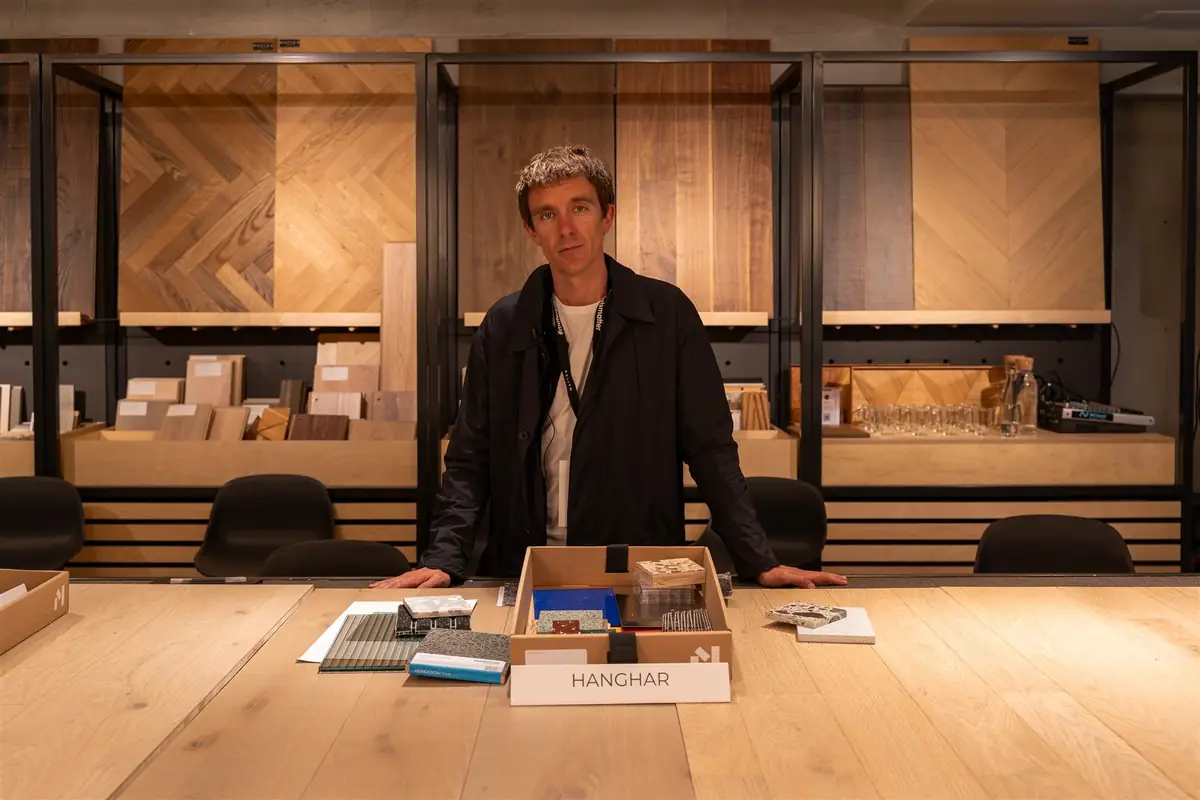
Eduardo Mediero followed a process of narrowing down. After an initial unfiltered selection, he studied the materials and classified them into three basic types: abstract materials without scale, such as continuous sheets; unusual materials, the result of combining components; and conventional materials capable of suggesting a new use and, with it, a new value, such as an entrance doormat imagined on the ceiling.
ba-rro — Jorge Pizarro
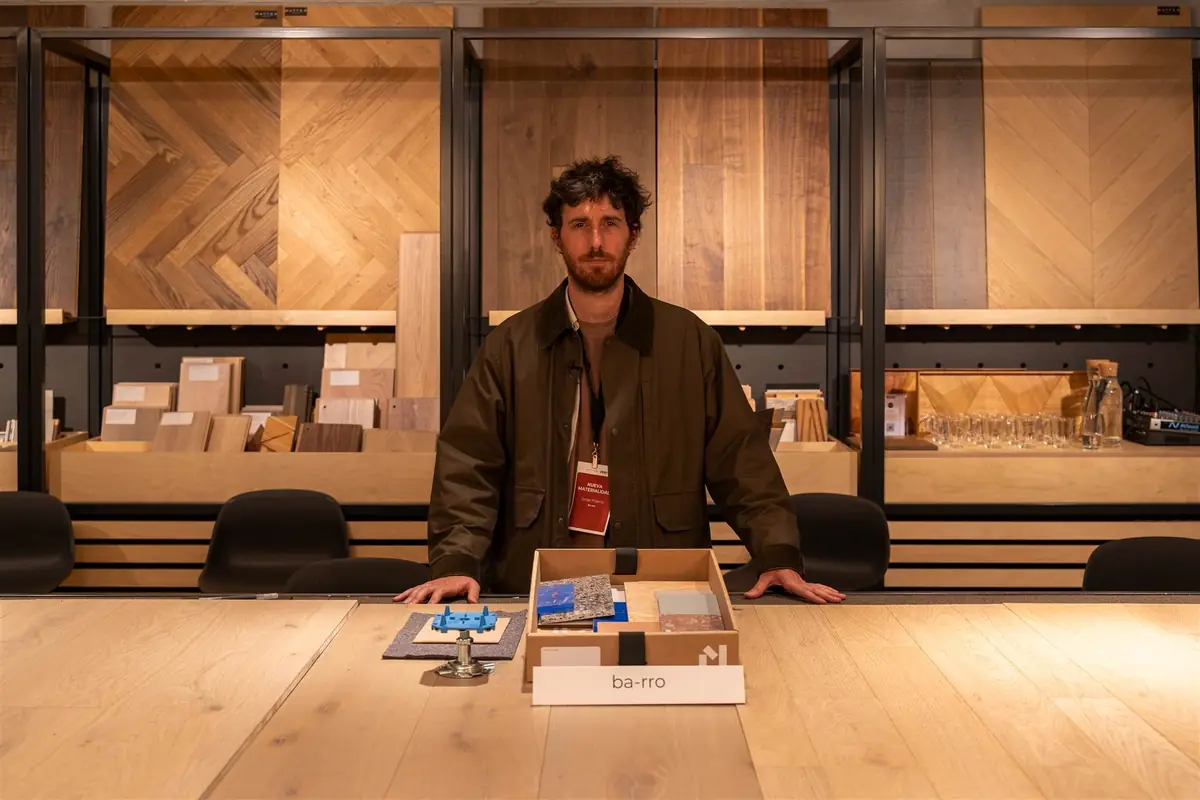
Jorge Pizarro approached his selection as an exercise in understanding the potential of each material within the construction process. He chose materials with little morphology and deliberately sought out those that remain hidden but are as important as those that provide the final finish: wools that deliver thermal and acoustic comfort, or pedestals that raise the access floor and leave room for services.
BURR — Elena Fuertes
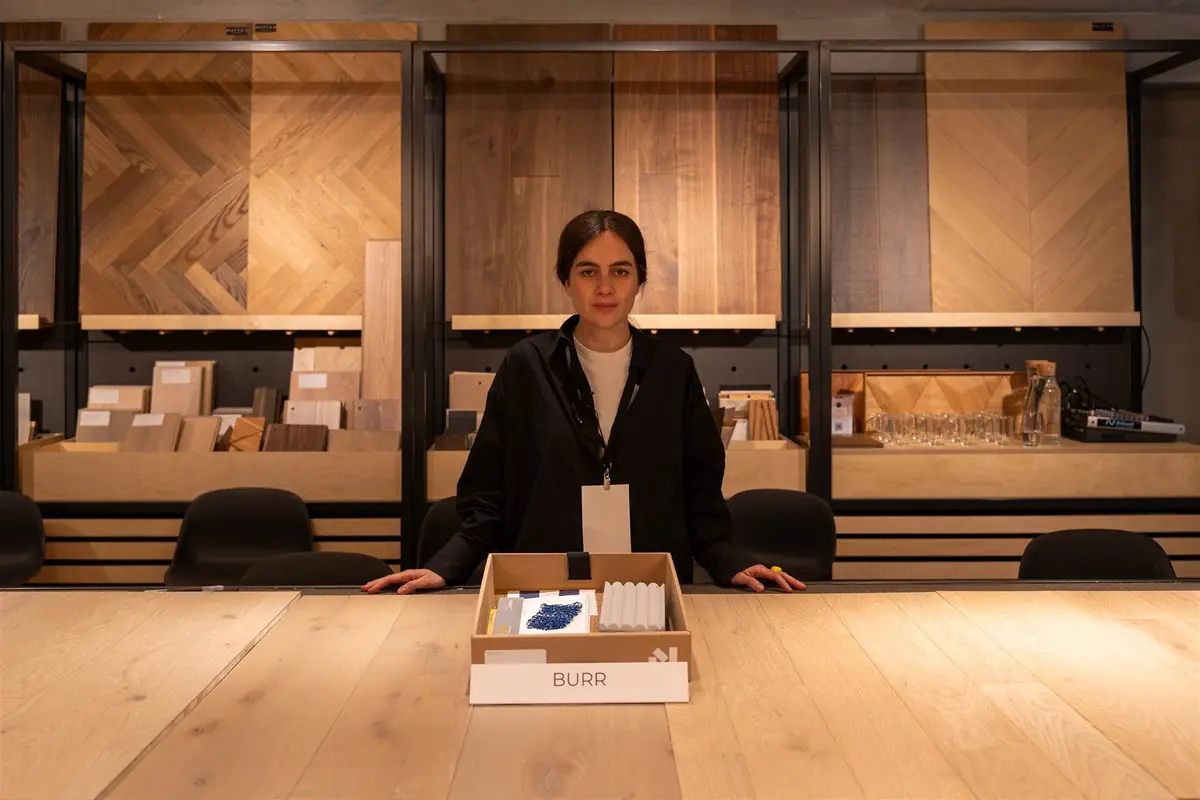
Elena Fuertes sees herself as part of a generation that works mainly by intervening in what has already been built, where a new narrative has to be introduced through materials. They study materials with an interest in discovering their own genealogy and highlighting it in a different context. Her selection featured textile elements, which make it possible to create a soft, tactile architecture.
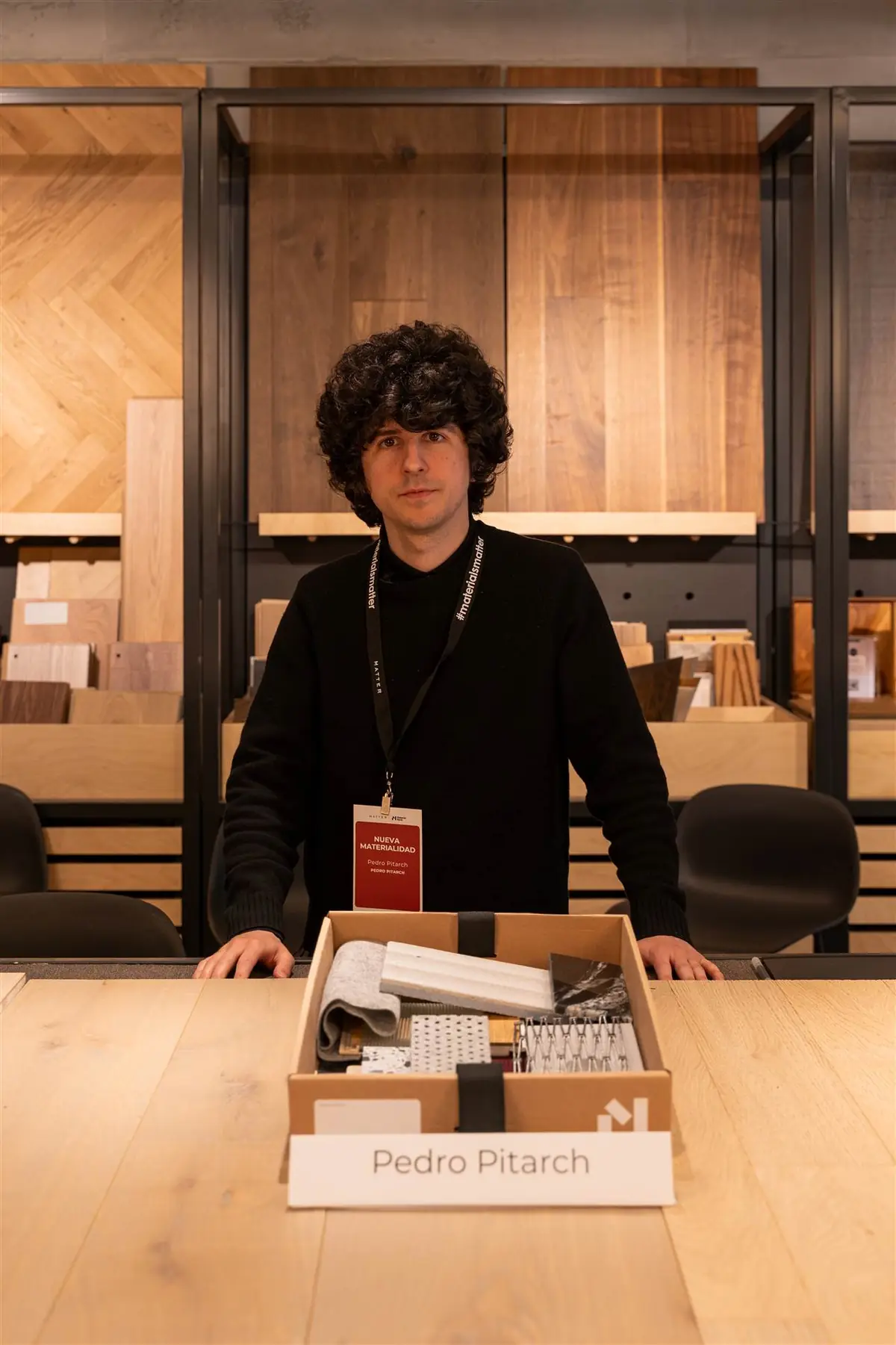
Pedro Pitarch
For Pedro Pitarch, the approach to a project is always strategic: the construction solution and the materials stem from the strategy, and they do not determine the design but communicate its narrative. He argued for a critical position on the prevailing concept of sustainability, which leads him to propose materials without an eco-label that do, within a process, offer a sustainable solution, such as his proposal for ARCO with plastic materials that were incorporated into the fair's packaging cycle.
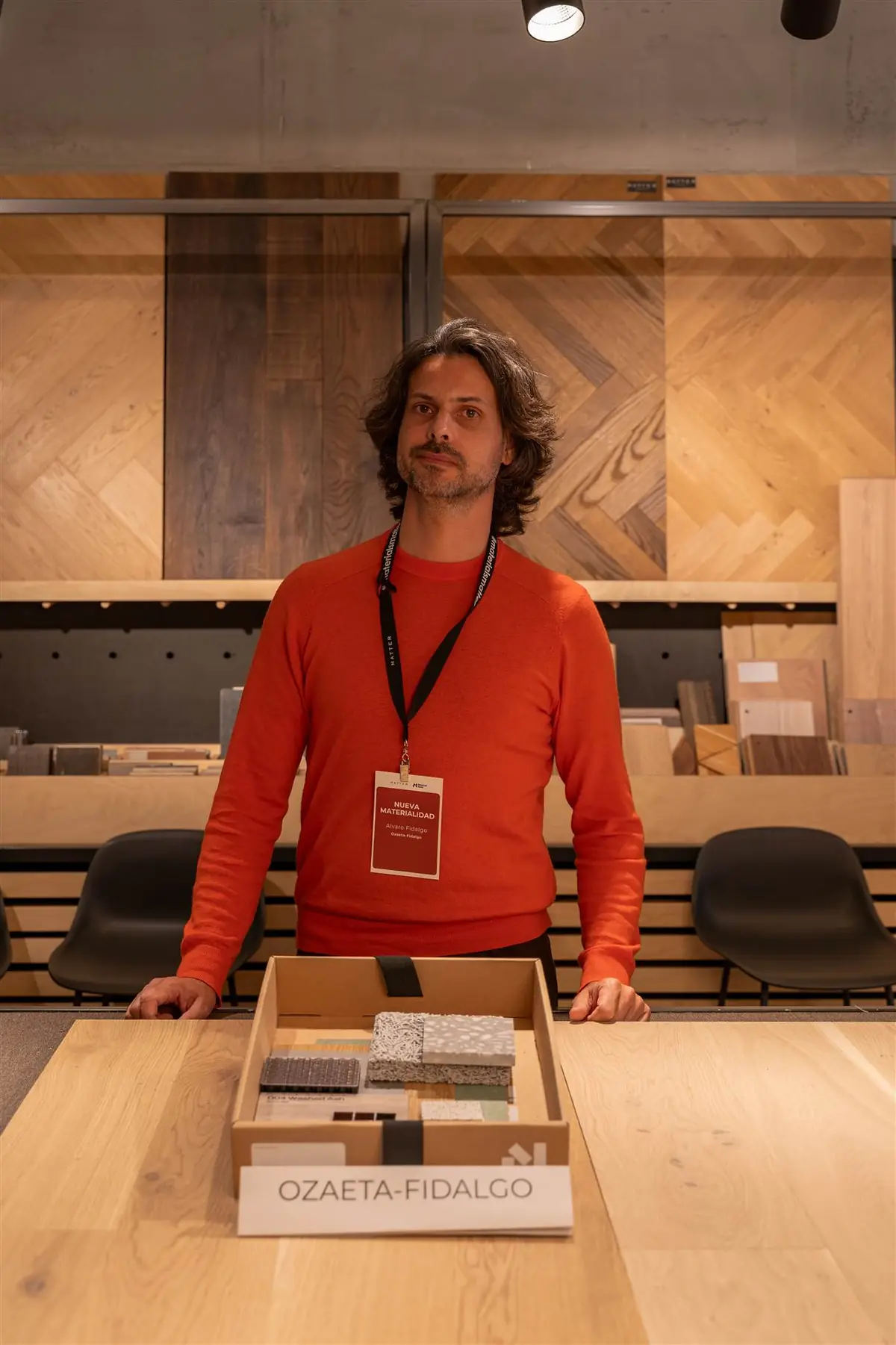
Ozaeta-Fidalgo — Álvaro Martín Fidalgo
Álvaro Martín Fidalgo began his selection without a preconceived idea and refined it as he went. As the last to speak, he recognised himself in many of the previous arguments, coincidences he attributed to belonging to a generation that began practising just after the 2008 crisis. His materials included those that can be overlaid on existing architecture, those that allow for demountable architecture and those that bring colour as a transformative element.
What a generation shares
The seven selections showed many points in common. They describe a group of architects free of prejudice, used to working quickly and on tight budgets, mainly on existing buildings, and deeply concerned with the legacy they leave to future generations. These are the ideas that came up most often:
- Decide early: the material is part of the construction approach from the earliest stages, not a finish added at the end.
- Work with what is built: materials that are overlaid, dismantled or that enhance what already exists.
- What is hidden also counts: insulation, pedestals and technical layers matter as much as the visible surface.
- Sustainability with judgement: beyond the label, what matters is how the material behaves within the process.
- Colour and touch: colour defines the atmosphere and textiles open the door to a more tactile architecture.
The event also served as a forum to discuss the sector's current challenges, environmental responsibility and the need to innovate in the way architecture and design approach materials.
Frequently asked questions
- What is Material Bank?
- A digital platform for searching, comparing and ordering samples of materials from different architecture and design manufacturers in a single order. According to the company, its European website now brings together more than 45,000 materials from more than 450 brands.
- Is there a charge for ordering samples?
- According to Material Bank, samples and shipping are free for architects and interior designers.
- How long do samples take to arrive?
- The alliance offers a single shipment of samples within 24 hours. Material Bank states that orders from different manufacturers are delivered together, in a single box, the following morning, in reusable, returnable trays.
- Can I see the materials in person and get advice?
- Yes. In our material libraries in Madrid and Barcelona you can see and touch the materials, and Matter's consultancy team supports you with the selection, from the concept stage to the final specification.
Material selection works best when the digital and the physical work together: comparing on screen, receiving the sample the next day and checking it in the material library with someone who knows each product.
Book your visit to Matter to discover our Materioteca and talk about the materials for your next project.
Book a visit