Healthy materials
Sonia Hernández-Montaño of Arquitectura Sana and Matter's consultancy team discuss indoor toxins and how to choose healthy materials.
EventsMatter Session3 of 74 min read
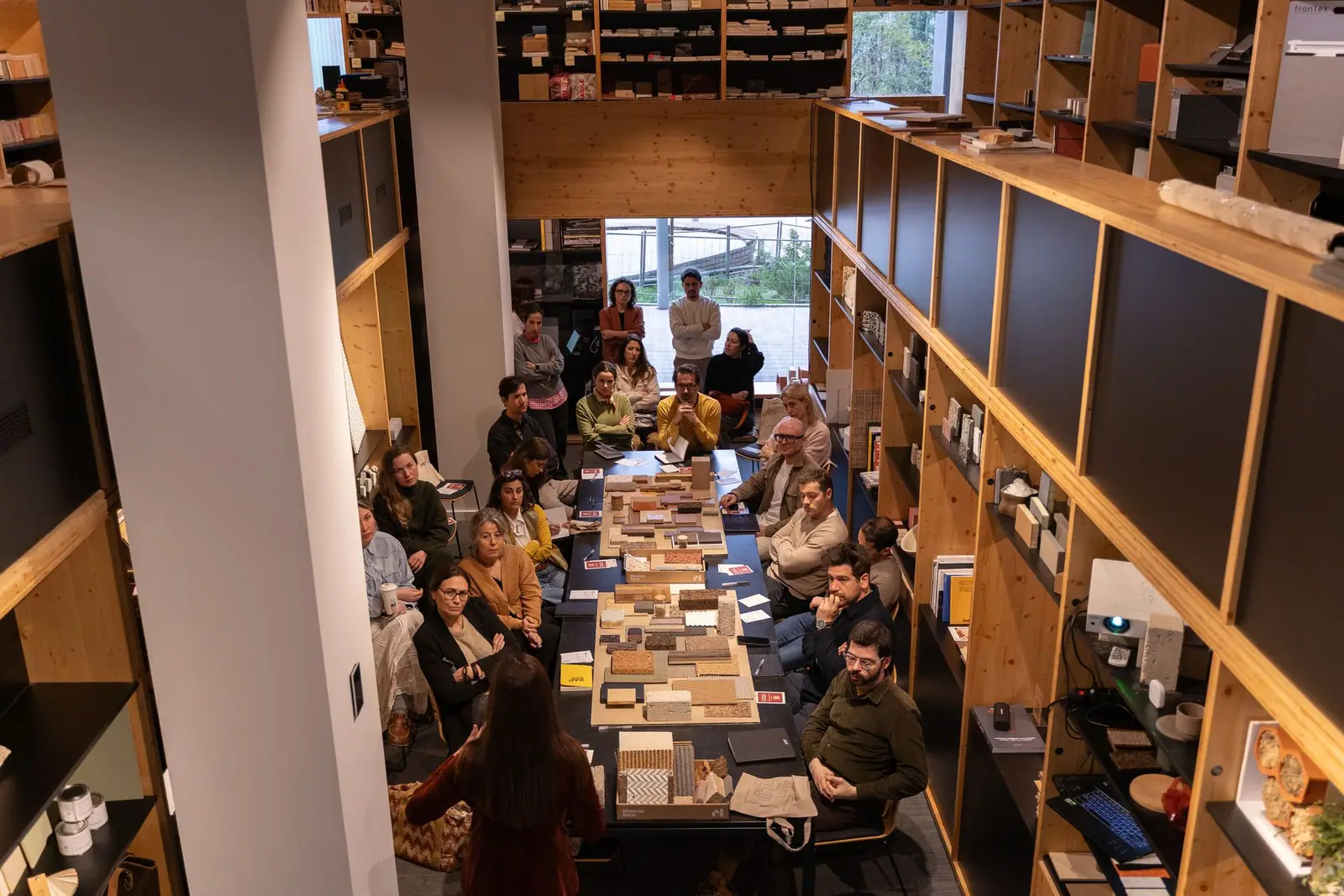
At MATTER SESSION 03: Healthy Materials, held at Matter, we created a learning space focused on the impact of spaces and their materiality on people's health and wellbeing. Fifteen interior design and architecture studios took part, keen to explore in depth how materials can help to design healthier and more sustainable environments.
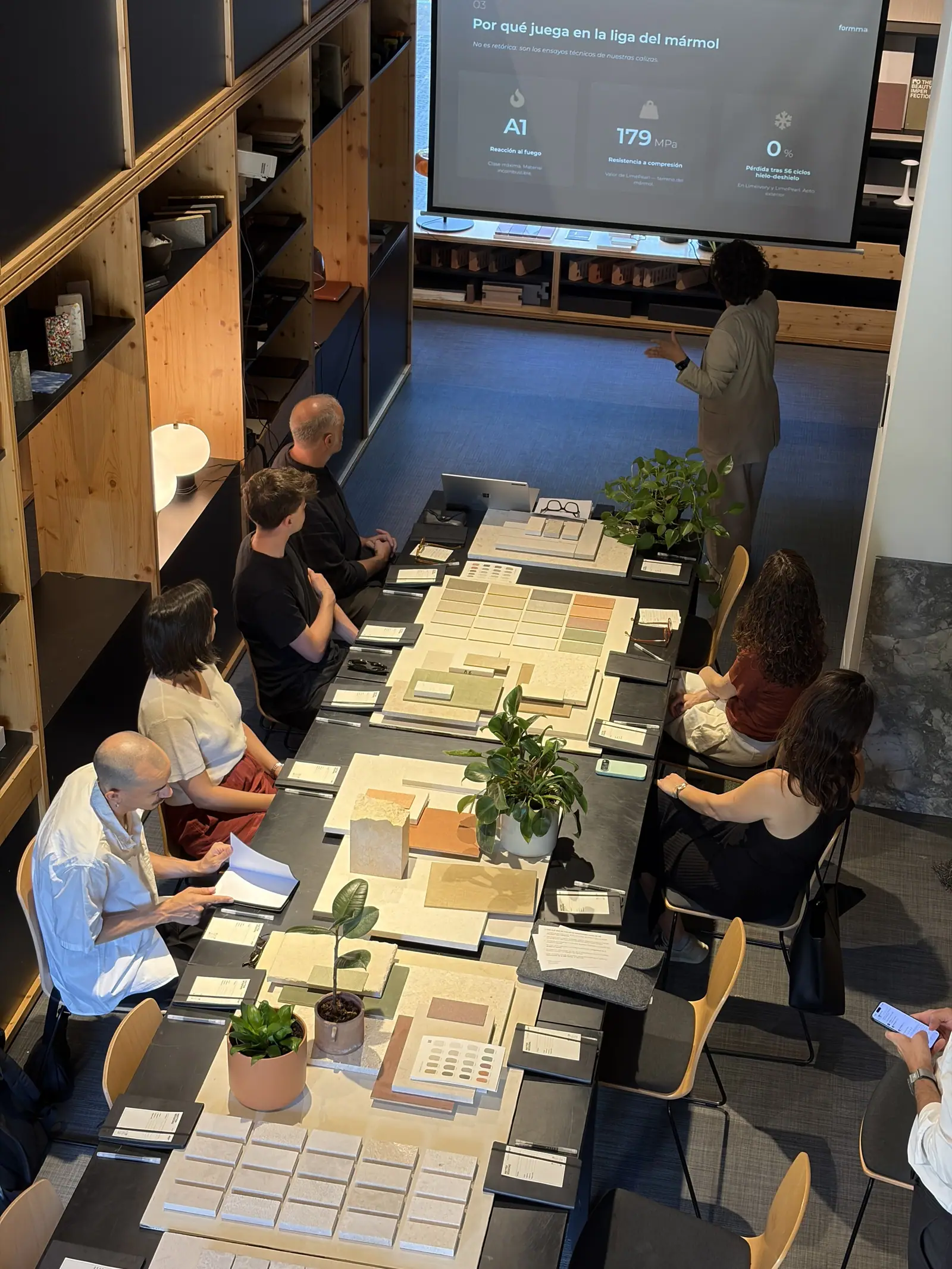
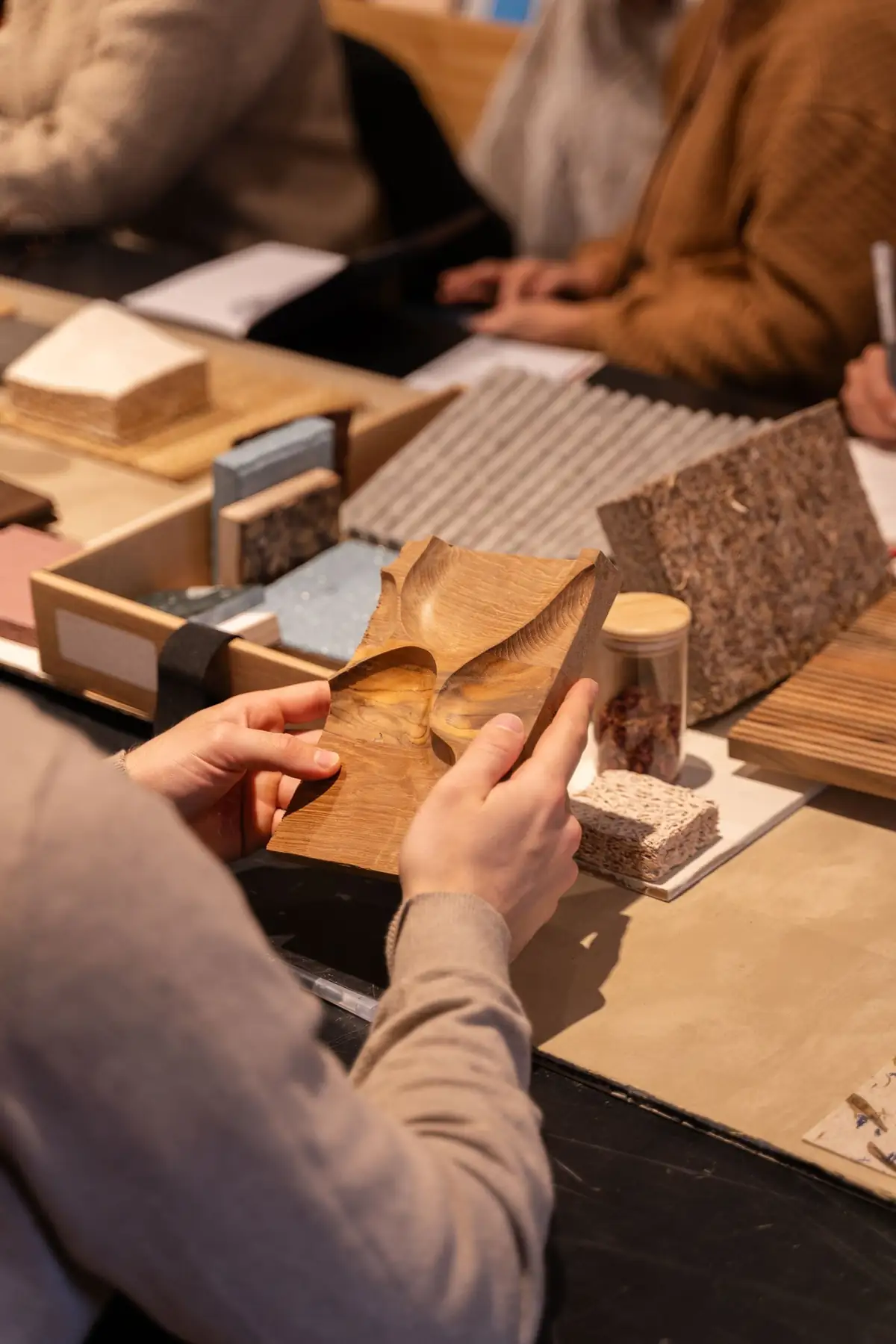
The session had two parts: a talk on healthy architecture by the architect Sonia Hernández-Montaño of Arquitectura Sana, and a selection of materials prepared by Matter's consultancy team to be handled and discussed around the table. In this article we cover both, together with some data and labels worth having to hand when specifying materials with health in mind.
An increasingly indoor life: health begins inside
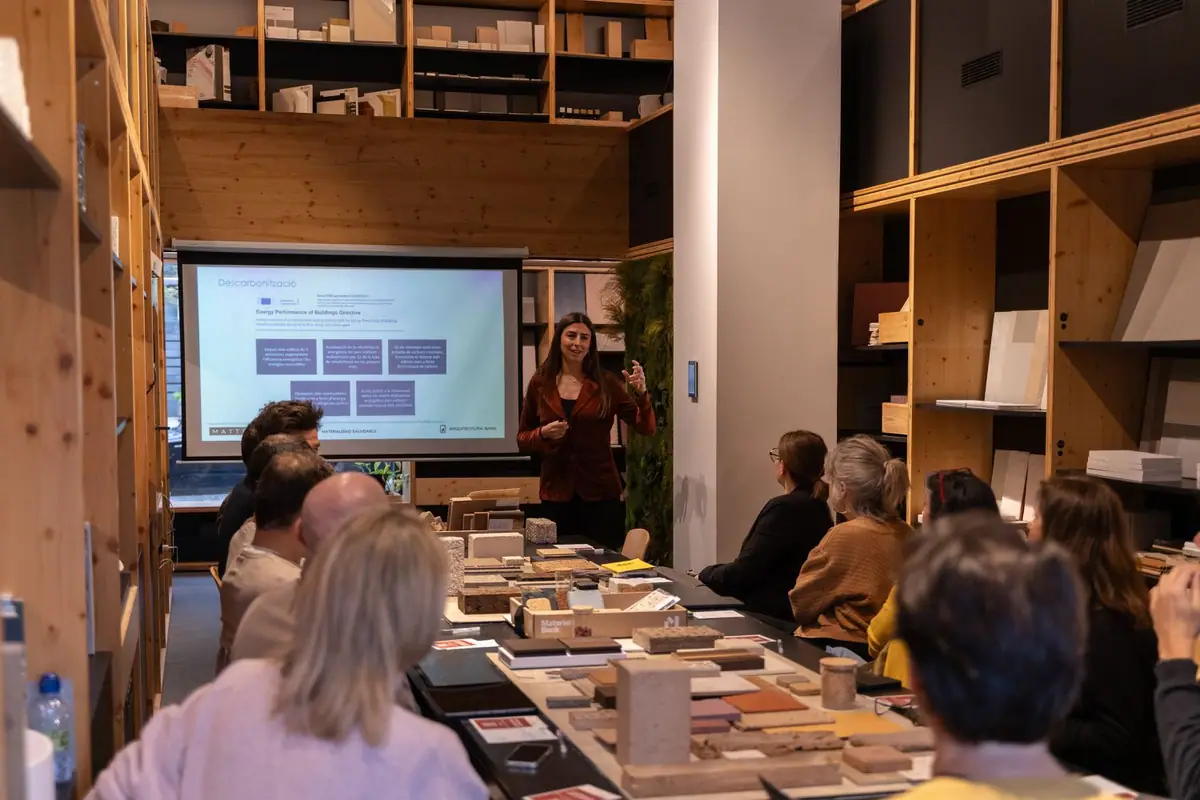
Sonia Hernández-Montaño, an architect specialising in bio-construction and founder of Arquitectura Sana, shared her knowledge of healthy architecture, focusing on the toxins that surround us in interior spaces – the result of an increasingly indoor life – and on the responsibility we have, as design professionals, for people's health.
An architecture graduate of the ETSAB, she founded Arquitectura Sana in 2010 and directs the postgraduate programme in Healthy Architecture at the Escola Sert, the continuing education school of the Col·legi d'Arquitectes de Catalunya (COAC). Her studio develops its own projects but, above all, advises developers, contractors, architecture studios and public bodies on incorporating health criteria into design.
What we breathe indoors
The data explain why the interior matters. According to the United States Environmental Protection Agency (EPA), we spend on average around 90% of our time indoors, and the concentration of some pollutants there is often two to five times higher than outdoors. For volatile organic compounds (VOCs), the difference can be as much as tenfold.
A large share of those emissions comes from what we specify: paints, varnishes, glues and adhesives, finishes and furniture. That is why the choice of materials and finishes, together with adequate ventilation, is one of the most direct tools a project has for improving indoor air quality.
Health and decarbonisation on the same agenda
The talk also placed health within the framework of decarbonising the building stock and of the European Energy Performance of Buildings Directive (EPBD). Its revised version, Directive (EU) 2024/1275, requires new buildings to be zero-emission from 2028 if publicly owned and from 2030 in all cases, and requires their life-cycle global warming potential to be calculated and shown on the energy performance certificate. The European Commission points out that the directive also includes provisions to ensure good indoor environmental quality.
A selection of healthy materials to touch
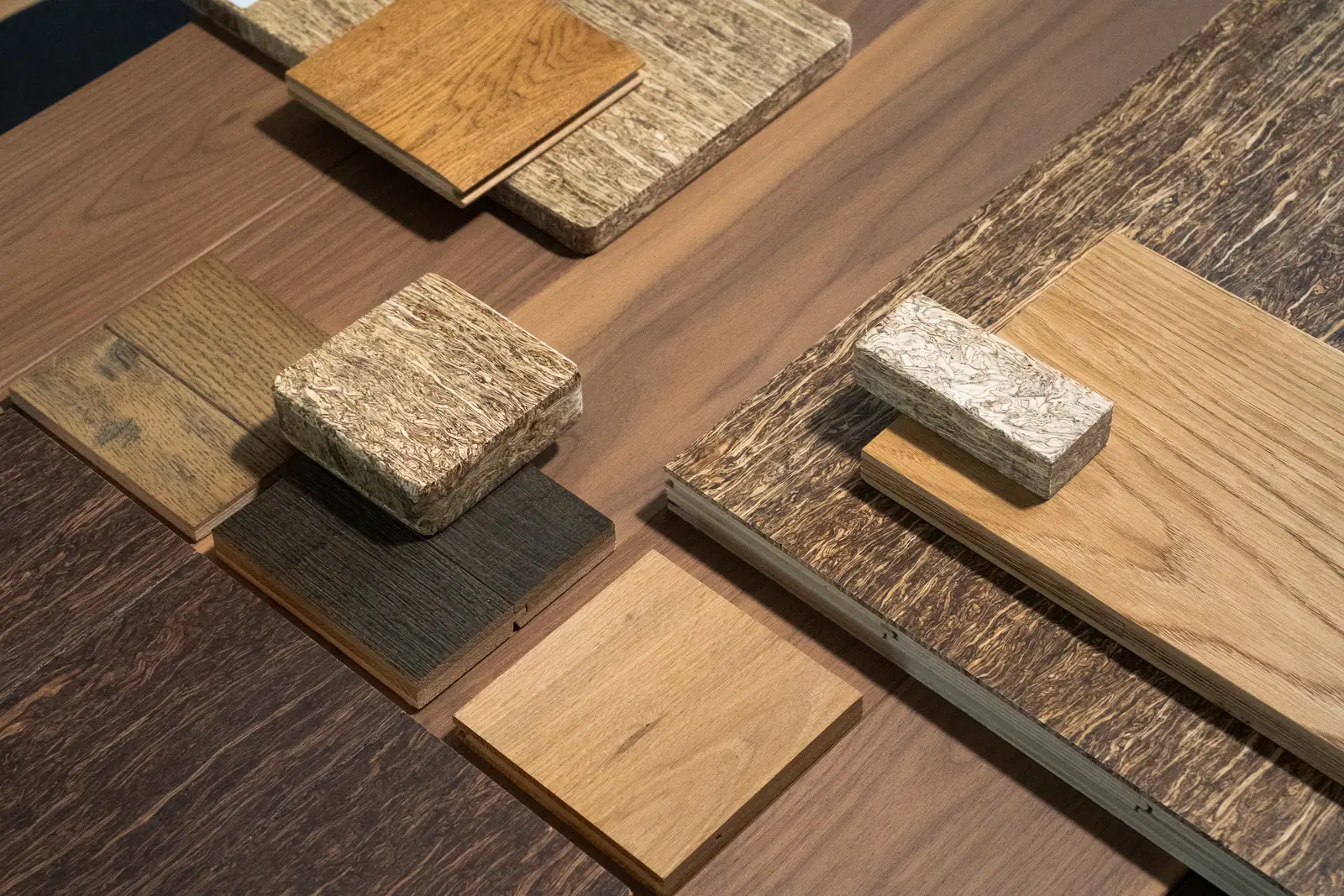
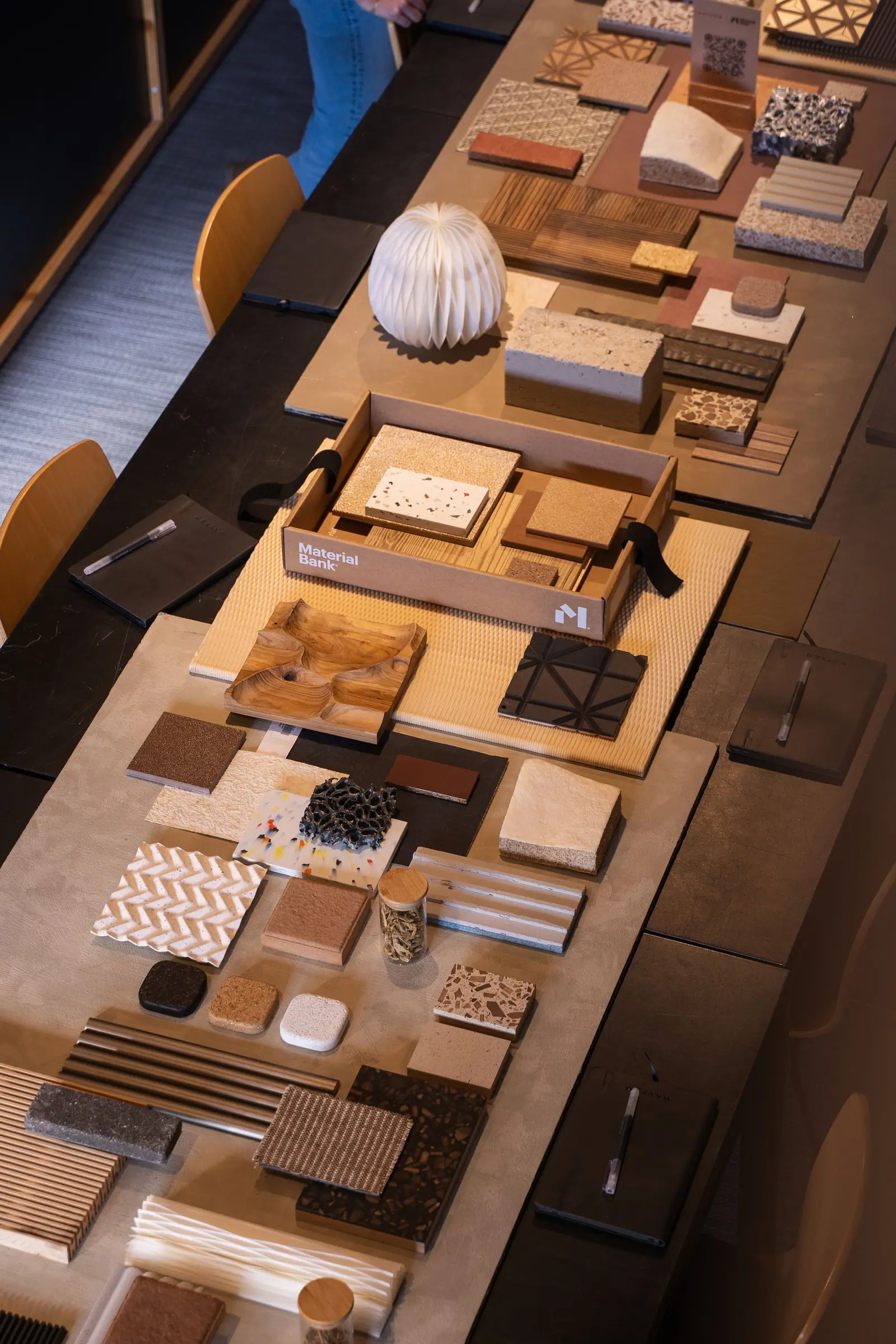
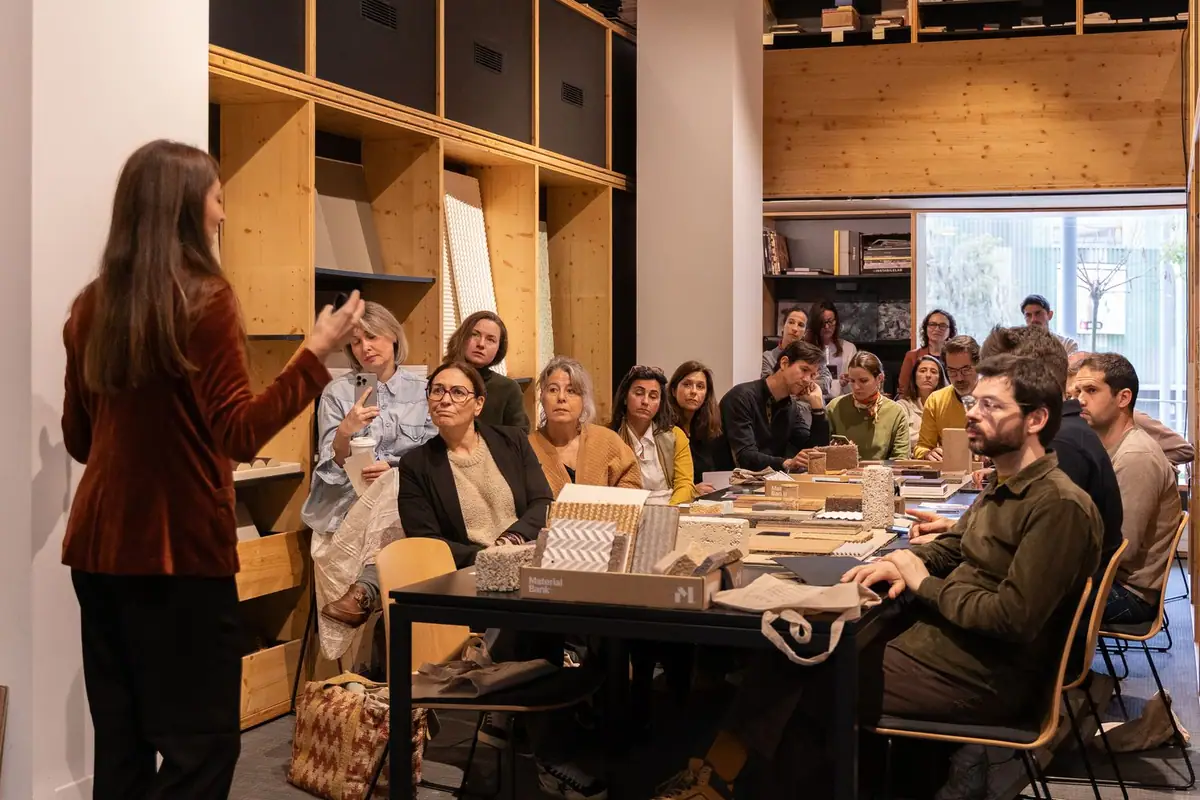
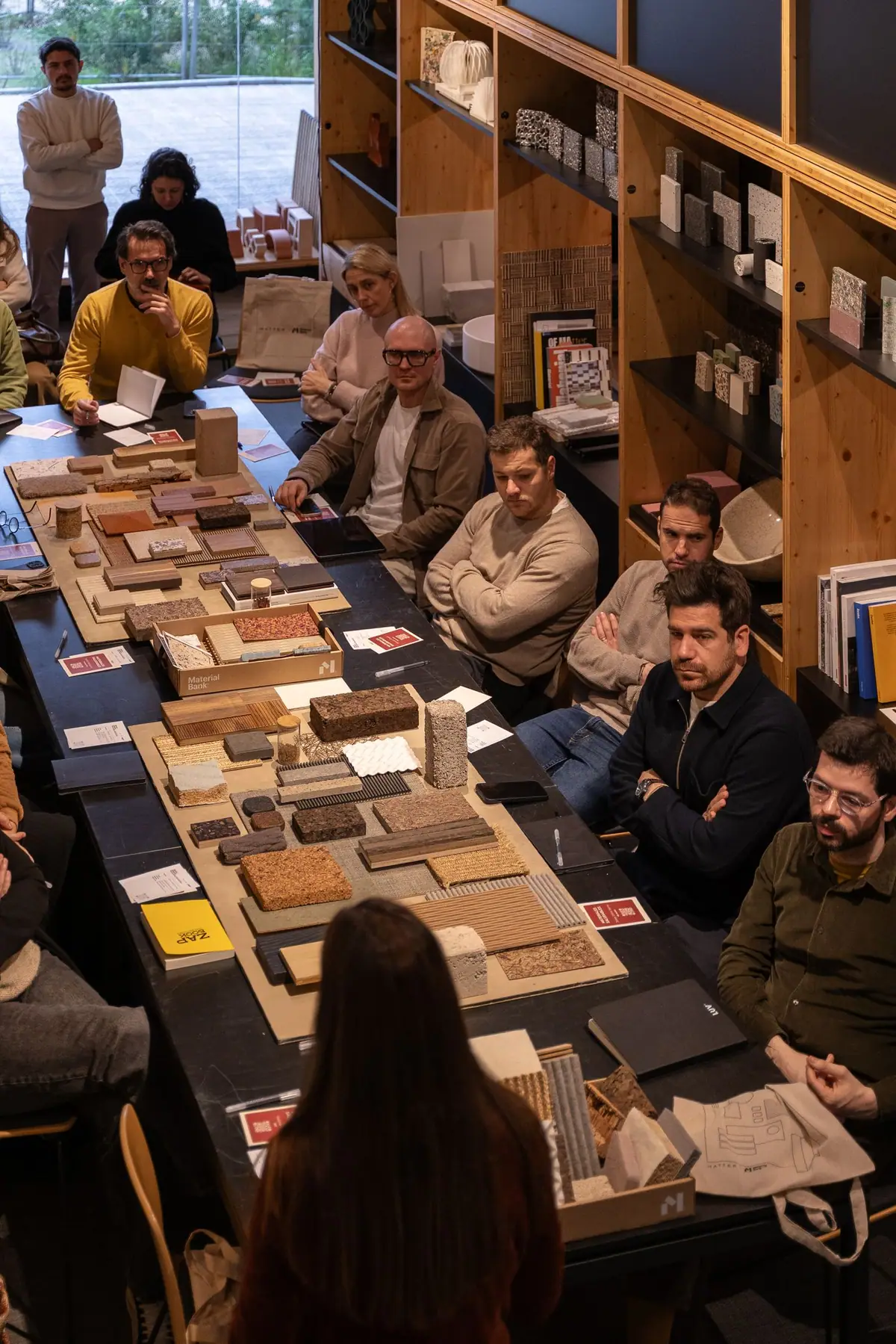
Moodboards prepared by Matter's consultancy team.
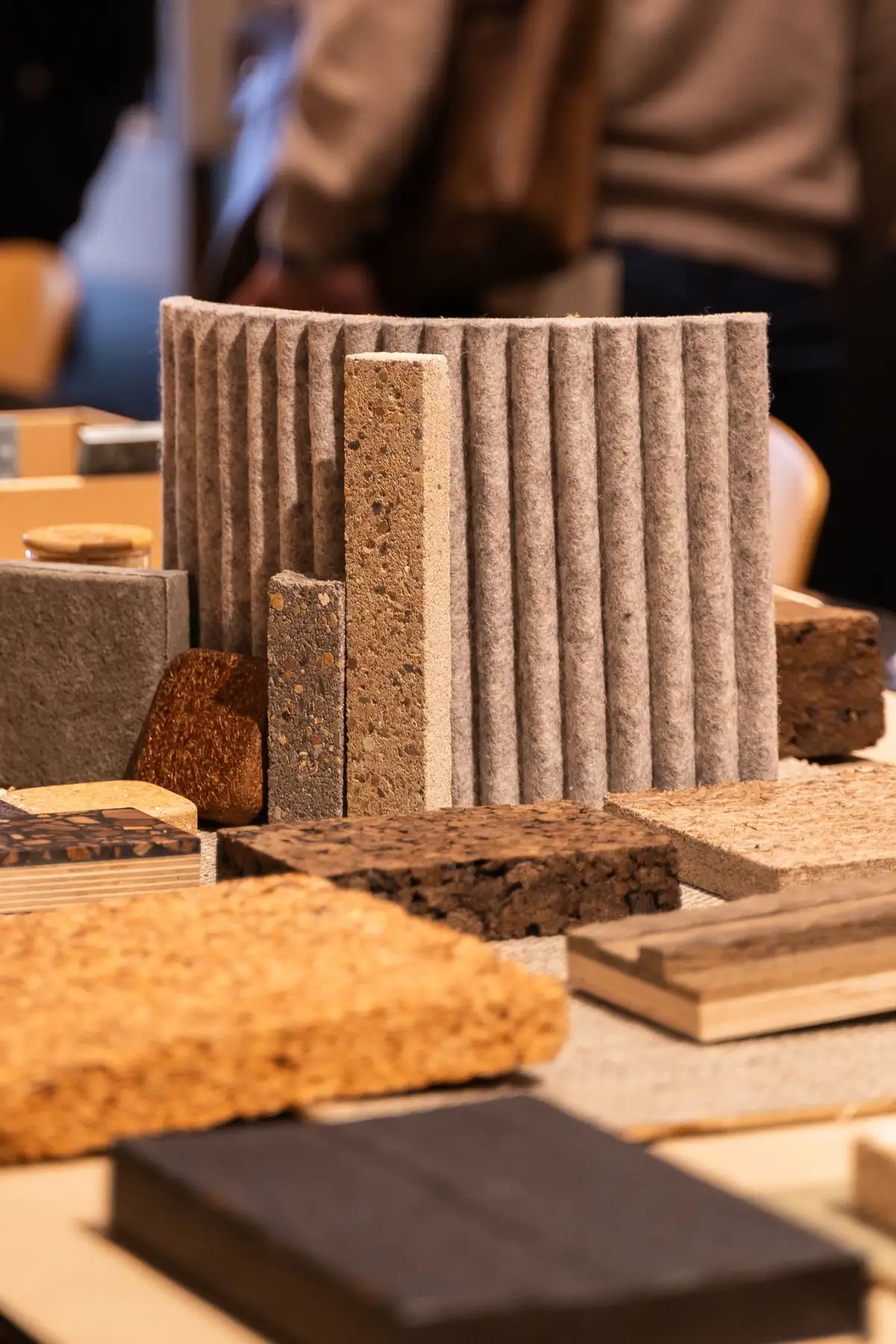
Matter's consultancy team prepared a careful selection of materials aligned with these principles, presented through inspirational moodboards. Attendees could handle them and learn about their properties and benefits.
The presentation grouped the materials under four criteria: non-toxic; low environmental impact; durable, recyclable and biodegradable; and materials that provide comfort and wellbeing. For each, we showed some of the labels and certifications that help to verify what a manufacturer claims:
A useful nuance: since 2013 the French emissions label has been mandatory for construction and interior decoration products sold in France – partitions, floor coverings, insulation, paints, varnishes, glues and adhesives – so many European manufacturers include it in their technical data sheets even when the product is used in Spain.
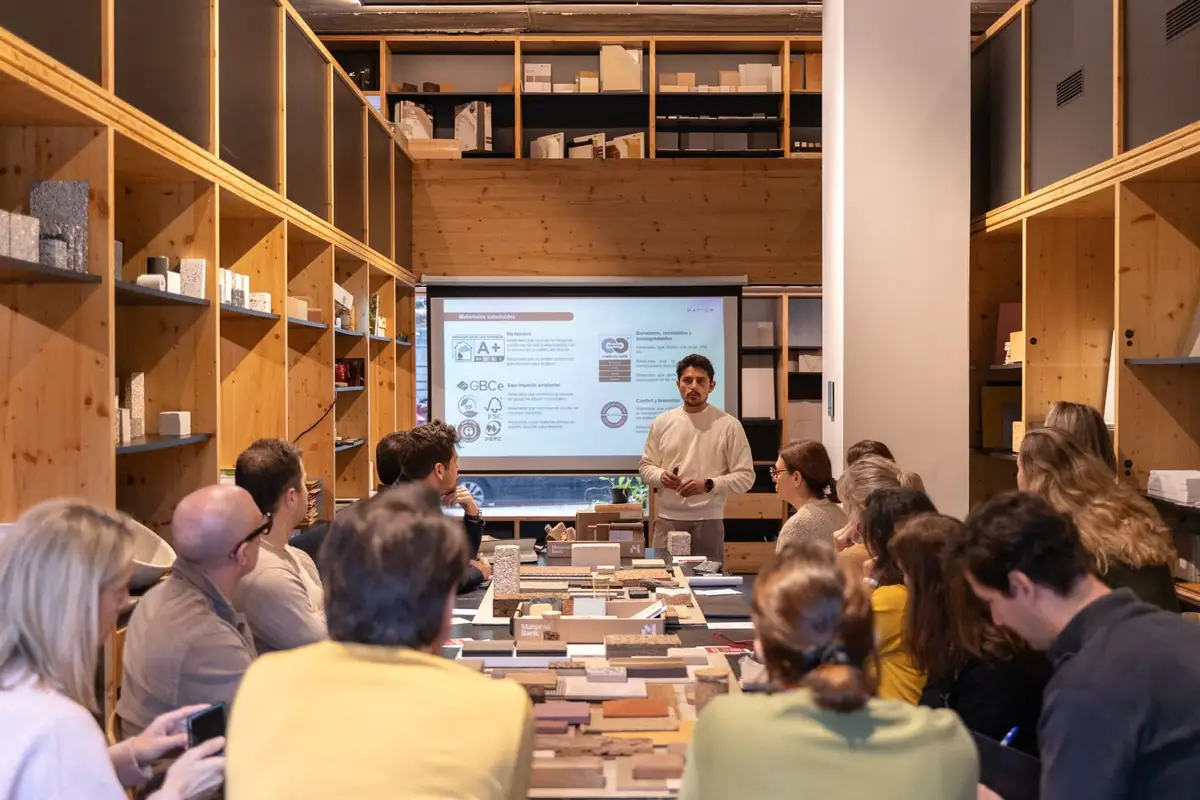
To close, we also invited attendees to register with Material Bank, the material sample platform Matter works with, so they could keep exploring and ordering samples for their projects.
Keys to specifying healthier materials
Some guidelines that emerge from the session and from the sources consulted:
- Look beyond the main material: paints, varnishes, glues, adhesives and treatments also release volatile compounds into indoor air.
- Ask for emissions data: the French label class (A+ is the best) or equivalent tests in the manufacturer's technical data sheet.
- Check the origin of wood and wood-based products with forest certifications such as FSC or PEFC.
- Think about the whole life cycle: durability, the possibility of repairing, recycling or composting, and the carbon footprint, which the new EPBD will make it mandatory to calculate for new buildings.
- Combine materials and ventilation: choosing low-emission finishes works best with adequate air renewal.
Frequently asked questions
- What is a healthy material?
- In the session we grouped them under four criteria: that it is not toxic and does not release harmful substances into indoor air; that it has a low environmental impact; that it is durable, recyclable or biodegradable; and that it provides comfort and wellbeing to whoever occupies the space.
- What does the A+ label found on many technical data sheets indicate?
- It is the French label for emissions into indoor air. It classifies construction and decoration products from A+ (very low emissions) to C (high emissions) according to the volatile organic compounds and substances such as formaldehyde that they release. It has been mandatory in France since 2013.
- What does the new European Energy Performance of Buildings Directive change?
- Directive (EU) 2024/1275 requires new buildings to be zero-emission from 2028 if publicly owned and from 2030 in all cases, and requires their life-cycle global warming potential to be shown on the energy performance certificate: from 2028 for new buildings of more than 1,000 m² and from 2030 for all of them.
Thank you for being part of the session
Thank you to everyone who took part in this session. We continue to promote knowledge and innovation in the sector to create healthier and more responsible spaces.
Look out for our upcoming Matter Sessions and book your visit to Matter to see our Materioteca and talk about the healthy materials for your next project.