An acoustic, aesthetic wall covering made from 3D fabric
Cello by Casalis: a 3D merino wool fabric designed by Aleksandra Gaca that covers class A acoustic panels for walls, ceilings and screens.
Products6 min read
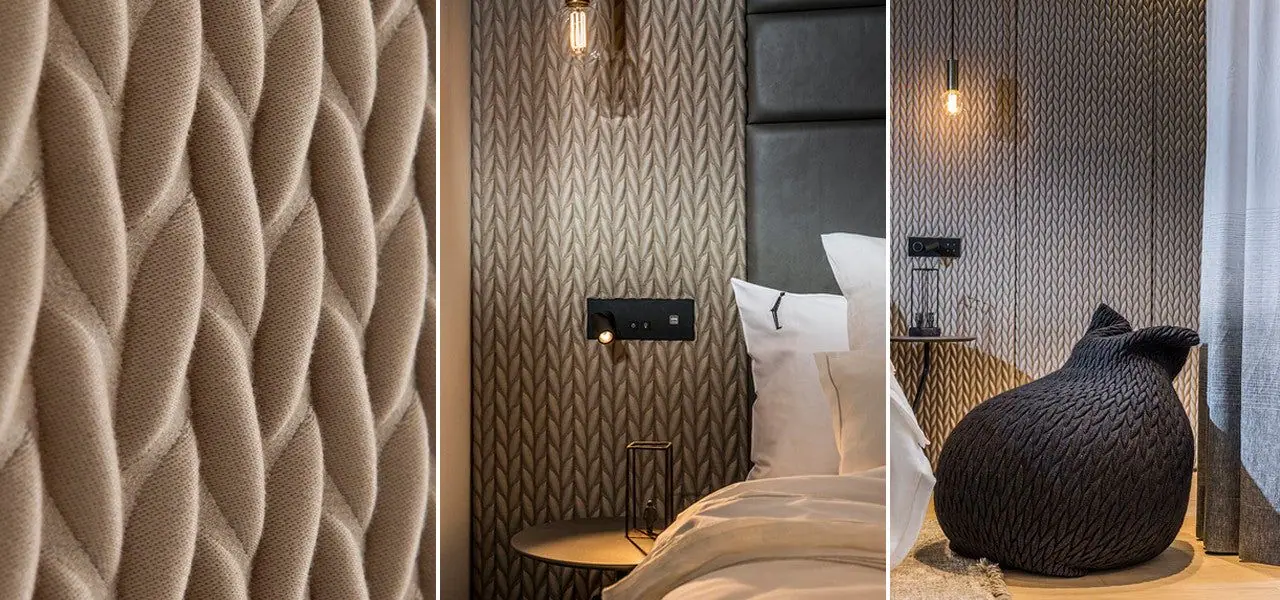
Casalis presents a collection in which texture and technique meet to produce distinctive fabrics. Cello is a three-dimensional fabric designed by Aleksandra Gaca that the Belgian firm uses as the cover for its acoustic panels: an undulating surface that plays with light and shadow and which, over an absorbent core, corrects a room’s reverberation without giving up the warmth of a textile.
In this article we look at what Cello is made of, how a panel with a 3D fabric absorbs sound, its technical data and mounting systems, what to bear in mind when specifying it and who is behind the design.
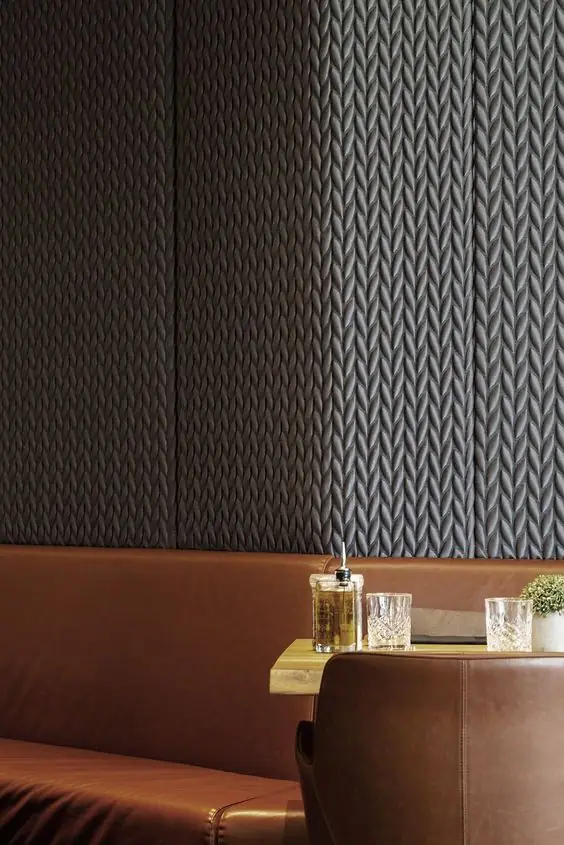
Cello: a 3D fabric for acoustic panels
The Cello collection is made from a 3D fabric that not only offers good sound absorption but is also aesthetically pleasing: a combination of matt and sheen, of hard and soft. Casalis uses it as the cover for its acoustic panels, which are made to measure for each project.
Casalis was founded in Belgium in 2000 with rugs created with independent designers and is now based in Kortrijk. The company’s long history and its experience in working and handling textile materials have allowed it to develop high-quality 3D fabrics on state-of-the-art warping and weaving machines; according to the firm itself, these fabrics are produced in Flanders.
The fabric blends 30% merino wool, 29% virgin wool, 24% polyester, 16% cotton and 1% elastane. Merino wool has finer fibres than conventional wool, so it is softer to the touch. That combination of natural and synthetic fibres was precisely one of the technical merits highlighted by the Dutch Design Awards jury when it gave its award to the series Cello belongs to.
How a 3D fabric absorbs sound
These products are certified with class A sound absorption, the highest on the UNE-EN ISO 11654 scale, which runs from A to E. Casalis describes them as panels with excellent performance in both absorbing and diffusing sound.
The explanation lies in the relief. According to the manufacturer, the three-dimensional fabric greatly increases the surface area of the acoustic element, and the assembly — the fabric over a 50 mm absorber — absorbs more than 90% of the sound that strikes it; what it does not absorb it reflects in different directions. In other words, the result depends not only on the fabric but on its combination with the panel core.
That percentage corresponds to the weighted sound absorption coefficient αw, which ranges from 0 (all sound is reflected) to 1 (all sound is absorbed). Cello’s technical specification of October 2021 declares an αw of 0.90, class A. The laboratory test that Casalis linked from the product page, carried out by Sonorcontrol in 2012 to EN ISO 354 and EN ISO 11654 on a 40 mm frame covered in 3D fabric and filled with melamine foam, gave an αw of 0.95.
Absorption should not be confused with insulation. A panel such as Cello reduces reverberation inside the room — the echo that makes spaces dominated by glass, stone or concrete uncomfortable — but it does not stop outside noise getting in: that is dealt with by insulating the building envelope.
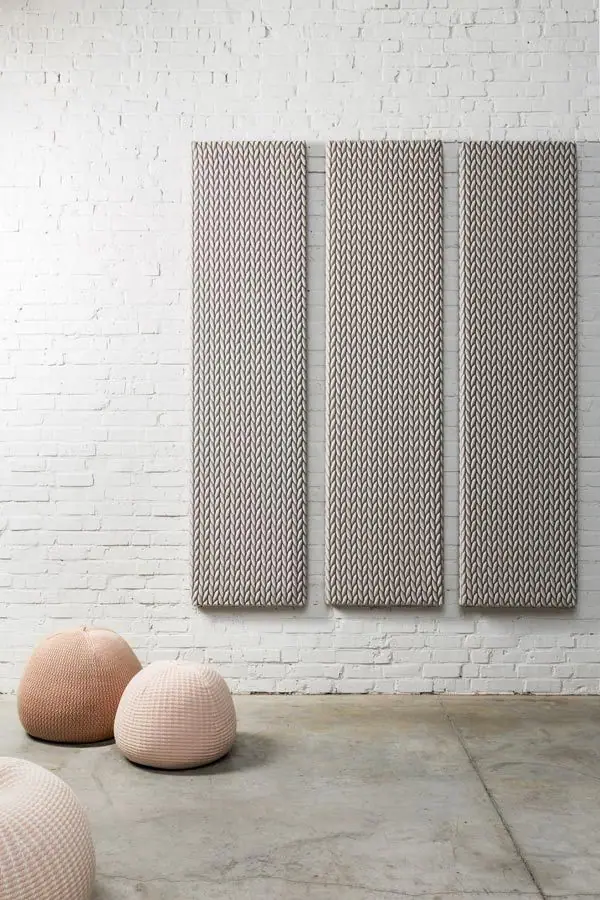
Panel technical data
Each panel consists of an aluminium frame, a mineral wool absorber and a removable 3D fabric cover. The table summarises the data from Cello’s technical specification and product page.
In 2022, the Casalis product page offered Cello in nine colours: black, navy, anthracite, camel, beige, taupe, mid grey, light grey and cream. Panels in different colours can be combined on the same wall, and the covers can be replaced without changing the panel. As of 2026, the manufacturer’s page keeps cream, beige, light grey, anthracite and black, and lists taupe, mid grey and navy as colours being phased out.
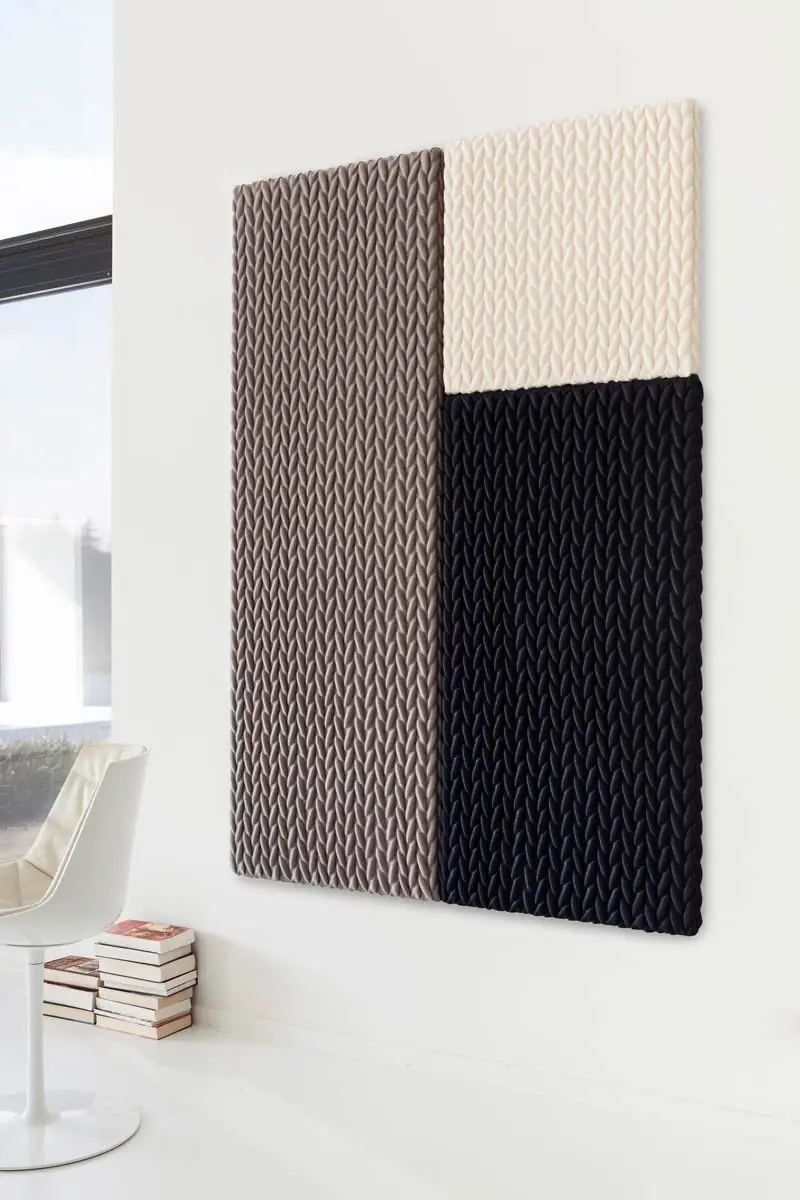
Formats and mounting systems
The panels are made to measure and allow several configurations. According to the Casalis specification:
- On walls: horizontally or vertically, with a magnetic mounting kit that makes the panel easy to fit and remove. Once installed, it projects 65 mm.
- On ceilings: with the same system or suspended from height-adjustable steel cables, horizontally or vertically.
- Floor to ceiling: tensioned on cables, as space dividers.
- Freestanding: on feet, as a screen, or mounted on a desk as a workstation divider.
- With integrations: switches, sockets, lights, speakers or screens can be built in to order.
The whole panel can be dismantled and, according to the manufacturer, all its parts are recyclable. In its 2020 technical information, Casalis also stated that the aluminium profile contains 80% recycled material.
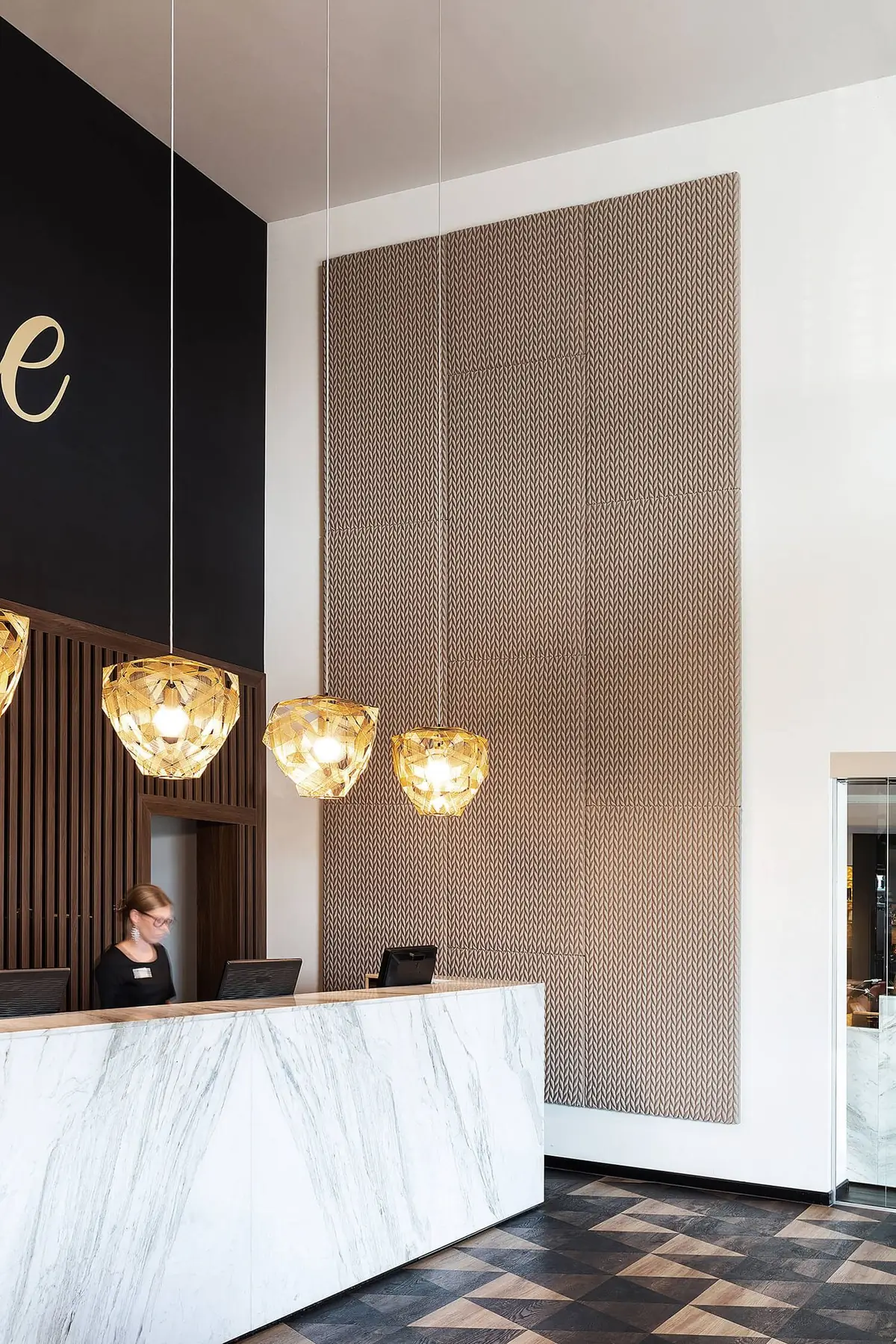
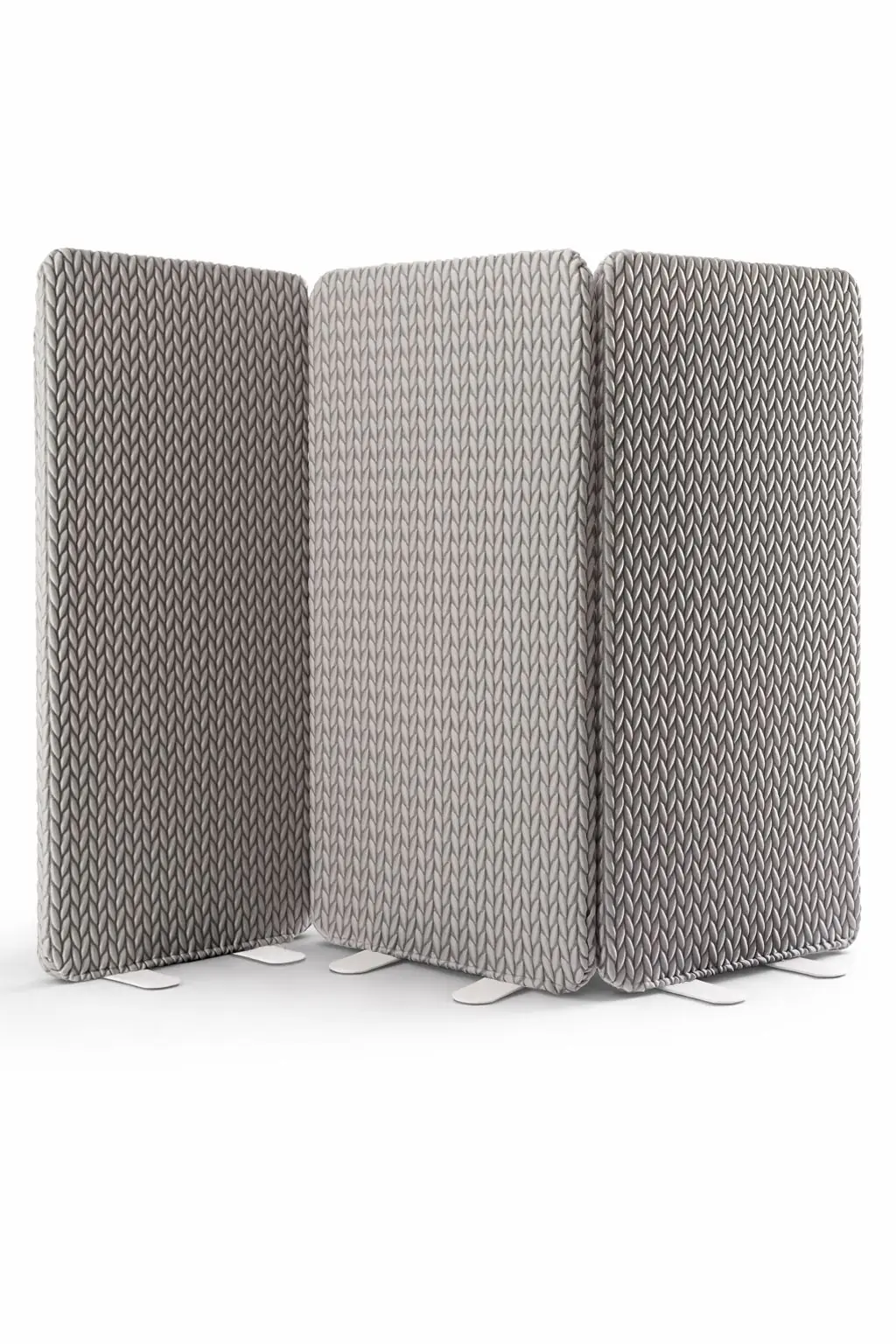
Key points for specifying Cello
- Absorption, not insulation: Cello corrects reverberation inside the room; if the problem is noise from outside or from a neighbouring space, it has to be solved in the envelope.
- Reaction to fire: the fabric is wool-based and Casalis states that it can be given a fire-retardant treatment. In spaces with strict requirements, it is advisable to confirm the classification of the treated panel with the manufacturer; its Trevira CS polyester fabrics, Ondo and Leevn, are classified B-s2,d0.
- Area and position: the amount of panelling depends on the volume of the room and its hard materials; in demanding projects, an acoustic study defines the area required and where to place it.
- Integrated devices: switches, sockets or detectors are built into the panel to order, so their position must be defined before it is manufactured.
- Maintenance: regular vacuuming is enough; for stains, Casalis recommends professional upholstery cleaning, and the cover can be removed for this.
Aleksandra Gaca and the Architextiles series
Cello is a collection designed by Aleksandra Gaca that combines strong aesthetic qualities with high functional acoustic performance. Her fabrics blend experimental weaving techniques with her own sensual approach to materials, colours and patterns.
Born in Poland and trained at the Royal Academy of Art in The Hague, Gaca works in the Netherlands and, according to Casalis, was a pioneer in the design and production of 3D woven textiles. Cello is part of Architextiles, the series of acoustic fabrics she created for Casalis together with Ondo, Leevn and Slumber. According to the Dutch Design Awards, the series grew out of research commissioned by the textile museum in Tilburg, based on experiments with weave structures and special materials.
The series and Cello have received several awards:
- Dutch Design Awards 2012: Casalis Architextiles won in the product category.
- Good Design 2013: award for best new material from the Polish Institute of Industrial Design (IWP), according to Casalis.
- A' Design Award 2017-2018: gold in the textiles category for Architextiles.
- Designregio Kortrijk Award 2019: Cello was one of the winners, according to Casalis.
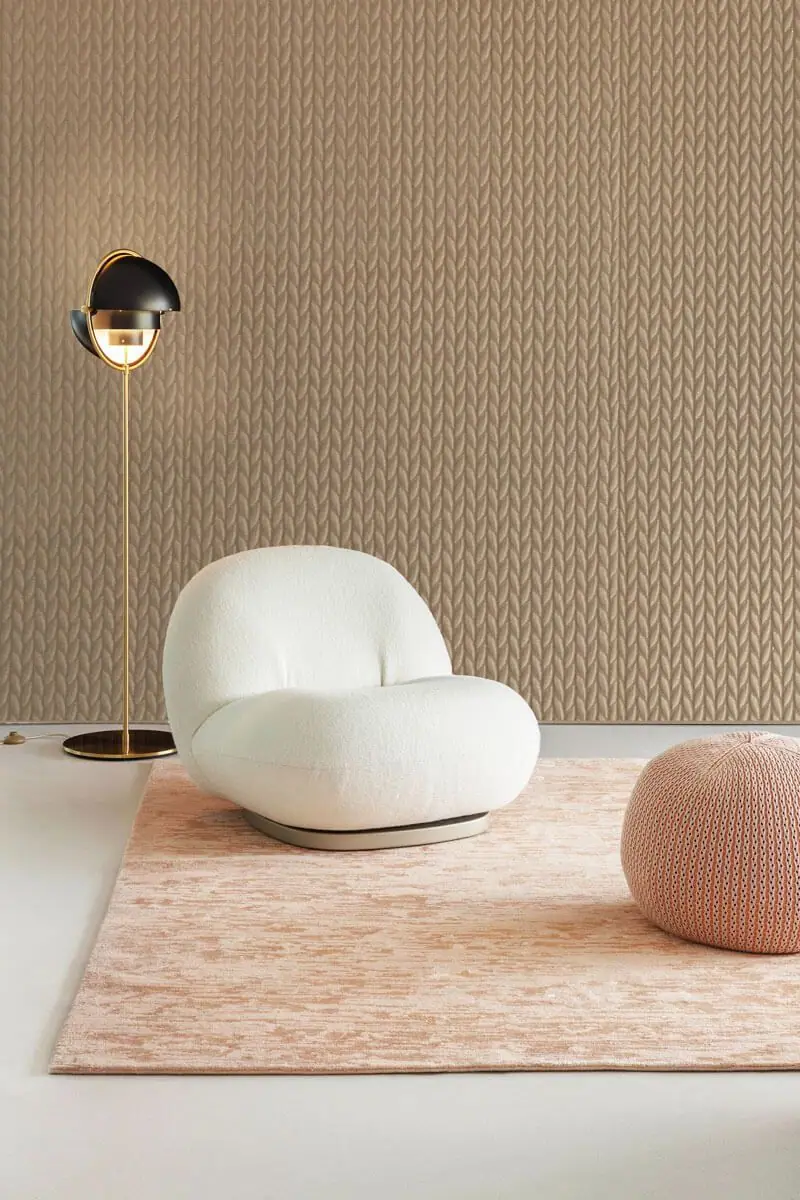
Frequently asked questions
- What does it mean that Cello is class A?
- That its weighted sound absorption coefficient αw, calculated to UNE-EN ISO 11654, is between 0.90 and 1.00, the highest band on the scale. Casalis declares an αw of 0.90 for the panel with its 50 mm absorber.
- Can it be used in spaces with reaction-to-fire requirements?
- The fabric is wool-based and Casalis states that it can be given a fire-retardant treatment, but its 2021 specification does not declare a Euroclass for Cello. The product page linked to a 2019 US ASTM E84 test in which the fabric achieved class A under that standard, which is not equivalent to the European Euroclasses. The classification must be confirmed with the manufacturer for each use.
- Can the cover be cleaned or changed?
- Yes. According to the specification, the cover is removable and washable. Casalis recommends vacuuming it regularly and, for a thorough clean, using a specialist upholstery company. It can also be replaced without changing the panel.
- What size can the panels be?
- They are made to measure, from 30 to 95 cm wide and up to 350 cm long, and 60 mm thick. They can have square or rounded corners and carry fabric on one side or both, which allows them to be used as dividers.
At the Matter material library you can explore acoustic and textile solutions for interiors and compare them with your technical team. If you are considering panels such as Cello, we can help you resolve your specification questions.
Book your visit to Matter.
Book a visit