Sustainable solutions for wall coverings
Komorebi by Glamora: 16 Japanese-inspired designs on GlamPure, a linen and viscose wall covering. Material, technical data and installation.
Products5 min read
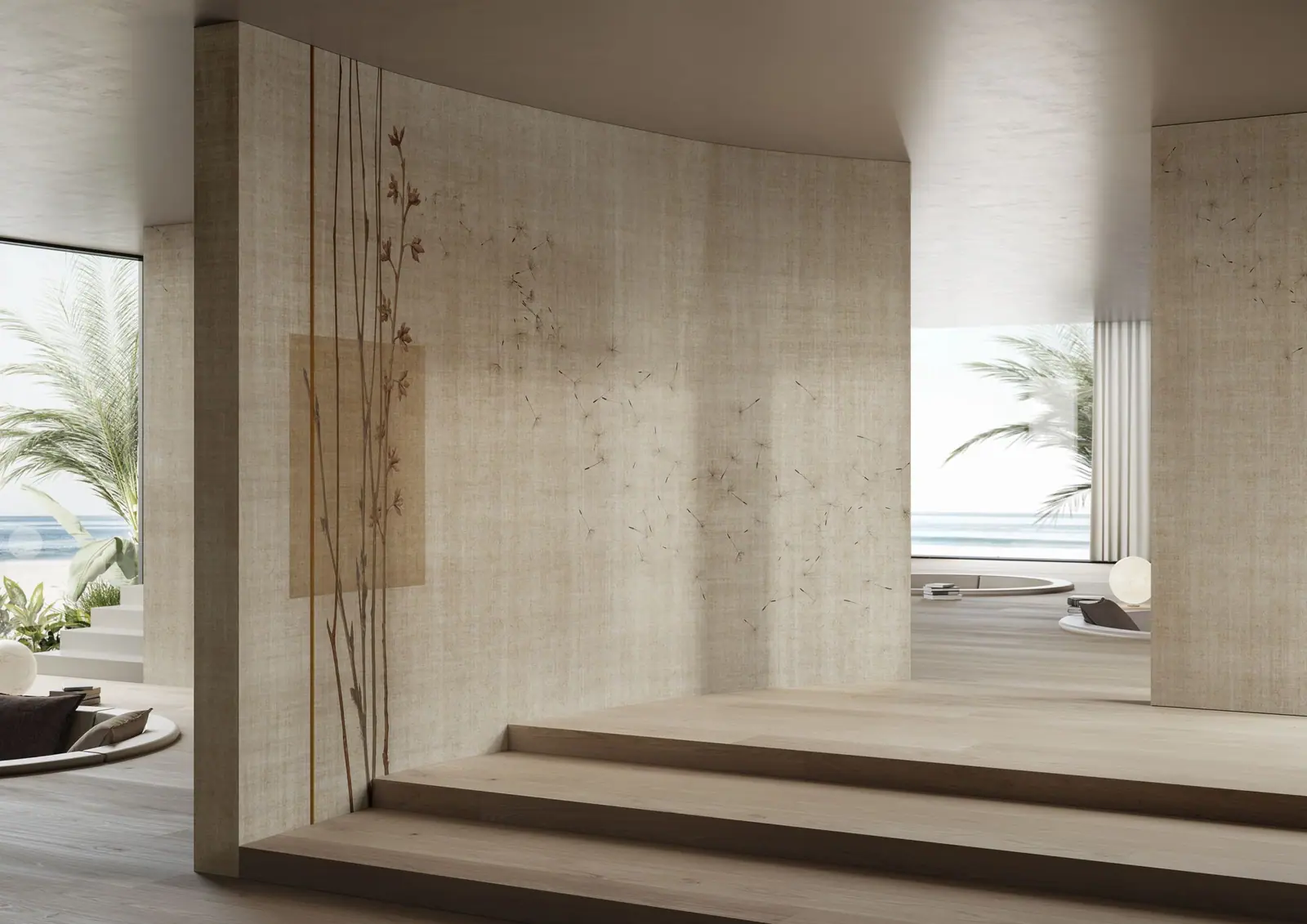
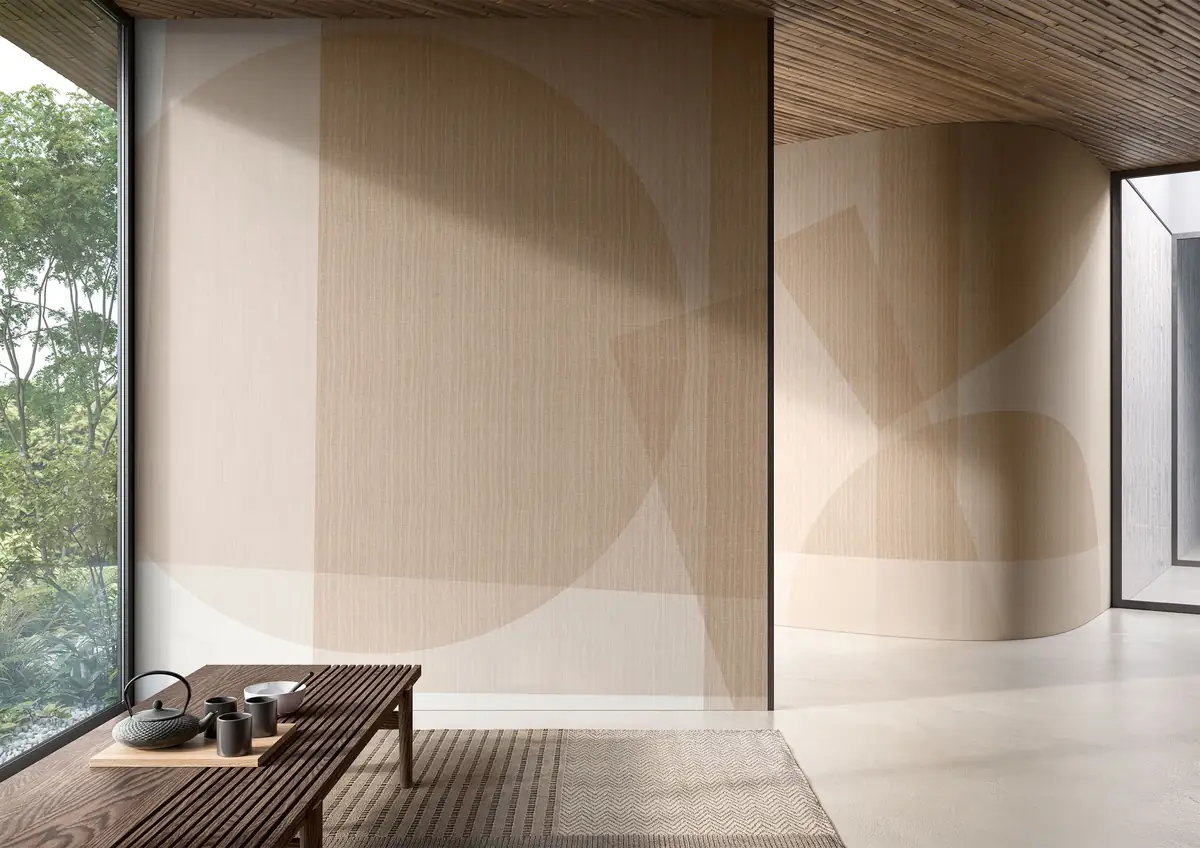
The Komorebi collection on GlamPure, The Organic Wallcovering, was created to satisfy lovers of beauty and elegance who are looking for sustainable interior design solutions that support the wellbeing of those who use them. The Japanese term Komorebi evokes the image of ‘sunlight filtering through the trees’, a vision of tranquillity and energy that brings a new dimension to the space. Through this collection, inspired by the Japandi aesthetic, a blend of Scandinavian and Japanese style, Glamora promotes an approach to life based on reconnecting with nature.
In this article we look at the idea behind the collection, the sixteen designs that make it up, the material on which they are printed — GlamPure, a non-woven of European linen and viscose — with its technical data, and what to bear in mind when specifying and installing it in a project.
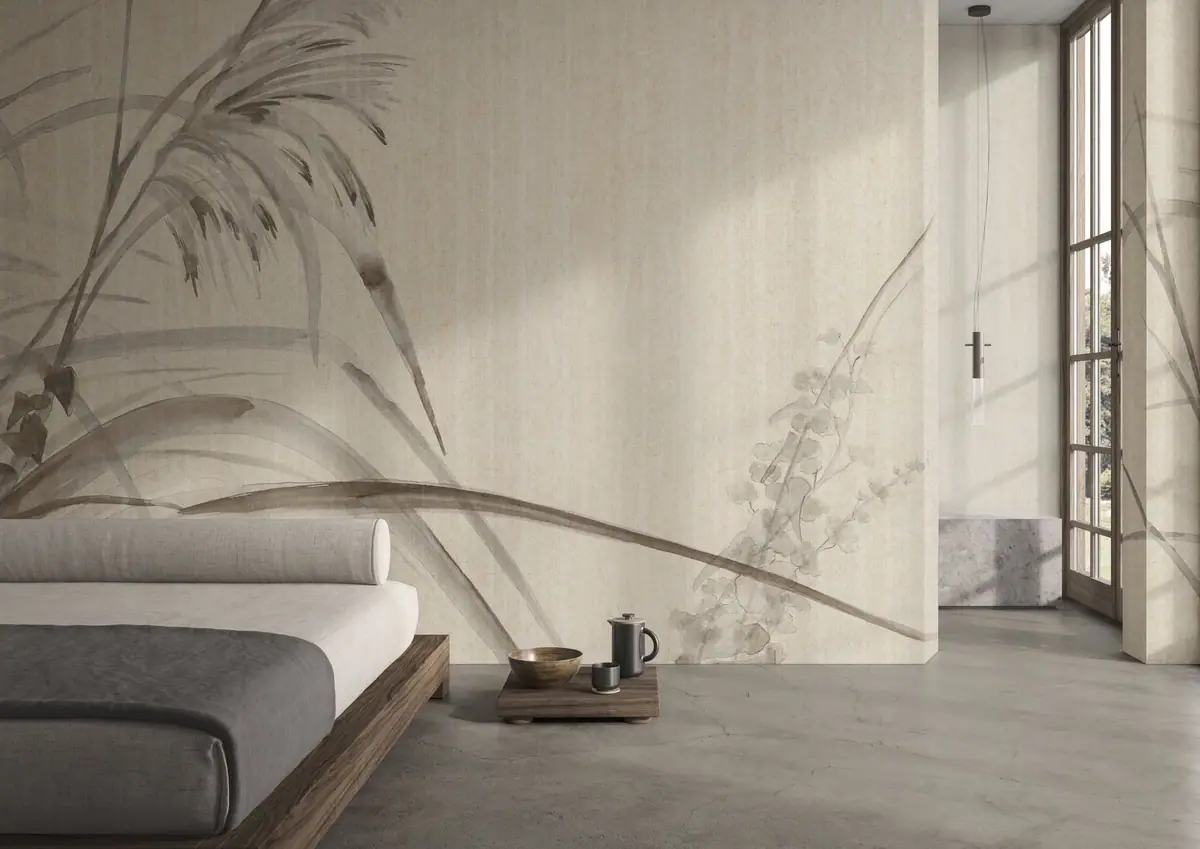
Komorebi: light filtering through the trees
Flowers and foliage float across the surface of the wall coverings, a high-quality plant-based wallpaper that presents an alternative idea of luxury. It represents a conscious choice, mindful of people’s health and of nature, that favours materials with a low environmental impact. Its texture is visually evocative and conveys the pleasure of living in a unique interior.
Glamora traces the origin of the collection to a shift in how luxury is understood, increasingly linked to physical and psychological wellbeing, balance, time for oneself and aesthetic and sensory experiences that respect others and the environment. In interiors, the manufacturer explains, this sensibility translates into harmonious spaces that prioritise organic materials, quality wood, personalisation, handmade pieces and sophisticated colour palettes.
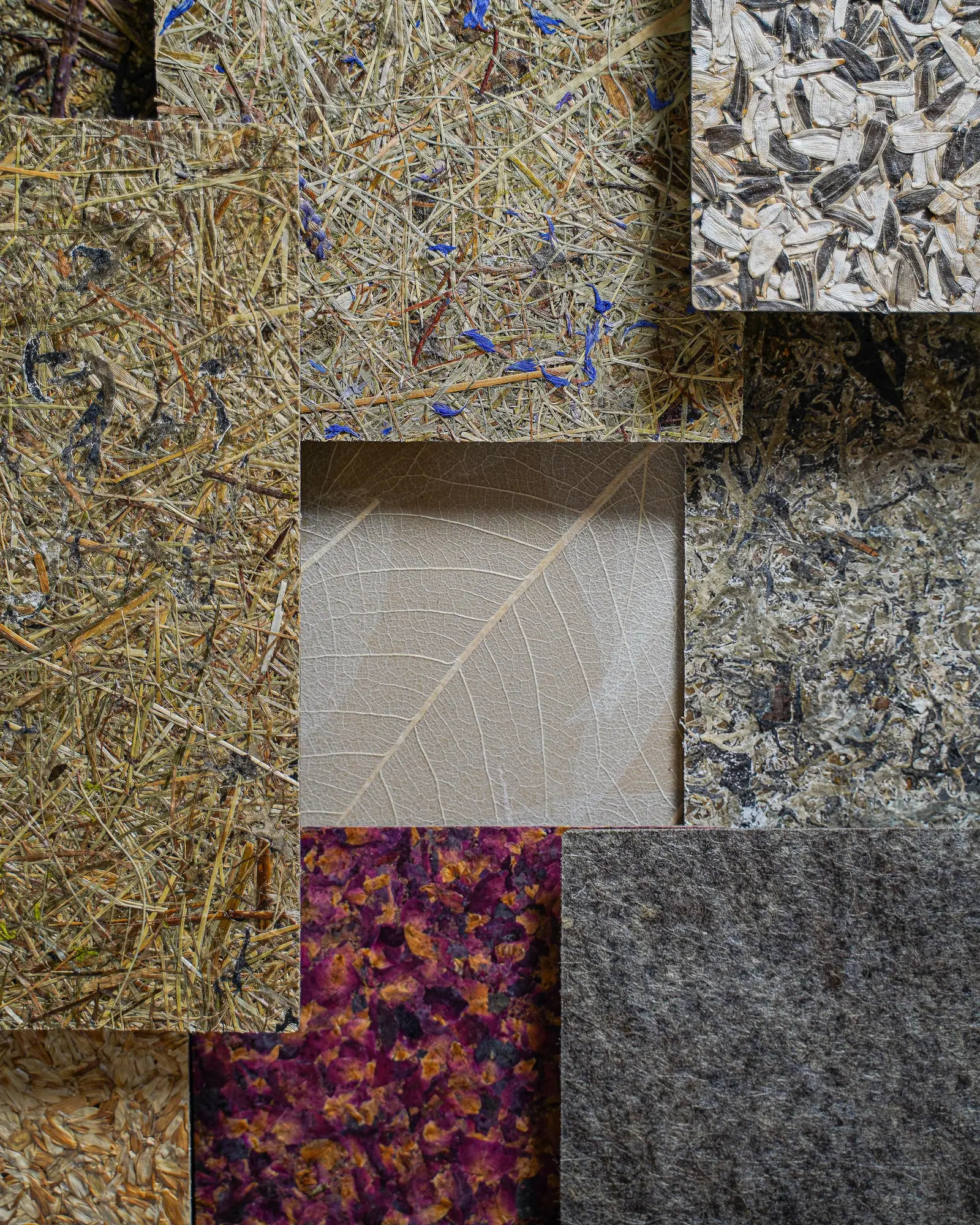
Fabrizio Rondini, creative director of Glamora, told IFDM magazine in 2021 that he has always been fascinated by the way Eastern aesthetics accept the imperfection of nature. From the Washi technique, the handmade paper of Japanese tradition, he took the idea of transparency and of layering natural fibres and very light weaves that bring out the uneven texture of linen.
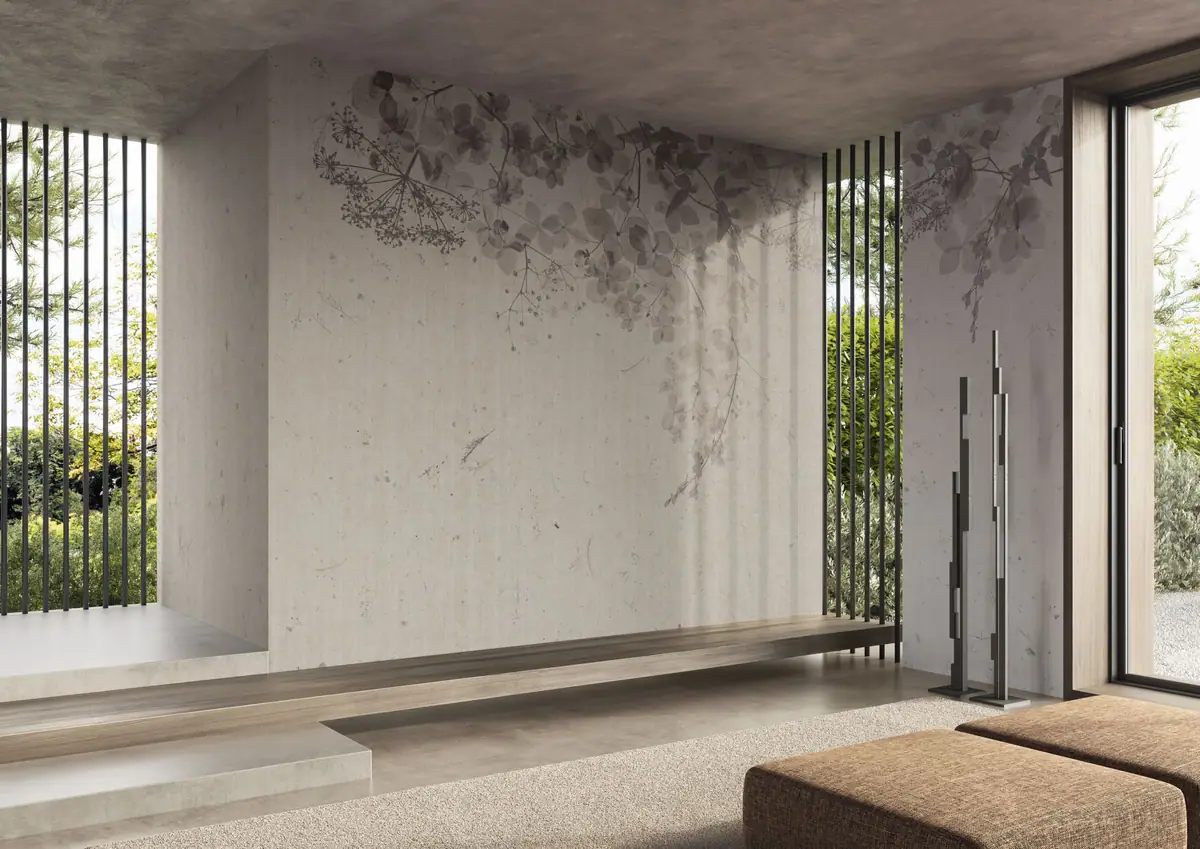
Sixteen designs between the botanical and the abstract
The collection comprises 16 designs, each with its own story. Abstract forms alternate with depictions of plants. Like treasures gathered on a walk in nature, they are layered over highly tactile material textures. Inspired by the Washi technique of Japanese papermaking, the Komorebi collection plays with the layering of natural components and light fabrics.
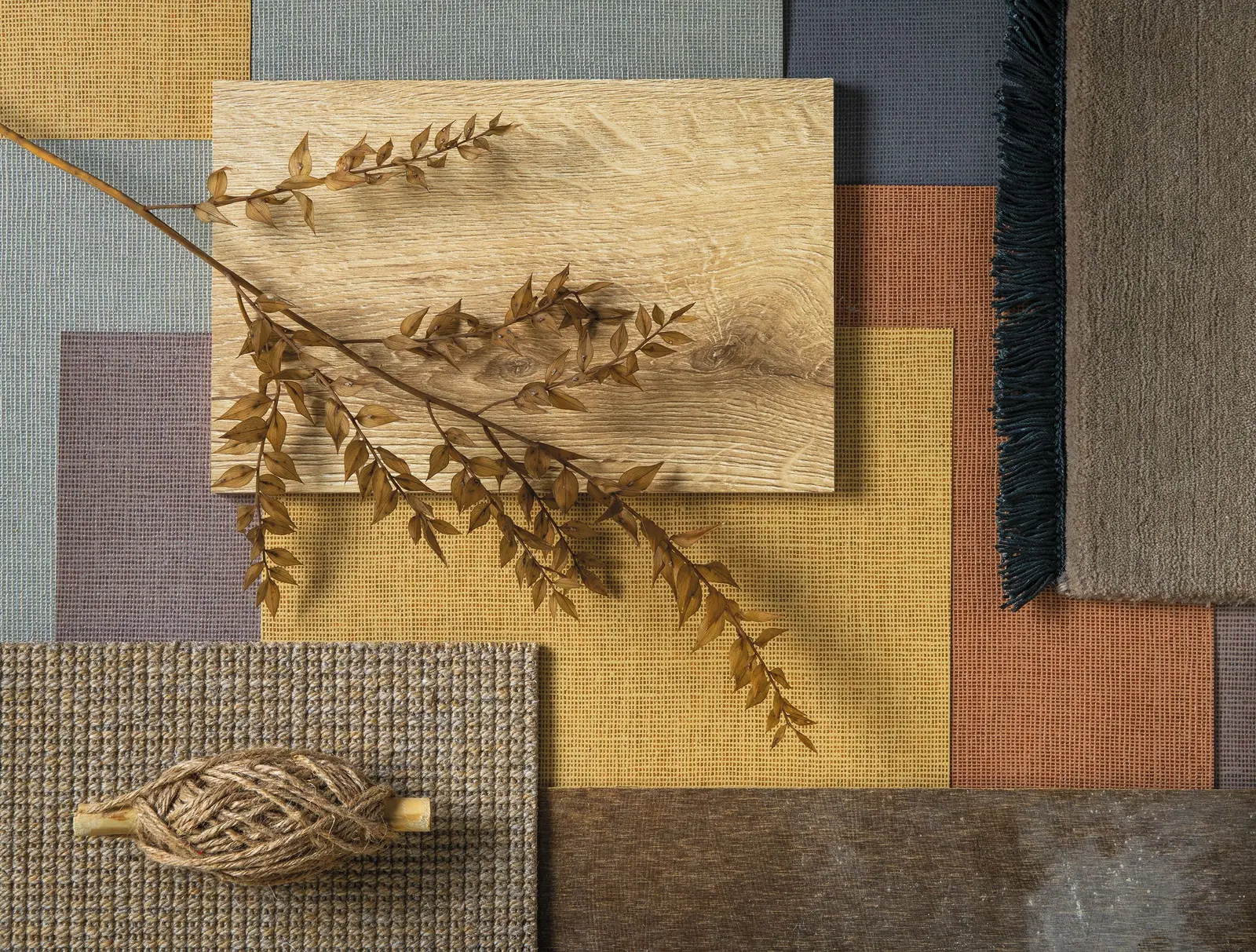
The natural tones of wood and earth and the indigo blue of Boro textiles create elegant colour juxtapositions. A light, milky layer of rice starch softens and blends the colours, bringing out the best in the naturally imperfect surface of GlamPure.
The sixteen designs are Kintsugi, Interplay, Foliage, Moribana, Stille, Materia, Temps Perdu, Morning Light, Boro, Sensitive, Quiet Place, Spark, Wabi, Kokoro, Seika and Jaku. Some names refer directly to Japanese culture: the fragmented pattern of Kintsugi, for example, is inspired by the Japanese technique of repairing ceramics, as a symbol that aesthetic perfection can arise from imperfection, according to the design’s product sheet.
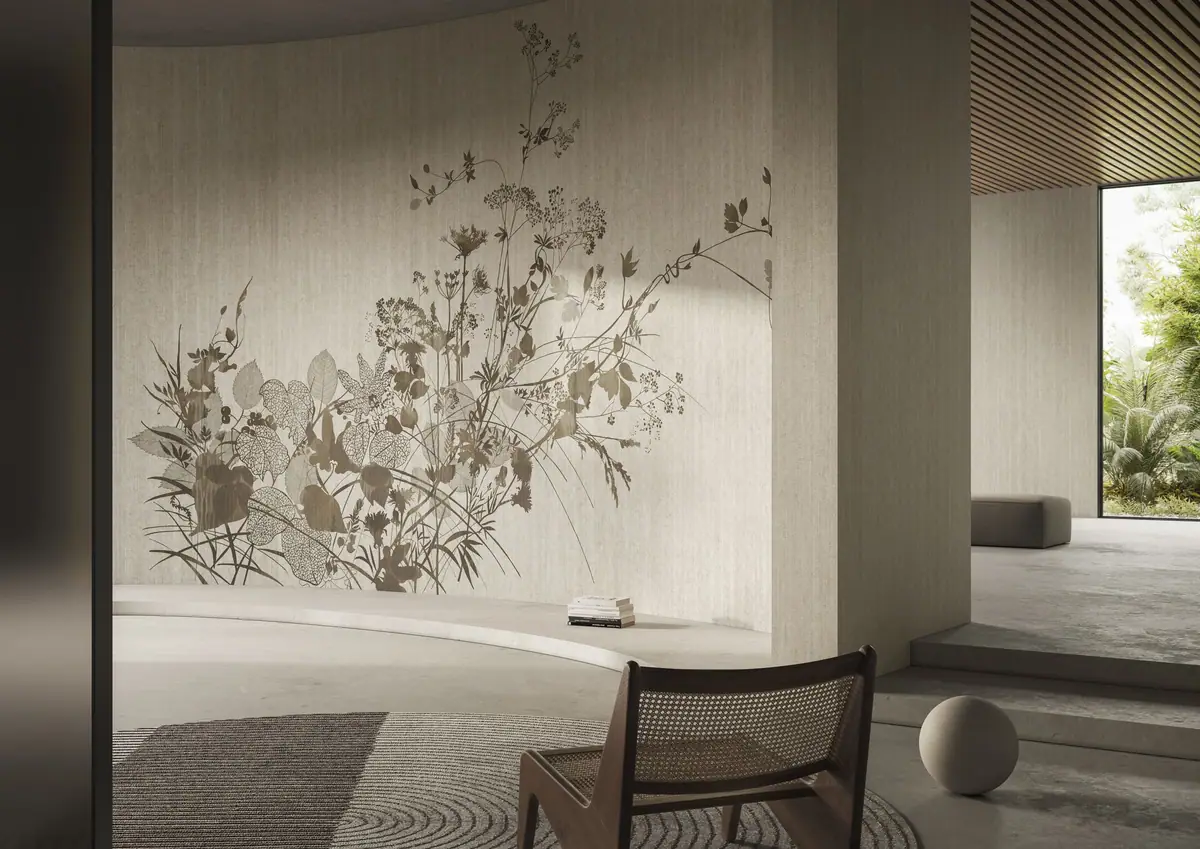
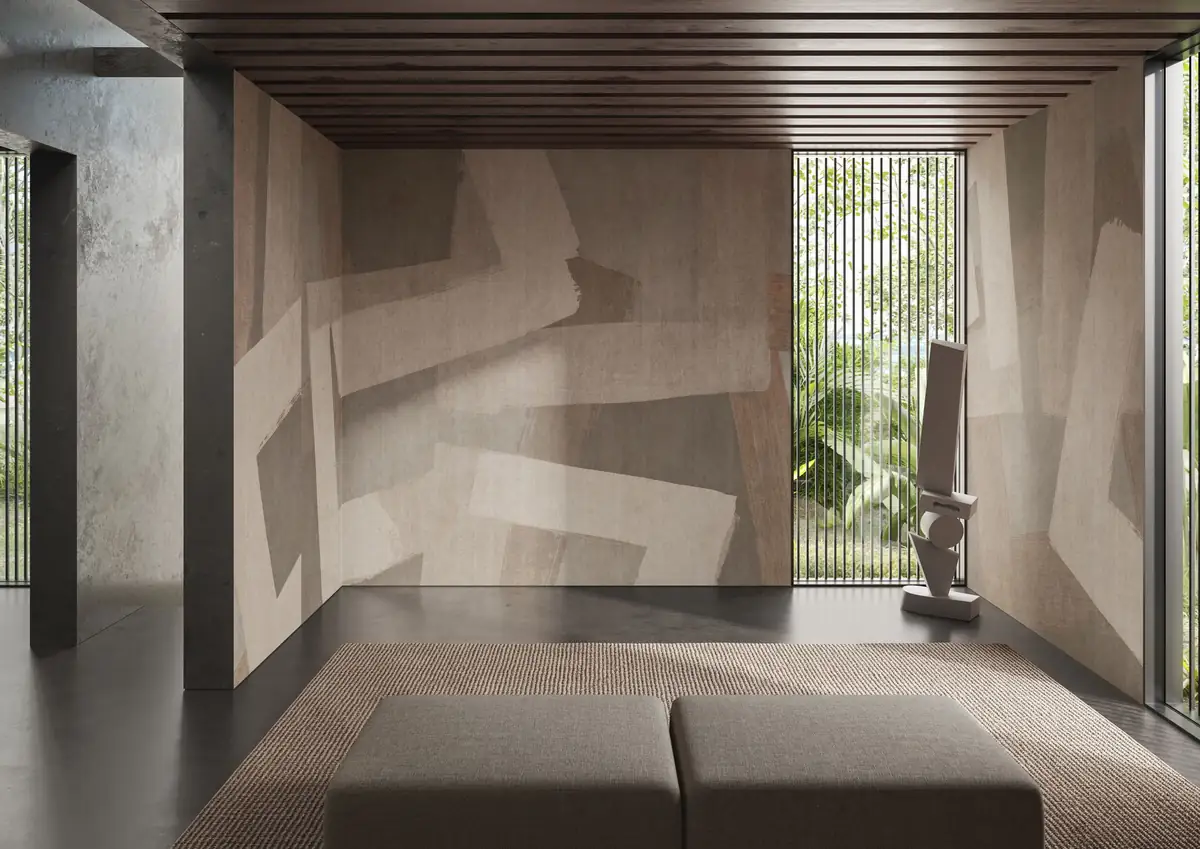
GlamPure, a linen and viscose base
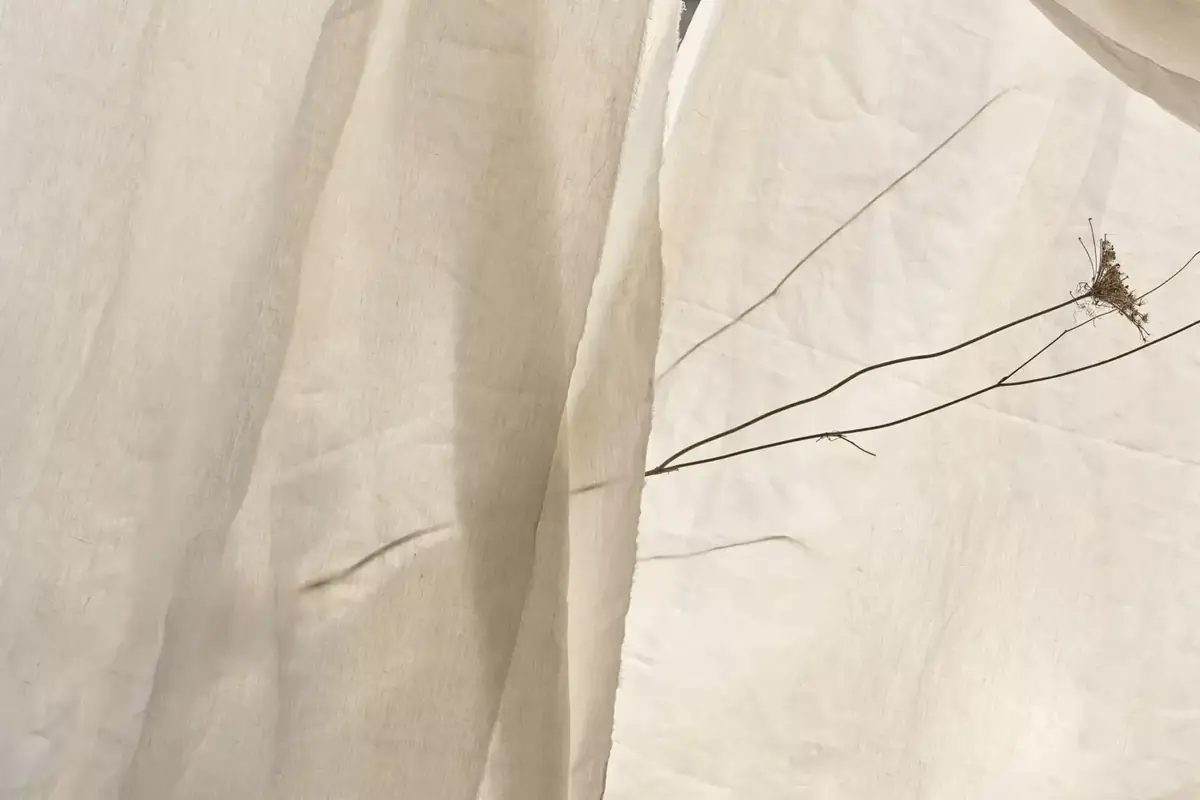
GlamPure, The Organic Wallcovering, is the culmination of Glamora’s research into fully organic materials, with all the characteristics of a cutting-edge wall covering. It is a non-woven of European linen and viscose: according to the technical sheet, 65% linen and 35% viscose. Linen, a plant-fibre textile originating in Europe, combines considerable aesthetic and practical value with a high level of sustainability: the manufacturer describes it as compostable and eco-compatible.
According to Glamora, its technical qualities make it suitable for bio-architectural residential and hospitality settings: durability, hypoallergenic properties and moisture absorption are its main characteristics. The fibrous surface, with its low thermal and acoustic conductivity, points to its insulating and thermoregulating properties.
On its website, Glamora also mentions FSC® certification, inks compliant with Greenguard Gold and compliance with the ISO 50001:2018 energy management standard. The technical sheet describes it as a product for professional use.
Where to use it and how to specify it
Glamora recommends Komorebi for spaces associated with physical and psychological wellbeing, such as yoga and meditation rooms, and for more intimate residential rooms, such as bedrooms and living rooms. In commercial projects it proposes it to bring warmth to hotel rooms, reading rooms, rest areas, open-plan offices, coworking spaces, meeting rooms and restaurants with a sustainable culinary offering.
Before including it in a project, these points from the manufacturer’s technical documentation are worth reviewing:
- Intended use: interior vertical surfaces in residential, commercial and hospitality settings. Glamora warns that installing it on wood, laminates, metal or resin, or on floors, doors or outdoors, falls outside its instructions and voids the warranty.
- Substrate: the wall must be smooth, flat, white and dry, with residual moisture below 2%. Over plaster or tiling, an extra-fine white cement-based skim coat and one or two coats of acrylic primer are required.
- Installation: the material comes with its specific adhesive, Adhesive Pure, and with the drops numbered according to a layout plan. They are butt-jointed, without overlapping, at between 15 and 35 °C and without draughts, conditions that must be maintained for 24 to 36 hours afterwards.
- Maintenance: GlamPure is not washable. Stains are treated immediately with an absorbent white cloth, without liquid or cream detergents and without rubbing, so its placement in areas exposed to splashes or abrasion should be carefully considered.
- Natural appearance: as it is made from natural fibres, the manufacturer considers small irregularities to be part of its aesthetic expression.
Glamora, the manufacturer
Glamora is an Italian wall covering company based in Sassuolo (Modena). Komorebi is part of its special editions, themed collections that the brand develops around a concept and a specific material; in this case, GlamPure.
Epilogue: in June 2022, after this article was published, the Komorebi on GlamPure collection received an honourable mention at the XXVII Compasso d'Oro ADI Award. According to Glamora, the jury highlighted its biophilic approach and its invitation to reconnect with nature.
Frequently asked questions
- What is GlamPure made of?
- It is a plant-based non-woven composed of 65% European linen and 35% viscose, 0.62 mm thick and weighing 130 (± 20) g/m², according to Glamora’s technical sheet.
- How does it behave in a fire?
- GlamPure’s technical sheet gives a reaction-to-fire classification of Euroclass B-s1, d0 under EN 13501-1, and the product is declared compliant with EN 15102, the standard for decorative wall coverings.
- Can it be used in bathrooms or wet areas?
- Glamora intends it for interior vertical surfaces and warns that it is not washable: stains should be avoided and treated immediately with an absorbent cloth. For areas exposed to splashes, it is advisable to consult the manufacturer before specifying it.
- How is it installed?
- On a smooth, white, dry wall, previously skimmed and primed, with the specific Adhesive Pure supplied with the material. The drops arrive numbered according to a layout plan and are butt-jointed, without overlapping.
At Matter we help you choose wall coverings for your project and compare natural materials, textures and solutions with your technical team.
Book your visit to Matter and we will help you choose the materials for your next project.
Book a visit