Cork, a material that brings design and sustainability to your spaces
What cork is, how it is harvested and what properties it has, and how Granorte uses it in Tatami, its 3D wall tiles made from recycled cork.
Products8 min read
A commitment to a sustainable architectural material is the purpose of Granorte, a Portuguese family business that grew out of a family of cork stopper manufacturers and in 1972 began recycling surplus material to turn it into building solutions. Its dedication to research, innovative production processes and technical excellence has made it one of the leading manufacturers of cork floor and wall coverings, with environmentally responsible products.
In this article we look at what cork is and where it comes from, which properties make it useful in architecture and interior design, the forms it is transformed into, and how Granorte uses it in Tatami, its collection of 3D cork wall tiles, with their technical data and what to bear in mind when specifying them.
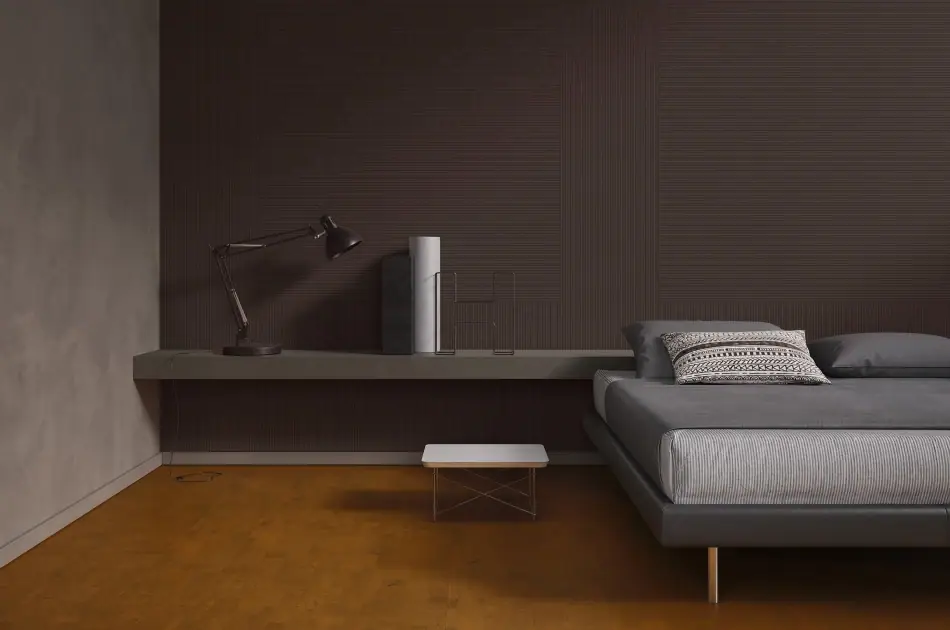
What cork is and how it is harvested
Cork is a raw material of plant origin: the outer bark of the cork oak (Quercus suber L.). According to Granorte, cork oak forests cover some 2.5 million hectares, mainly in seven countries of the Mediterranean basin: Portugal, Algeria, Spain, Morocco, France, Italy and Tunisia.
The cork oak lives for around 300 years and does not yield its first harvest until it is 25. From then on, the bark is stripped from the trunk every nine years, sustainably and without harming the tree, and it regenerates naturally. That is why cork is a renewable resource: the same tree produces it for generations.
Granorte also stresses the environmental value of cork oak forests: they halt desertification and are a habitat for rare and endangered species. According to the manufacturer, a stripped cork oak absorbs three to five times more carbon while it regenerates its bark, and in Portugal, which produces more than half of the world's cork, these trees have been protected since the 13th century and cannot be felled without the authorities' involvement.
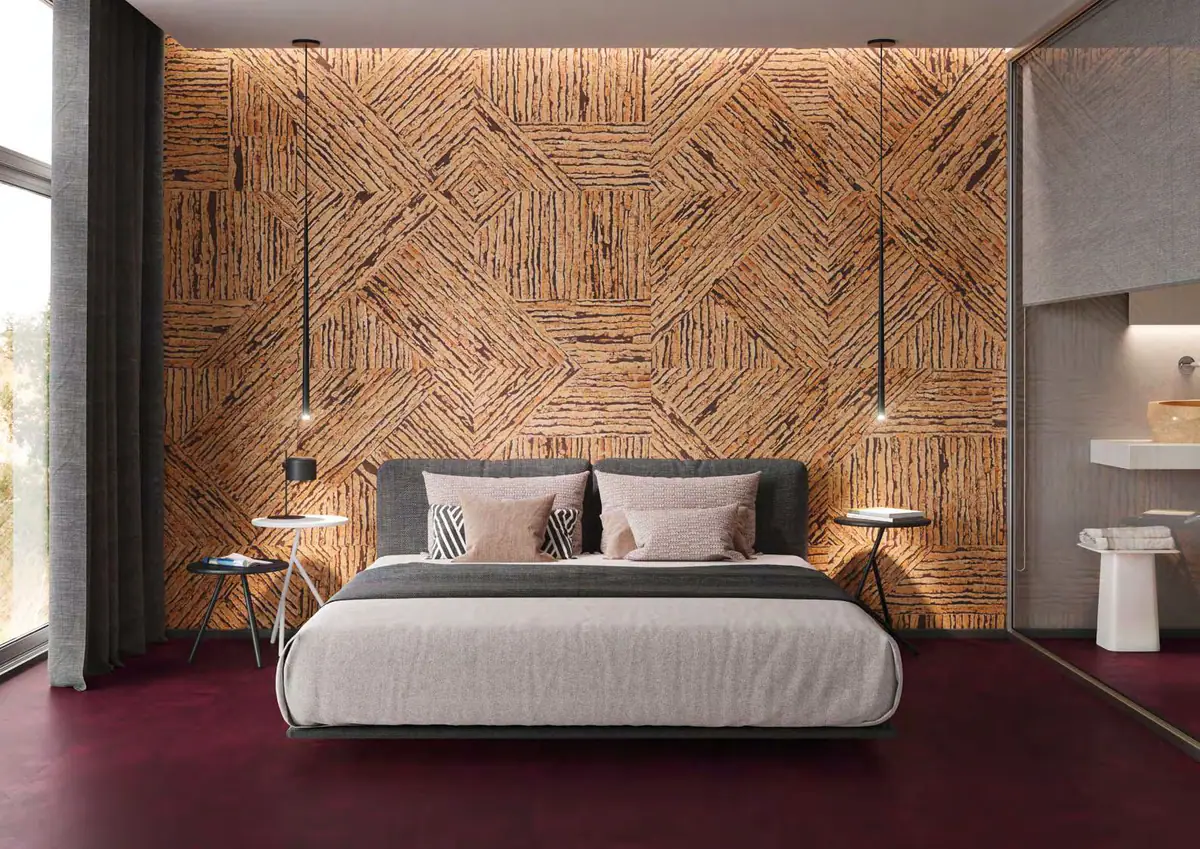
Properties of cork
Cork has some very distinctive characteristics, owing to its honeycomb cellular structure: according to Granorte, each cubic centimetre contains between 30 and 40 million cells, most of them filled with gas. Hence its main qualities:
- Lightness: around 80% of its volume is gas, so it is very light and floats on water.
- Elasticity and resilience: its flexible cell membranes allow it to compress under pressure and recover its volume as soon as the load is removed; it is elastic and strong at the same time.
- Impermeability and insulation: suberin makes it impermeable to liquids and gases and resistant to rot, and the gas trapped in millions of sealed cells gives it excellent thermal and acoustic insulation properties.
- Behaviour in fire: it is a natural fire retardant that does not spread flame or release toxic gases when it burns.
- Durability: it withstands wear well and has a high coefficient of friction, so it suffers less damage than harder surfaces.
- Health and life cycle: it does not absorb dust, so it is hypoallergenic, and it is biodegradable, recyclable and renewable.
These are properties of the material. In a specific product, which is usually agglomerated cork with a protective finish, what matters in a project are the tested values in its technical data sheet: we look at them further on in the case of Tatami.
Natural, granulated or agglomerated
In its various forms —natural, granulated or agglomerated— cork has qualities that no other raw material offers, and it adapts to very different techniques and product specifications. Granorte lists among its applications sealing, insulation, vibration control, weight reduction, sound damping, gaskets, flotation, energy saving, fillers, polishing and pollution control, in sectors ranging from construction and high technology to sport, interior design, fashion and cosmetics.
Granorte's floor and wall coverings are made of agglomerated cork: surplus cork from stopper production is ground into granules, which are pressed and agglomerated into blocks and sheets, from which the pieces are cut, machined or moulded. The manufacturer describes an industry in which nothing is wasted: the by-products of one process are the raw material of another, and even cork dust is used to produce energy.
Granorte: from stopper waste to wall covering
Granorte's origins lie in a small cork stopper business that Francisco Rocha set up in 1955. In the 1970s, the Figueiredo da Rocha family's five factories were together a major stopper producer, and José, the eldest of the brothers, saw the need to add value to the cork waste they generated. Granorte was thus founded in 1972, with the aim of recycling surplus cork from wine stopper production. It is based in Rio Meão, in northern Portugal.
Since then, the company has added stages to the processing of the material: cork granules in 1975, an agglomeration plant in 1982, agglomerated blocks and sheets in 1984 and, since 1985, wall and floor coverings. These are some milestones of interest to specifiers:
- Quality: its own quality control laboratory, GNLab, since 1994, and a quality management system certified to ISO 9000 standards since 2000.
- FSC chain of custody: certified since 2010 (C044061); the brand offers FSC-certified products on request.
- Hygiene: since 2008, an exclusive worldwide agreement to use Microban antibacterial technology in cork products.
- Design: the GranorteDesign brand since 2011 for special projects, and awards such as the iF Design Award and Green Good Design (2015, Nuspa collection) and the German Design Award 2018 (Vita Decor).
Tatami: the Japanese mat brought to the wall
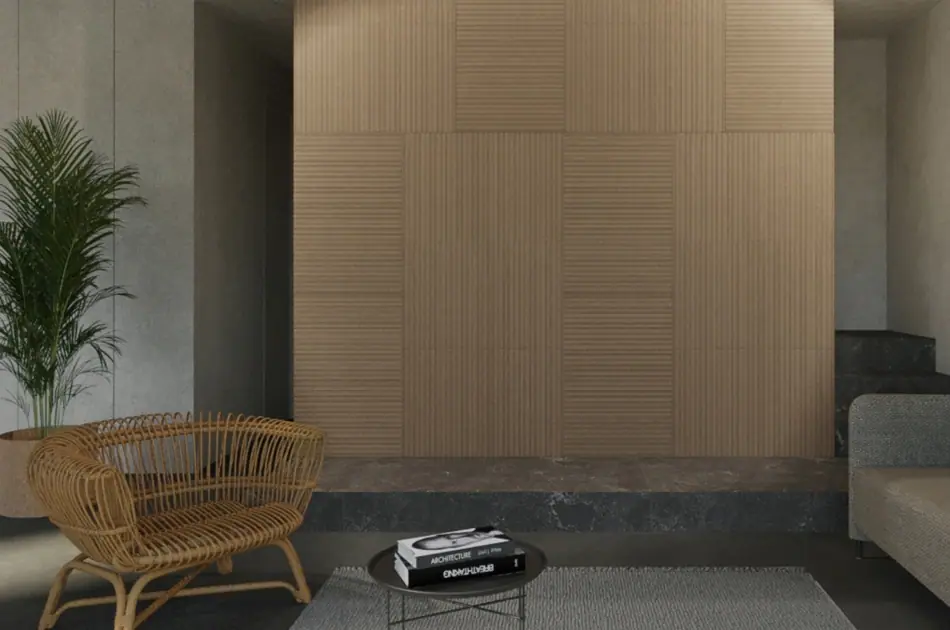
3D cork tiles inspired by rice straw mats.
Tatami is a collection of 3D cork wall tiles that Granorte launched in 2020. According to the brand's presentation as reported by the trade press, it was designed by Marco Carini and is inspired by tatami, the traditional Japanese rice straw mats: its effect is based on contrasting lines in relief that can be laid horizontally or vertically to change the way the wall reads.
The tiles come in a single format, 600 × 300 mm and 4 mm thick, with all four edges bevelled, and the relief is obtained by pressure-moulding the agglomerated cork. All the cork comes from recycled post-industrial by-products —according to the technical data sheet, around 90% of the composition— and the tile contains no PVC or plasticisers. It is glued down and comes with the CORKGUARD finish, a water-based dispersion of Scotchgard and resins that repels water, oil and stains, with Microban antimicrobial technology.
Granorte offers three models within the collection, in colours that echo the traditional tones of the mats: Midnight, a deep brown; Natural, a wheat colour; and Light, in a sand tone. The brand can also develop custom colours on request, so that the covering harmonises with the other materials and elements in the space.
Technical data
All three colours share these characteristics. Their references in Granorte's catalogue are 316 023 012 (Light), 316 023 000 (Natural) and 316 310 000 (Midnight).
What to bear in mind when specifying it
- Use: Granorte recommends it for residential and commercial use, as an interior wall covering in accordance with EN 12781, always glued down.
- Reaction to fire: Tatami is class E. The DB SI fire safety document of the Código Técnico de la Edificación (CTE, Spain's building code) exempts the interior of dwellings from this requirement, but in occupiable areas of other uses it requires C-s2,d0 for wall and ceiling coverings when they exceed 5% of the room's surface area, and B-s1,d0 in protected corridors and stairways. In hotels, offices or shops this should be checked before specifying.
- Acoustics: with an αw of 0.1, the tile adds texture and warmth, but it is no substitute for dedicated sound-absorbing treatment.
- Thermal comfort: its low conductivity makes the wall feel warm to the touch, although at 4 mm thick it does not replace the insulation of the building envelope.
- Air quality: according to the manufacturer, no formaldehyde-containing materials are added and it complies with the German AgBB scheme and the French A+ VOC emissions classification.
Beyond Tatami: colour and printing on cork
Tatami is part of a broader family. Over the last decade, Granorte has taken cork beyond its traditional appearance: in 2012 it launched Vita, digitally printed cork flooring; in 2015, Vita Decor, with printed designs; and in 2018, the Kenko flooring collection. In 2020, alongside Tatami, it presented the Wabi, Mat, Modular and Groovy wall covering collections, which explore colour, texture and relief.
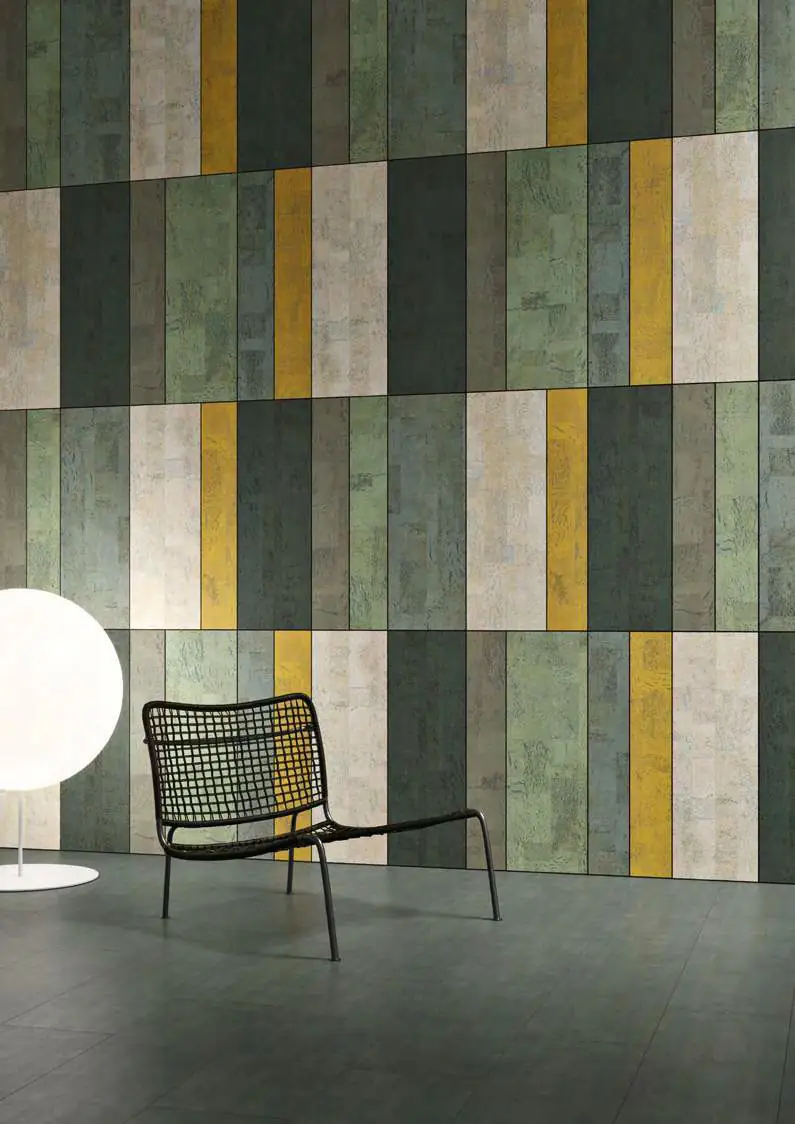
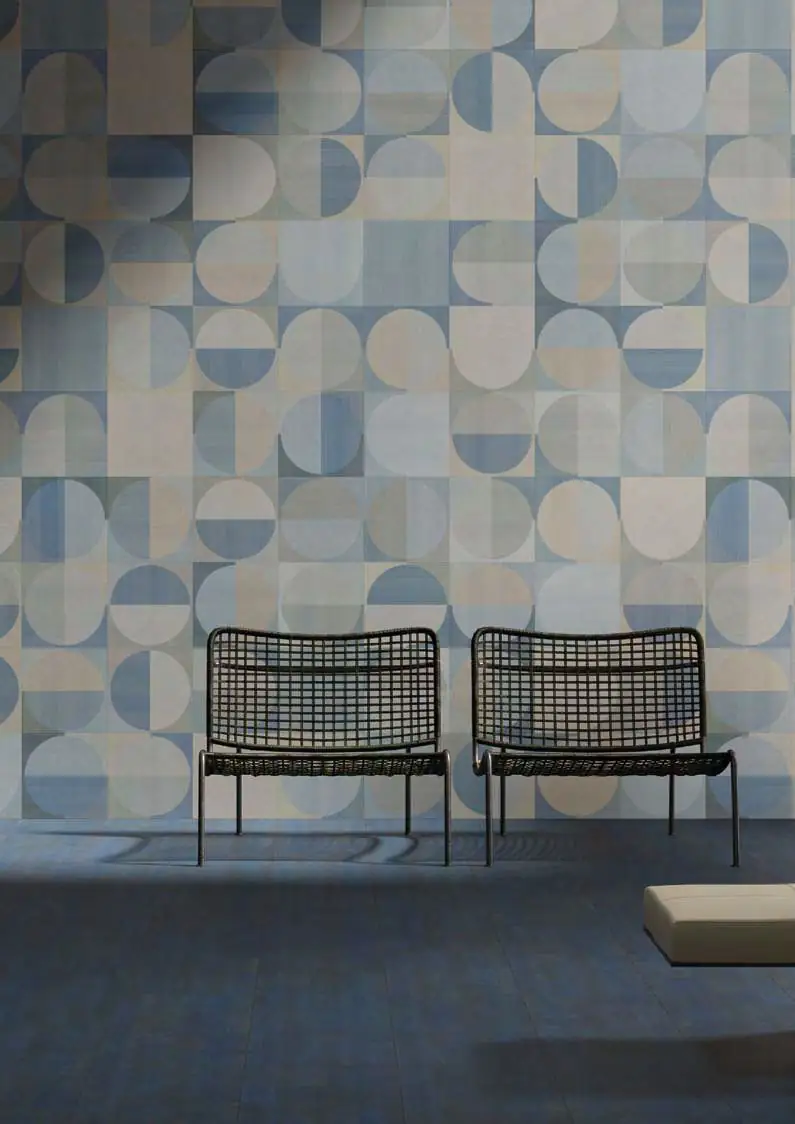
Cork is a contemporary material and, at the same time, a sustainable one. As a wall covering or as flooring, it brings the material's natural qualities to a space —warmth, acoustic comfort, a pleasant feel— and makes it a versatile environment that adapts to the needs of those who live in it.
Frequently asked questions
- Does the cork oak have to be felled to obtain cork?
- No. Cork is the bark of the tree and is stripped from the trunk without harming it. The first harvest takes place when the cork oak is 25 years old and is then repeated every nine years; the bark regenerates naturally.
- Is the cork in Tatami recycled?
- Yes. According to Granorte, all the cork in the tiles comes from recycled post-industrial by-products of stopper manufacturing and accounts for around 90% of their composition. The tile contains no PVC or plasticisers.
- Can Tatami be used in a hotel, an office or a shop?
- Granorte recommends it for residential and commercial use, but its reaction to fire is class E. Outside the interior of dwellings, the CTE's DB SI requires at least C-s2,d0 on the walls of occupiable areas when the covering exceeds 5% of the surface area, so this needs to be checked in each project.
- Does it improve a room's acoustics?
- Only slightly: its weighted absorption coefficient is αw = 0.1. Correcting a room's reverberation requires dedicated acoustic treatment.
- Can it be ordered in other colours?
- Yes. In addition to Midnight, Natural and Light, Granorte can develop custom colours on request.
Cork is best understood by touch: its temperature, its lightness and the relief of a 3D tile do not come across in the same way in an image. At Matter we help you choose the right cork wall covering or flooring and compare it with the other materials and finishes in your project.
Book your visit to Matter.
Book a visit