Natural, sensory wall coverings
Organoid turns alpine hay, flowers and leaves into organic papers for walls, furniture and acoustics: raw materials, substrates and how to use them.
Products8 min read
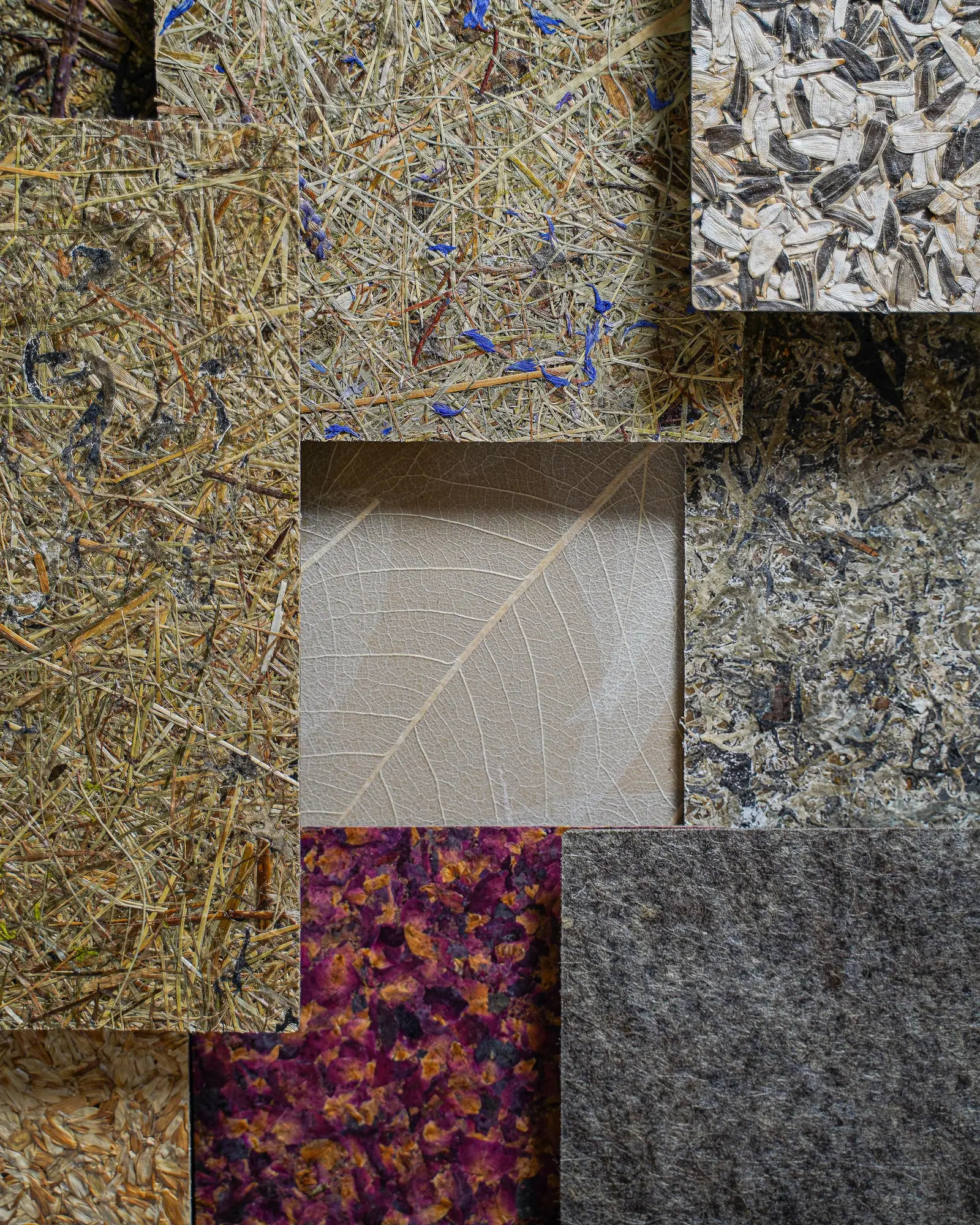
In the search for interiors that convey calm and wellbeing, many interior designers have found in Organoid a direct way of bringing nature indoors. This Austrian manufacturer turns alpine hay, flowers and leaves into natural surfaces for walls, ceilings, furniture and acoustic panels, which retain the look, feel and scent of the plant they come from.
In this article we explain what these organic papers are, which raw materials they start from and how they are made, which substrates they are offered on —wallpaper, decorative veneer, self-adhesive film, flooring and acoustics— and what to bear in mind when specifying them. The technical data correspond to the collection as the manufacturer presented it in 2024.
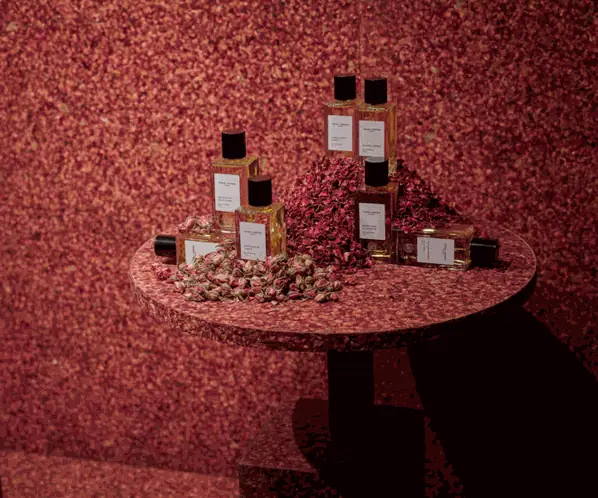
Seeing, touching and smelling: nature as an interior material
Interior design is not only about aesthetics but also about creating environments that improve our quality of life. Bringing natural elements into an architectural space brings rooms to life and stimulates the senses: we can see, touch and smell nature at home, in the office or in a hotel. This is the idea behind biophilic design, which Organoid places at the heart of its offer: according to the manufacturer, this contact with nature helps to reduce stress, encourages relaxation and improves concentration.
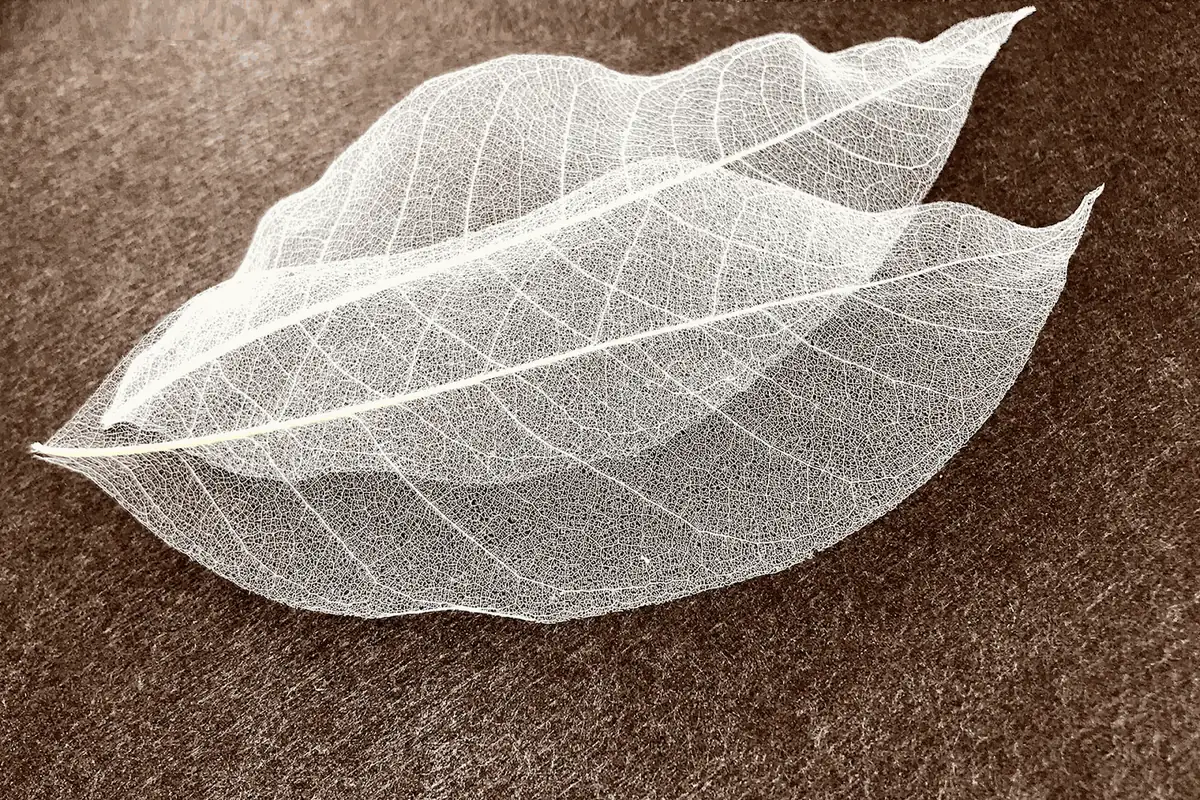
The surfaces leave the factory unsealed, so the fibres can be felt to the touch and give off the scent of the raw material itself, with no added fragrances or aromas. The intensity depends on temperature, humidity and air renewal, and gradually decreases over time: some surfaces, such as those made with skeleton leaves or wool, barely smell; others, such as those made with rose petals or coffee, have an intense, long-lasting scent.
Raw materials from the Alps and the agri-food industry
Organoid Technologies GmbH was founded in 2012 in the Austrian Tyrol and has its headquarters and plant in Fließ, in the Inn valley. Its founders, Christoph Egger and Martin Jehart, began experimenting with organic materials in 2010 and presented their first surfaces at the 2014 EuroShop trade fair. The name combines ‘organic’ with the Greek suffix ‘-oid’ (resembling).
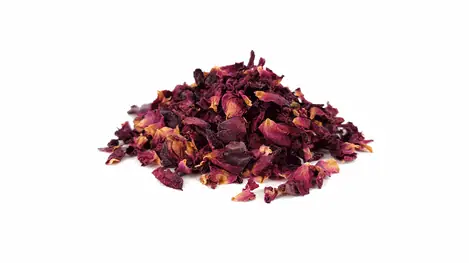
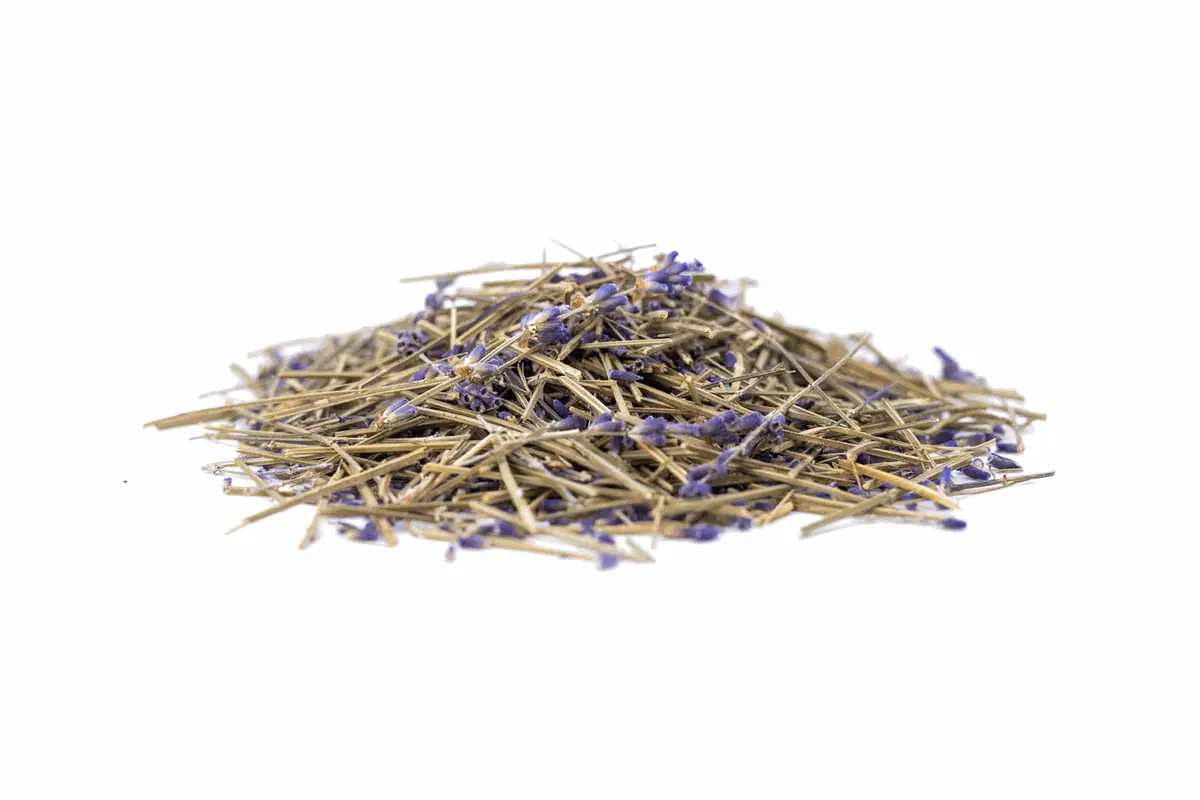
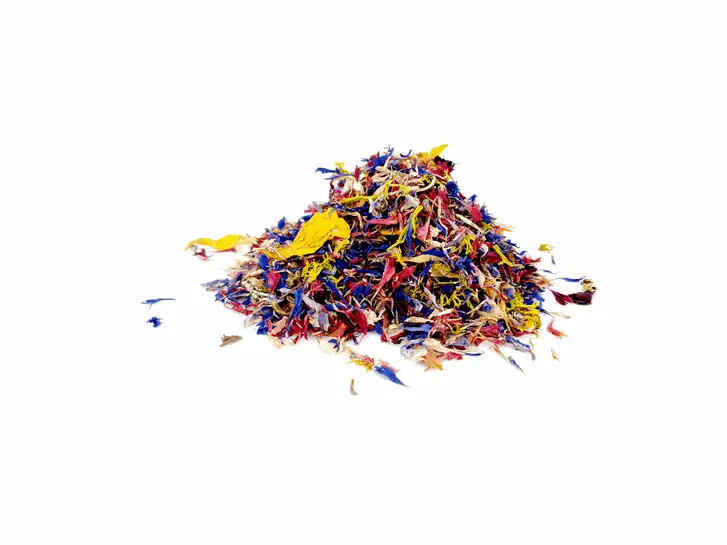
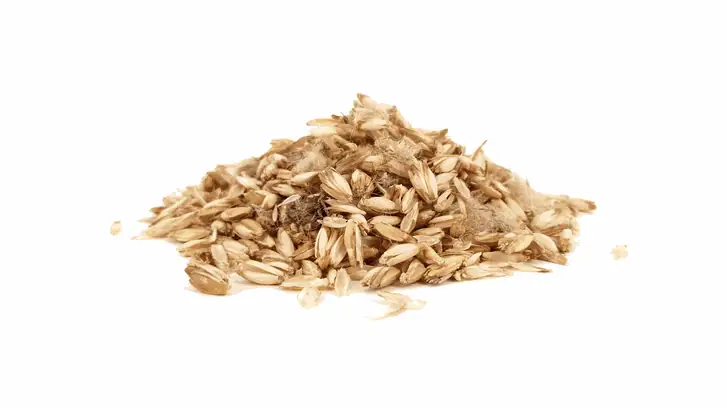
The most characteristic raw material is alpine hay. Hay for the Wildspitze surface is mown by hand at between 1,700 and 2,000 m above sea level, on the slopes of the highest mountain in the Tyrol, and is supplied by farmers in the Kaunergrat nature park. The lavender comes from a farming cooperative in the south of France; the cornflower and rose petals from certified agriculture. Organoid also uses by-products: spelt husks, sunflower seed shells, coffee grounds and moss left over from making moss walls.
How it is made
The process begins with a check of the raw material: how the hay smells, whether it has dried properly, how thick the fibre is. It is then weighed, shredded and sorted; the fibres are sieved in several layers onto the substrate together with an ecological binder and pressed at high temperature and pressure. Each surface has its own recipe, with between 40 and 100 parameters, so that the result can be reproduced from one batch to the next.
According to the manufacturer, the plant runs on 100% renewable electricity and production is climate-neutral. The resins that fix the fibres are bio-based, up to 100% biodegradable, free of plasticisers and solvents, and suitable for food contact.
Substrates and applications
The same natural layer is applied to different substrates, and it is the substrate that determines the use: wallpaper, decorative veneer for joinery, self-adhesive film for glass, flooring or acoustic panels. These were the substrates in the collection in 2024:
With the natural layer, the surfaces in the collection range from 1 mm (skeleton leaves on self-adhesive film) to 3.5 mm (spelt on HPL). To order, Organoid also works on plywood, MDF, paper, metal, leather or textile, and develops custom surfaces from 4 m².
Wallpaper on linen fleece
The most common substrate is a 100% natural, unbleached linen fleece, hydroentangled without chemicals, weighing 130 g/m²; it is not a glass-fibre fleece like that used in many wall coverings. It is breathable and regulates humidity. It is supplied in rolls 1,360 mm wide and in any length from 1 m².
It is hung like a heavy non-woven wallpaper: the wall is pasted, not the paper, and each length overlaps the previous one by about 2 cm so that both can be cut at once (double cut). Because the fibres are randomly distributed, there is no pattern to match, and the join between lengths is practically invisible. The manufacturer recommends having it hung by experienced installers and always carrying out a trial first.
Premium, Medium and Light
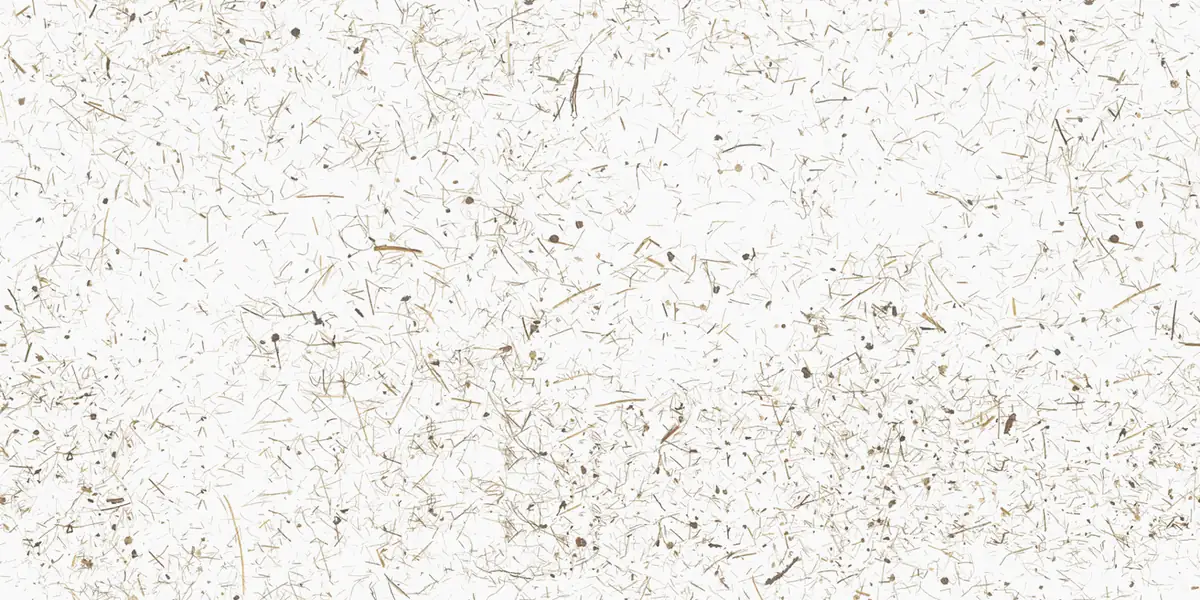
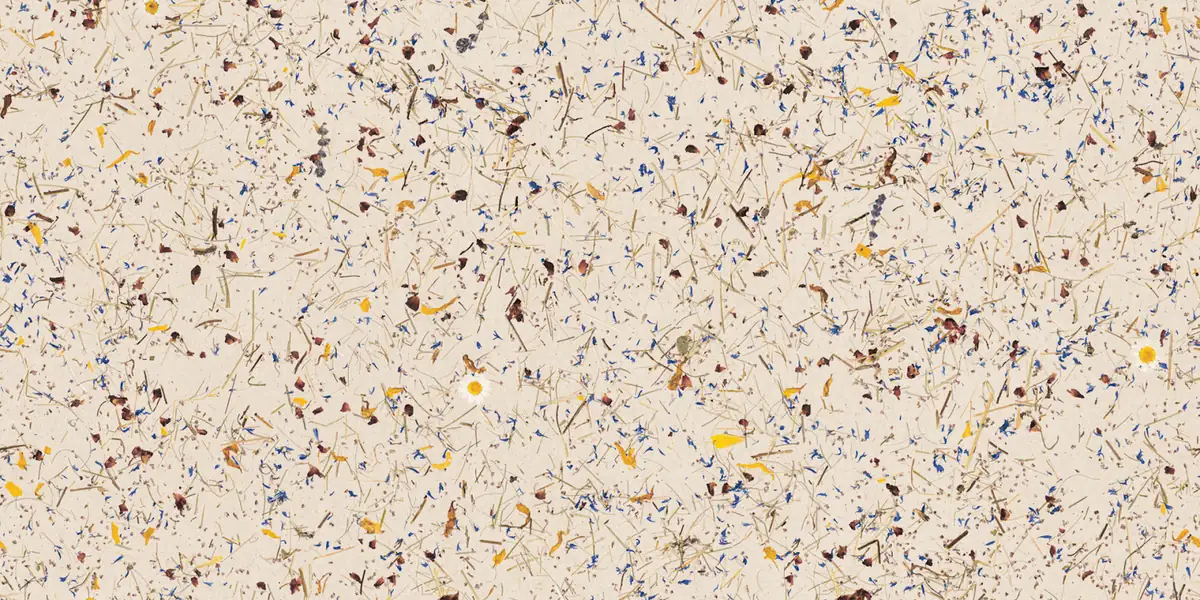
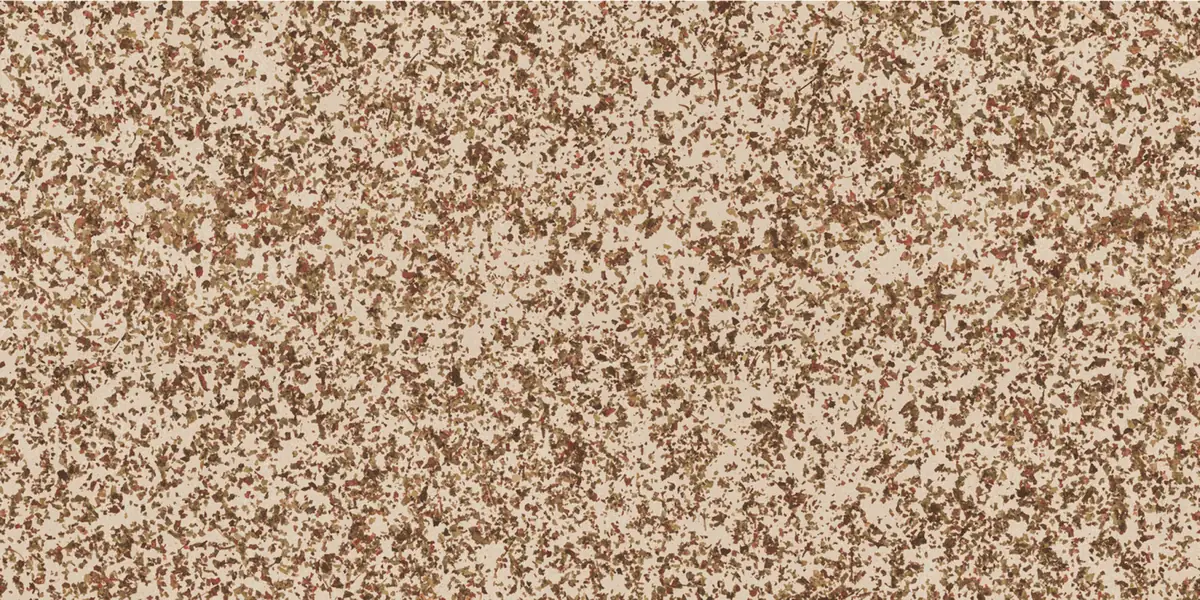
Each surface is offered with a different density of material. Premium surfaces cover the substrate completely and convey colour and scent most strongly. In Medium surfaces the layer is thinner: on the translucent self-adhesive film, they can be used as a film for glass partitions or backlit panels. Light surfaces scatter the fibres over a light background, which remains visible; they are the ones to use for large areas, and their scent is neutral or very faint.
Acoustics and flooring
Acoustic properties are achieved with specific substrates. The absorber panels combine a natural surface on linen fleece with a 50 mm panel of PET recycled from bottles, without chemical additives and certified to OEKO-TEX Standard 100; according to the manufacturer, they achieve an αw coefficient of up to 0.8 and are hung like a picture. The absorbent panels and slotted panels are 16 mm MDF boards perforated at the back, which work as Helmholtz resonators; for more demanding fire requirements they are made in fire-retardant MDF or gypsum fibreboard.
For floors, Organoid offered planks factory-sealed with polyurethane, as an 11 mm click version for floating installation or a 5 mm glue-down version. The click planks have AC3 abrasion resistance, use class 32 (33 with an additional sealing coat) and reaction to fire Cfl-s1. The sealing is permeable, so the floor keeps the scent of the hay.
Health and sustainability
Concern for environmental health is another feature of these organic papers. According to the manufacturer, its surfaces are free of PVC, plasticisers and solvents, and contain no artificial colourings or added fragrances: the colour and scent are those of the plant. Organoid tested the raw materials that are allergenic when fresh —hay, moss and birch leaves— and detected no allergenic emissions from the finished product.
At the end of their service life, disposal depends on the substrate and on whether the surface has been sealed. Surfaces on linen fleece can be composted in industrial facilities if they do not retain thick residues of adhesive; in general, they can be disposed of like wood-based products and, if in doubt, it is best to ask the local recycling centre.
Projects: from a café counter to the bedroom
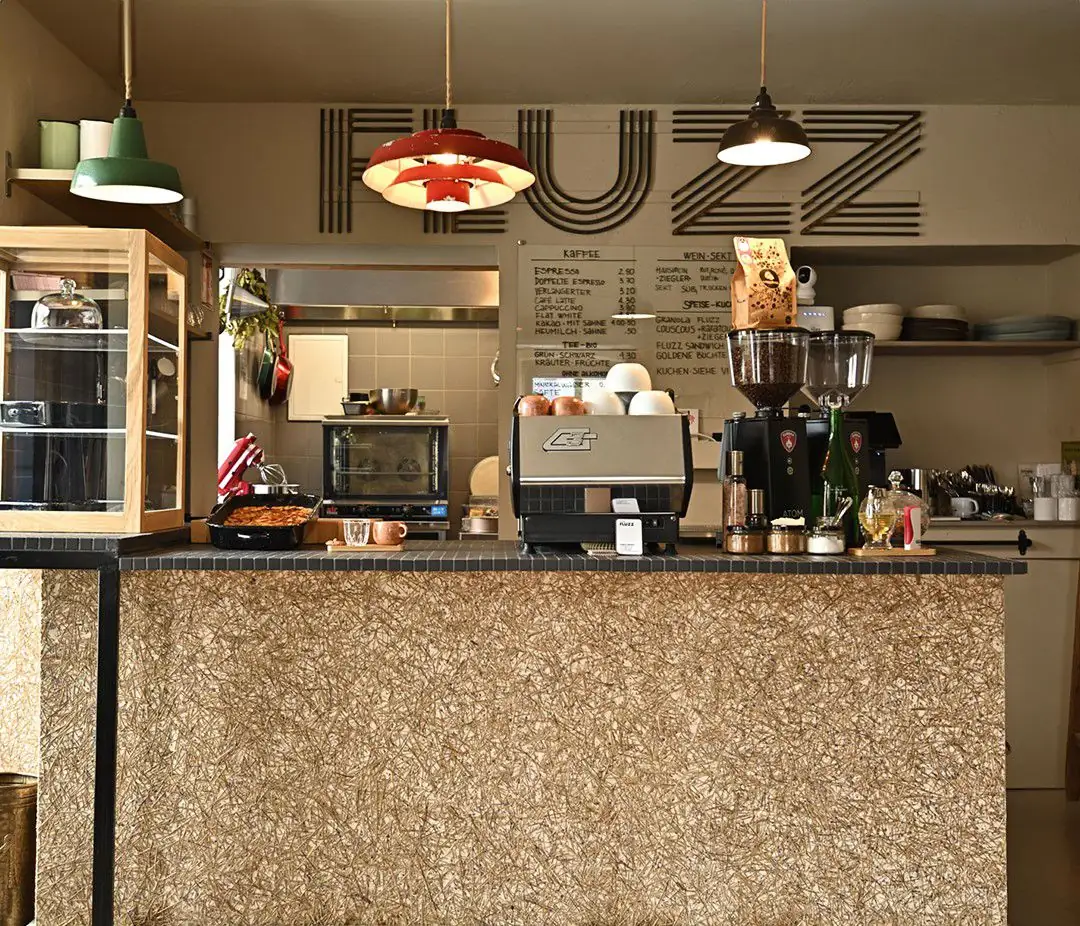
Organoid lends itself to covering entire walls and ceilings, but also to dressing specific pieces: a bar front, a headboard, a piece of furniture or a lampshade. At Café Fluzz in Kufstein (Austria), the architect and interior designer Judit Boros, who owns the café, covered the counter with Lavendel medium on linen fleece, a surface made with lavender flowers and stems.
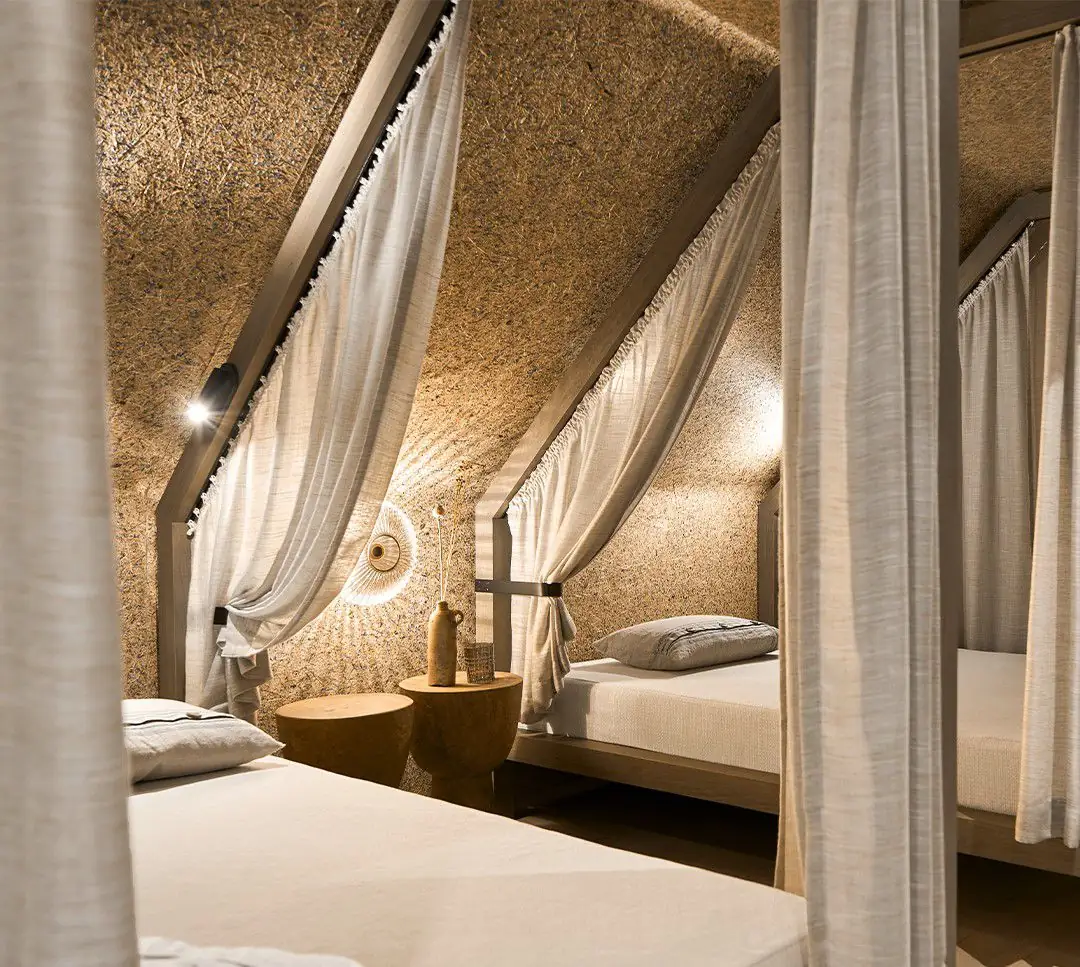
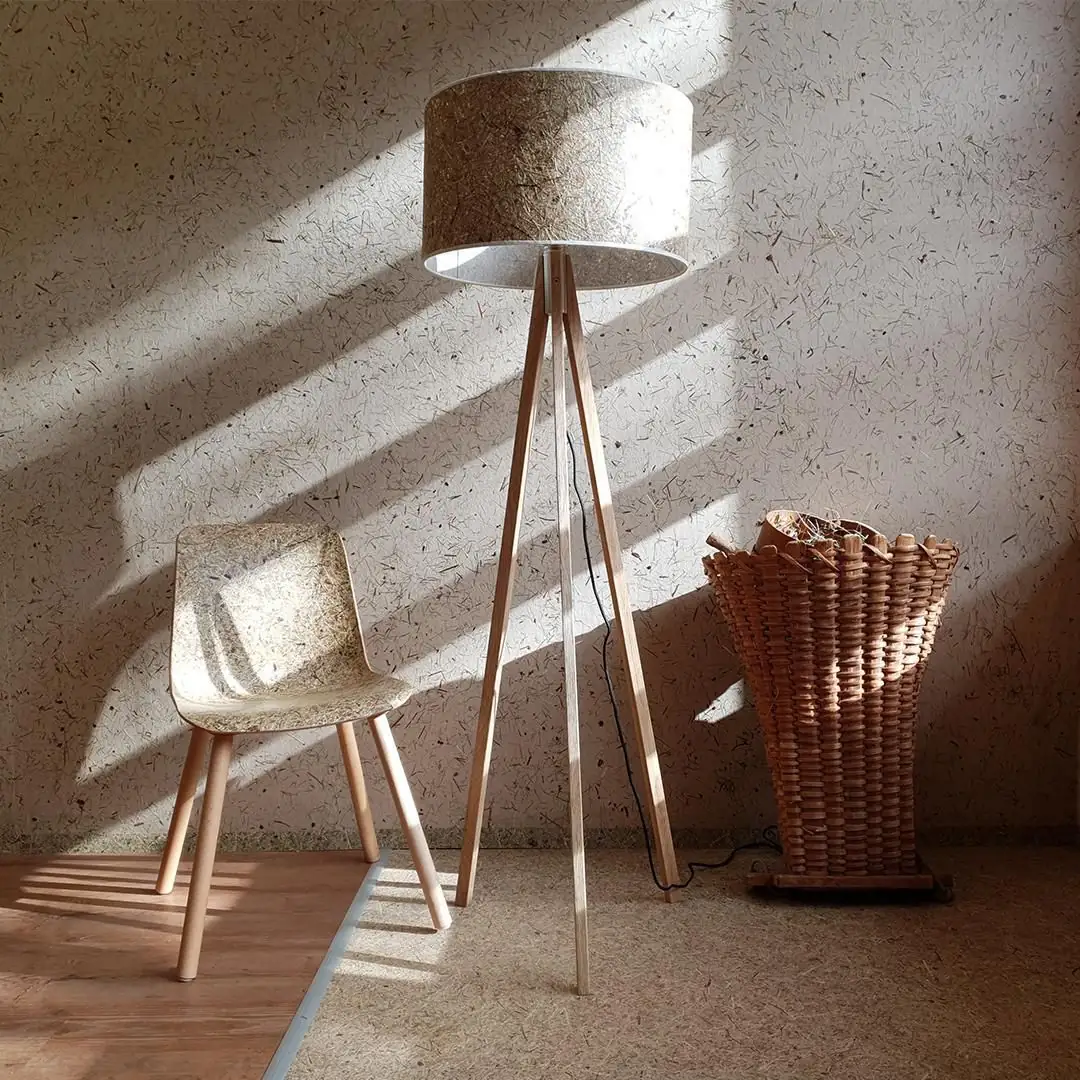
In hotels and homes, natural surfaces on walls and sloping ceilings create warm rooms in which scent is part of the atmosphere. The same materials can be applied to chairs, lamps and other objects, and combined with a sealed hay floor.
What to bear in mind when specifying
These are natural materials, and that has consequences on site and in use. These are the manufacturer's recommendations to plan for at design stage:
- Dry interior use: unsealed, the surfaces are only suitable for interiors and away from moisture. Many can take varnish, oil, wax or glass for added resistance, always after a trial; sealing is not recommended for moss, skeleton-leaf or Light surfaces, and they are not suitable for saunas.
- Reaction to fire: according to EN 13501-1, Light surfaces on linen fleece or Ecofleece achieve B-s1, d0, and Premium surfaces on linen fleece C-s1, d0; on HPL, B-s1, d0. It is advisable to request the classification report for the specific combination.
- Natural variation: colour, scent and fibre may vary slightly between batches. For large walls, material should be ordered from a single batch.
- Loose fibres: surfaces with pronounced relief, such as lavender or spelt, may shed the odd particle with frequent rubbing. An additional coating is recommended in nursery schools.
- Maintenance: vacuuming on low power or wiping with a dry, lint-free cloth is enough; Premium surfaces can take a barely damp cloth, Light surfaces cannot.
- Light: surfaces containing chlorophyll age with UV radiation. They include a stabiliser, and protection can be increased to order.
Frequently asked questions
- How long does the scent last?
- It depends on the raw material, on the temperature, humidity and ventilation of the space, and on each person's sensitivity. The scent decreases continuously; for intense surfaces, such as rose petals, the manufacturer states that it takes several years to fall below the threshold of perception. A subsequent varnish or paint reduces it.
- Can they cause allergies?
- According to the manufacturer's tests on raw materials that are allergenic when fresh (hay, moss and birch leaves), the finished product does not emit allergens. The reports are available on Organoid's website.
- Can they be used in bathrooms or kitchens?
- Untreated, no: they are for dry interiors. With suitable sealing (water-based varnish or oil, after a trial) they gain resistance to moisture and rubbing, and under glass or epoxy resin the range of uses widens. They are not suitable for saunas.
- Can custom surfaces be made?
- Yes, from 4 m². Organoid adjusts the substrate, the thickness of the layer, the fibre, its colour and its fineness, prepares up to eight sample variants and fixes the chosen one in a reproducible recipe. It can also incorporate the client's own waste materials.
Wall coverings made with organic papers offer a complete sensory experience that brings nature into everyday surroundings, and at the same time they are a technical material with their own rules for installation and use. At Matter we advise you on choosing the natural covering that best fits your project, whether a wall, a piece of furniture or an acoustic solution.
Book your visit to Matter to see the materials in person.
Book a visit