Sustainable and creative concrete solutions by LafargeHolcim
ECOPact, concrete with up to 100% less CO₂ according to the group, and Artevia, decorative concrete with the luminescent Boreal finish: what they are and how to specify them.
Products7 min read
Today we want to talk about ECOPact and Artevia™, two concrete ranges developed by LafargeHolcim, a group specialising in cement, concrete and aggregate products and solutions. The first responds to the need to reduce the carbon footprint of the structure; the second turns concrete into a decorative, seamless and customisable floor for interiors and exteriors. Both stem from the same idea: offering sustainable, high-quality building materials and solutions that make innovation easier in architectural projects.
In this article we look at the company’s carbon strategy, what ECOPact is and how its emissions reduction is measured, which variants make up the Artevia range – including Artevia Boreal, the paving that glows at night – and what to bear in mind when specifying them.
A group that sets out to reduce the carbon of construction
With the reduction of carbon emissions as its goal, LafargeHolcim aims to be a benchmark in the construction sector. The Switzerland-based group works in four business areas – cement, aggregates, ready-mix concrete, and solutions and products – and, according to its 2020 figures, has more than 70,000 employees in over 70 countries.
The company also follows a circular business model, with operations in waste treatment and in the recycling of demolition waste. According to the group itself, its subsidiary Geocycle co-processed more than 10 million tonnes of waste in 2019, and its Susteno cement incorporates fine granulate from demolished buildings.
In Spain, LafargeHolcim operates under the Lafarge and Holcim brands. In 2020, according to the company, it became the first firm in the Spanish cement and concrete sector to obtain the double ‘Calculo y Reduzco’ (‘I calculate and I reduce’) seal from the Oficina Española de Cambio Climático (Spanish Climate Change Office, MITECO), for calculating the carbon footprint of its cement and concrete activities and committing to reduce it.
ECOPact: the green concrete
A range of concretes with different levels of carbon reduction.
As part of this line of sustainable solutions, LafargeHolcim announced the international roll-out of ECOPact in July 2020, after introducing it in Switzerland, Germany and France. Its CEO, Jan Jenisch, described it as “the industry’s broadest range of green concrete for circular, sustainable and high-performance construction”. With ECOPact, the company wants to accelerate the transition to more sustainable materials that make it possible to build with fewer emissions.
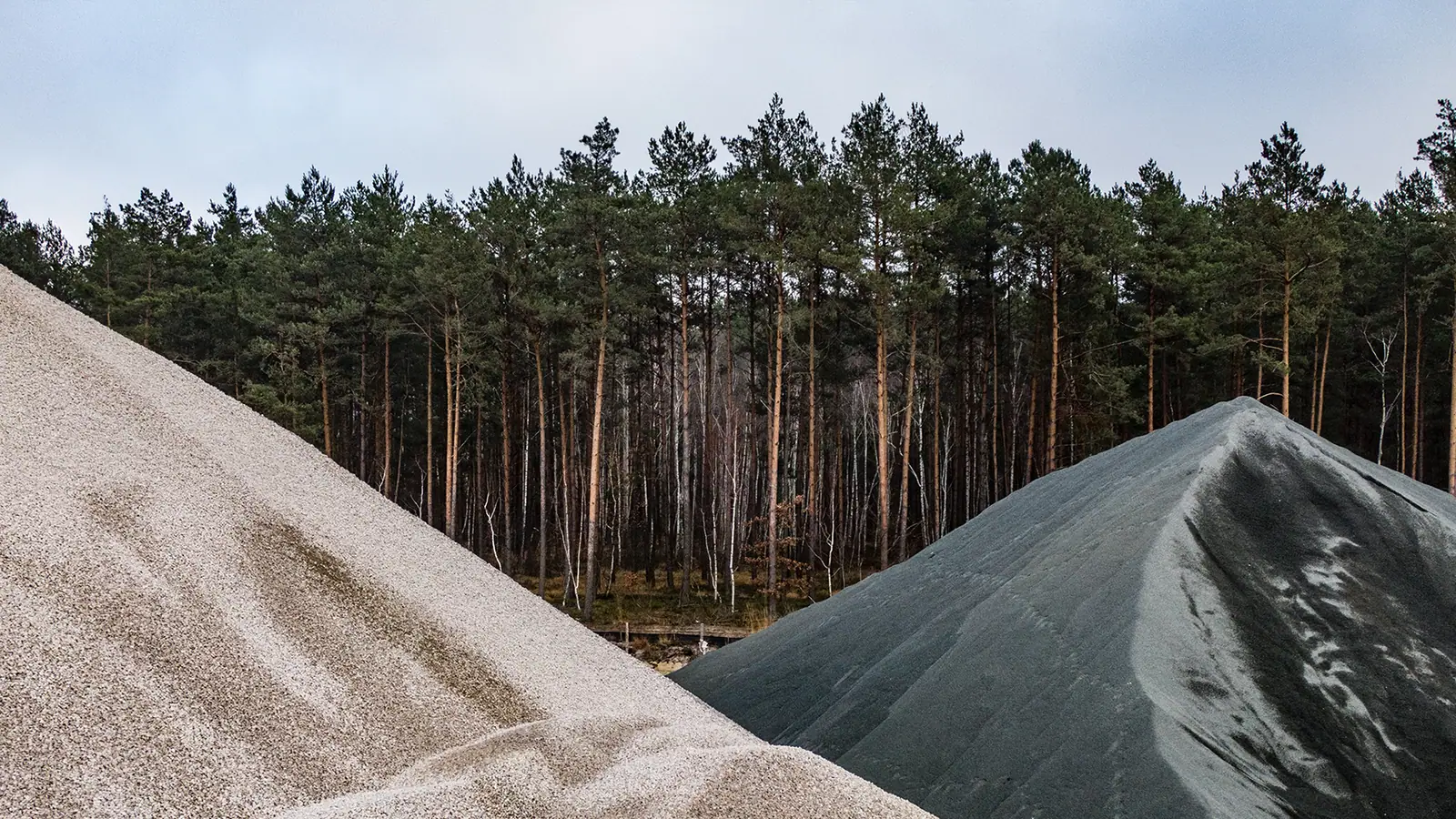
Unlike standard concrete, made with CEM I cement (Portland cement), ECOPact is sold in several low-carbon levels: according to the group, between 30% and 100% fewer emissions than standard concrete. Where regulations allow, the concrete can incorporate recycled construction and demolition materials. By closing the materials loop in this way, the new concrete contributes to a circular economy.
For designers, the advantage is being able to reduce the environmental impact of concrete without changing the construction system. At the time, LafargeHolcim España also highlighted the Environmental Product Declaration (EPD, DAP in Spanish) for its concretes: the reference document on a product’s environmental performance, which makes it easier to obtain certifications such as LEED and BREEAM.
Artevia™: decorative concrete for interiors and exteriors
A range designed so that the concrete is also the finish.
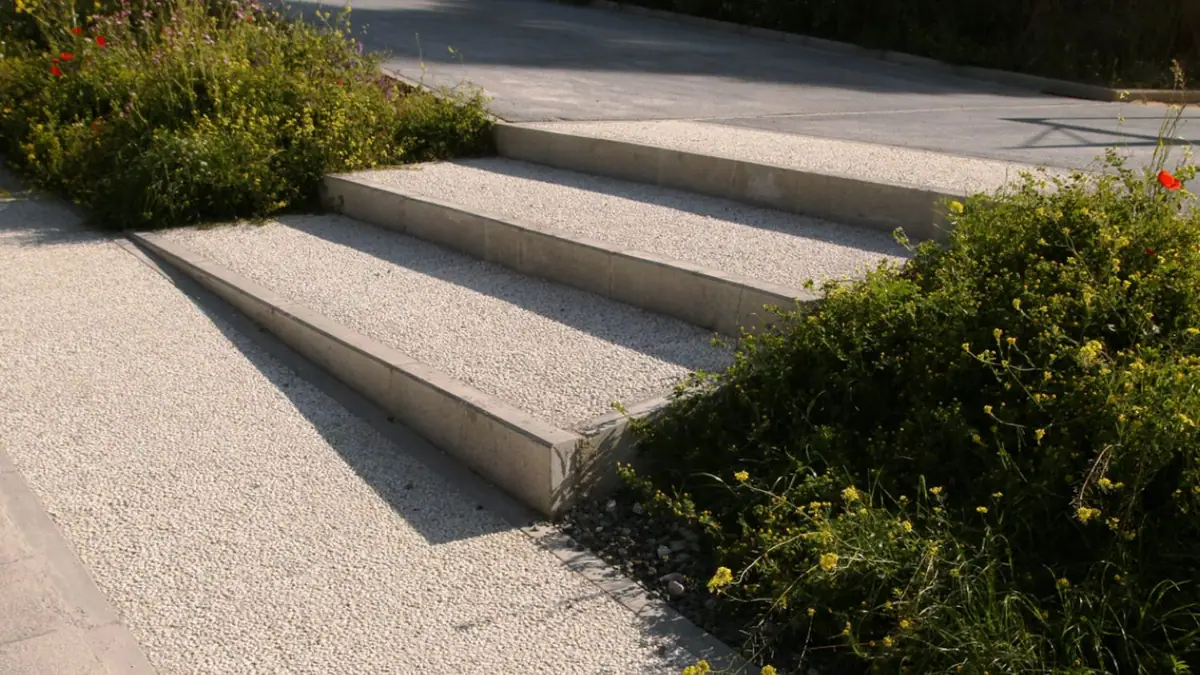
The company also offers Artevia™, a range of decorative concretes notable for its versatility. It is produced in a wide variety of colours, designs and textures, with customised finishes, and includes solutions for both interiors and exteriors. It retains the advantages of conventional concrete – strength and durability – and, according to the manufacturer, requires little maintenance.
This versatility makes it suitable for projects that seek to combine creativity and performance with ease of maintenance and resistance to wear. Artevia can be made with local aggregates, which helps the paving blend into its surroundings, and it can be combined with brick, metal, wood or planting. It is laid by certified applicators from the brand’s network, using methods developed for this material.
The variants in the range
One of the paving’s main attributes is that it can be customised to suit the requirements of the project. In early 2021 the Artevia™ range included six variants, each with its own technical data sheet. This is how the manufacturer describes them:
- Artevia Pulido Interior: a seamless polished finish for interiors, similar in appearance to marble, granite or terrazzo, in gloss or matt.
- Artevia Natural: a surface with the look of natural carved rock, with high resistance to abrasion, impact and weathering according to the manufacturer.
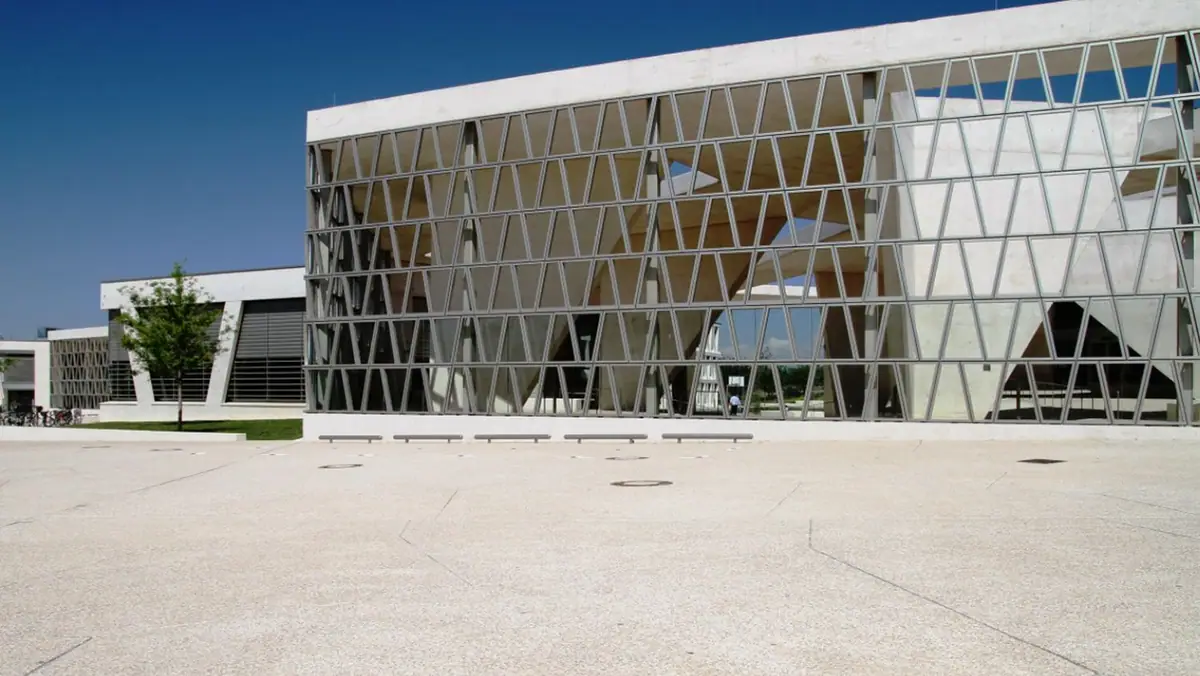
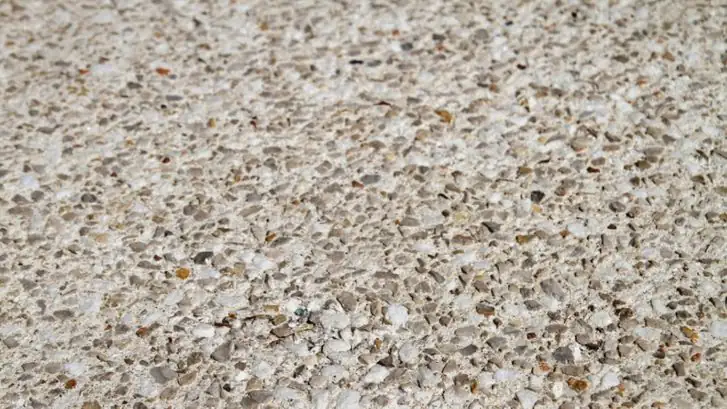
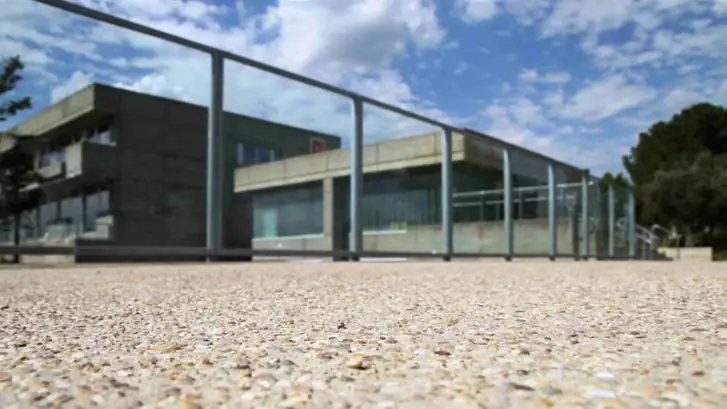
- Artevia Desactivado: an exposed natural aggregate finish, the one seen at the Colegio Alemán in Madrid and in several of the images in this article.
- Artevia Impreso, Artevia Color and Artevia Arena: these complete the range with other textures and finishes, detailed in their technical data sheets.
Artevia™ Boreal: paving that glows at night
Luminescent aggregates that capture light by day and give it back in the dark.
Among the finishes in the range we want to highlight Artevia™ Boreal, which LafargeHolcim presented in June 2018 at the Colegio Oficial de Arquitectos de Madrid (COAM, the Madrid architects’ association) as the first concrete paving on the market with photoluminescent technology. Developed with Chryso, a company specialising in admixtures for concrete and cement, it incorporates luminescent aggregates using patented Lumintech technology, which absorb UV radiation – natural or artificial – and then release it as visible light.
The result is a new sustainable source of natural lighting: a soft, coloured light that improves visibility at night and marks out routes. According to the manufacturer, it offers more than 10 hours of luminescence, allows different light densities and was produced in blue, turquoise green and turquoise blue. It is a finish that can be applied across the whole Artevia range.
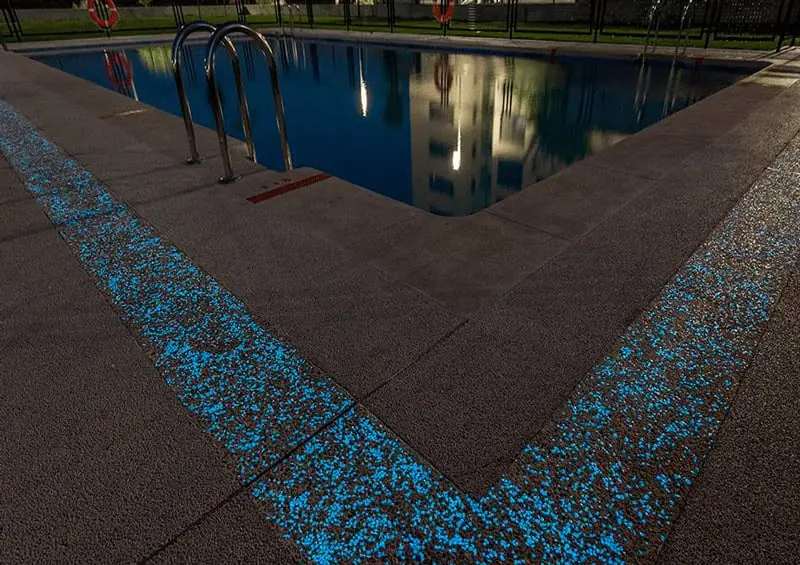
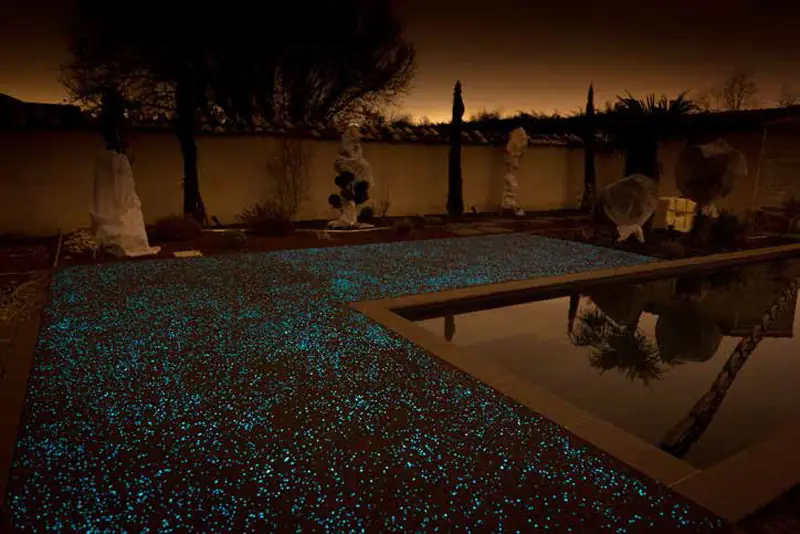
It can be used in public works, such as cycle lanes, sports courts, squares, unlit roundabouts and pavements, or in private projects, such as house entrances, pool areas, perimeter paths around buildings and garden paths.
Key points for specifying
Before specifying any of these solutions, a few points are worth bearing in mind:
- Level of carbon reduction: ECOPact is not a single product but a range with several levels. The required level should be set in the project and the environmental documentation (EPD) requested for the concrete to be supplied.
- Strength and structural use: confirm with the manufacturer that the chosen low-carbon level is available in the strength and exposure class required by each element.
- Aggregates and colour: in Artevia, the type, size and colour of the aggregate – and of the paste – determine the final appearance. Using local aggregates helps integrate the paving into the landscape.
- Installation: the finish depends on the workmanship. The brand works with a network of certified applicators and specific methods for each finish.
- Light in Artevia Boreal: the luminescence is charged by natural or artificial UV radiation, so its effect depends on how much the paving is exposed during the day.
What has changed since 2021
Epilogue: a few weeks after this article was published, in March 2021, LafargeHolcim officially launched ECOPact in Spain. The Spanish range was presented with a carbon footprint reduction of between 30% and 70% compared with CEM I concretes, thanks to low-CO₂ cements and optimised mixes, and as the first concrete range in the country with its own EPD, according to the company.
In May 2021 the group’s shareholders approved changing its name from LafargeHolcim to Holcim; in Spain the company now operates as Holcim España. The Artevia range remained in its catalogue: the 2023 Artevia Boreal data sheet offers the finish in three variants – Natural, Desactivado and Pulido Interior – and the option of producing it as a low-emission concrete with its own EPD.
Frequently asked questions
- How much CO₂ does ECOPact save compared with conventional concrete?
- It depends on the level chosen. At its international launch in 2020, LafargeHolcim cited levels of between 30% and 100% fewer emissions than a standard CEM I concrete. The range launched in Spain in March 2021 was presented with reductions of between 30% and 70%.
- What is an Environmental Product Declaration and what is it for?
- It is the reference document on a product’s environmental performance over its life cycle. It allows solutions to be compared using verified data and makes it easier to earn points in certifications such as LEED or BREEAM.
- Can Artevia be used indoors?
- Yes. The Artevia Pulido Interior variant is designed for seamless interior floors, with a finish similar to marble, granite or terrazzo, in gloss or matt.
- How long does Artevia Boreal glow for?
- According to the manufacturer, more than 10 hours. The photoluminescent aggregates are charged by UV radiation, natural or artificial, and release it as visible light in the dark.
The commitment to more sustainable architecture calls for solutions that take care of every part of the process: every material counts, and that is the idea shared by these two LafargeHolcim ranges. If you are considering a low-carbon concrete or a decorative seamless floor, at Matter we help you and your team compare solutions, finishes and technical documentation.
Book your visit to Matter.
Book a visit