Tarimatec: the details count
Tarimatec decking, façades and panels in Ecofiber Stone Composite, a WPC made with rice husk: the material, certifications, range and key project points.
Products7 min read
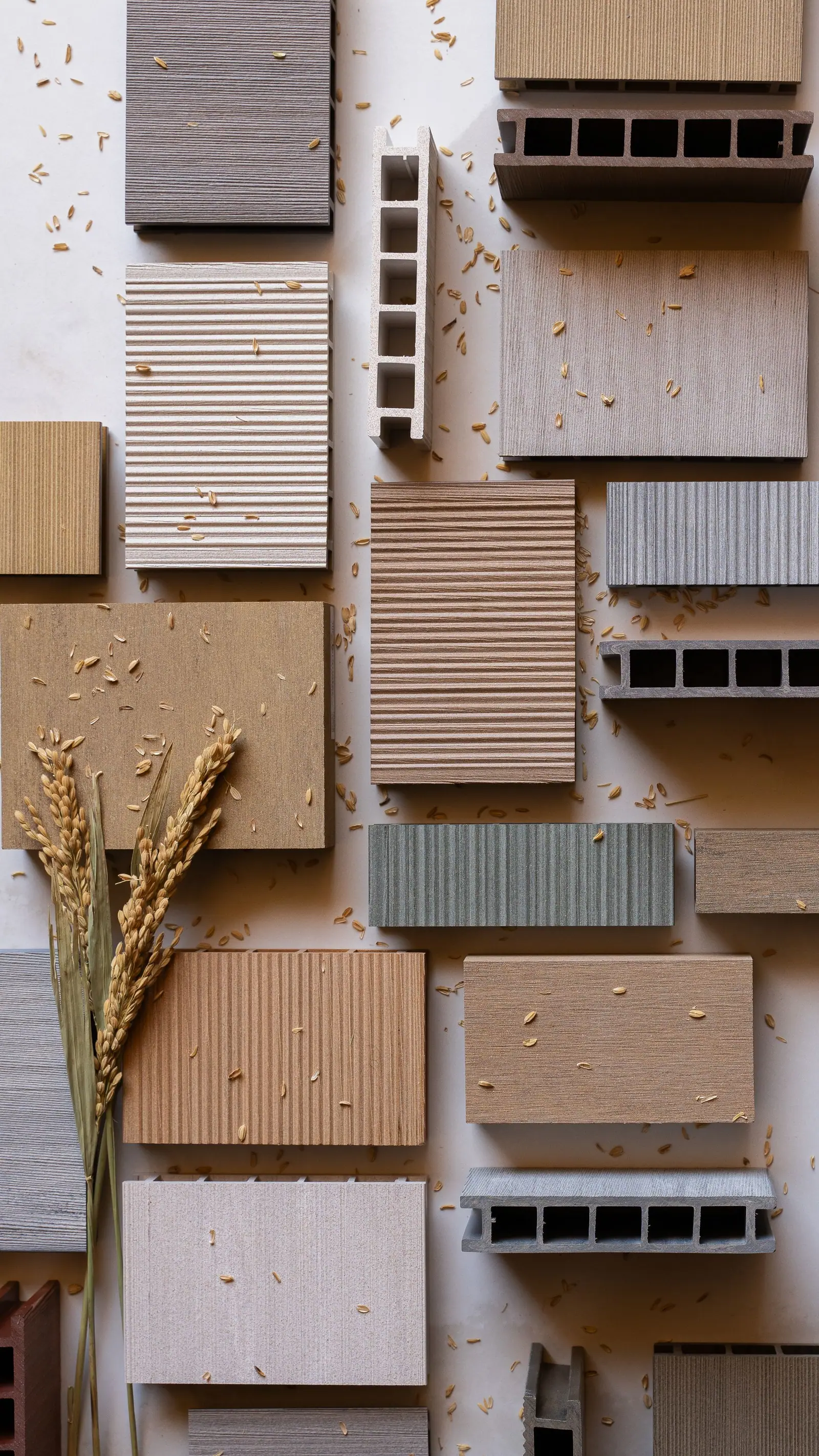
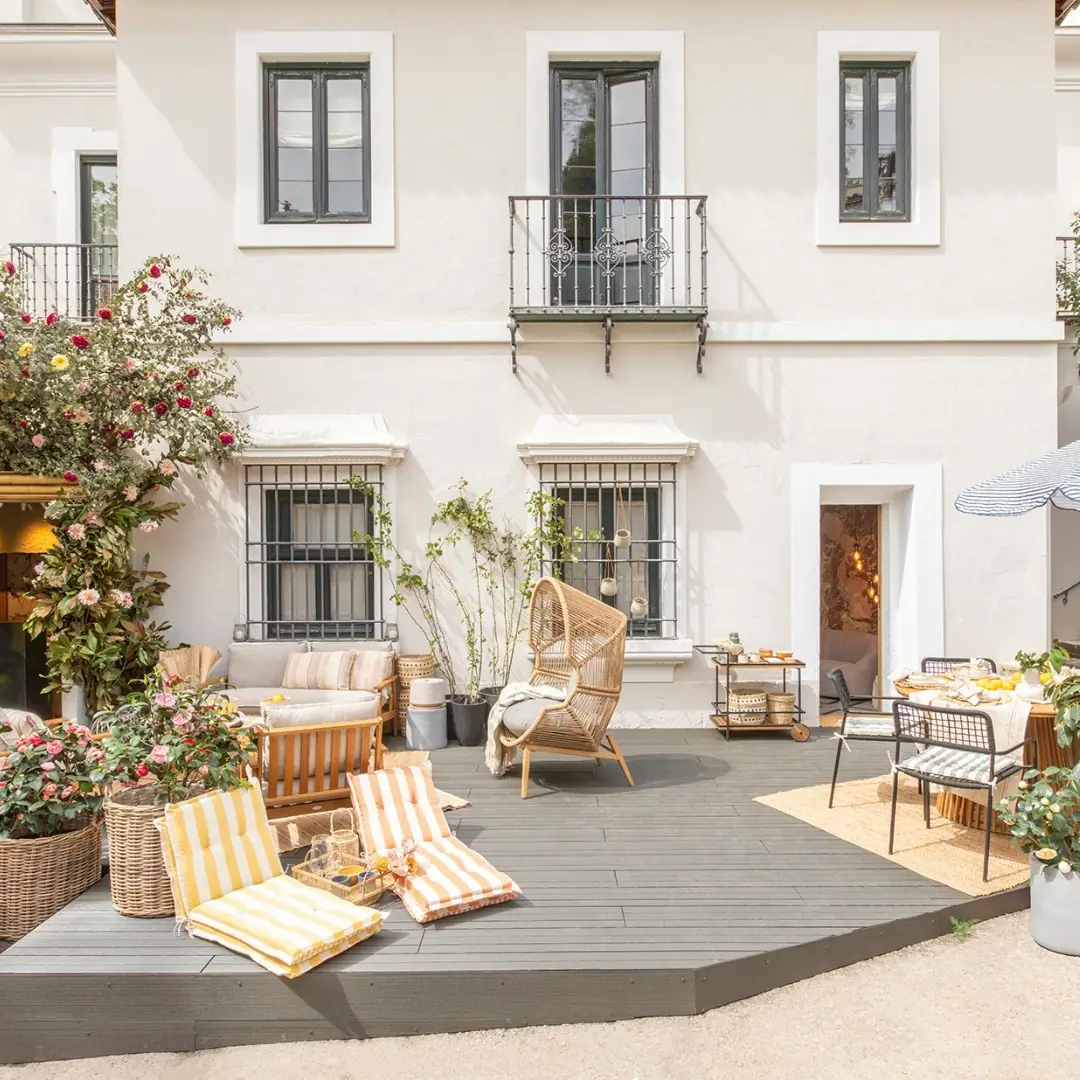
Tarimatec is the profile brand of Plásticos Viters, a Valencian company that extrudes plastic profiles and pipes and has more than 60 years of experience in the sector. Almost 20 years ago, its R&D department formulated its own raw material, Ecofiber Stone Composite, to make its first product: outdoor decking. It is a wood-plastic composite (WPC) in which the plant fibre does not come from wood but from an agricultural waste product, rice husk, combined with limestone and polyvinyl chloride (PVC).
From that decking, the catalogue has grown to offer complete solutions for flooring and cladding, indoors and out. In this article we look at what the material is made of, which environmental certifications back it, which products and collections Tarimatec presented in 2024, and what to bear in mind when specifying it.
Ecofiber Stone Composite: rice husk, limestone and PVC
Ecofiber Stone Composite is the raw material for all Tarimatec profiles. According to the manufacturer, the plant fibre it contains does not come directly or indirectly from felling trees or from wood waste: it is rice husk, so this is not recycling but the direct recovery of a waste product. Tarimatec says it has already recovered more than 5,000,000 kg of husk.
The formulation has three main components, each with a specific role:
- Rice husk: 50 parts per 100 of PVC. It adds hardness, acts as a natural fungicide and reduces water absorption.
- Crushed limestone (calcium carbonate): 40 parts per 100 of PVC. It improves hardness and resistance to bending and impact.
- Polyvinyl chloride (PVC): the base of the composite. The manufacturer highlights its resistance to weathering and solar radiation, that it is self-extinguishing and does not drip in a fire, and that it is 100% recyclable.
In manufacturing, Tarimatec combines this raw material with recycled material. According to its 2024 catalogue, the mix is made up of 64% Ecofiber Stone Composite dry blend, 22.5% WPC recovered from site offcuts and end-of-life product, and 10.5% shavings from the planing and sanding of its own production, which go back into the process.
Manufacturing and environmental certifications
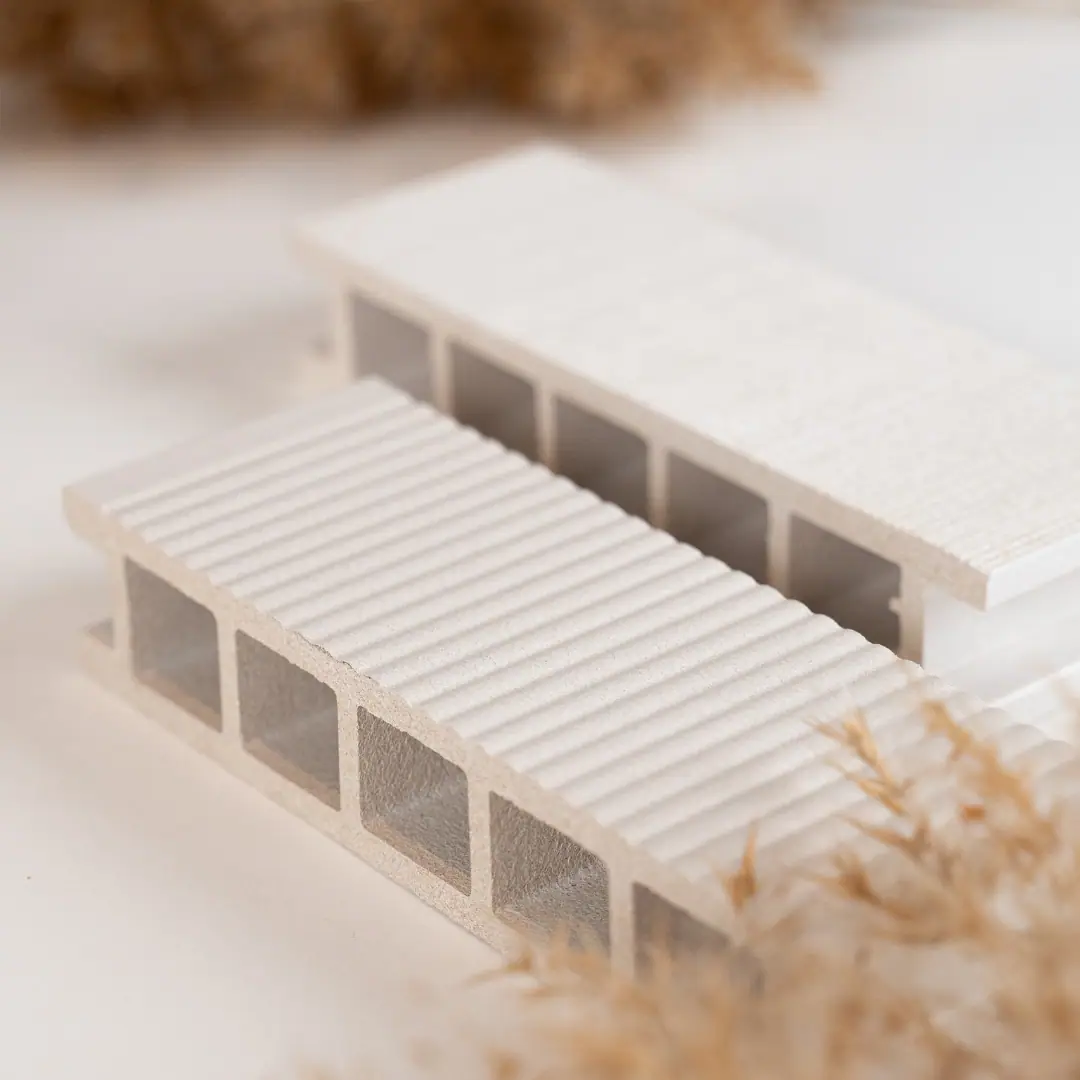
Tarimatec formulates its own raw material and turns it directly into profiles, without producing intermediate pellets. According to the brand, this halves electricity consumption compared with extruding from pellets. In 2024 it stated that it produced with 56.8% renewable energy and worked only with Spanish raw-material suppliers, many of them local. The company has ISO 9001:2015 (quality) and ISO 14001:2015 (environment) management systems in place, certified by AENOR.
For those designing with environmental certification in mind, the two useful documents are the Environmental Product Declaration (EPD) and the Ficha Ambiental de Producto (product environmental sheet). The EPD, verified by Tecnalia Certificación and registered with The International EPD System under number S-P-07588, covers hollow and solid decking, the Montblanc, Annapurna and Aris vertical profiles and the trim profile. The Ficha Ambiental, published by GBCe in November 2023, sets out for the same products the criteria they can contribute to under VERDE, LEED v4 and BREEAM:
- Life cycle: the EPD impacts can be used in the building's life-cycle assessment (VERDE RN 11, LEED MR and BREEAM MAT 1).
- Origin and composition of materials: Spanish suppliers and declared recycled content (VERDE RN 05 and RN 07, LEED MR and BREEAM MAT 3).
- Waste and durability: product recyclability and design for durability (VERDE RN 08 and RN 09, BREEAM MAT 5 and RSD 1).
The sheet points out that it is an aid for the certification team, not a product certification: the final decision lies with the body behind each label. As for durability, Tarimatec offers a 25-year warranty, set out in its technical manual.
The catalogue: decking, vertical profiles and panels
The adaptability of the material has made it possible to extend the catalogue beyond decking. In 2024 Tarimatec organised it into three families: outdoor decking (solid, hollow or cellular, and Dune), six profiles for vertical applications, and decorative panels and wall boards. The table summarises dimensions and finishes according to that year's catalogue.
Outdoor decking: solid, hollow and Dune
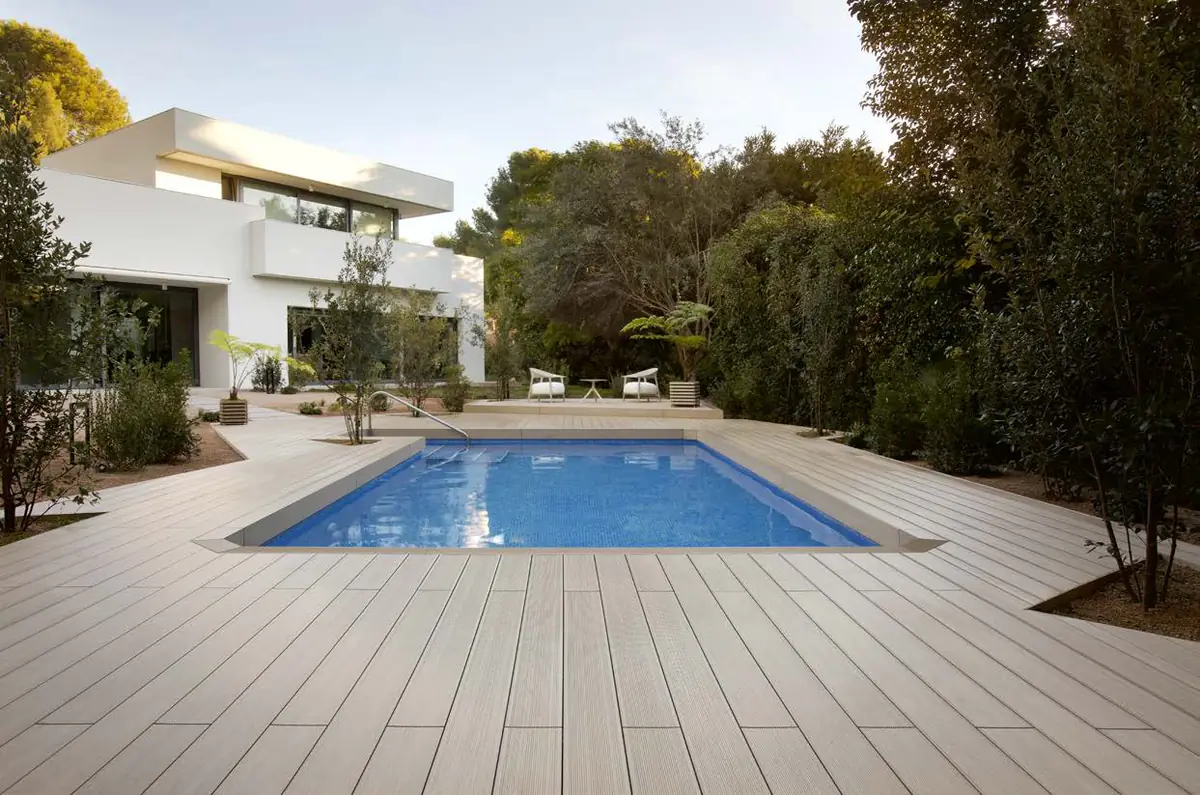
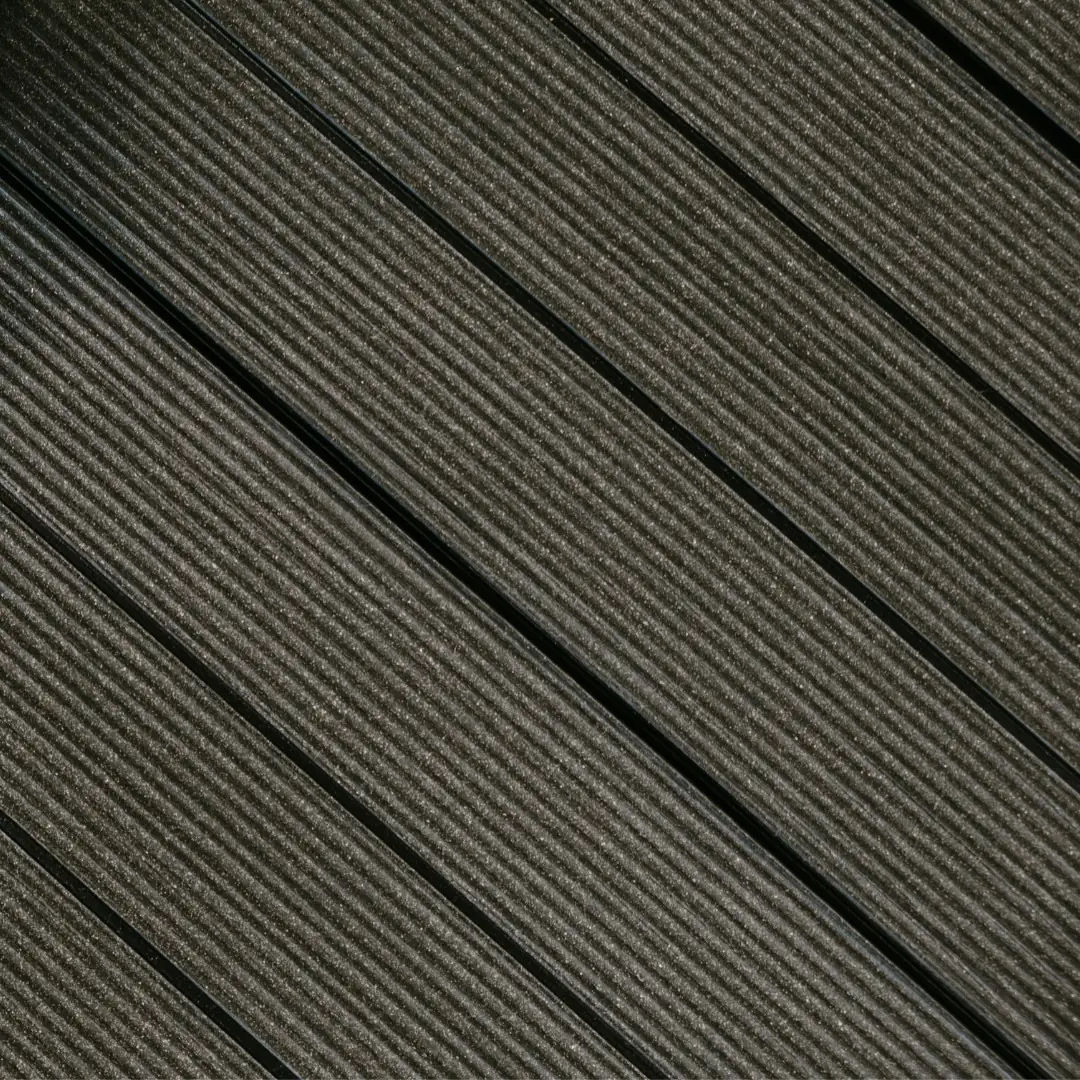
Solid decking is the option for areas of very intensive use, such as public spaces, and is made in the full colour range in the Nature finish. Hollow or cellular decking is used in both homes and public spaces, and is the one that takes the grooved Tecno finish.
Dune was the new product for 2024: a 200 mm profile that combines three 64 mm slats in a single piece, with a Surco finish. It was launched in six main tones (Iroko, Bambú, Antique, Lino, Preto and Aloha), with the other references available to order.
Vertical profiles: Montblanc, K2 and Annapurna
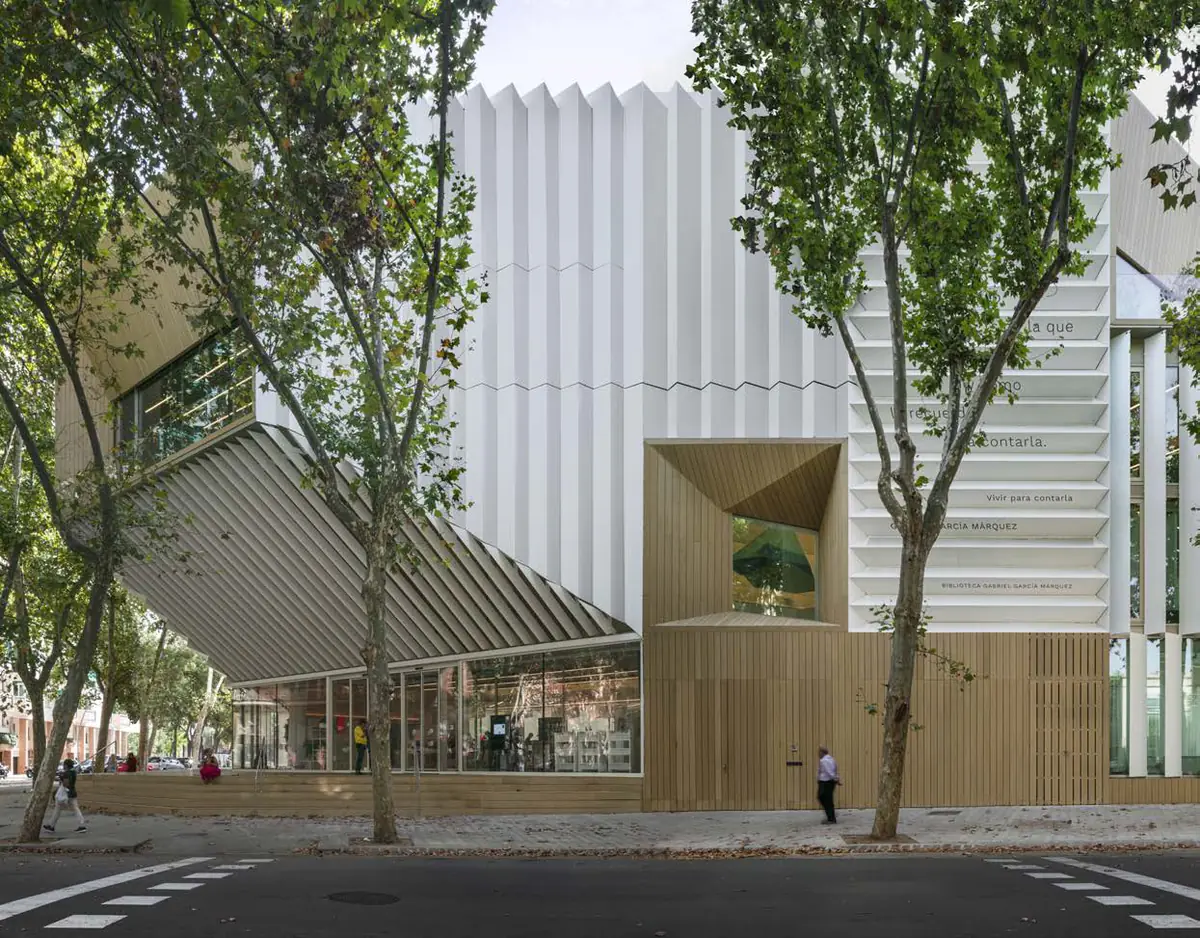
Montblanc is Tarimatec's ventilated façade system, in the Nature finish and in all the colours of the Chromatic and Wood collections. K2 was the brand's first vertical profile: a 110 × 15 mm hollow batten that works as a decorative element or as wall cladding.
Annapurna is a non-structural decorative batten system for façades, screens and pergolas. It is the only profile with the Sanding finish, a light sanding on all four faces that allows it to be seen from any angle. It is made in three sizes (40 × 40, 40 × 80 and 40 × 160 mm), takes an internal metal reinforcement and has end caps to conceal the hollow core. In 2024 Kod was added, a connector for resolving 90° corners in the 40 × 40 and 40 × 80 profiles. Annapurna 50 applies the same logic to walls, ceilings and even floors, with a continuous pattern.
Panels and wall boards: Aris and Malibú
Aris is the family of quick-to-install decorative panels and wall boards, designed to refresh interior and exterior spaces without subsequent treatments. It comes in three designs that can be installed vertically or horizontally: Square, with a regular fret pattern; Cadence, with an asymmetric rhythm; and Onna, with wavy lines. Square and Cadence are available in the Nature finish, for indoor and outdoor use, and Trama, an embossed finish for indoor use only; Onna has a Surco finish.
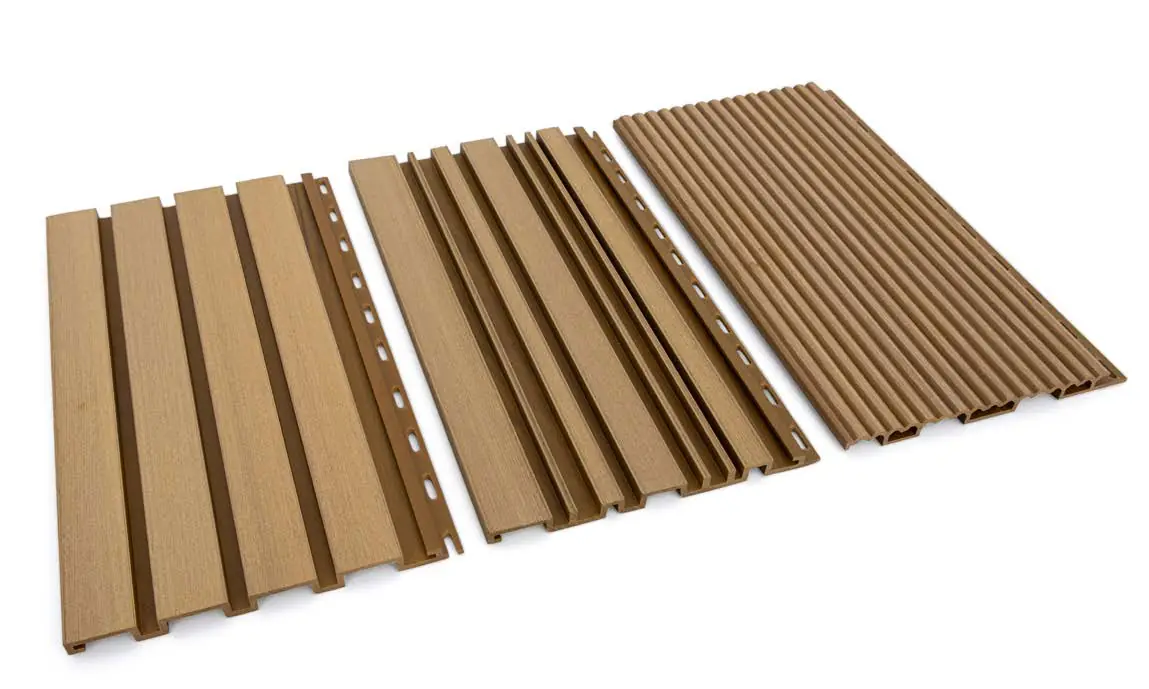
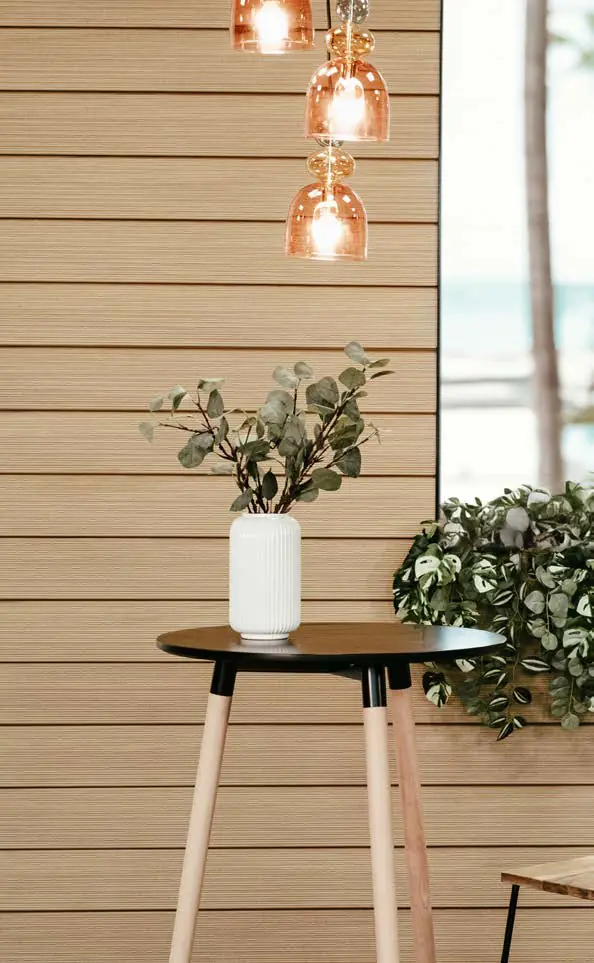
Malibú, another of the new products for 2024, is a decorative panel with a Surco finish inspired by the timber houses of the California coast. The manufacturer presents it as suitable for indoor and outdoor use and for installation as a ventilated façade. Aris and Malibú were offered in the main tones of the Wood collection (Wengué, Ipé, Roble, Nogal, Luna, Polar and Silver), with the other colours and special lengths available to order.
Three colour collections: Chromatic, Wood and Ethnic
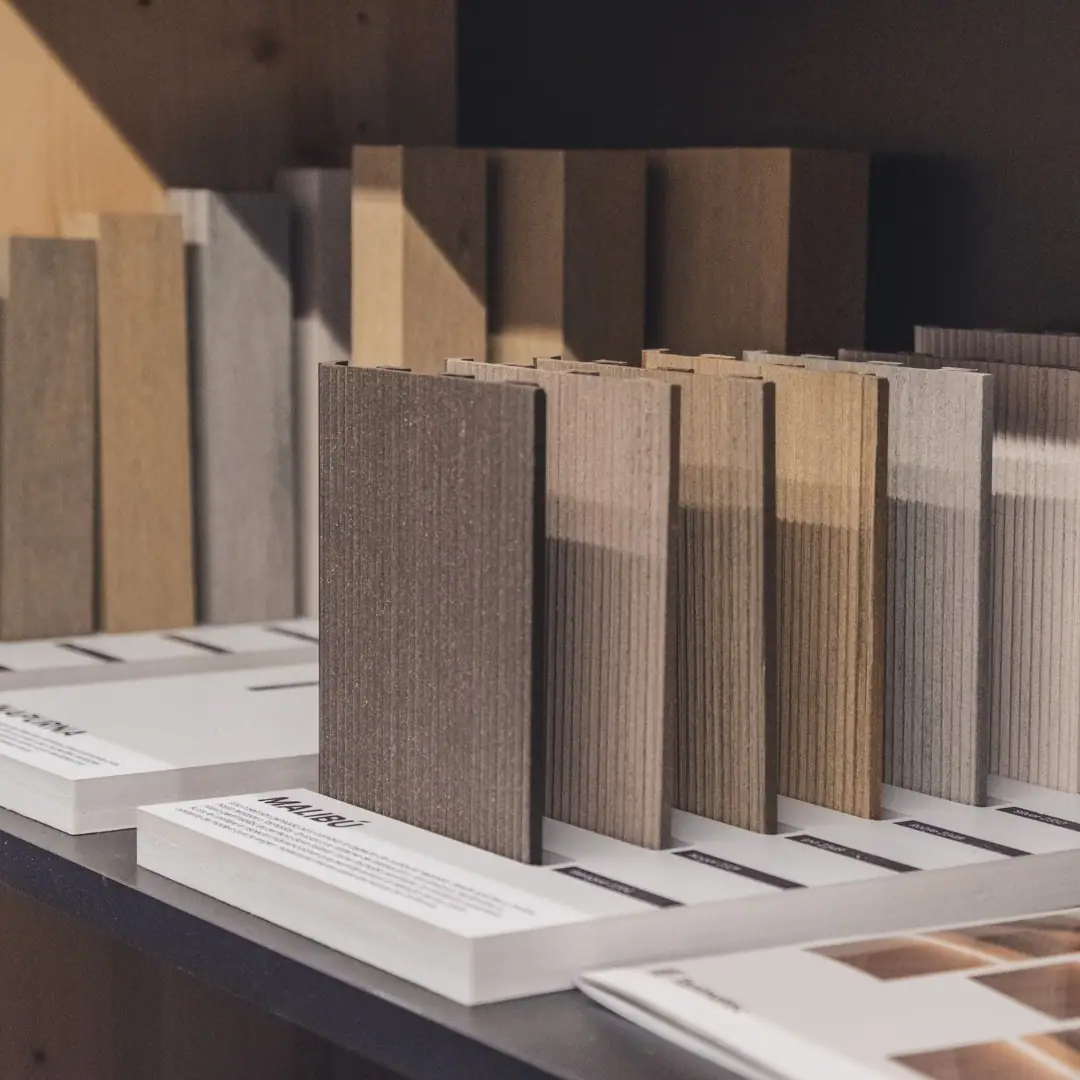
Colour is organised into three collections, with 33 references in total according to the 2024 catalogue, and each one is associated with specific finishes depending on the profile:
- Chromatic: eleven plain colours that showcase the chromatic versatility of the raw material, from Blanco SRI, Arena, Cemento or Gris to Antracita, Cobalt or Moss. Nature (brushed smooth) and Tecno (grooved, decking only) finishes.
- Wood: fourteen tones, from Silver or Luna to Sándalo or Cozumel, with irregular grain that makes each board different. It comes in the softly textured Nature finish.
- Ethnic: eight shades with a light grain, such as Lino, Iroko, Bambú or Formentera, with a Surco finish. It is the most sensory collection and the basis of Dune.
In addition to the catalogue, Tarimatec offers technical advice from specification through to installation and maintenance, and manufactures to order in special colours and lengths to suit the needs of each project.
Key points for specifying Tarimatec
Before finalising the project, it is worth bearing in mind these recommendations from the manufacturer:
- Tone variation: the plant fibre and pigments produce slight differences in tone between profiles and between batches. Each area should be supplied from a single batch.
- Expansion: the profiles expand and contract with temperature. This is expected behaviour that causes no problems if the Tarimatec installation manual is followed.
- Non-structural profiles: none of them is structural. Annapurna can take a metal profile inside it to gain strength in screens and pergolas.
- Roofs and penthouses: the aluminium batten system with a closed frame is self-supporting and needs no fixings into the substrate that could damage the waterproofing.
- Maintenance: it requires no treatments, only periodic cleaning to keep its appearance. After installation there is a slight fading that stabilises over time.
Frequently asked questions
- How does Tarimatec differ from timber decking?
- It is a composite of PVC, rice husk and limestone, not wood. As a result it needs no varnishes or oils, does not splinter and, according to the manufacturer, is not attacked by termites or fungi. In return, its expansion with temperature and a slight variation in tone between batches need to be allowed for.
- Can it help achieve LEED, BREEAM or VERDE certification?
- It can contribute to several credits. Tarimatec has an EPD registered with The International EPD System (S-P-07588) and a Ficha Ambiental de Producto published by GBCe that details the VERDE, LEED v4 and BREEAM criteria to which its products can contribute.
- Can it be used around a swimming pool?
- Yes. The manufacturer states that the material is resistant to pool chlorine and that its decking meets slip resistance class 3 of the Código Técnico de la Edificación (CTE, Spain's building code), the most demanding class, which the CTE requires in outdoor areas and pools.
- What warranty does it have?
- Tarimatec offers a 25-year warranty, set out in its technical manual. It covers manufacturing defects in the product, not the installation.
At Matter we help you choose the right outdoor flooring or cladding for each project and compare materials, colours and finishes with your technical team.
Book your visit to Matter.
Book a visit