The materiality of rattan palm
karuun® turns rattan palm into veneers, translucent sheets and blocks: how it is made, formats, properties, projects and key points for specifying it.
Products9 min read
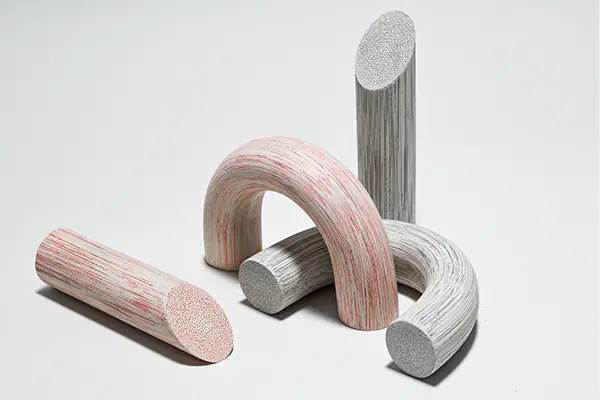
When we look for materials that are innovative, environmentally responsible and economically viable, rattan palm is an option worth considering. Through a low-energy process, karuun® transforms the natural structure of rattan into a lightweight, high-quality surface material, which the manufacturer presents as an ecological alternative to plastic. Its raw material comes from the tropical forests of Indonesia: rattan needs the forest in order to grow, so its cultivation provides jobs and livelihoods for local communities and is, at the same time, an incentive to conserve an ecosystem that is home to many species and absorbs CO2.
In this article we explain what rattan is and how it differs from wood and bamboo, who is behind karuun®, how it is made, which products it offers in which formats and thicknesses, what properties the manufacturer declares, where it has been used and what to bear in mind when specifying it.
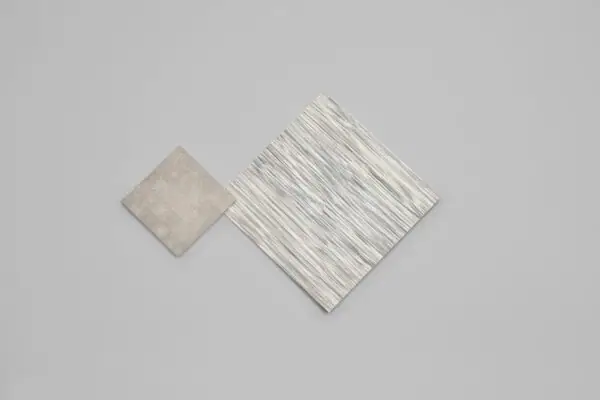
Rattan, a climbing palm of the tropical forest
Rattan is neither a wood nor a bamboo: it is the stem of climbing palms of the genus Calamus and others in the subfamily Calamoideae. According to karuun®, there are around 600 species, of which only about thirty are used commercially, and around 80% of the rattan on the market comes from Indonesia. Like a liana, it climbs from tree to tree, supported by its spines, and can exceed 200 metres in length. karuun® uses manau rattan (Calamus manan), which has a solid stem up to about 8 cm in diameter.
Unlike bamboo, a grass with a hollow stem, rattan is solid and runs with bundles of capillaries that carry water: hence its lightness, its flexibility and the possibility of bending it with heat and moisture. It grows faster than trees —the German workshop Holzrausch, which works with karuun®, speaks of three to five metres a year— and does not thrive in monoculture. It is harvested by hand, with a machete and without heavy machinery, in lengths of about three metres.
Despite its potential, rattan has remained associated with traditional uses: cane furniture and basketry, often confused with bamboo and with hardly any technical development. After its heyday from the 1970s to the 1990s, it was gradually displaced by synthetic materials.
karuun®: rattan's ‘hidden treasure’
This is the context in which karuun® was born, a material that opens up new possibilities for rattan in interior architecture, consumer goods and the automotive industry. Its name comes from the Indonesian and Malay expression ‘harta karun’, meaning ‘hidden treasure’. It was developed by out for space, a company founded in 2015 in Kißlegg, in the Allgäu region of Germany, by the product designers Julian Reuter and Peter Kraft. The idea came about on a trip Reuter made to Bali, and the material and the company were created in parallel in collaboration with the Innovation Centre in Lichtenfels.
Production is in Indonesia. The VIVERE group, one of the country's largest furniture manufacturers, is the exclusive producer of karuun® at its plant in Semarang (Java), using the patented technology of out for space, which opened its own office there in 2022. According to the brand, several tens of thousands of square metres of karuun® stripe leave Semarang every month.
How it is made: colour in the capillaries and two cutting directions
The process makes use of rattan's vascular bundles. Light- and UV-resistant pigments are injected into the peeled canes and travel through the capillaries with minimal energy consumption. In this way the colour is distributed throughout the cross-section, not just on the surface. The canes are then milled to a square section, removing the curved bark, and the resulting prisms are glued and pressed into blocks of homogeneous fibre.
Each block yields different materials depending on the direction of the cut. A longitudinal cut reveals the capillaries as fine lines: this is karuun® stripe veneer. A cross cut shows them as dots and produces a naturally perforated sheet that is translucent and air-permeable: this is karuun® shine. From there, the manufacturer produces veneers, three-dimensional pieces, translucent sheets, boards, edging and solid blocks.
According to the brand, karuun® is made up of 97.5% natural rattan, 2% wood glue, 0.3% acrylic binder and 0.2% pigments, and it plans to replace the glues and binders with bio-based alternatives. The bark that is removed is reused, for example as poultry bedding, and the surplus fibres from milling are kept to develop new products.
Properties declared by the manufacturer
These are the figures karuun® publishes about its material. They should be read as manufacturer's data and checked against the technical data sheet for each product:
- Lightness and flexibility: the capillary structure makes the material light and formable; karuun® 3D has a density of about 400 kg/m³ and can be deep-drawn into three-dimensional pieces.
- Homogeneous structure: the block has no knots or growth irregularities and can be machined without splintering, with any cutting tool.
- Translucency: light transmission is around 15% for karuun® stripe natura and 50% for karuun® shine natura, which allows them to be backlit.
- Acoustics: the hollow capillaries of karuun® shine form a micro-perforated surface; the manufacturer gives an NRC of 0.95 and an αw of 0.9.
- Fire behaviour: because of its silica content, the manufacturer describes it as naturally flame-resistant, but makes clear that its reaction-to-fire class has not been laboratory-tested.
This last point matters to specifiers: the original version of this article referred to ‘fire resistance’, and the brand clarifies that there is no tested classification because the material is almost always used in composites. If the project requires a reaction-to-fire class, the manufacturer will need to be asked for a test of the complete system (karuun® plus substrate and finish).
The karuun® range: formats and thicknesses
The table lists the products and dimensions that karuun® published in its data sheets in 2024. Dimensions are approximate and all can be ordered to size.
karuun® stripe and karuun® 3D: rattan veneers
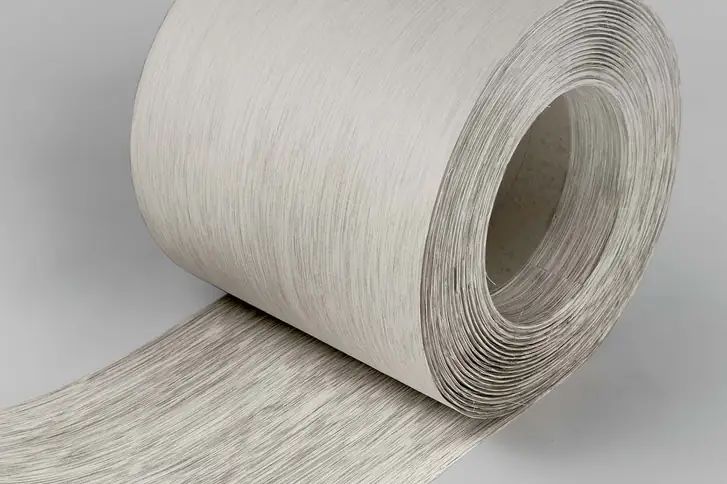
karuun® stripe is the basic veneer in the range. It retains rattan's linear grain, is supplied coated and pre-sanded, with a fine cellulose fleece that prevents it from cracking when worked, and can be used to cover all kinds of substrates and for postformed pieces. It is supplied on a roll and, according to the manufacturer, the sheets can be joined edge to edge without visible seams. In addition to the four capillary colours, custom tones are available.
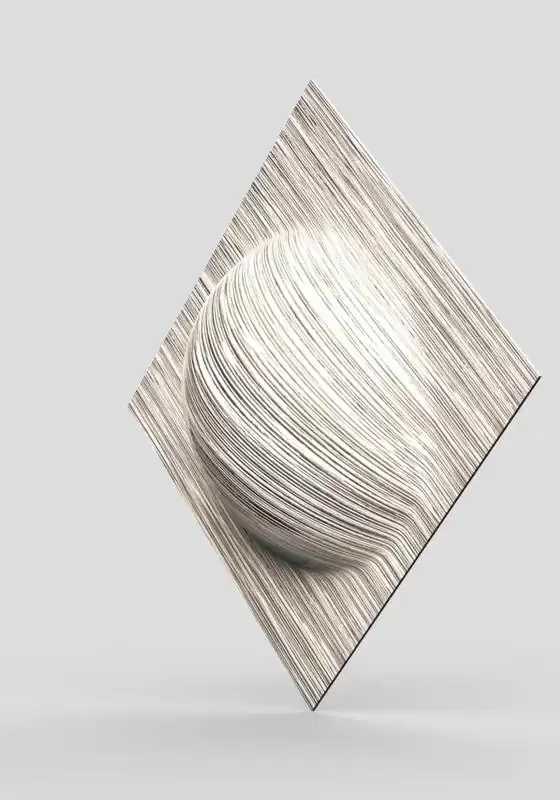
karuun® 3D has a thicker, waterproof cellulose fleece that allows it to be formed in three dimensions, in a process comparable to deep drawing. The brand proposes it as an alternative to fibreglass and plastics in curved pieces, particularly in mobility.
karuun® shine: translucency and acoustics
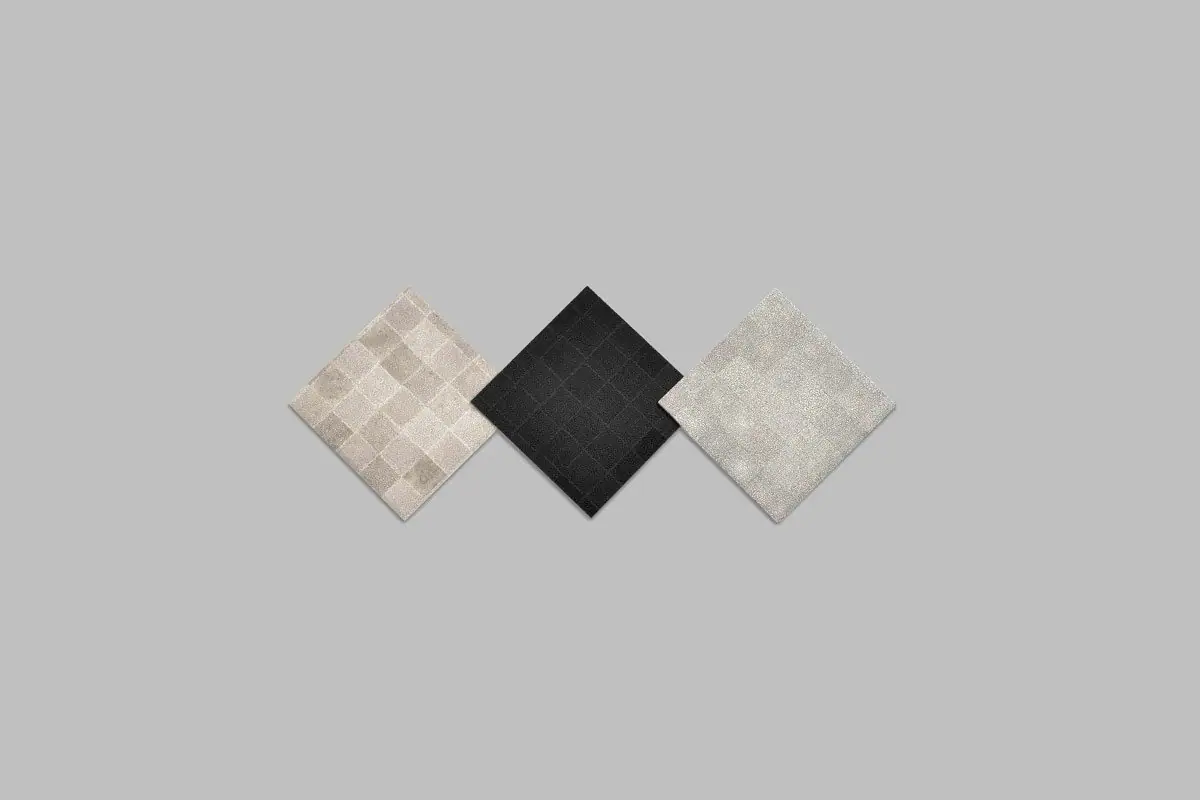
karuun® shine is produced by sawing the block crosswise. The hollow capillaries form a subtle mosaic on a naturally perforated, translucent and slightly flexible surface that changes appearance depending on the viewing angle. The manufacturer aims it at lighting, bespoke acoustic treatment and wall and floor surfaces.
karuun® block, panel and edge
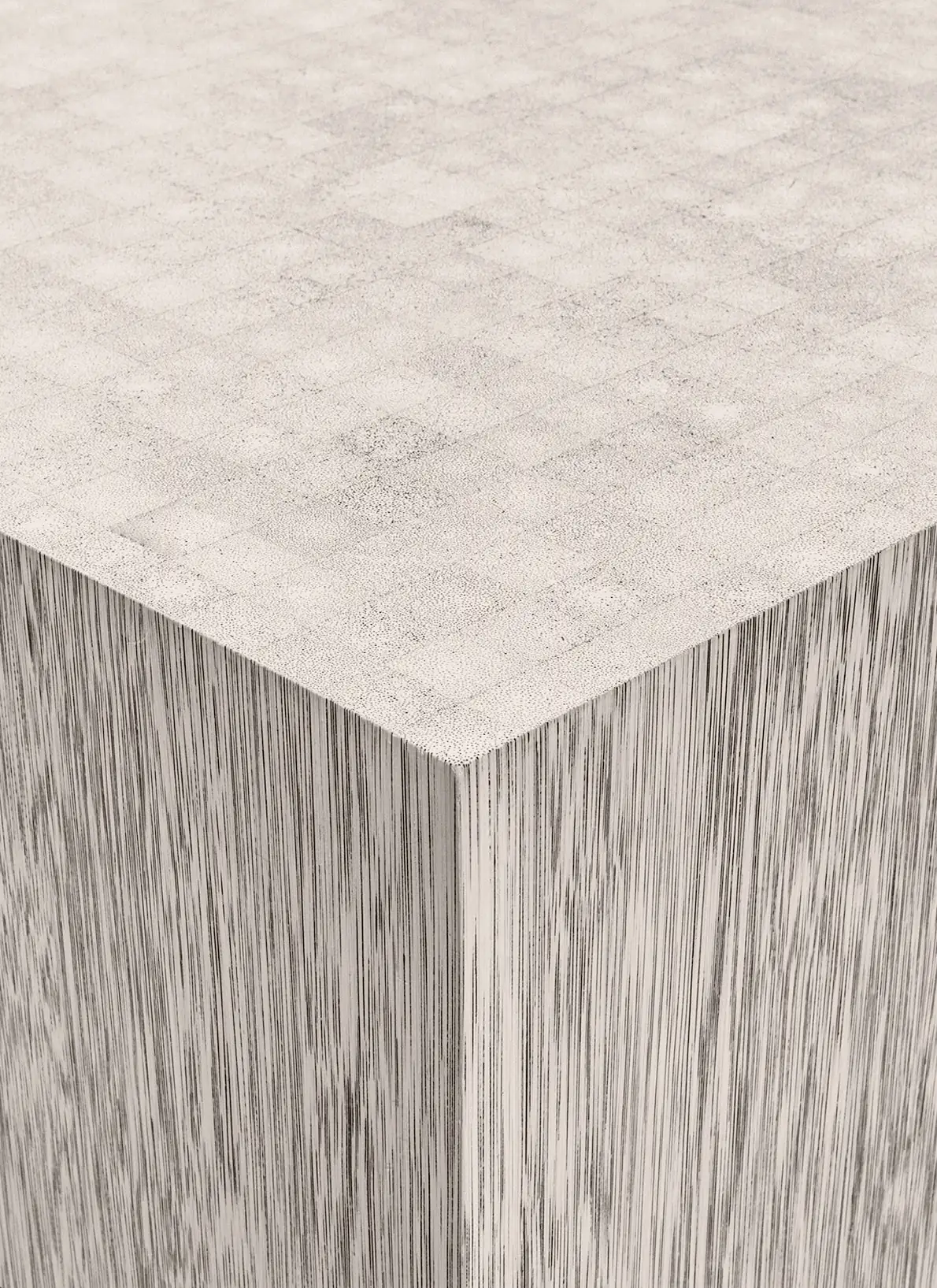
karuun® block is the solid block from which the veneers are cut: it can be milled and turned, and when it is cut diagonally or in free forms the capillary structure becomes a decorative motif. karuun® panel is a board already veneered with karuun® stripe on MDF or plywood, for walls, ceilings, furniture or stands. karuun® edge is the matching edging, about 2 mm thick, for finishing boards in the same material.
Applications: from mobility to interior architecture
The versatility of the material allows it to be used in very different fields. The brand groups them into three: mobility (automotive and aviation), sustainable architecture (interior design, furniture and fit-out) and plastic substitution in product design, sporting goods and electronics.
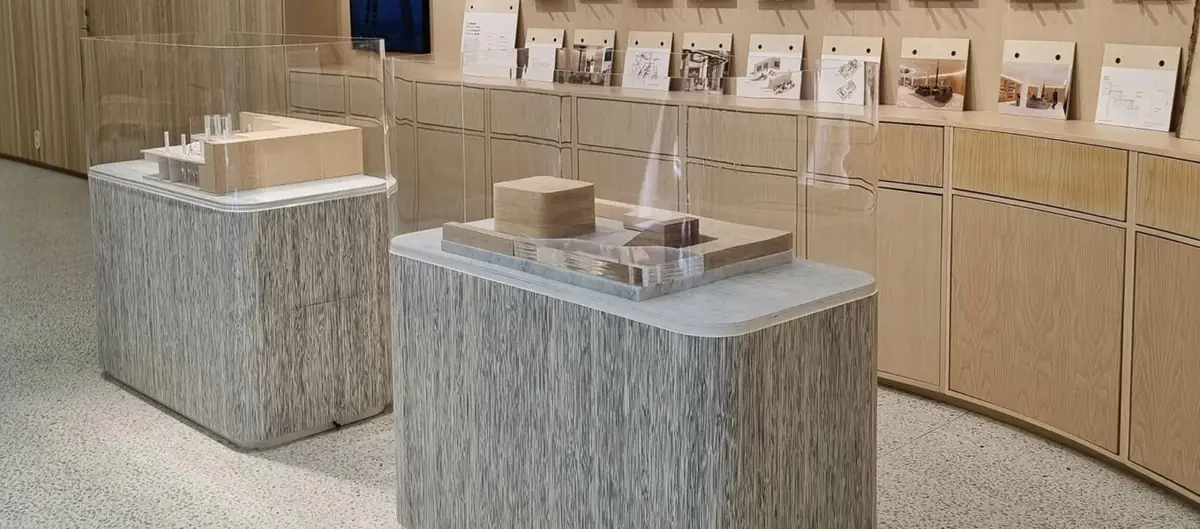
In the automotive sector, NIO was the first manufacturer to use karuun® in the interior of its cars, from the NIO EVE prototype to the ET7 and ES7 series. The Chinese brand also took it into architecture: in NIO House Oslo, its showroom and members' club, karuun® stripe was used for the display furniture.
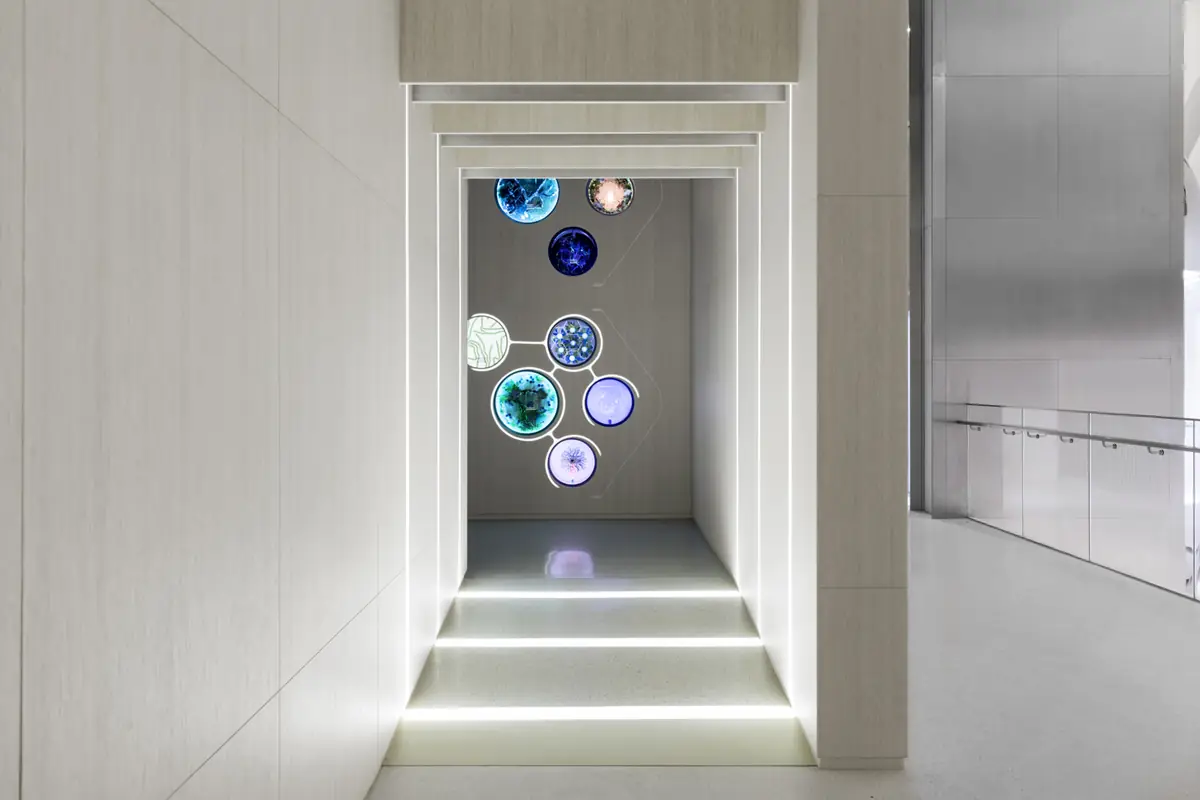
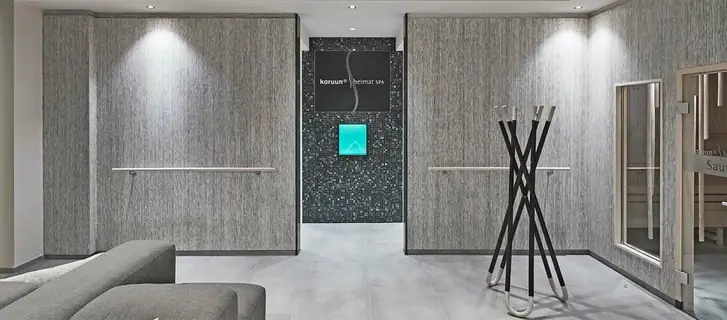
In interior architecture, the largest project is the Museum of the Future in Dubai (architecture by Killa Design; exhibition design by Atelier Brückner): on level 4, the space devoted to tropical forest ecosystems is clad with some 600 m² of karuun®. In Munich, the joinery firm Lauinger used karuun® stripe in the womenswear department of the Ludwig Beck department store. And in Kißlegg, the Ochsen hotel is home to the Heimat Spa, the first wellness space clad with karuun®, a material that won over the sauna manufacturer Klafs after thorough testing of its suitability for the spa, with acoustic sails by Topakustik in micro-perforated karuun® stripe.
Key points for specifying karuun®
Beyond its appearance, these are the points to resolve at design stage:
- Choose the cut for the effect: stripe for surfaces with a linear grain, curved or postformed; shine when translucency, backlighting or acoustics matter; block for solid machined pieces.
- Define substrate and edge: karuun® stripe can be applied to any substrate, and karuun® panel comes ready-veneered on MDF or plywood, with karuun® edge for the edges.
- Plan the finish: the veneer is supplied pre-sanded and the manufacturer publishes guides on brushing, sanding, lacquering, staining and 3D forming.
- Resolve reaction to fire: there is no tested class for the material, so in uses with reaction-to-fire requirements the complete system must be validated with the manufacturer.
- Start from samples: dimensions are approximate and pieces are made to size; the brand offers sample sets for comparing cuts and colours.
Sustainability: rattan as an ally of the tropical forest
Sustainability is central to the philosophy of karuun®, which starts from one idea: environmental protection is only possible if the local population benefits. Rattan depends on biodiversity and does not grow in monoculture, so a farmer who makes a living from it has a direct incentive to keep the forest standing. That is why the brand promotes local work and the cultivation and replanting of rattan.
According to the manufacturer, it works with Fairventures Worldwide, the VIVERE group and the German development agency GIZ —within the develoPPP.de programme— on forest conservation and restoration projects and on training the so-called Rattan Rangers, and an app makes it possible to trace the origin of the rattan. In 2021 it calculated its corporate carbon footprint for the first time and carried out a life-cycle assessment of karuun® stripe. At the end of its service life, karuun® stripe can be recycled as waste wood or recovered as fuel.
Frequently asked questions
- Is rattan the same as bamboo?
- No. Bamboo is a grass with a hollow stem that grows independently; rattan is a climbing palm with a solid stem, full of capillaries, that needs to lean on the trees of the forest. They may look alike from the outside, but their structure and behaviour are different.
- What is the difference between karuun® stripe and karuun® shine?
- They come from the same block with different cuts. stripe is a longitudinally cut veneer with a linear grain, 0.6 or 0.8 mm thick; shine is a cross-cut sheet with the capillaries showing as dots, translucent, air-permeable and with acoustic properties, 1 to 4 mm thick.
- Is karuun® fire-resistant?
- The manufacturer states that its silica content makes it naturally flame-resistant, but also that its reaction-to-fire class has not been laboratory-tested. If the project requires a classification, it must be validated with the manufacturer for the specific system.
- Can it be used as wall and ceiling cladding?
- Yes. karuun® panel is a veneered board designed for walls, ceilings and furniture, and karuun® stripe can be applied to other substrates. It has been used in this way at the Museum of the Future in Dubai, the Ludwig Beck store in Munich and the Heimat Spa in Kißlegg.
- What is karuun® made of?
- According to the manufacturer, 97.5% natural rattan, 2% wood glue, 0.3% acrylic binder and 0.2% pigments. The rattan comes from Indonesia, where it is harvested by hand.
Rattan's grain, its translucency or the feel of a veneer dyed through its whole section are best understood with the material in front of you. At Matter we help you assess natural and innovative materials such as karuun® for your project and compare them with other cladding solutions in our material library.
Book your visit to Matter.
Book a visit