Durat: circularity as its reason for being
A Finnish solid surface made with recycled plastic: properties, worktops, sanitaryware, Durat Plus and the Durat Circular service that closes the loop.
Products9 min read
Durat was founded in Finland in 1990 in response to a specific concern: the amount of plastic waste ending up in landfill. Its founders set out to reuse that plastic as a quality raw material for design products, and from that idea came a solid surface that combines recycled waste with a look of its own and great durability.
Since the beginning, Durat has produced sheets and sanitary elements such as washbasins, sinks and bathtubs, in both standard and bespoke formats, at its plant in Rymättylä (Naantali, Finland). True to its values, the brand buys back disused furniture through its Durat Circular programme, so that the material retains its value and usefulness for as long as possible, and it extends the life of its products with simple maintenance: scratches and surface marks are removed by sanding.
In this article we look at what Durat is and what its technical properties are, how a worktop is built and what to plan for when specifying one, which sanitary pieces it offers, what Durat Plus —its formulation with higher recycled content— brings, and how the Durat Circular service works.
Durat, the original material
A solid surface with plastic waste in its body.
Durat is a polyester-based solid surface supplied in sheets for making furniture, worktops, cladding or sanitary elements. According to the manufacturer, it contains around 30% post-industrial recycled plastic —manufacturing waste that never reached the consumer—, is 100% recyclable and is made by casting: the mixture of resin and granules is cast into sheets or moulds, giving a homogeneous, resistant and repairable structure.
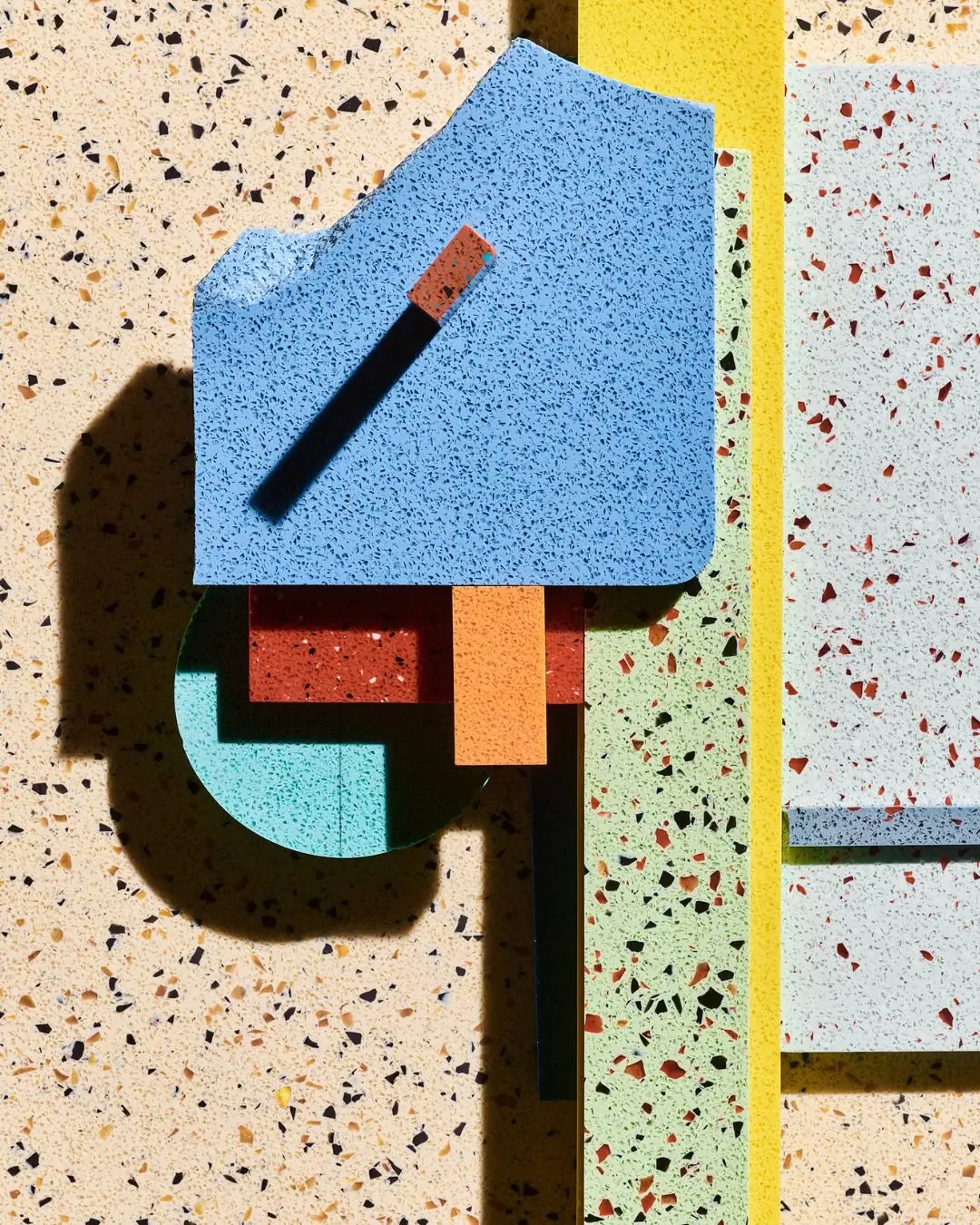
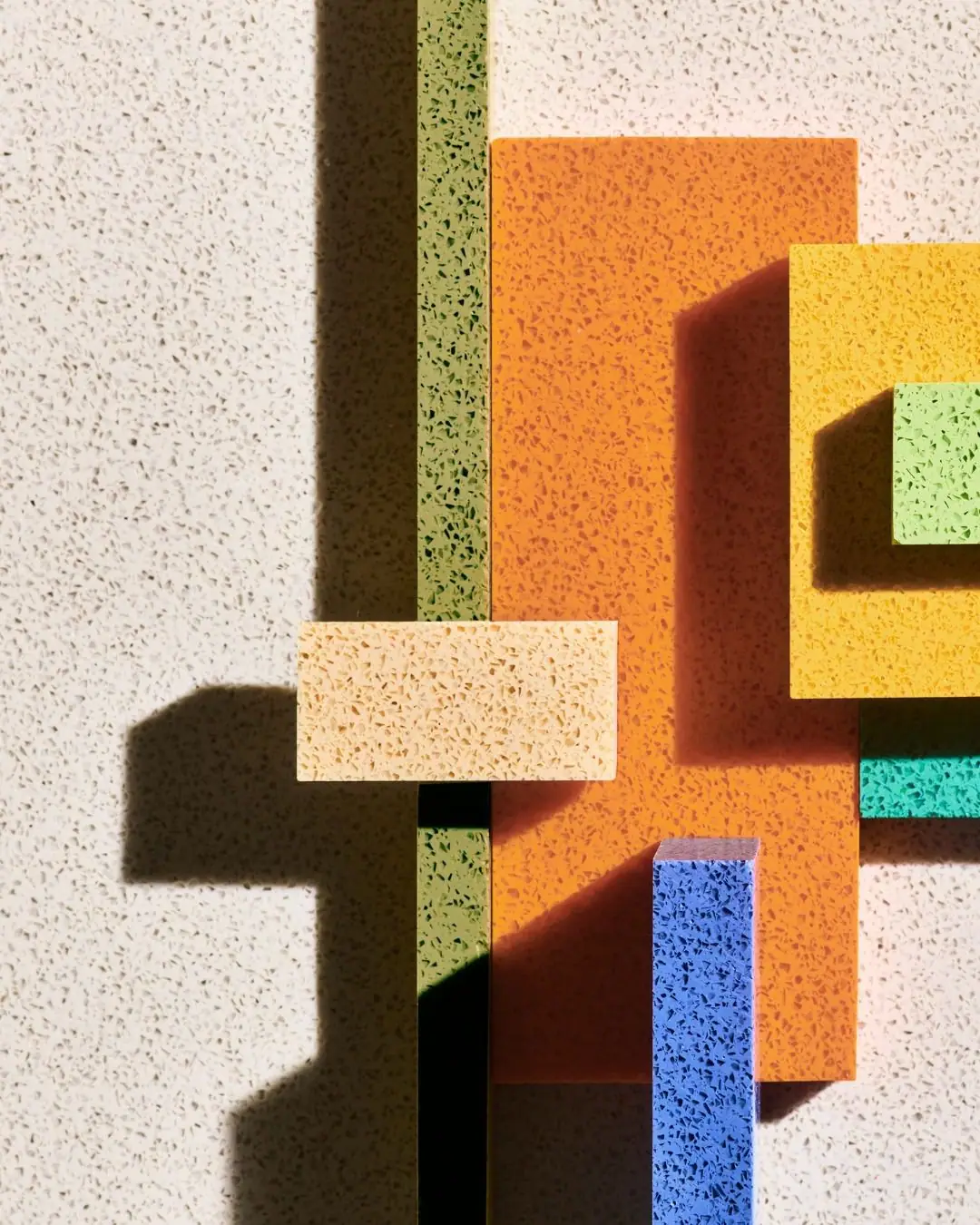
Its most recognisable feature is its speckled finish, reminiscent of terrazzo. That texture comes from the granulated plastic waste incorporated into the mix and gives each sheet a character of its own, intended for projects with personality.
Standard sheets measure 2900 × 800 × 12 mm, and the material can be cast in thicknesses from 9 to 18 mm. Pieces such as sinks, washbasins and bathtubs are moulded from the same material.
Its dense, homogeneous structure withstands intensive use and allows pieces to be joined without visible seams, making it a suitable finish for bespoke furniture. Because it does not absorb liquids, Durat is hygienic and easy to clean, and it works well for kitchen worktops of almost any size, sinks and accessories where a distinctive look, durability and low maintenance are wanted.
Technical properties
Durat's technical data sheet gives the following values for the standard material:
Durat also holds the Finnish M1 classification for low-emission materials, which limits volatile organic compounds, formaldehyde, ammonia and odour. In addition, according to the manufacturer, machining it does not generate harmful silica (silicon dioxide) dust.
Colour and texture: more than 300 colours
Durat's colour chart runs to more than 300 colours, including almost the entire RAL Classic range, and each colour can be combined with different types of speckle. The brand organises them as follows:
- Small speckles: in black, white, black and white, grey, mixed grey or multicolour, with a discreet texture.
- Murumuru: dense multicolour speckles, the most speckled option among the small speckles.
- Large speckles: fragments of aire terrazzo in clear, black, white or multicolour.
- Palace: sixteen combinations with a mineral sheen in gold, bronze, ruby red, emerald green or turquoise tones.
- Custom colours: bespoke base and speckles, with around a week for tinting.
Two useful nuances when choosing: Durat always adds some speckle to the darkest colours, because scratches and stains are less noticeable on a textured surface, and it advises against dark tones on surfaces subject to heavy mechanical wear. In addition, large speckles are not reproduced exactly the same way in a moulded washbasin as in the worktop: the tone matches, but the pattern is not identical.
Worktops: how they are built
12 mm sheets joined without seams, with a support panel underneath.
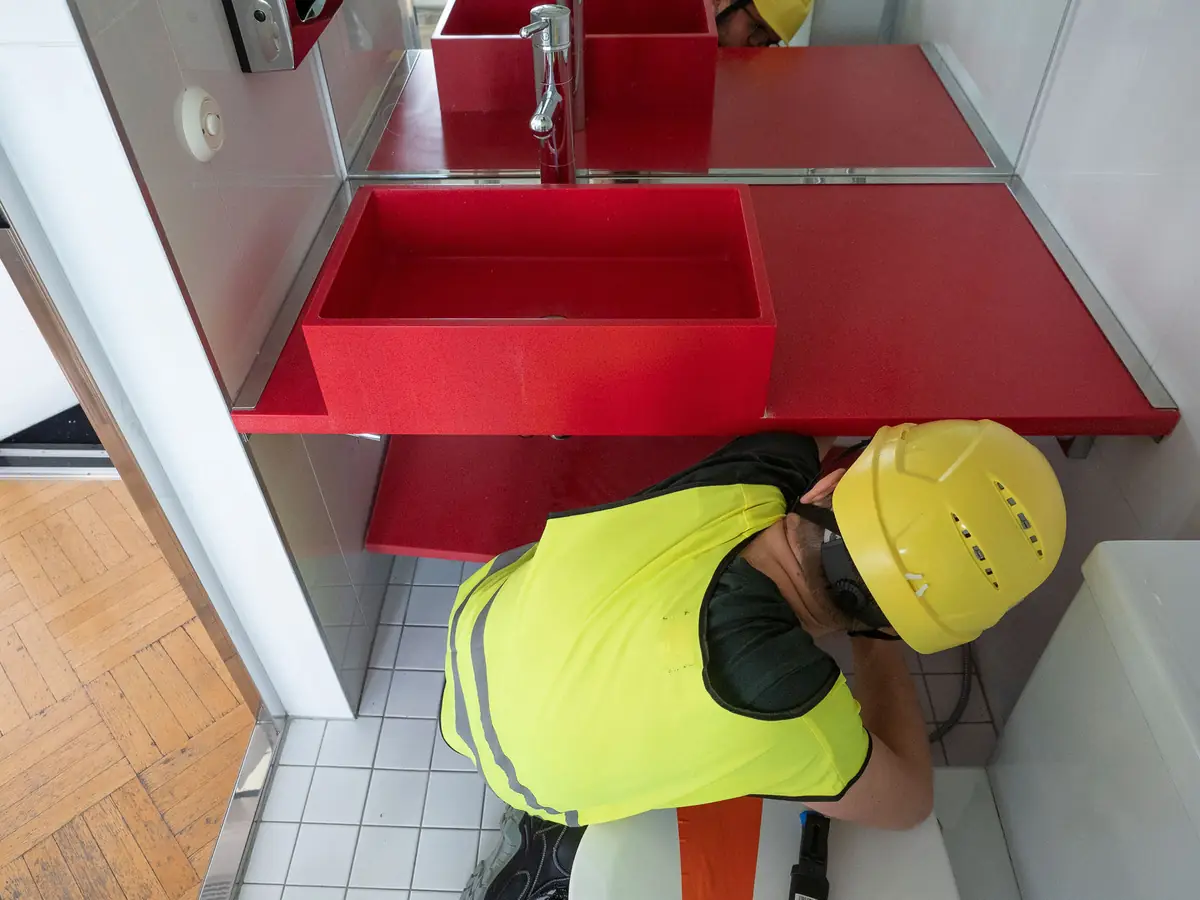
Durat worktops are made with woodworking tools from 12 mm sheets (standard format 2900 × 800 mm), which are bonded together with Durat adhesive without visible seams. This means the length, depth, edges, corners and finishes of each project can be designed freely.
To reinforce the structure, an 18 mm support panel (plywood or MDF) is fixed to the underside with silicone, giving a total thickness of 30 mm. If another thickness is needed, a 12 mm panel can be used or the support can be machined to the desired dimension, for example up to 38 mm. Worktops can also be supplied without a support panel.
Key points when specifying a Durat worktop
- Edges and fronts: the standard edge radius is 2 mm, and a moulding is added on exposed edges to conceal the support panel.
- Overhangs and supports: without a support panel, a 12 to 18 mm worktop should not overhang by more than 100 mm; wall-mounted worktops need supports approximately every 600 mm.
- Undermounted basin: at least 50 mm is recommended between the bowl and the front edge, and between 30 and 110 mm to the rear edge depending on the position of the tap and overflow.
- Flush recesses: if reinforced with double thickness, the worktop reaches at least 24 mm, something to allow for in the design of the unit and the position of the dishwasher.
- Workshop finish: sheets leave the factory sanded to P320 grit and the final sanding is done once the piece is finished. The warranty requires Durat's fabrication instructions to be followed.
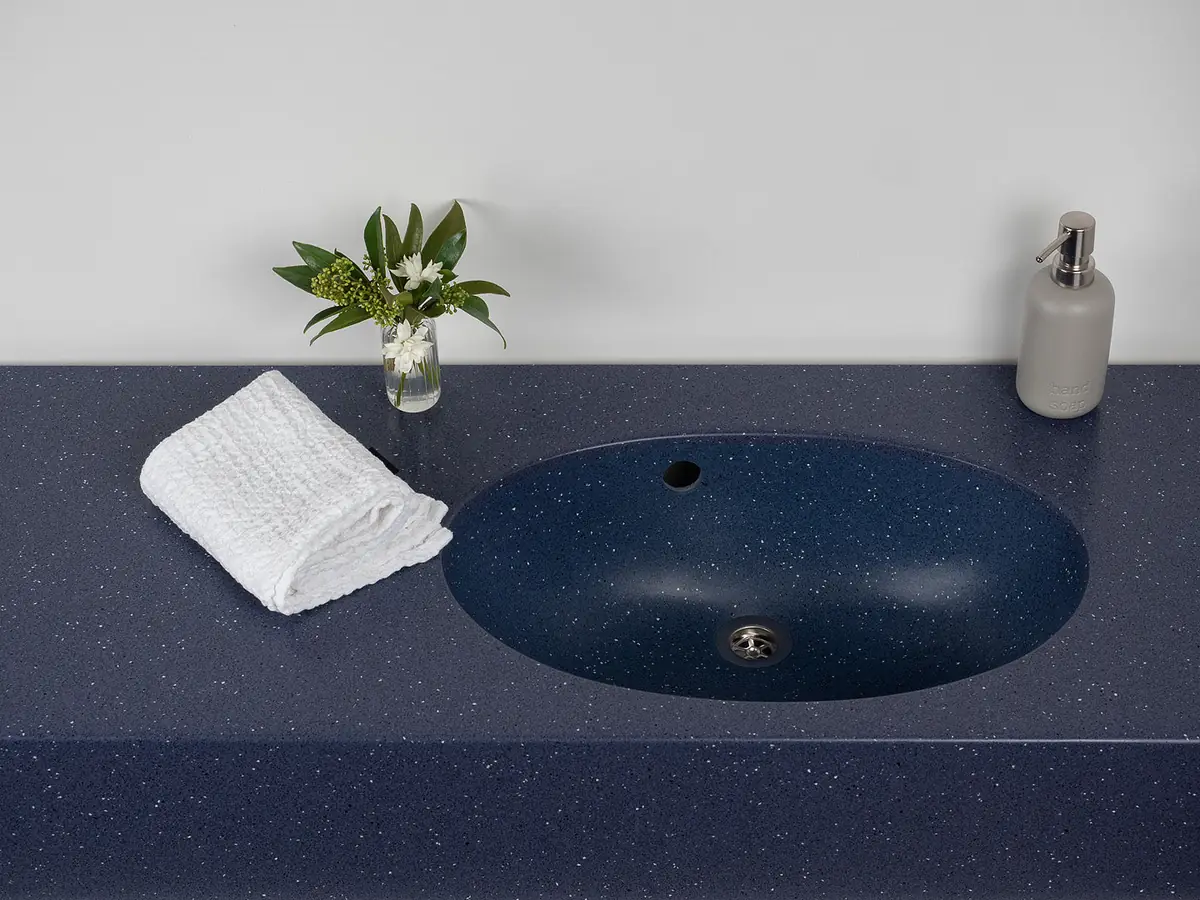
Durat offers a 15-year limited warranty against material defects. If necessary, the surface can be renewed with light sanding, and a professional can easily repair it with Durat adhesive. No special tools are required: the material is easy to work with standard woodworking tools.
Washbasins, sinks and bathtubs
Durat is also moulded into sanitary pieces that are integrated into the worktop. There are more than twenty bowl models, round, oval or rectangular, from very small up to 1790 mm long, which are joined to the underside of the sheet without seams and supplied with waste, overflow and trap. For washing up in the kitchen, the manufacturer recommends the deepest models, Block IV and Block XIV. The range is completed by washbasins, accessible washbasin units and bathtubs.
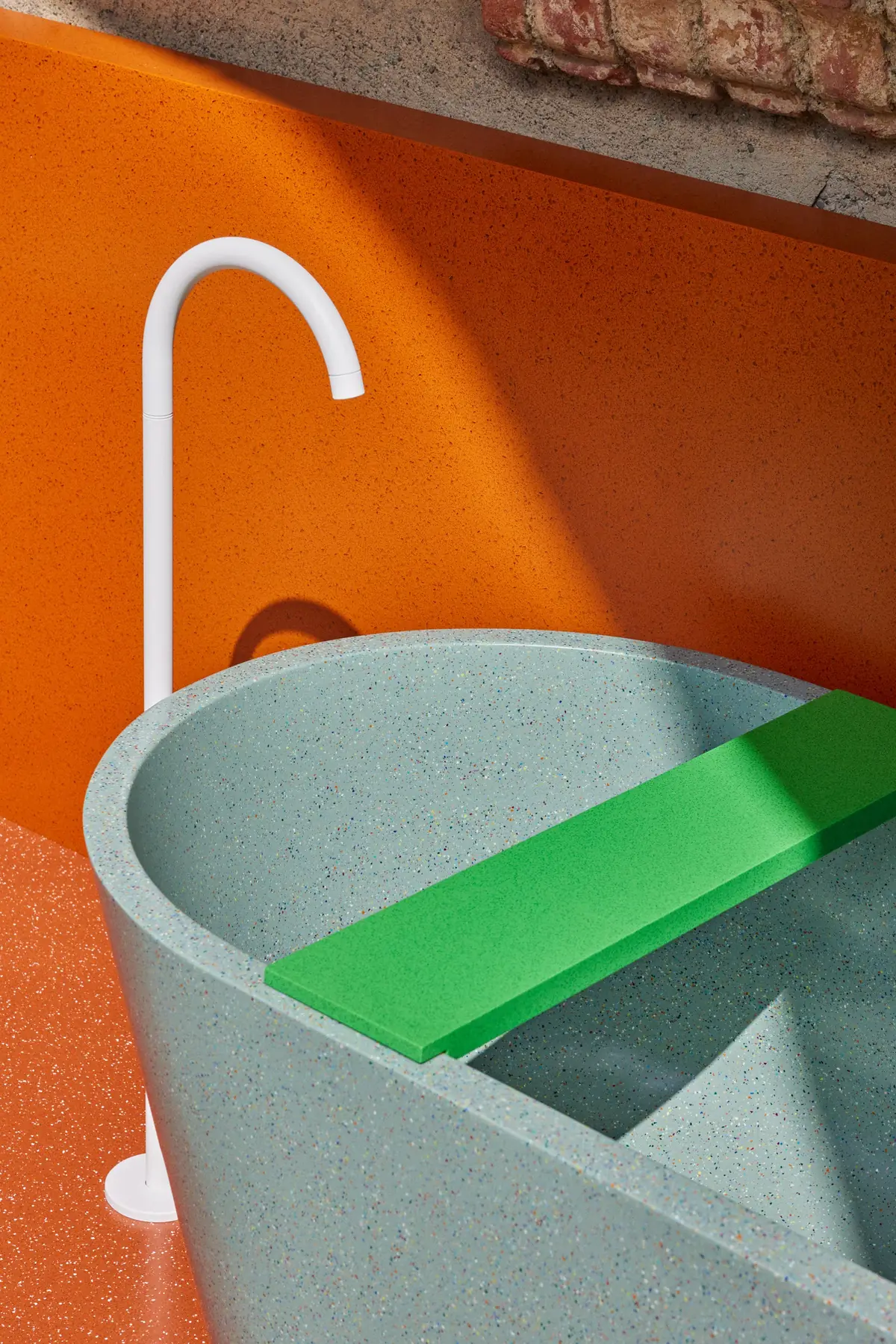
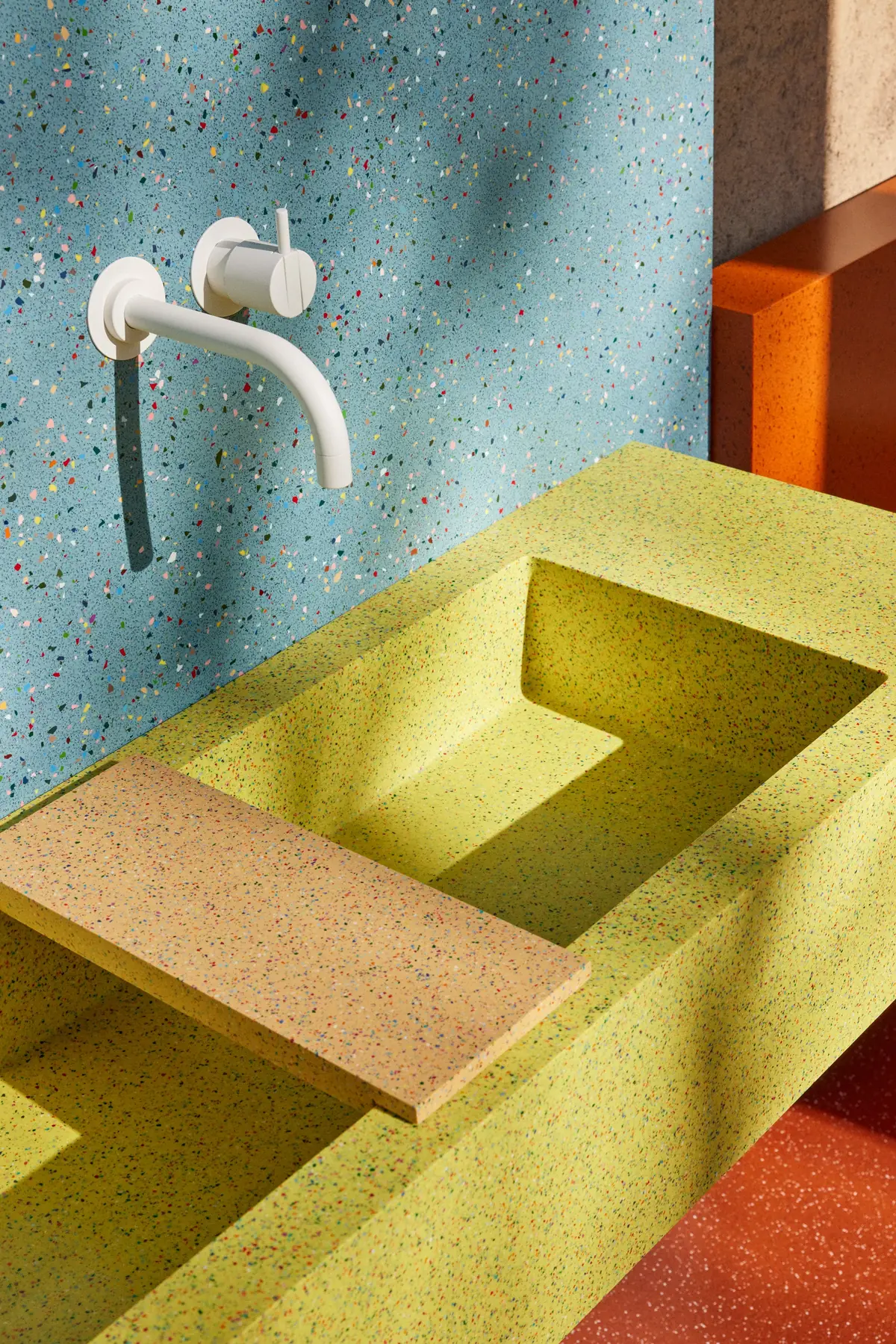
The images show Porta dei Colori, the installation with which Durat appeared at Alcova during Milan Design Week 2024: walls, benches, washbasins and bathtubs in saturated colours, designed by Linda Bergroth. Durat Plus was also shown there.
Durat Plus, the next step in the formulation
More recycled content and a more restrained look.
Durat Plus is the technical evolution of Durat's formulation. The brand presents it as the world's first commercial solid surface to combine recycled PET resin with recycled solid surface, and that recycled solid surface can come from any manufacturer. The base resin is obtained from recycled PET plastic, the same as in bottles, which significantly increases the proportion of recycled material compared with traditional Durat.
In its initial phase, Durat Plus contained around 50% recycled material; the brand now puts it at around 55%, with the aim of reaching up to 80%. According to the manufacturer, its carbon footprint is roughly half that of traditional Durat.
Visually it has an identity of its own: a uniform base colour flecked with speckles of recycled solid surface, with a subtle texture. The first edition, in white, has a more uniform and restrained overall appearance, very different from the more expressive speckle of traditional Durat.
Like the rest of the range, Durat Plus is recyclable, can be joined without noticeable seams and can be renewed or repaired. It is an option for those looking for maximum recycled content with a restrained aesthetic.
Durat Circular: buy-back, restoration and recycling
Keeping the material in use for as long as possible.
The aim of the Durat Circular service is to close the material loop. The brand undertakes to buy back disused Durat furniture for around 5% of its purchase price. If the pieces can be reused, they are refurbished, resized if necessary and sold as Circular products (for now, only in Finland); those that cannot be reused are crushed and turned into raw material for new sheets.
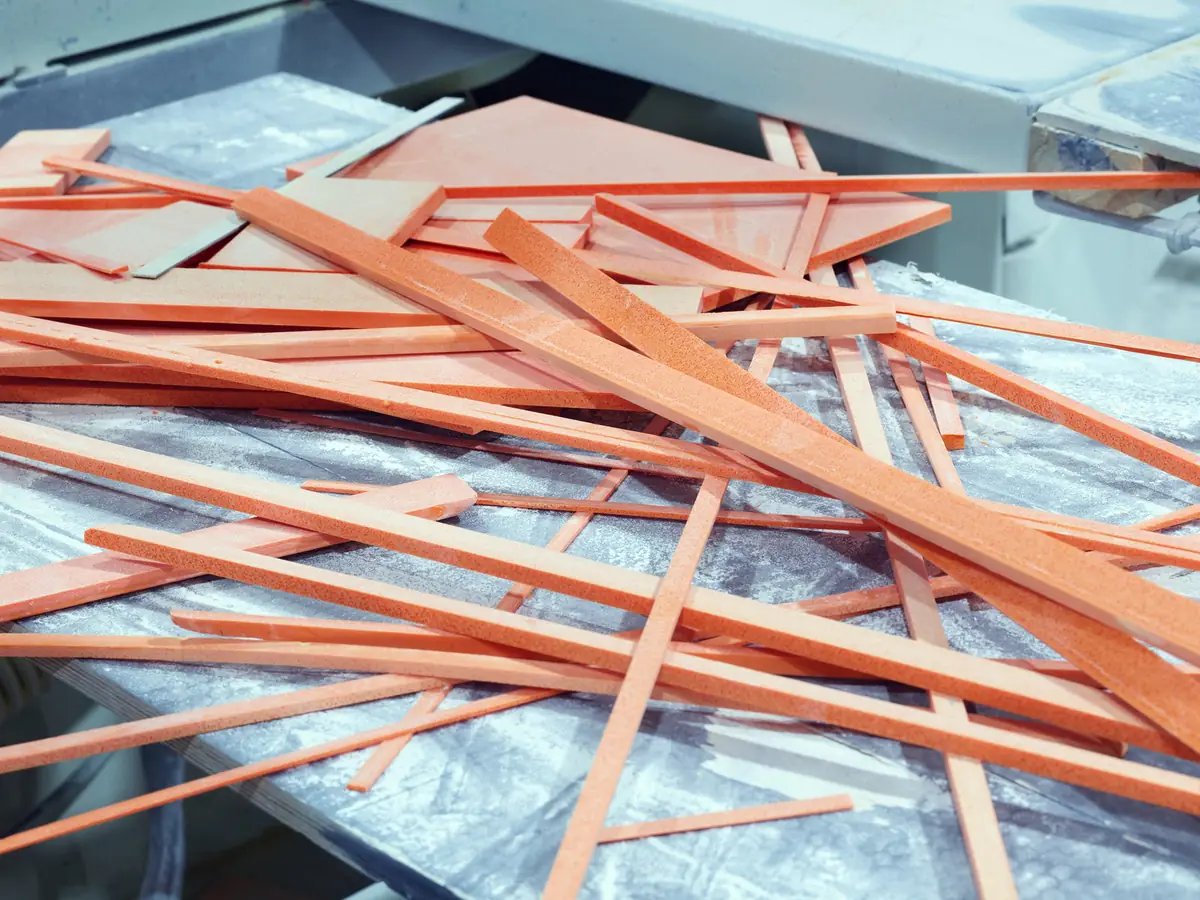
The same happens with manufacturing offcuts: Durat buys them back from the workshops that fabricate with its material in order to crush them and reincorporate them into production, with the goal of recycling 100% of its waste. In Finland, sheet orders include a box for returning offcuts.
One example is Hotel Torni in Helsinki. When its full renovation began in 2020, Durat removed the bathroom furniture the hotel had used since 2004, designed by Pirkko-Liisa Topelius for the building, restored it and put it on sale as Durat Circular products.
A manufacturer with environmental criteria
The company's commitment to sustainability took concrete form in 2023 with its first Environmental Product Declaration (EPD).
The EPD communicates the material's environmental impact transparently and reflects the brand's commitment to measuring, reducing and publishing those impacts. Durat's EPD (EPD Hub, HUB-0499), published in June 2023 in accordance with EN 15804+A2 and ISO 14025 and verified by a third party, covers the entire range and assesses the life cycle from the extraction of raw materials to end of life. In the production stage (modules A1-A3), Durat's carbon footprint is 3.35 kg CO₂e per kilo of material. The brand also has an information sheet for LEED projects.
Looking ahead, the aim is to apply the circular economy even more effectively across all areas of the company and to reduce its climate impact significantly. The brand wants to keep expanding its range of products and services with a truly circular economy in view, and is concentrating its efforts on developing new materials that increase the proportion of recycled content and make use of both its own waste and other industrial by-products.
Frequently asked questions
- How much recycled material does Durat contain?
- According to the manufacturer, standard Durat contains around 30% post-industrial recycled plastic and Durat Plus around 55%, combining recycled PET resin and recycled solid surface. Both are 100% recyclable.
- How thick is a Durat worktop?
- The usual build-up is a 12 mm sheet with an 18 mm support panel, 30 mm in total. With a 12 mm or machined support other thicknesses can be achieved, for example 38 mm, and it is also supplied without a support, with overhangs of no more than 100 mm.
- How are scratches removed?
- By sanding. Durat recommends a P1000-grit Abralon abrasive with water for light marks, starting at P360 for larger scratches and at P180 by machine for deeper damage. Dark or intense colours are finished with a light polish.
- Which cleaning products should be avoided?
- For everyday cleaning a mild soap is enough. The manufacturer advises against highly concentrated cleaners for hard porcelain and warns that Durat is not resistant to acetone or similar solvents.
- What warranty does it have?
- A 15-year limited warranty against material defects, provided the piece has been fabricated and installed according to Durat's instructions.
A solid surface is best understood with a sample in hand: the feel, the size of the speckle and the behaviour of the colour change a great deal from one finish to another. At Matter we help you compare Durat with other circular surfaces and work through its specification with your technical team.
Book your visit to Matter to talk about your project.
Book a visit