Large format, technique and beauty: a perfect match
What large-format porcelain stoneware is, which formats and thicknesses exist, how to specify it, and collections such as Storie and Matrice by Cedit.
Products5 min read
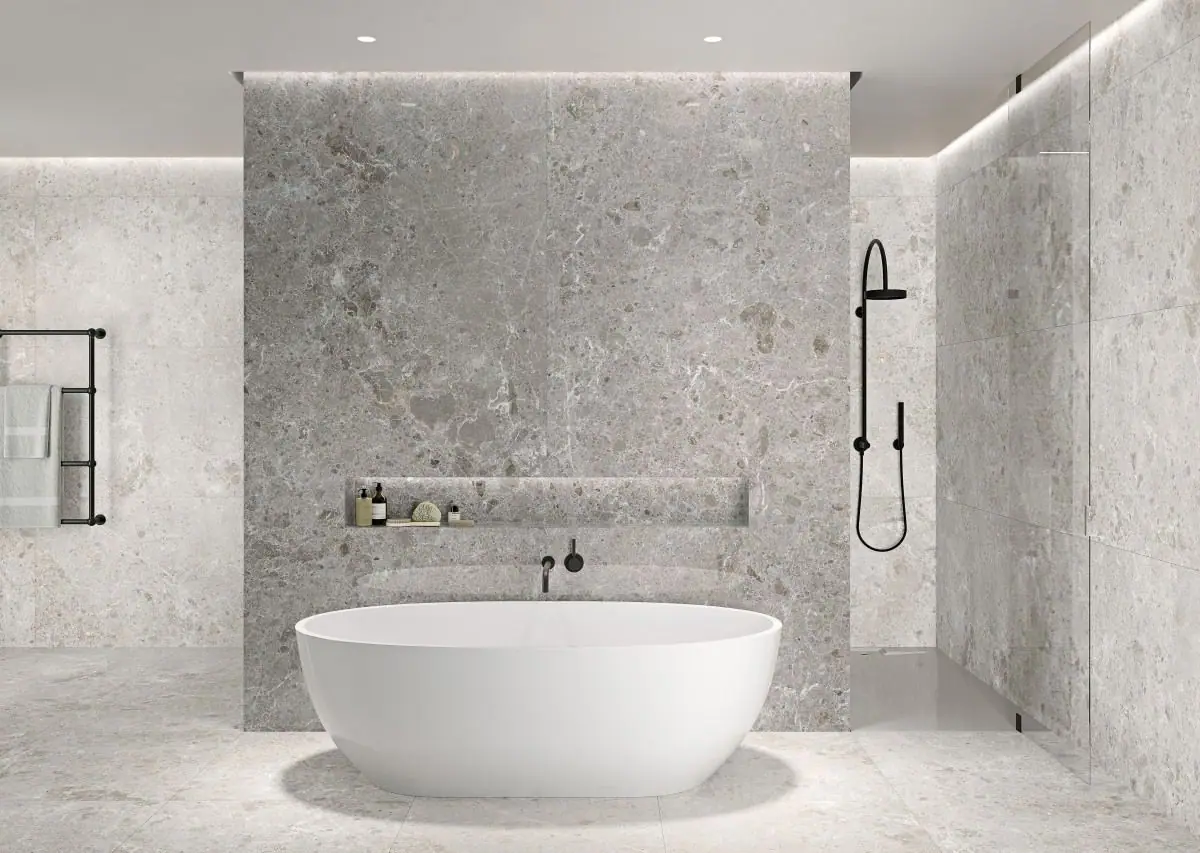
Today we discuss a very strong, durable material with very low water absorption that withstands extreme temperatures, is hygienic, resists impact and, despite its large dimensions, is light for its size. It is large-format porcelain stoneware, a material that combines beauty and technology and has changed the way floors, walls and façades are designed.
In this article we look at what it is and why it is a good choice for an architecture or interior design project, which formats and thicknesses exist, what to plan for when specifying it, and some collections that put it into practice: Storie and Matrice, by Cedit, and the Matter Anoat, Matter Nebula and Matter Marizia collections.
What large-format porcelain stoneware is
Porcelain stoneware is made from finely ground clays, feldspars and sands, which are pressed, dried and fired at temperatures above 1,200 °C. The result is a very compact tile, with water absorption equal to or below 0.5% (group BIa of the UNE-EN 14411 standard). That low porosity explains its resistance to frost, stains and wear, and its great durability.
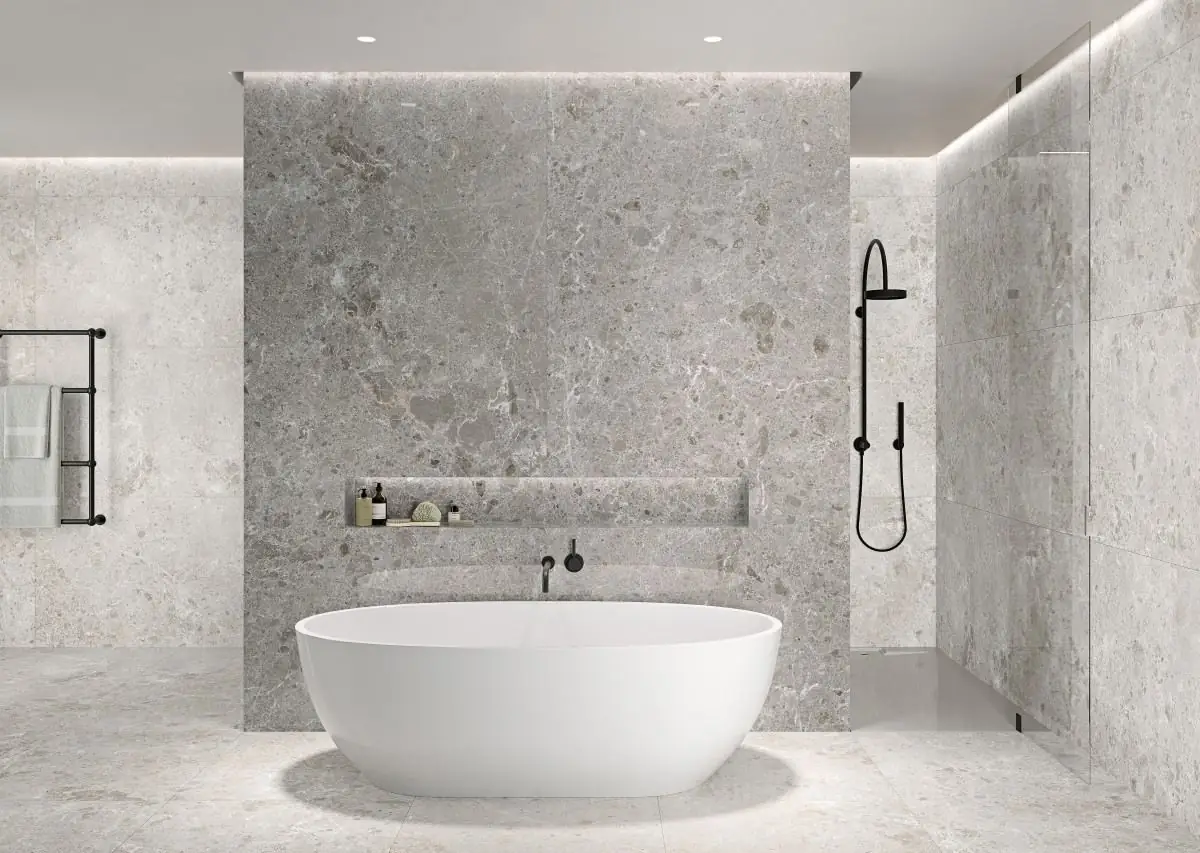
Large format refers to tiles whose longer side exceeds 70 cm, but today the term is mostly associated with slabs of 120×240 cm and above. Thanks to these dimensions, the material can cover large surfaces with very few joints, unify a space and create sober, elegant atmospheres with very few pieces. And although the slabs are large, their thin profiles (from around 3 mm to 20 mm) reduce weight and make handling and laying easier.
Why choose it for a project
Beyond its technical performance, one of the reasons large-format porcelain is an excellent choice is the range of looks it can take: its versatility multiplies its possibilities. These are its main advantages:
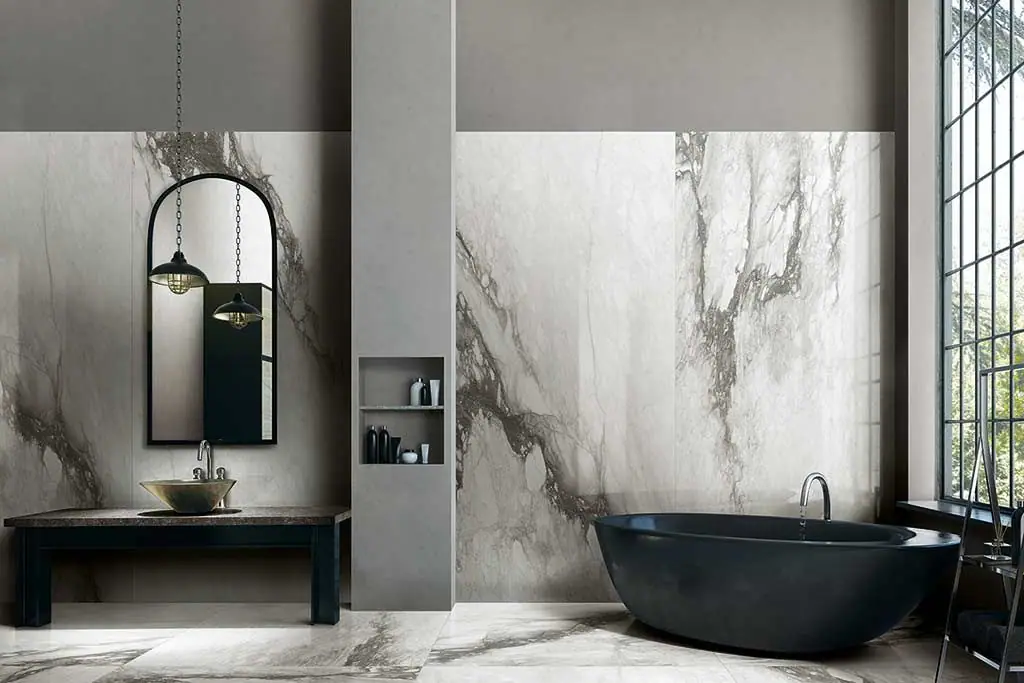
- Few joints: large slabs allow walls and floors to read as continuous planes and the veining or movement of the material to be followed from piece to piece.
- Relative lightness: with thin profiles, a large slab weighs less than one might expect and can even be laid over existing finishes.
- Interior and exterior: thanks to its low absorption, it can clad façades, cover a terrace or be used in wet areas exposed to extreme temperatures.
- Minimal maintenance: it needs no treatments or sealing, and with fewer joints there is less surface where dirt builds up.
- Aesthetic variety: stone, marble, cement, renders or designer graphic surfaces, all with the same technical performance.
What to bear in mind when specifying it
Laying a large-format slab properly requires more precision than a conventional tile. Laying guides based on the UNE 138002 standard set out these key points:
- Flat substrate: the recommended flatness tolerance is ±1.5 mm; if it is exceeded, the substrate must be levelled before laying.
- Deformable adhesive: improved (C2) and deformable cementitious adhesive; for slabs of more than 1 m² or with a longer side of 120 cm, highly deformable (S2).
- Double spreading: adhesive on the substrate and on the back of the slab, then beating in to expel the air.
- Minimum joint: at least 2 mm, increasing it according to the size of the piece and the use, and always respecting perimeter, structural and expansion joints.
- Façades: the designer must assess whether additional mechanical fixings are needed.
Cedit: large format with a designer’s signature
Among the large-format porcelain collections that can fill a space with life and character are those by Cedit. Founded in 1947 in Lurago d'Erba (Italy), the brand worked with designers such as Ettore Sottsass and Enzo Mari, and in 2016 the Florim group relaunched it, drawing on its expertise in large ceramic slabs. Cedit is known for its collaborations with architects, designers and artists, which result in original designs of great aesthetic richness.
Storie — Giorgia Zanellato & Daniele Bortotto
The marks of time, translated into ceramics.
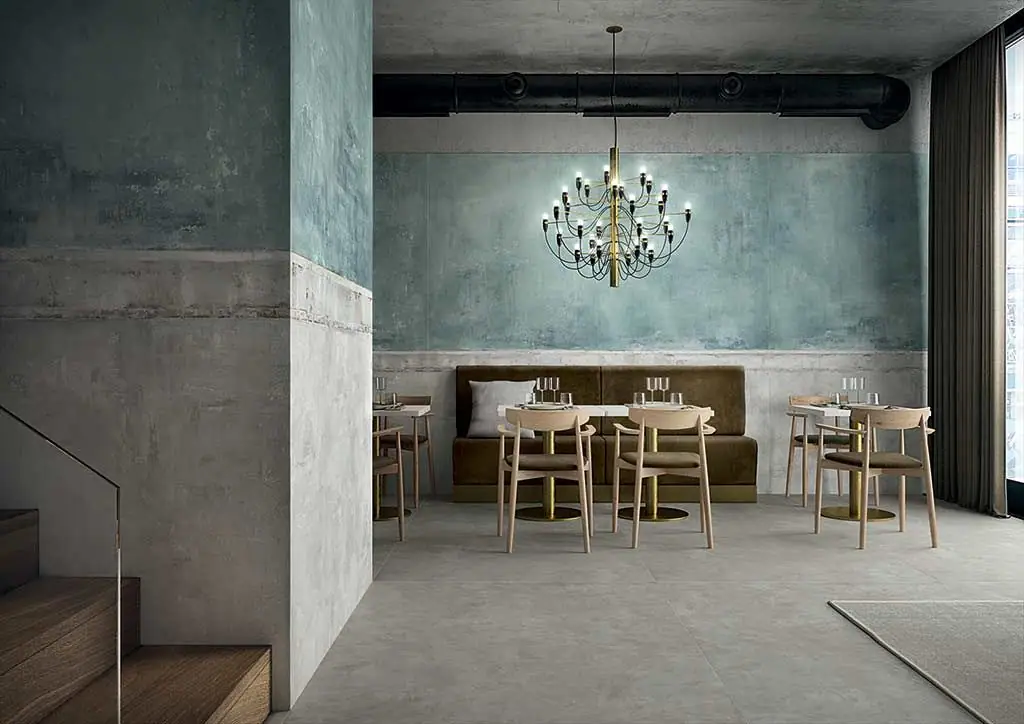
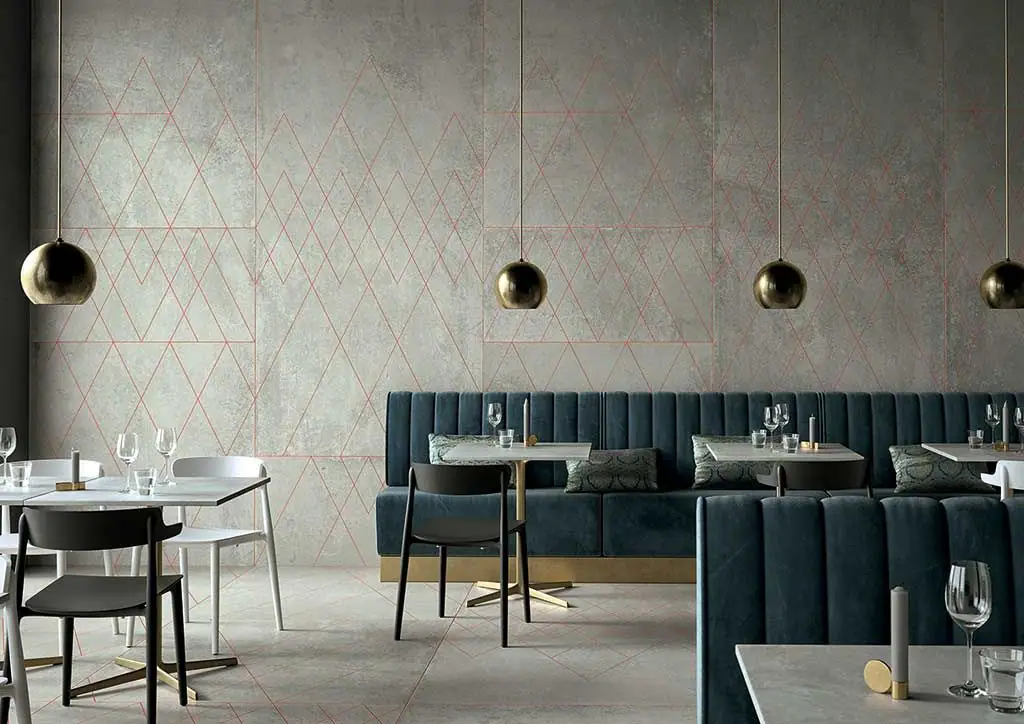
The Storie collection, designed by Giorgia Zanellato and Daniele Bortotto, is intended for interior surfaces and, in some cases, exteriors too. It blends pigments to achieve highly expressive gradations of colour, inspired by the slow wear of renders and wall decorations in traditional Italian architecture. A single piece measures 120×240 cm, and its design fills the space with expressiveness and delicacy.
In its current product sheet, Florim offers it 6 mm thick with a matt finish, in 60×120, 120×120 and 120×240 cm formats, and in six colours: Cascina, Palazzo, Masseria, Castello, Villa and Casale.
Matrice — BRH+ (Barbara Brondi & Marco Rainò)
The expressiveness of concrete in modern architecture.
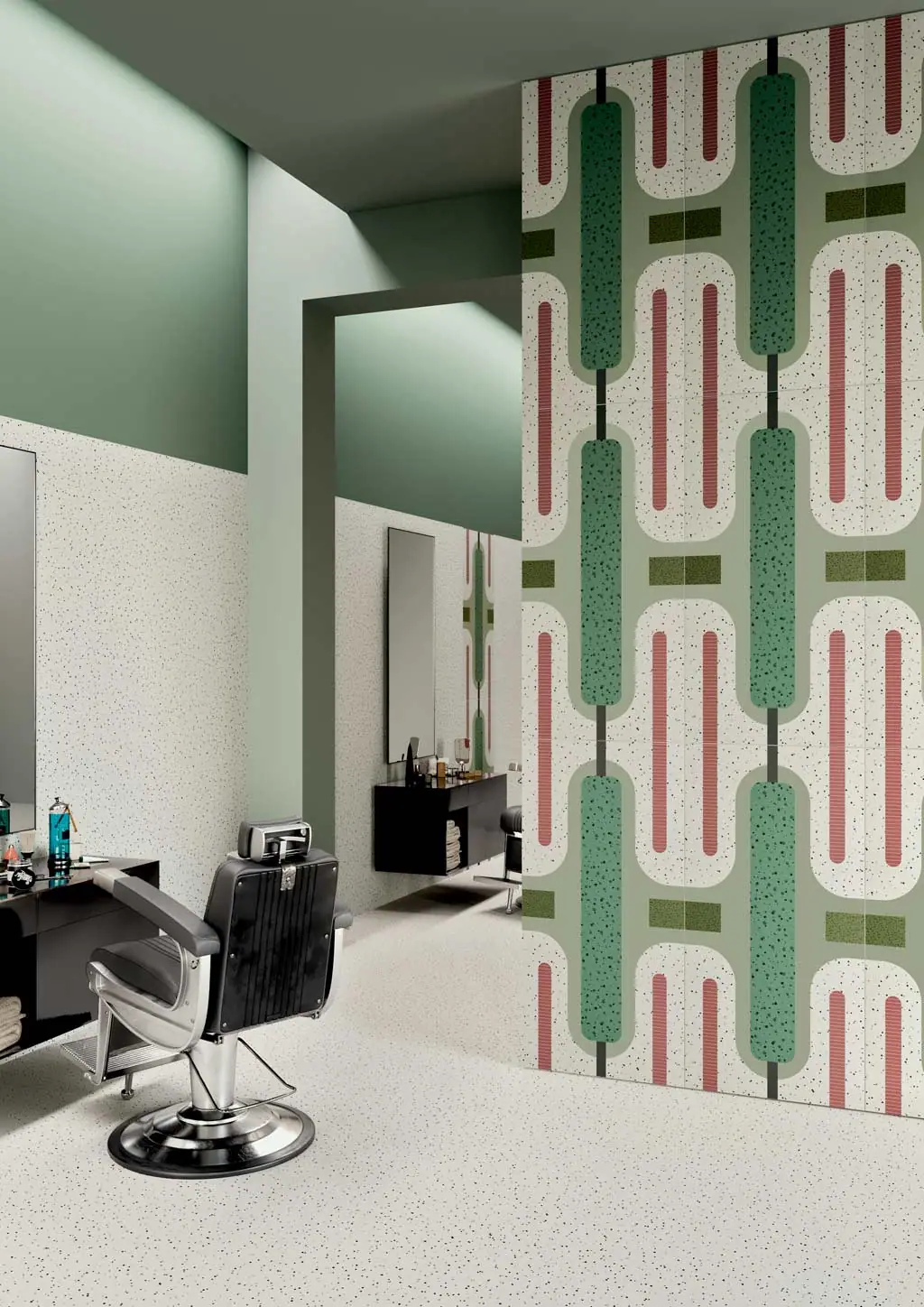
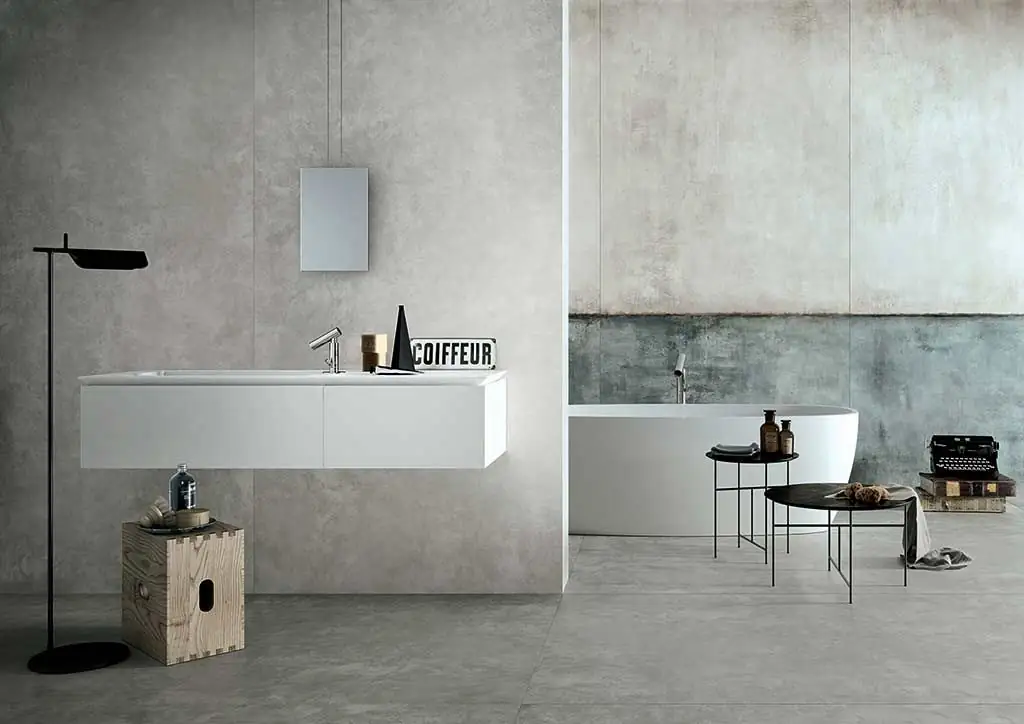
Matrice, by the architects Barbara Brondi and Marco Rainò (BRH+ studio), takes Italian modern architecture and exposed-concrete compositions as its starting point. To that sober base it adds a repertoire of graphic marks inspired by the gestures of weaving and embroidery, which can be combined in many ways. In its current product sheet, Florim presents it in 6 and 9 mm thicknesses, a matt R9 finish and formats from 60×120 to 120×240 cm.
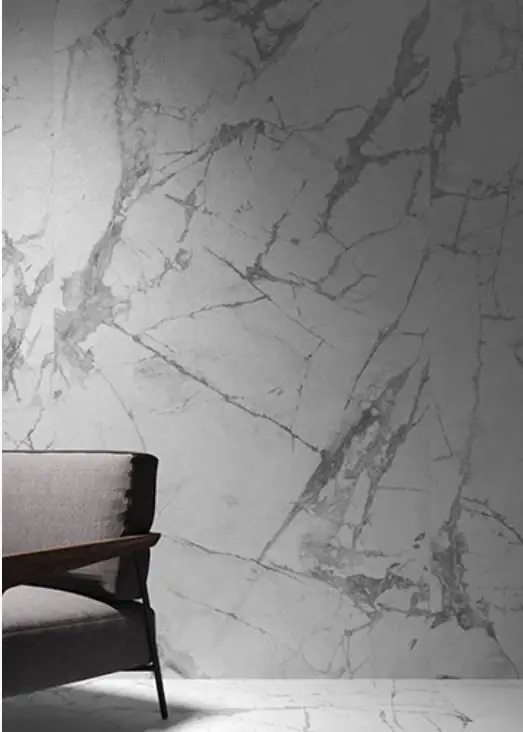
Large-format marble effect: Matter Marizia
Other collections are based on very precise reproductions of marble, such as the Matter Marizia collection. On large-format slabs the veining can be seen running through the material from piece to piece, and the effect is especially interesting when doors and cabinets are clad in the same material as the walls: the whole reads as a single block of stone.
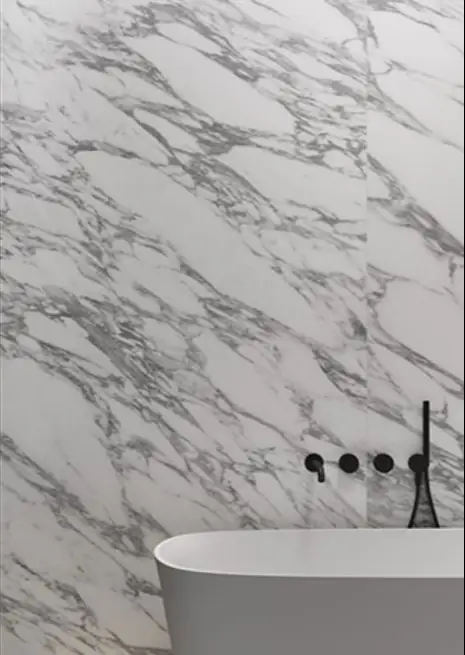
A material of our time
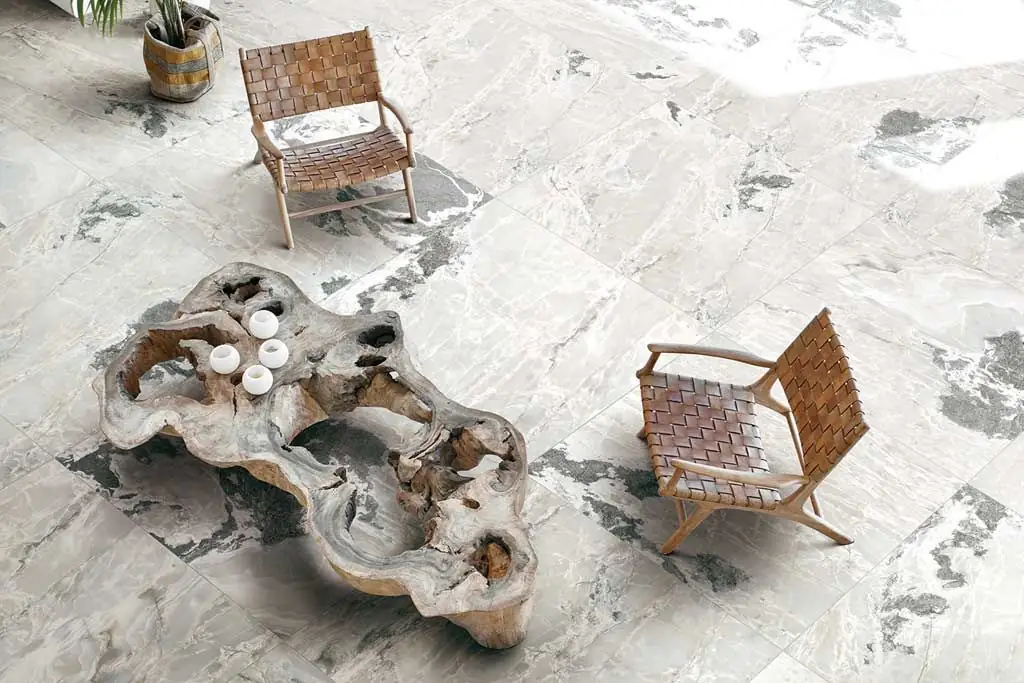
Large-format porcelain also makes it possible to give a project a contemporary edge, making the most of what ceramics can offer today. A large-format project is a project of today, one that speaks of the times we live in.
Frequently asked questions
- From what size is a tile considered large format?
- Laying guides based on UNE 138002 treat as large format any tile with a longer side of more than 70 cm. In practice, the term refers to slabs of 120×240 cm and above, up to formats of 160×320 cm.
- Which thickness should I choose?
- It depends on the use. Thin profiles, of around 3 to 6 mm, are used mainly for wall cladding, furniture and refurbishments over existing flooring; intermediate thicknesses for interior floors; and 20 mm for exteriors, for example on pedestals or gravel. Always confirm it in the product sheet of each collection.
- Can it be used outdoors and on façades?
- Yes, thanks to its low water absorption and frost resistance. On façades, the designer must assess whether mechanical fixings or a ventilated façade system are needed, and choose a collection suitable for exterior use.
- Can it be laid without a joint?
- No. Laying guides recommend a joint of at least 2 mm, increasing with the size of the piece and according to the use. With rectified pieces and a joint in the same tone, it is barely noticeable.
We encourage you to try large-format porcelain for the technical and aesthetic performance it offers: an excellent material to enhance a project. The size, the feel of each finish and the effect of the joint are far better appreciated at full scale than in a catalogue.
Book your visit to Matter and ask our team about the large-format collections that best suit your project.
Book a visit