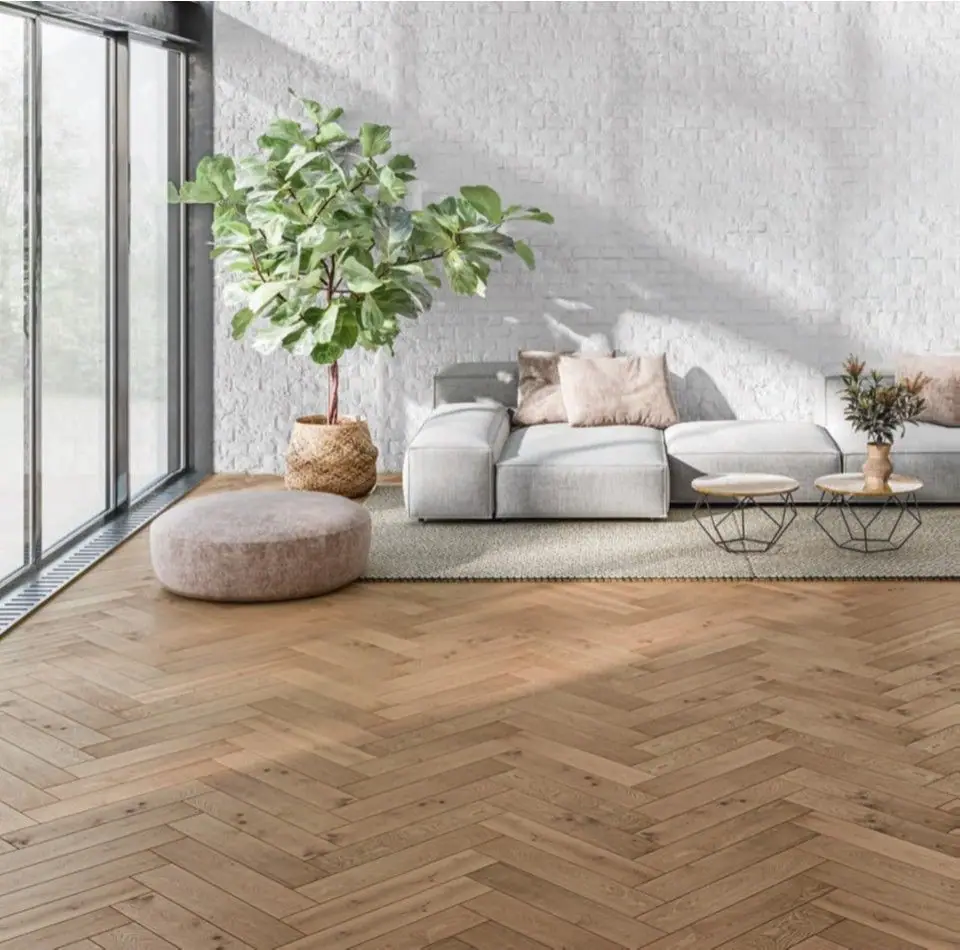
Large-format Finnish wood floorboards
What Timberwise wood floors are like: wide oak, ash and larch boards on a birch core, their formats, finishes and key design points.
Products6 min read
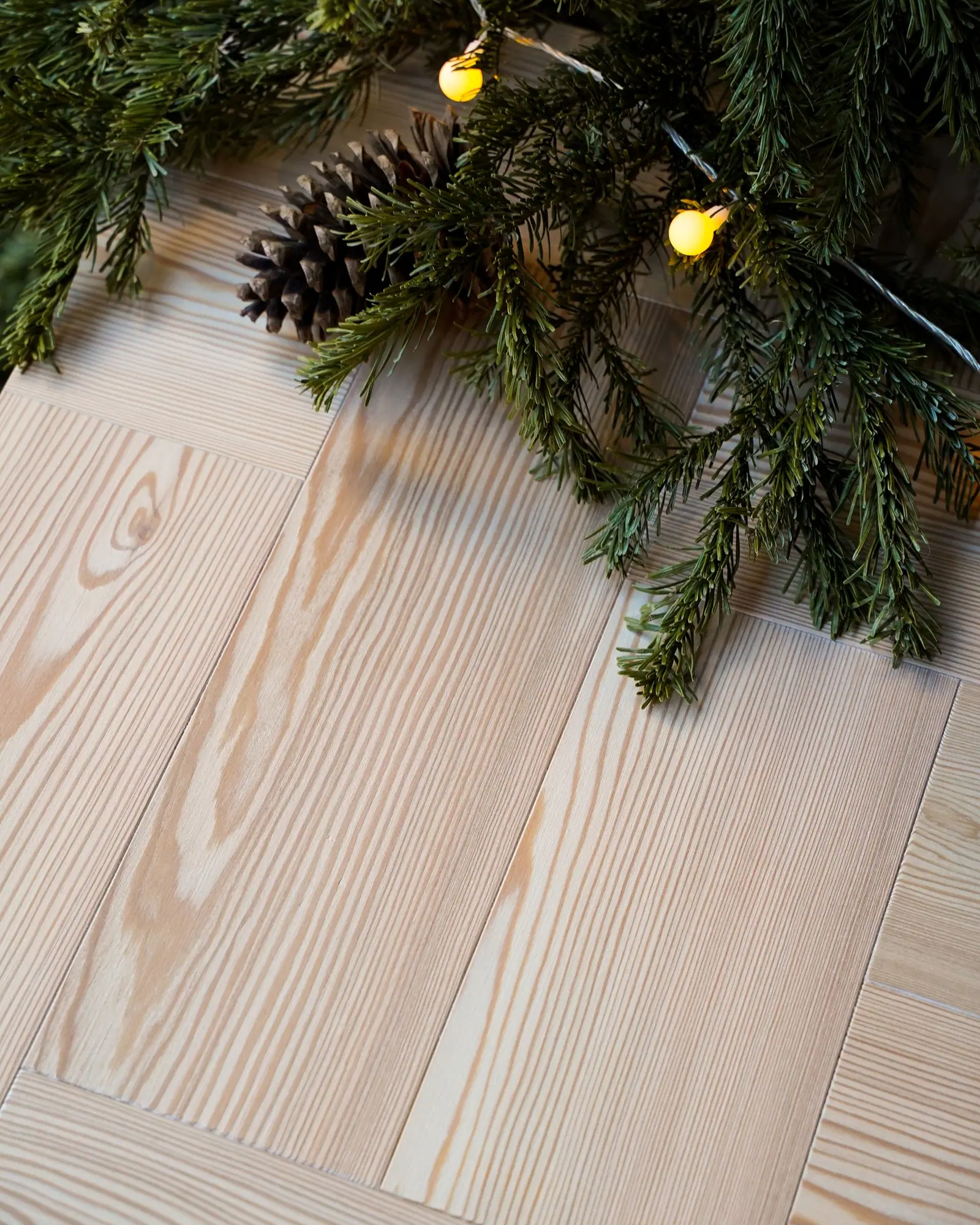
Timberwise wood floors are made of high-quality European oak, ash and larch on a core of Finnish birch plywood. The company selects its raw material to strict quality criteria and works each piece in its own factory, from the moment it arrives as a rough board until it becomes a finished floorboard, intended mainly for domestic spaces. The aim is a floor that lasts generation after generation.
In this article we look at how these large-format boards are built, which widths, lengths and species Timberwise offered when we presented them, which finishes they take, what indoor air quality guarantees the manufacturer provides and what to bear in mind when specifying them.
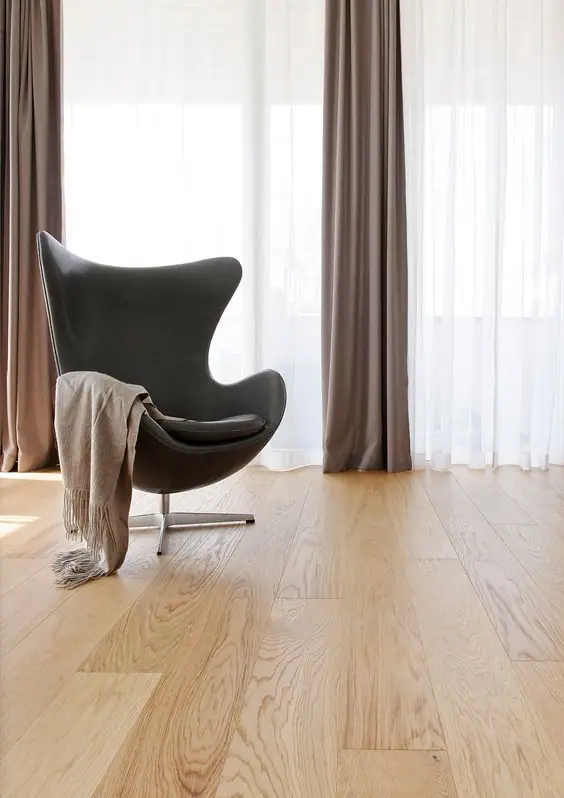
Timberwise: wooden floorboards made in Finland
Timberwise is a Finnish family company founded in 1999 in Loimaa, in western Finland, where it still makes its boards. They are produced there from top-quality raw material, combining traditional Finnish joinery with highly automated industrial processes.
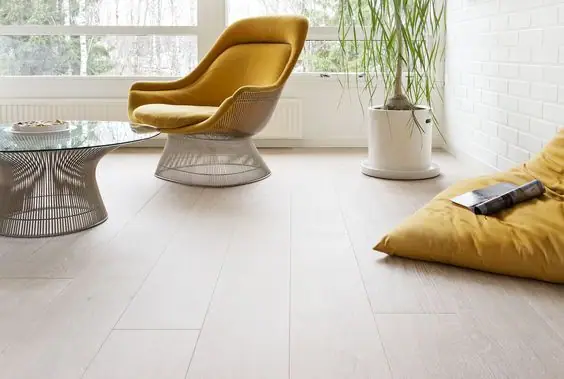
They are wide planks, with micro-bevels on all four sides and a range of colour and surface options. Timberwise offers both hardwoods (oak and ash) and softwoods (larch), several widths and a very wide range of tones, from natural to white and from mid tones to the darkest. That variety makes it possible to find a suitable wood floor for minimalist or classic interiors, for houses and apartments, and also for offices and restaurants.
Three layers with a birch plywood core
The key to these large-format pieces lies in their section. Each board has a three-layer cross-bonded structure: a top layer of hardwood or larch (oak, ash or larch), a 9 mm Finnish birch plywood core and a balancing veneer on the underside.
According to the manufacturer, this construction considerably reduces the wood’s movement in response to changes in humidity and temperature, compared with solid boards or two-layer floors. The birch plywood core, a hardwood, is more stable than softwood plywood or the usual lamella cores: the surface stays flat, with no cupping, and the balancing veneer allows floating installation. Timberwise also states that birch plywood improves sound insulation and protection against moisture.
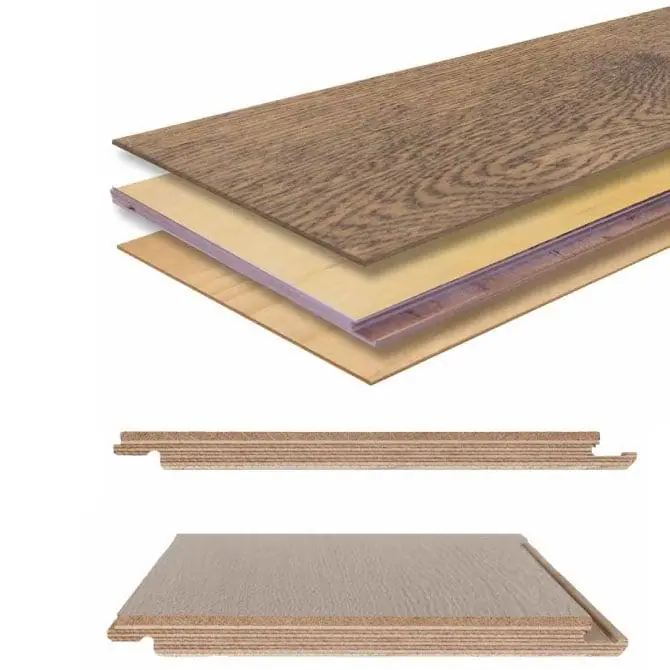
The glued joints are tested periodically using the bonding test of the Japanese JAS1 standard, which involves boiling samples in water for several hours. According to Timberwise, the joints hold without the top layer coming away, which makes these boards suitable for climates with sharp seasonal changes in temperature and humidity.
Formats and species
Timberwise works with long, wide boards, and each pack contains boards of a single length, with no random mix of sizes. These were the formats in its range at the time of this article:
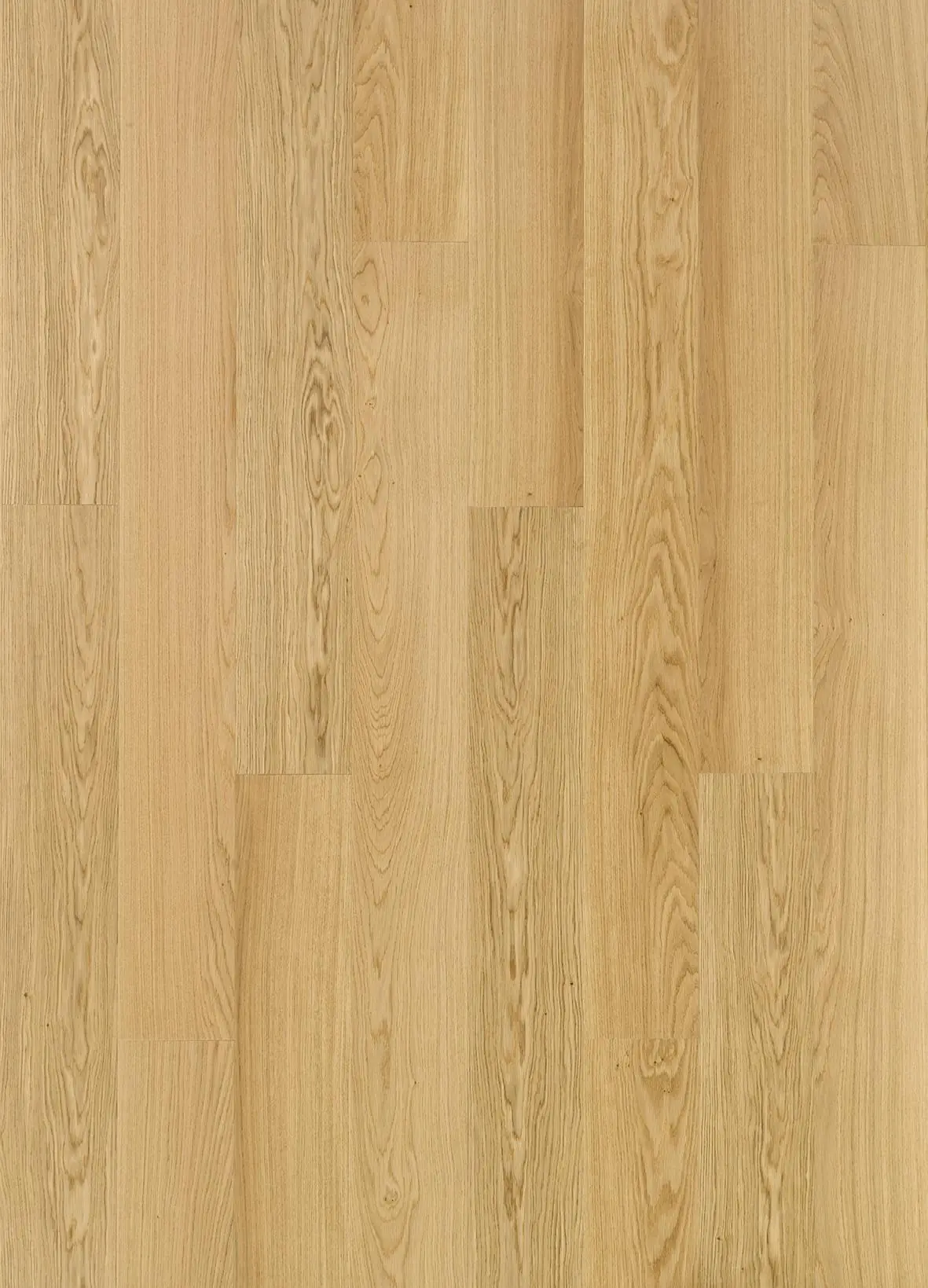
The edges have 0.7 mm micro-bevels on the long sides and 0.5 mm on the ends: they define each plank without collecting dirt. Brinell hardness indicates how well each species resists impact and wear: the higher, the better. Ash and oak are the hardest; larch is a conifer, but harder than other softwoods.
Grades of each species
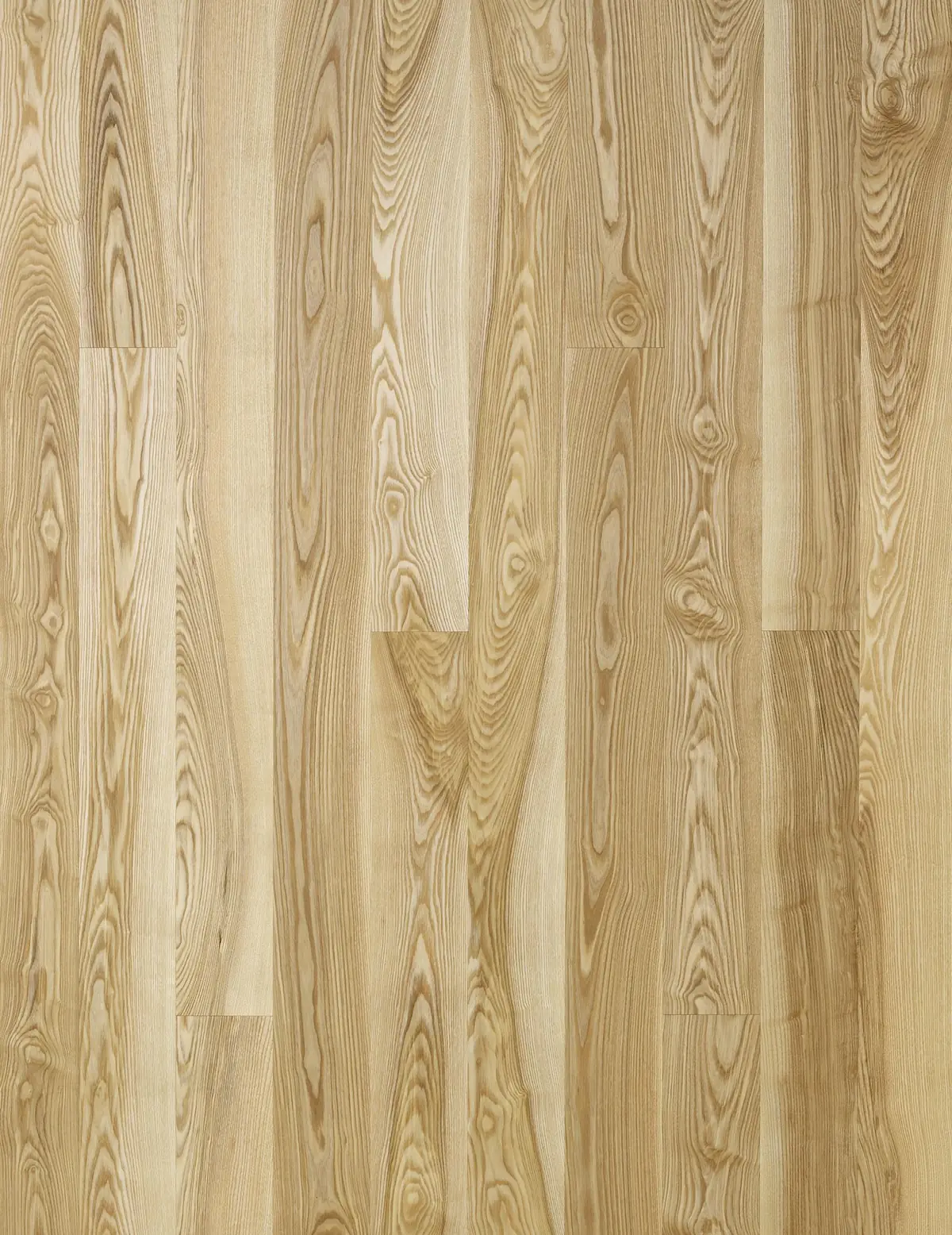
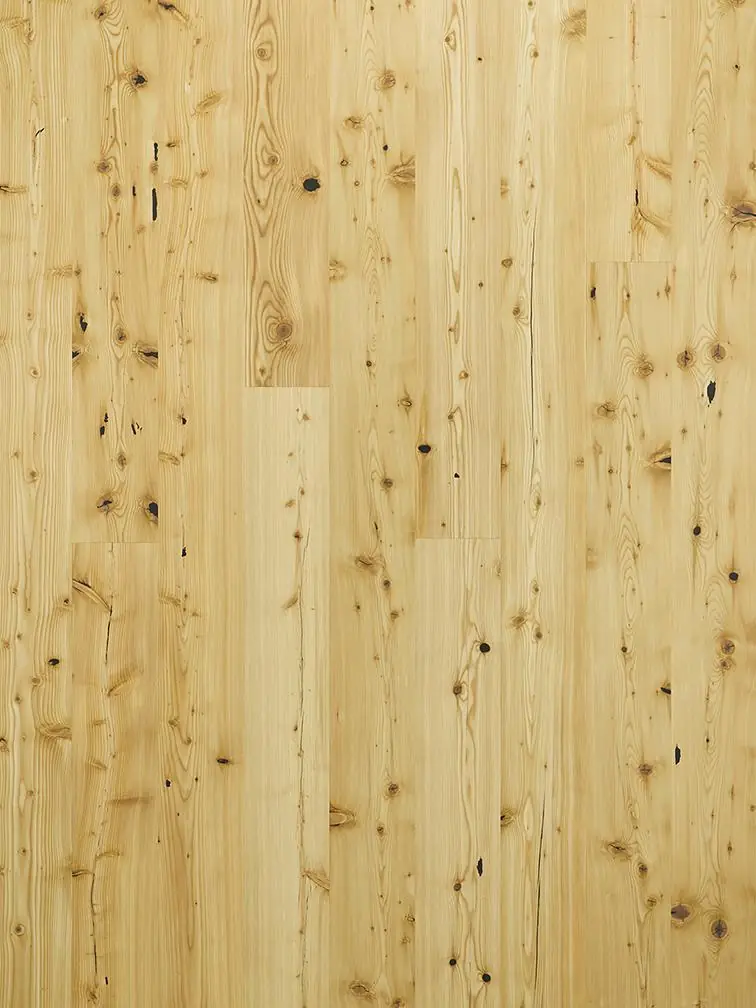
Each species is offered in several grades, from the most uniform to the most rustic:
- Oak: Select, almost knot-free and even in colour; Classic, with grain, colour variation and small visible knots; Vintage, with knots and cracks filled in black.
- Ash: Select, even in tone; Classic, slightly darker and with small knots; Olive, with the dark heartwood that gives it its name and wide variation between boards.
- Larch: Select, calm and almost knot-free; Natural, with knots and strong colour variation; Vintage, with knots and cracks filled in black and a rustic look.
Finishes: colour without exotic woods
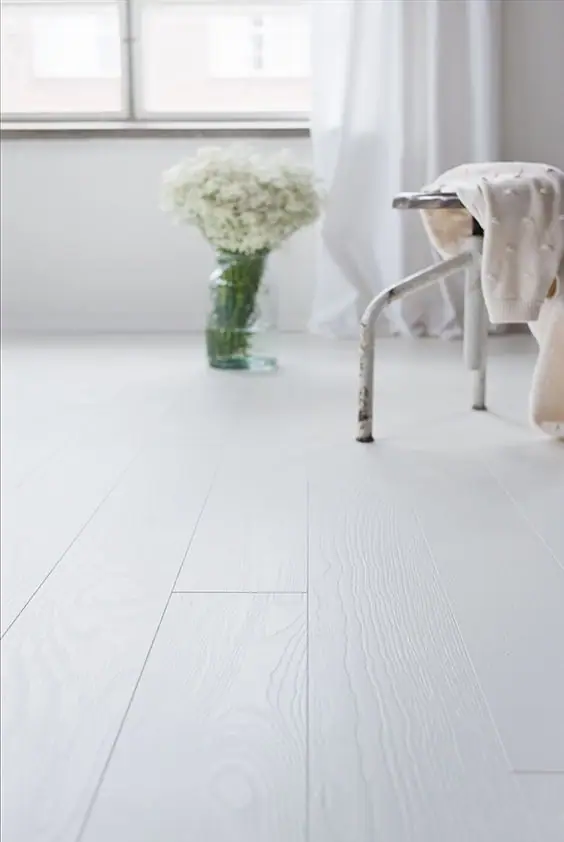
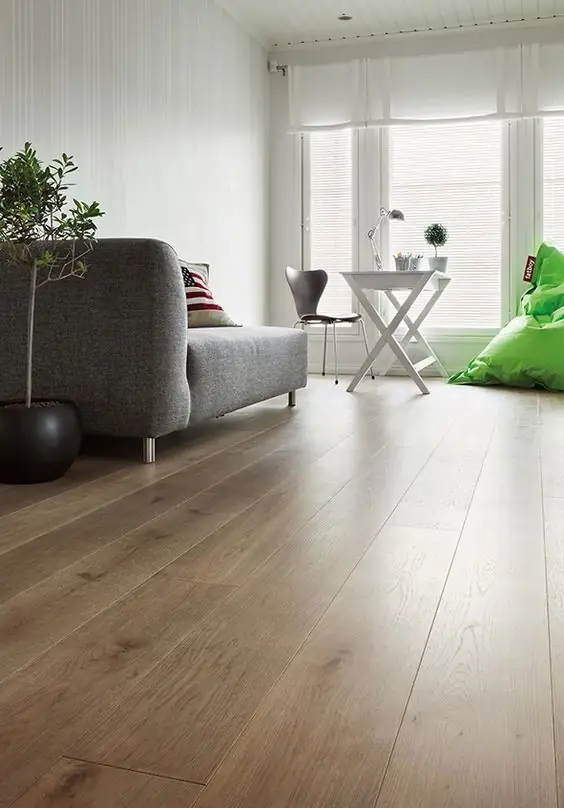
Timberwise boards come in different tones and finishes thanks to the treatments applied to their surfaces. Timberwise does not use exotic or endangered wood species: dark tones are achieved with stains applied to oak, ash and larch. The natural qualities of the wood are accentuated by sanding or brushing, and the surface is protected with UV-cured oil-wax or with lacquer.
- Sanded: a smooth, even surface with an elegant look. With oil it is more sensitive to scratches, so the manufacturer does not recommend it for high-wear areas.
- Brushed: raises the grain and leaves the texture of the wood visible. Timberwise uses nylon brushes rather than steel ones, and recommends it for homes with children or pets because it hides marks better.
- UV-cured oil-wax: a matt or satin finish with a natural look, which is non-slip and can be repaired in patches. It leaves the factory ready to use.
- Lacquer: more resistant to wear, suitable for hallways and kitchens. Timberwise offers it in three gloss levels: normal (25), matt (10) and extra matt (5).
A floor designed with indoor air in mind
The floor is one of the largest surfaces in a home, which is why Timberwise has made indoor air quality one of its product criteria. According to the manufacturer, its boards are made with adhesives and finishing products that are entirely formaldehyde-free; formaldehyde is a substance that can irritate the eyes and airways. Their formaldehyde emissions are a tenth of the limit set by the Finnish M1 classification, which they also hold.
The products carry the allergy label of the Finnish Allergy, Skin and Asthma Federation (Allergia-, Iho- ja Astmaliitto). They also comply with the European parquet standard EN 13489, are CE marked and achieve class F**** under the Japanese JAS standard, the lowest in formaldehyde emissions.
As for the origin of the wood, Timberwise works mainly with PEFC- and FSC-certified raw material: the oak, ash and larch come mostly from Central Europe, and the birch plywood from Finland.
Key points for specifying Timberwise
These are the manufacturer’s recommendations worth reviewing at design stage:
- Floating or glued installation: boards with the WiseLoc tongue and groove are laid one by one as a floating floor and require a very flat subfloor (±2 mm over 2 m). The 270 mm wide boards only have a traditional tongue and groove and are glued to the subfloor.
- Large areas: for floating floors, Timberwise sets a reference of about 8 m across the boards and about 10 m along them; beyond that, expansion joints are needed. A gap of at least 10 mm must be left around the perimeter.
- Underfloor heating: it is compatible provided the floor temperature does not exceed 27 °C. Larch is only recommended with a stable relative humidity of 40-60%.
- Use: oak and ash are suitable for homes and for restaurants, hotels or offices; larch is reserved for rooms with lighter use, such as bedrooms, galleries or museums.
- Fire: the standard class is D(fl)-s1. To order, lacquered boards with a birch core glued to the subfloor can achieve C(fl) or B(fl)-s1 with a factory fire-retardant treatment.
Frequently asked questions
- Are Timberwise floors solid wood?
- No. They are multilayer boards: a wear layer of about 3 to 3.5 mm on a 9 mm birch plywood core and a balancing veneer. This structure is more stable than solid boards when humidity changes.
- Can they be laid over underfloor heating?
- Yes, according to the manufacturer, provided the floor temperature does not exceed 27 °C and does not routinely fluctuate by more than 2 °C. In the case of larch, only if a stable relative humidity of 40-60% is guaranteed.
- Do they use adhesives containing formaldehyde?
- No. Timberwise uses formaldehyde-free adhesives and finishing products across its whole range, and its boards hold the M1 classification and JAS class F****.
- Which finish is best in kitchens and hallways?
- The manufacturer recommends lacquer, which is more resistant to wear. If oil-wax is chosen, it advises applying a maintenance coat after installation in kitchens, hallways and public spaces.
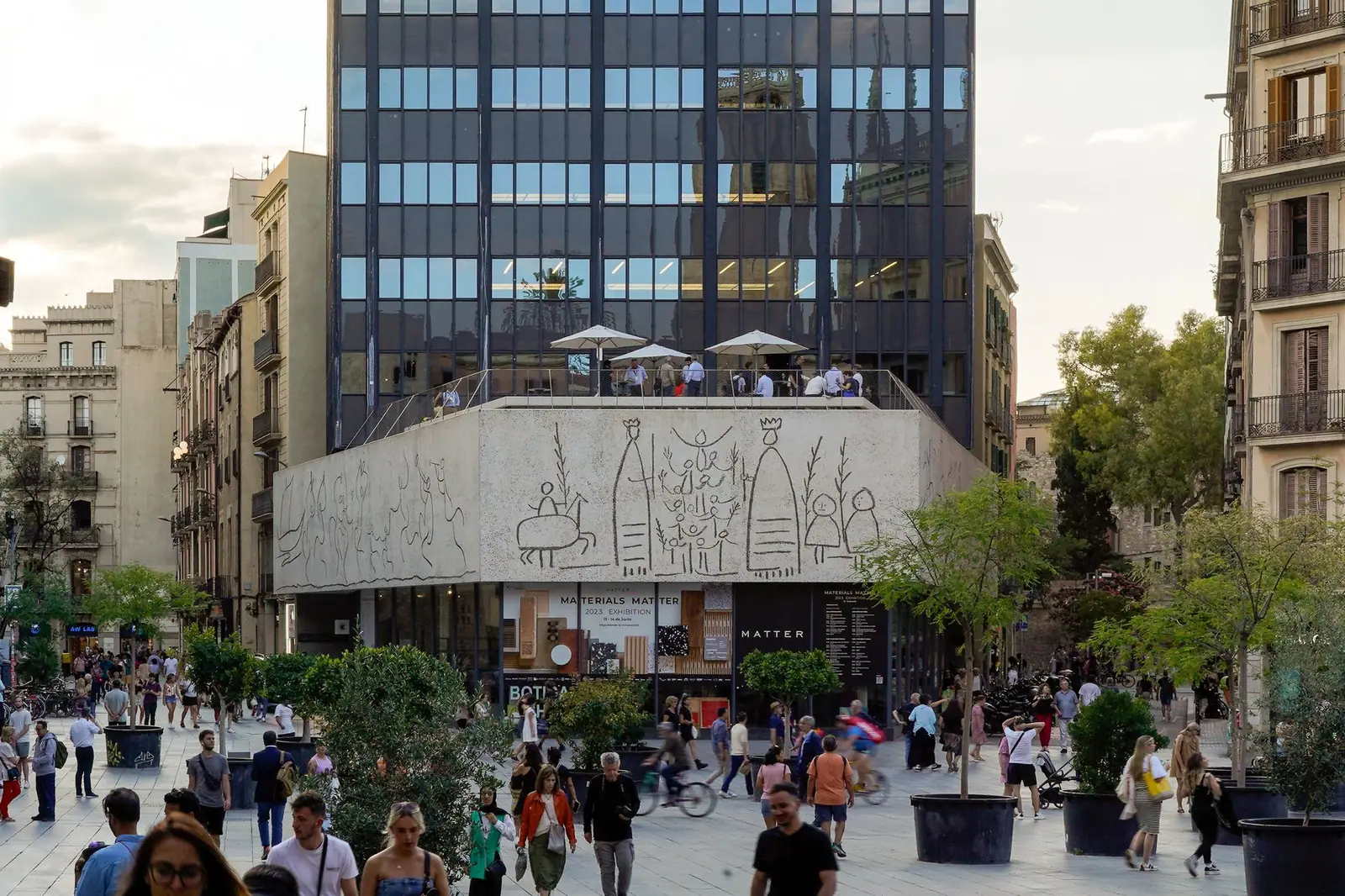
Wood needs to be seen and touched: grain, brushing or the sheen of a lacquer do not come across the same way on a screen. At the Matter material library we help you compare wood floors and choose species, format and finish with your technical team.
Book your visit to Matter.
Book a visit