New Mattonelle Margherita collection by Mutina
Mattonelle Margherita, by Nathalie Du Pasquier for Mutina: 41 hand-drawn glazed porcelain stoneware tiles to combine on floors and walls.
Products6 min read
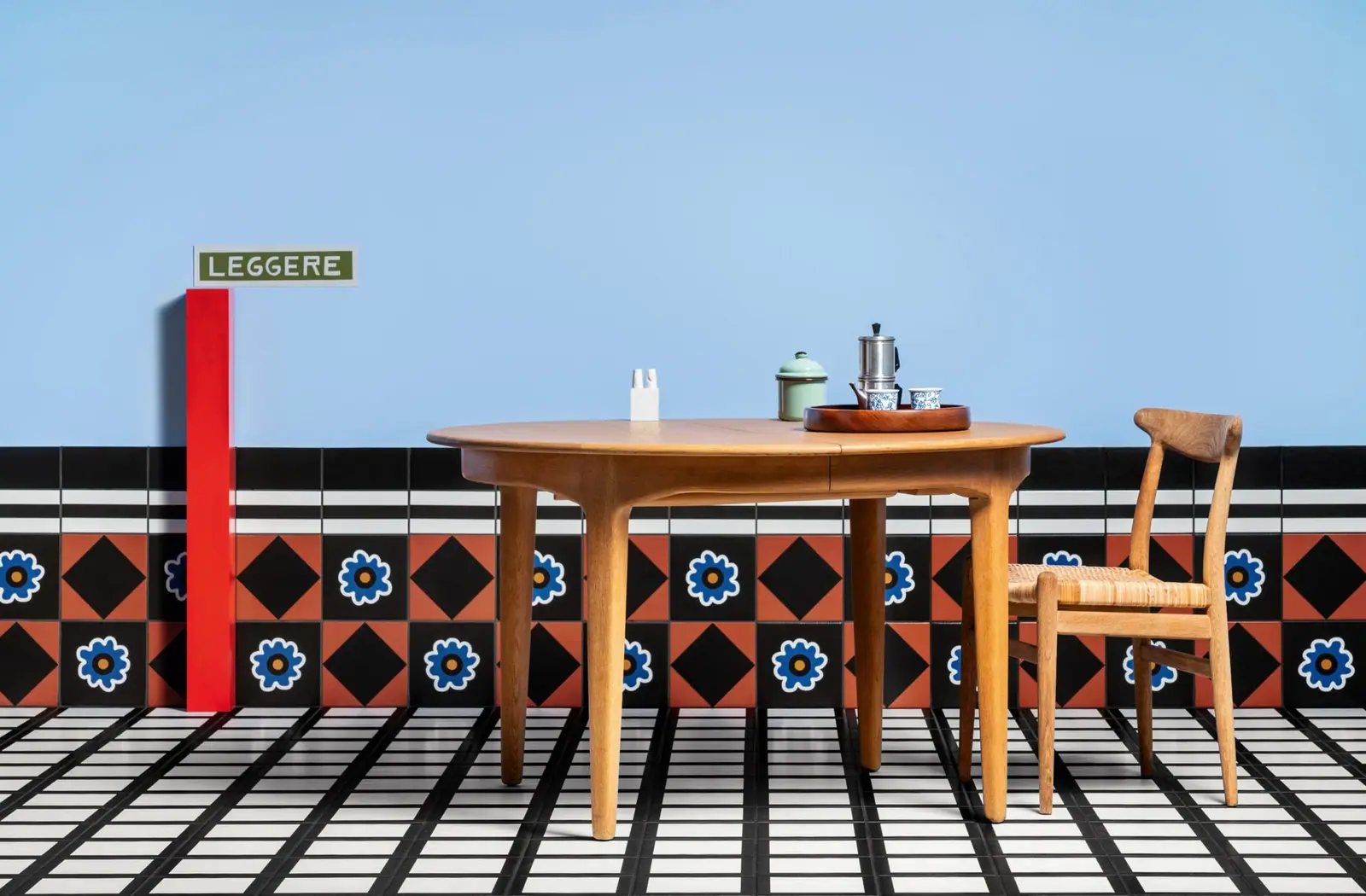
Mutina presents Mattonelle Margherita, the first ceramic collection designed by the artist Nathalie Du Pasquier. With it, the Italian company approaches colour in a new way and creates a line that stands out for its duality: minimal and refined on the one hand, bold and creative on the other. The combination of different aesthetic and formal languages makes it possible to achieve surprising results on floors and walls.
In this article we explain where the collection comes from, how its 41 patterns and two formats are organised, what the glazes and the paints that accompany it bring, which combinations Mutina proposes and which technical data to have to hand when specifying it.
Nathalie Du Pasquier and Mutina, from BRIC to Mattonelle Margherita
The relationship between the artist and the Fiorano Modenese company began in 2019 with BRIC, an installation conceived for Mutina's MUT exhibition space. It continued with Brac, an extruded terracotta brick designed as a design element, and in 2020 came Mattonelle Margherita, officially presented on 15 September that year, coinciding with Mutina's 15th anniversary.
Nathalie Du Pasquier was born in Bordeaux and has lived in Milan since 1979. In the 1980s she worked as a designer, mainly of textiles and surfaces, and was one of the founders of the Memphis group. Since 1987 she has devoted herself mainly to painting, and her work has been exhibited at the Kunsthalle Wien, Pace Gallery and Anton Kern Gallery, among others.
In the conversation with Massimo Orsini included in the collection's catalogue, the artist explains that the name comes from her building's concierge, who is called Margherita, and that she liked it because it is a popular name that evokes the flower. Her definition of the collection is brief: “Mattonelle Margherita is for everyone. Mattonelle Margherita requires imagination. Mattonelle Margherita is for those who are not afraid.”
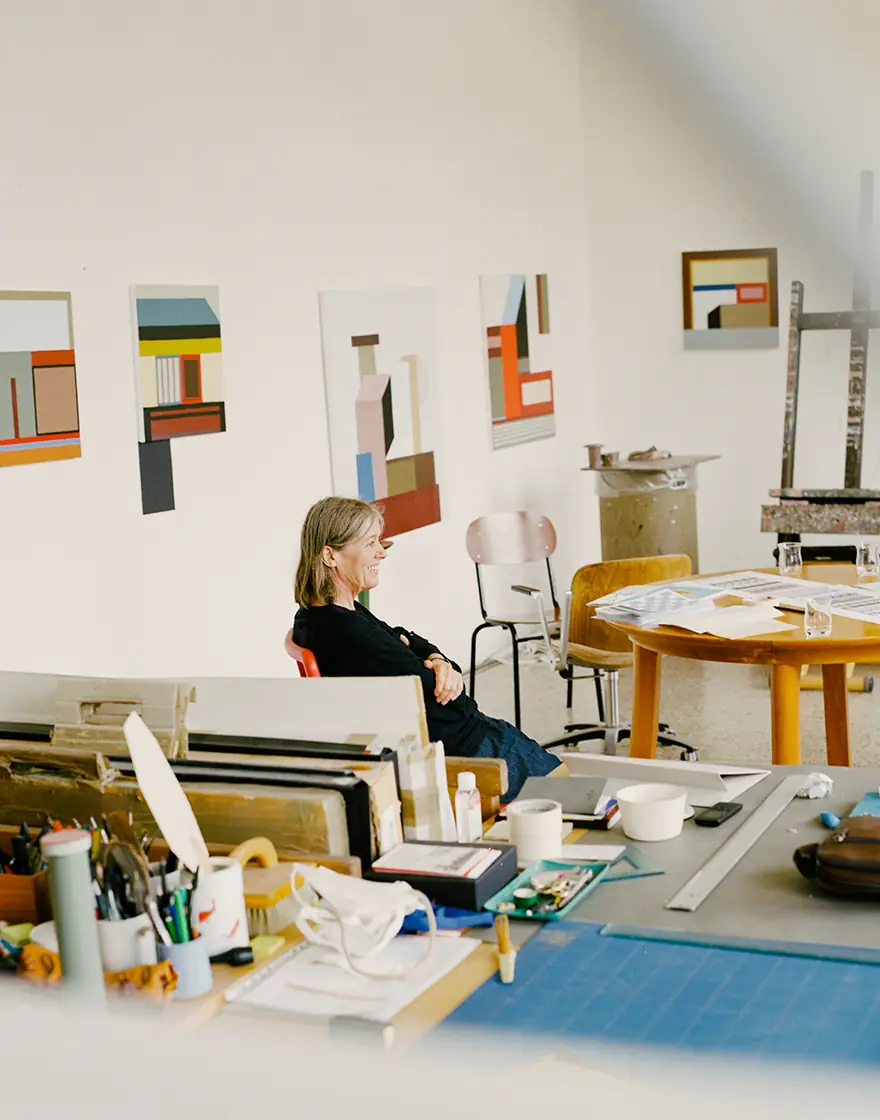
41 hand-drawn patterns in two formats
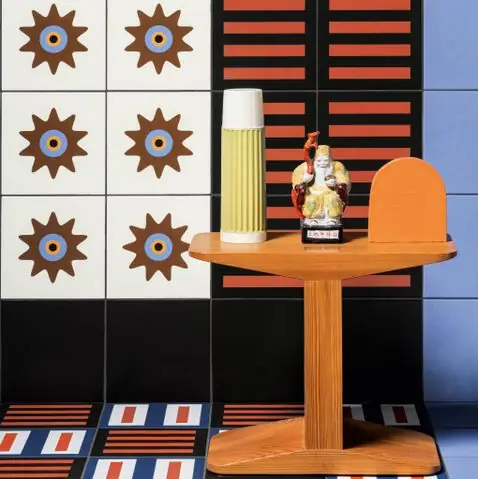
Nathalie Du Pasquier did not just design some tiles: she developed a concept of interior that combines ceramic pieces and paint. The collection's universe is made up of 41 different hand-drawn patterns that can be freely combined to create ever-changing compositions. The pieces can be used to cover entire surfaces, on both floors and walls, or to create decorative details such as wainscoting (boiseries), skirtings and door frames.
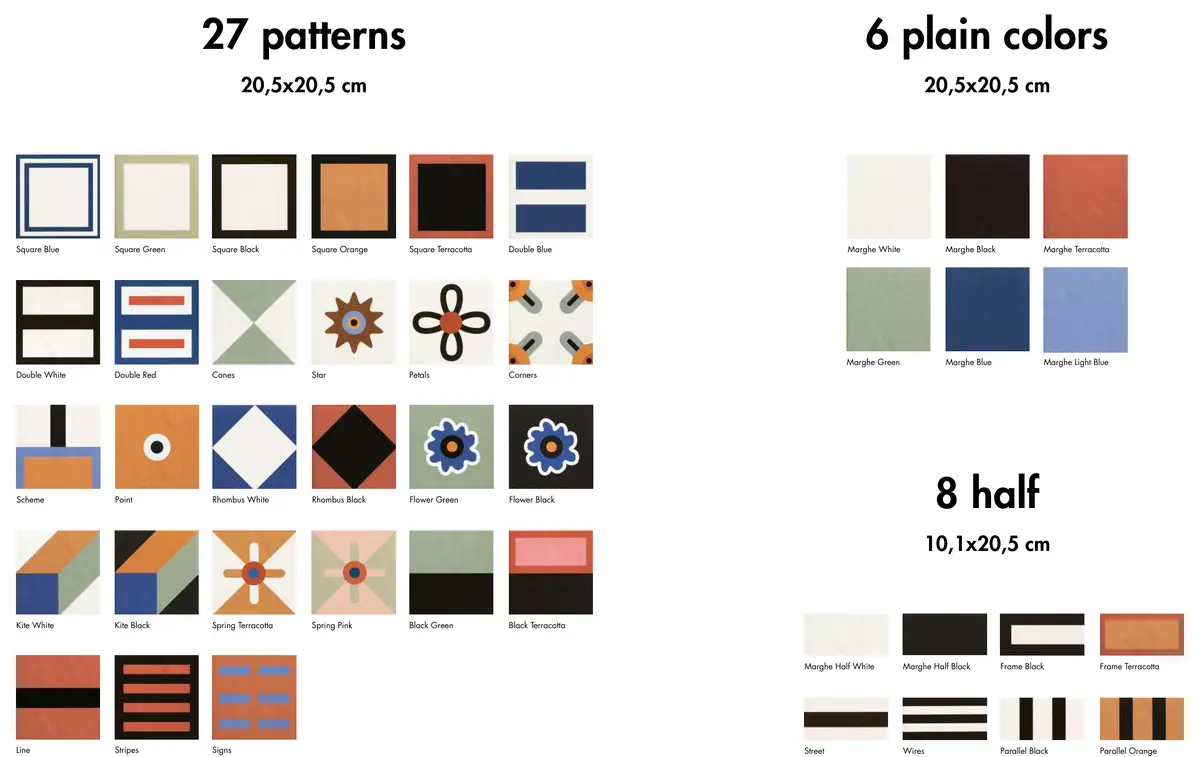
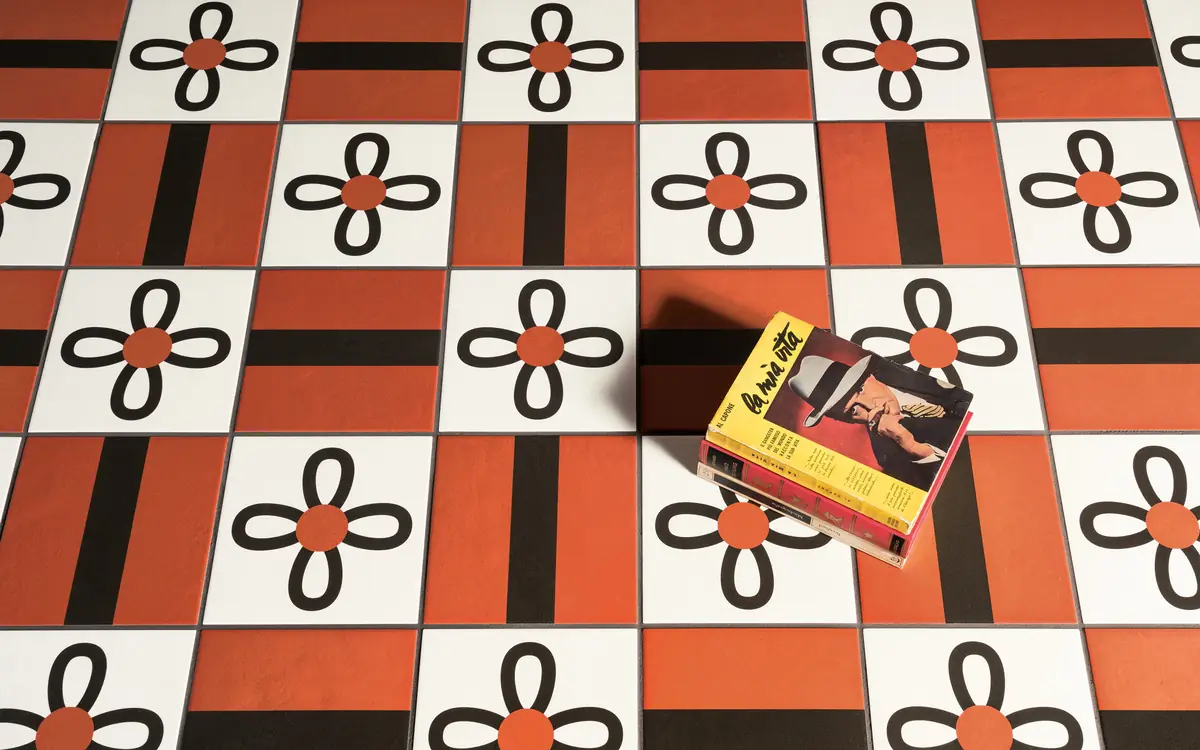
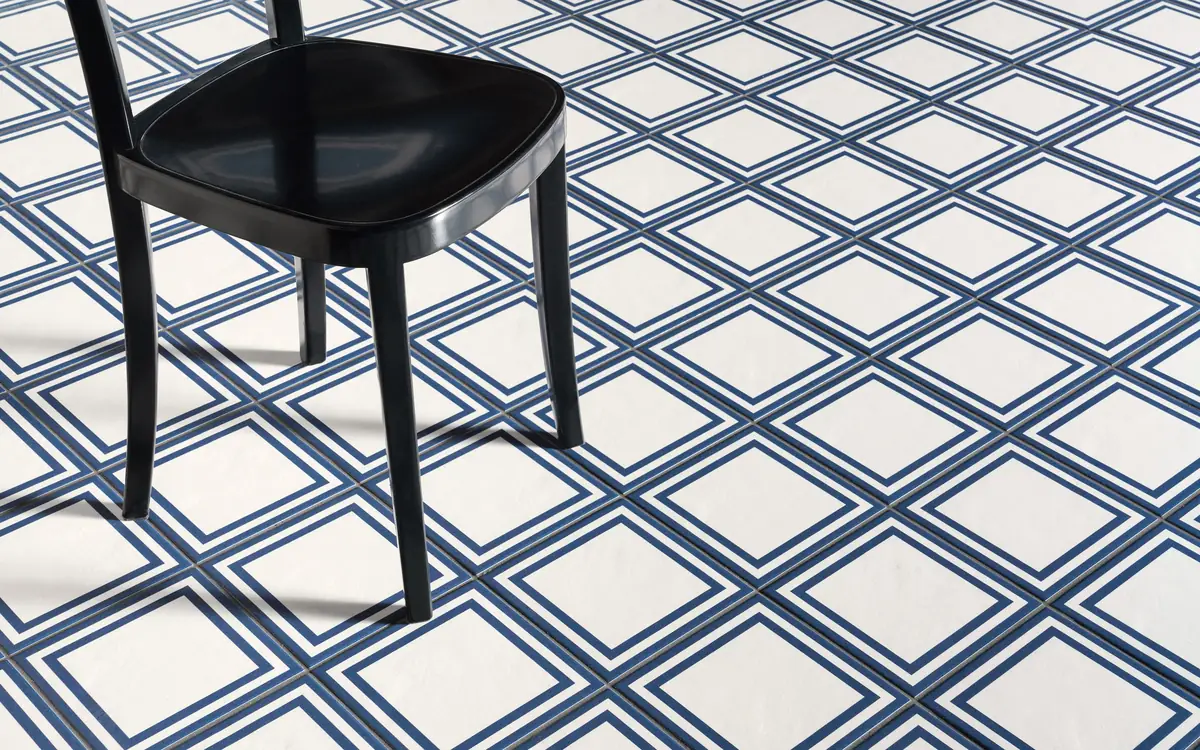
According to Mutina, the two formats are modular with each other with a 2 mm joint. The plain tiles are called Marghe (White, Black, Terracotta, Green, Blue and Light Blue); the graphic tiles have descriptive names such as Line, Stripes, Star, Petals, Rhombus or Flower, and some only reveal their full design when laid together: in Corners, each piece has a quarter flower in each corner, and the flower appears when four tiles are laid together. The small format has two plain tiles (Marghe Half White and Marghe Half Black) and six graphic ones: Street, Wires, Frame Black, Frame Terracotta, Parallel Black and Parallel Orange.
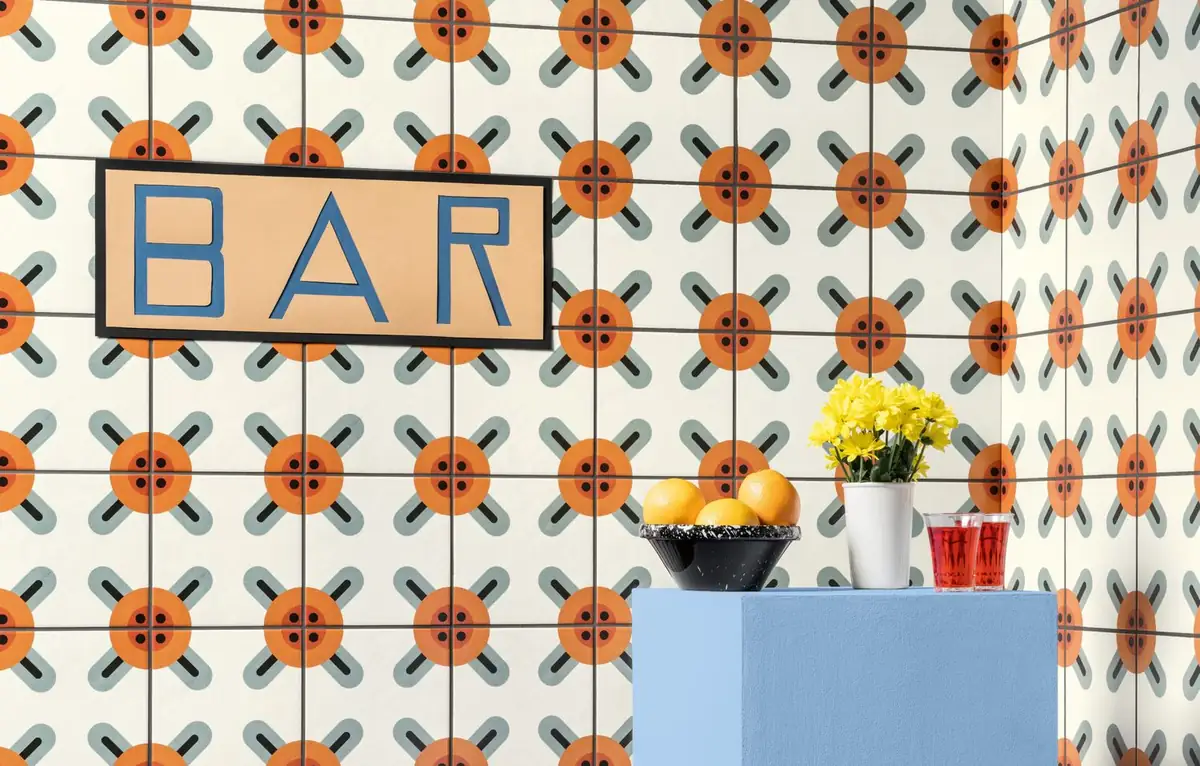
Glazed porcelain stoneware with a handcrafted look
The pieces are glazed porcelain stoneware, made using a traditional industrial method, ‘like in the old days’, according to Mutina. To achieve the best result in finish and colour, the glazes were studied in detail until the most reactive ones were found, which give the satin surface a bright, vibrant finish. The combination of very pure white glazes with transparent, waxy glazes, applied generously, produces a natural-looking surface that absorbs the colour and enhances its effect. The manufacturer describes the result as a semi-gloss, silky surface with a slight mottling typical of handmade products.
The satin surface is pleasant to the touch, but Mutina does not classify it under the German slip resistance standard DIN 51130. For spaces that must meet anti-slip requirements, the manufacturer offers a specific treatment on request, at additional cost: an extra layer of glaze fixed by a further firing, which slightly mattifies the surface while keeping a smooth, easy-to-clean texture.
Ceramics and paint: the Margherita Paints
The collection's palette is completed with paint. For the Mattonelle Margherita settings, the paints from the Accents line already in Mutina's catalogue were selected (Clay, Oxide, Pearl, Pine, Sand and Terra), and the Margherita Paints were added: five colours created by the artist for the collection, Rosa, Azzurro, Arancione, Giallo and Verde, in matt and satin versions. The catalogue also proposes black or white grout. In this way, the ceramic dado and the painted wall are designed as a single whole.
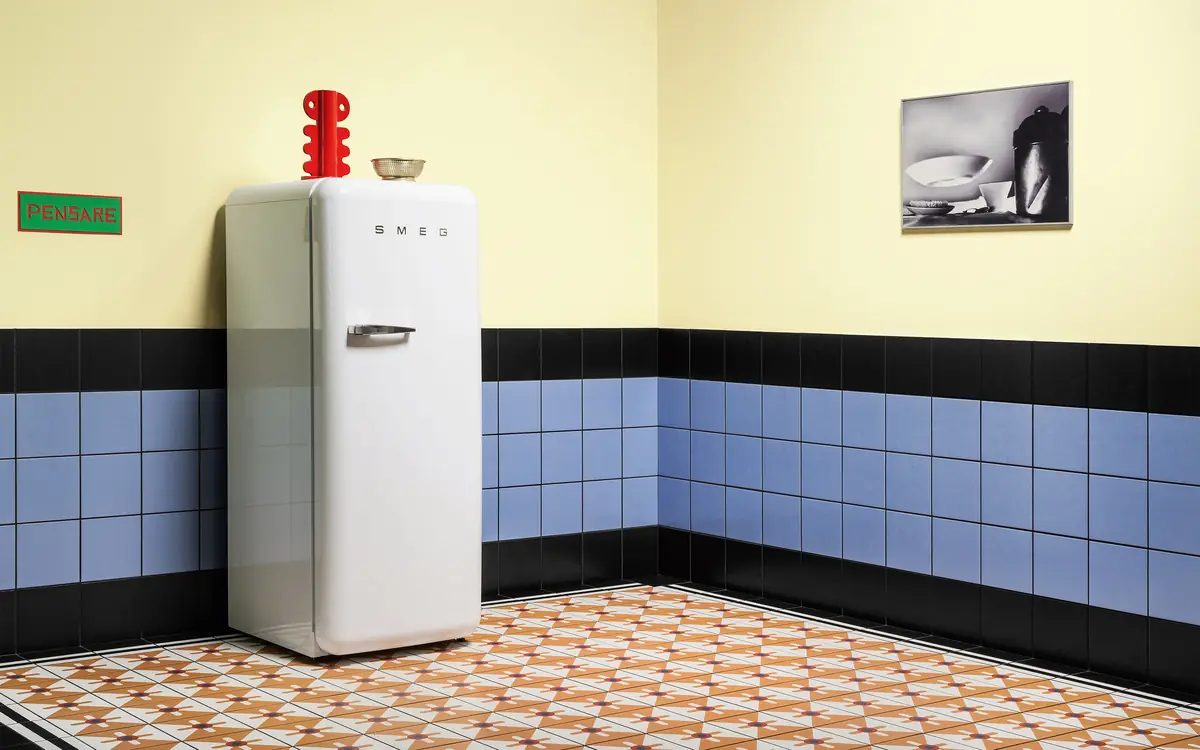
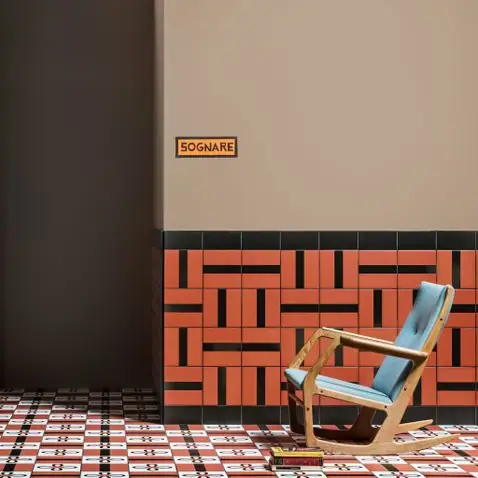
From full floors to dados: how to combine it
Mutina conceives the collection for two kinds of user: those looking for a simple, minimal result and those who want to experiment with surfaces and achieve bolder results. Its catalogue includes a series of suggested uses that serve as a starting point:
- A single piece: one graphic or plain tile repeated over the whole surface, the most restrained option.
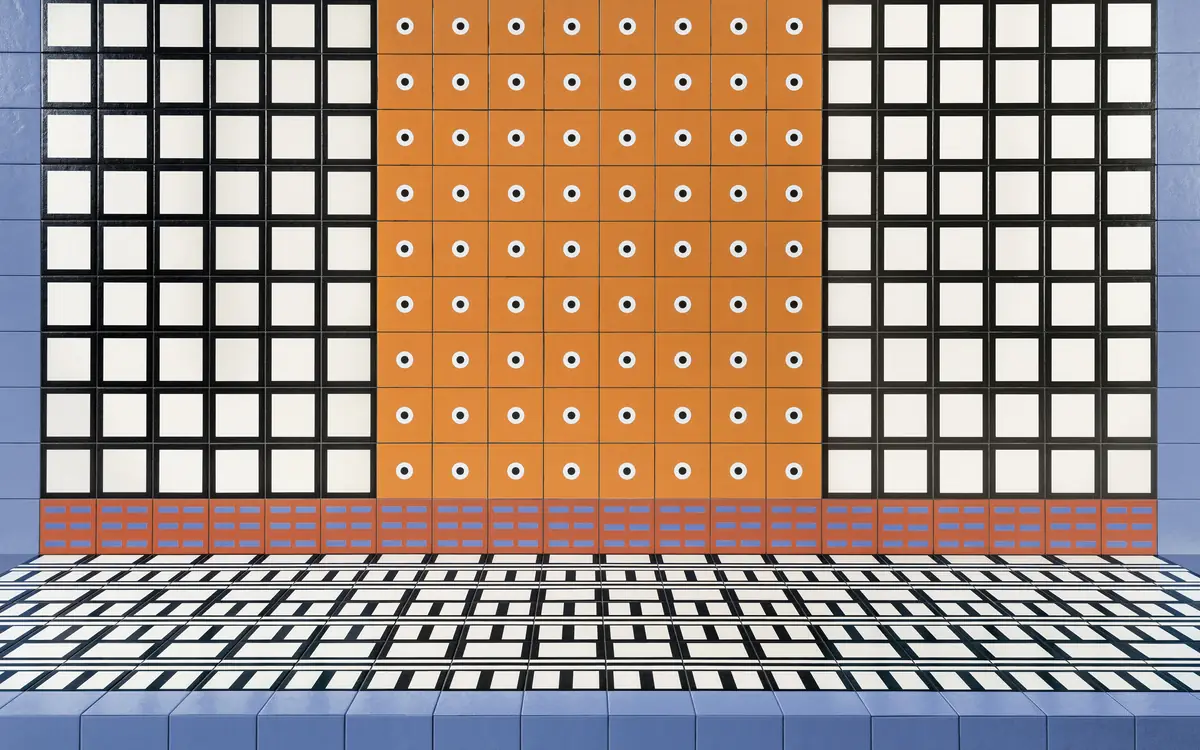
- Chequerboard and bands: two alternating pieces, or strips of the small format that organise the wall, such as Stripes, Wires or Parallel.
- Rug: an area of floor with its own pattern and border, like a ceramic rug within the room.
- Door frames and mixed formats: 10.1 × 20.5 cm pieces that frame openings or are mixed with the square ones.
- Skirting and high dado: tiles up to mid-height with the wall painted above, a solution the artist describes as halfway between the fully tiled house and the very simple house.
The artist herself notes in the catalogue that the collection works very well in small spaces such as a cloakroom, a bathroom or part of the kitchen, where tiles are usually used, but that there they can be used more radically, for example by combining four different designs and intense colours.
Key points for specifying Mattonelle Margherita
Before finalising the tile layout, it is worth resolving these points with the technical team:
- Drawn layout: with 41 combinable pieces, the result depends on the setting-out plan. Draw the layout of each wall and each floor, including the graphic tiles that form motifs when joined, such as Corners.
- 2 mm joint: this is the joint Mutina specifies so that the 20.5 × 20.5 and 10.1 × 20.5 cm formats are modular with each other. It should be respected in the layout.
- Floors and walls: glazed porcelain stoneware, with water absorption of 0.06%, is suitable for both. For floors with anti-slip requirements, the specific treatment must be ordered.
- Paint and grout: if the project includes a dado and a painted wall, choose the paint (Accents or Margherita Paints) and the grout colour at the same time.
- Maintenance: according to Mutina, the material is hard-wearing and non-absorbent, and is cleaned with hot water and neutral detergents.
Sustainability according to the manufacturer
According to Mutina's catalogue, the tile body contains 20% by weight of pre-consumer recycled raw material, calculated in accordance with UNI EN ISO 14021. The manufacturer also states that volatile organic compounds (VOCs) are completely eliminated in production, that it recovers virtually all its wastewater and that its packaging uses recycled and compostable materials. It estimates the service life of the ceramic product at more than 50 years.
A year after its launch, in December 2021, Mattonelle Margherita won the Best of Year award from the American magazine Interior Design in the tile + stone flooring category.
Frequently asked questions
- How many pieces does Mattonelle Margherita have?
- 41 hand-drawn patterns: 27 graphic and 6 plain tiles of 20.5 × 20.5 cm, and 6 graphic and 2 plain tiles of 10.1 × 20.5 cm. All pieces are 10 mm thick.
- Can the two formats be combined?
- Yes. According to Mutina, they are modular with each other with a 2 mm joint. The catalogue combines them in dados, door frames and borders.
- Is it suitable for floors?
- Yes, it is a glazed porcelain stoneware suitable for floors and walls, with water absorption of 0.06%. If the floor must meet anti-slip requirements, Mutina offers a specific treatment on request at additional cost.
- What are the Margherita Paints?
- Five paints —Rosa, Azzurro, Arancione, Giallo and Verde, in matt and satin— created by Nathalie Du Pasquier to accompany the collection, alongside Mutina's Accents paints.
At Matter we help you plan ceramic surfaces with character: choosing pieces, layouts, joints and finishes, and comparing them with the rest of the project's materials. Come to our material library in Barcelona or Madrid and let's talk about your project.