Terracotta brick surfaces
Bloc, an extruded terracotta brick by Ronan and Erwan Bouroullec for Mutina: colours, finishes, technical data and key points for building partitions and screens.
Products5 min read
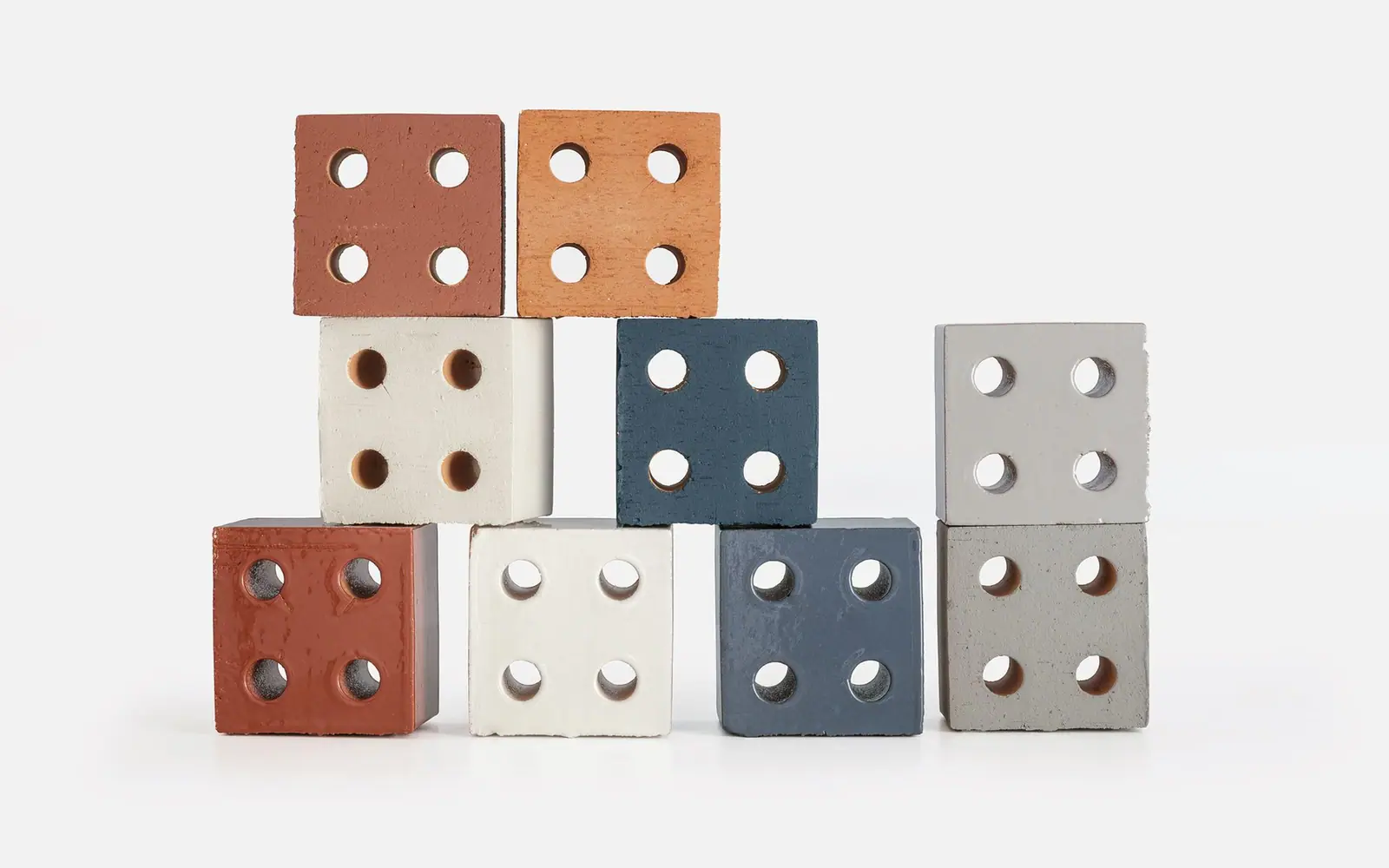
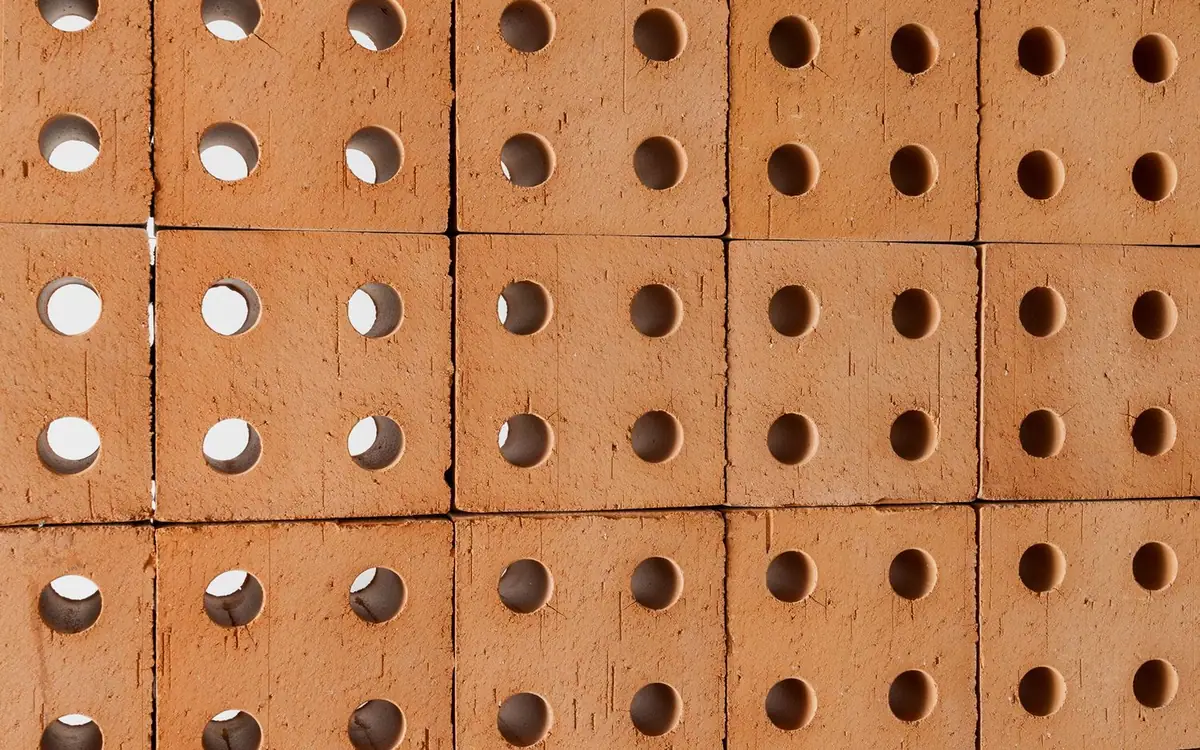
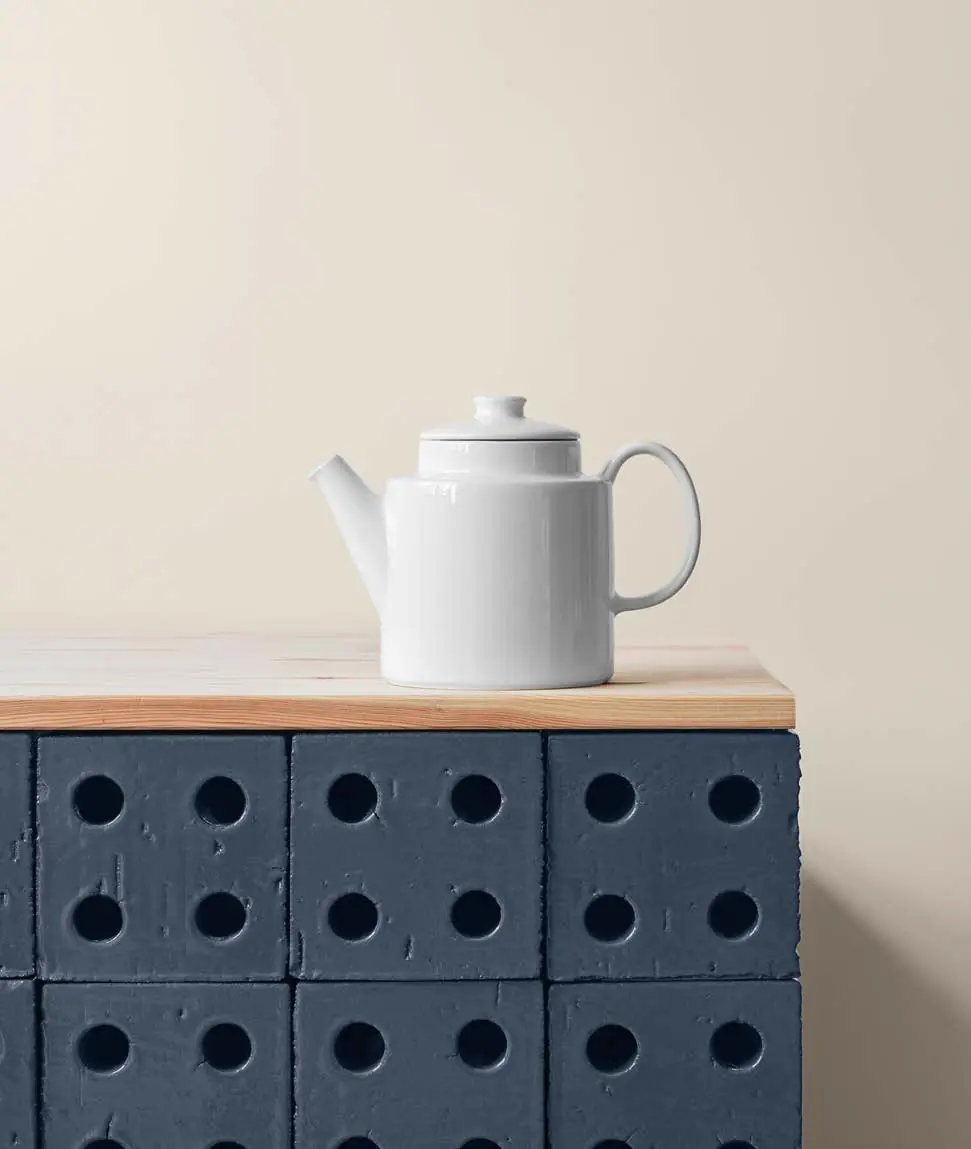
Bloc is a terracotta brick designed for building, not for cladding. Ronan and Erwan Bouroullec designed it for Mutina as part of its line of three-dimensional elements, 3D Elements: a 13 × 13 × 10 cm cubic piece pierced by four holes, used to build partitions, screens and architectural and decorative structures in which light passes through the wall.
In this article we explain how Bloc is made, which colours and finishes it comes in, what the Tube accessory is for, what technical data Mutina publishes and what to bear in mind when specifying and laying it in an interior design project.
An extruded terracotta brick
Bloc is made using the craft technique of extrusion: the clay is pushed through a die that gives it its section, then cut and fired. Mutina defines it as a three-dimensional element conceived for building architectural and decorative structures. The material is extruded terracotta in the natural version, and extruded, glazed terracotta in the coloured versions.
Its square face is marked by the holes that run through the piece. Stacked, the blocks form a 10 cm thick wall with a regular pattern that works both as texture and as a filter: depending on how the holes are treated, the wall lets light through or reads as a solid, graphic surface.
The collection was presented at Ensemble, the event with which Mutina celebrated ten years of collaboration with Studio Bouroullec, from 27 September to 1 October 2021 at its headquarters in Fiorano Modenese, Italy. It brought together the collections the brothers have designed for the brand: Pico, Rombini, Punto, Pico Bois and Bloc.
Colours and finishes
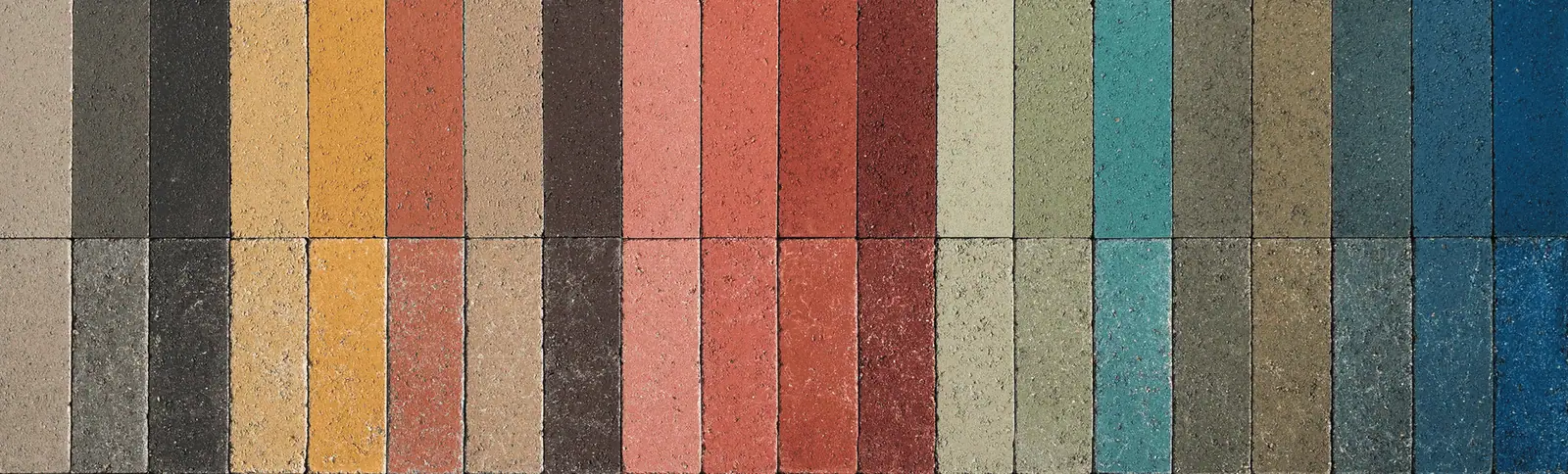
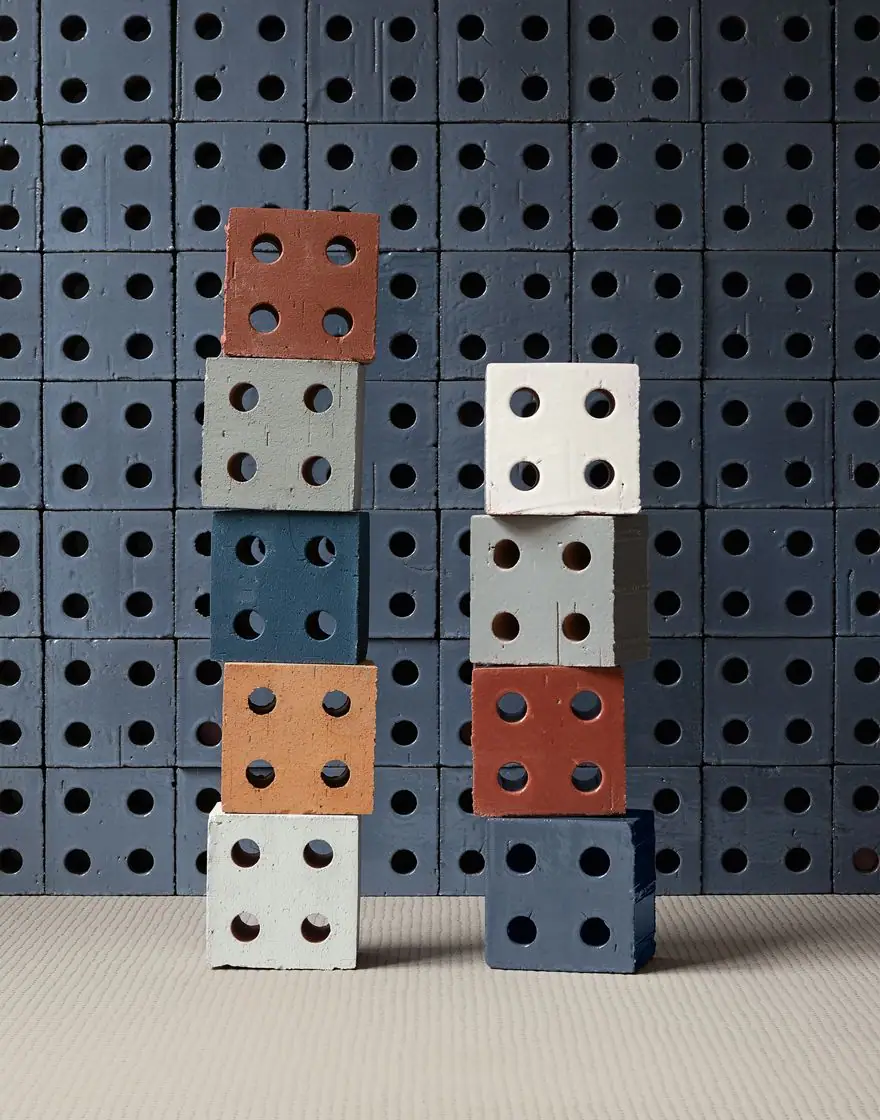
Bloc comes in a Natural version, which shows the terracotta as it leaves the kiln, and a palette of four colours — Pearl, Blue, Red and Grey — in Matt and Glossy finishes. Each finish is obtained differently:
The result is three readings of the same brick: the irregular warmth of natural terracotta, the flat, even surface of the matt finish, and the reflections of the gloss glaze, which accentuate the small irregularities inherent in craft production.
Tube: filling or emptying the holes
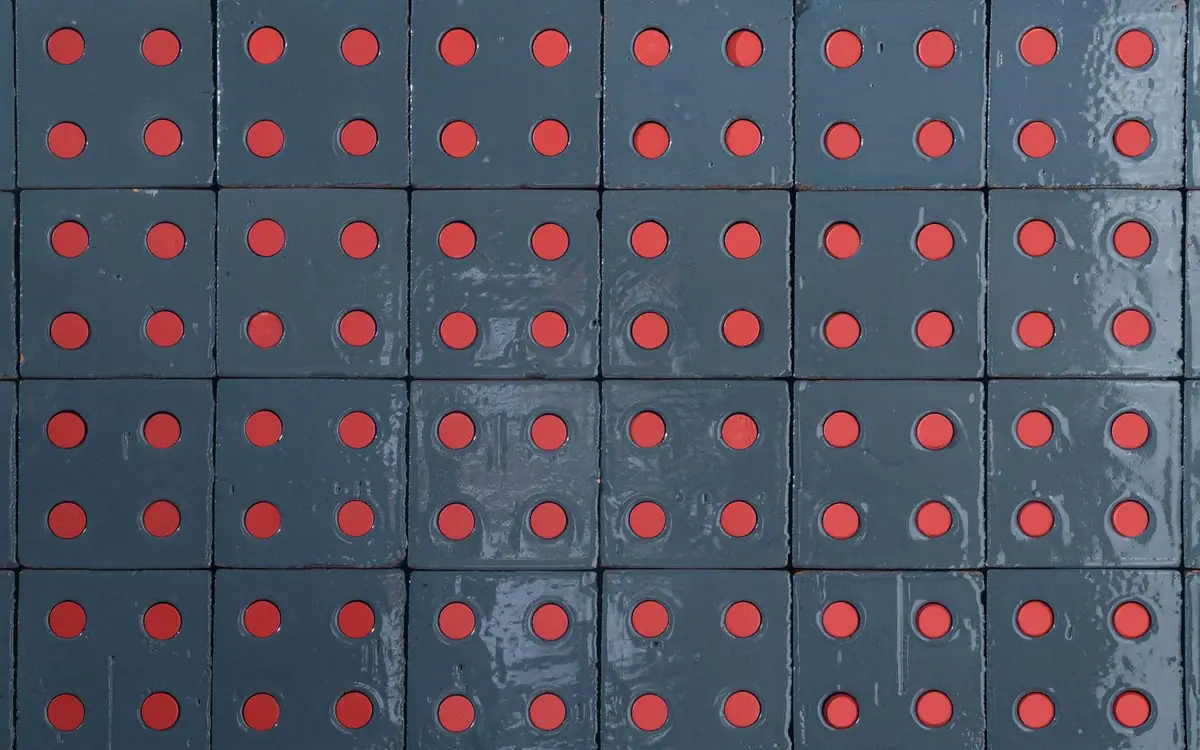
Bloc gives spaces a distinctive character thanks to its holes. They can be left empty, to create plays of light through the wall, or filled with Tube, a 2.5 × 10 cm wooden accessory available in red and blue. With Tube, the wall becomes opaque and the perforation turns into a dotted pattern of colour that contrasts with the background.
Bloc technical data
Mutina publishes a technical data sheet for Bloc with the brick’s performance according to the European standards for masonry units (the UNE-EN 772 series). These are the main data:
On the environmental side, Mutina states that Bloc contains no volatile organic compounds (VOCs) and declares 10% recycled content for LEED v4.1 certification purposes. According to the manufacturer, VOC emission and content declarations and the HPD (Health Product Declaration) are available on request.
Ronan and Erwan Bouroullec
The brothers Ronan and Erwan Bouroullec, designers from Brittany, began working with Mutina in 2011. For the brand they have designed the Pico, Rombini, Punto, Pico Bois and Bloc collections, which share a common language and can be combined to create interiors of great aesthetic coherence.
Of Bloc, the designers say: “Bloc is a further outcome of the research into ceramic vibration that we have carried out over the years of our collaboration with Mutina.” With Bloc, that research moves from the surface of the tile to the volume of the brick.
Where to use Bloc
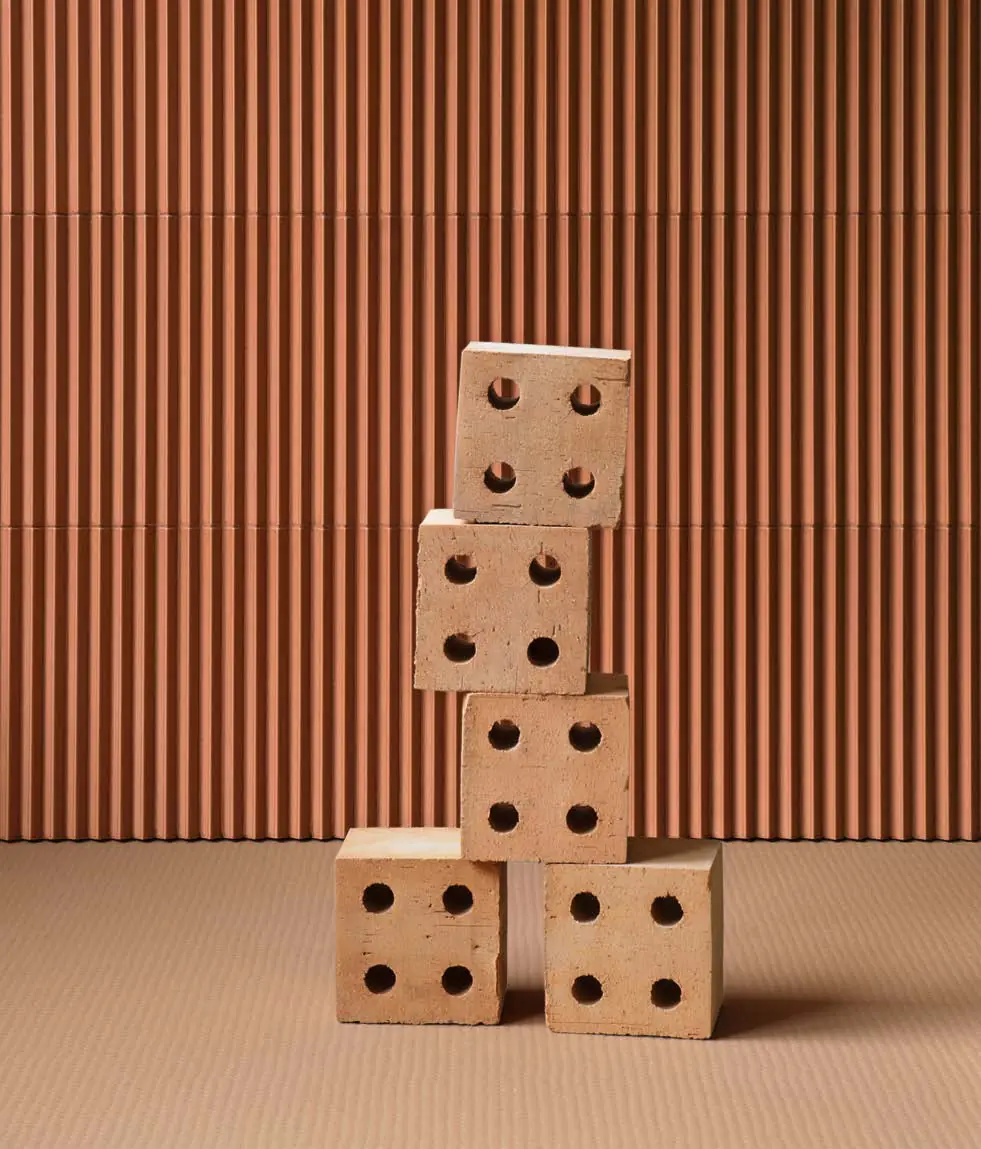
Mutina presents it as a product suited to both residential and commercial spaces. Its natural applications are:
- Partitions and dividers: 10 cm dividing walls that define areas without fully closing them off, for example between reception and workspace or between dining room and kitchen.
- Light screens: with the holes left empty, the wall filters natural or artificial light and casts shadows that change through the day.
- Feature walls: with Tube or the Glossy finishes, the wall becomes a surface of colour and texture, closer to a graphic wall covering.
- Architectural and furniture elements: Mutina also conceives its 3D elements for building furniture pieces, combined with other materials.
- Projects with other Bouroullec collections: Bloc was designed to work alongside Pico, Rombini and Punto on floors and walls.
Key points for specifying and laying Bloc
Bloc is a building element and is laid as such. Mutina’s technical data sheet sets out several points worth resolving at design stage:
- Interior only: the version of Bloc presented in 2021 is intended for interiors only, with class F1 freeze-thaw resistance.
- Height and anchoring: the product is designed for walls up to 4 m high, and the maximum dimensions of a wall panel depend on how many sides are anchored to the structure (up to 400 × 300 cm with anchoring on three sides). The wall must also comply with the building regulations of the country where it is installed.
- Sealant instead of mortar: Mutina recommends joining the pieces with its sealant, an organic, eco-friendly, solvent-free material rated EMICODE EC 1 Plus, sold separately.
- Wooden profiles: for a clean finish there are linear profiles in painted wood and a top profile with removable sides for fixing the wall to the ceiling.
- Orientation and cleaning: the blocks are laid with the ribs always on the same side, except the last one in each row, and never with the rib facing up or down. Sealant drips should be avoided; if they occur, they are left to dry and removed with a sharp blade.
Frequently asked questions
- Is Bloc a wall covering or a floor tile?
- Neither. It is a 13 × 13 × 10 cm terracotta brick for building 10 cm thick walls, partitions and decorative structures. It is not a tile and is not intended for floors.
- Can it be used outdoors?
- The version presented in 2021 is for interiors only, with F1 freeze-thaw resistance. As a postscript: in 2025 Mutina added Bloc Outdoor, a version rated F2 (severe exposure) that its technical data sheet declares suitable for outdoor use.
- What is the difference between the Matt and Glossy finishes?
- Matt is obtained by painting the piece with paints from the Mutina Accents line and gives a flat, even surface. Glossy has a clear gloss ceramic glaze fired onto the terracotta that reflects light.
- What is Tube for?
- It is a 2.5 × 10 cm wooden accessory, in red or blue, that is inserted into Bloc’s holes. It closes the perforation and turns it into a dot of colour.
- How many pieces go into a square metre?
- According to Mutina’s technical data sheet, 59.17 pieces per square metre of wall.
At Matter we help you choose the ceramic and terracotta materials that best suit your project, from wall coverings to building elements that, like Bloc, turn a partition into a piece of design. Come to our material library to see terracotta and ceramic options and compare them with your technical team.
Book your visit to Matter.
Book a visit