Personalising projects with small pieces
Small-format ceramics: what they bring to a project, how the joint and laying pattern change the result, and what to plan for when specifying handmade pieces.
Products8 min read
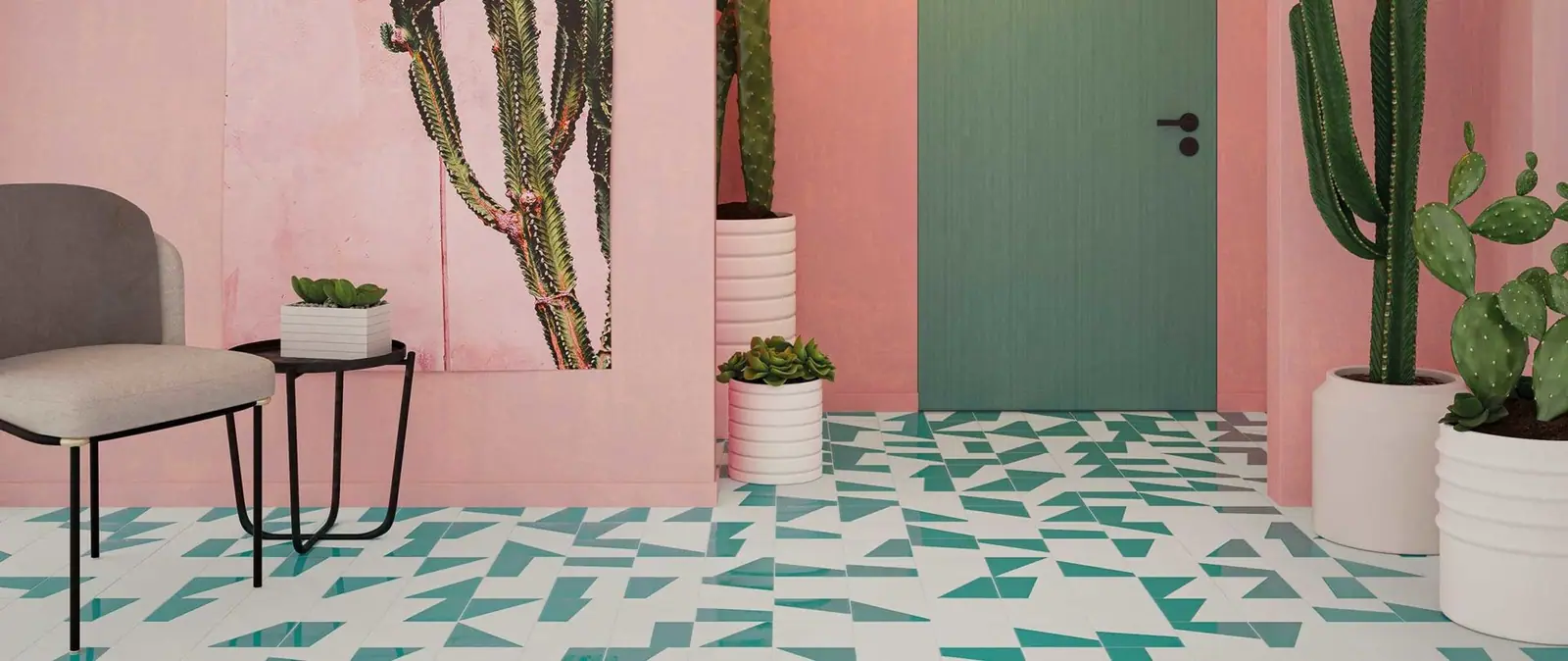
While it is true that ever larger ceramic formats are available to clad the spaces we design, every material has its place and its project. Not every project accepts, allows or requires large-format ceramics, and some inherently call for small-format ceramics to bring out their character.
In this article we look at what we mean by small format, what it brings to an architecture or interior design project, how the joint and the laying pattern change the result, what distinguishes handmade ceramics from porcelain, and what to plan for when specifying it.

What we mean by small format
No standard measurement separates small format from medium format. The only designation defined by size is mosaic: ASCER’s Guía de la baldosa cerámica (ceramic tile guide) applies the term to pieces that fit within a 7×7 cm square (normally from 2×2 to 5×5 cm), supplied mounted on sheets of around 30×30 or 30×60 cm to make laying easier. Above that size, small format covers square tiles a few centimetres across, elongated brick- or strip-type pieces, hexagons and other shapes.
Size, moreover, says nothing about the type of ceramic. As the same guide points out, the term mosaic refers only to dimensions, not to the class of product: a small piece can be a porous-bodied wall tile, a glazed stoneware, a porcelain or a terracotta. The table summarises the common types in Spain and their usual sizes.
The sizes in the guide are indicative, and today’s range goes further, both towards smaller pieces and towards large formats. What matters for the project is that small format runs across all the families: the choice of size is a design decision, and the choice of ceramic type a technical one that depends on the use.
Why choose small pieces
Small-format ceramics offer a very broad range of possibilities and advantages in an architecture or interior design project. Their size and weight make them very easy to handle, which means many installers know how to lay them well and the final result is very satisfying. These are their main advantages:
- Handling and laying: light pieces that can be cut, transported and laid without special equipment, using techniques any tiler knows.
- Curved and relief surfaces: ASCER’s guide recommends glazed mosaic for cladding curved surfaces or those with concavities and convexities, where a large piece cannot adapt.
- Substrates subject to movement: on deformable substrates or those liable to move, the same guide advises widening the joints and using smaller tiles.
- Composition: they make it possible to combine colours, directions and laying patterns, and to draw with the piece itself.
- Character: they can enrich a design or become the main element of a project.
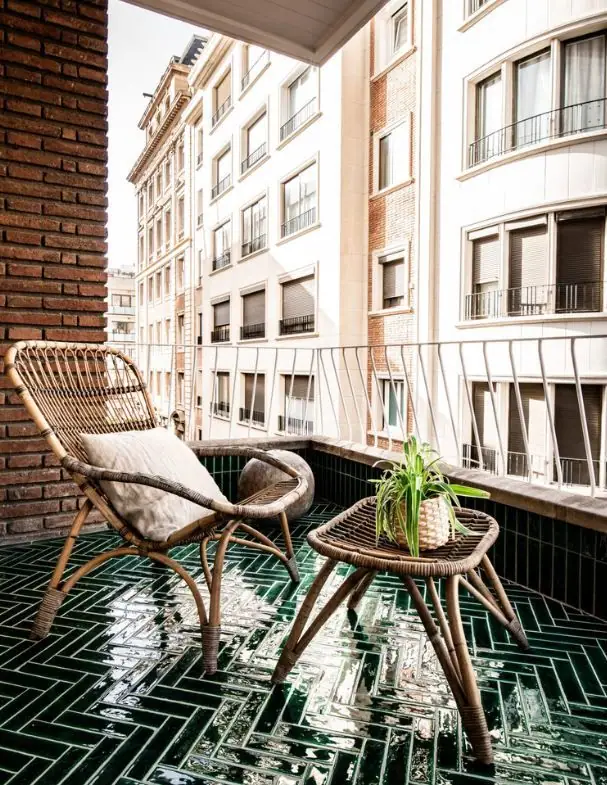
Their format allows a wide variety of laying patterns, directions and combinations depending on the piece chosen. It can enrich designs or be the very main element of a project, thanks to its ability to personalise spaces and give them a character of their own.
The joint as a design element
Among the constraints of ceramics is the need for a joint, the gap left between each piece. ASCER’s guide considers jointed laying to leave 3 mm or more between tiles, and minimum-joint laying to leave between 1.5 and 3 mm; in no case does it recommend going below 1.5 mm, because the grout does not penetrate properly and the tiles may end up touching.
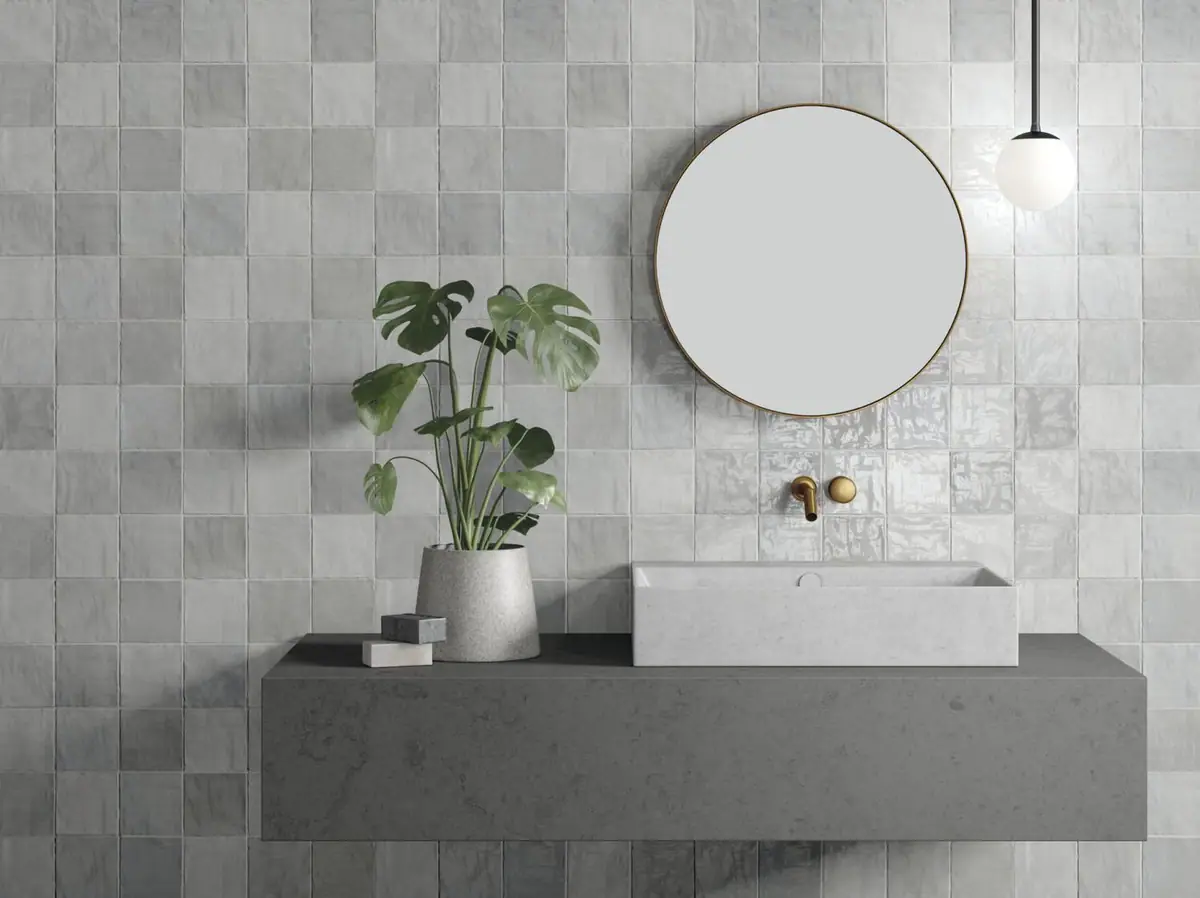
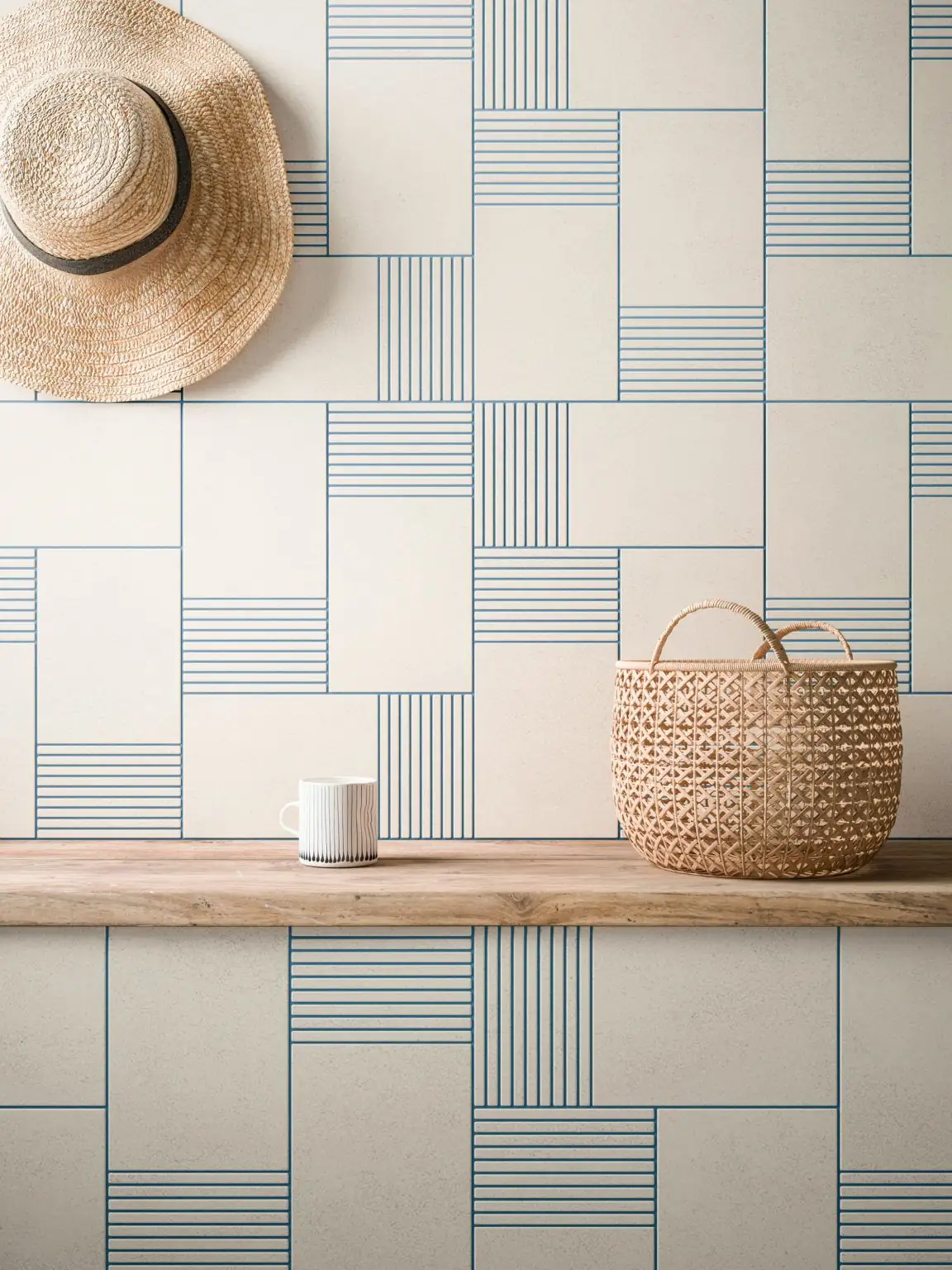
The joint is not only a technical requirement: it absorbs deformations of the substrate, compensates for small differences in size between pieces and has an aesthetic function. We can turn it into a virtue and widen the possibilities for the overall look of the laid pieces. Grout can be coloured to increase or reduce contrast with the tiles, and the joint can be flush with the piece or slightly recessed.
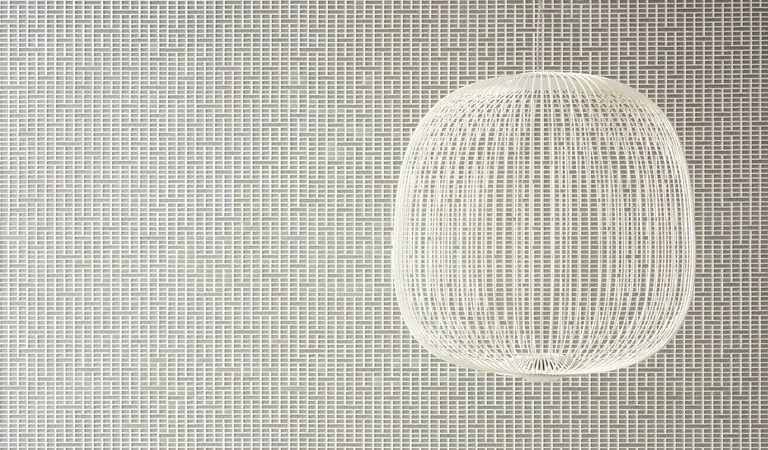
With small-format ceramics, the repetitive pattern they create can give the impression of a continuous surface. With a joint in the same tone as the piece, the cladding reads as a single plane; with a contrasting joint, the grid comes to the fore and each piece stands out.
Handmade ceramics and small-format porcelain
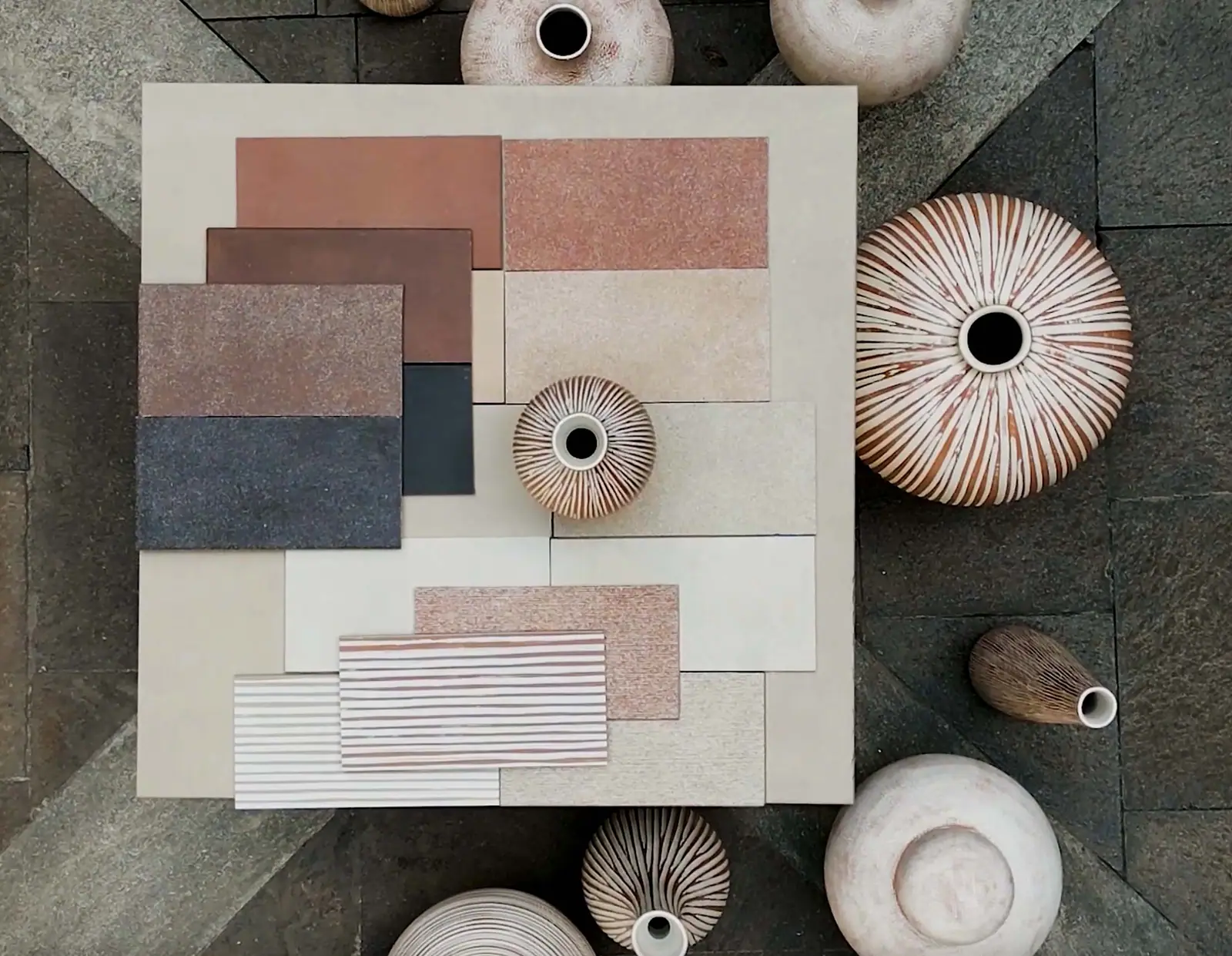
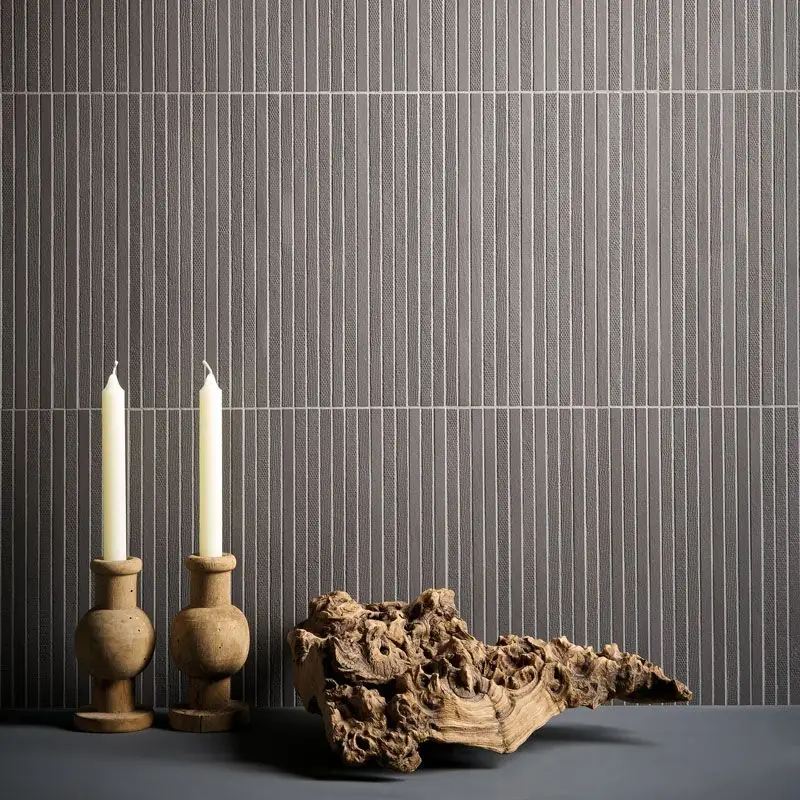
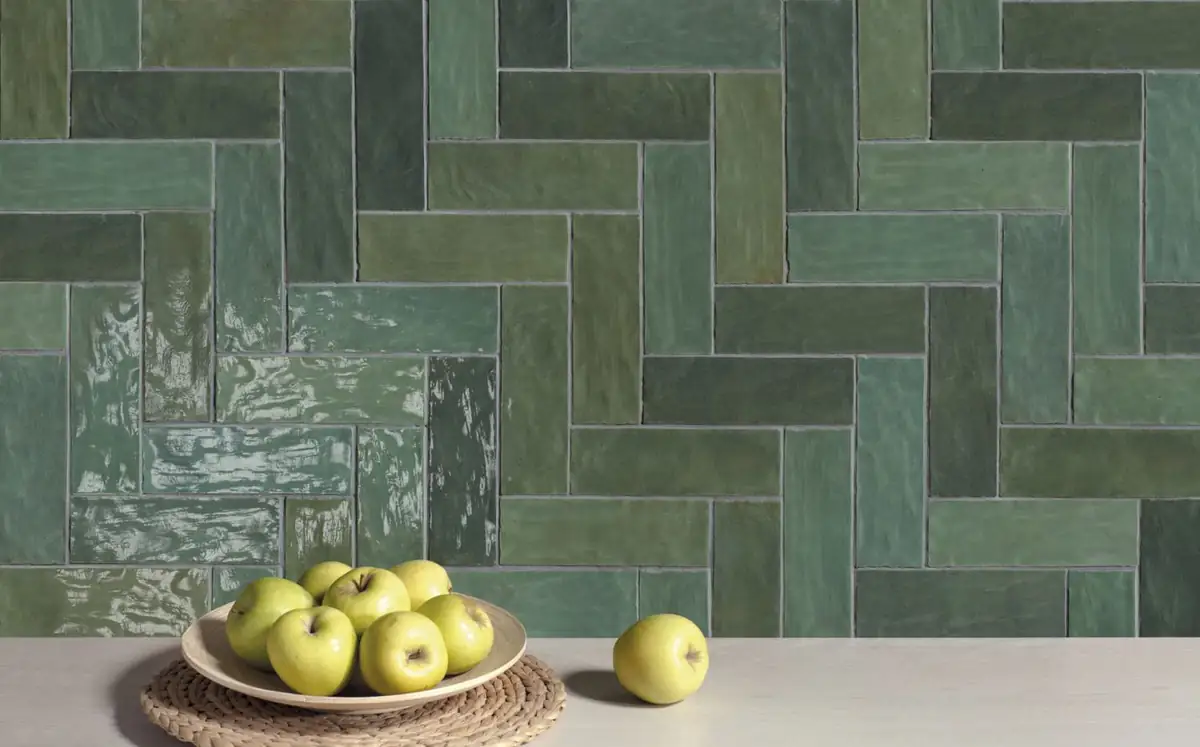
There are many types of small-format ceramics. One of them is handmade ceramics, which stands out as one of the clearest ways to personalise spaces, because the variations in each piece (in tone, glaze and surface) heighten and intensify the impact of the space in which it is used. This is why this kind of solution is increasingly common in restaurants and hotels that seek to be original and create their own atmospheres. Handmade production also offers a very wide range of colours and sizes.
Not all ceramic tiles are the same, even though they all start from clay: the composition of the body, the forming method (pressing or extrusion) and the firing determine the final porosity of the piece. That is why the UNE-EN 14411 standard classifies tiles by water absorption: from over 10% in porous-bodied wall tiles, intended for interior walls, to a maximum of 0.5% in porcelain stoneware. The lower the absorption, the better the performance against frost and wear.
Alongside handmade pieces, small-format porcelain stands out for its excellent results, achieving very refined designs with great resistance and, depending on the model, it can also be used on floors and outdoors.
The laying pattern changes the space
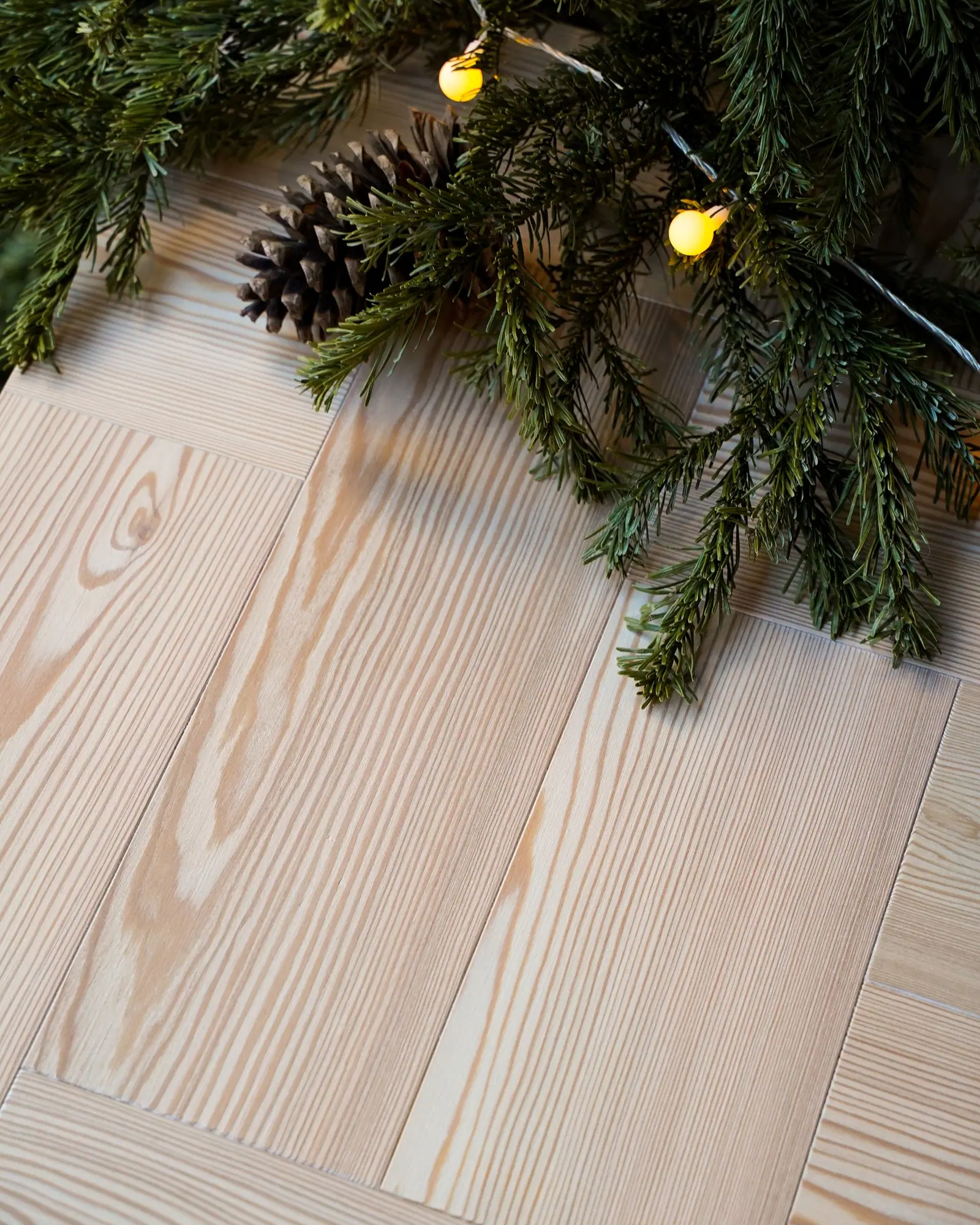
To make the most of the qualities that define ceramics, whether on vertical or horizontal surfaces, we can play with laying patterns, which allow pieces such as the familiar rectangular format to transform a space entirely depending on how they are laid. Each option creates a different effect and extends the possibilities of this type of cladding:
- Stack bond: the pieces form regular, parallel rows, horizontal or vertical. Vertical laying reinforces the sense of height.
- Running bond or staggered: each row is offset from the previous one, usually by half a piece, as in brickwork. A smaller offset breaks the symmetry.
- Herringbone: rows of elongated pieces tilted alternately to the right and left that form a succession of Vs.
- Diagonal: the grid is turned 45° to the walls and gives movement to the plane.
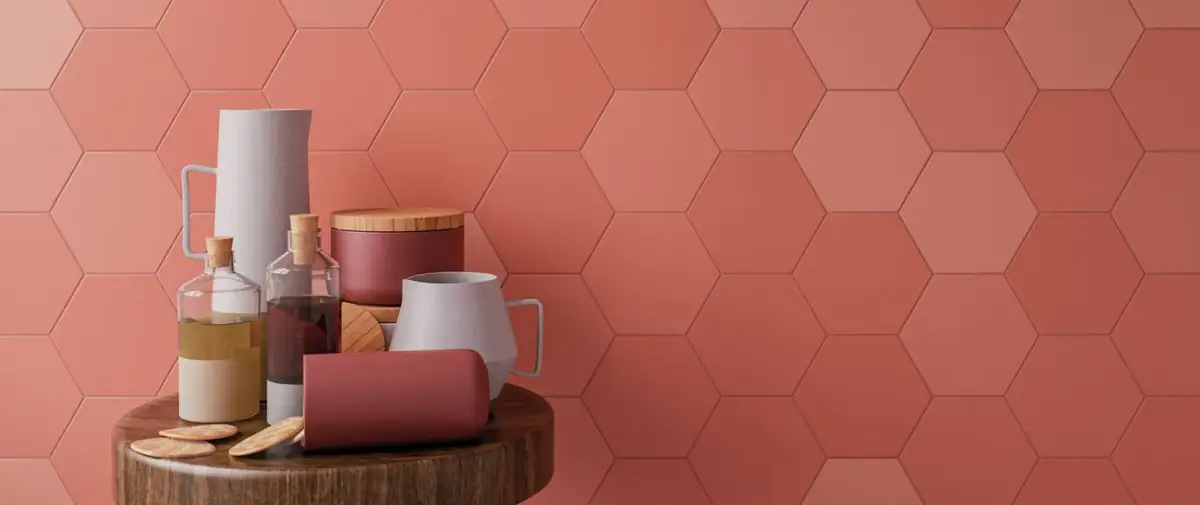
- Hexagons, triangles and mixed formats: geometric compositions that create patterns from the piece itself.
Digital printing: pieces tailored to the project
In the decorative world of ceramics, the quality digital printing has reached makes decoration on small pieces another useful, expressive option: there are countless graphic designs, ever better resolved and with better finishes.
This scope for customisation allows pieces that adapt to brands and projects and give them character and personality. In hospitality and retail, for example, ceramics can incorporate a brand’s colours or graphic motifs; this should be raised with the manufacturer from the outset, because lead times and minimum quantities depend on each case.
Key points for specifying small format
Beyond aesthetics, these are the points worth resolving at design stage:
- Joint width: decide whether to lay with a joint (3 mm or more) or with a minimum joint (1.5 to 3 mm). A minimum joint requires pieces with strict dimensional tolerances; handmade pieces or those with irregular edges call for jointed laying.
- Grout: the UNE-EN 13888 standard distinguishes normal (CG1) and improved (CG2) cementitious grouts and reaction-resin grouts (RG). ASCER recommends CG2 for floors in wet rooms and RG for food-related, sanitary uses or where there is chemical attack. With small pieces there are more metres of joint, and the choice of grout weighs more heavily on the result.
- Mixing boxes: when laying, tiles from different boxes should be blended to avoid unwanted changes of tone, and boxes of different calibre should not be mixed in the same room. With handmade pieces, which vary more in tone, this is even more important.
- Floors and slip resistance: the Código Técnico de la Edificación (CTE, Spain’s building code, DB SUA 1) requires class 1 in dry interior areas, class 2 in wet interior areas such as bathrooms and kitchens, and class 3 in showers, pools and outdoors (on slopes of 6% or more and on stairs it goes up one class). A gloss glaze may be ideal on a wall and fail to comply on a floor.
- Adhesive: chosen according to the UNE-EN 12004 standard depending on the substrate, the piece and the use, from normal (C1) to improved (C2) cementitious adhesives.
Frequently asked questions
- From what size do we speak of small format?
- There is no standard definition. ASCER’s Guía de la baldosa cerámica only defines mosaic by size: pieces that fit within a 7×7 cm square, normally from 2×2 to 5×5 cm. In practice, small format refers to tiles a few centimetres across, strips, bricks and hexagons.
- What joint width should I leave?
- Never less than 1.5 mm. Between 1.5 and 3 mm is considered a minimum joint and requires very regular pieces; from 3 mm it is jointed laying, the most suitable for handmade pieces or those with irregular edges, because the joint absorbs differences in size.
- A joint in the same colour or a contrasting one?
- It depends on the effect sought. With a joint in the same tone, the cladding reads as a continuous surface; with a contrasting joint, the grid and the shape of each piece come to the fore. Grout can be pigmented to achieve either effect.
- Can I use gloss-glazed or handmade pieces on the floor?
- Only if they meet the slip-resistance class the Código Técnico requires for each area (class 2 in bathrooms and kitchens, class 3 in showers and outdoors) and, outdoors, if they are frost-resistant. Many pieces designed for walls are not suitable for floors; check each manufacturer’s technical data sheet.
- Which grout should I choose for a bathroom or kitchen?
- For floors in wet rooms, ASCER recommends improved cementitious grouts (CG2, according to UNE-EN 13888), with lower water absorption and higher abrasion resistance; on walls, at least a normal cementitious grout (CG1). In professional kitchens, sanitary uses or where cleaning is aggressive, reaction-resin grouts (RG), usually epoxy.
The range of possibilities is very broad, and nothing beats seeing and touching the materials to know whether they have the desired impact: the tone of a glaze, the sheen of a handmade piece or the effect of a contrasting joint are best appreciated at full scale. At Matter you can discover small-format ceramics and compare them with your technical team.
Book your visit to Matter.
Book a visit