Radiators that go beyond comfort
Criteria for choosing radiators and a selection from Tubes, Foursteel and Terma that turns heating into a lamp, a sculpture or an industrial piece.
Products8 min read
When it comes to radiators, there are several technical decisions worth settling from the outset: whether the system is two-pipe or one-pipe, the diameter and material of the pipework, the position of the valves, whether the unit will be hydronic or electric, and what material the emitter should be made of: steel, aluminium or even copper.
A radiator creates comfort, reinforces the feeling of home and lives day to day with the people who use the space. But once the technical aspects are resolved, its appearance matters just as much: it can go unnoticed, blending into the wall or floor, or take centre stage, like a lamp, an art object or almost a sculpture. In this article we review the basic selection criteria and a selection of radiators from Tubes, Foursteel and Terma that shows how far that variety of formats, forms, colours and finishes now extends.
Before design: the installation decisions
Once the characteristics of the system have been defined, it is time to choose how the radiators should look in each space, so that the balance between the interior design and these elements is coherent. These are the points that shape the choice:
- Hydronic, electric or dual-fuel: a hydronic radiator connects to the hot-water heating system; an electric one needs only a power supply, which makes it easier in refurbishments and spaces without a heating circuit; a dual-fuel radiator combines both systems.
- Layout and connections: the type of system (two-pipe or one-pipe), the position of the connections and valves, and whether the pipes are exposed or concealed determine which models and connection kits can be used.
- Output: it must meet the needs of each room. The EN 442 standard defines the nominal output of radiators at a temperature difference of 50 K (water at 75/65 °C and room at 20 °C); with condensing boilers or heat pumps that work at lower temperatures, the actual output is lower and must be recalculated.
- Material: steel (carbon or stainless), aluminium and copper offer different performance and finishes; this selection includes examples of all four.
- Position: wall, floor, ceiling or freestanding; in bathrooms, the possibility of hanging towels is often decisive.
Tubes: the radiator as a design object
Three pieces from the Italian firm, ranging from a portable sphere to a sculpture.
EVE, by Ludovica+Roberto Palomba
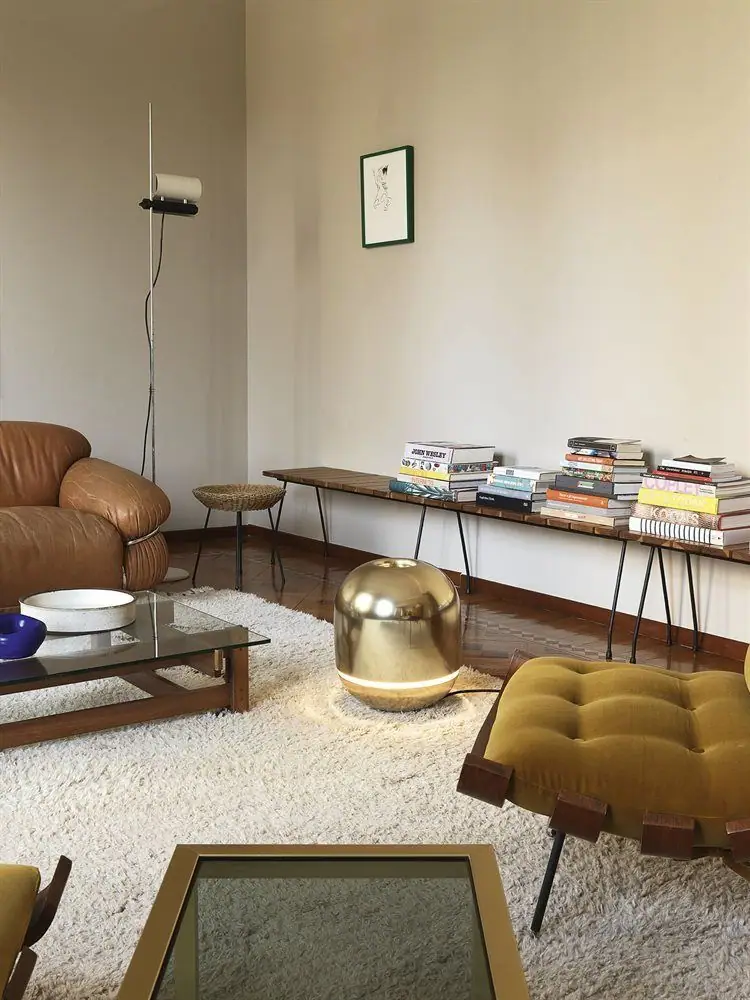
We start with EVE, a discreet but visually striking personal heater that ends up drawing the eye within the space. Designed by Ludovica+Roberto Palomba and presented by Tubes in 2018 as part of its Plug&Play line, it has the dual function of heating and lighting: it is a sphere of rigid structural polyurethane, 35 cm in diameter and 40 cm high, that emits warm air and dimmable light. An object of soft, gentle curves that, even when switched off, complements the space with its minimalist design.
It needs no installation: simply plug it in, and it can stand on the floor or on a table. According to Tubes’ data sheet, heating is set at two levels, 400 and 800 W, with a two-hour boost function, and is controlled with the touch controls or from a mobile app via wi-fi. The light function means it can also be enjoyed at dusk in the warmer months.
Step-by-Step, by Alberto Meda
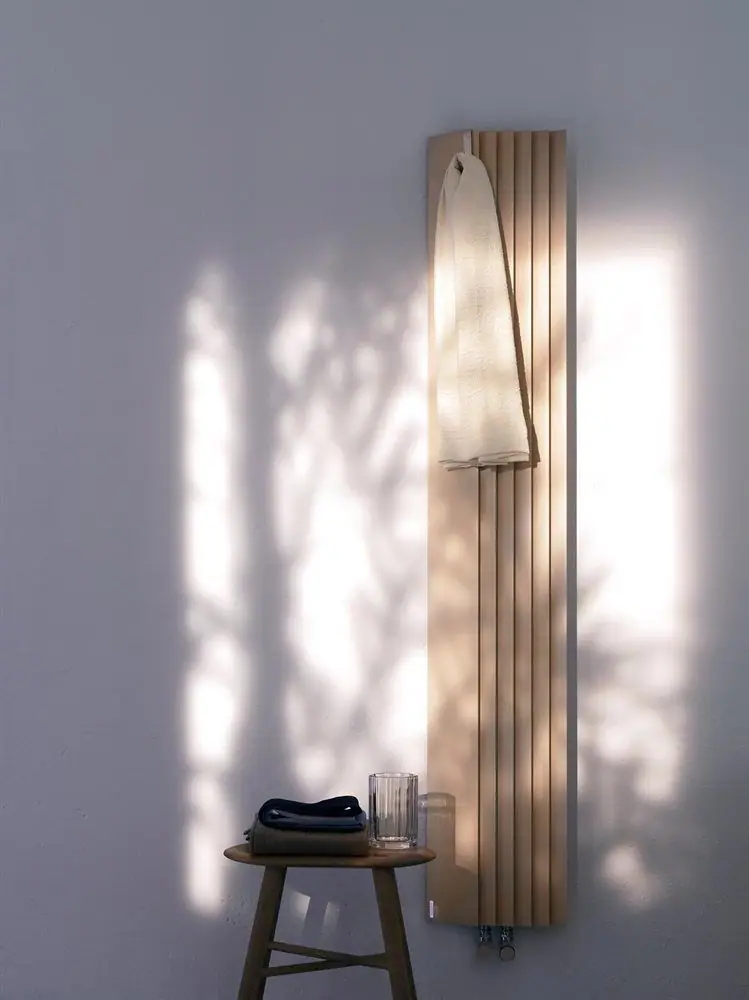
Next comes Step-by-Step, designed by Alberto Meda for Tubes in 2018. It has a solid aluminium body with a surface articulated in pleated elliptical modules: depending on the angle of the light and the viewpoint, its form changes and creates a different movement. Tubes compares these overlapping elements to the pages of a book.
The base module can be installed on its own or alongside another, tilted to the right or to the left; these four configurations, multiplied by the available heights, allow up to twenty different combinations. It is a clean, slim, linear object that rests gracefully against the wall, with absolute formal clarity: the technology is there but completely hidden, with no visible brackets or connections. It projects just 7.8 cm from the wall, comes in hydronic, electric and dual-fuel versions, and accepts a towel rail and hook, so it also works in the bathroom.
Milano, by Astori De Ponti Associati
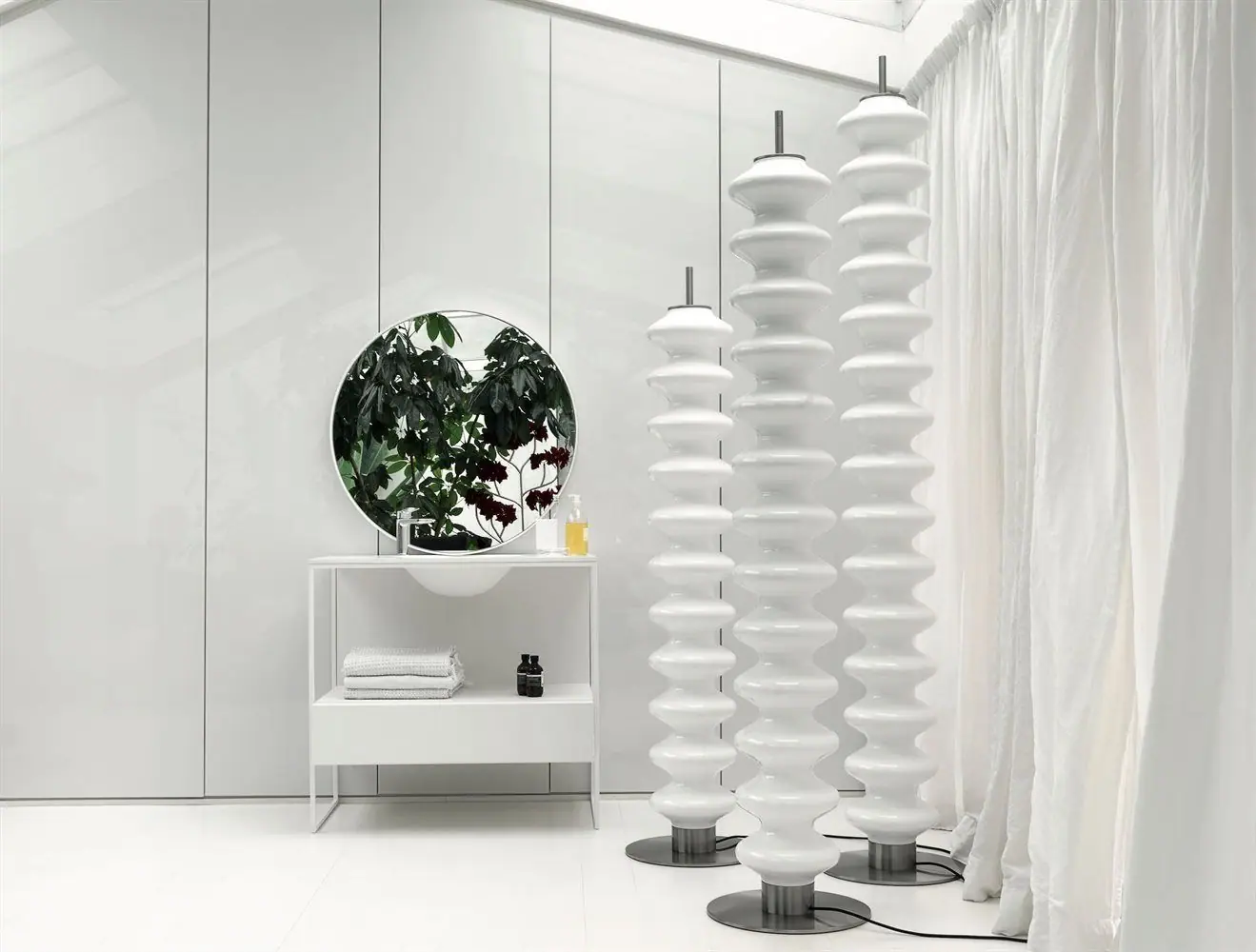
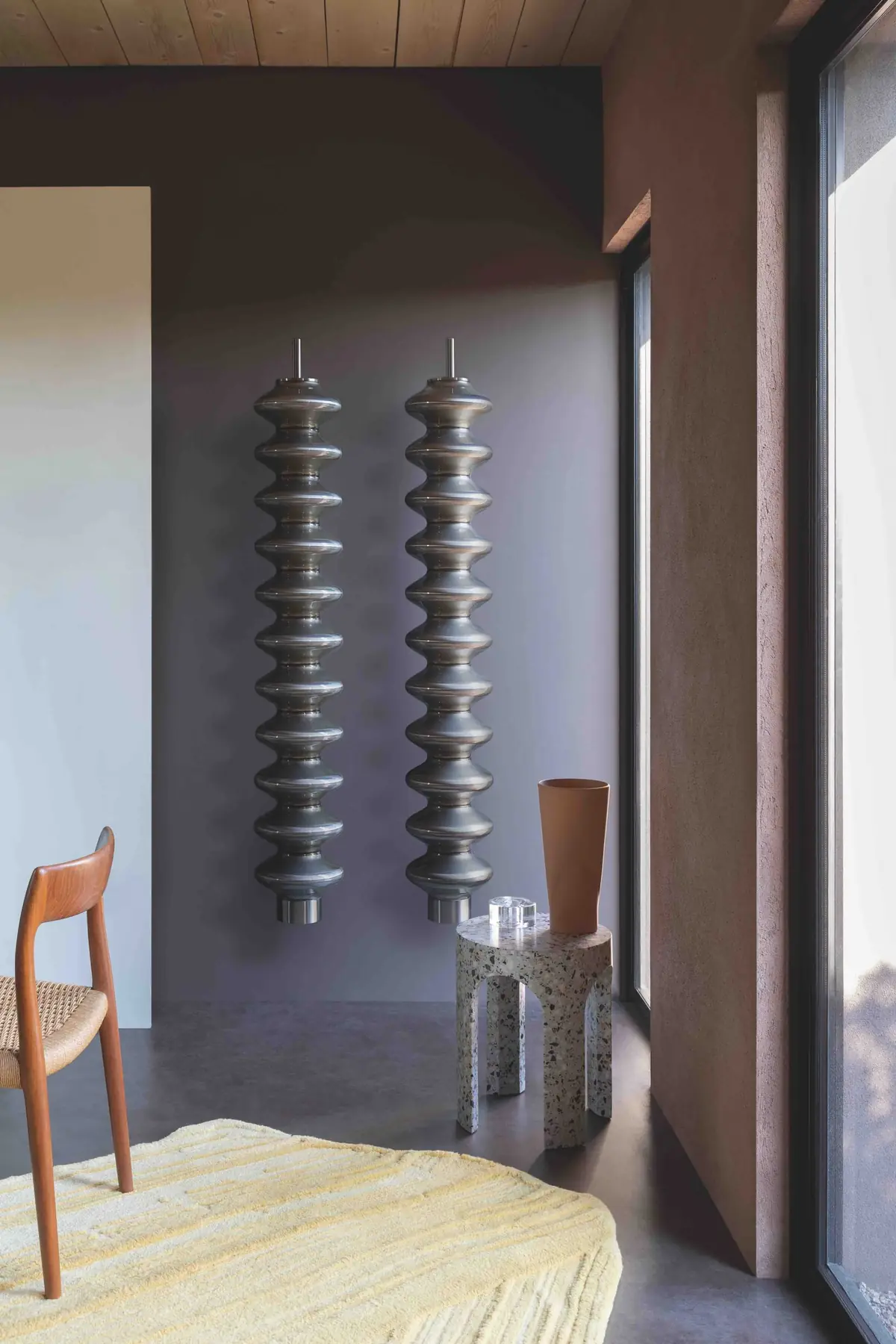
Among the sculptural objects, Milano stands out, designed for Tubes by Astori De Ponti Associati in 2006. Its sinuous body, made of modular elements, defines its form and enhances the space it occupies. It is made entirely of carbon steel and is offered in hydronic and electric versions, in three heights: 170, 200 and 230 cm.
It can stand on the floor, hang on the wall or be suspended from the ceiling; the latter version, electric only, hangs from rods of 40 to 150 cm. In the floor-standing version it is 25.8 cm wide, and its concealed base allows it to be connected without visible cables. Its design is part of the permanent collection of the Die Neue Sammlung museum in Munich.
Foursteel: minimalism in stainless steel
Simple lines to heat the space cleanly and discreetly.
Foursteel is a Portuguese manufacturer of designer radiators and towel warmers, founded in 2004, that works in stainless steel and steel with architects and designers. The four models in this selection appear in its 2020 catalogue.
Skinny
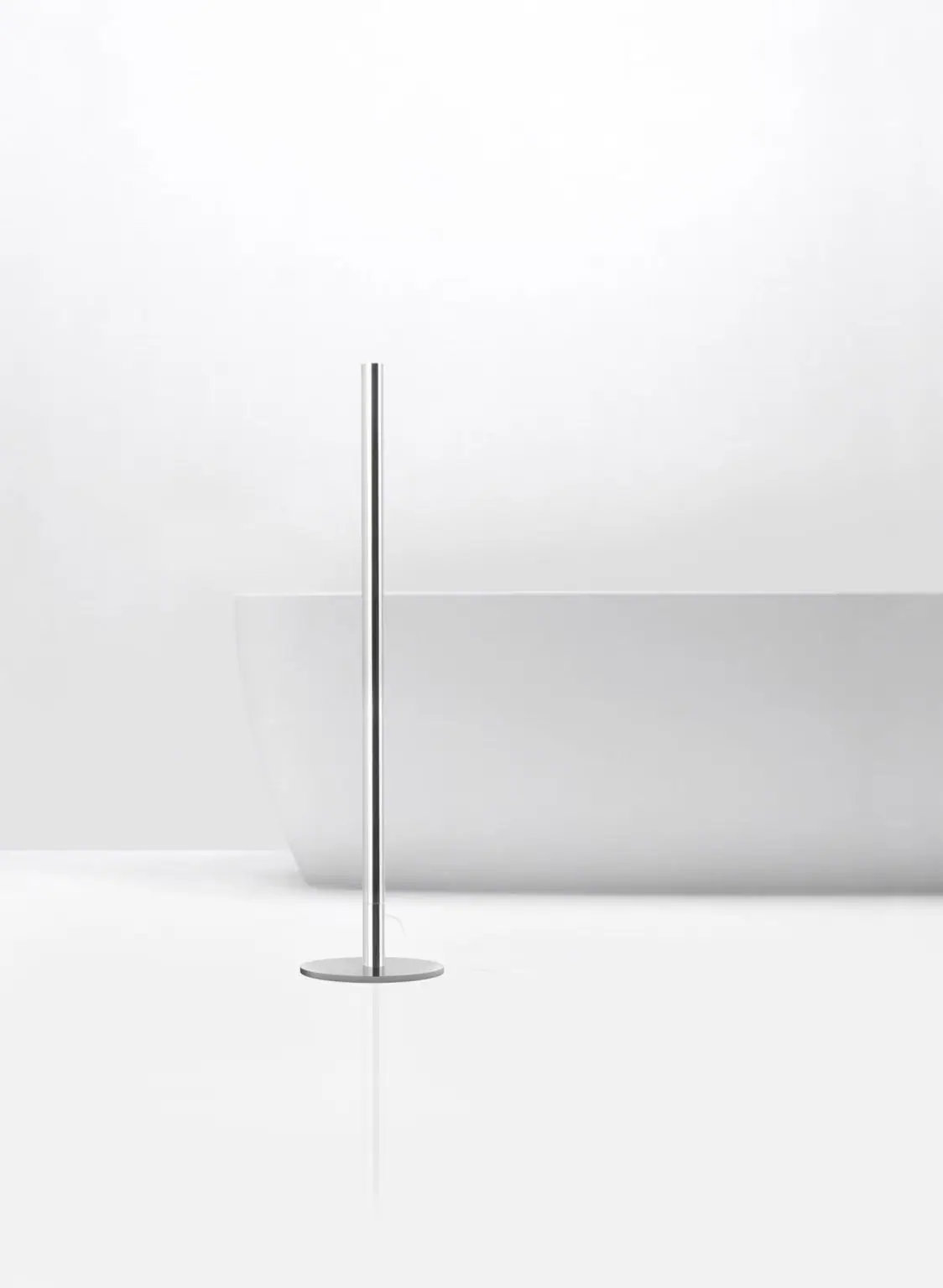
Skinny is an electric towel warmer that reduces the radiator to its bare essentials: a stainless steel tube 42 mm in diameter, in heights of 900, 1200 and 1400 mm. It can be fixed to the floor or used as a freestanding, movable piece, and several elements can be combined. Like the rest of the collection, it is offered in polished, brushed, white, RAL colours, textured black and gold or copper titanium finishes.
Plano Move
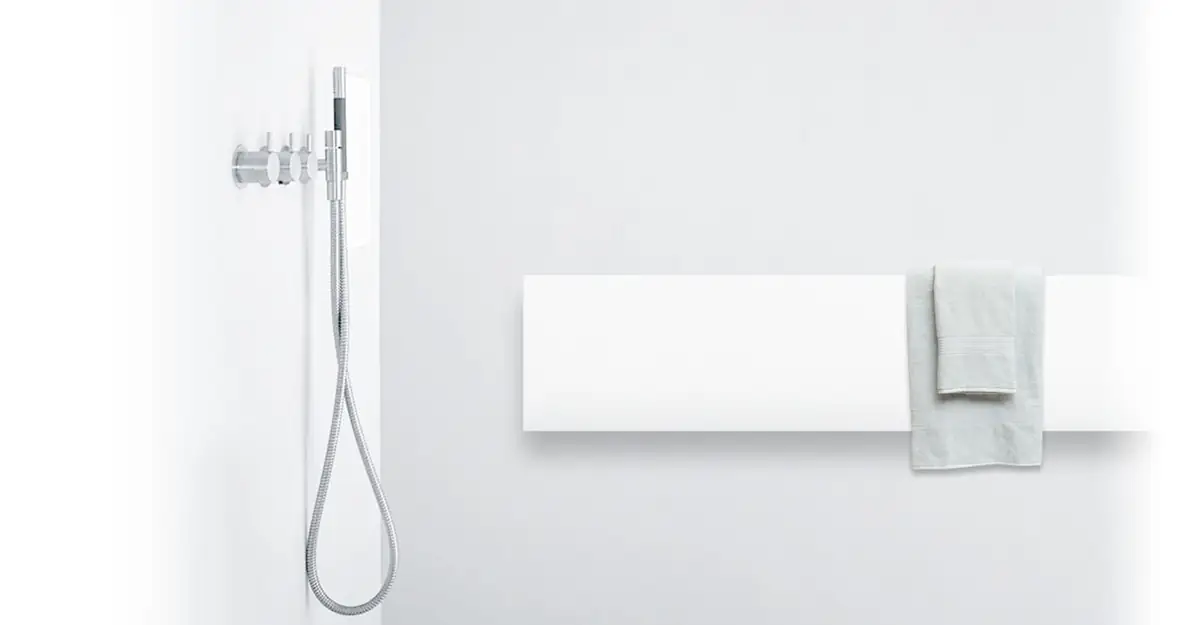
For those who prefer minimalist elements, the flat Move radiator is a way to heat the space cleanly and discreetly. Foursteel classifies it as a room radiator: an electric panel in stainless steel or steel with a concealed heating element, installed horizontally or vertically, with sides from 400 to 2000 mm and depths of 40, 60 or 90 mm. Its simple lines mean it can also be used to hang towels.
Minimal X
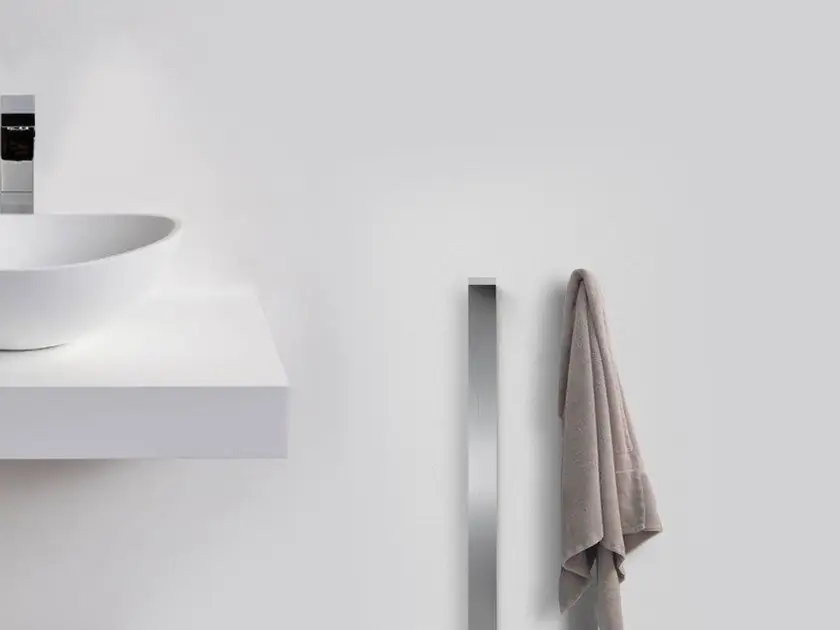
Along the same lines is the Minimal X towel warmer, because a minimalist object can bring out the beauty of a space. It is an electric stainless steel profile with a 50 × 50 mm square section, in heights from 900 to 1800 mm, fixed to the wall like a simple vertical line.
Diamond, by Patrick Pedrosa
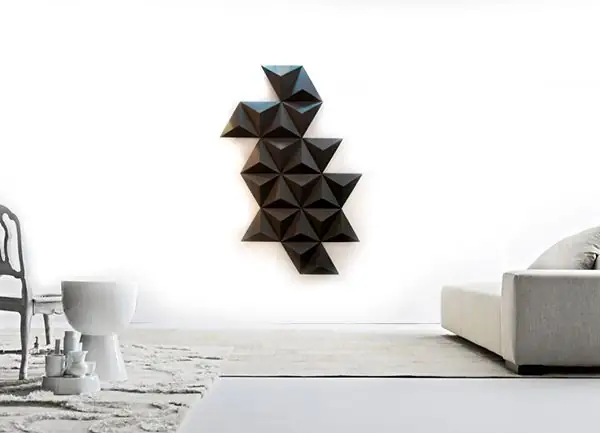
A different kind of radiator, one that plays with a three-dimensional geometric element to create an almost artistic composition, is Diamond, designed by Patrick Pedrosa for Foursteel. Its pyramidal pieces recall diamonds and dress the space like a work of art, giving it character. It is made in hydronic and electric versions, vertical (1560 × 1050 mm) or horizontal, and in a smaller version, Diamond XS, with finishes such as white, textured black, brushed, gold or copper.
Terma: copper and industrial tube
Forms and materials with character for industrial-style spaces.
For radiators that continue to stand out for their forms and materials, the Polish manufacturer Terma has some interesting proposals.
Pająk
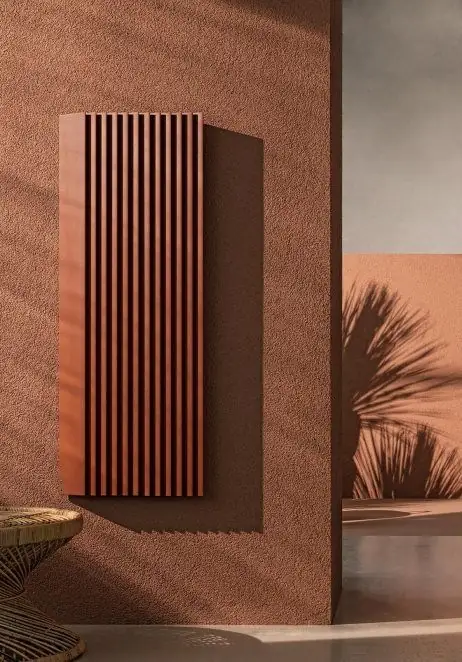
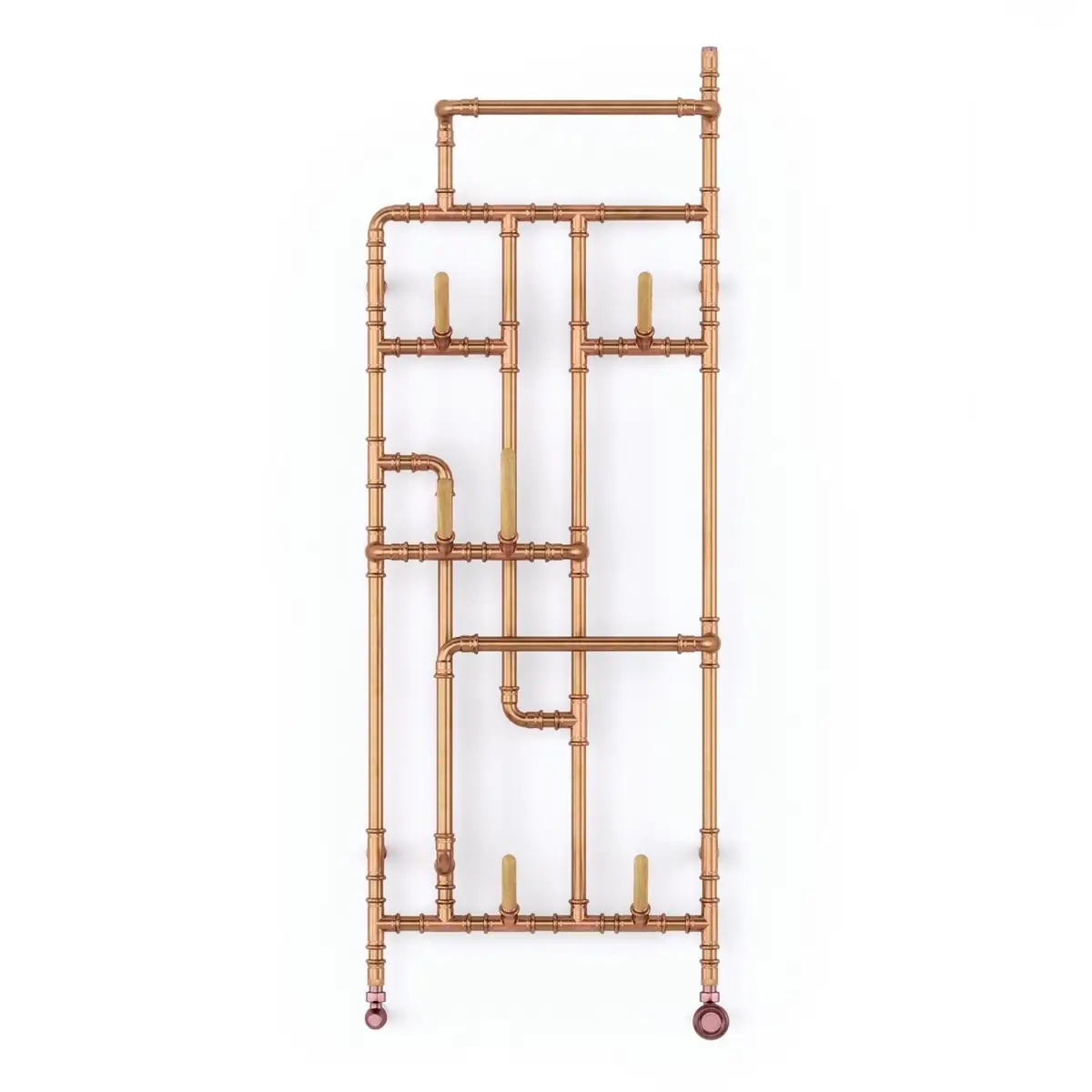
Pająk is made entirely of unvarnished copper and has a somewhat industrial look that fits perfectly into lofts or eclectic, postmodern spaces. Its name, ‘spider’ in Polish, refers to pająki, traditional Polish ornaments that build complex forms from simple materials. Over time the copper develops a natural patina, and it includes wooden hooks that make it useful in entrance halls and corridors. It is made in heights of 1000, 1400 and 1800 mm and widths of 431, 531 and 631 mm, in hydronic, dual-fuel and electric (Pająk E) versions.
Ribbon V
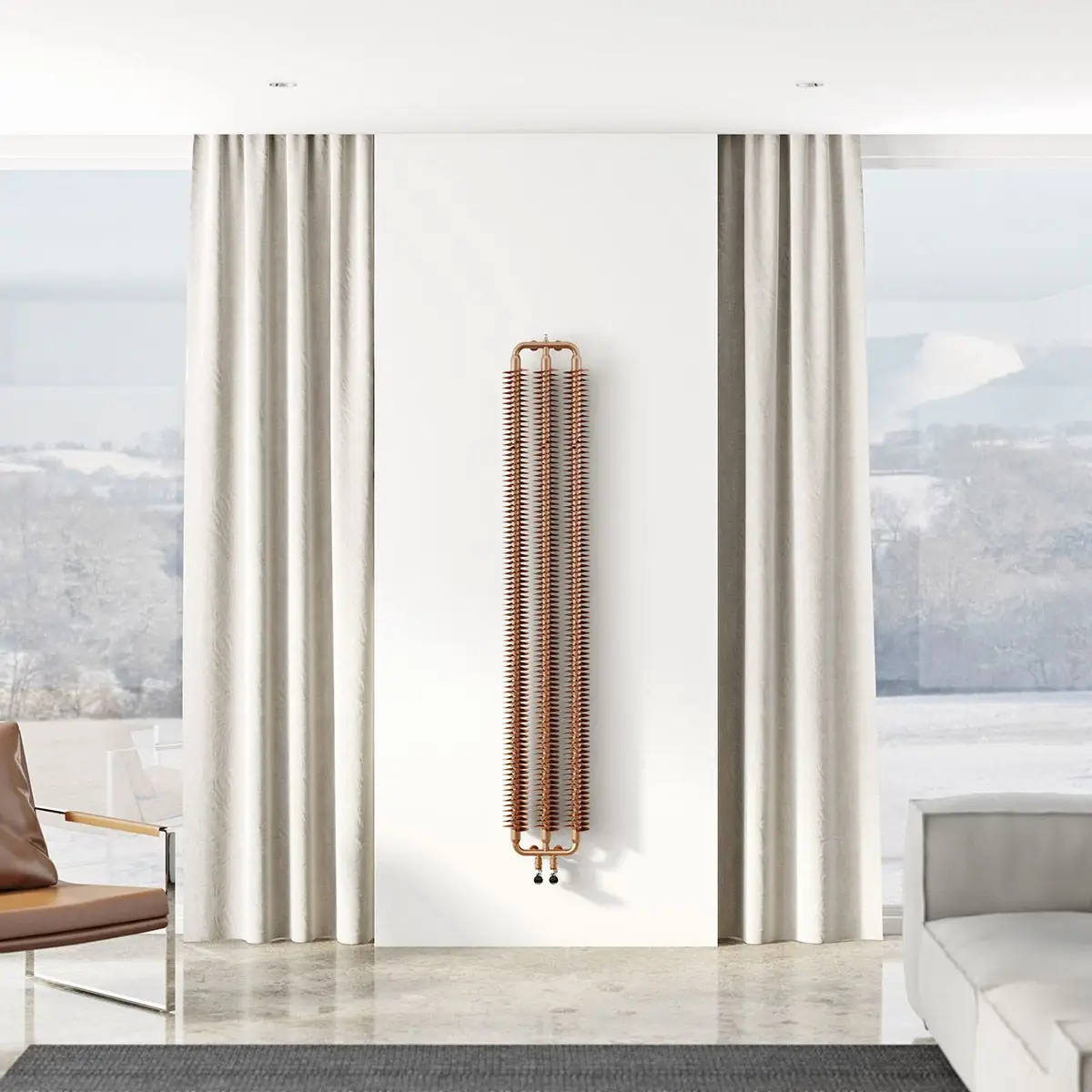
Another option is Ribbon V, with a forceful look, ideal for contrasting with weathered or simply neutral materials; Terma recommends it against brick, stone or concrete. It is built with industrial-style Faviera tubes, like those once used in industrial buildings, and is offered in hydronic and electric (Ribbon V E) versions, in heights of 1720 and 1920 mm and in a wide range of colours, including a copper finish.
Key points for choosing the project’s radiator
Every element that makes up a space deserves to be studied. These are the criteria that help get it right:
- Centre stage or discreet: decide whether the radiator should disappear (flat panels, slim profiles) or become a decorative element (sculptural, geometric or copper pieces).
- With or without building work: electric and Plug&Play models suit rooms without a heating circuit or light refurbishments; hydronic models make use of the central system.
- Bathrooms: consider versions with a towel rail, hooks or dual-fuel operation so the towel warmer can also be used out of season.
- Wall space and depth: profiles that project only a few centimetres, or floor-standing and ceiling models, free up the wall in small rooms.
- Finish and material: the colour, exposed metal or copper patina should work with the rest of the project’s materials.
Frequently asked questions
- What is the difference between a hydronic, an electric and a dual-fuel radiator?
- A hydronic radiator runs on hot water from the heating system; an electric one has a heating element and needs only an electrical connection; a dual-fuel one combines both systems. In this selection, Step-by-Step and Pająk are offered in all three options.
- How do you compare the output of two hydronic radiators?
- Manufacturers declare output according to the EN 442 standard, at a temperature difference of 50 K (water at 75/65 °C and room at 20 °C). If the system works at low temperature, for example with a heat pump, the actual output is lower and must be recalculated using the radiator’s curve.
- Which regulations apply to electric radiators?
- Since 1 January 2018, electric local space heaters sold in the European Union have had to meet the ecodesign requirements of Regulation (EU) 2015/1188, which sets a minimum seasonal energy efficiency and takes into account the type of temperature control. In 2024 it was replaced by Regulation (EU) 2024/1103.
- Can a designer radiator be used as a towel warmer?
- Many models allow it: Skinny and Minimal X are towel warmers, Step-by-Step accepts a towel rail and hook as accessories, and Pająk includes wooden hooks.
There are more and more radiators that respect the character of a project and contribute to its overall design: what completes an element that works is its beauty. At Matter we help you choose the heating systems and finishes that best suit the rest of your project’s materials.
Book your visit to Matter.
Book a visit