Transforming nature into art
Mogu turns textile and agro-industrial waste into mycelium acoustic panels, wall coverings and floors: how they are made and what they offer.
Products7 min read
In the constant search to redefine material design, we came across a product born of the conviction that nature's inherent intelligence can be put to use, seeking a harmonious fusion between human skill and the rhythms of the natural ecosystem: mycelium, the vegetative part of fungi.
It is presented by Mogu, an Italian company that has been developing mycelium materials for interior design since 2015. In this article we explain how a living organism is turned into a building material, which products it offers today —acoustic panels, wall coverings and floors—, with their formats and performance, and what to bear in mind when specifying them.


From mycelium to material: how it is made
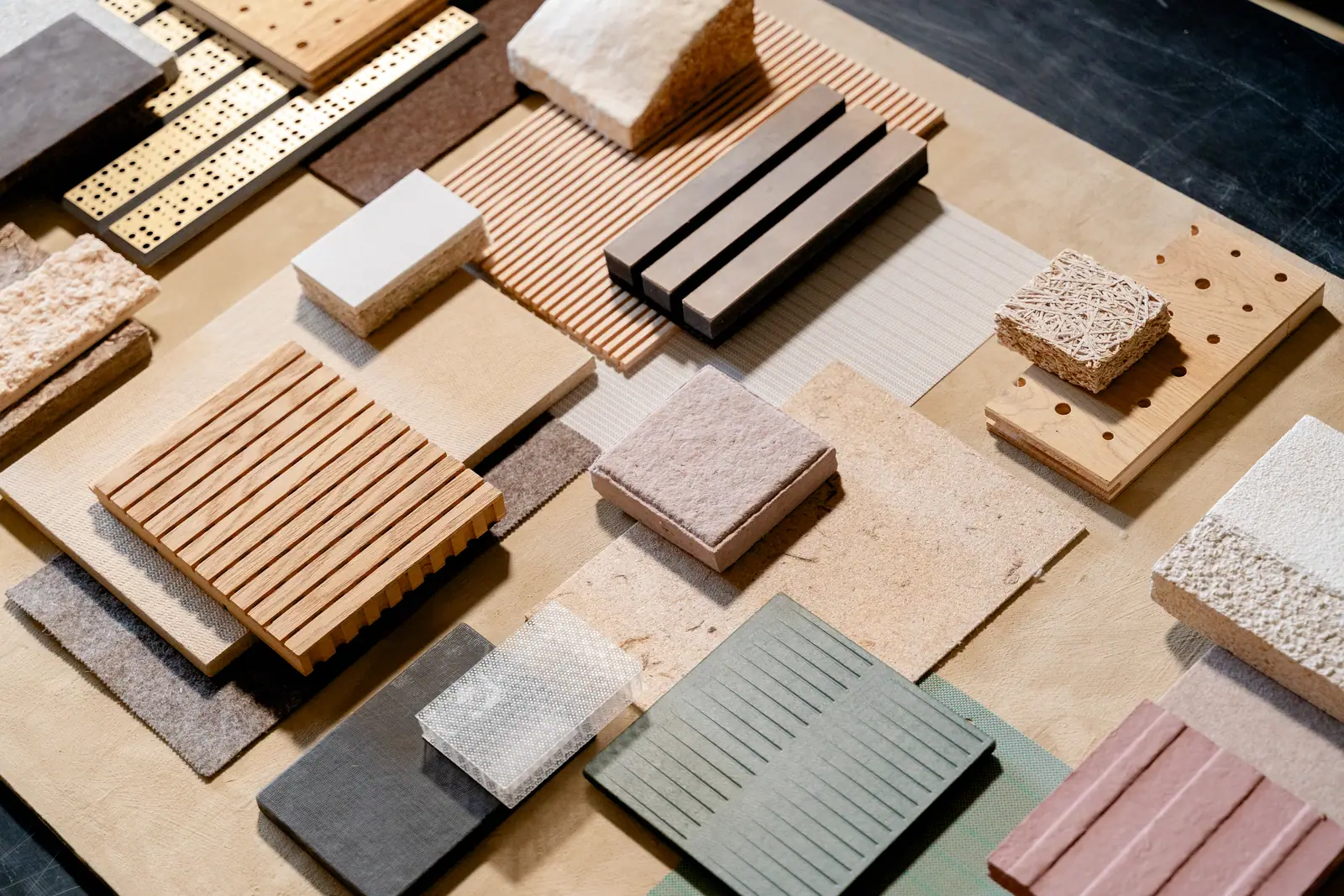
Exploring the aesthetic potential of materials, Mogu presents a pioneering range of commercial products based on mycelium. Designed for interiors, these products range from soft, foam-like textures to tough, high-density compositions.
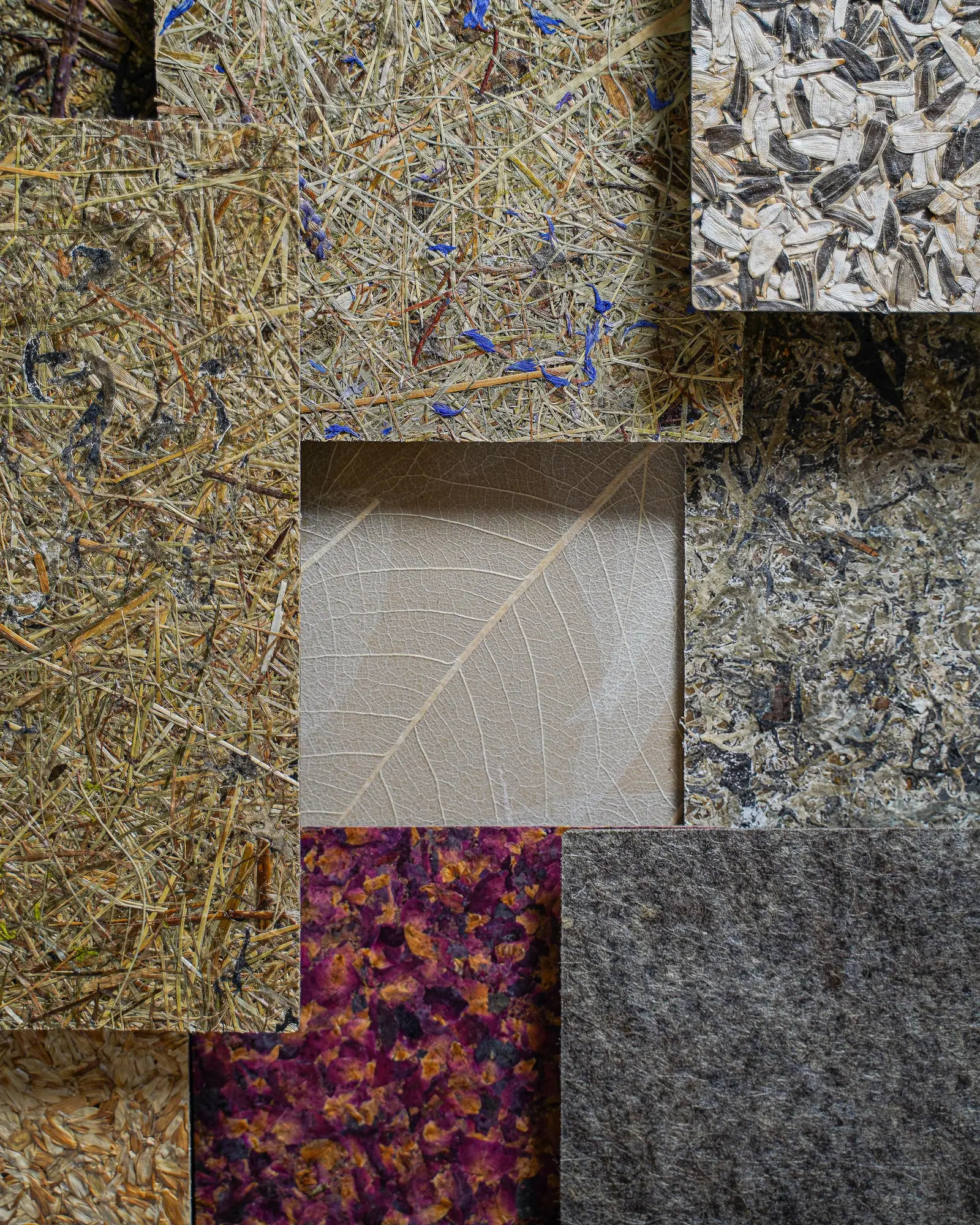
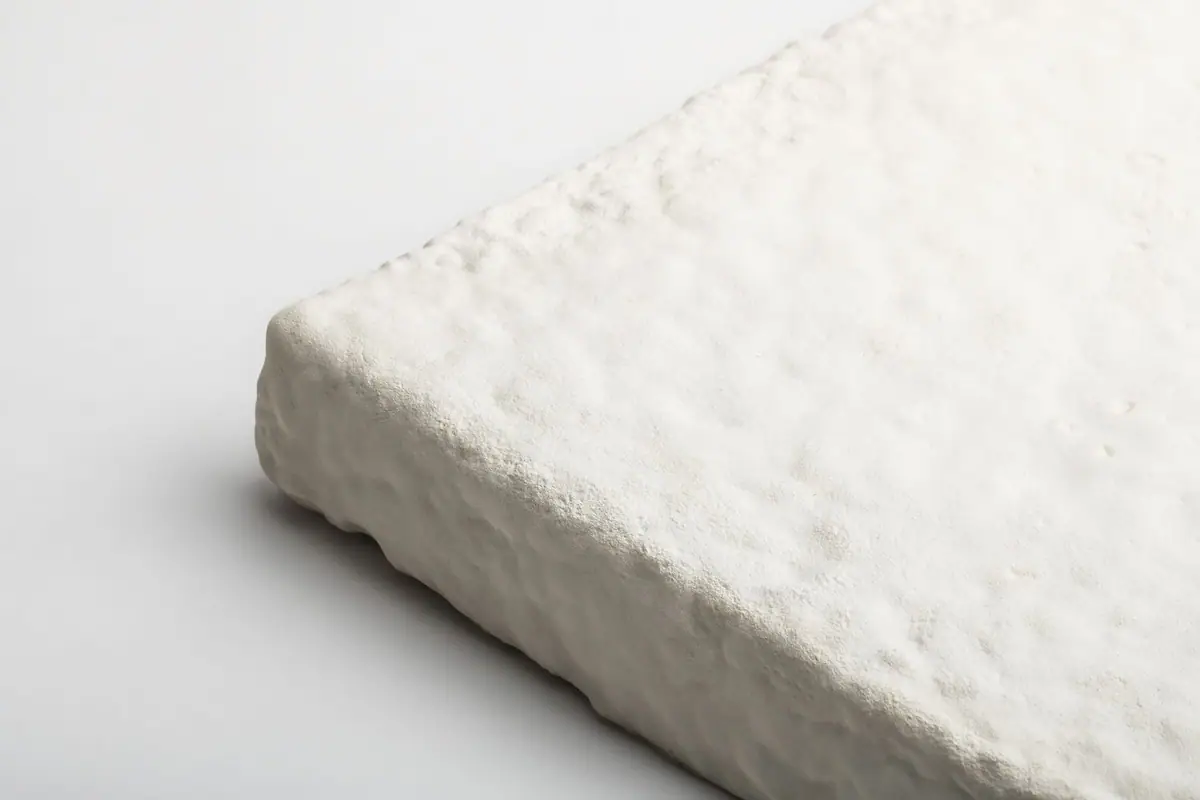
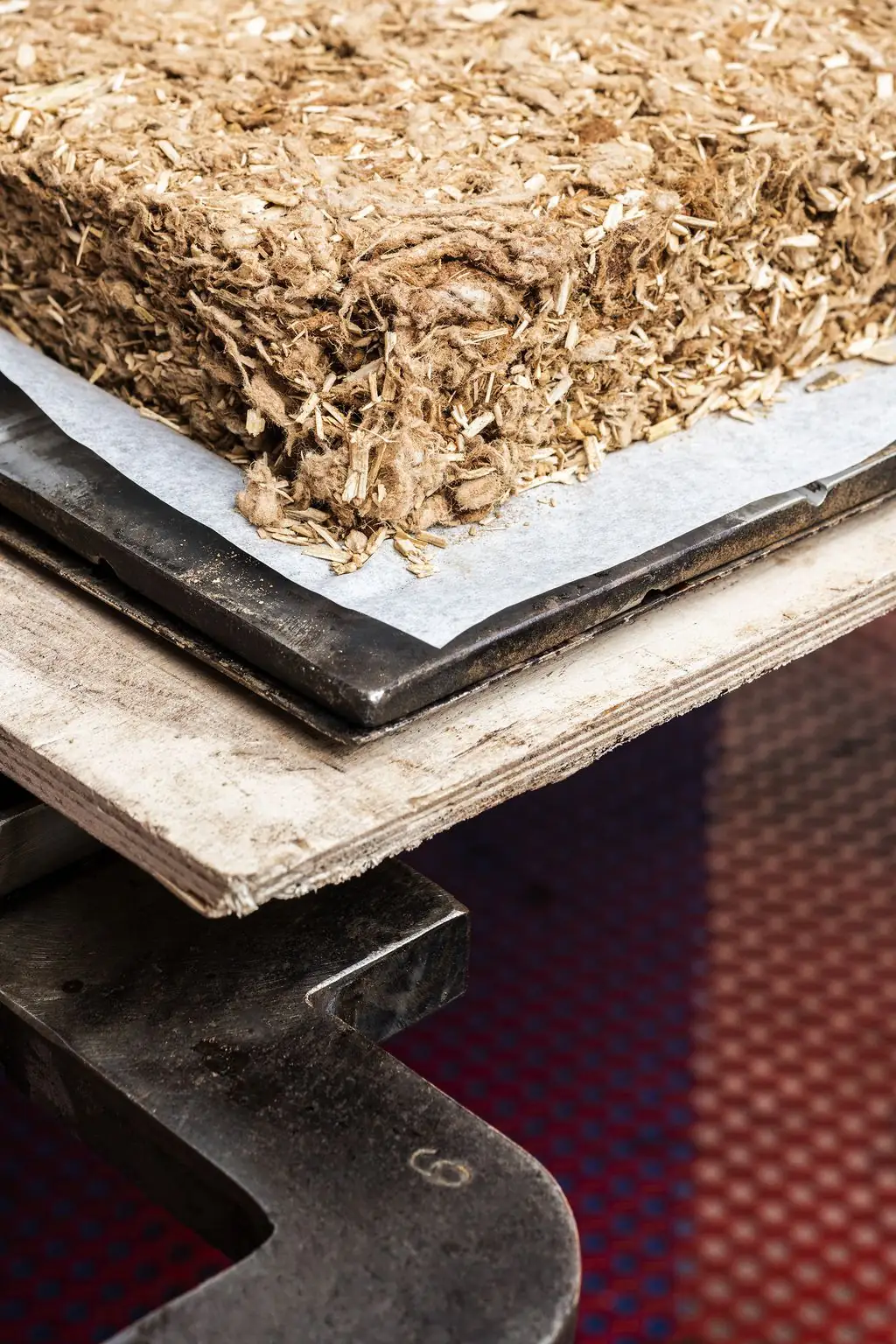
The technology consists of partnering with fungal micro-organisms and using mycelium as the key ingredient. Mogu grows selected strains on substrates prepared from agro-industrial waste: as it grows, the mycelium intertwines with the fibres and acts as a reinforcement of the matrix, turning that waste into high-value functional composite materials. By adjusting the composition of the substrate, materials with different properties can be obtained quickly and with few resources. At the end of the process, slow drying renders the material inert, with low energy consumption.
In a world where industrial production generates overwhelming amounts of waste, this approach changes the production process: it starts from low-value materials with no other industrial use and turns them into value-added products. One example is the short, dusty cotton fibres that are unsuitable for upholstery or spinning, which Mogu recovers from the textile industry. In the floors, the finishing resin incorporates other waste biomass, such as maize residues, rice straw, coffee grounds, algae and mollusc shells.
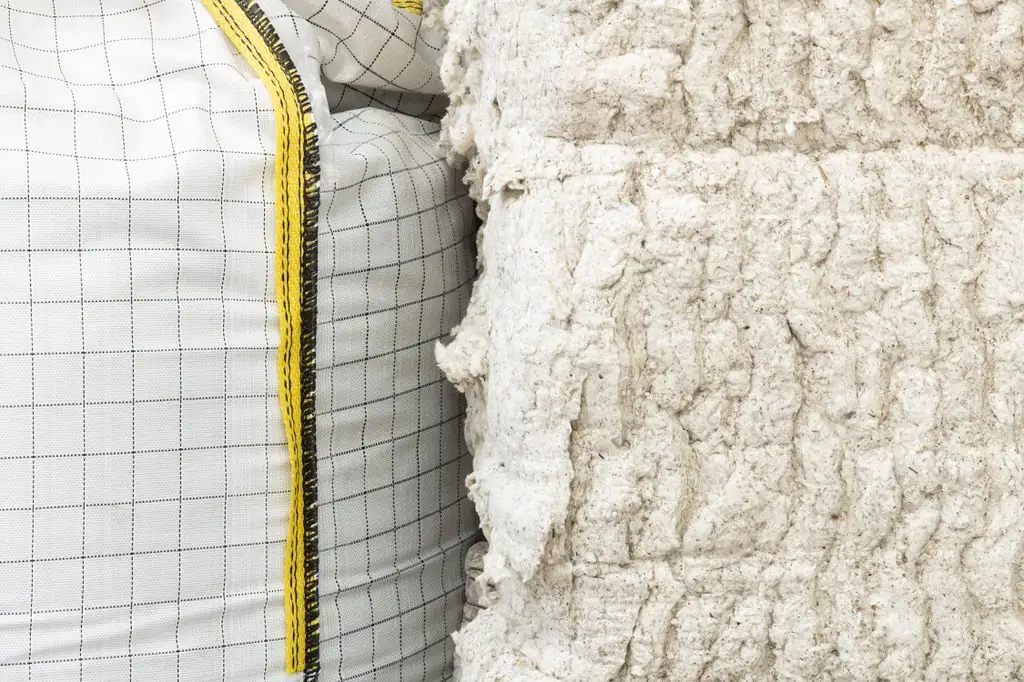
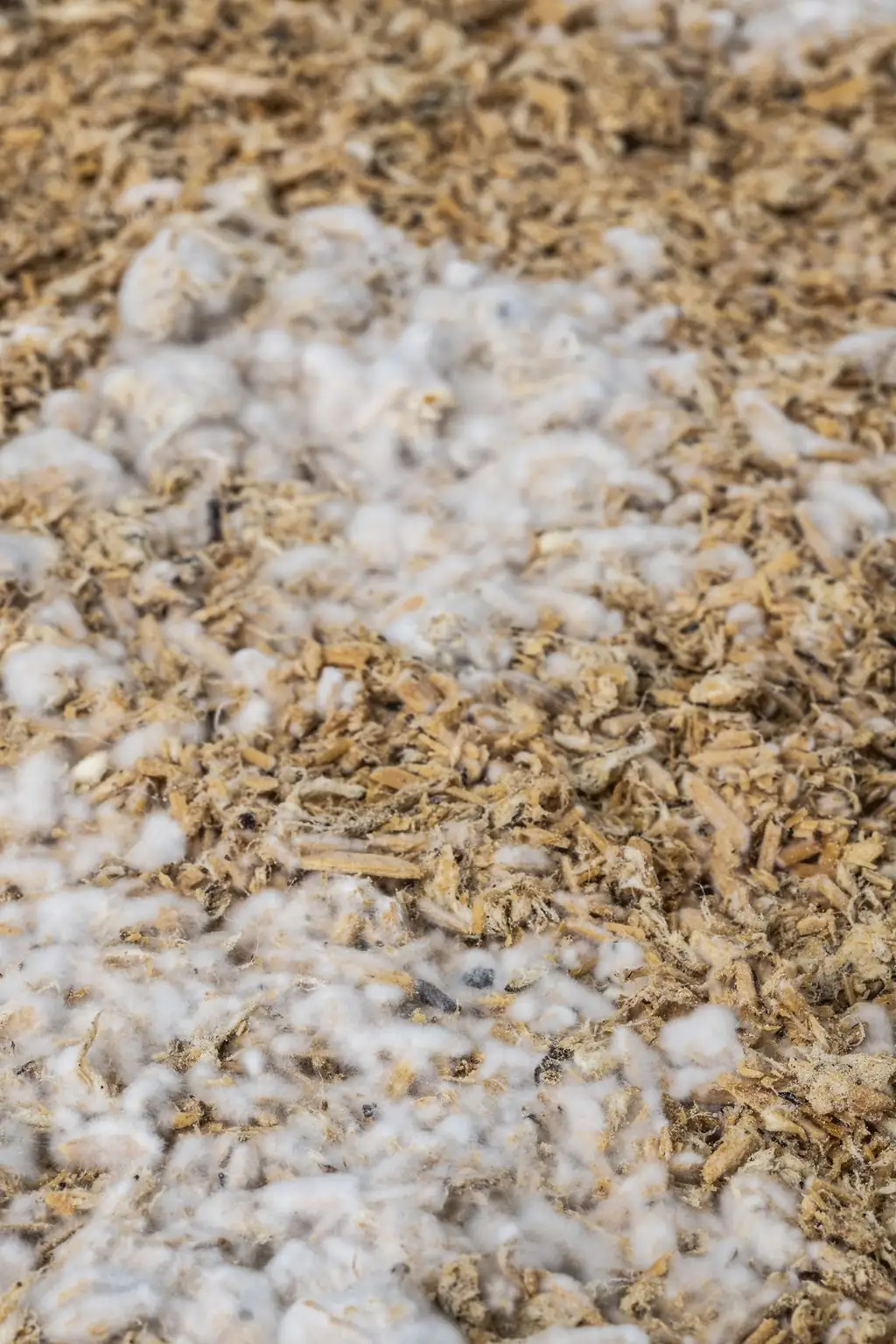
According to the manufacturer, the result has the following properties:
- Plastic-free: the mycelium composite consists of the substrate and the mycelium, with no other additives.
- Biodegradable: the material is stable and durable in use and degrades at the end of its service life under the right industrial conditions.
- Safe: Mogu uses strains that are neither genetically modified nor allergenic, and that release no spores during production.
- Indoor air quality: the materials have been tested for volatile organic compound (VOC) emissions and allergenic potential, and Mogu considers them safer in this respect than wood and many common interior materials.
Mogu, a company specialising in mycelium
Mogu was founded in 2015 in Inarzo, near Varese (Italy); its co-founders include Stefano Babbini and Maurizio Montalti. The company is part of SQIM, which brings together its two product lines: Mogu, devoted to interiors and architecture, and Ephea, mycelium materials for fashion. In January 2024 it closed an €11 million funding round to expand its industrial production.
Its interiors catalogue was launched in 2019 with the first commercially available mycelium acoustic panels, according to the company itself, and has since grown to include wall coverings and floors.
Three product families for interiors
These materials have a wide range of applications, covering acoustic panels, wall coverings and floors.
Mogu Acoustic panels
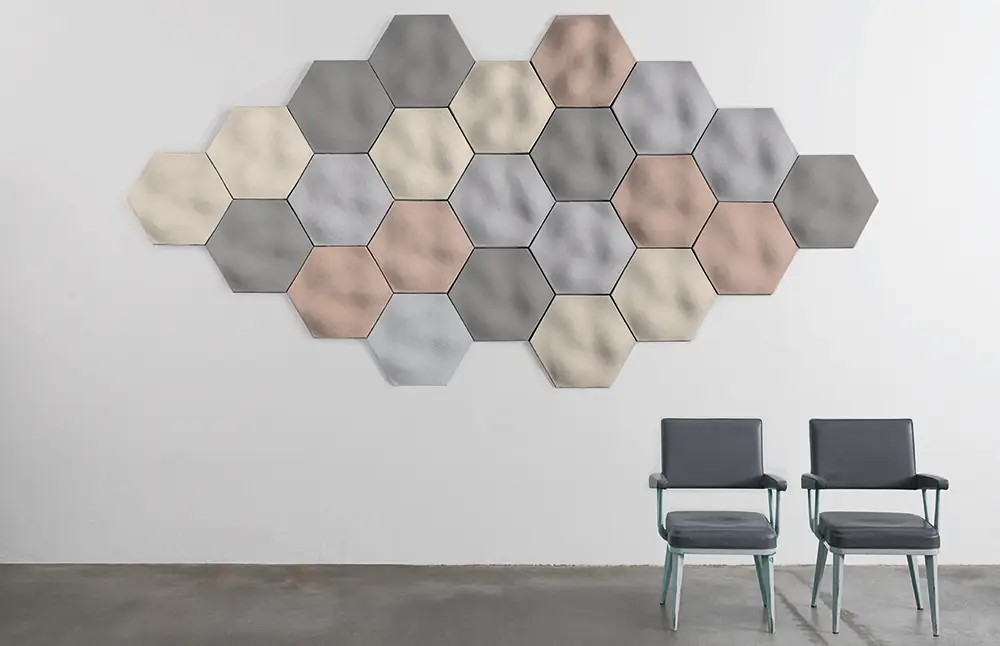
The acoustic panels are made from soft mycelium, with a foam-like texture, and recycled textile waste. They are modules with a three-dimensional relief and a velvety finish, designed to absorb sound above all at speech frequencies, and they fit into any architectural design. They are fixed to the wall with a proprietary screwless system and are available in various formats, colours and models.
The table summarises the models Mogu presented in its Acoustic collection, with the dimensions from its website and the noise reduction coefficient (NRC) from its 2023 technical data sheet.
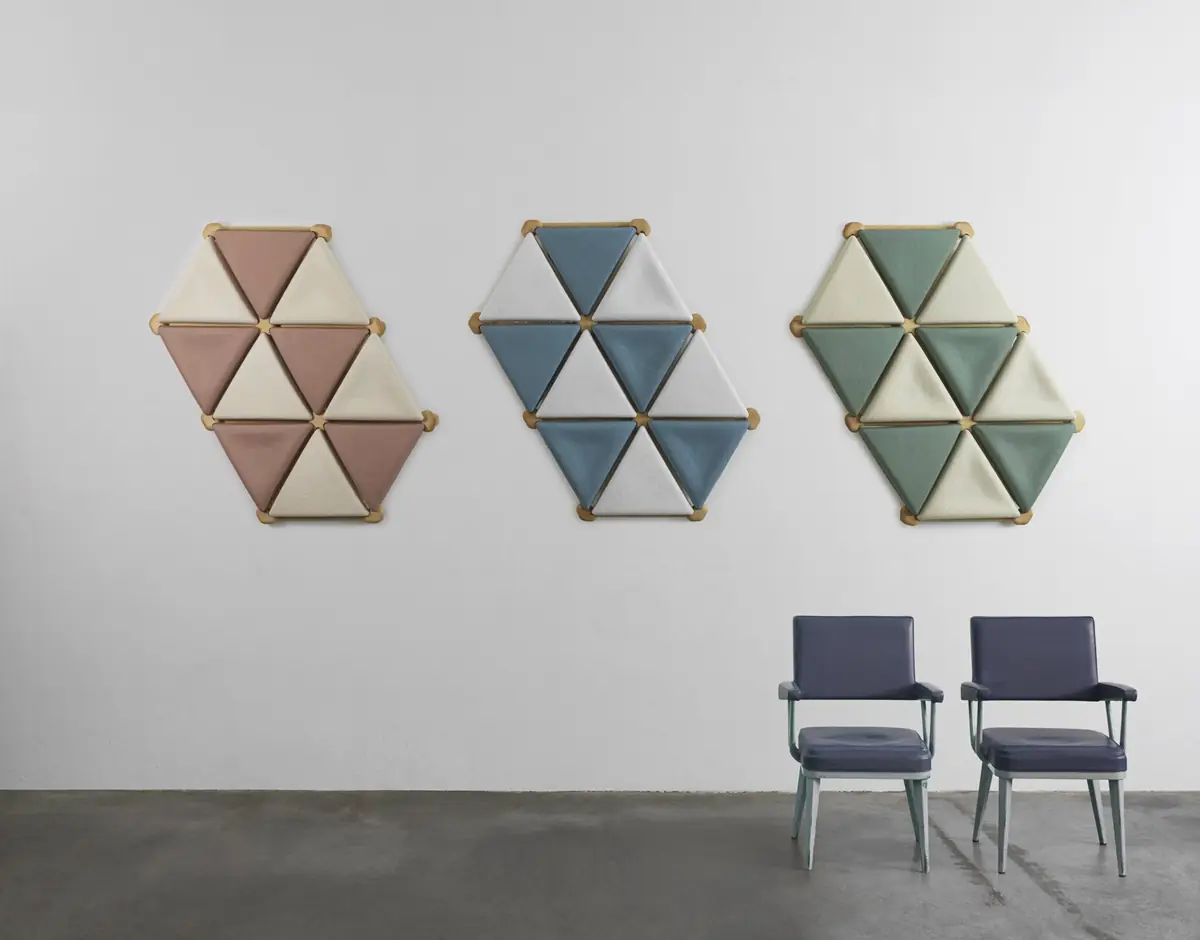
Foresta System, developed with the engineering firm Arup, combines the mycelium panels with a structure of beech branches and nodes screwed to the wall; the panels are attached to the nodes with magnets, so the composition can be changed without building work. It received the German Design Award 2022 in the Excellent Product Design – Eco Design category.
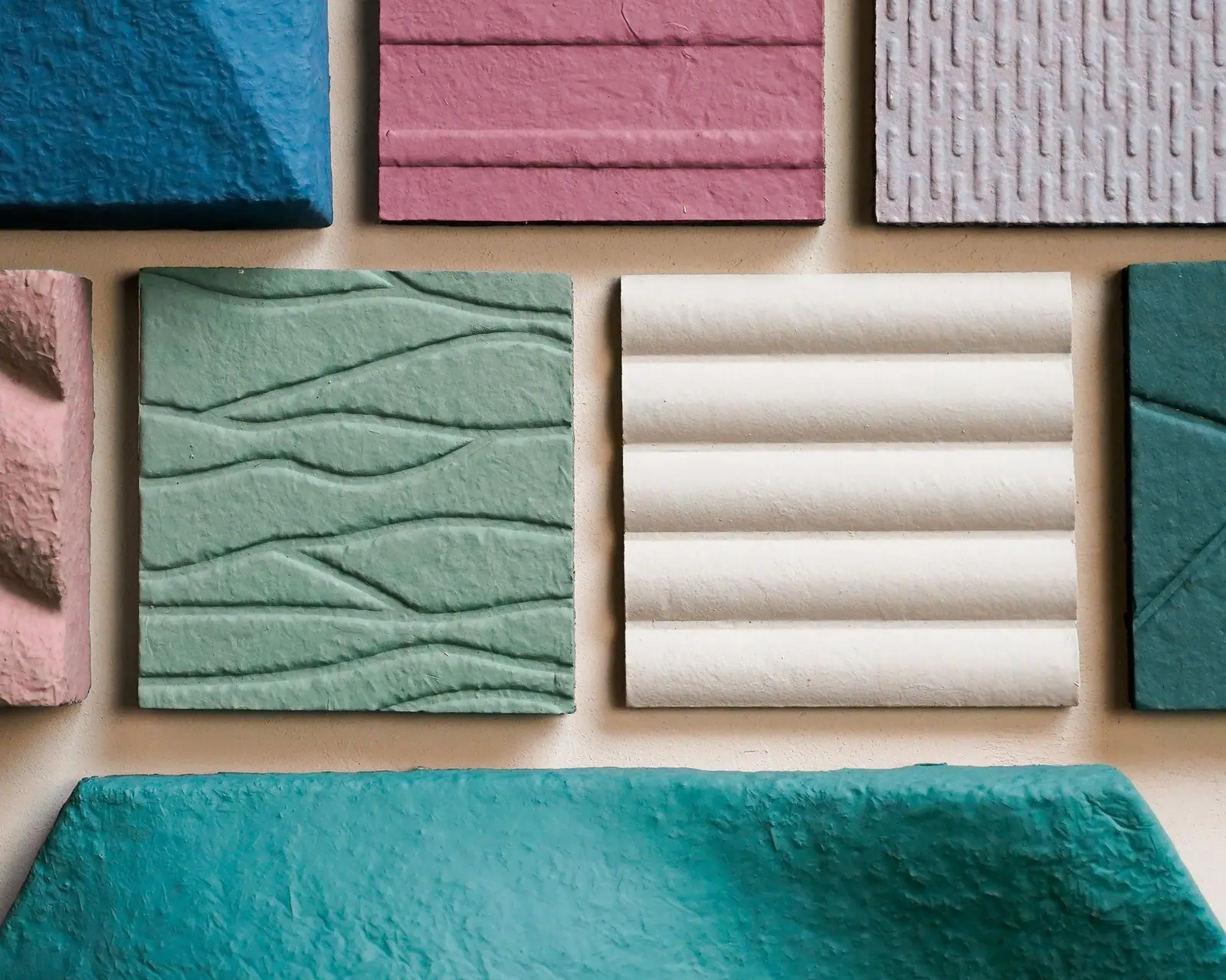
Mycelium is naturally white, but the collection is also offered in a palette of five colour scales with four shades each, inspired by water, forest, earth and sand. The paint is water-based, low in VOC emissions and elastic, so as not to block absorption. The finish does affect performance: according to Mogu, the untreated natural panel reaches an NRC of 0.6, and the finish reduces it by between 0.1 and 0.2 points. The same applies to fire: the technical data sheet gives class B-s2-d0 with the fire-retardant finish, C-s2-d0 with the colour-only finish and D-s2-d0 in natural.
PLUMA wall panels
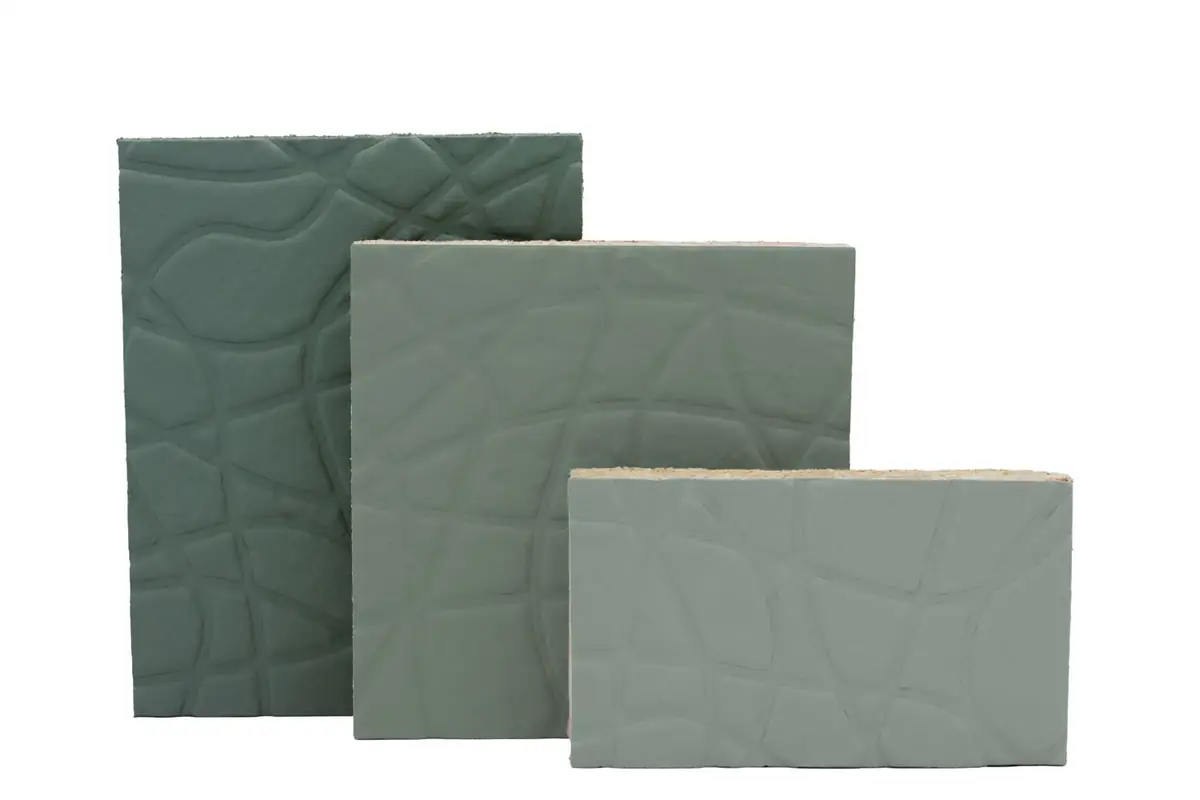
The PLUMA wall panels Mogu presents are thin boards with sound-absorbing and thermal insulation properties, designed to bring innovation and a natural feel to interiors. Made with mycelium technology and textile waste, they are described by the manufacturer as 100% circular, bio-based and biodegradable. They are available in a range of textures inspired by natural forms.
Mogu launched the collection in September 2022 with four textures, and by early 2024 its website listed seven: Leaves, Fluted, Reeds, Mycelium, Natural, Cosmos and Needles. They are designed to fit together even when the pieces are rotated, and a project-specific texture can be printed into the mycelium. The panels are 20 mm thick and come in four formats: 500×500, 600×600, 500×1000 and 600×1200 mm, in natural white or in Mogu's colour palette.
Mogu Floor flooring
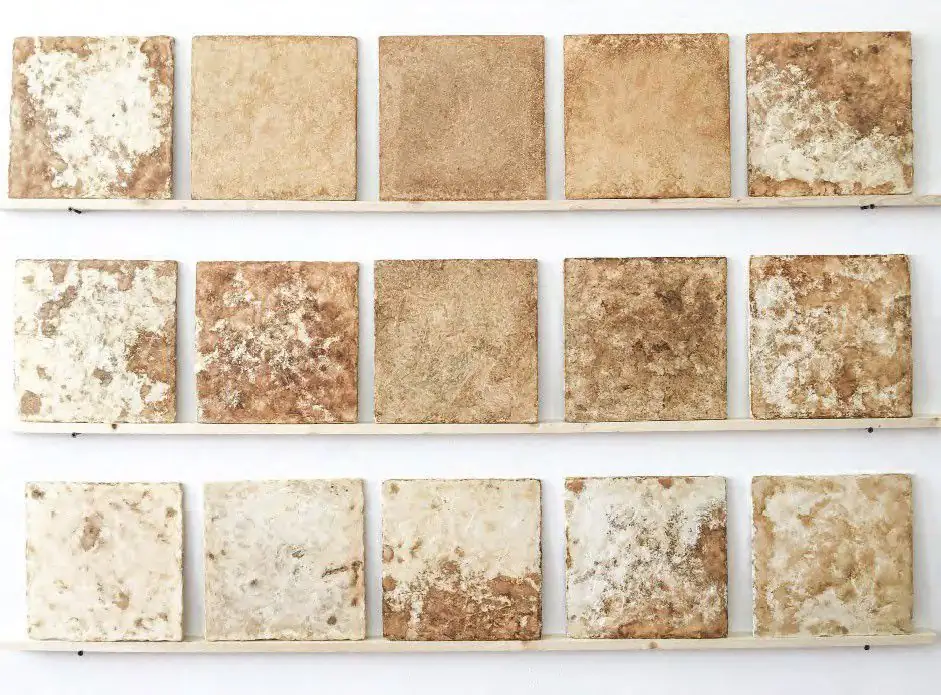
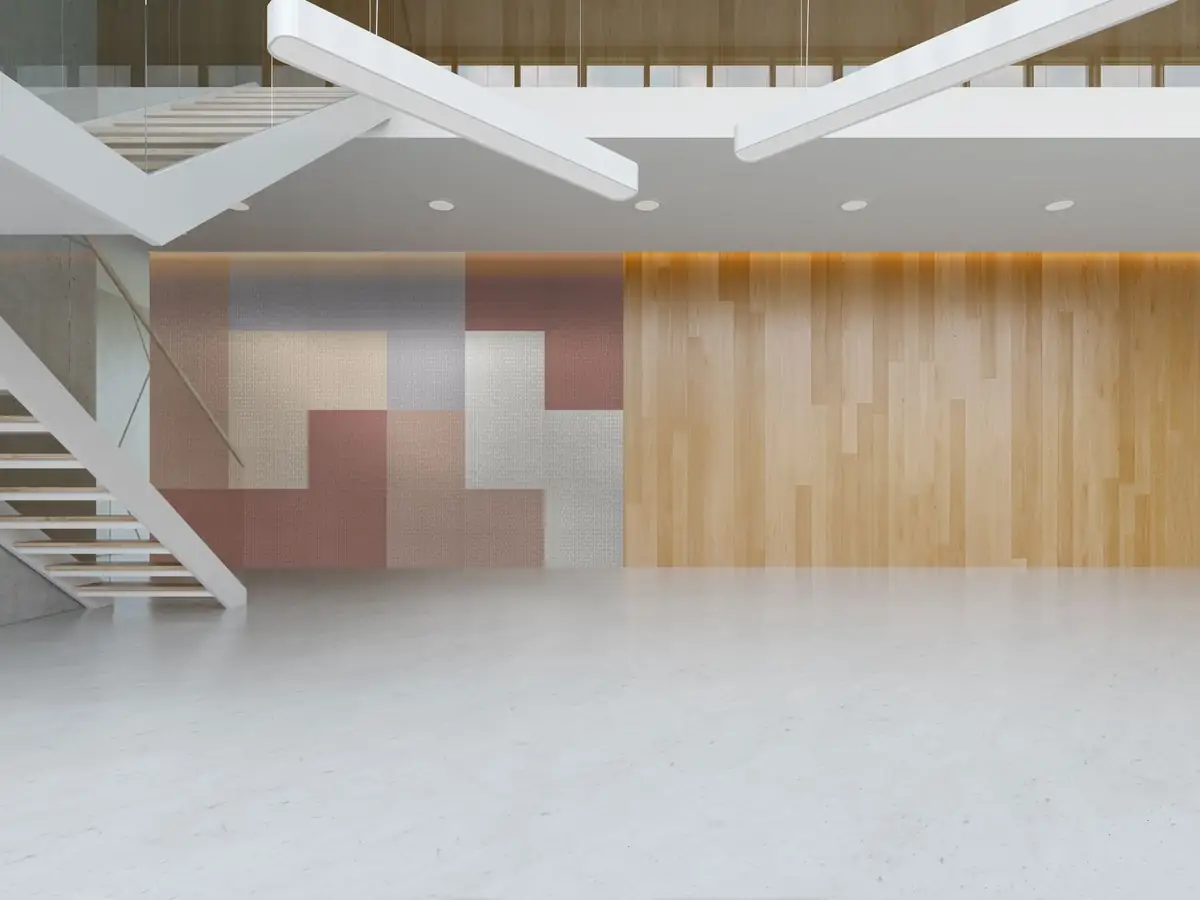
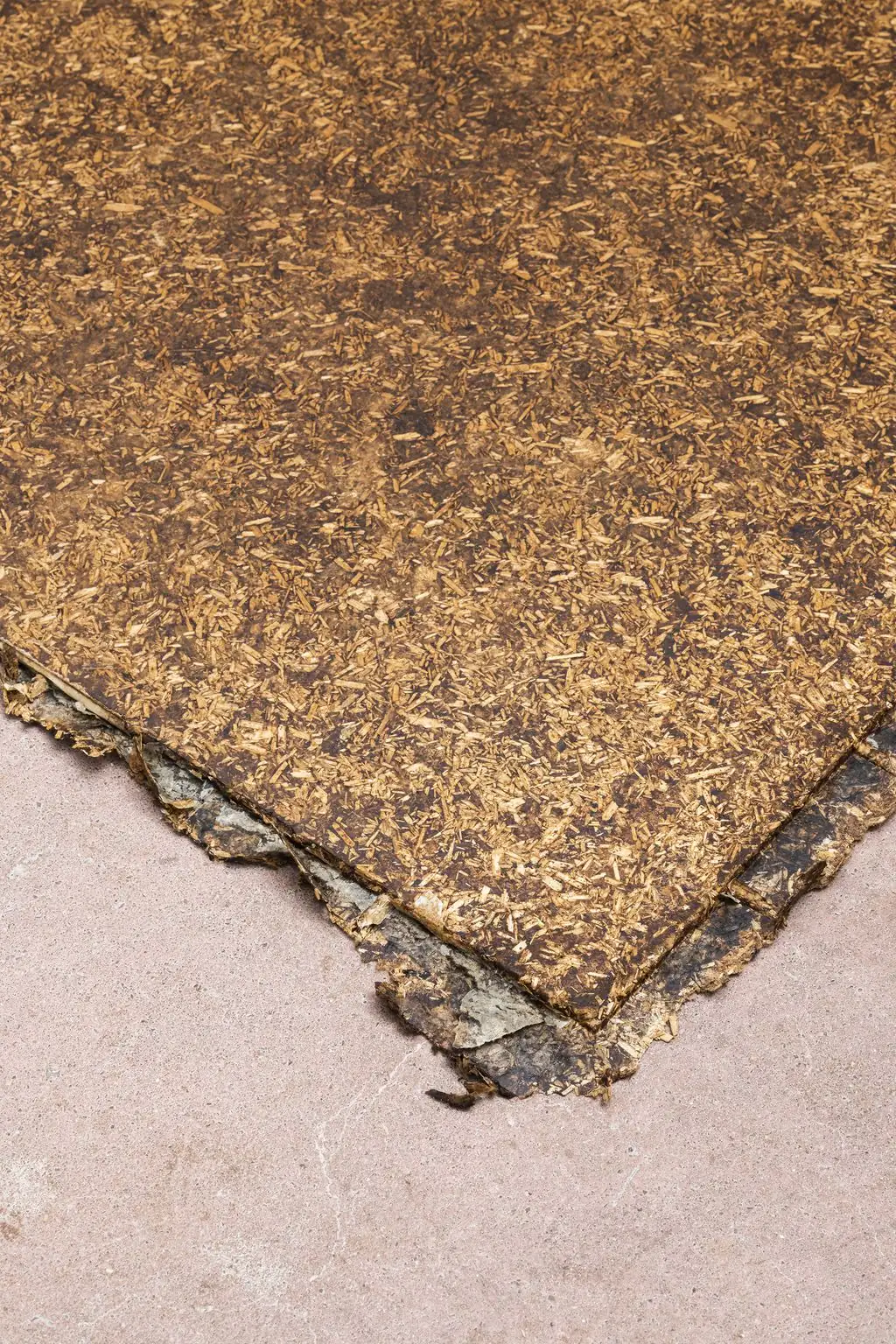
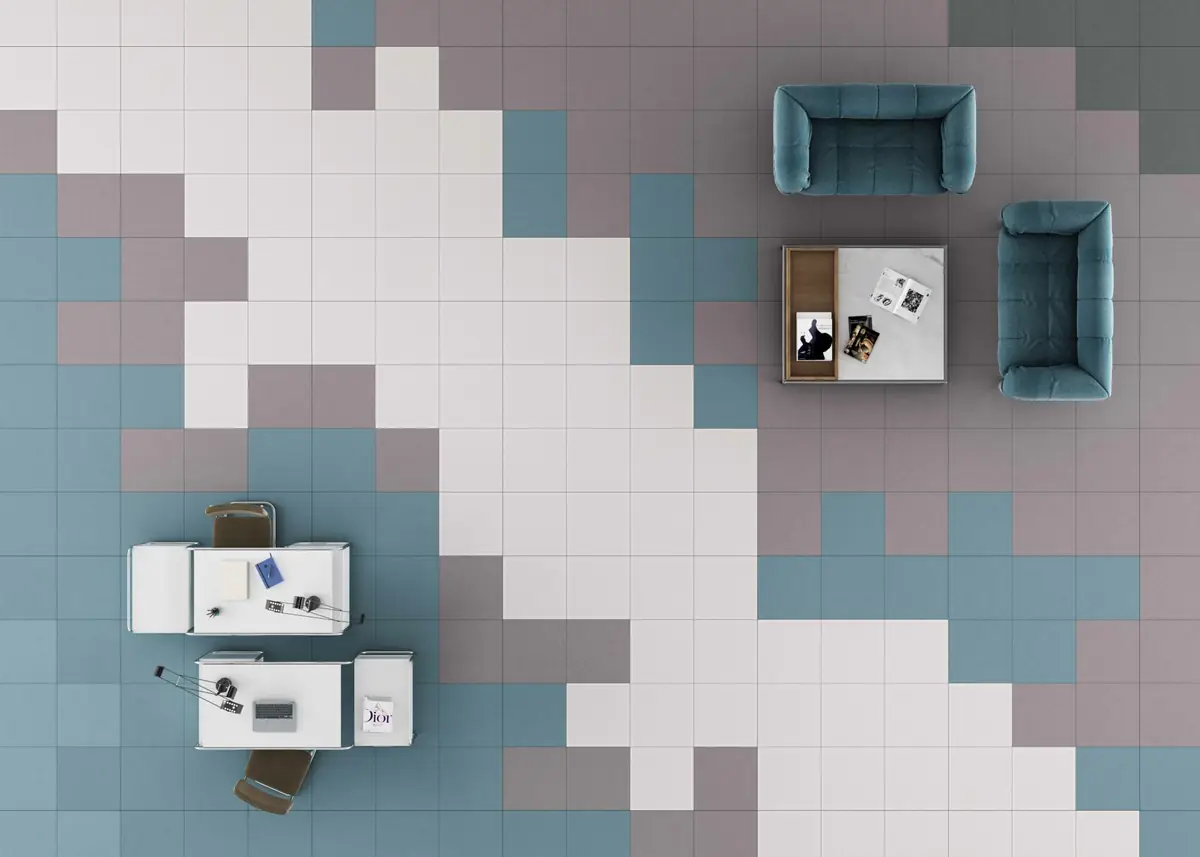
Made from agro-industrial waste, Mogu Floor is a collection of bio-based resilient floors that brings circularity to the construction industry. The tiles have a high-density biocomposite core, made from waste fibres from the textile industry and a natural binder, covered by a layer of high bio-content resin that withstands heels, scratching and abrasion like a conventional floor. Despite its stone-like appearance, the manufacturer highlights its warm, soft feel.
The collection has two lines. Floor Tiles are 7 mm glue-down tiles, in a 500×500 mm square format and a 250×500 mm plank, with a fibrous or plain look. According to the technical data sheet, they consist of a 6 mm core and a 1 mm aesthetic layer of Mogu Flex, with 67% bio-based content, which can be separated from the core at the end of its service life so that the core can biodegrade. Floor Flex is a flexible covering 1.5 or 2.5 mm thick, in 1.4 × 20 m rolls or in sheets, intended for large, high-traffic surfaces; it can run up from the floor onto the wall and clad curved surfaces and furniture.
Key points for specifying mycelium materials
These are new materials for many project teams. According to Mogu's documentation, these are the points worth resolving from the outset:
- Absorption, not insulation: the panels reduce reverberation and echo within a space, but do not insulate against outside noise. The number of panels depends on the volume and finishes of the room, and is best calculated with an acoustic consultant.
- Dry interior use: the panels withstand ambient humidity, but Mogu advises against installing them outdoors or in rooms with high humidity, such as kitchens or bathrooms.
- Finish and performance: colour and fire-retardant treatment alter sound absorption and reaction-to-fire class. The finish should be chosen according to the project's requirements.
- Installation and maintenance: the acoustic panels come with their own screwless fixing system, although they can also be glued. They are antistatic, gather little dust and are cleaned dry, with a feather duster or compressed air.
- Building certifications: the products are not certified under LEED or BREEAM in their own right, but they contribute points for materials and VOC emissions. Mogu Floor floors carry the Blue Angel ecolabel, according to the manufacturer.
Frequently asked questions
- Do mycelium panels provide sound insulation?
- No. They absorb part of the sound and reduce reverberation within a space, especially at speech frequencies, but they do not stop noise passing from one room to another. According to Mogu's technical data sheet, the models in the Acoustic collection have an NRC of between 0.39 and 0.53.
- Can they be used in bathrooms, kitchens or outdoors?
- Mogu designs them for interiors only. Although mycelium is naturally water-repellent, the manufacturer advises against installing them in very humid environments, as this can affect their durability.
- How do they perform in a fire?
- It depends on the finish. According to the 2023 technical data sheet, the acoustic panels reach class B-s2-d0 with a fire-retardant finish, C-s2-d0 with a colour finish and D-s2-d0 in natural. Floor Tiles are class Cfl-s1 according to their technical data sheet.
- What happens to the material at the end of its service life?
- The mycelium composite biodegrades under the right industrial conditions; in use, it is stable. In the tiles, the top resin layer can be separated from the core so that the core can biodegrade properly.
Committed to sustainability, the circular economy and environmental protection, Mogu offers materials for designing innovative, harmonious interiors in which beauty springs from nature itself.
If you would like to see and touch these materials, book your visit to Matter.
Book a visit