Eco-friendly textile wallcoverings
High Performance Textures by Omexco: five textile textures printed on PVC-free non-woven, as an alternative to vinyl. Designs, data and installation.
Products6 min read
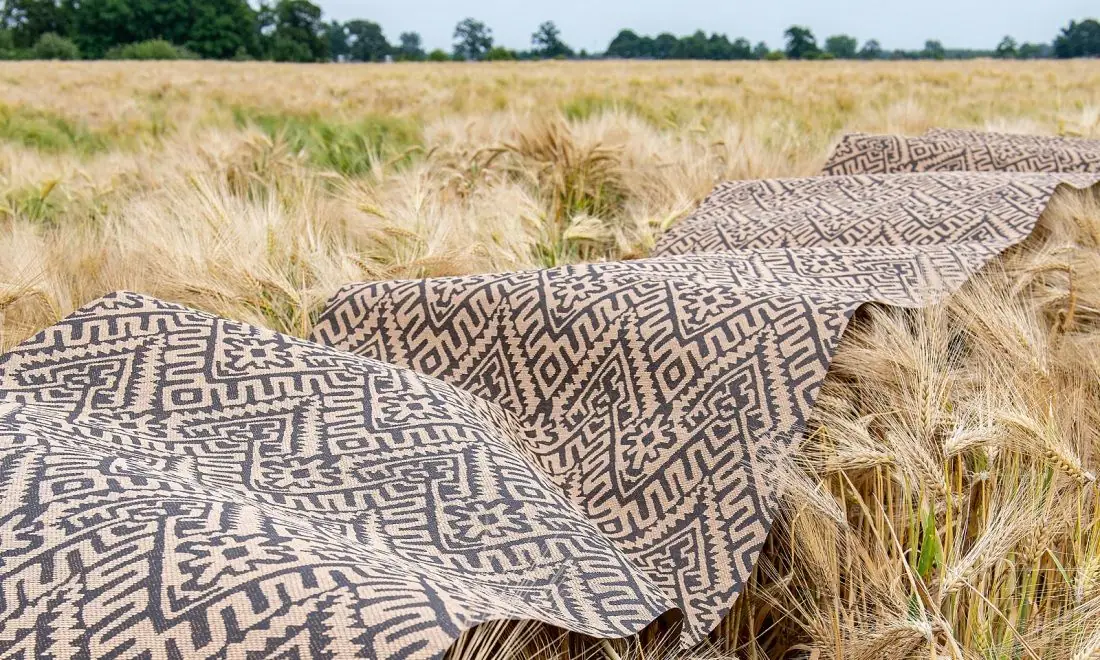
Omexco is a Belgian company that designs and manufactures high-quality wallcoverings, many of them made from textiles or natural fibres: products that take their users into a world of tactile sensations, with the aim not just of covering walls but of making them stand out.
Today we present its High Performance Textures collection, conceived as a more environmentally friendly alternative to vinyl. In this article we look at exactly what the material is, the five textures that make up the collection, its technical data —reaction to fire, weight, width and lightfastness—, where it makes sense to use it and what needs to be planned for a good installation.
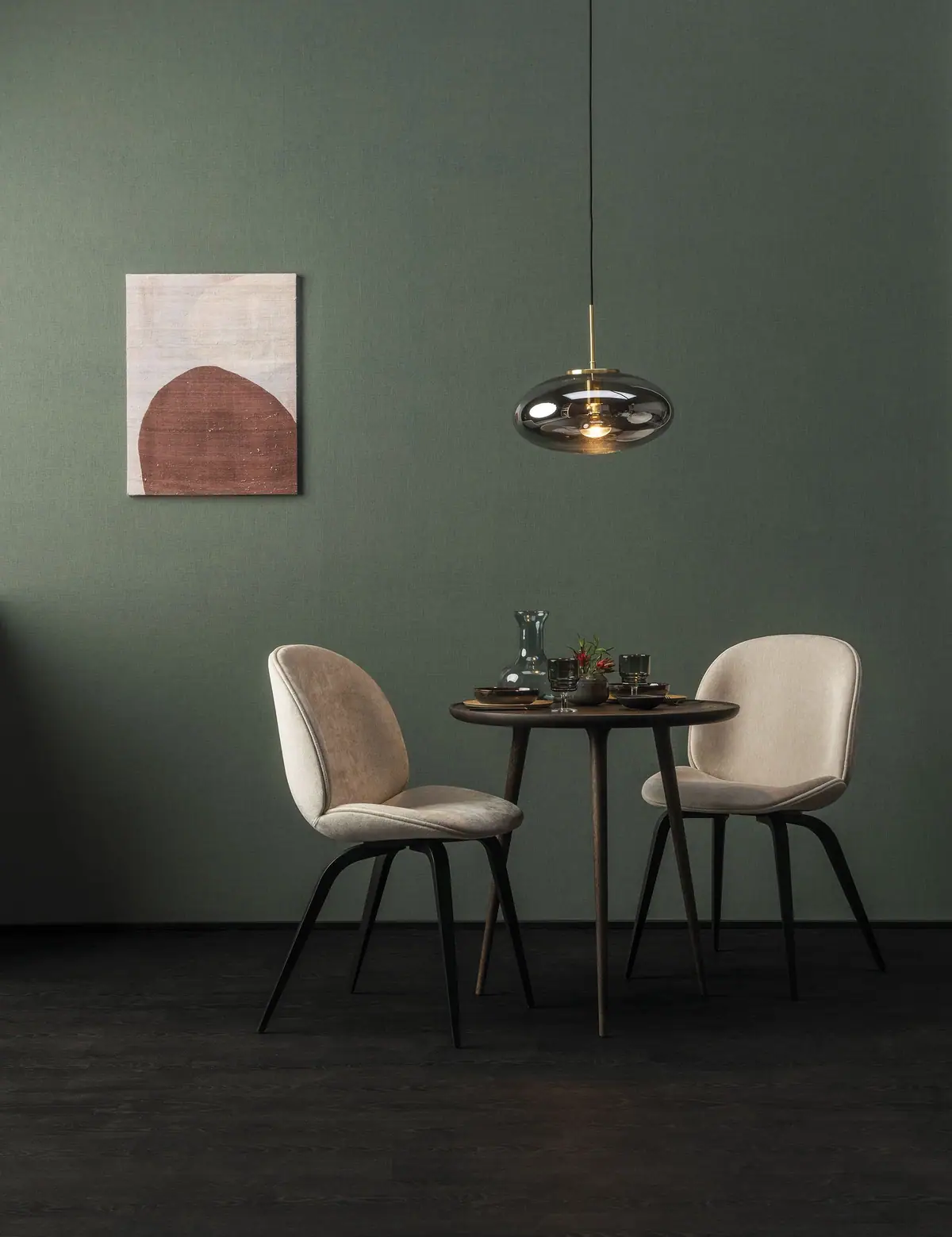
An alternative to vinyl
Omexco presented High Performance Textures with a clear message: to speed up the shift towards a future free of fossil fuels with a new material, developed by its technical and creative teams, that would meet the demands of commercial, hospitality and residential projects without giving up environmental responsibility.
Technically it is not a woven fabric but a non-woven: a cellulose and polyester backing onto which the texture of a fabric is printed. According to the manufacturer, it is made with recycled fibres, printed using solar energy and water-soluble inks free of heavy metals, and contains no PVC, the usual component of the vinyl wallcoverings this collection aims to replace.
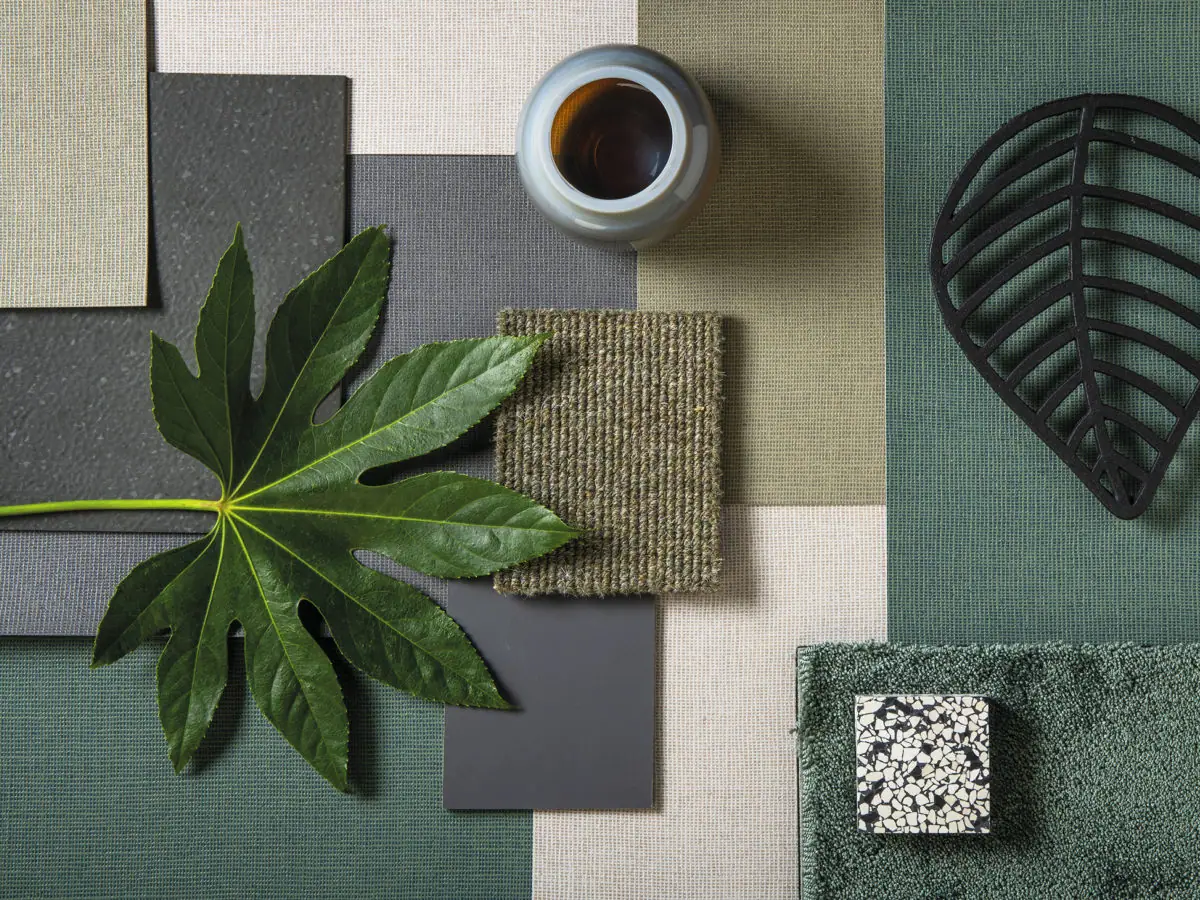
Five textile textures
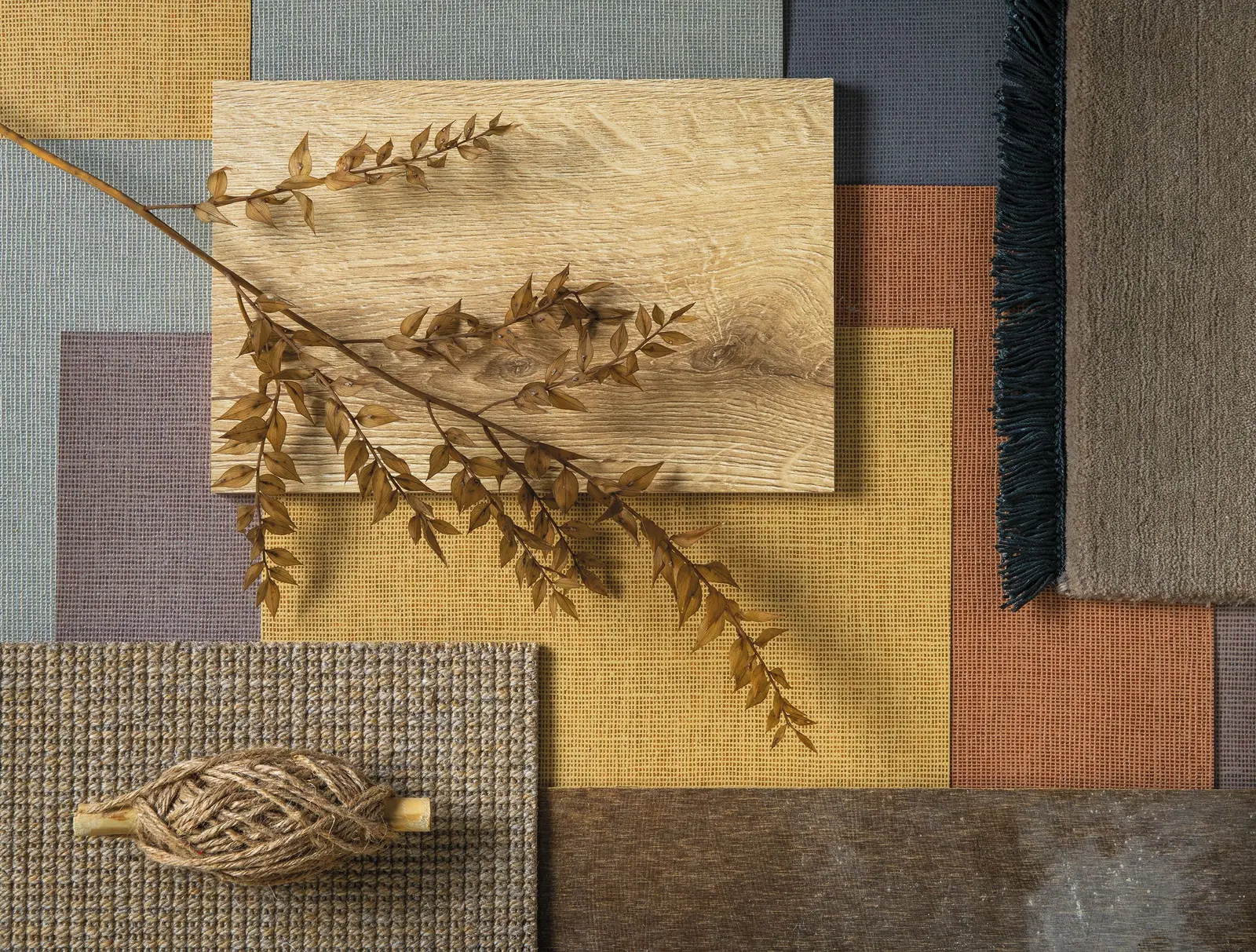
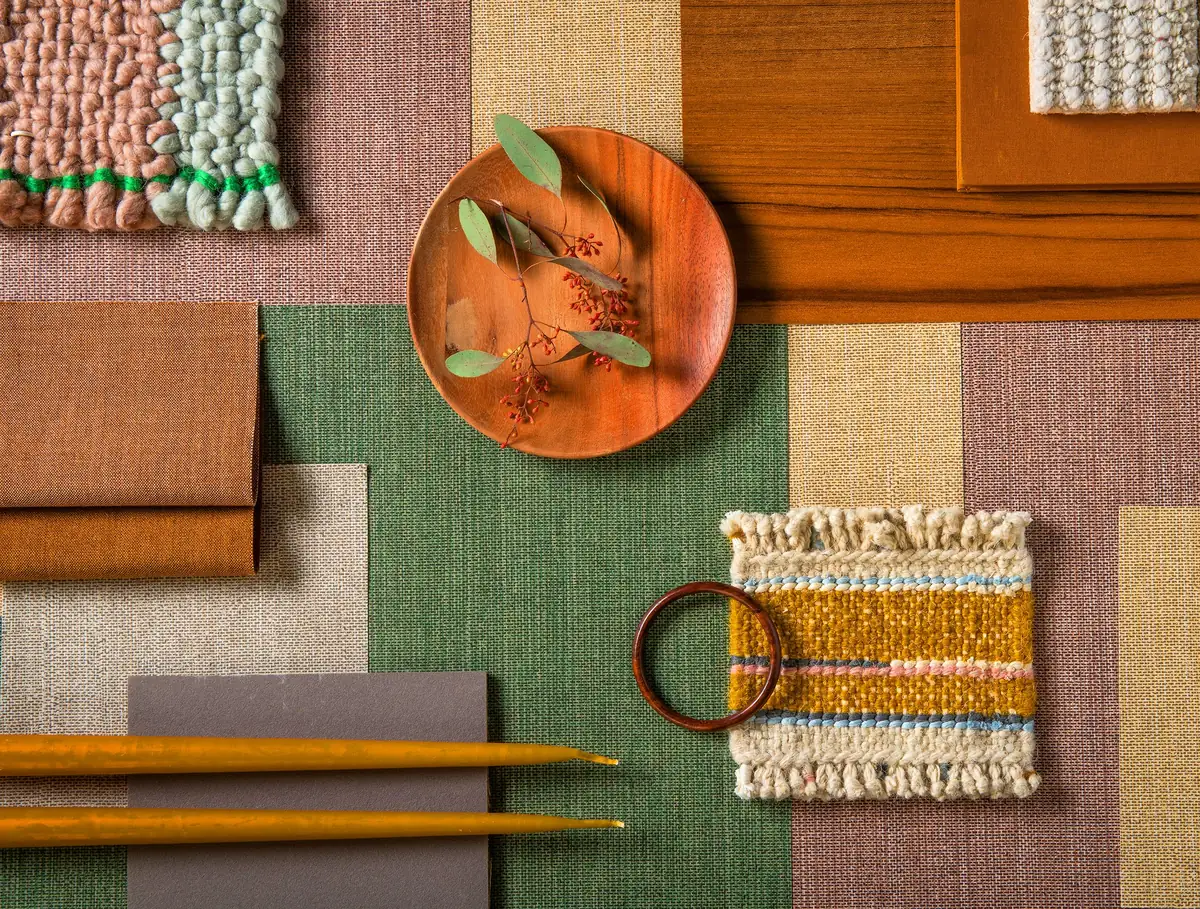
The collection has five base designs, each with the characteristic surface of a textile, and each in eleven colours. When a project requires it, Omexco also offers custom colours on request.
- Linen (HPT2): an open linen texture. According to Omexco, it is the design that most recalls the Belgian tradition of working with linen.
- Denim (HPT3): inspired by the way jeans are made, with the characteristic diagonal twill of denim.
- Abaca (HPT4): a very fine woven abaca. It takes as its reference abaca fibre, from a species of banana plant native to the Philippines, which Omexco uses as grasscloth in other collections.
- Silky (HPT5): a texture of textile warps (fil à fil), the technique with which Omexco made its first wallcoverings.
- Tussah (HPT6): tussah silk, thicker and stronger than ordinary silk, recognisable by the slubs in the yarn that stand out in the fabric.
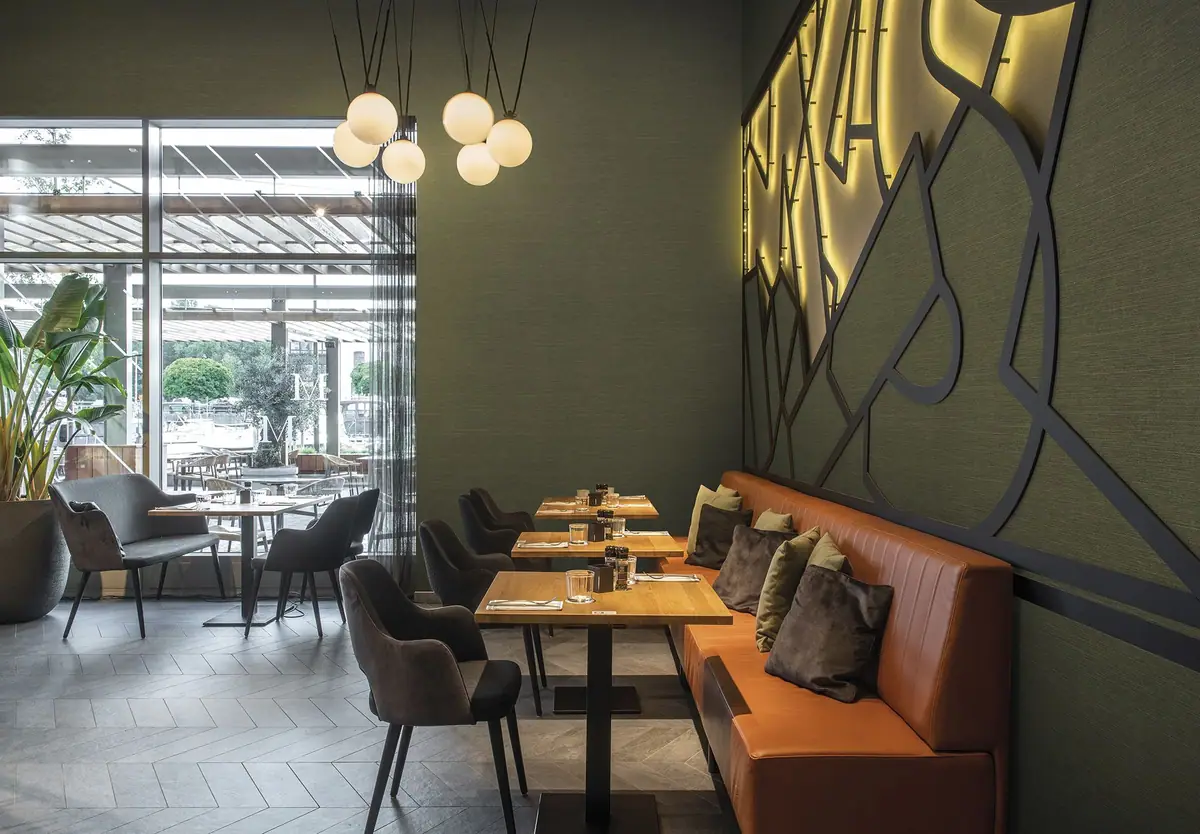
High Performance Textures technical data
The table summarises Omexco's technical data sheets for the five designs. All share a width of 100 cm, a repeat of 0 cm —there is no pattern to match between drops— and are sold by the linear metre.
For reaction to fire, Omexco declares Euroclass B-s1,d0 under UNE-EN 13501-1 (class A in the United States): a very limited contribution to fire, the lowest smoke production in the classification (s1) and no flaming droplets or particles when burning (d0). Its lightfastness is 6-7 in the Xenotest. The manufacturer adds an antibacterial finish, describes it as hard-wearing, washable and breathable, and calls it seamless, with invisible joins.
Where to use it
High Performance Textures is intended for interior walls in homes, shops and hospitality venues, on continuous masonry or plasterboard substrates. Its fire classification widens its scope of use: in Spain, the Código Técnico de la Edificación (CTE, Spain's building code, DB-SI) requires B-s1,d0 for wall and ceiling coverings in protected corridors and stairways and in special-risk rooms, and C-s2,d0 in occupiable areas, except inside dwellings.
Omexco also states that the product complies with European Directive 2014/90/EU on marine equipment. In September 2021, a few months after this article, the Cruise Ship Interiors Expo presented it to the cruise industry as a fire-retardant wallcovering compliant with International Maritime Organization regulations and able to withstand the enhanced cleaning protocols adopted during the pandemic.
Key points for specifying and hanging
It is hung with a clear, ready-to-use polyvinyl acetate (PVA) or ethylene-vinyl acetate (EVA) copolymer adhesive, applied directly to the wall, without wetting the back of the wallcovering. These are the points worth planning for at project stage, according to Omexco's instructions:
- Substrate: clean, smooth, dry, sound and uniform in colour. It is not hung on glossy or non-porous surfaces, or on new or unprimed plaster; on plasterboard, cracks must be filled and an acrylic primer applied first.
- Adhesive: about 200 g/m², spread evenly. Too much paste can stain the joins and uneven application can leave them open.
- Orientation: Abaca and Tussah are hung horizontally and Silky can go either way. In the designs that call for it, every other drop is reversed.
- Batch and roll order: all the material must come from the same batch, and the numbered rolls are hung from the highest number to the lowest. Omexco does not accept claims once three drops have been hung.
- Ordering: it is sold by the linear metre and cut to size for each order, which matches the purchase to the project and reduces offcuts.
Omexco, the manufacturer
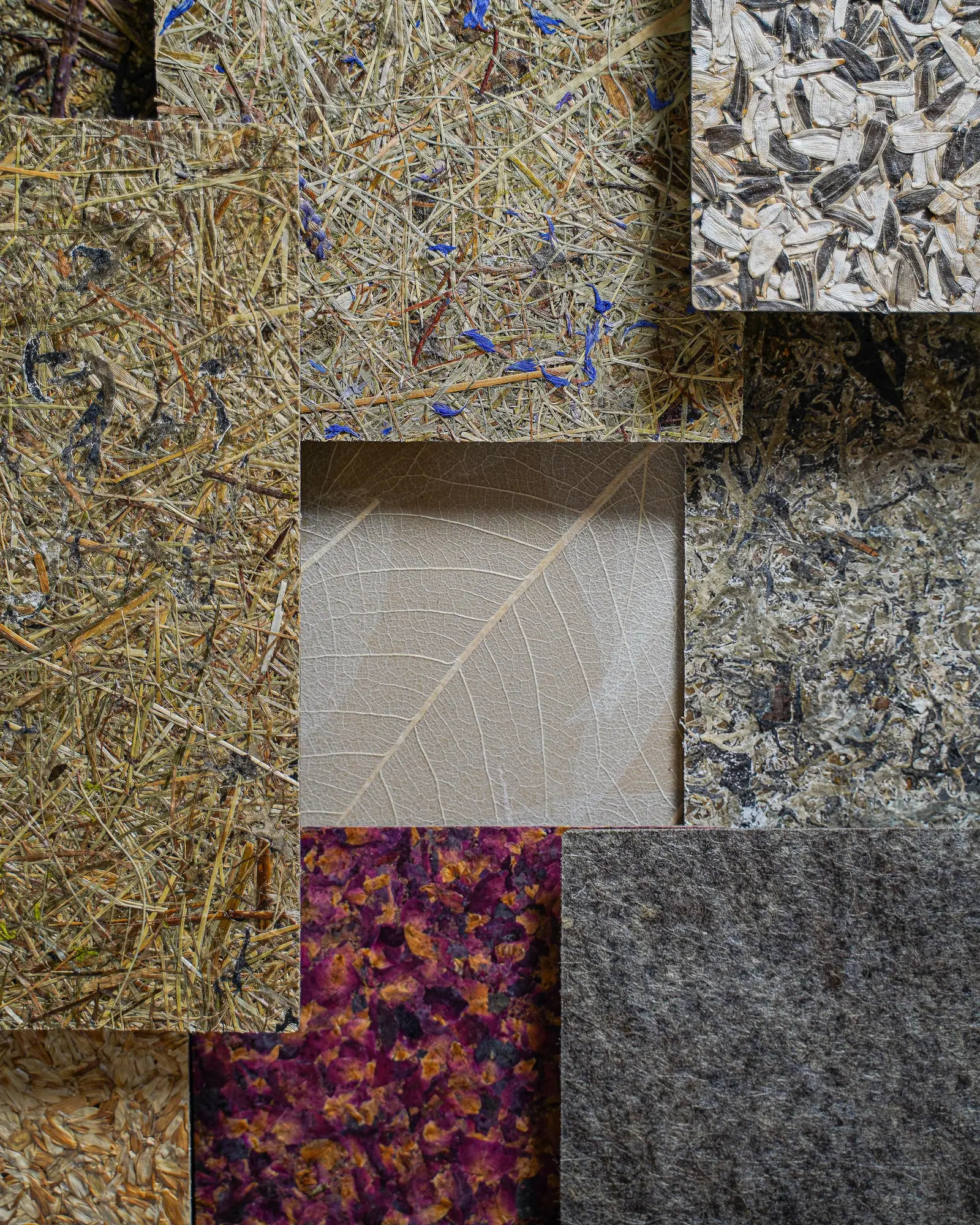
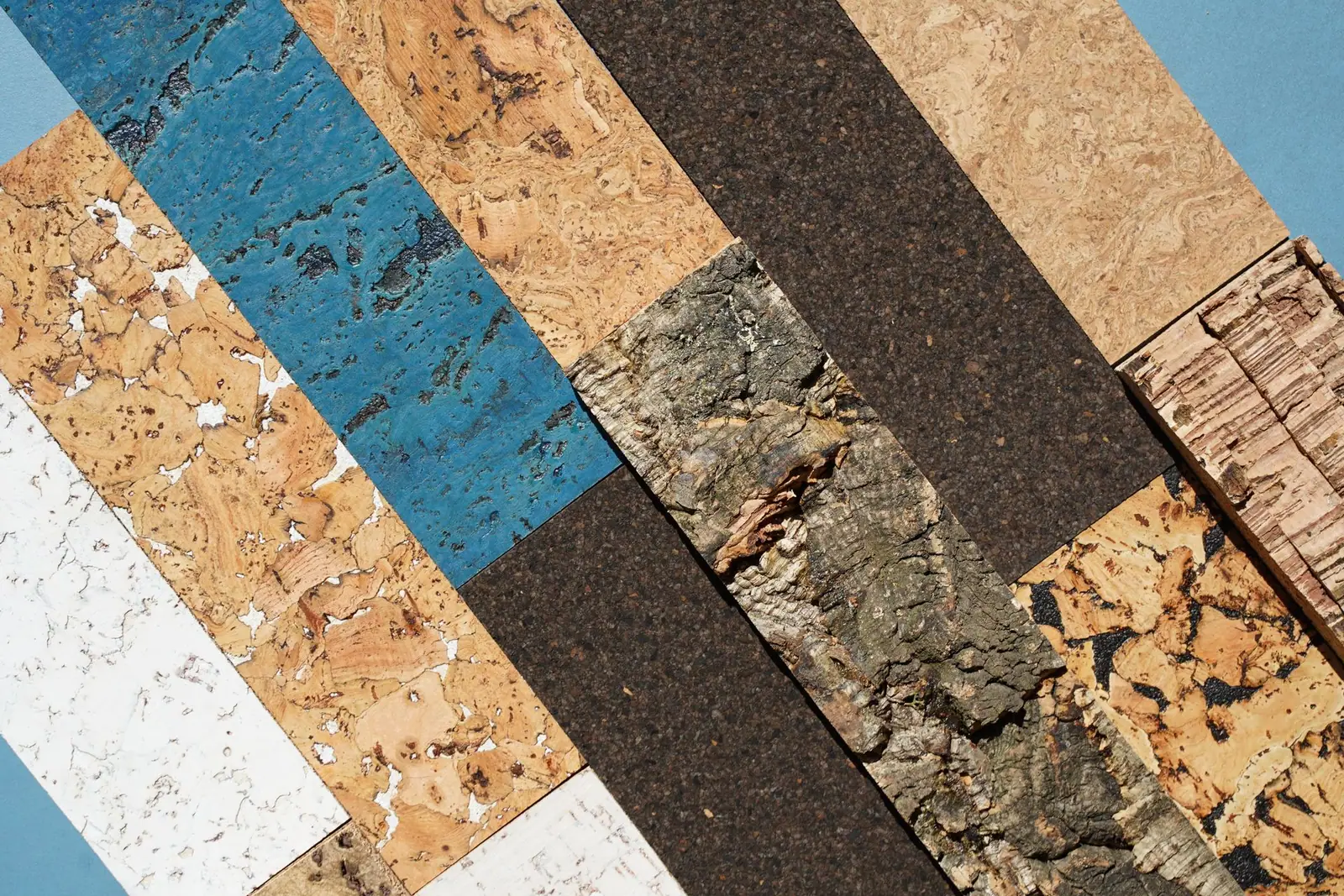
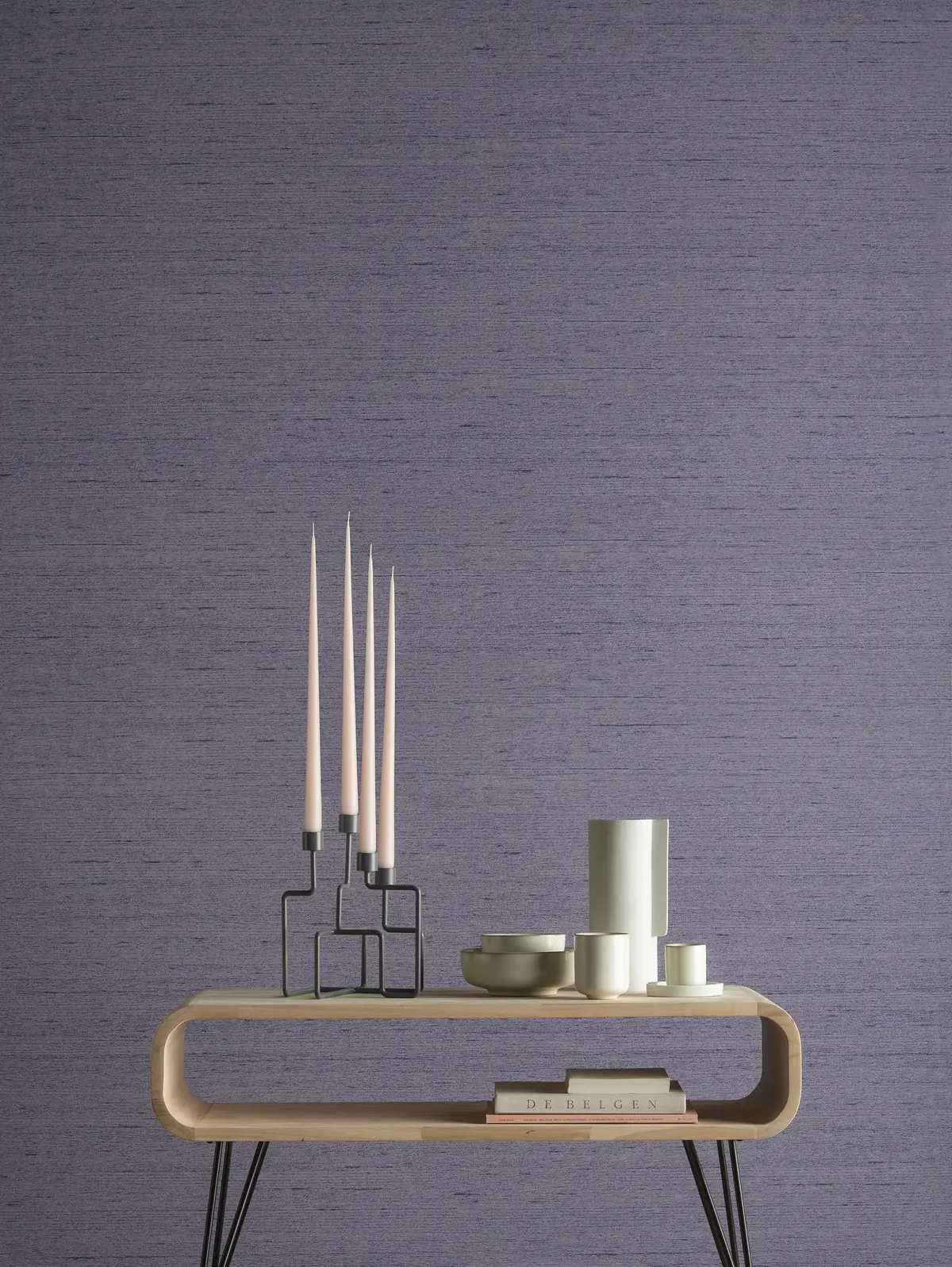
Omexco was founded in 1976 in Flanders. Its founder, Bob Rans, who exported Belgian design objects to the Middle East, decided to make his own products and started with textile warp wallcoverings (fil à fil). In the late 1980s, under John Dubaere, the company expanded its catalogue with craft techniques and natural materials such as mica, cork, mother-of-pearl, bark and plant fibres. It is based in Heverlee and designs and manufactures in its workshop near Brussels.
The company explains that it prioritises recycled fibres and renewable energy from its own solar panels, that it cuts each order to size to reduce waste and that almost all its products are PVC-free and eco-certified. In 2021 it highlighted that it had obtained an ecolabel and sustainable forest management certification.
Other Omexco collections
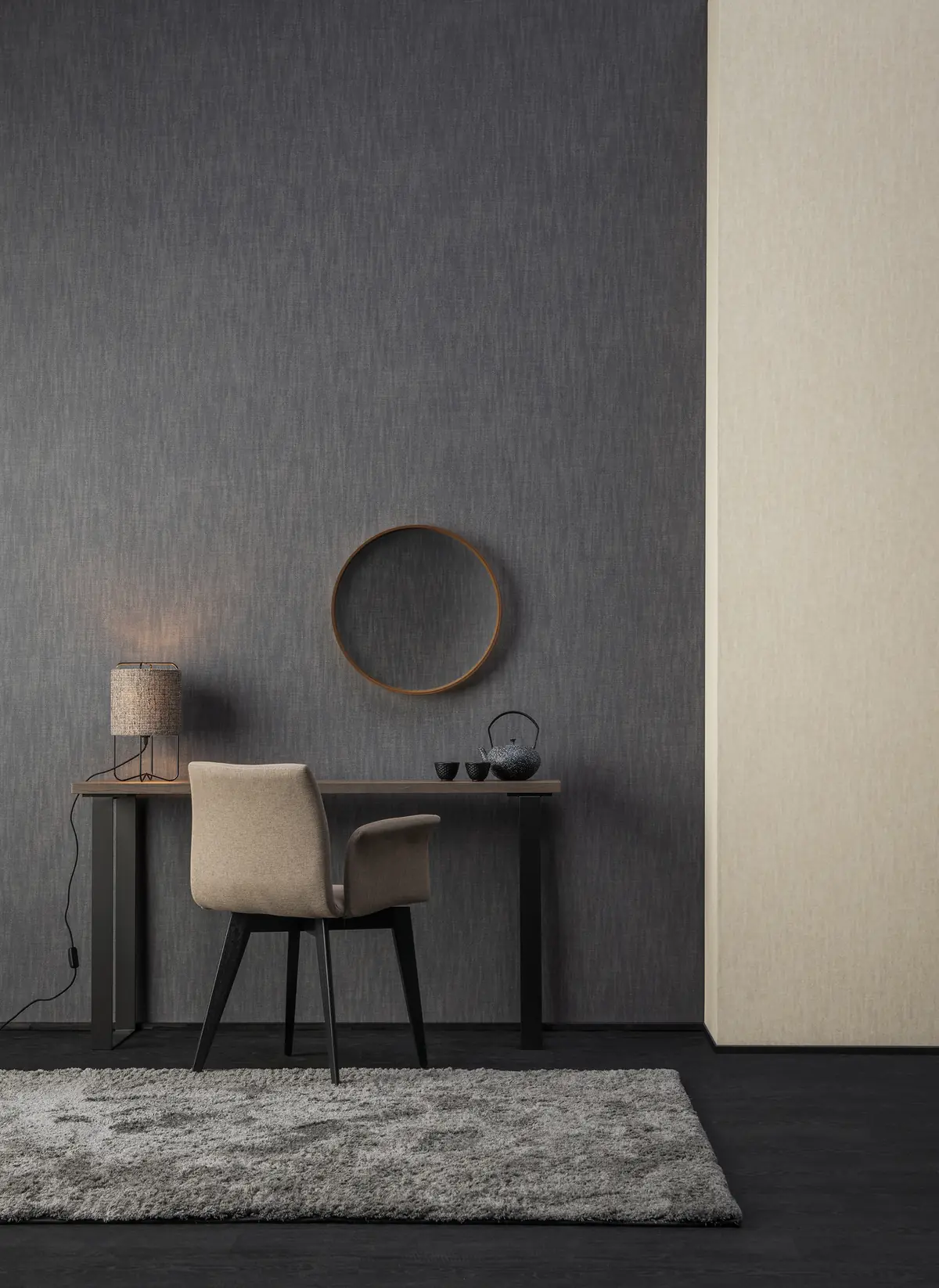
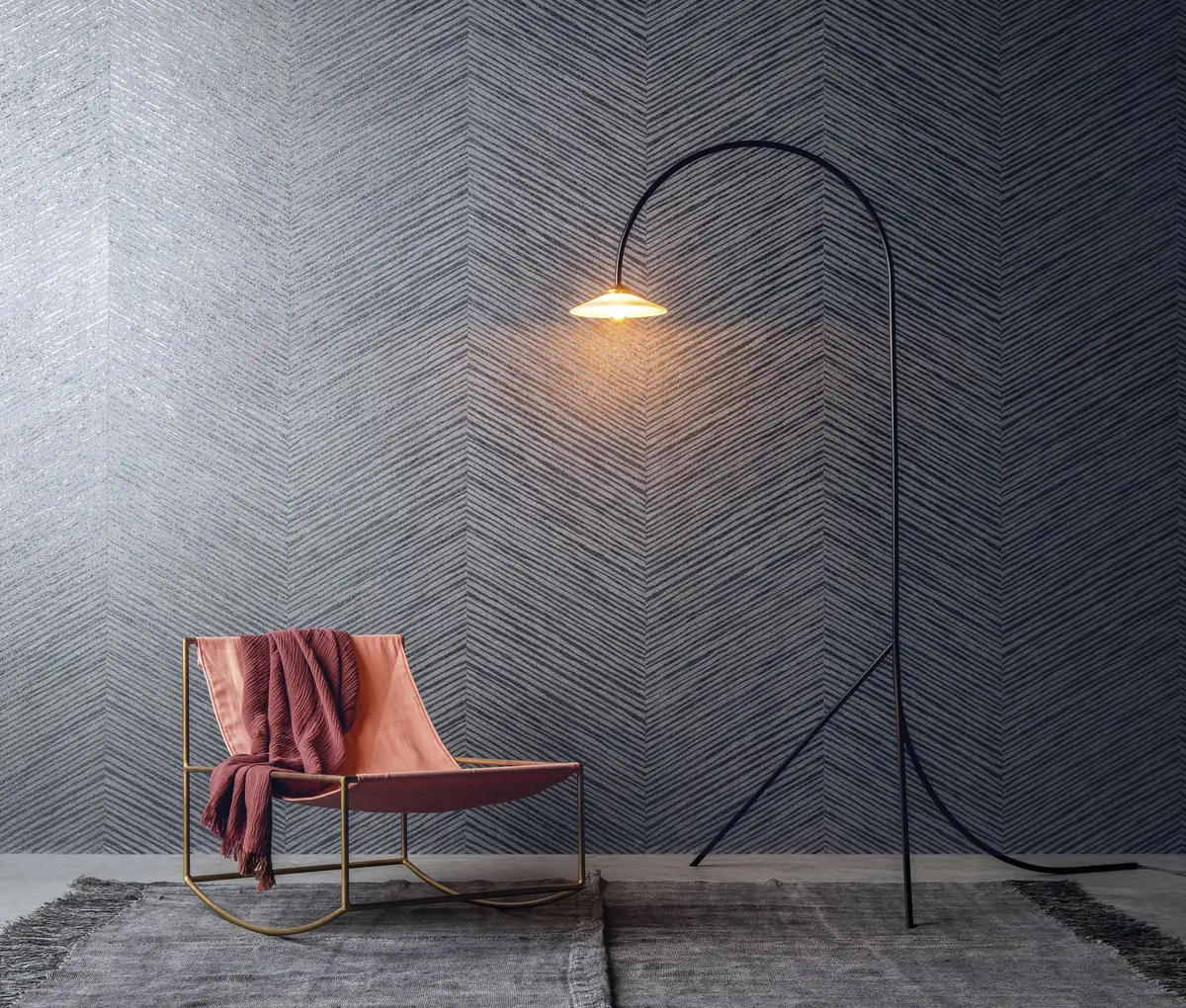
The last two images are not of High Performance Textures but of two other collections from the brand. Sycamore celebrates natural wood: hand-inlaid pieces of paulownia wood forming geometric mosaics. Loft combines prints on non-woven with minerals such as glass microbeads and mica, in designs inspired by nature or geometry, such as the XL herringbone in the image.

Frequently asked questions
- Is High Performance Textures a textile wallcovering?
- Not exactly. It is a cellulose and polyester non-woven with the texture of a fabric printed on it: linen, denim, abaca, textile warps or tussah silk. Omexco positions it as a PVC-free alternative to vinyl.
- Can it be used in protected corridors and stairways?
- Omexco declares Euroclass B-s1,d0, which is what the CTE's DB-SI requires for wall and ceiling coverings in protected corridors and stairways and in special-risk rooms. It is advisable to request the current declaration of performance for the project file.
- Is it hung vertically or horizontally?
- It depends on the design. Abaca and Tussah are hung horizontally and Silky can go either way. None of the designs has a pattern to match, and in those that call for it every other drop must be reversed.
- How is it cleaned?
- Omexco presented it as washable and with an antibacterial finish. In its 2025 maintenance instructions it states that it can be cleaned with water and a mild detergent and tolerates diluted bleach.
- Can it be ordered in another colour?
- Yes. Each design comes in eleven catalogue colours and Omexco offers custom colours on request.
At Matter we help you choose wallcoverings for each project, from wallpapers to textiles and natural finishes, and compare textures, colours and performance with your technical team.
Book your visit to Matter.
Book a visit