Sensi, by Casa dolce casa – Casamood
Porcelain stoneware by Matteo Thun inspired by ‘no colour’: five colours, four stone surfaces, formats of up to 120×280 cm and key points for specifying.
Products5 min read
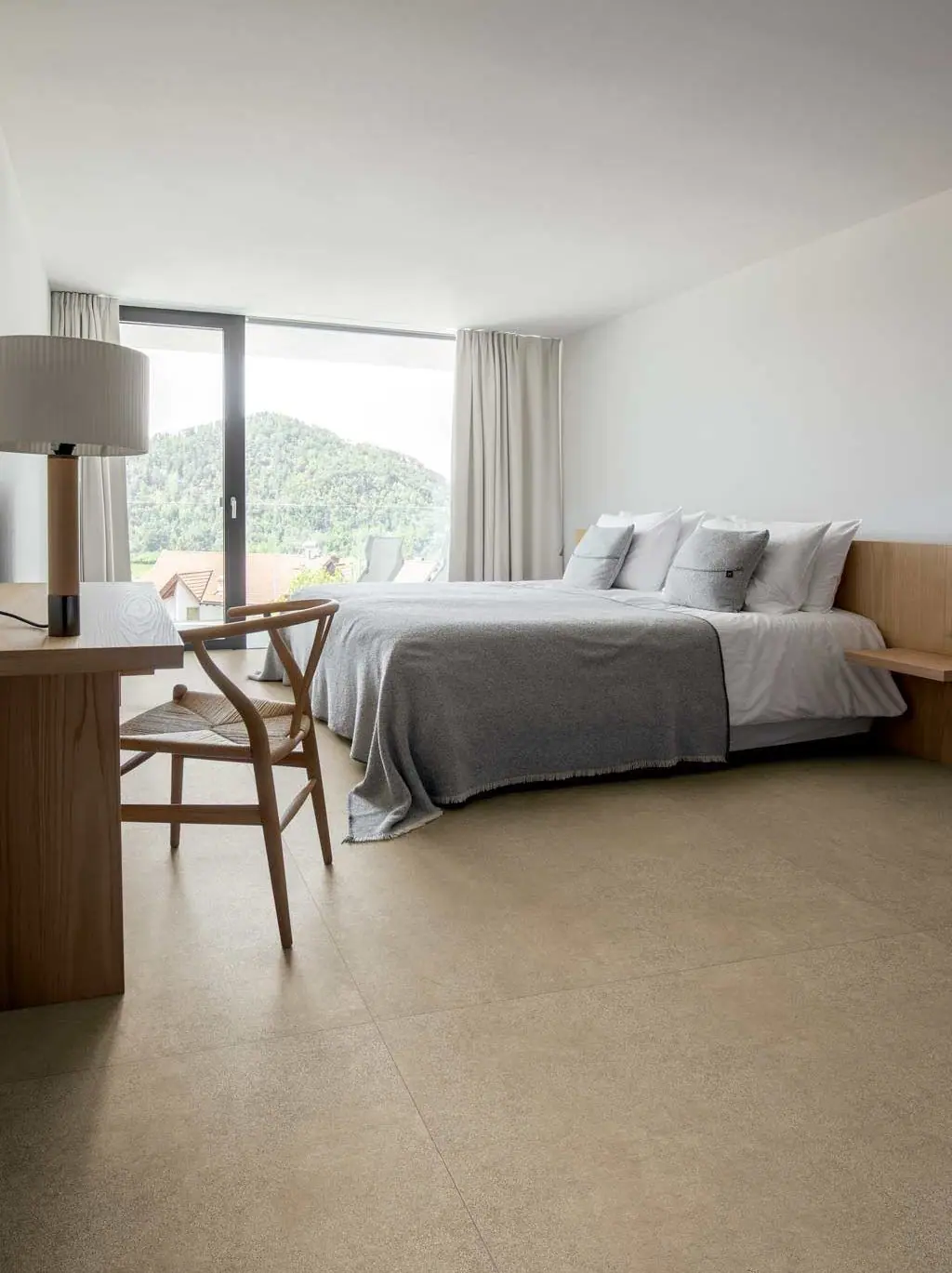
Sensi is a porcelain stoneware collection by Casa dolce casa – Casamood, a brand of the Italian Florim group, designed by Matteo Thun. It offers natural stone-look surfaces that evoke elegance, simplicity and a slower pace of life. The decorative concept that inspires it is ‘no colour’ and the graininess of earth, which recalls the strength of nature: Sensi proposes a journey through the senses in which to discover the feel of natural earths and light mineral elements.
In this article we look at the idea behind the collection, its five colours and four surfaces, the formats and thicknesses in which it was offered in early 2021, where it can be used and what to bear in mind when specifying it. The technical data come from the documentation Florim published at the time.
Earth, light and no colour
Florim sums up the collection in three words: lightness, earth and sensoriality. The surfaces take centre stage, and the play of light on the texture defines the decoration. Sensi brings to ceramics the experience of touching the earth and interpreting mineral essences mixed and forged over time, in a texture designed to be caressed with the eyes.
The delicate, natural colours and the sandy feel evoke a simple lifestyle that leaves the unnecessary behind. According to the manufacturer, the harmony of nature is carried into spaces that offer comfort and a slower pace, places in which to recover energy and balance.
The surfaces stand out for their neutral tones, designed to create flowing, comfortable spaces.
Five colours and four surfaces
The collection is available in five colours: White, Ivory, Grey, Taupe and Brown. Each is produced in four surfaces that refer to different types of stone: Dust, Sand, Lithos and Fossil. The result is twenty combinations, named by surface and colour, such as Sand Taupe or Fossil White.
Each surface has its own finish and slip resistance. The table shows the values Florim declared in 2020 for the 10 mm pieces:
R+PTV is a finish with more grip: as well as R10, it exceeds a wet value of 36 in the pendulum test (BS 7976). For the 6 mm Magnum slabs, Florim’s declaration of performance of December 2020 gives R9 for the matt finish and R10 for R+PTV.
Formats and thicknesses
In early 2021 Sensi was offered in six formats – 40×80, 60×120, 80×80, 120×120, 120×240 and 120×280 cm – and in four thicknesses: 4, 6, 10 and 20 mm. The 120×240 and 120×280 cm slabs reduce the number of joints on floors and walls, and in the catalogue they also appear as bars, worktops and furniture fronts.
The 20 mm thickness is a rectified monolithic slab for outdoor use. Florim states that it is resistant to frost, static loads and temperature changes, with R11 slip resistance, and that it can be laid directly on grass or gravel, on a screed or on fixed or adjustable pedestals.
The range is completed by a decorative mosaic of glass recycled from discarded television and computer screens, in 0.6×0.6 cm tesserae on 29×29 cm mesh sheets. According to Florim, its manufacture involves handwork and, owing to the nature of the glass, every tessera is different: the surface, velvety or textured to the touch, shifts between gloss and matt with the light.
Where it is used
The settings in Florim’s catalogue show the range of applications for the collection:
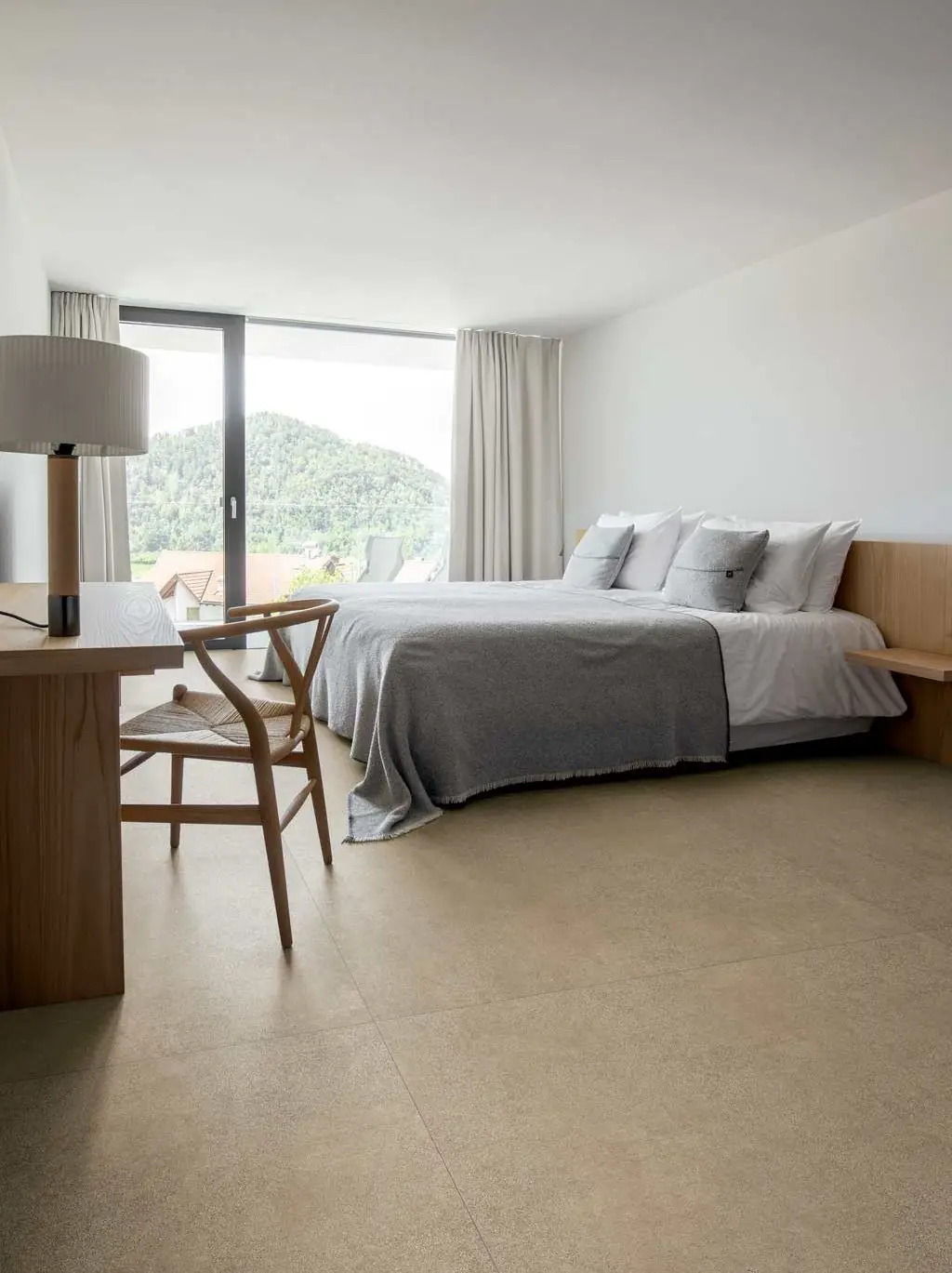
- Interior floors: bedrooms, living rooms and commercial spaces, in formats from 60×120 to 120×240 cm.
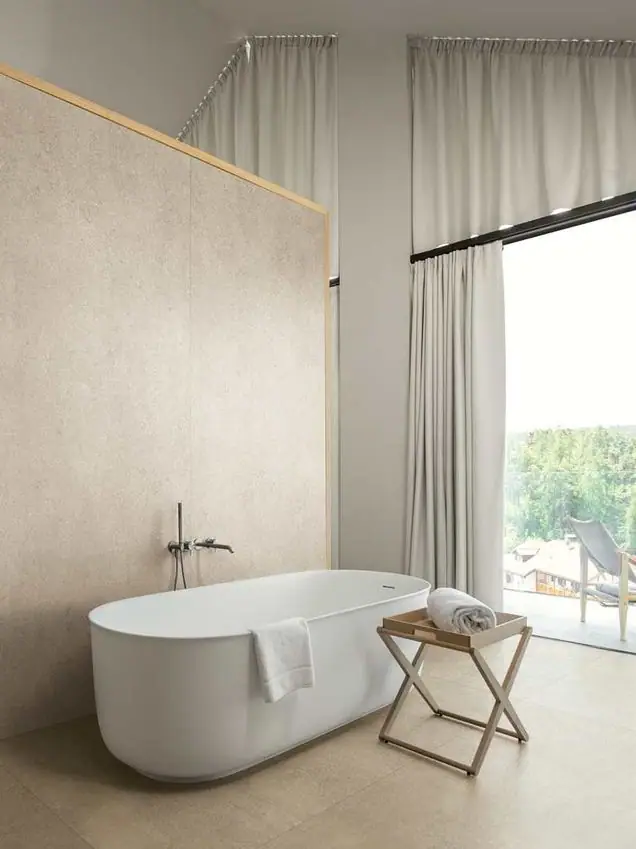
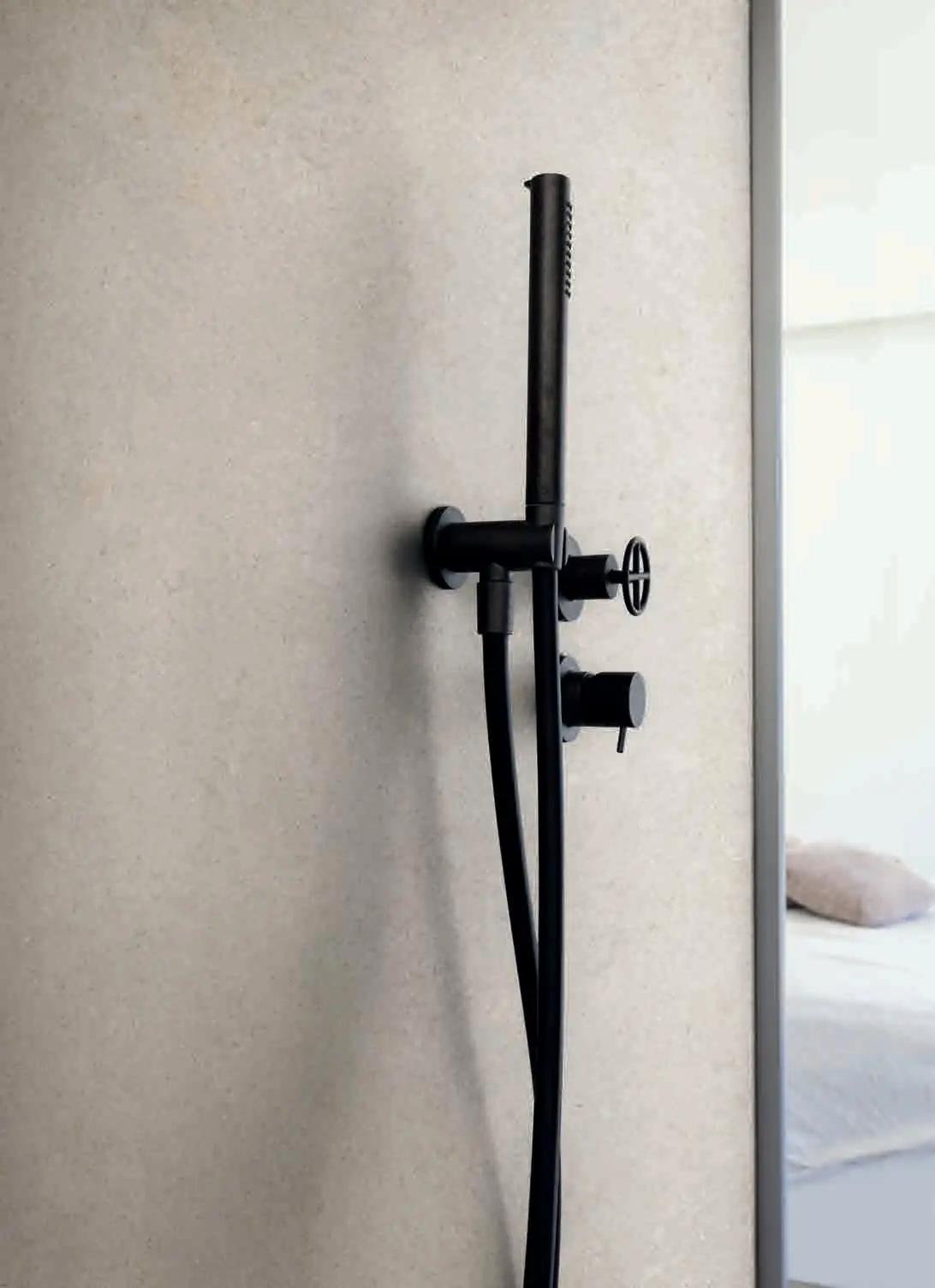
- Walls and bathrooms: seamless large-format wall cladding and shower walls, such as Fossil White in 120×240 or 120×280 cm.
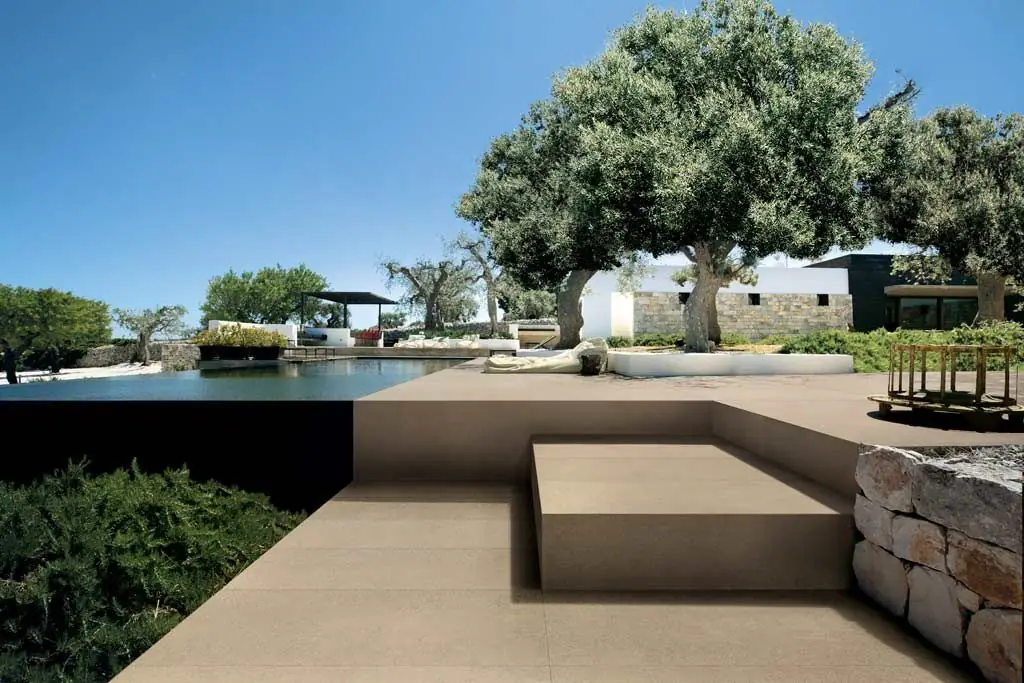
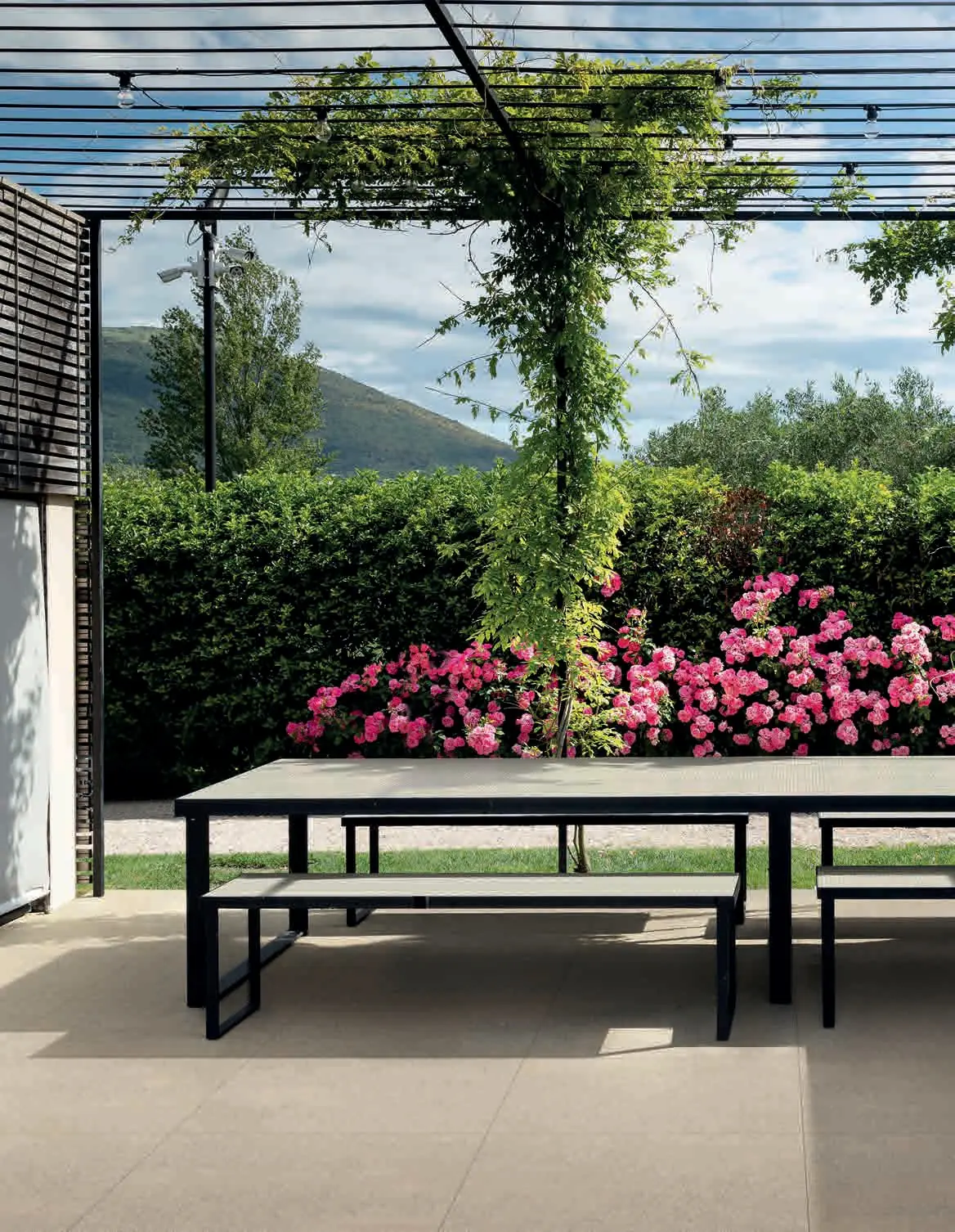
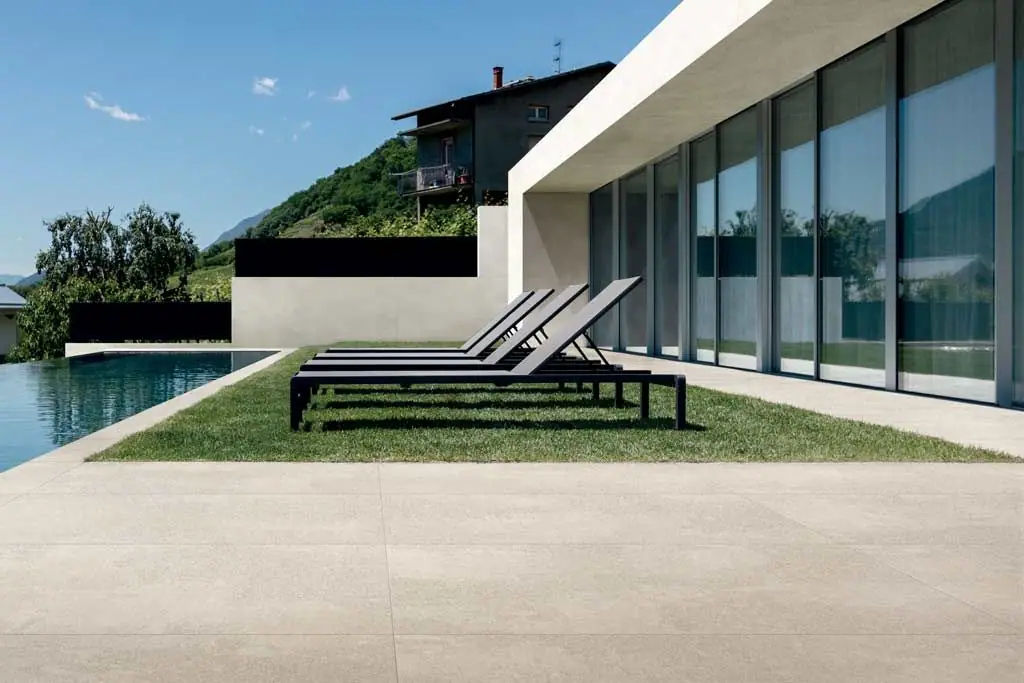
- Outdoors and pools: terrace paving in the Sand R11 surface, and façades and pools clad in Dust White.
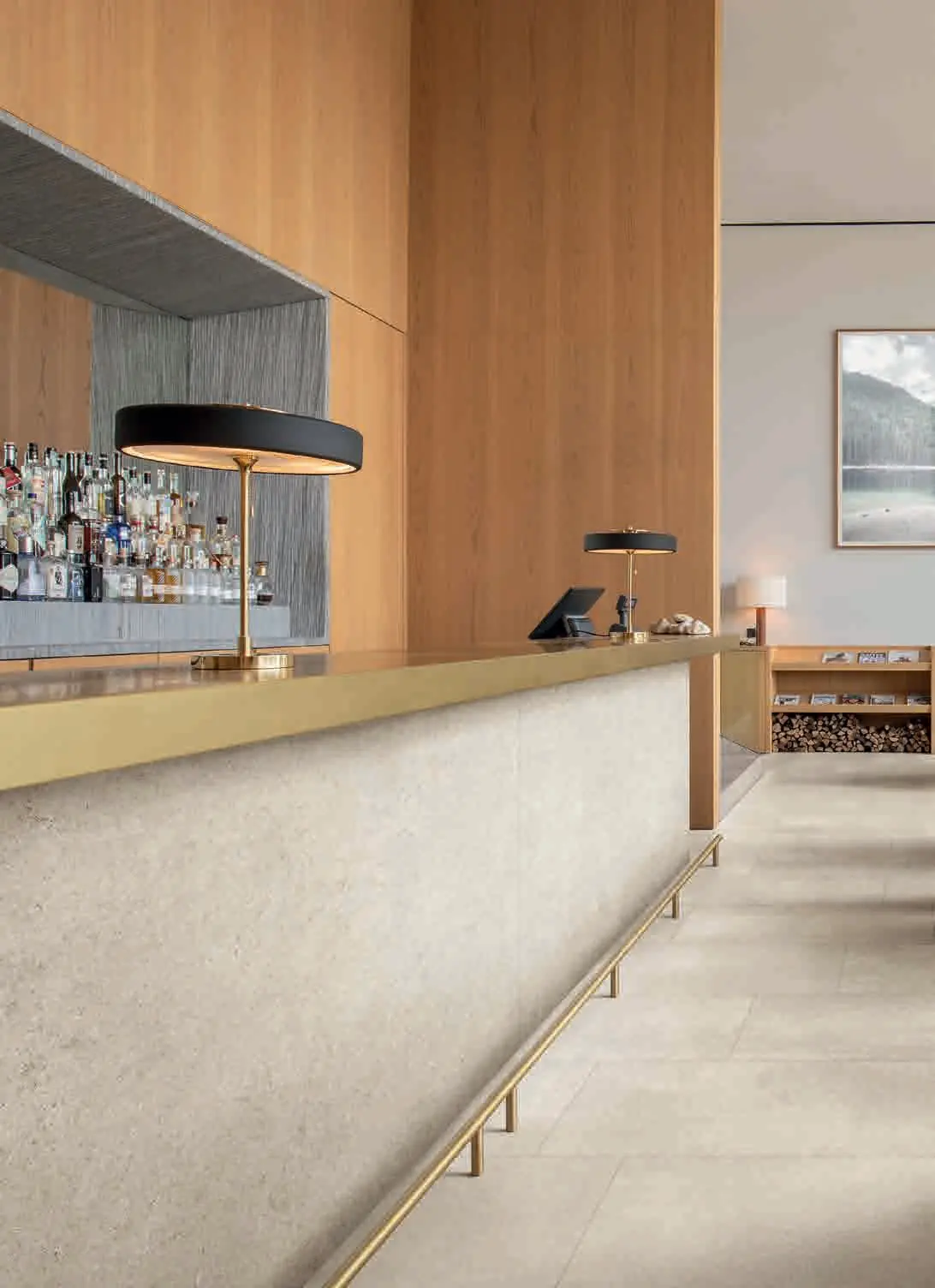
- Furniture: kitchen worktops, table tops, bars and furniture fronts, and washbasins in Lithos White.
Key points for specifying Sensi
According to Florim’s technical documentation, these are the points worth resolving at the design stage:
- Surface according to use: Sand (R11) and Fossil R+PTV (R10) offer more grip than the R9 matt surfaces of Dust and Fossil; for the 6 mm Magnum slabs the classification changes, so it should be checked in the data sheet for each product.
- Joint: Florim recommends 2 mm for single-format layouts and 3 mm when different formats are combined.
- Thicknesses: because of the different manufacturing technologies, the manufacturer advises against laying pieces of different thicknesses next to each other, as the result may not be uniform.
- Performance: it is unglazed fine porcelain stoneware in group BIa of EN 14411, with an average water absorption of 0.08%, resistant to frost and thermal shock.
Sustainability according to the manufacturer
Environmental and energy impact was taken into account in the production process. Florim presented Sensi as an example of the circular economy: made with natural raw materials and 60% recycled material, it comes from a production process that is up to 100% sustainable in terms of both water consumption and the self-generation of electricity.
For LEED-certified projects, Florim published data sheets for the collection in its various thicknesses, including the 6 mm Magnum slabs and the 20 mm pieces. Its management system was certified to ISO 9001, ISO 14001, ISO 45001 and ISO 50001.
Sensi today
Epilogue (2026): Sensi is still in Florim’s catalogue, now within the Florim Creative Design line, with the same five colours and four surfaces and a revised range of thicknesses: 6, 9 and 20 mm. In 2024 Florim also presented SensiTerre, another collection by the studio Matteo Thun & Partners, which we have covered in the Journal.
Frequently asked questions
- Who makes Sensi?
- Casa dolce casa – Casamood, one of the brands of the Italian ceramics group Florim, based in Fiorano Modenese. The collection is designed by Matteo Thun. Florim now includes it in its Creative Design line.
- What is the difference between Dust, Sand, Lithos and Fossil?
- They are the collection’s four surfaces, each inspired by a type of stone. They differ in texture and grip: in the 10 mm pieces, Dust and matt Fossil are R9, Lithos (bush-hammered) and Fossil R+PTV are R10, and Sand reaches R11.
- Can it be used outdoors and in pools?
- Yes. It is porcelain stoneware with an average water absorption of 0.08% and is frost-resistant. For outdoor paving the catalogue suggests the Sand R11 surface or the 20 mm slab, and shows façades and pools clad in Dust White.
- What joint should be left?
- Florim recommends 2 mm if a single format is laid and 3 mm if different formats are combined. It also advises against laying pieces of different thicknesses next to each other.
A surface defined by its feel and by the way it catches the light is best understood with the pieces in hand. At Matter we help you choose the right surface, format and thickness for each use: ask our team about Florim’s collections and request samples for your project.
Book your visit to Matter.
Book a visit