3D wall coverings by Orac Decor
Zigzag, Valley and Hill, Orio Tonini’s profiles for Orac Decor: 3D wall panels in Purotouch®, dimensions, Flex version and key points for installation.
Products5 min read
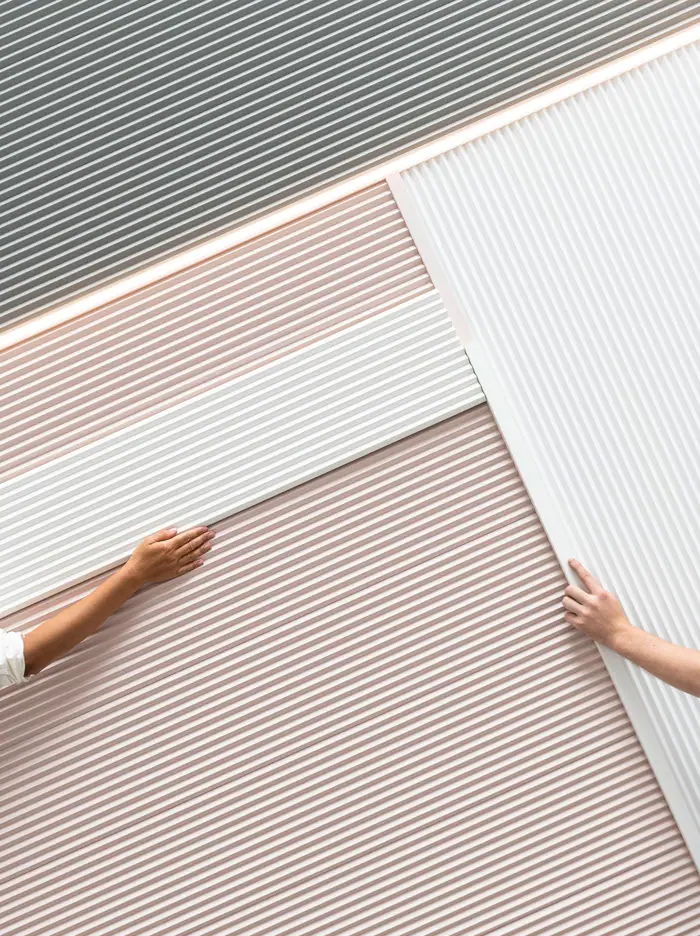
Orac Decor’s 3D Wall Covering collection brings together relief wall panels designed to give depth and rhythm to a flat surface. In this article we focus on three of its profiles, Zigzag, Valley and Hill, designed by Orio Tonini. They are made of Purotouch®, the brand’s high-density polyurethane, and come factory-primed: their compact, smooth surface can be painted directly, without preparing the piece first.
We look at what they are and what material they are made of, the dimensions of each profile, the difference between the rigid and Flex versions, what they bring to a project and what to bear in mind when specifying and installing them. At the end you will find some frequently asked questions and the sources consulted.
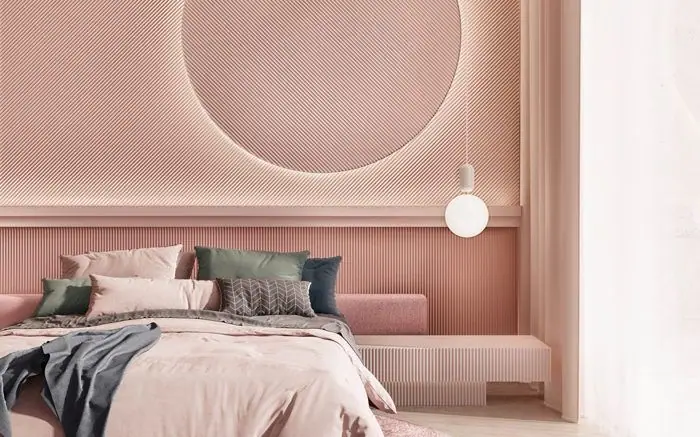
What the 3D Wall Covering collection is
Orac presents its 3D wall covering as a way of adding dimension to a space in contrast to traditional flat finishes. The pieces are long strips with a repeating linear relief: laid side by side, the pattern continues from one panel to the next and the wall reads as a single textured surface. According to the manufacturer, two pieces are needed to cover one square metre.
The material is Purotouch®, which Orac describes as a high-quality, high-density polyurethane that can reproduce small details with precision. The result is light, strong pieces that are easy to handle on site. Like all the brand’s products, the panels leave the factory with a coat of primer, so the final finish is achieved with paint in whatever colour the project requires.
Zigzag, Valley and Hill: three profiles by Orio Tonini
All three share the same length and height; what changes is the relief pattern and the depth.
Zigzag (W108)
This is the deepest relief of the three, at 1.8 cm. Its zigzag pattern creates very sharply defined lines, and in the manufacturer’s gallery it is shown laid both vertically and diagonally, two very different ways of reading the same wall. Orac presents it as a profile for playing with form and accents of colour.
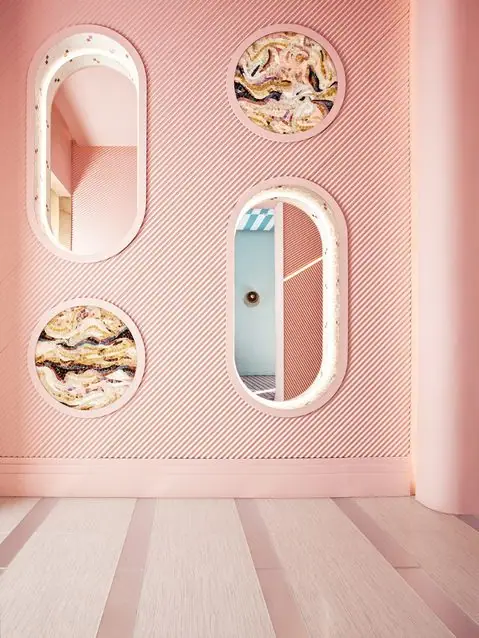
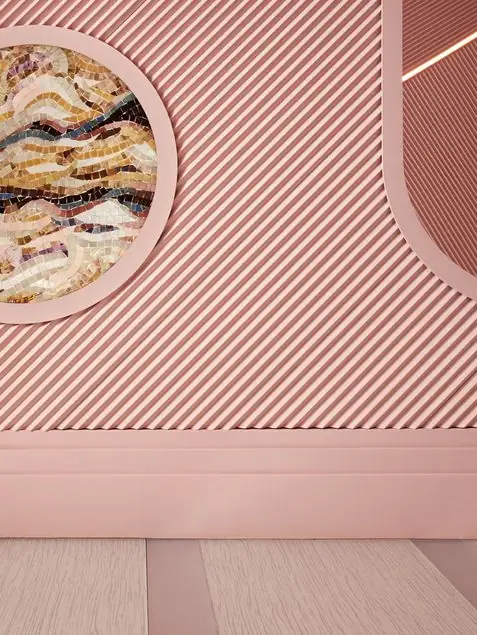
Valley (W109)
Valley is the most subtle: a lower relief, 1.3 cm deep in the data sheet of the time, which works well when texture is wanted without the wall becoming the focus. In the manufacturer’s gallery it appears both on full walls and as dados covering only the lower part of the wall.
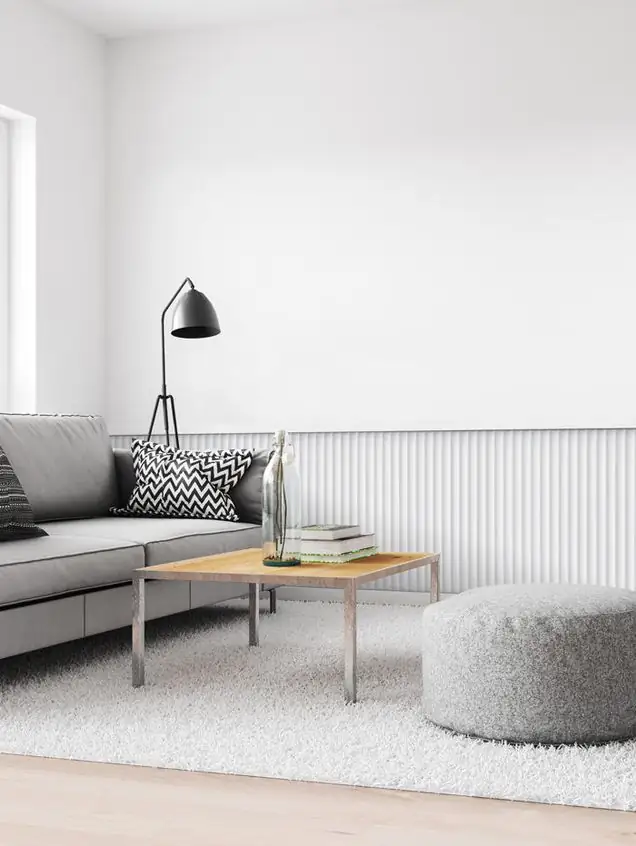
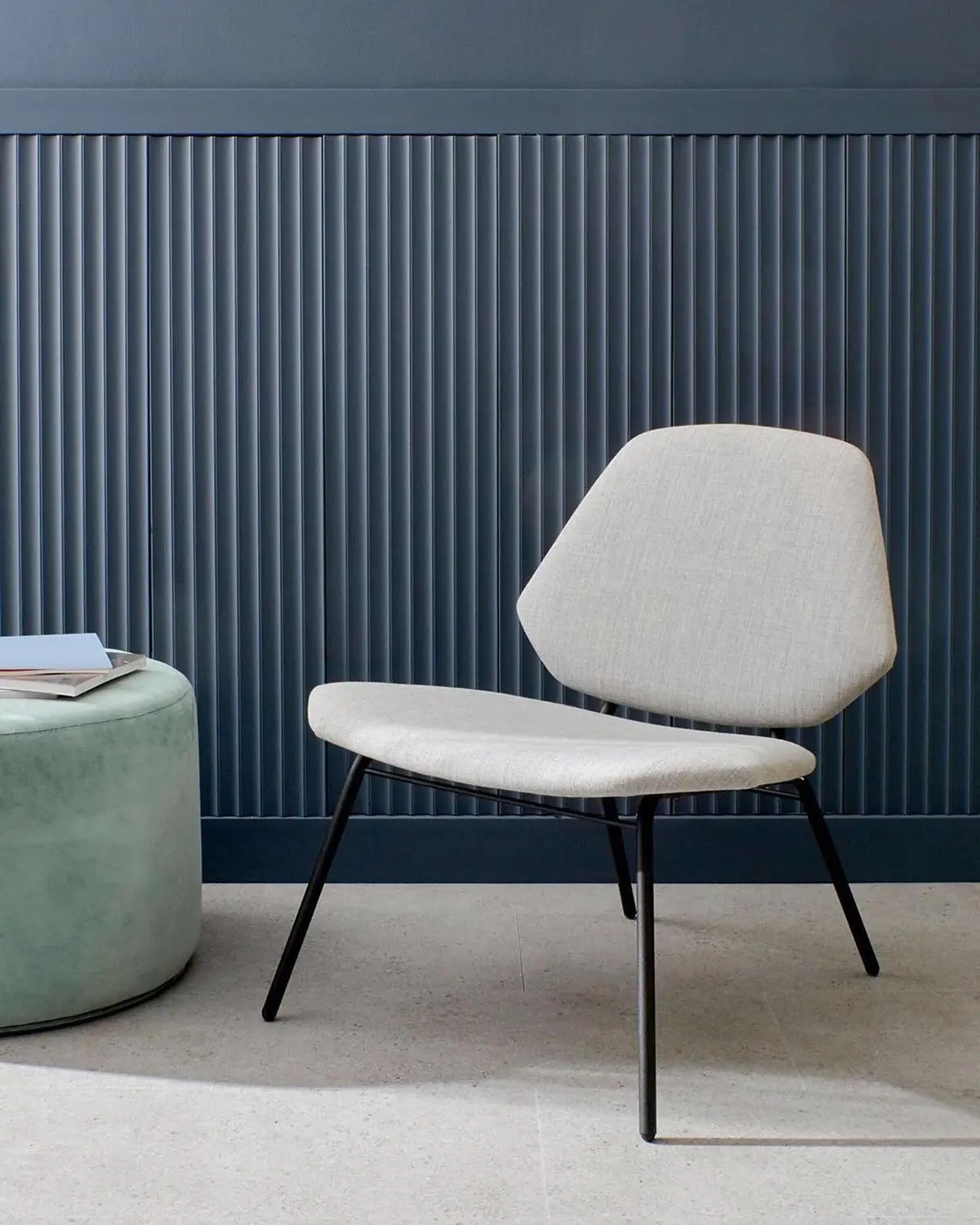
Hill (W110)
Hill sits in between, at 1.6 cm deep. In its description, Orac highlights that it is easy to install and has proven positive thermal and acoustic properties; the manufacturer does not publish values in the data sheet that would allow them to be quantified, so they should be requested if the project depends on them.
Rigid and Flex versions
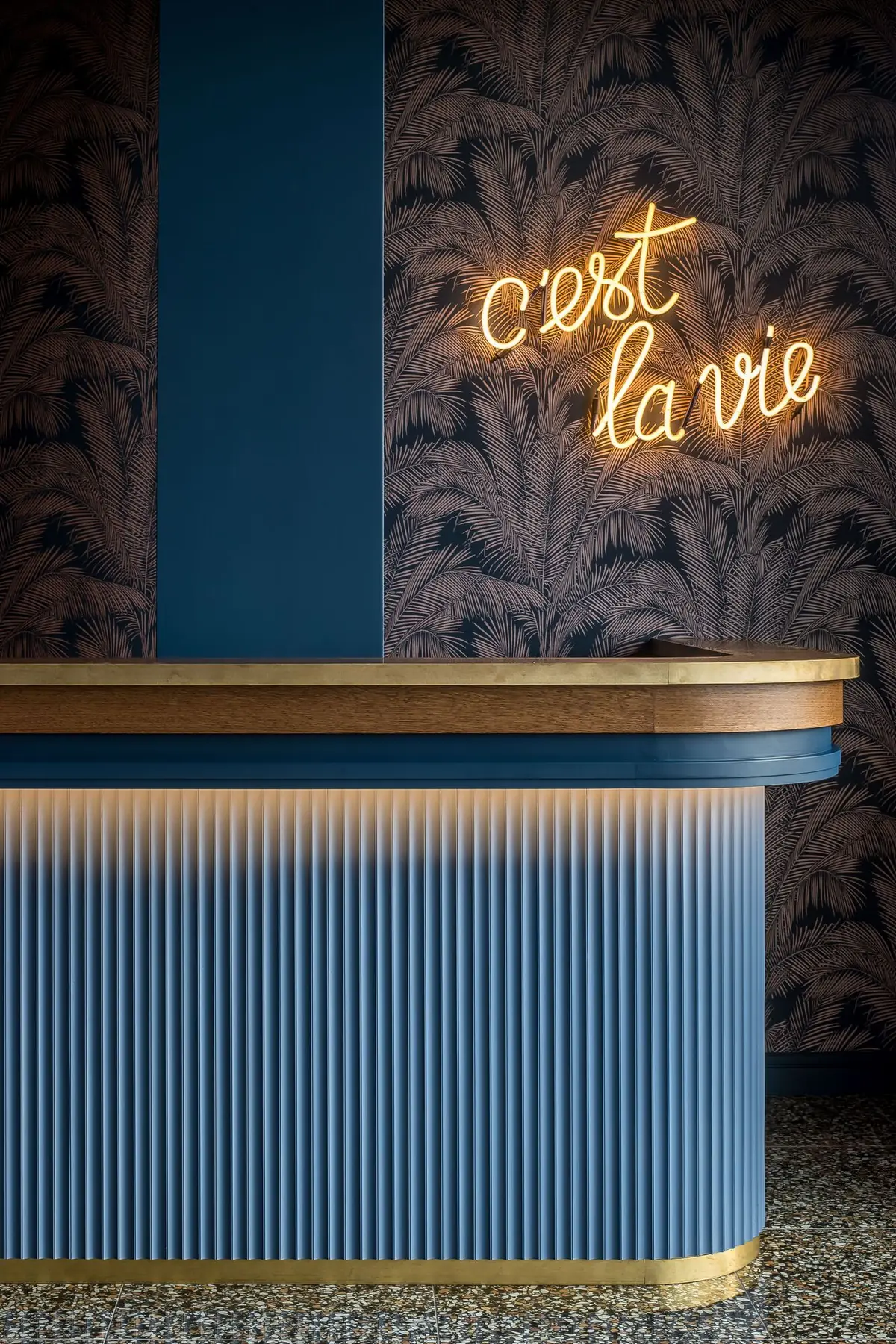
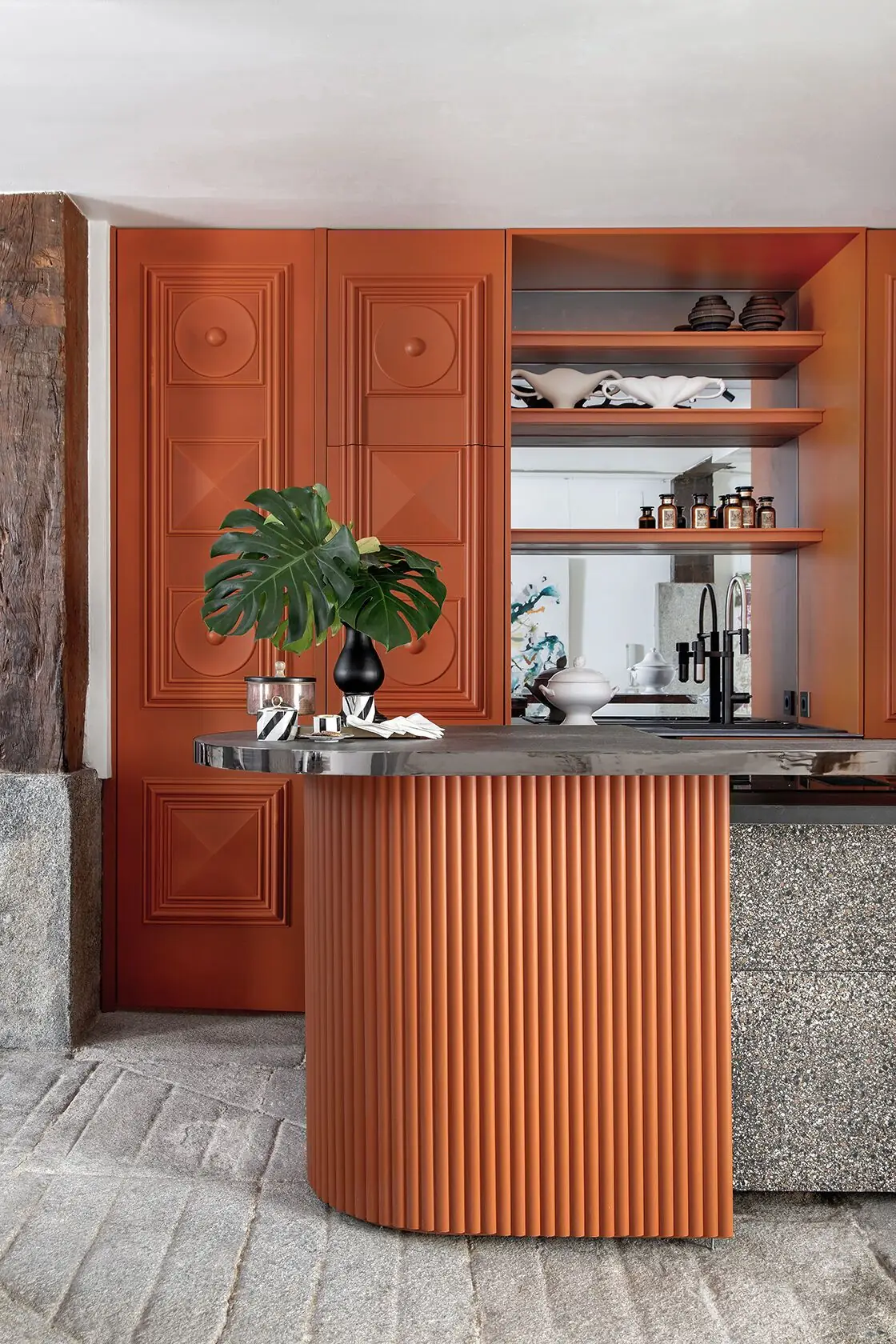
All three profiles are produced in a rigid version and a Flex version (W108F, W109F and W110F), with the same dimensions. The Flex version allows installation where a degree of flexibility is needed, such as the curved front of a bar or island, where a rigid piece cannot adapt. This makes it possible to keep the same pattern on the walls and on the curved elements of a single space.
What they bring to the project
The coverings in the collection combine stability, strength and lightness, and this is most noticeable on site:
- Lightness: the pieces weigh little, which makes them easier for installers to handle and shortens installation times.
- Strength: Orac presents them as water- and impact-resistant, an advantage in circulation areas, receptions or bars.
- Custom colour: they arrive primed and are painted on site, so the same profile can blend into the tone of the wall or become the colour accent of the space.
- Beyond the wall: because they are light, they can clad other interior elements, such as a bar, a headboard or a reception desk.
- Repaintable: the manufacturer stresses that they can be repainted as many times as needed, allowing the space to be refreshed without replacing the covering.
That is why they suit hotels and retail spaces, where the covering has to bring character, withstand use and adapt to each brand’s identity: the three variants make it possible to customise each space and add dynamism and depth with clean lines.
Key points for specification and installation
Before specifying them, these points should be resolved with the installer and the manufacturer:
- Interior use: Orac states that its products are designed for interiors and that it cannot guarantee their performance outdoors.
- Quantities: with 200 × 25 cm pieces, the manufacturer calculates two pieces per square metre of wall.
- Fixing: the panels are bonded with the brand’s mounting adhesive (FDP700 DecoFix Power), and the current data sheet states that they must also be screwed to the wall. Orac publishes specific manuals for linear and non-linear 3D coverings.
- Substrate: the surface must be clean and level before installation so that the pattern continues without steps between pieces.
- Finish: painting is essential. Orac states that its products must be finished with water-based paints or enamels.
Orac Decor, the manufacturer
Orac is a Belgian company based in Ostend specialising in architectural elements for walls and ceilings: cornices, skirtings, mouldings, indirect lighting and 3D coverings. The brand traces its origins to 1970 and sums up its way of working in three principles: products that are easy to understand and install, ready for any paint colour and made from durable materials. As well as Purotouch®, it works with Duropolymer®, an impact-resistant extruded polymer, and with Durofoam® for its basic range.
Frequently asked questions
- Can they be installed outdoors?
- It is not recommended. Orac states that its products, including the adhesives, are designed for interiors and that outdoor conditions can affect their performance, so it does not guarantee results outside.
- Do the panels need priming before painting?
- No. They leave the factory with a coat of primer and are painted directly. What is necessary is to paint them: Orac recommends finishing them with water-based paints or enamels.
- When should the Flex version be used?
- When the surface is curved, for example the front of a bar or island. In its current data sheet, Orac gives minimum bending radii of 30 and 40 cm depending on the case, so these should be checked for each project.
- How many pieces are needed per square metre?
- According to the manufacturer, two 200 × 25 cm pieces per square metre. Material lost in cuts and trimming must be added to that figure.
- How do they perform in a fire?
- As standard they are not fire-retardant. On its current website (2026), Orac states that it can apply a fire-retardant coating at the factory to comply with EN 13501-1 and that, with its adhesives and sealant, Purotouch® achieves a B-s1,d0 classification when it covers up to 27% of the wall.
A relief covering is best understood at full scale: the depth of each profile, how it changes with the light and how it looks once painted cannot be appreciated in the same way in a catalogue. At Matter we help you choose the right wall covering for each project and combine it with the other materials.
Book your visit to Matter to see and compare materials with our team.
Book a visit