Lunawood
How Lunawood Thermowood thermally modified timber is made, how it performs and how it is specified for façades, interiors, decking and saunas.
SeriesWood Matters3 of 36 min read
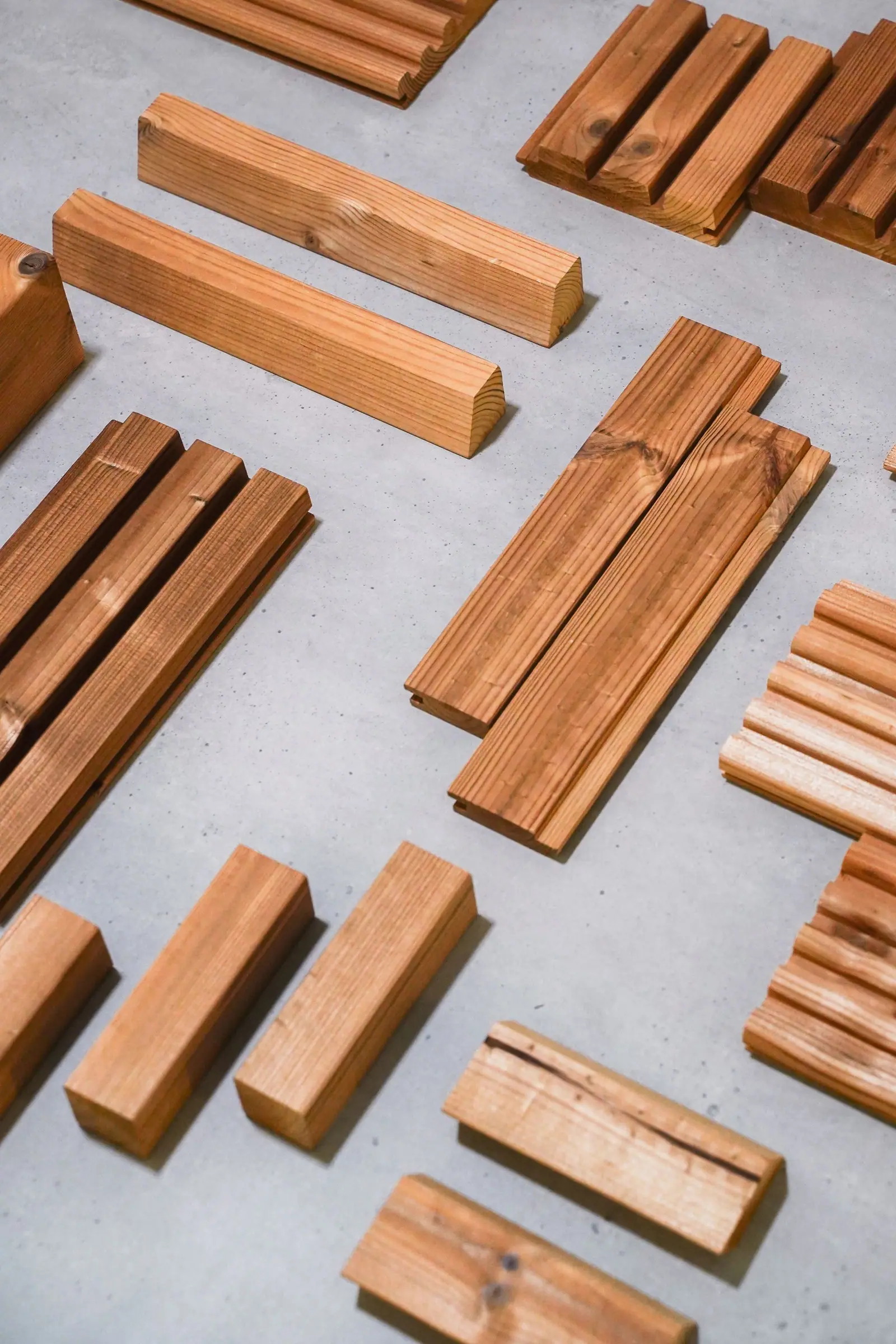
Lunawood, a company based in Finland, is a pioneer in the production of thermally modified timber. From Nordic pine and spruce sourced from certified forests, it manufactures Lunawood Thermowood, a timber modified only with heat and steam, without chemicals, designed for façades, interiors, decking and saunas.
Lunawood was the sponsoring brand of Wood Matters, the series in which we explored the value of wood in construction at Matter HUB. In this article we explain what thermal modification involves, how the resulting timber performs, how it ages, what to bear in mind when specifying and installing it, and how it has been used in two reference projects.
Timber modified only with heat and steam
Nordic Lunawood Thermowood is a timber product made through a thermal modification process using only heat and steam. According to the manufacturer, the temperature in the chamber is raised gradually to 212 °C in a process that can last up to 110 hours. The steam prevents the wood from burning and, at the end of the cycle, moisture is reintroduced to prevent cracking: the timber leaves the process with a moisture content of between 4 and 7%.
The heat permanently alters the chemical and physical properties of the wood throughout its cross-section, not just at the surface. This gives Thermowood timber greater durability, making it dimensionally stable and resistant to decay. Because the colour is also uniform through the whole thickness, a cut, planing or a small knock does not expose a different shade.
ThermoWood® is a registered trademark of the International ThermoWood Association, which monitors its members’ production quality through an independent auditor. The system distinguishes two treatment classes: Thermo-S, focused on dimensional stability, and Thermo-D, focused on durability. Lunawood works with the Thermo-D class, which the manufacturer considers suitable for interior and exterior use without chemical protective treatment, and also for wet areas such as spas and saunas.
Performance for the project
A range of products with strong durability and sustainability credentials, which can be used on façades, interior surfaces and decking in any climate and is highly weather-resistant. These are the properties that count most when specifying it:
- Dimensional stability: with its equilibrium moisture content lowered, the timber swells and shrinks much less than untreated wood and keeps its shape through changes in temperature and humidity.
- Durability without chemicals: the Thermo-D class reaches durability class 2 against rot without preservatives or additives. It is not termite-resistant: where that risk exists, it needs a specific treatment.
- Resin-free: the process removes the resin, so the timber does not exude it in the heat and, according to the manufacturer, knots do not bleed through paints or stains over time.
- Behaviour in the sun: according to the manufacturer, it heats up less in the sun than untreated wood.
- Machining and gluing: it is sawn and planed like conventional timber. It accepts most adhesives, although gluing and pressing times can be 4 to 6 times longer; in the manufacturer’s tests, reactive polyurethane (PUR) adhesive gives the best results.
Because the timber is 100% resin-free, Lunawood is also suitable for saunas. Its dimensional stability allows it to perform in hot, humid environments, and the same profiles can be used both inside and outside the cabin.
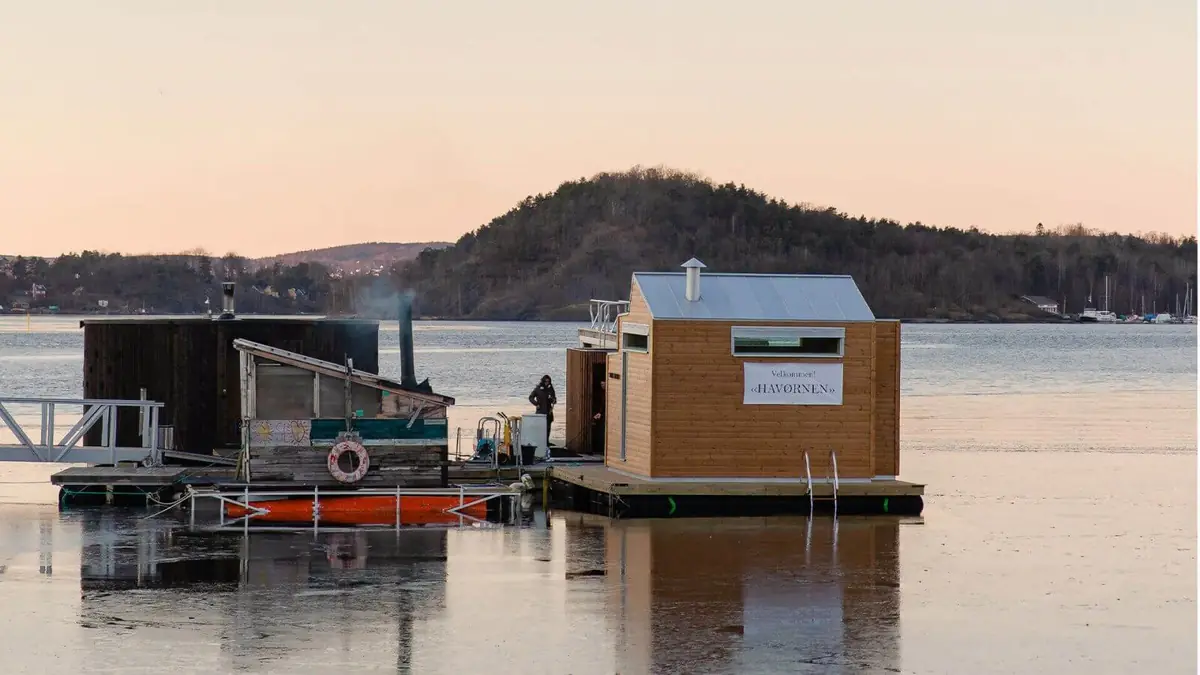
From caramel brown to a grey patina
Thermally modified timber has a deep brown tone that naturally weathers over time to a silver-grey patina, showing the beauty of the passing years without any additional treatment.
According to the manufacturer, greying starts to become noticeable 3 to 6 months after installation, as a result of ultraviolet radiation and moisture, and over the years small surface checks may appear, as in any timber. The manufacturer states that the timber needs no maintenance to withstand the passage of time: treatments serve to preserve its original appearance.
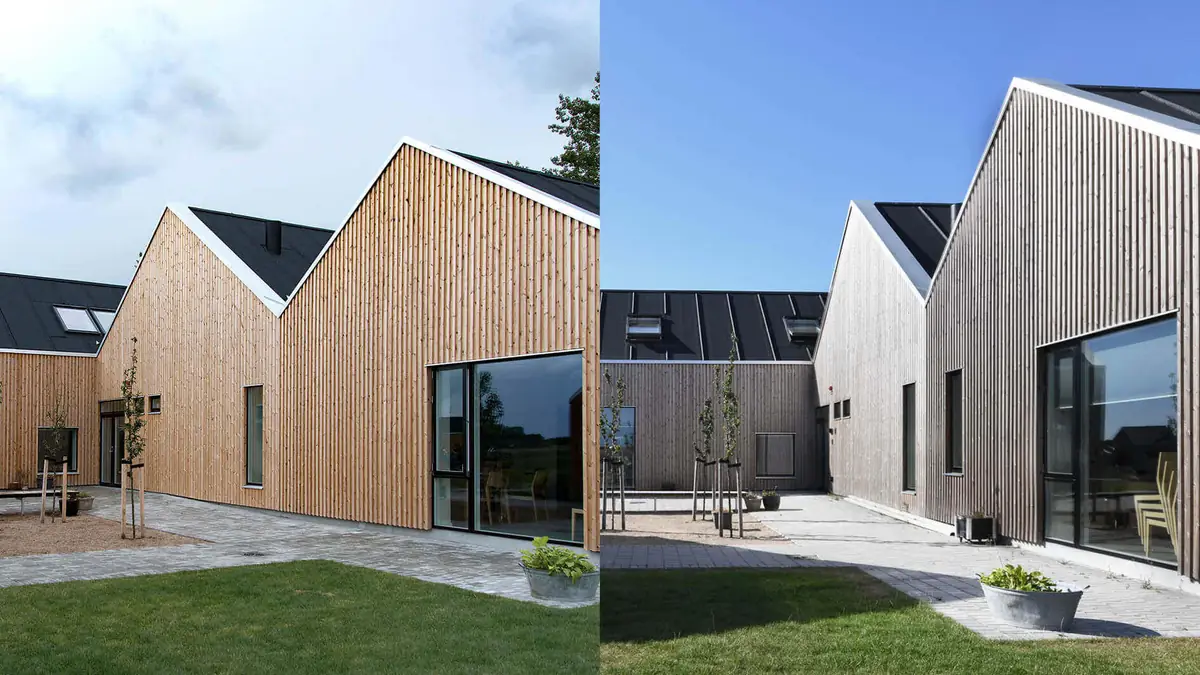
To keep its brown tone, various surface treatments can also be applied to the timber: pigmented oils or waxes, stains, varnishes or paints with a UV filter, which increase its protection against ultraviolet rays. They are applied in a thin coat, before or just after installation, and renewed depending on the climate, use and sun exposure.
Key installation points
The performance of thermally modified timber depends on correct installation. These are the basic recommendations the manufacturer gave in 2021; for each profile, check its installation guide:
- Fixings: always stainless steel.
- Ventilation: leave enough space around the timber for air to circulate. On façades, battens are set at 600 mm centres.
- No ground contact: the Thermo-D class corresponds to use class 3, so the timber must be kept clear of the ground.
- Decking: joists at no more than 450 mm centres for 26 mm boards and 600 mm for 40 mm boards. The minimum thickness is 26 mm for decking and 19 mm for cladding.
- Pre-drilling: when the screw is less than 70 mm from the end of the board, to avoid splitting. The profiles can be installed vertically and horizontally, with some exceptions: lap and bevelled profiles, for example, are only installed horizontally.
Most common profiles and dimensions
The most popular dimensions in the range, with their recommended use – solar shading, cladding, interiors, decking and pergolas – were summarised as follows in 2021:
Reference projects
Two recent buildings show Lunawood thermally modified timber on façades, in very different climates.
Casa A, REM’A arquitectos (Guimarães, Portugal)
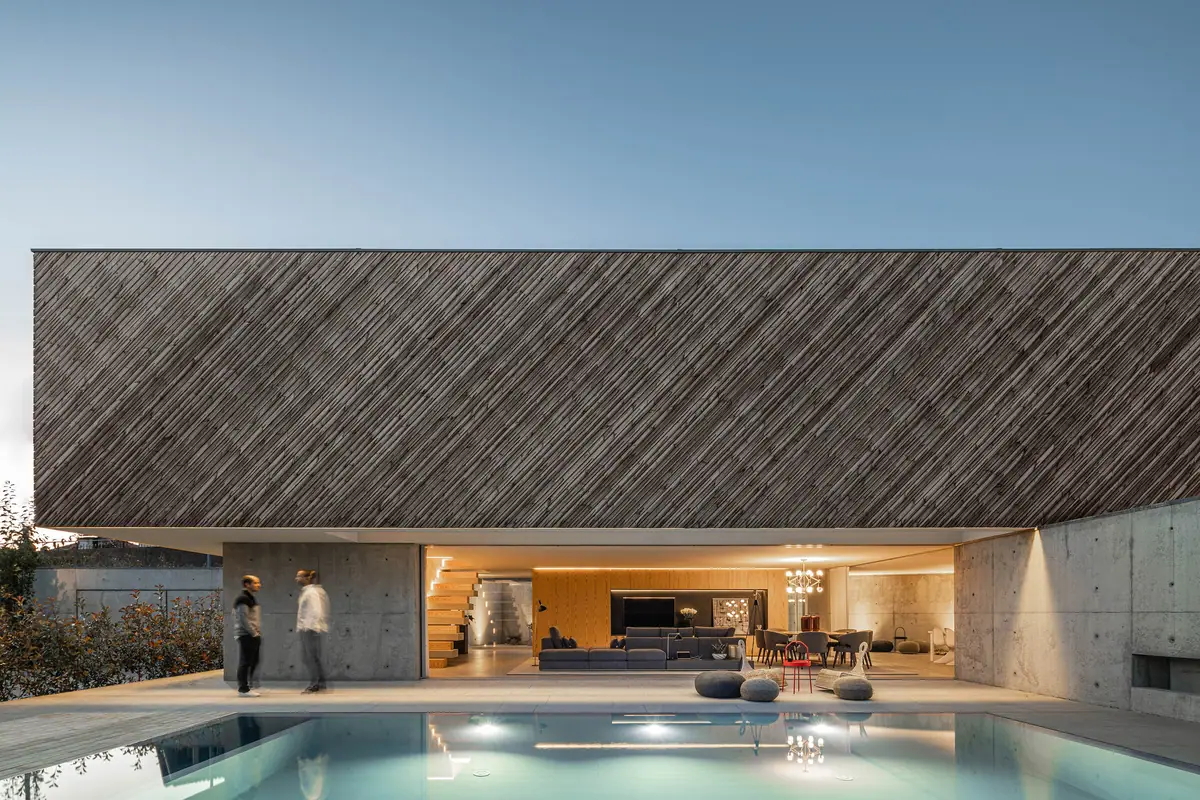
Casa A is a contemporary single-family house in an urban setting in Guimarães. The upper volume, which contains the private rooms, is clad in Lunawood Thermowood battens laid diagonally, like a nest. According to Lunawood, the grey of the naturally weathered timber will gradually come closer to the tone of the base of the building. The project won ArchDaily’s Building of the Year 2020 award in the Best Applied Products category.
Kokhta-Mitarbi Resort, Architects.ge (Georgia)
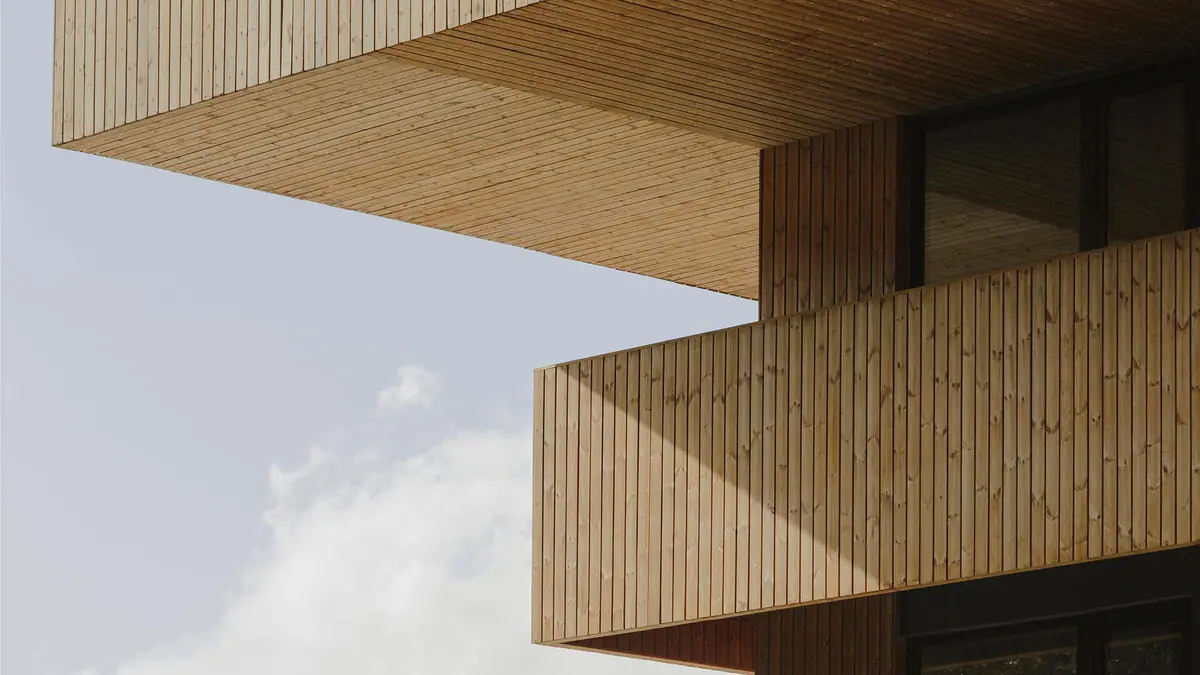
This mountain resort in Georgia combines a hotel and residential apartments at the foot of a mountain, in a climate with four distinct seasons. According to Lunawood, the aim was to offer families a modern, healthy way of life, and Thermowood was chosen for the façade for its weather resistance and because it is a resin-free, non-toxic material. The project was completed in 2020.
A manufacturer with a sustainable approach
The quality of the product rests on a natural, non-toxic manufacturing process and on a careful selection of raw material from properly managed local forests certified with the PEFC label. According to the manufacturer, the average transport distance for its raw material was 235 km, and its long service life without treatments makes it a long-term store of CO₂.
In addition to PEFC, in 2021 Lunawood held KOMO certification, which attests to the durability of the Thermo-D class, CE marking on its exterior cladding and interior panels, and the Avainlippu label, which identifies products designed and made in Finland. Its production is monitored by the International ThermoWood Association through an independent auditor.
Frequently asked questions
- Does thermally modified timber need a surface treatment?
- Not to maintain its durability: the Thermo-D class can be left untreated, in which case it takes on a silver-grey patina. To keep the brown tone, a pigmented oil, stain or paint with a UV filter must be applied and renewed periodically.
- Can it be used in contact with the ground?
- No. Lunawood Thermo-D corresponds to use class 3 under EN 335 (exterior, above ground) and the manufacturer does not recommend it in direct contact with the ground.
- Why is it suitable for saunas?
- Because the thermal process removes the resin, which does not exude even at high temperatures, and because it is dimensionally stable in hot, humid environments. It is also made without chemicals.
- What is the difference between Thermo-S and Thermo-D?
- They are the two treatment classes of the ThermoWood system. Thermo-S prioritises dimensional stability and is aimed at interiors; Thermo-D prioritises biological durability and weather resistance and is also suitable for exteriors. Lunawood produces in the Thermo-D class, modified at 212 °C.
- Is it termite-resistant?
- No. According to the manufacturer, Lunawood is not termite-resistant; in areas with this risk it must be given a specific treatment.
Thermally modified timber is best understood in the hand: the tone, feel and scent of heat-treated wood, and the difference between a new board and a weathered one, do not come across in the same way in a photo. This article is part of the Wood Matters series, together with the research on timber construction and the day with studios and companies from the sector.
Book your visit to Matter to see our Materioteca and talk about the timber materials for your next project.
Book a visit