ILMIODESIGN
Andrea Spada, founding partner of ILMIODESIGN, explains how his studio brings together Italian eclecticism, project discipline and the search for materials.
InterviewsWorkflows That Matter58 of 586 min read
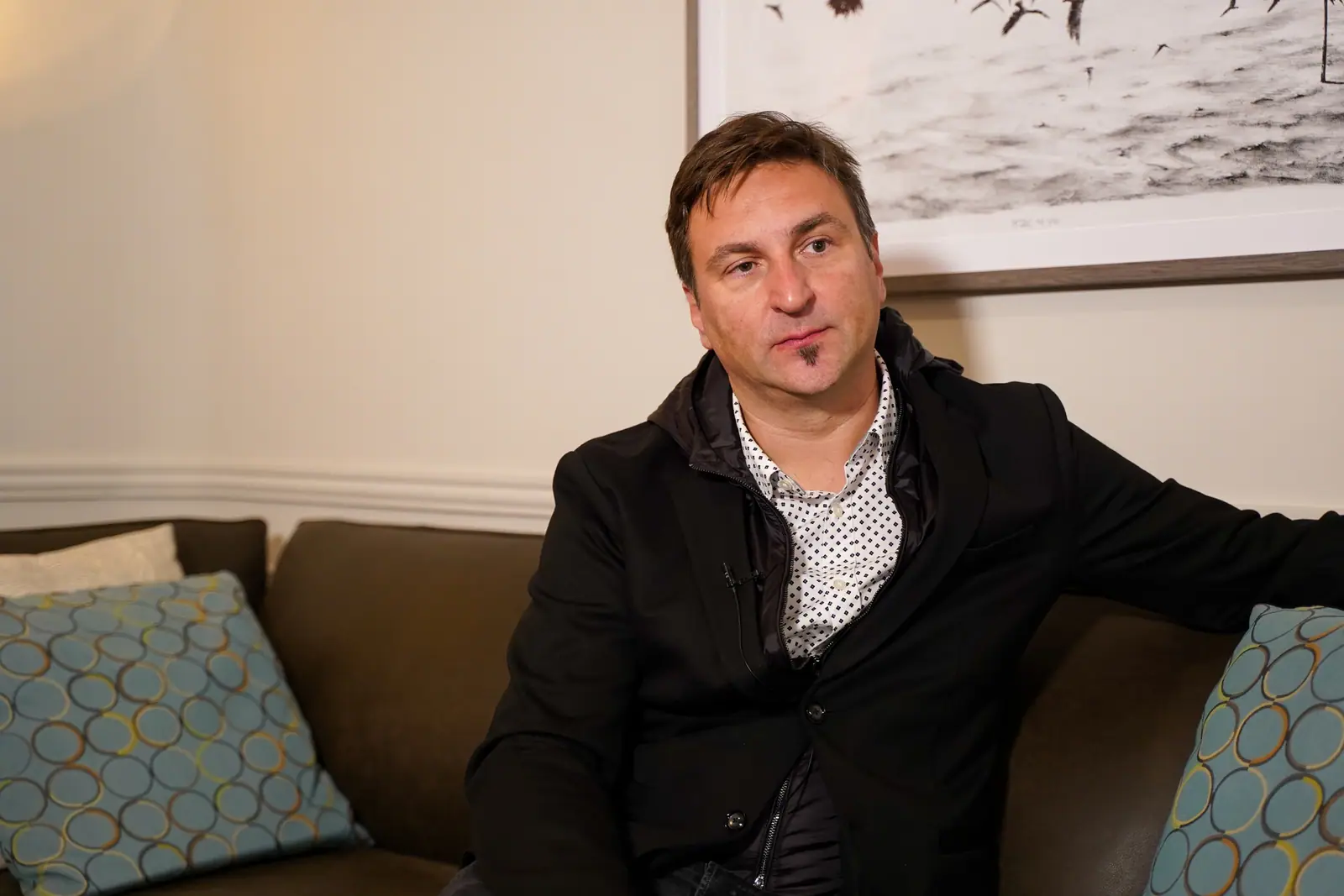
“You have to see the material. If you can't appreciate the materiality and you don't see it, it's very hard to get an idea of what the project will be.”
ILMIODESIGN is a studio inspired by eclecticism, combining classic Italian design with avant-garde design that sets out to surprise users the moment they come into contact with the space.
The studio is led by the architect Michele Corbani and the industrial designer Andrea Spada who, in a “professional marriage, Italian style”, complement each other and aim for every project, innovative and original, to carry the Italian essence that is part of their signature.
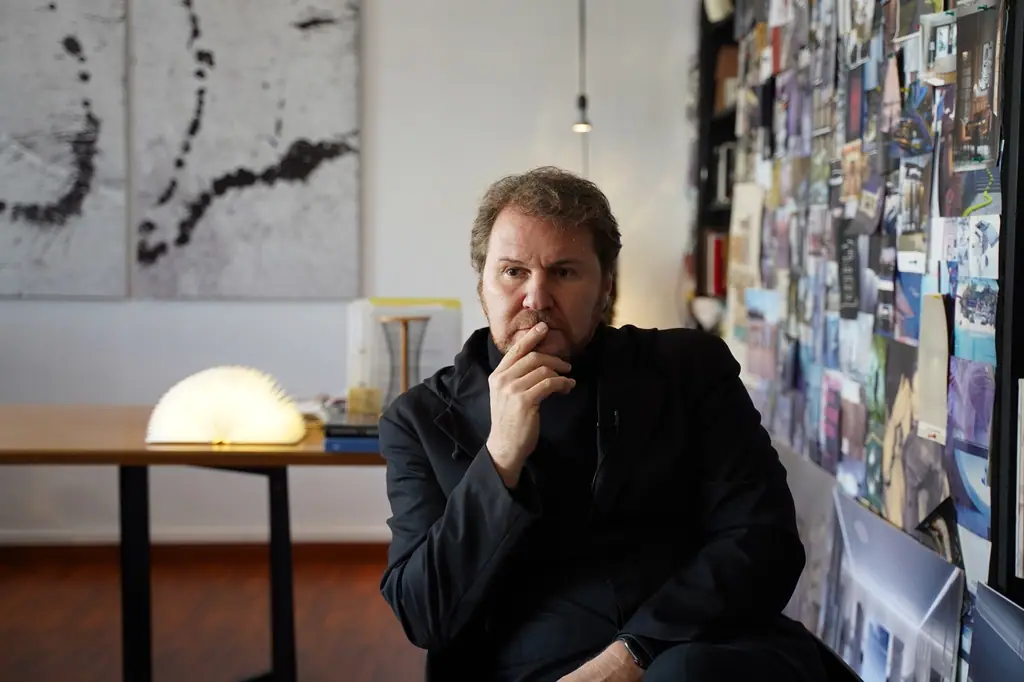
In this edition of WORKFLOWS THAT MATTER #34 we talk to Andrea Spada, one of the two partners who founded ILMIODESIGN, who highlighted the importance of meticulous work when approaching a project from every angle: how the studio defines itself, what values guide it, how the two partners divide the work and why, for them, you have to see and touch the material.
ILMIODESIGN: interior design with an Italian accent, from Madrid
Michele Corbani and Andrea Spada are Italian, graduated from the Politecnico di Milano and, according to the studio, met in Salamanca while on Erasmus. The name says it all: “Il mio” underlines their Italian identity and the authorship of their designs, and “design” the craft that, they say, runs in their Milanese blood. The studio is based in Madrid.
Their work spans hotels, restaurants, clubs, housing, offices and retail, as well as product design. It is carried out by a multidisciplinary team of architects, industrial designers, interior designers and graphic artists who, as the studio explains in its philosophy, work without intermediaries and start from one idea: there is no such thing as a large or small project, from the private client to the large hospitality chains.
Hospitality: from the 1930s club to the art deco hotel
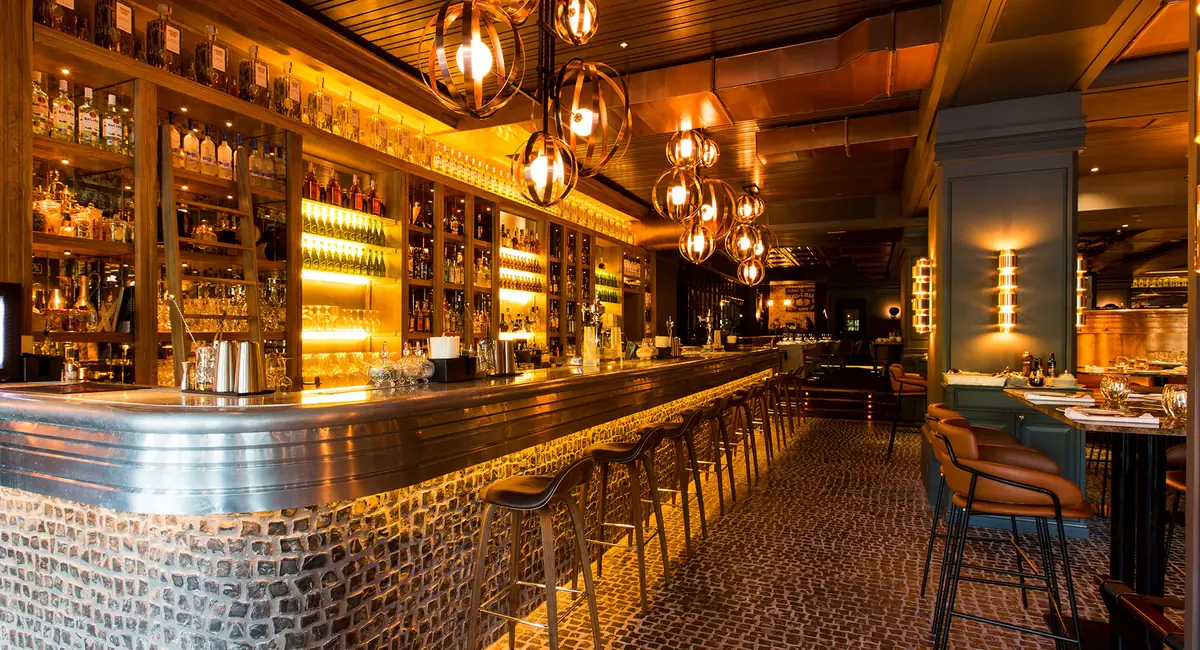
Hospitality is where that eclecticism shows most. At the Tatel restaurant in Madrid (2015, 800 m²), ILMIODESIGN proposed a contemporary take on the clandestine clubs of the Prohibition era: a 1930s and 1950s aesthetic, pieces designed exclusively for the venue combined with design icons, and murals with nods to Spanish culture.
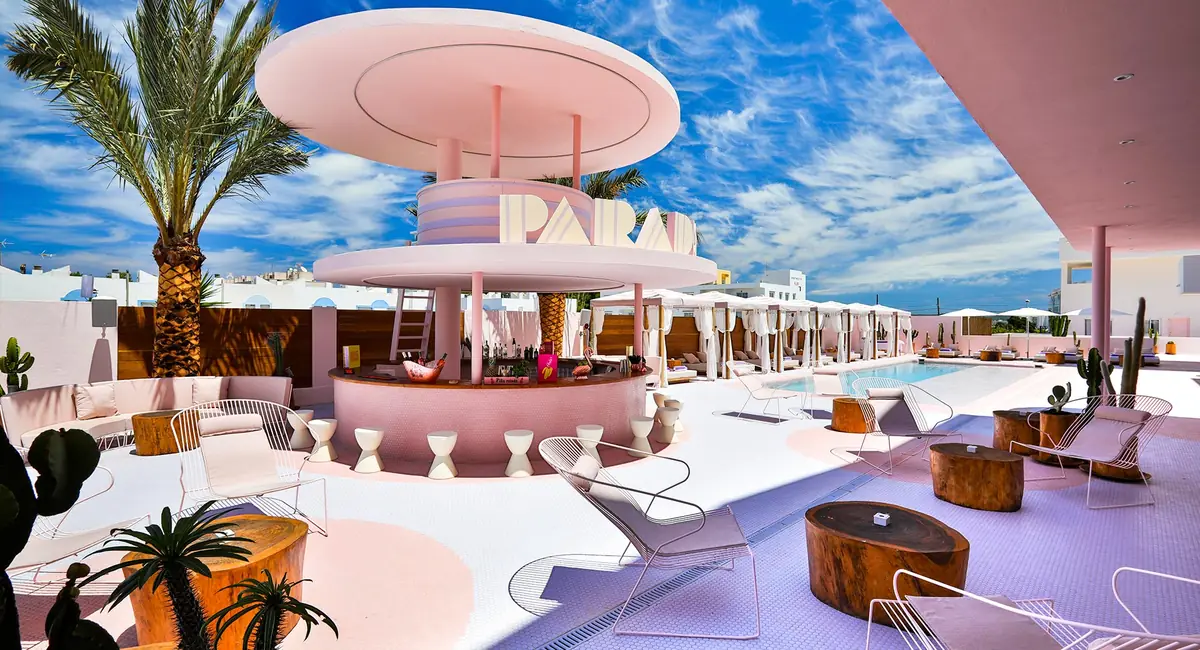
In Ibiza, the Paradiso Ibiza Art Hotel (2018, 12,000 m²) was a complete refurbishment of an existing building with Miami as its inspiration: pastel colours, street art and a tribute to the 1970s Italian group Archizoom. On the Costa Blanca, the Hotel Barceló La Nucía Palms (2021), a new-build five-star hotel, combines a Nordic style of light woods and neutral tones with classical mouldings, bespoke furniture, and greens, blues and turquoises that evoke the Mediterranean.
An eclectic studio with an Italian soul
How would you define ILMIODESIGN?
“I would define it as an eclectic studio with an Italian soul – the founding partners are Italian, but we have been in Spain for a long time. As we consider ourselves eclectic, the idea is always to be able to adapt to the demands of each client. In that respect, I think creativity is nothing if you don't then know how to bring the project down to earth, if you don't know how to give it shape according to the client's real requirements and their budget, which are increasingly important in our profession. We are eclectic both when it comes to creating and when it comes to knowing how to bring the project down to earth and give it shape.”
Knowing how to listen to the client
What values or qualities characterise ILMIODESIGN?
“Our main value when approaching a project is knowing how to listen to the client. We have to be good interior designers, good architects and also good psychologists: above all, knowing how to listen so that we can then capture the initial idea, what comes out of the first conversation, and make it a reality. Internally, our values are creativity and internal discipline, so that everything flows according to the schedules we set out.”
“Creativity is nothing if you don't then know how to bring the project down to earth.”
— Andrea Spada
Two profiles, one project
As a studio, how do you approach each project?
“Although we are the studio's founding partners, Michele and I are very different. I studied industrial design, Michele is an architect. So I can say that I have a more creative soul and Michele's is more technical. Then we come together and we often look like an Italian married couple and start arguing a lot in that first phase of the project, so that we feel comfortable and take the project seriously.”
“In the studio we live each project as if it were the first or the last, we live it to the end, and then all that intensity, that inner fire, is reflected in the work of everyone on the team, who often have to put up with us. After that, we set out a series of very strict guidelines and everything has to run on rails so that the final result is not affected, so that the client gets a good product and a good service.”
You have to see the material
How important is it for you to have materials that fit your projects?
“We love the process of searching for materials; we try to take in every trade fair we can attend.”
“Being able to count on advice like the kind Matter can offer is good. In our studio we have our own set of materials, but we can't cover everything and have every material in the studio, so having physical, on-site advice to go to with the client and see a whole range of materials suited to all kinds of projects and requirements seems to me an excellent and very practical service for the client.”
“You have to see the material. If you can't appreciate the materiality and you don't see it, it's very hard to get an idea of what the project will be.”
Materials at the service of those who live in the space
So is the search for innovative materials the key to delivering an original product to your clients?
“The search for materials always has to be a search at the service of the user, who is the one who really enjoys these spaces. All our effort is focused on thinking about others; that is the goal. The sensory quality of materiality helps enormously. Each material has a sensory quality that can be expressed in one way or another, and we have to be the magician who manages to bring all the elements together so that the materiality is appreciated in one way or another, as the project requires.”
“We have to be the magician who manages to bring all the elements together so that the materiality is appreciated.”
— Andrea Spada
Seeing and comparing materials at Matter
What Andrea Spada describes is also the reason our material libraries exist: no studio can keep every material in-house, and the texture, the feel or the way light behaves on a surface cannot be appreciated in the same way in a catalogue. At Matter Barcelona and Matter Madrid we support interior design studios and their clients in selecting materials for hospitality, residential and contract projects.
Book your visit to Matter and come and see the materials for your next project with your client.
Book a visit