Lagranja Design
Gerard Sanmartí and the Lagranja Design team talk about how they work and how Mediterranean craftsmanship shaped the ME Sitges Terramar hotel.
InterviewsWorkflows That Matter1 of 5815 min read
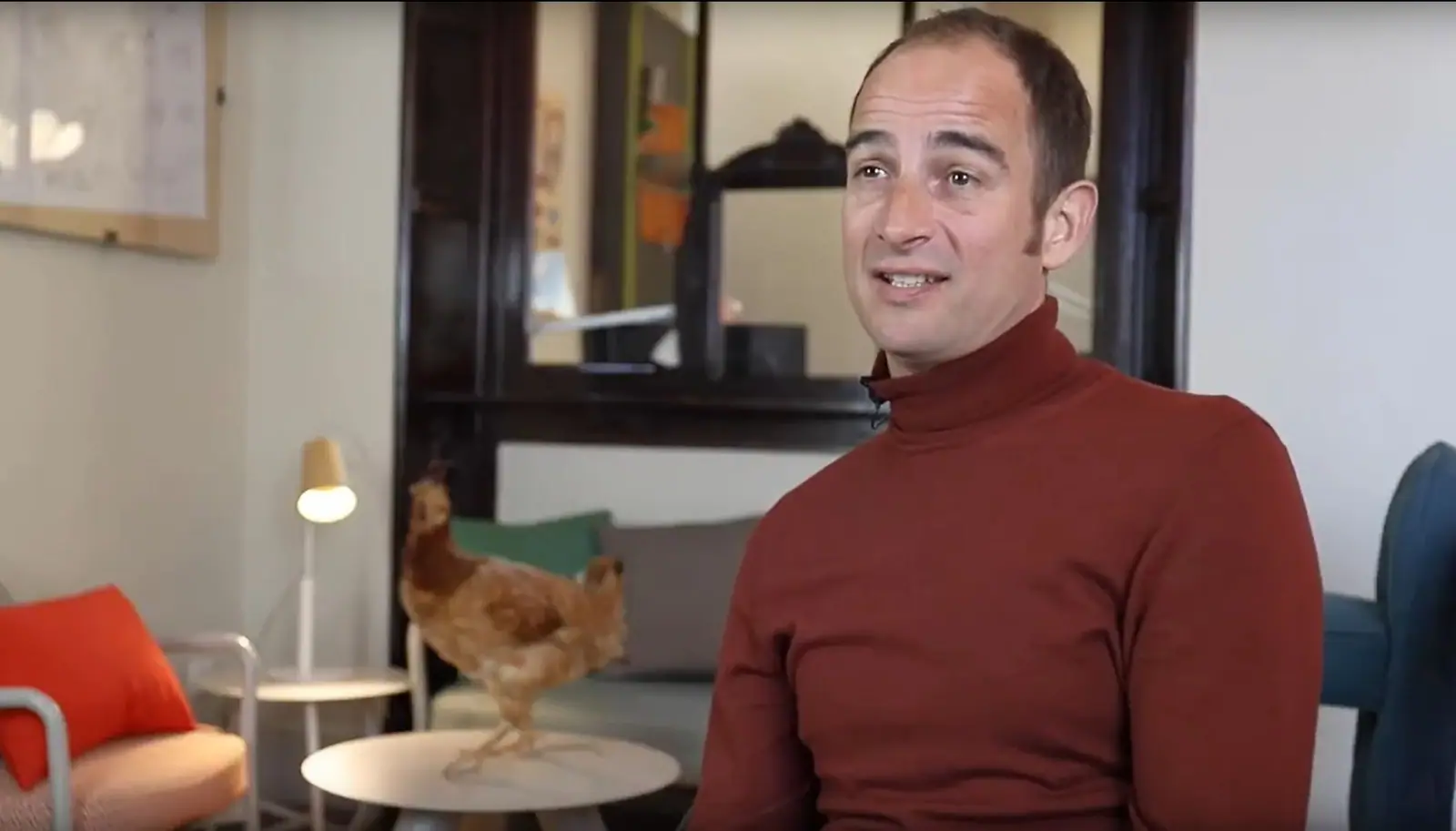
“It’s about trying to provoke these ‘accidents’ that let you learn. You have to stretch the limits to put things under tension.”
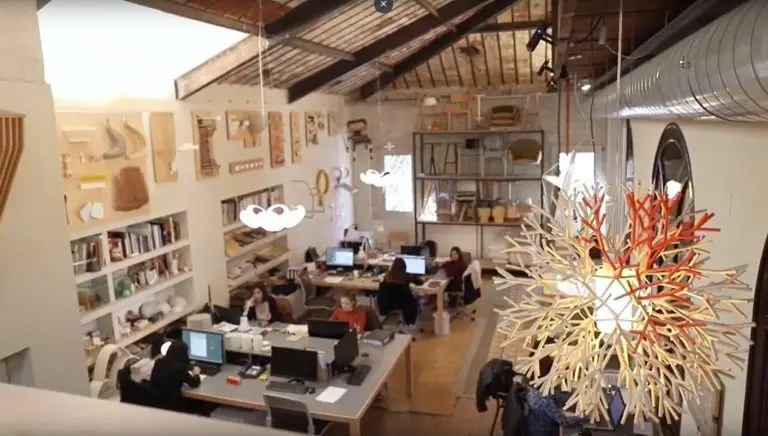
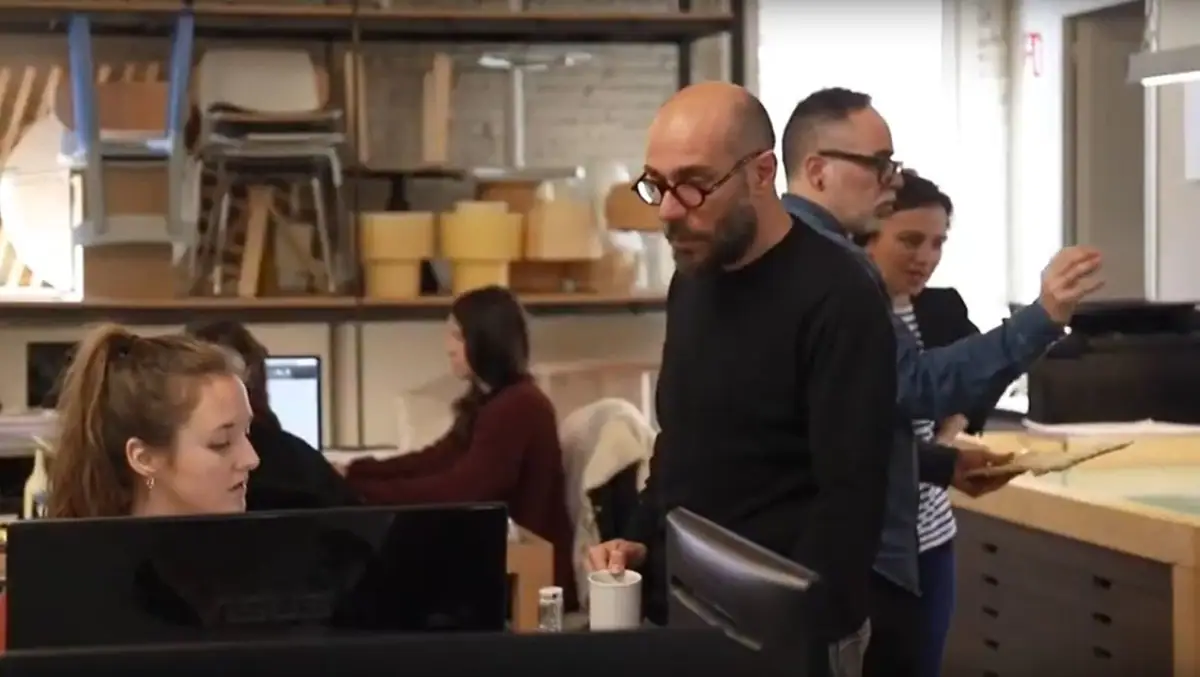
Always on the edge of innovation and understanding, without pigeonholing itself or falling into a premeditated style, Lagranja Design opens the first chapter of Workflows That Matter. We went inside the studio, led by Gerard Sanmartí and Gabriele Schiavon, so that they could show us their world in person and we could learn first-hand where the magic in their work comes from.
We talked about the origin of the name, how a team that combines interior design and product design is organised, their creative process and, above all, the ME Sitges Terramar hotel: how the commission came about, what role the materials played and what they learned along the way. In the second part we are joined by Anna, from the studio team, who was closely involved in the project.
Lagranja Design: interiors and product since 2002
Gerard Sanmartí and Gabriele Schiavon founded Lagranja Design in Barcelona in 2002, and the name comes from the street where they opened their first studio, La Granja. Today the studio describes itself as a multidisciplinary design company working in interior design, furniture and lighting, product design, conceptual architecture and landscape, and one-off pieces prototyped in its own Atelier.
In 2004 María Ruiz joined to head the product department, while José Manuel Fernández took charge of interior design, as he explained to Barcelona Global. Before this interview the studio had already received, among others, the Red Dot Award (2007), the Premi Ciutat de Barcelona de Disseny (2008), the IIDA Excellence Award (2009) and a Silver Delta (2012). Today, according to its website, it has offices in Barcelona, Istanbul and Singapore.
Much of the conversation revolves around ME Sitges Terramar: the refurbishment of the historic 1930s Hotel Terramar in Sitges, which Lagranja carried out for HI Partners and the ME by Meliá brand. According to the studio, the project, completed in 2018, covers 18,200 m² and includes architecture, interior design, concept, FF&E and craft pieces.
The name and the team
Let’s start at the beginning: why “Lagranja”?
“For a simple reason: the first studio was on ‘La Granja’ street, and from saying ‘let’s meet at La Granja’ so often, the name stuck. Also, if from the start you’re given a name you have no affinity with, in the end you reject it, but we liked its connotations and felt very comfortable with the ‘farmer’ idea, which is the antithesis of design – design would be the stuffier side, wouldn’t it? It’s much more approachable, informal, spontaneous, hard-working, and we have those values deeply ingrained, so we took the name as our own.”
And the name goes along with the way you communicate, doesn’t it?
“The truth is these things aren’t premeditated, but I think people are shaped by where they live, the friends they have… it’s empirical knowledge around us that you absorb. The name has been the same kind of experience. We took it on completely by chance, and then a friend gave us a hen, we did a photo shoot on a farm, and so on, and we enjoy it like that. It’s anecdotal, but it amuses us and we have fun with it.”
What is Lagranja like as a team?
“In the end we’re a very cross-disciplinary team led by Gabriele and me (Gerard Sanmartí), the founders, but we soon saw that we shouldn’t polarise the team too much. We started from a very global structure and we’ve been like that for 18 years now. In the first or second year María and José joined: María with a product, industrial design profile, and José with more of an architecture profile. From there our activity took shape: spatial design, which is basically interior design, and product design that feeds those spatial projects. It’s almost always for our own designs, but we try to work for many other companies so as not to become closed in on ourselves.”
What do you like most about Lagranja?
“That’s a very good question but very hard to answer, because it’s a bit boastful… What I’m proudest of is that we do what we really like and are passionate about, and that we’re proud of every one of the projects we’ve carried out – and being able to say that today is a stroke of luck. You have to strike a balance between the quality of what you feel comfortable doing and the needs and obligations you have to meet for all this to work. That’s getting harder and harder because the team is growing, there are bigger, more diversified projects and everything is magnified, but for now, despite the complexity, we have the balance well in hand.”
“What I’m proudest of is that we do what we really like and are passionate about, and that we’re proud of every one of the projects we’ve carried out – and being able to say that today is a stroke of luck.”
— Gerard Sanmartí
What sets them apart and how they work
What sets you apart from other practices? What characterises you?
“Perhaps it’s this cross-disciplinary approach, which lets us do product design, interior design and some architecture, and we also apply all this diversity on an international stage, not just locally.”
I imagine that within this diversity the people you design your buildings for also have different needs. How do you research them, and how do you add value for your clients?
“Until now we’ve done it 100% intuitively, but there came a point when our intuition sometimes failed us and we didn’t win a competition because our intuition was focused more on the creative side. We realised that this isn’t the only point of view to take into account in projects: you also have to include a more business and marketing-oriented view and empathise a little more with the client in general. That made us ask for outside help to give us a more complete perspective.”
What is your process of inspiration? How is a project created at Lagranja?
“I’ve been asked this many times but it’s very hard to answer because there’s no clear answer. You have to keep your eyes open, listen, read, look, travel… all of that shapes people, and then you give them a voice and they tell you what they think is right based on what they’ve lived. It’s an unpredictable process; there’s no single formula that’s the key. There will be periods of greater creativity and others of more crisis, depending on each person and the external factors influencing them at any given time.”
When inspiration comes, how do you sustain it or work on it afterwards?
“Although, depending on who you ask, we may seem a bit crazy and informal, associated with fun, we’re very Germanic, rigorous and perfectionist when it comes to meeting deadlines and always making sure the quality thresholds are right. We work hard and have a very disciplined internal organisation that lets us be efficient without people being too stressed.”
How do you achieve this organisation? Do you follow a process?
“It’s true that María and Jorge, who take the lead most within the studio’s organisation, are very disciplined, so in that respect we’re very relaxed.”
The ME Sitges Terramar hotel
A second life for a Sitges icon.
Let’s talk about the Terramar project. How did it come about?
“HI Partners, the company that bought the Hotel Terramar in Sitges, called us to refurbish it. It was a very complex project because of its sheer scale and its significant history – it isn’t just any hotel; in Sitges it’s highly representative, it’s an icon, and it was a great challenge for us. We had to give a second life to a 1930s hotel that was completely run-down and forgotten, and it was a wonderful opportunity for us.”
How did you approach it?
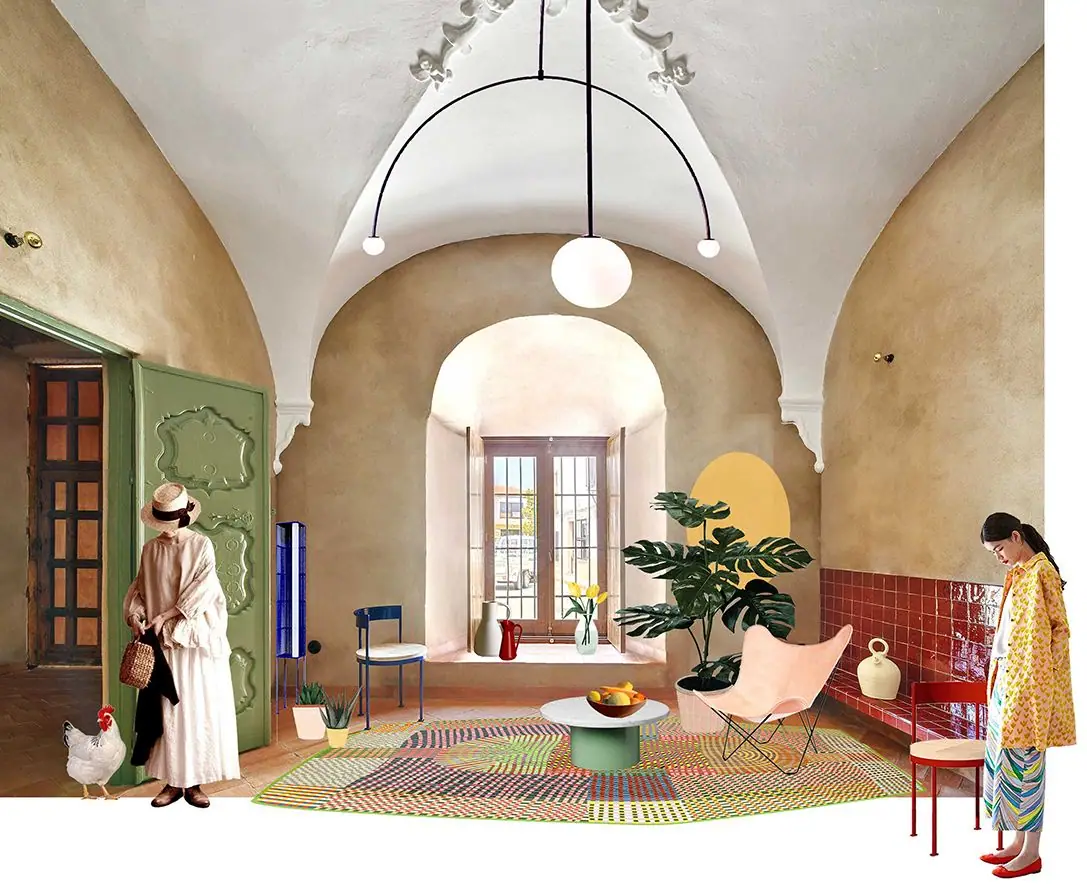
“I think very naturally, taking its history into account. It was a building with great value and deep roots in the place, and its narrative had to be updated and adapted to the reality of the 21st century. It’s a building with several layers; the first hadn’t been erased, it’s inside the building itself, and HI Partners called us to recover it. It’s an eclectic project, but we based it on the Mediterranean tradition, which helped us carry it through.”
So on the one hand there was this great challenge of interpreting the history… And how did the Mediterranean culture you mentioned come into the project?
“Well… when you do a hotel, I always say it’s very complex because you have two clients: one is the owner and the other is the operator. Aligning those two points of view isn’t easy, and you also have the constraints of the building, which aren’t easy either… in the end we opted for a Solomonic solution that everyone could like, using elements such as tradition, craftsmanship and the local in an avant-garde way.”
There are some very special pieces in this building, aren’t there? Tell me an anecdote about one of them and how it came about.
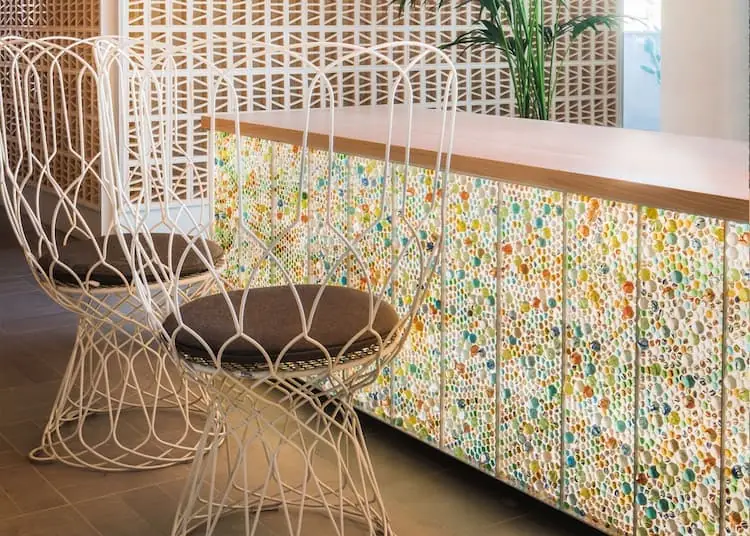
“We like this side of playing and experimenting with materials. At one point – we have an olive tree at home – we picked some olives, put them in vacuum bags and froze them to eat later. When I took out the bag of frozen olives, I held it up to the light and saw it was very beautiful, and I thought we had to do something with it, but I didn’t know what. Then my wife showed me some marbles she had kept from when she was little, and I thought, why don’t we do the same as with the olives? We put them in a vacuum-sealed plastic bag and held them up to the light, and we liked it so much that we ended up using that charming element, which came about completely by chance and spontaneously, in the hotel reception.”
Materials as narrative
What role have materials played in this project?
“Well… key, crucial! But as in any project, eh… materials are ultimately the project’s DNA; they give it personality and life. If the materials are weak, the project doesn’t hold up at all.”
At what point do you start thinking about them?
“From minute one, always. Although sometimes you approach them one way and then they have to be changed, depending on the client’s feedback and the needs that arise. You can almost never do whatever you want; it’s a selection of constraints, because you have to adapt to a thousand variables and circumstances.”
What helps or hinders you in these choices?
“The more options you have, the better. If you’re clear about what type of material you want, you can start narrowing it down according to its characteristics, what you need and whatever the constraints are. We try to find imaginative solutions: often the material can be the story, and other times it can accompany the story, and we try to make materials carry a narrative charge rather than a purely decorative one.”
And what does this narrative charge consist of?
“Well, in the Terramar project, for example, it’s related to craftsmanship, to the different ways of handling and applying materials, and so on. By changing their context, materials can take on another dimension; some materials are innovated and others are reinterpreted. In the end it’s the whole that comes across as original and genuine – the finished puzzle, not the separate pieces.”
“We try to find imaginative solutions: often the material can be the story, and other times it can accompany the story, and we try to make materials carry a narrative charge rather than a purely decorative one.”
— Gerard Sanmartí
The Terramar from inside the team
So, Anna, one of the projects you carried out that particularly caught our attention is the Hotel Terramar in Sitges, and we’re told you were especially involved in its development. What would you highlight about this project?
“What struck us most about this project from the outset was the freshness and creative freedom it allowed us, breaking established patterns, applying and adapting our way of thinking and doing, and recovering Mediterranean ideas.”
And where do you think this freshness and freedom you found working on the project shows most?
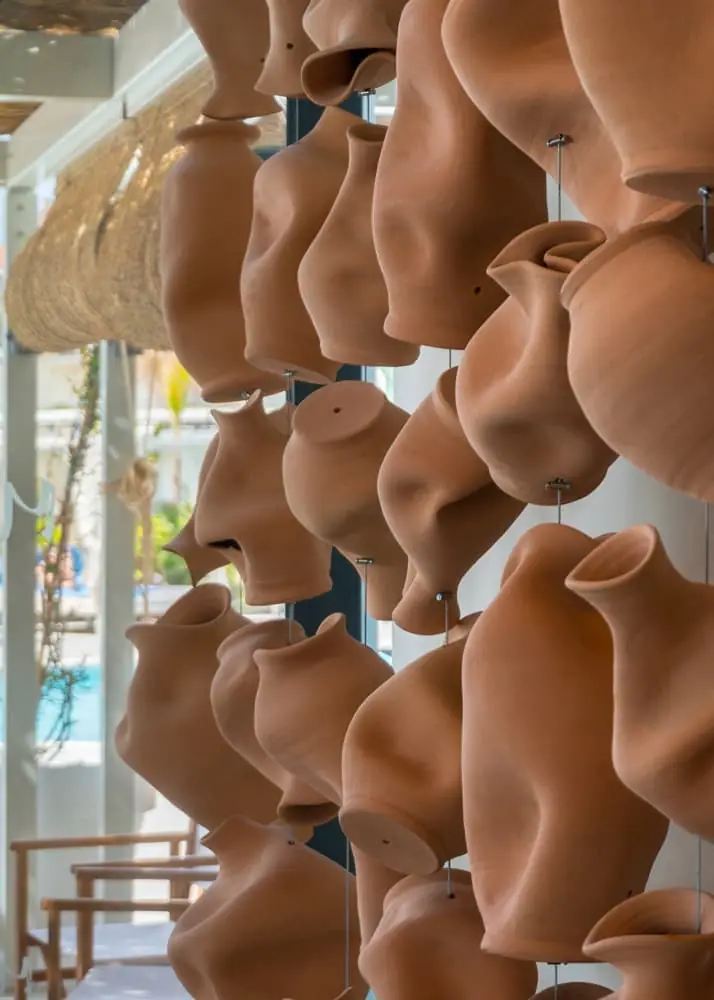
“I think the project is full of very personal touches and nods. Being able to treat very simple, everyday local materials in different ways. We did it with the wicker on the columns, with clay vases that we turned into screens… that’s roughly what we tried to convey: taking a material that’s very familiar to us within our Mediterranean aesthetic and applying it differently, reinterpreting it and giving it a new life or a much more contemporary look.”
There are many materials in this project and each evokes different sensations, like the desk made with marbles, for example. If I’m not mistaken, there’s also a very special ceramic screen. What were you aiming for with it?
“Well, it’s always tied to the narrative of nearby materials, of the earth. Part of the process of making this screen was developing an idea, putting it into sketches, going to the craftsman’s workshop, working on it with him, explaining what we wanted, and so on. We always start from an idea; it isn’t an abstract design that others then develop – we like to be involved in the whole process.”
What have you loved most about this project?
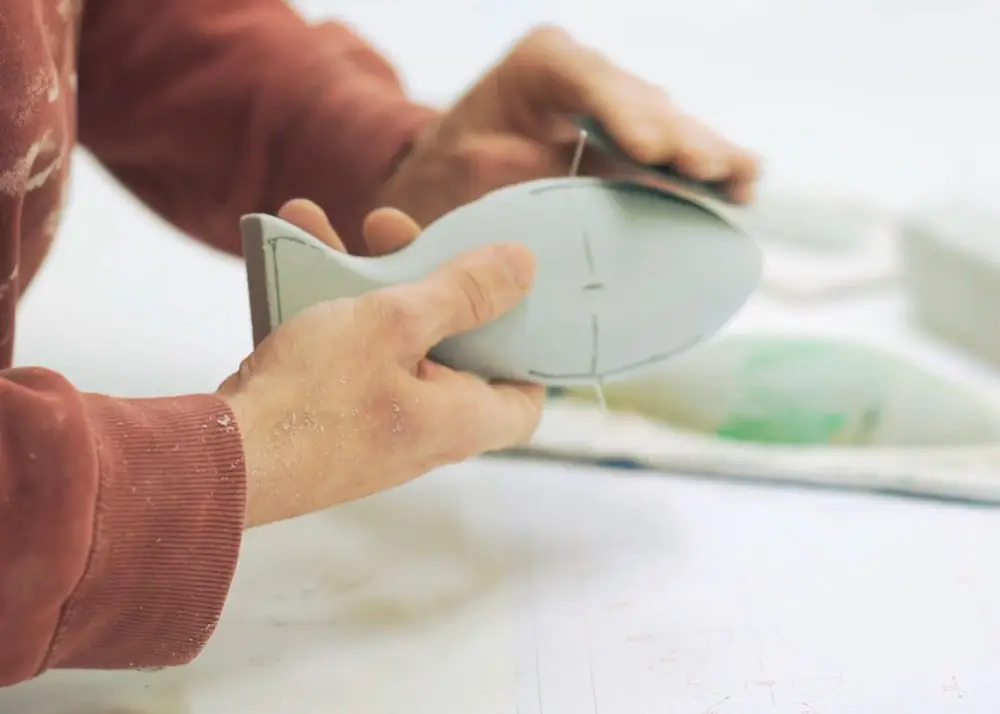
“I think what I like most – perhaps because it’s a hotel with very open spaces – the most interesting thing is walking around it, because it’s like a small museum. You keep coming across different, very special elements with a touch of surprise and freshness, like the marble desk, the columns, the fish on the walls, and so on.”
The Terramar pieces that come up in the interview
Several of the pieces made to measure for the hotel come up during the conversation:
- Marble desk: the reception front, with vacuum-packed marbles seen against the light, an idea that grew out of a home experiment with frozen olives.
- Wicker columns: a local, everyday material, applied in a different way to give the columns a contemporary feel.
- Clay vase screens: vases turned into screens, developed with the craftsman in his workshop.
- Fish on the walls: one of the elements that, according to Anna, turn a walk through the hotel into a visit to a small museum.
What was learned in the process
What have you learned from this experience?
“For us it was interesting because it was a very large project, in collaboration with many teams, and that interaction, which was somewhat new for us, gave us a great deal. Having to share the project with other teams, share problems, solve them together… I think it was very enriching.”
When you had to make a decision, was the client the person you had in mind? Who were you drawing for?
“Well, obviously when we draw we always have the end client in mind, the one who will have the experience. We have a brief and a programme to meet, but that also serves as a guide so that we can then step away a little, interpret and propose new things. Being able to bring new things to that script is interesting.”
Is there anything you would do differently?
“I don’t know… I think every project is an evolution. You start with some drawings, with a design, and as the works progress things change. I think it’s good to have that flexibility and to adapt to the realities you encounter along the way and the needs that arise during the process.”
Where Lagranja is heading
Back to you, Gerard: Lagranja has already come a long way… 18 years, as you were telling us, in which you’ve gone from two people on La Granja street to moving here and becoming a larger team. You started out working more locally in Catalonia and now you’re present in 10 countries on three continents… Where do you think you’ll be in five years?
“I hope not to be in many more places but to do less and better. We’re working on it; in fact, the team is growing so that Gabriele and I in particular can have more distance from things and see them more clearly. When you’re very immersed, you lack the perspective to see the things that really matter. In that sense, for us creativity is the most important thing – it’s what everything rests on, isn’t it? So if we aren’t creative enough, something’s wrong, and we have to keep feeding that energy so it doesn’t flag, and devote ourselves exclusively to it. For me the future lies there: delegating more and better and focusing your attention on the things you think are important.”
“I hope not to be in many more places but to do less and better. We’re working on it; in fact, the team is growing so that Gabriele and I in particular can have more distance from things and see them more clearly.”
— Gerard Sanmartí
And what kind of projects do you see yourselves doing in the future?
“I hope to continue along the same multidisciplinary line, because that’s what keeps us going; you simply have to surround yourself with people who can teach you interesting things and grow the team intelligently.”
They say the world is changing, that it has already changed a great deal in the last ten years and that the pace of change will keep increasing. How do you think this might affect the way you work?
“Well, change is constant in everything. We’re in a little world where trends rule, and that’s something Gabri and I observe quite a lot from the sidelines. What interests us is working apart from fashions, keeping our own line and voice, which is more sober, enduring or outside trends. Even though times are constantly changing, with more and less interesting things, we hold on to the more interesting ones, such as 3D printing. But creativity in its most elemental state is also on the rise: illustration is far more valued than ten years ago, without using technology at all. So in the end it’s the quality of things that makes them stand on their own.”
Many thanks to Lagranja for sharing your experiences, ideals and concerns with us! It is a pleasure to get to know your way of working and living the profession better.
Lagranja Design at Matter
Since this interview, the relationship with the studio has continued in other Matter formats:
- Workflows Project (May 2021): we devoted a full article to the ME Sitges Terramar hotel, with its craft pieces and the project data sheet.
- Atelier Series: About Working Spaces (October 2021): José Manuel Fernández, director of interior design, presented the Xcelirate offices in Barcelona.
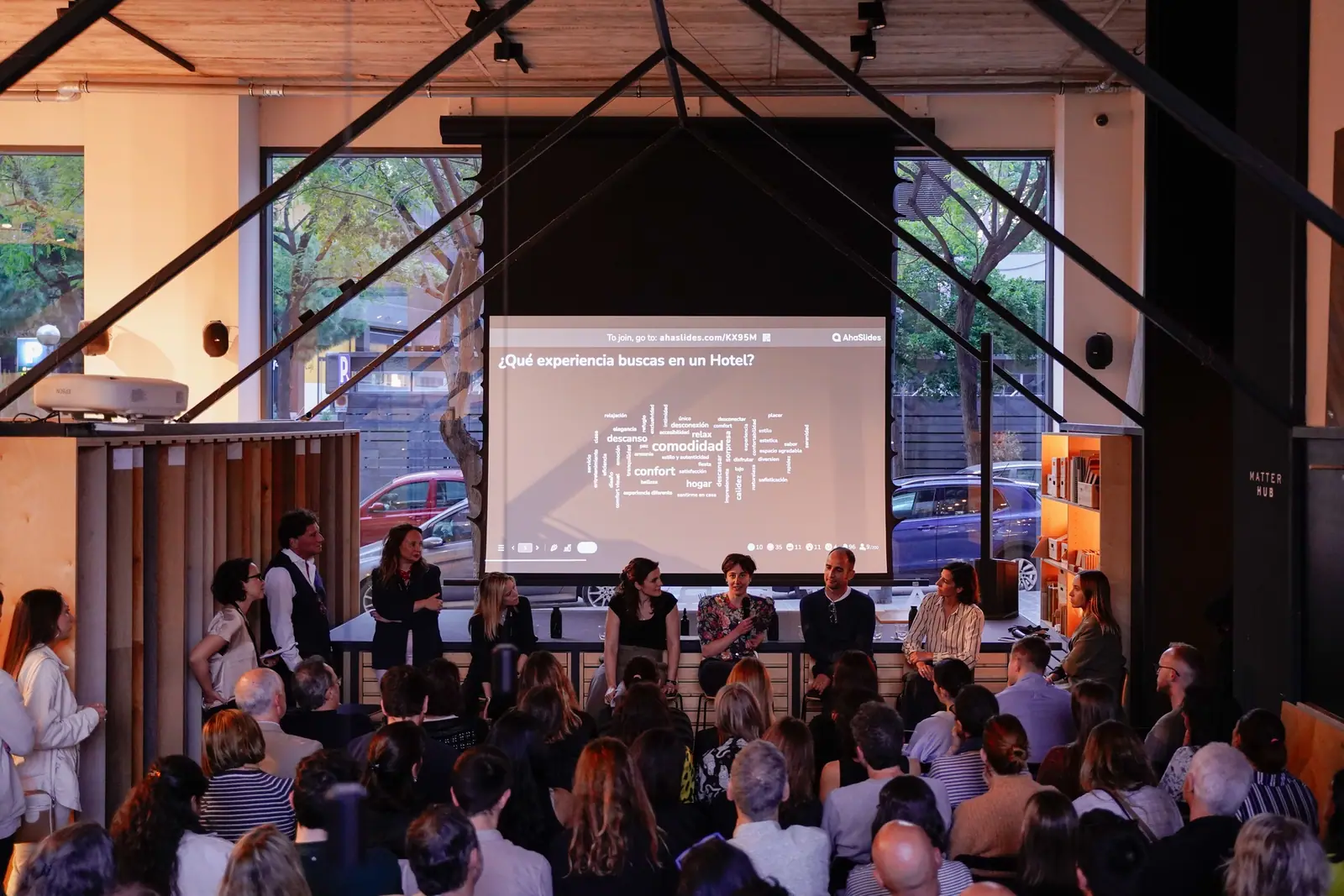
- Talks That Matter: Lighting and Comfort in Hotels (16 May 2024): Gerard Sanmartí explained the interior design of the Gran Meliá Dubai, then in development.
- Materials Matter Exhibition 2025 (12 June 2025): Gabriele Schiavon and María Ruiz took part in the talks programme.
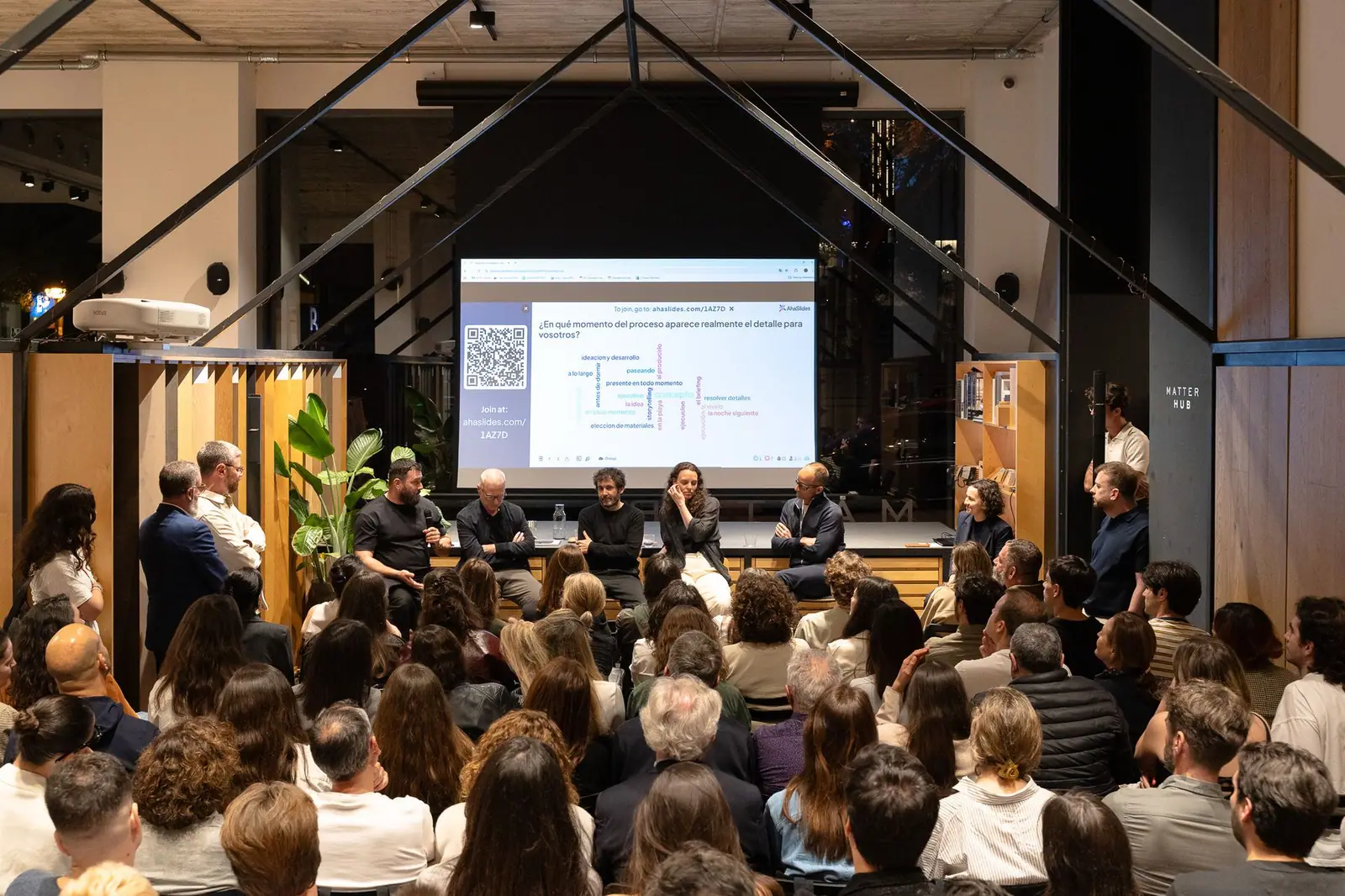
- Talks That Matter: Designing from the detail (9 April 2026): Gerard Sanmartí took the audience through the studio itself by way of its prototypes, samples and experiments.
If you are working on a hospitality or refurbishment project and are looking for materials with a craft character, come to the Materioteca at Matter Barcelona to see and touch them with our team.