Alted Materials: Elevating circular materials to cutting-edge interior design
Decorative 600×600 mm panels made from paper waste: composition, performance and installation of Alted H01, winner of a 2026 Silver Delta.
Products8 min read
In a context where interior architecture increasingly demands sustainable solutions without sacrificing formal ambition, Alted Materials turns recovered cellulose into a decorative cladding for interior walls. Its value lies in elevating a circular base through texture, relief patterns and colour, turning waste from the paper industry into a piece with aesthetic presence and documented technical performance.
In this article we explain what the Paper Waste Panels —the Alted H01 collection— are made of, what environmental and technical data the manufacturer declares, which patterns and colours are available, how they are installed and where they are best used. We begin with the award they have just received at the Delta Awards.
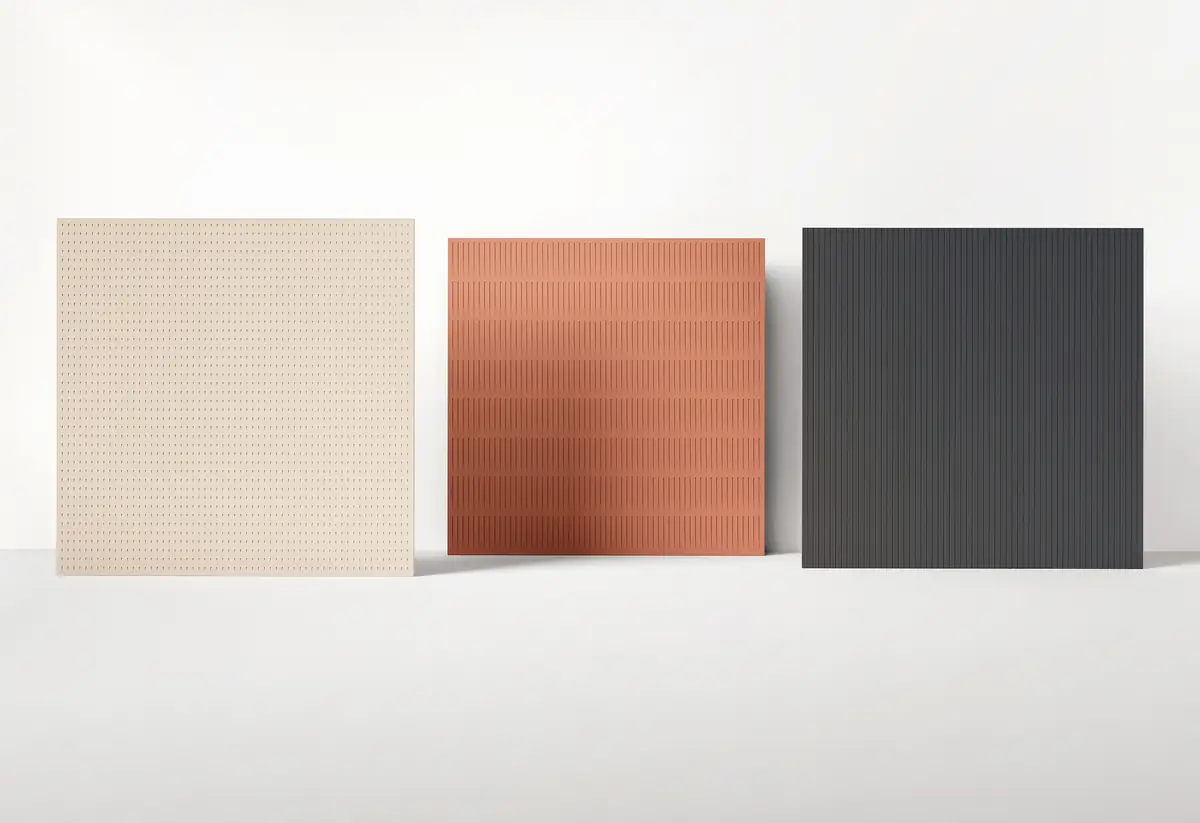
A Silver Delta for Alted H01
At the ceremony for the 43rd edition of the Delta Awards, held on 22 July 2026 at Disseny Hub Barcelona, Alted H01 – Paper Waste Panels, designed by Berta Julià Sala, received a Silver Delta in the Materials and Construction Elements category. The Deltas are among the benchmark awards for industrial design in Spain, presented by ADI-FAD since 1961.
The jury awarded it “for demonstrating the potential of circular materials with a wall covering that combines sustainability, aesthetic quality and innovation in manufacturing processes”. An award that endorses the firm’s work in a particularly demanding field: demonstrating that a material born from waste can compete in formal rigour, performance and manufacturing quality with conventional solutions.
Who Alted Materials are
Alted Materials is a Barcelona company founded in 2023 by industrial designer Berta Julià Sala, who had previously worked at studios in London and Stockholm and collaborated with Honext, the maker of the board she now uses as a base. Its aim is to speed up the arrival of innovative, low-impact materials in construction by turning them into ready-to-install products. The Paper Waste Panels are its first collection.
The brand works on a B2B model aimed at hospitality, retail and offices, with commercial partners in Europe; outside Spain, samples are handled by FRONT. According to Via Empresa, Netflix has installed the panels in its offices.
The base: paper waste and bio-resins
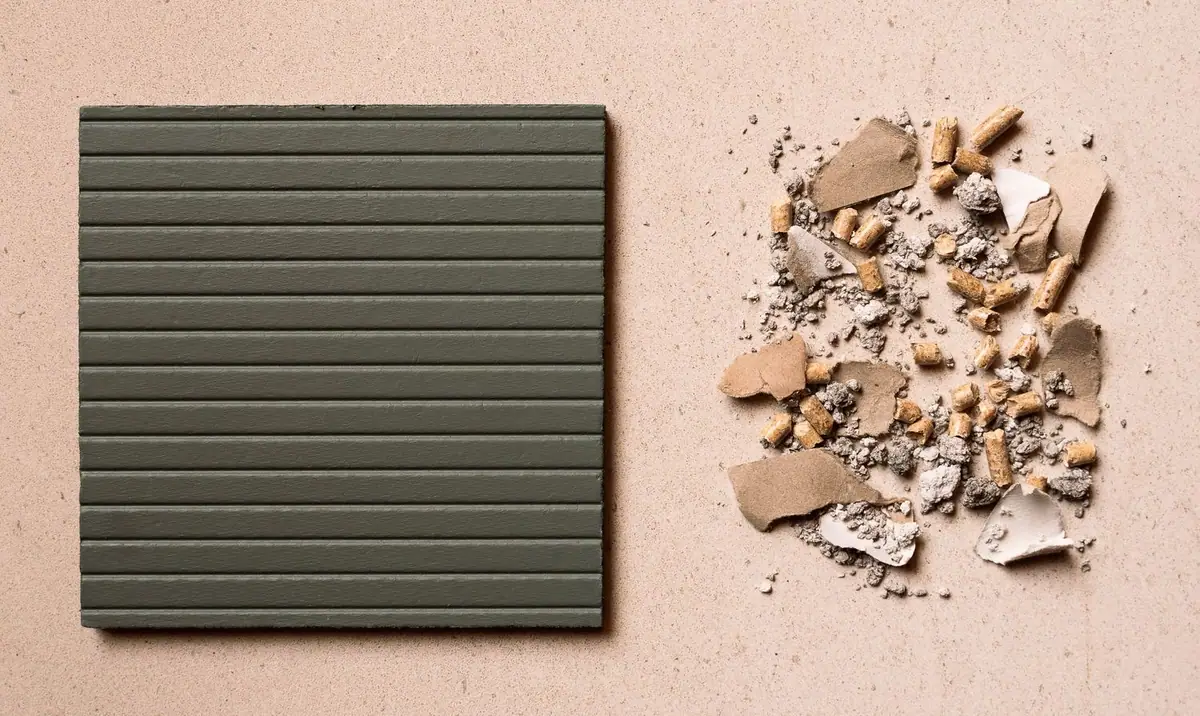
Alted works with the HONEXT® board, made from paper-mill sludge and post-consumer cardboard. Honext reinforces the short cellulose fibres through a resin-free process, and its board holds Cradle to Cradle Certified® Gold, including Gold in Material Health. According to Alted’s sustainability statement, the board accounts for 98 % of the panel and is made about 50 km from its plant.
Onto this base, the brand applies an Iridea Bio coating by ICA Lab: up to 75 % water plus bio-resins obtained from food-industry plant waste unfit for human consumption. It accounts for 2 % of the panel. Alted then combines two proprietary processes, coating and pressing, which harden and seal the surface while embossing the pattern.
The environmental profile, in figures
These are the environmental figures declared by the manufacturer:
- Recycled content: 98 % of the panel comes from waste; some components of the board and coating are virgin.
- Plant-based: 80 % of the raw material. The rest consists of plastic, metal or ink particles carried over by recycled paper (staples, films, tapes) and mineral additives.
- Waste diverted: every 100 m² installed contains 722 kg of waste that would otherwise have gone to landfill.
- Indoor air quality: A+ rating under French regulations (Grenelle), with no added VOCs.
- Embodied carbon: low profile; according to Honext’s EPD, the board has a negative global warming potential when it leaves the factory.
For certifications such as LEED or BREEAM, bear in mind that Alted’s sustainability statement is not an EPD: the company says it is preparing one and will complete it in 2026, once it has a year of production data. In the meantime, it provides its indoor air quality certificate and the certificates of its raw materials on request.
Circularity beyond recycled content
The sustainability of Alted Materials does not end with the percentage of recovered material. The company manufactures on the outskirts of Barcelona: its pressing and coating facilities and the Honext plant, where the waste paper is obtained, are all within a 50 km radius. The Iridea Bio coating is produced in Italy. The panels accept demountable fixings —French cleat or z-clip— that allow the whole piece to be recovered during a refurbishment and reinstalled; for repairs or touch-ups, the manufacturer itself supplies the finishing products.
And there is a further step: once its take-back programme is operational, the panels can be 100 % recycled within the same HONEXT® board loop, without downcycling, so that they never become waste again. In the meantime, according to the installation guidelines, in most places they can be recycled as paper in municipal collection. The manufacturer highlights this approach for hospitality and retail, where an interior often lasts less than the materials it is made of.
Three patterns, five colours
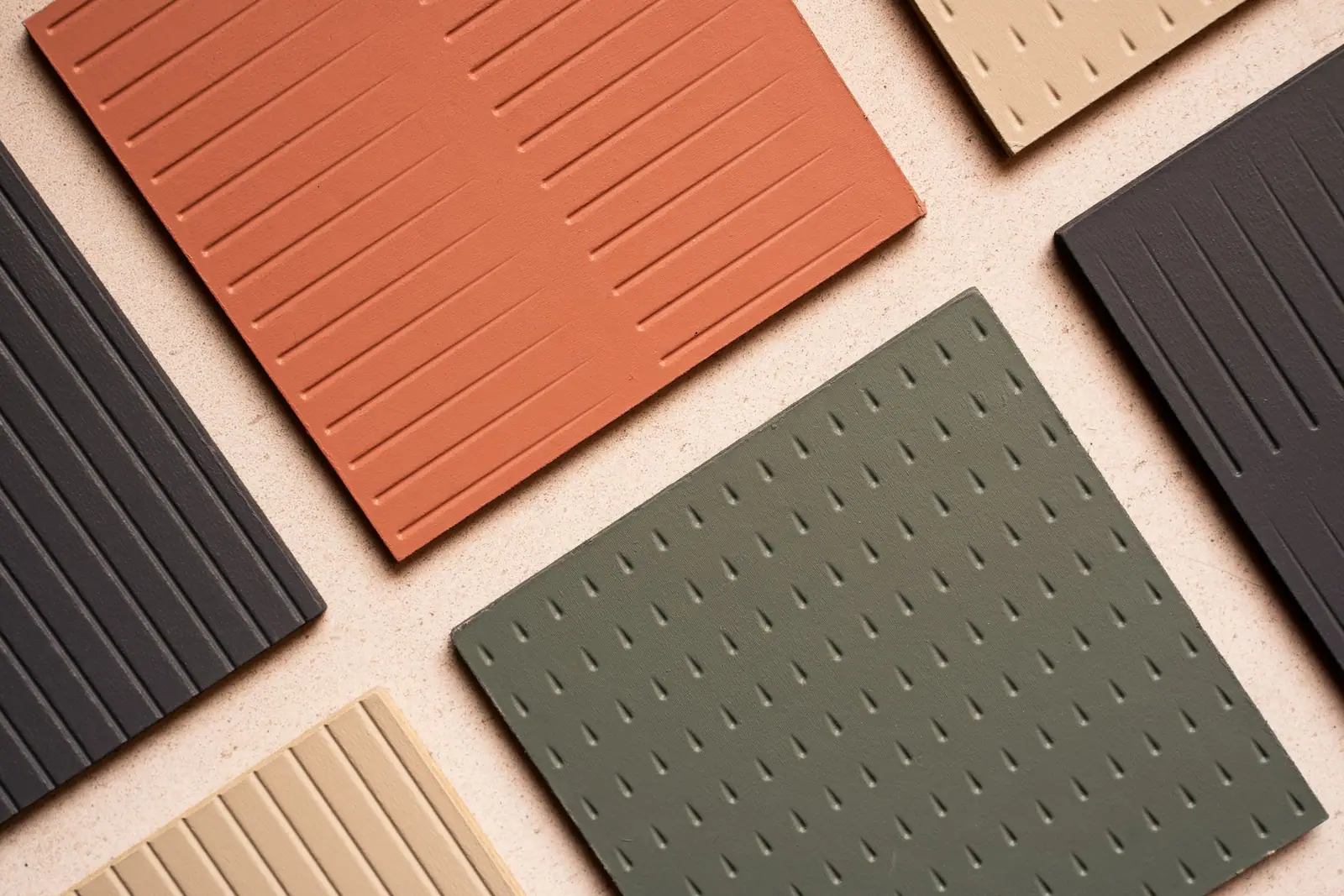
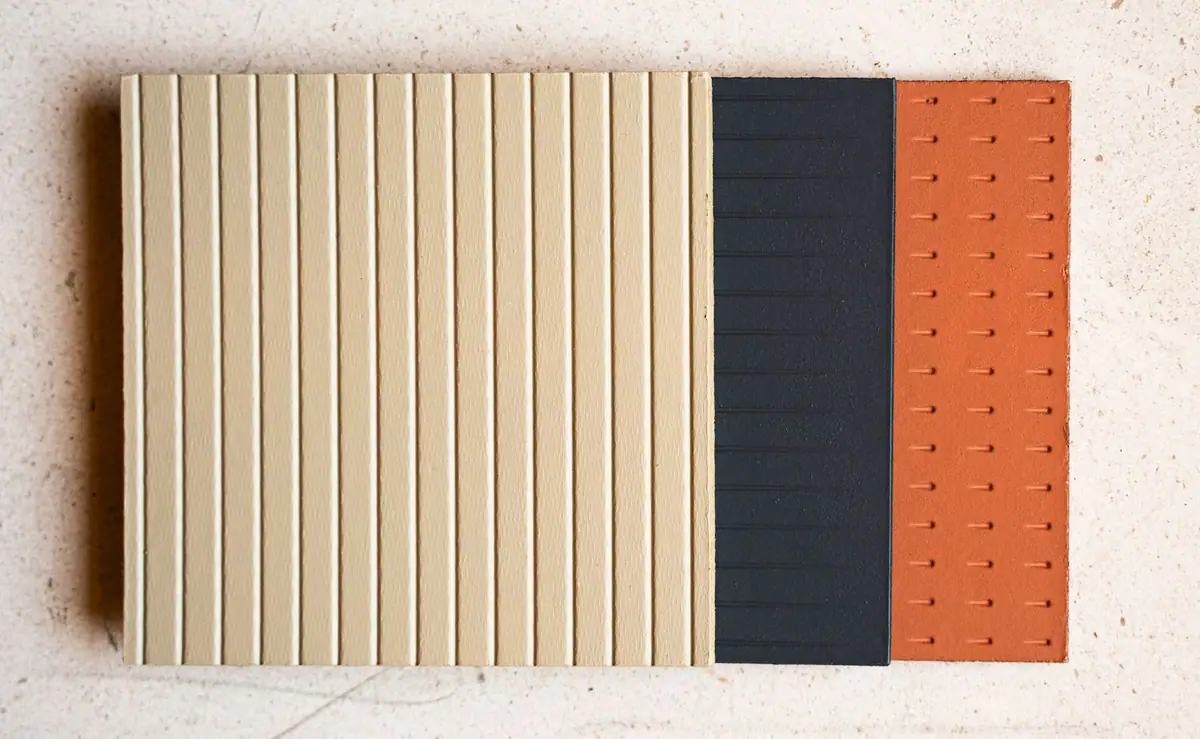
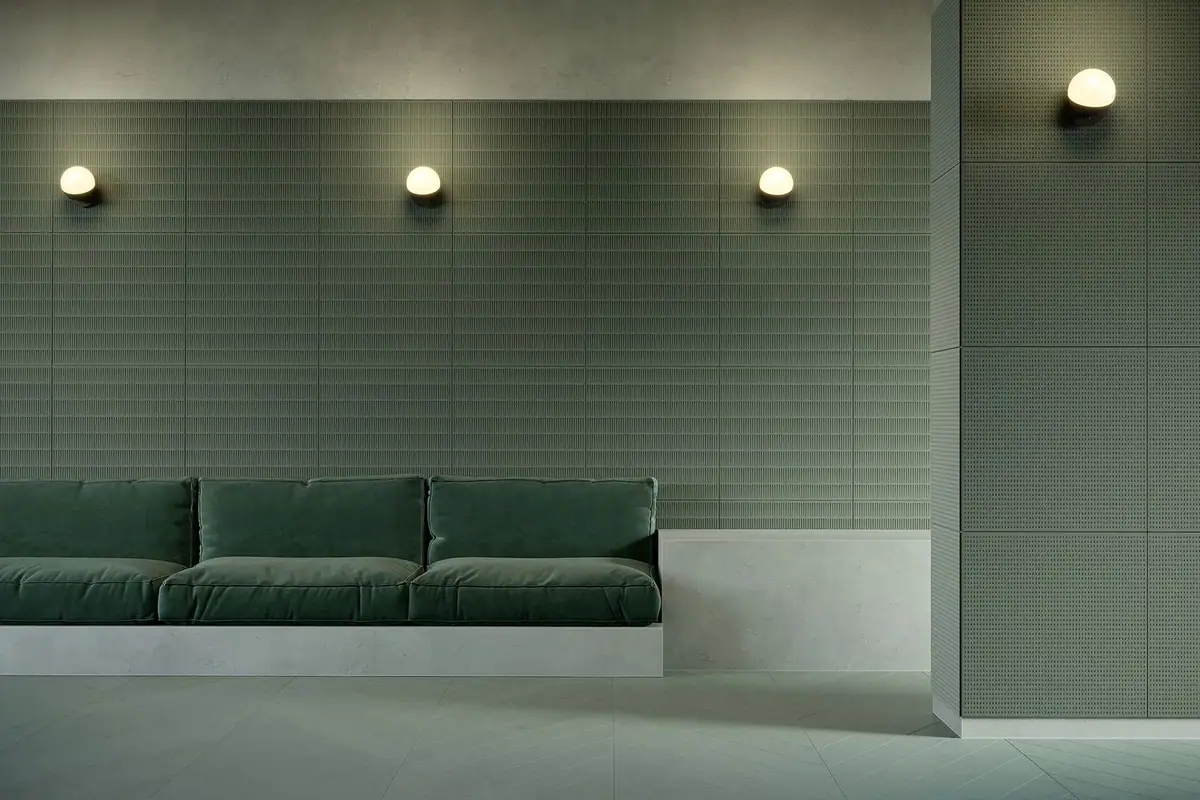
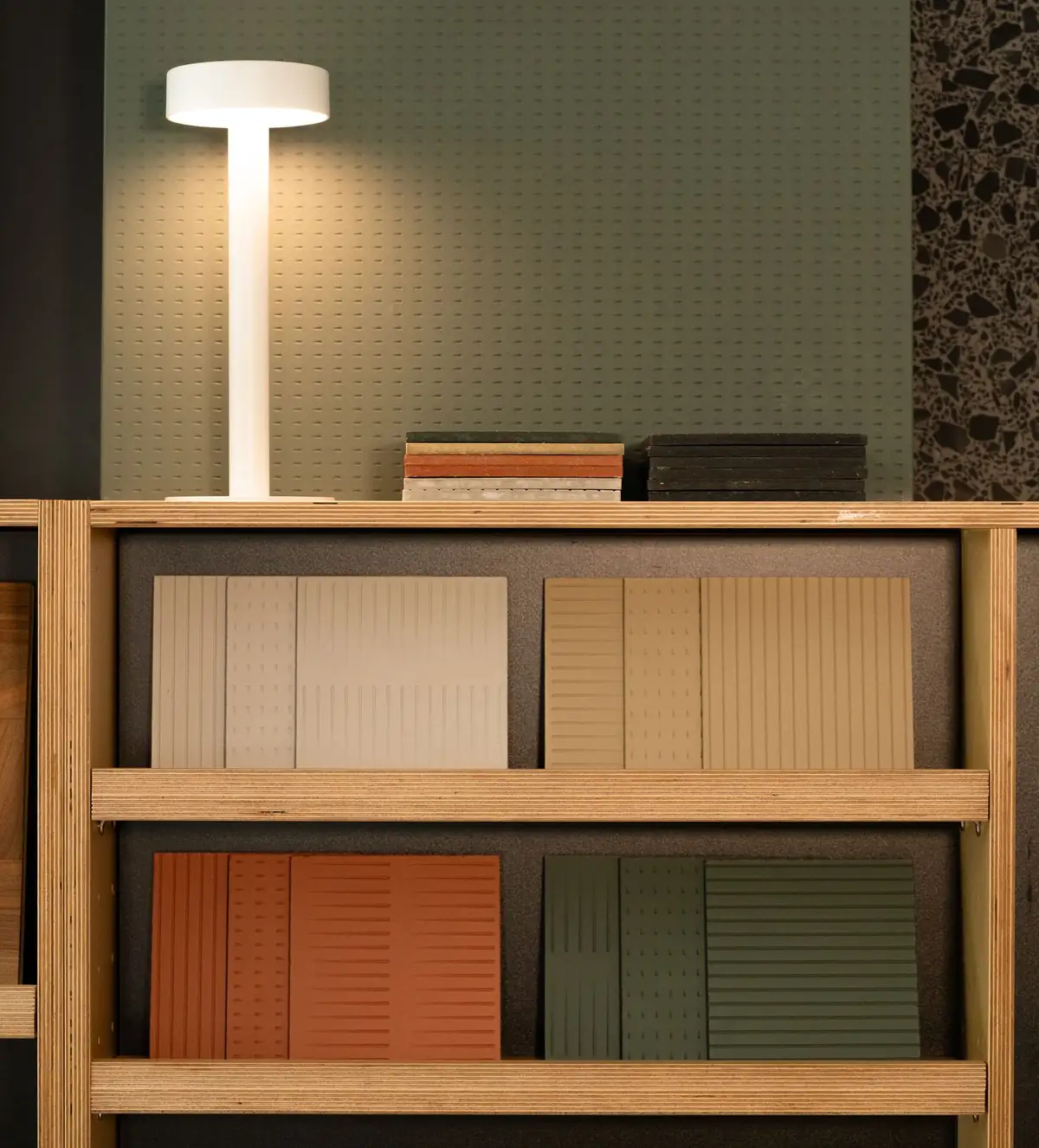
Paper Waste Panels are designed to bring visual richness to interiors through colour and geometry. The patterns are debossed into the surface and create shadows that change with the light and the orientation of the pieces. The collection has three patterns —Gota (H01G), Ratlla (H01R) and Línia (H01L)— and five colours, each with its NCS reference.
Customisation broadens their scope: colour can be ordered in any NCS or RAL reference, free of charge for orders over 50 m² and with a small surcharge below that. For projects of a certain scale, Alted’s pressing technology makes it possible to develop bespoke patterns with its technical assistance. As the panels are made from waste, slight variations in tone may occur between batches.
Technical performance for interior spaces
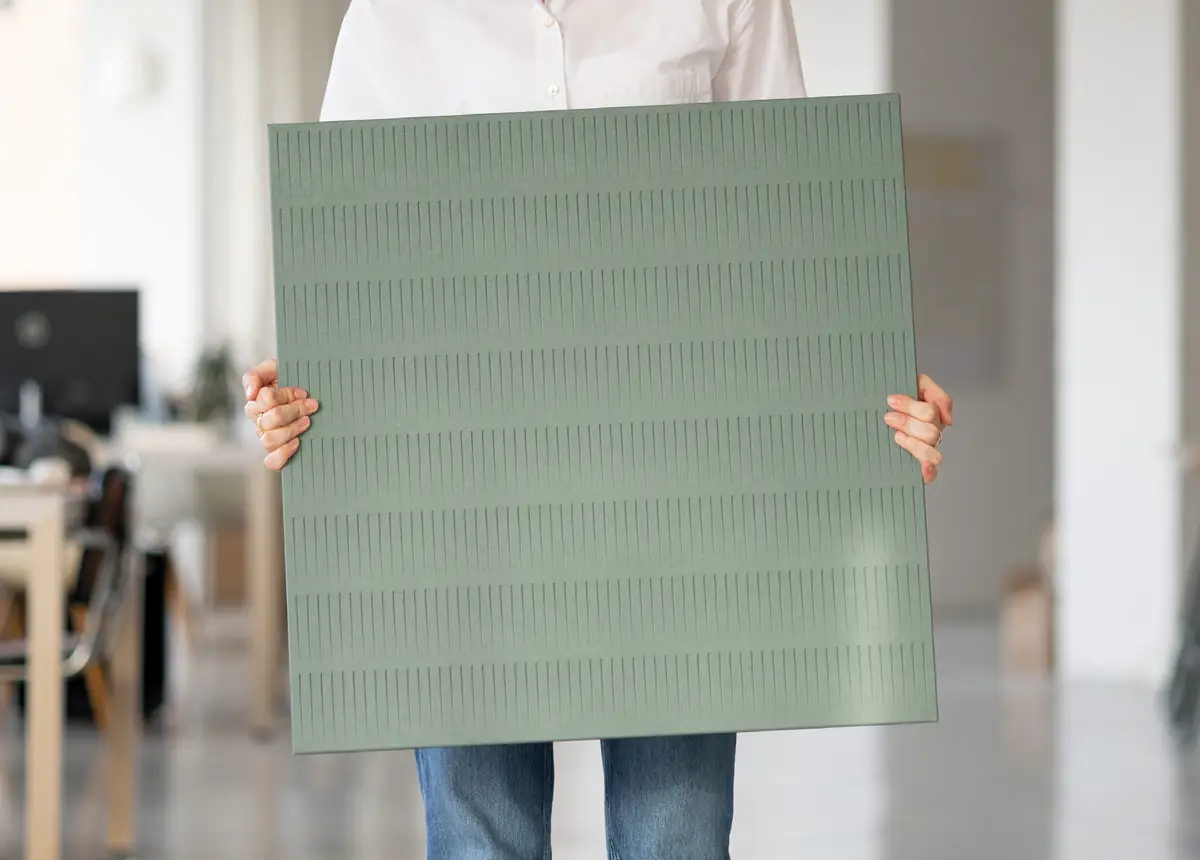
Beyond its environmental credentials, this is a product ready for interior projects. The panels, 600×600 mm and 8 mm thick, weigh 2.3 kg each and are designed for cladding interior walls. They accept mechanical or adhesive fixing and are not an acoustic product, although they absorb slightly more sound than other common wall finishes: their αw coefficient of 0.15 is similar to that of chipboard or softwood.
The standard version has a C-s1,d0 reaction to fire, and the data sheet announces a B-s1,d0 version from the last quarter of 2025: a very limited contribution to fire, low smoke opacity and no flaming droplets or particles. If the project requires B-s1,d0, specify it in the order and request the corresponding certificate. The usual production lead time is six to eight weeks plus shipping.
Where to use them and installation essentials
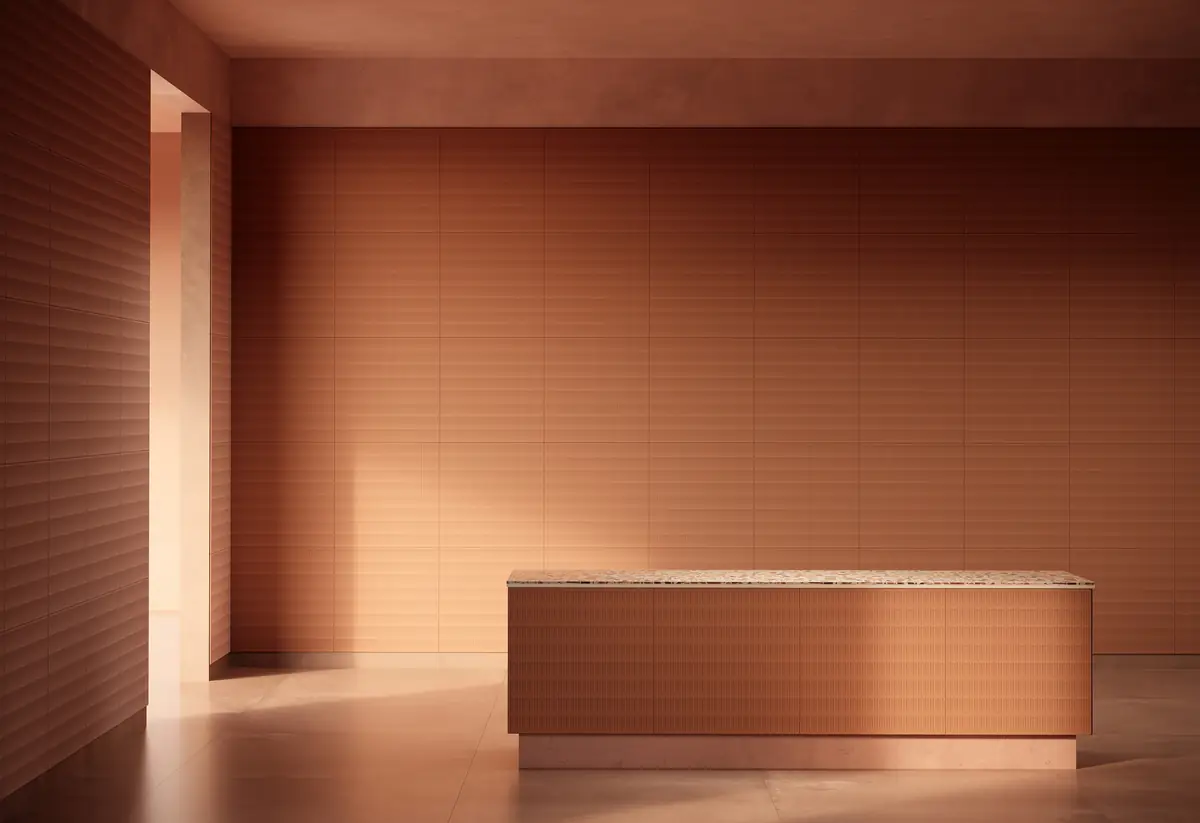
Paper Waste Panels are a cladding for interior walls in dry spaces: hospitality, retail, offices or homes. The manufacturer also lists them for ceilings —screwed directly, onto timber battens or into a suspended ceiling grid, which may need reinforcement— but notes that this application is still under development. They should not be installed in bathrooms or wet areas; in kitchens, only away from areas exposed to liquids. Nor are they suitable for areas with heavy impact or wear.
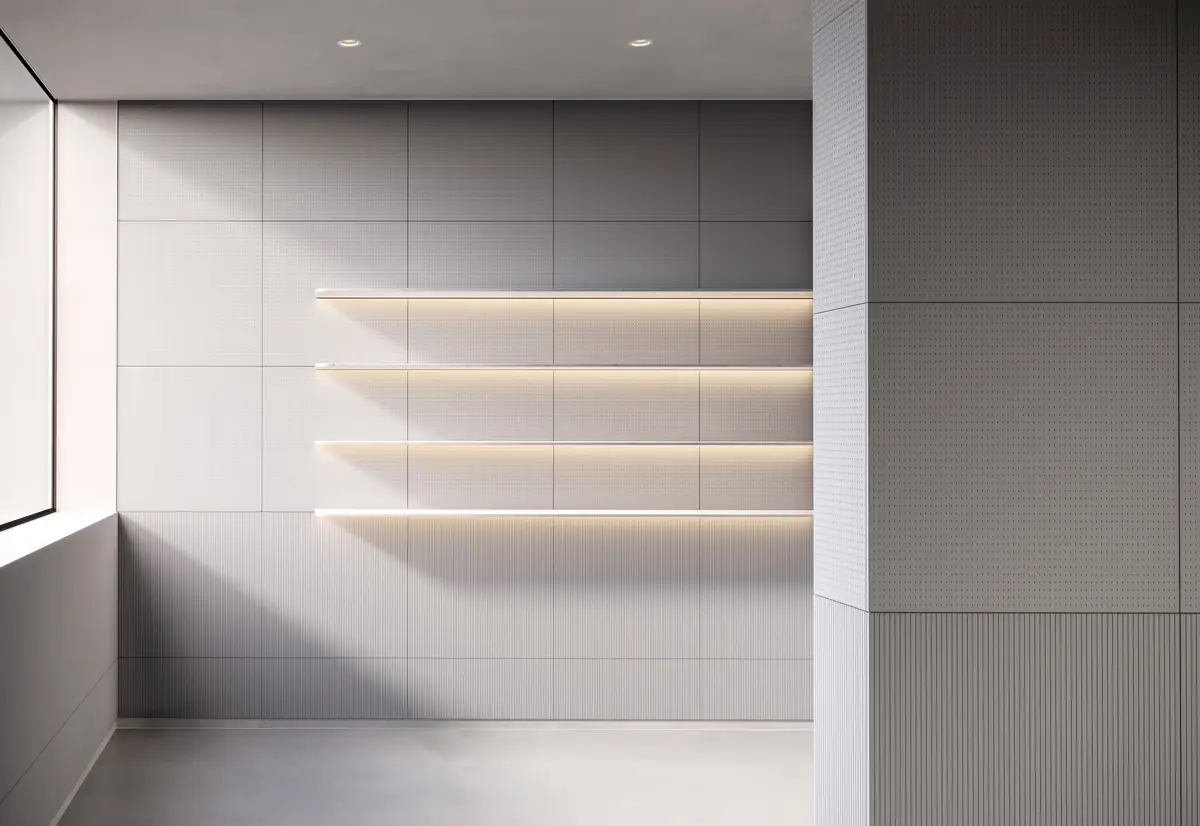
Cellulose absorbs and releases moisture, so the panels behave like a natural material. These are the points from Alted’s installation guidelines worth planning for from the design stage:
- Fixing system: the manufacturer recommends the z-clip, an aluminium version of the French cleat, because it allows the panels to be dismantled and reused. Adhesive is quicker and cheaper, but prevents their recovery.
- Fixing points and gaps: fix the whole perimeter where possible, with points every 100 mm, 10 mm from the edge, and the corners always secured; leave at least 1 mm between panels.
- Substrate and storage: a clean, dust-free and levelled wall, never freshly painted. Panels are stored flat, in their packaging and in a dry place, so that they acclimatise.
- Cuts and corners: with a circular saw with 96 or more teeth at 5,000 rpm. The colour is not through-body, so plan where cut edges will fall and touch them up with the paint supplied by Alted; for corners, an overlap joint or a painted timber corner trim.
- Junction with the floor: leave a gap or fit a skirting board to protect the panels when the floor is cleaned.
- Cleaning: with a dry or barely damp cloth; no wet mops, steam, solvents or abrasive products.
Alted Materials at Matter
At Matter we have added Alted Materials’ Paper Waste Panels as a solution for architecture and interior design projects that want to incorporate circular materials without compromising on aesthetic quality or technical performance. A proposal that shows how waste can become a high-value resource, capable of creating surfaces with their own identity and meeting the new demands of sustainable construction.
Frequently asked questions
- Can they be used in bathrooms or kitchens?
- Not in bathrooms or wet areas. The manufacturer advises against high-moisture spaces or areas that need frequent cleaning; in kitchens, only away from areas exposed to liquids.
- Can they be installed on ceilings?
- Alted lists them for walls and ceilings, but states that ceiling installation is still under development. It suggests screwing them directly, onto timber battens or into a suspended ceiling grid, the latter possibly with reinforcement. Check with the manufacturer for each project.
- What is their reaction to fire?
- The standard version is C-s1,d0. The October 2025 data sheet announces a B-s1,d0 version from the last quarter of 2025: if the project requires it, specify it in the order and ask for the certificate.
- Are they acoustic panels?
- No. Their weighted sound absorption coefficient is αw 0.15, similar to chipboard or softwood: they absorb slightly more than other common wall finishes, but are no substitute for acoustic treatment.
- Can I order my own colour or pattern?
- Yes. Colour can be ordered in any NCS or RAL reference, free of charge from 50 m². Bespoke patterns depend on the scale of the project, with Alted’s technical assistance.
The relief of the patterns, the feel of the coating and the way raking light changes each colour are best appreciated with the pieces in front of you. At Matter you can talk to our team about how to specify Paper Waste Panels in your project.
Book your visit to Matter to discover them.
Book a visit