Materialising health
How building materials affect health, which pollutants they can introduce and which labels and certifications help when choosing them.
SeriesHealthier Materials4 of 68 min read
Health is multifactorial: in addition to internal factors such as diet, our wellbeing is directly linked to the built environment in which we live, work and rest.
Building materials make up everything around us and can have short- and long-term effects on health without our being aware of them. That is why it is essential to know how to select products and systems from a health perspective: to understand what the materials we design with are made of and how they behave.
A better-informed approach to materials and their effects helps to improve not only human health but also the health of the environment. In this article, which summarises the document ‘Materialising health’ produced by Matter HUB as part of the Healthier Materials series, we go over its key points: why indoor air matters, which pollutants materials can introduce, which tools help in choosing them, and a project that puts all this into practice.
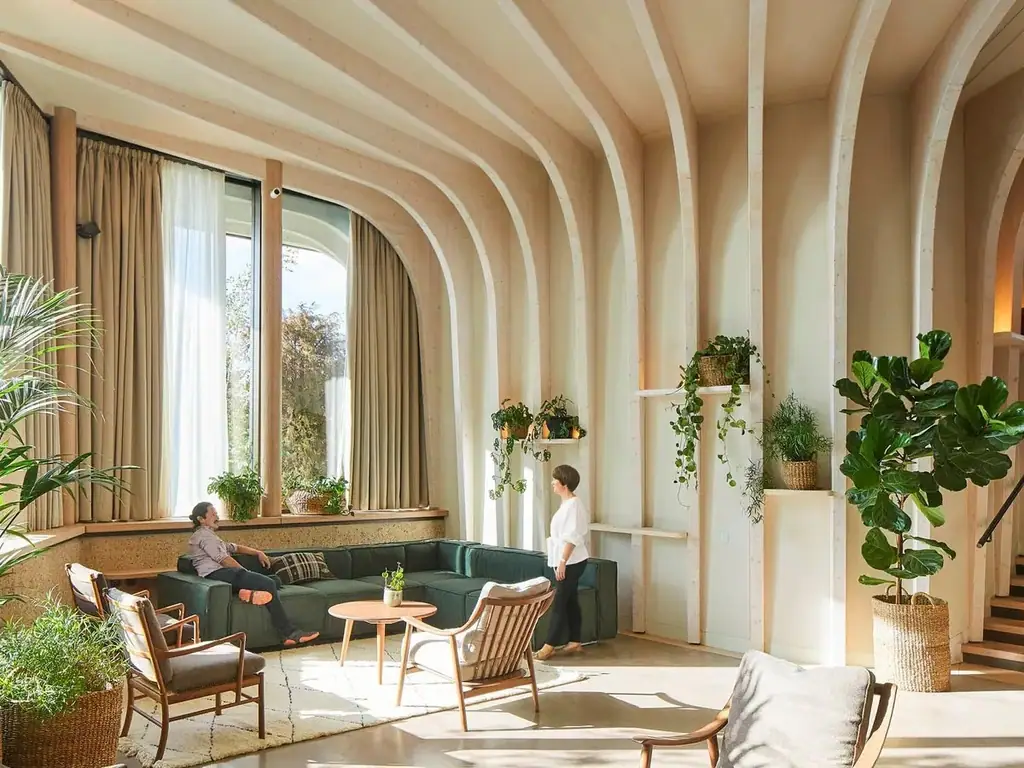
The Indoor Generation: why indoor air matters
The built environment has become the main human habitat. We are known as the Indoor Generation: according to the United States Environmental Protection Agency (EPA), we spend on average around 90% of our time indoors. And although the purpose of architecture is to provide shelter, the EPA itself notes that concentrations of some pollutants are often two to five times higher indoors than outdoors.
Since the Industrial Revolution, which also brought a chemical revolution, countless products and substances have appeared that give industry new properties —petroleum-based polymers, solvents, additives and other synthetic chemicals—, in many cases without any prior thorough analysis of their effects on human and environmental health.
Today the mass of human-made materials already exceeds all living biomass on Earth (Elhacham et al., Nature, 2020), and in 2022 an international team of scientists concluded that the safe planetary boundary for ‘novel entities’, chemical and plastic pollution, has been crossed (Persson et al., Environmental Science & Technology). Understanding how the components we build with affect us is increasingly urgent.
How building materials affect health
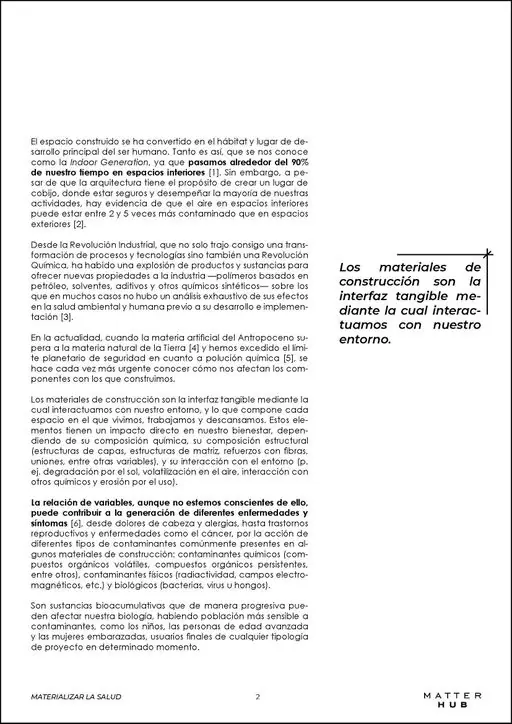
Building materials are the tangible interface through which we interact with our surroundings. Their impact on wellbeing depends on their chemical composition, their structural composition (layered or matrix structures, fibre reinforcement, joints…) and their interaction with the environment: degradation by sunlight, volatilisation into the air, reaction with other chemicals or erosion through use.
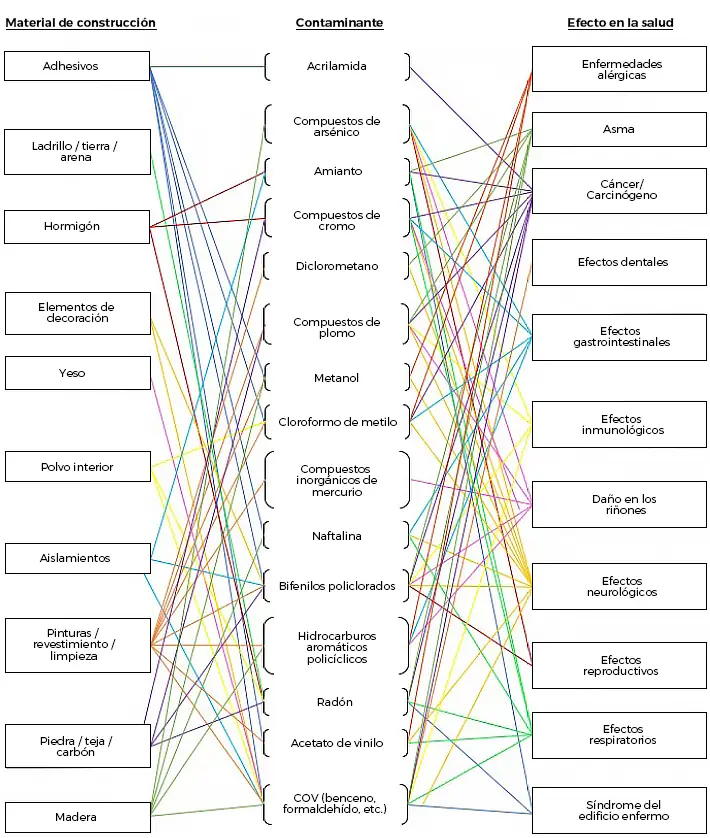
Taken together, these variables can contribute, without our being aware of it, to the onset of symptoms and illnesses —from headaches and allergies to reproductive disorders or cancer— through the action of three types of pollutant present in some materials:
- Chemical pollutants: volatile organic compounds (VOCs) and persistent organic compounds, among others.
- Physical pollutants: radioactivity or electromagnetic fields.
- Biological pollutants: bacteria, viruses or fungi.
Some of these substances are bioaccumulative and progressively affect our biology. There are also more sensitive populations —children, older people and pregnant women— who, at some point, are end users of every type of project.
Active materials, bio-construction and green chemistry
An artificially created material also has a dual nature: it can be whatever it is designed to be. Hence materials with a positive impact, such as so-called active materials, which not only do not pollute but can help to clean the air, like photocatalytic paving and paints.
Disciplines such as bio-construction study the relationship between people and the built environment: the use of natural, minimally processed materials, integration with the site and the design of biocompatible building services to achieve healthier, more ecological habitats.
New materials are also a catalyst for innovation. Following the principles of green chemistry, products and construction systems are emerging that are optimised to minimise their human and environmental toxicity, with more efficient and harmless manufacturing processes.
How to select materials on health criteria
Health is decided at every stage of a material’s life.
The market today offers an enormous variety of solutions, from the most natural to the most technological. Among so many aesthetic and technical possibilities, the key is to build health objectives into the design from the outset and to consider the material’s effects across its whole life cycle:
- Extraction and manufacture: the origin of the raw materials and the processes used to make the product.
- Installation: a stage at which some materials can have high VOC emissions.
- Use and maintenance: how the material behaves over the life of the building.
- Dismantling: its recovery for recycling or its decomposition.
It also means involving everyone who takes part in the project —client, consultants, contractor and developer, among others— to prioritise health together, and comparing alternatives on the basis of data:
- Composition: what exactly is this product made of?
- Declaration: does it have a data sheet or declaration to back this up?
- Emissions: what emissions potentially harmful to people and the environment might it have?
Beyond materials and their chemical composition, health in architecture means a state of complete physical, mental and social wellbeing, influenced by hygrothermal comfort, water quality, sensory qualities, lighting, ergonomics and connection with nature (biophilia).
Regulations, certifications and labels for specification
There is currently no reference framework setting out how to implement and measure the benefits of building with health parameters. We know how to quantify the reduction in a building’s energy consumption or its carbon footprint in CO2 equivalent, but for health there is no comparably precise benchmark, as was highlighted at the Summit Series Healthier Materials meeting (2021). Not everything that matters can be measured, but the effects of ignoring harmful components and the conditions of the built space are evident and can be recorded.
Spanish regulations have fallen behind those of countries such as France, where since 1 September 2013 construction and interior decoration products must carry a VOC emissions label (from A+ to C), or Germany, where the AgBB scheme assesses emissions from construction products. According to GBCe, in Spain pollutants such as VOCs or formaldehyde are not yet regulated, and legislation is limited to widely known hazardous substances such as asbestos.
By contrast, several voluntary certifications and labels set out, to varying degrees, criteria for selecting healthier materials and reducing exposure to toxic substances:
A+, Blauer Engel, natureplus and Friendly Materials identify low-emission products, while Health Product Declaration and Declare report in detail on the chemical substances that make up a product and compare them against ‘red lists’ of identified toxic substances. Practices such as Perkins&Will have gone further with their Precautionary List, launched in 2008 and updated as an open resource for other professionals on their Transparency website.
Designing for health requires knowing the materials we build with and being able to interpret the available data —technical data sheets, emissions certificates, environmental product declarations (EPDs)— in order to make the right decisions.
An example: Slow Building Barcelona
Health and biodiversity in an office building.
The document cites as an example the Slow Building Barcelona, a multifunctional office building in Sant Cugat del Vallès (Barcelona) designed by BailoRull, led by Manuel Bailo and Rosa Rull, for the developer Marcove. Project management was carried out by H.A.U.S. Healthy Buildings, which approached it from the outset with efficiency and health criteria. According to published information on the project, products with low VOC content were prioritised and, apart from part of the structure, all other elements were built using dry construction so that they can be dismantled and reused in the future.
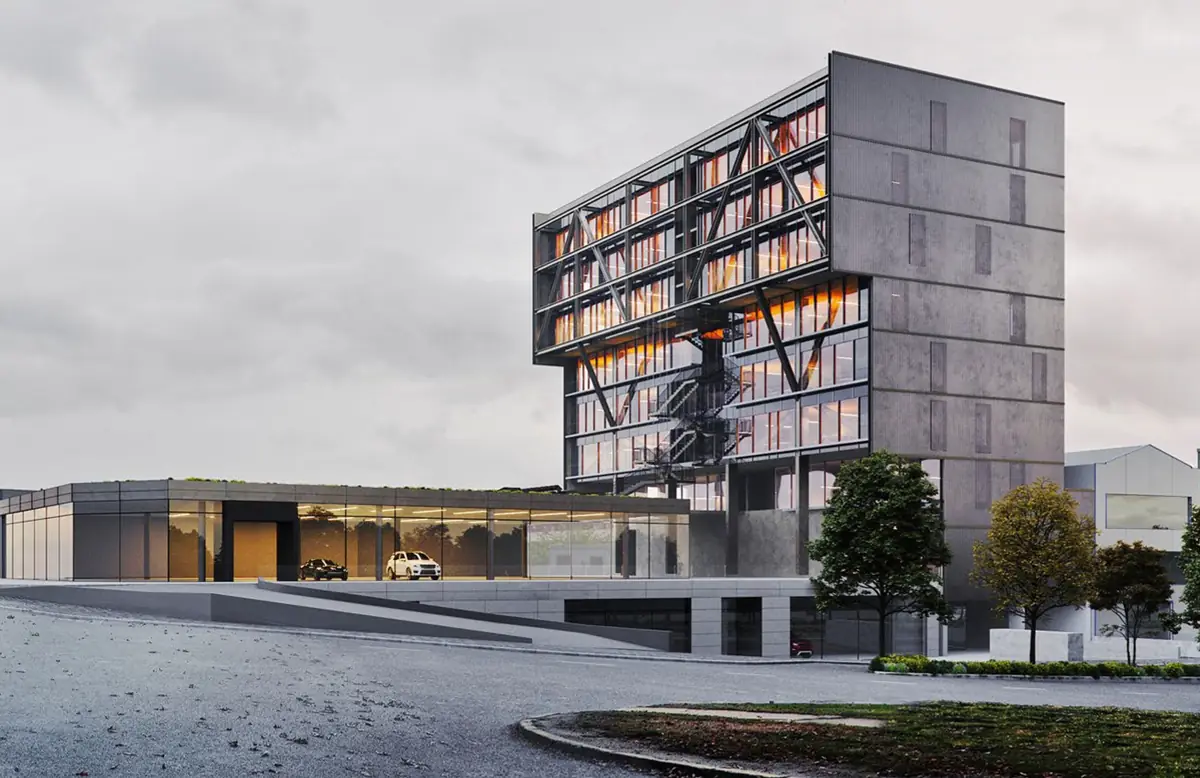
The project also addresses the preservation of biodiversity. Making use of the landscaped areas and terraces —including a 350 m² green terrace planted with native species with low water demand—, the building sets aside space for three species that occupied the land before it was developed: the monarch butterfly, the honeybee and the sparrow. According to the developer, the building holds DGNB Gold certification and is conceived as a nearly zero-energy building (nZEB).

Designing for health from the concept stage
In practice, many building defects are easy to avoid in design and construction if you know how they arise; once they appear in the building, removing them is very costly, both technically and financially. That is why health must be a priority from the conceptual stage of the project.
In rethinking the way we build, environmental sustainability —and energy efficiency in particular— has taken centre stage. The health perspective is not yet a significant part of degree programmes, nor is it sufficiently integrated into design and decision-making processes. These are the keys the document proposes to reverse this:
- Training: broad training for professionals that provides the technical skills to design spaces for wellbeing.
- Outreach: educating, communicating and asking manufacturers for data.
- Specification: specifying healthier materials and measuring their impacts.
- Demand: each of these actions sends industry a clear signal, and industry responds to stated needs.
Ignorance leads to sins of omission. Designing with health in mind should be part of the ethical code of architects and designers, so that architecture can truly be the safe, vital place it is meant to be.
The Healthier Materials series and the full document
This article is part of Healthier Materials, Matter HUB’s research series on the impact of building materials on health. The full seven-page document develops every point, with the pollutants chart, the Slow Building Barcelona example and the bibliography.

The series was sponsored by Honext and Sto, whose articles in the series you can also read in the Journal.

Frequently asked questions
- Why do materials have such an influence on indoor air quality?
- Because we spend around 90% of our time indoors and many materials can release substances into the air, such as volatile organic compounds. According to the EPA, concentrations of some pollutants are often two to five times higher indoors than outdoors.
- When do materials emit the most VOCs?
- The document identifies installation as a stage at which some materials can have high VOC emissions, although effects should be assessed across the whole life cycle: manufacture, use, maintenance and dismantling.
- What is the difference between an emissions ecolabel and a declaration such as HPD or Declare?
- Ecolabels such as A+, Blauer Engel or natureplus identify products that meet certain limits or criteria, for example on emissions. Health Product Declaration and Declare report on a product’s composition and compare it against lists of toxic substances, so that specifiers can make data-based decisions.
- Is there a mandatory emissions label in Spain like the French one?
- No. According to GBCe, pollutants such as VOCs or formaldehyde are regulated in France but not in Spain, where regulations focus on widely known hazardous substances such as asbestos. That is why many designers turn to voluntary certifications and labels.
- What is an active material?
- A material that, as well as not polluting, can help to improve the air in a space, such as photocatalytic paving and paints.
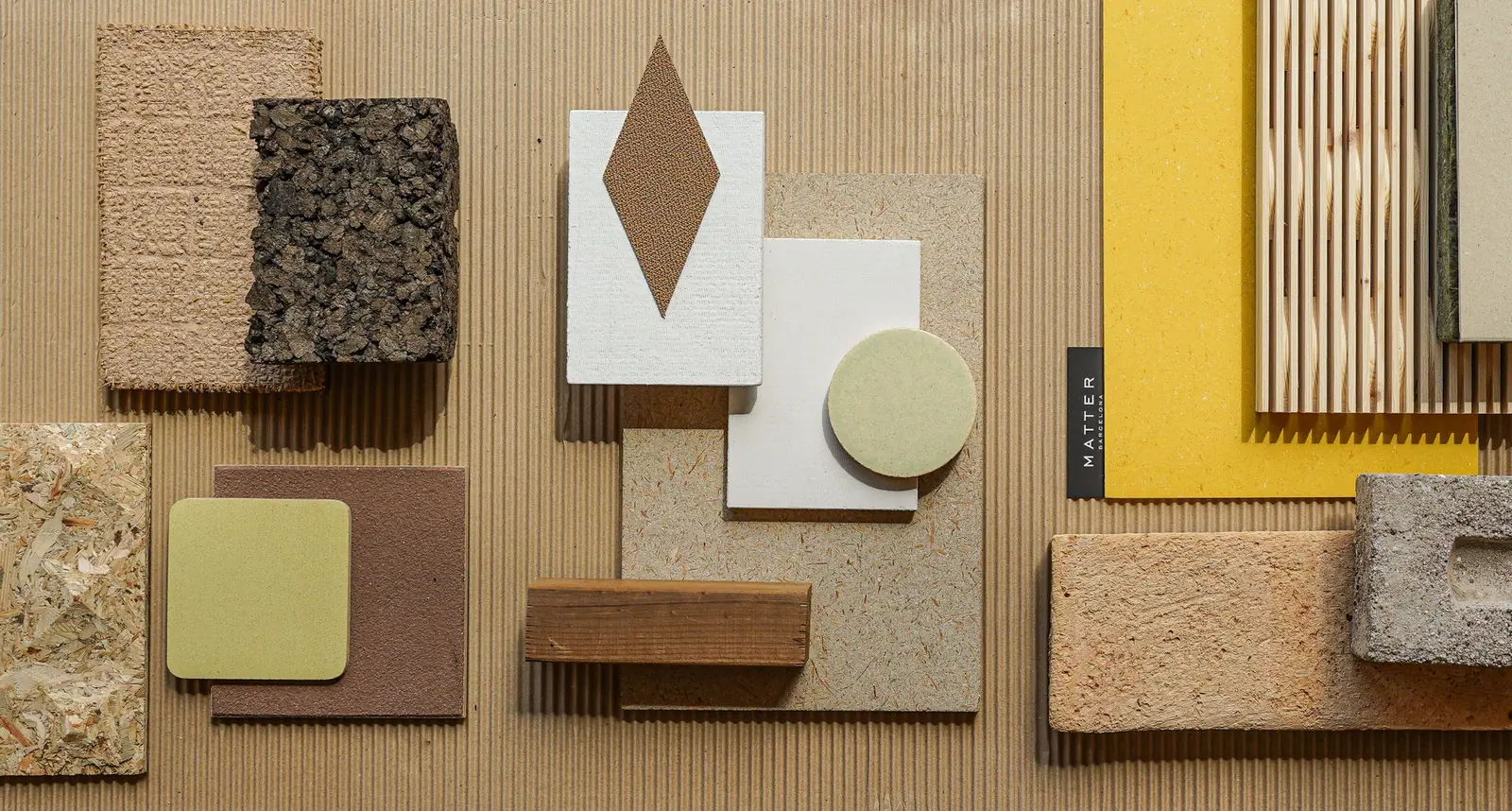
Choosing materials on health criteria is easier when you can see, touch and compare them. At Matter’s Materioteca you can consult the technical information on the materials for your next project with our consultancy team.
Book your visit to Matter to discover our Materioteca.
Book a visit