Honext boards: A new material for architects and designers
Fibreboards made from paper-mill sludge and recycled cardboard, without resins: how HONEXT is made, its technical data, its installation and two projects.
SeriesHealthier Materials2 of 66 min read
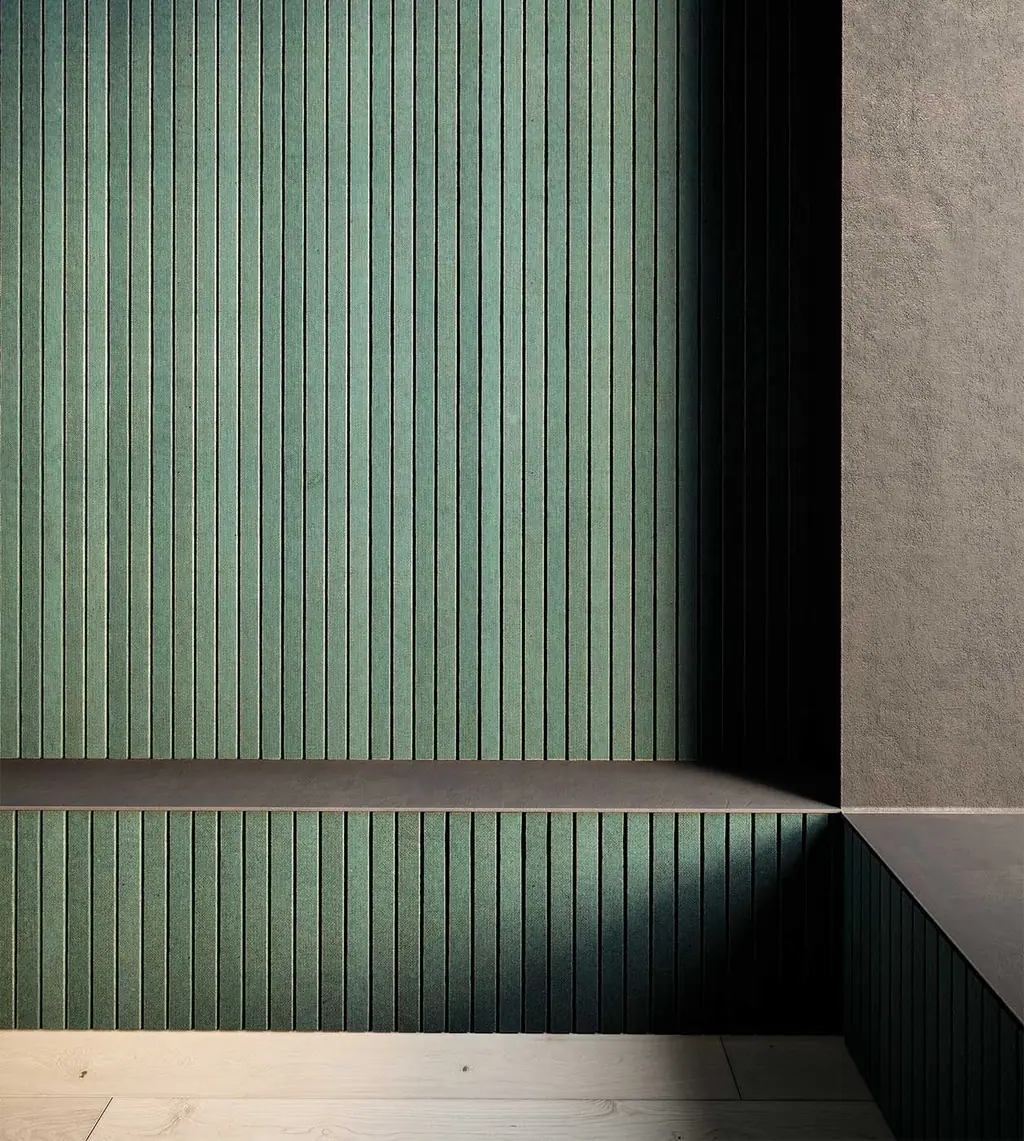
Honext is a Barcelona-based company that makes fibreboard from waste: sludge from paper mills and post-consumer cardboard. From these it produces panels for interior furniture and construction that contain no resins and which, according to the manufacturer, emit no formaldehyde or other volatile organic compounds (VOCs). Honext was one of the brands that took part in Healthier Materials, Matter’s series on the impact of building materials on people’s health.
In this article we explain what the HONEXT board is made of, how it is manufactured, what technical data the brand published in early 2022, what needs to be planned for its installation and in which projects it had been used: the Torre d’Ara coworking space in Mataró and the Wallbox offices.
What HONEXT is: a resin-free cellulose board
Honext’s industrial process is biological in origin, generates no waste and uses no resins. It turns residual cellulose fibres into recyclable, non-toxic panels: a process that strengthens and protects the bonds between the fibres and produces recyclable fibreboards with no added VOC emissions.
Honext was founded in 2011 by Pere and Pol Merino, growing out of a research project at the Universitat Politècnica de Catalunya. After ten years of development, it makes its boards at its first plant, integrated into a landfill site in Vacarisses (Barcelona). The company explains that at this plant gas and electricity are obtained from the digestion of waste and that process water circulates in a closed loop.
The raw material is not scarce: according to Honext, in the European Union alone paper mills generate more than 7 million tonnes of sludge a year, a volume that grows as paper recycling increases. Its stated aim is to create a network of plants next to paper mills to transform the waste where it is produced.
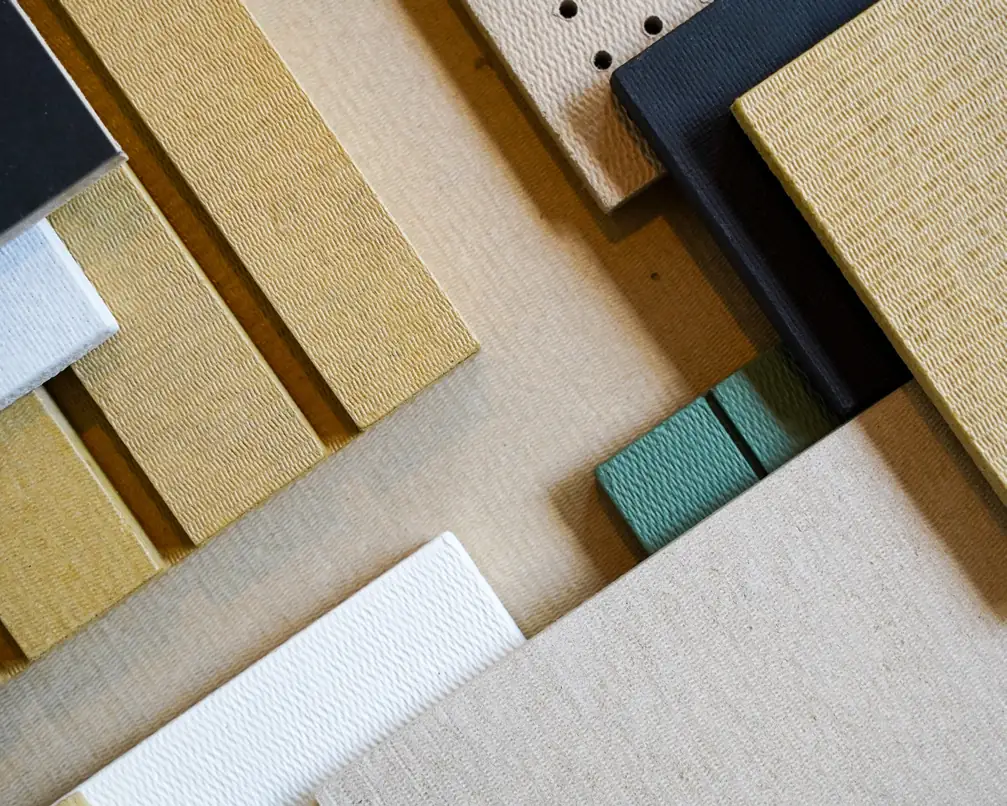
From paper sludge to board: how it is made
The manufacturer describes a four-step process:
- Standardisation of the raw material: product quality is based on analysing, sorting and classifying the waste according to its composition. If necessary, post-consumer cellulose fibre is added to maintain consistent quality.
- Enzymatic treatment: naturally derived enzymes, adapted to the process, create stronger bonds between the cellulose fibres without the need for resins.
- Mechanical transformation: the fibres are mixed with additives, previously analysed to ensure their sustainability. Once mixed, the material is pressed and the board is formed.
- Drying: the board enters a drying tunnel where the remaining water is evaporated by heat and airflow. Once dry, HONEXT is ready for its next healthy space.
When the board reaches the end of its service life, it can be fed back into the process and the cycle restarted, producing a new batch of HONEXT boards. In 2022 the manufacturer specified that this recycling could only be done at its Vacarisses plant and that it was preparing a panel take-back programme.
HONEXT board technical data
Honext made a single board format, which can then be cut, machined, painted or laminated. These are the figures it published on its website in early 2022:
The brand also pointed out that the board absorbs sound better than plasterboard and MDF, that it resists moisture and water vapour, and that it is lighter and more resistant to bending than traditional partition materials. At the time it announced that the material would achieve reaction-to-fire class B-s1,d0. The specifications have evolved since then: for a current project, it is advisable to check the up-to-date technical data sheet on the manufacturer’s website.
Health and circularity, according to the manufacturer
From the outset the board was conceived as a material for healthier spaces. These are the characteristics Honext attributed to its product:
- No added emissions: it emits no formaldehyde or other VOCs and is made without resins.
- Certifications: Cradle to Cradle Certified Silver, Material Health Silver and certification from Green Building Council España (GBCe).
- Local waste: the raw material comes from nearby suppliers, and the company describes its process as carbon neutral.
- Recyclable in its own process: so as not to compromise recyclability, adhesives and finishes must not exceed 5% of the board’s volume.
In 2021 the board won the public vote at the Dezeen Awards in the sustainable design category, with 23% of readers’ votes.
No two boards alike
Each HONEXT panel is different and has a visually unique surface. Because the raw material is 100% mixed waste, the colour of the panels can vary slightly within a range of light beige and grey.
The manufacturer describes other features worth knowing before specifying it: each face has a different texture, owing to the meshes that support the board during manufacture; the front face usually shows horizontal water marks, and small dark spots may appear from plastic residues in the recycled cardboard or from inks. According to Honext, this heterogeneity does not affect its mechanical properties or machining. Anyone looking for a uniform finish can paint it over a white primer.
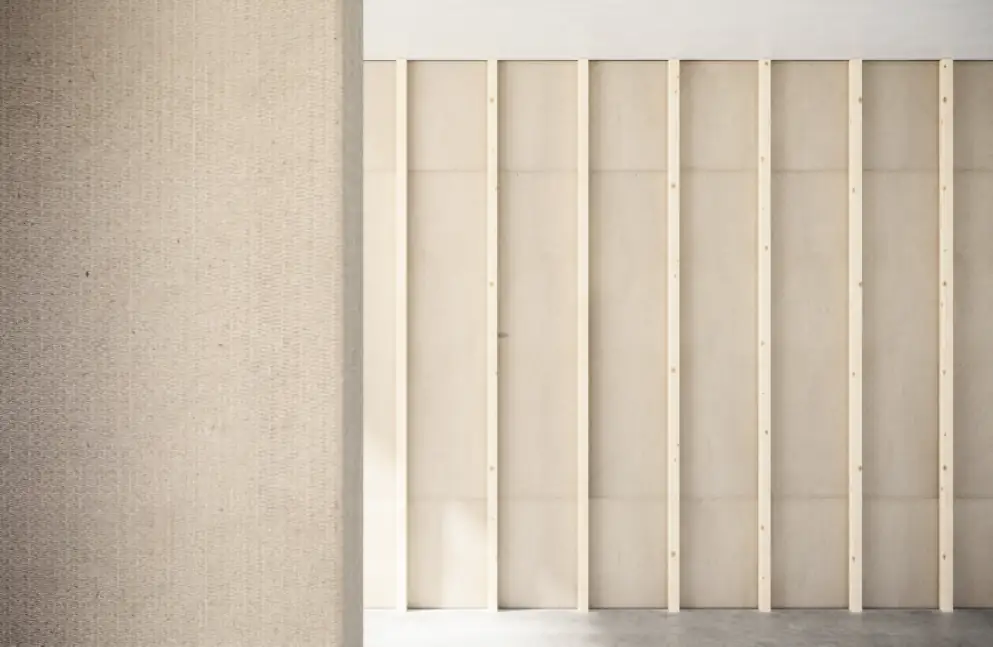
Applications and installation essentials
HONEXT is designed for interiors: wall cladding, suspended ceilings, acoustic panels, lightweight partitions, furniture, stands and retail spaces. It is cut, drilled and sanded with the same tools and fixings as wood, and accepts varnishes, paints, oils, waxes and laminates. Honext’s processing and handling manual (July 2021) sets out these guidelines:
- Interior use only: the board must be fixed around its entire perimeter and protected on both faces with a finish.
- Wall cladding: framing with fixings no more than 60 cm apart, or no more than 30 cm apart if no adhesive is used.
- Acoustic panels: perforated board reduces reverberation; on walls, battens at a maximum of 600 mm and fixings every 300 mm; on ceilings, battens at 400 mm and fixings every 250 mm.
- Suspended ceilings: pieces larger than 1 m² are not recommended without reinforcement, and they should never simply rest on the grid.
- Finishes and adhesives: water-based products, spray-applied in thin coats so as not to distort the board; white glue (PVA) or methylcellulose adhesive, and a mask when machining, because a lot of dust is produced.
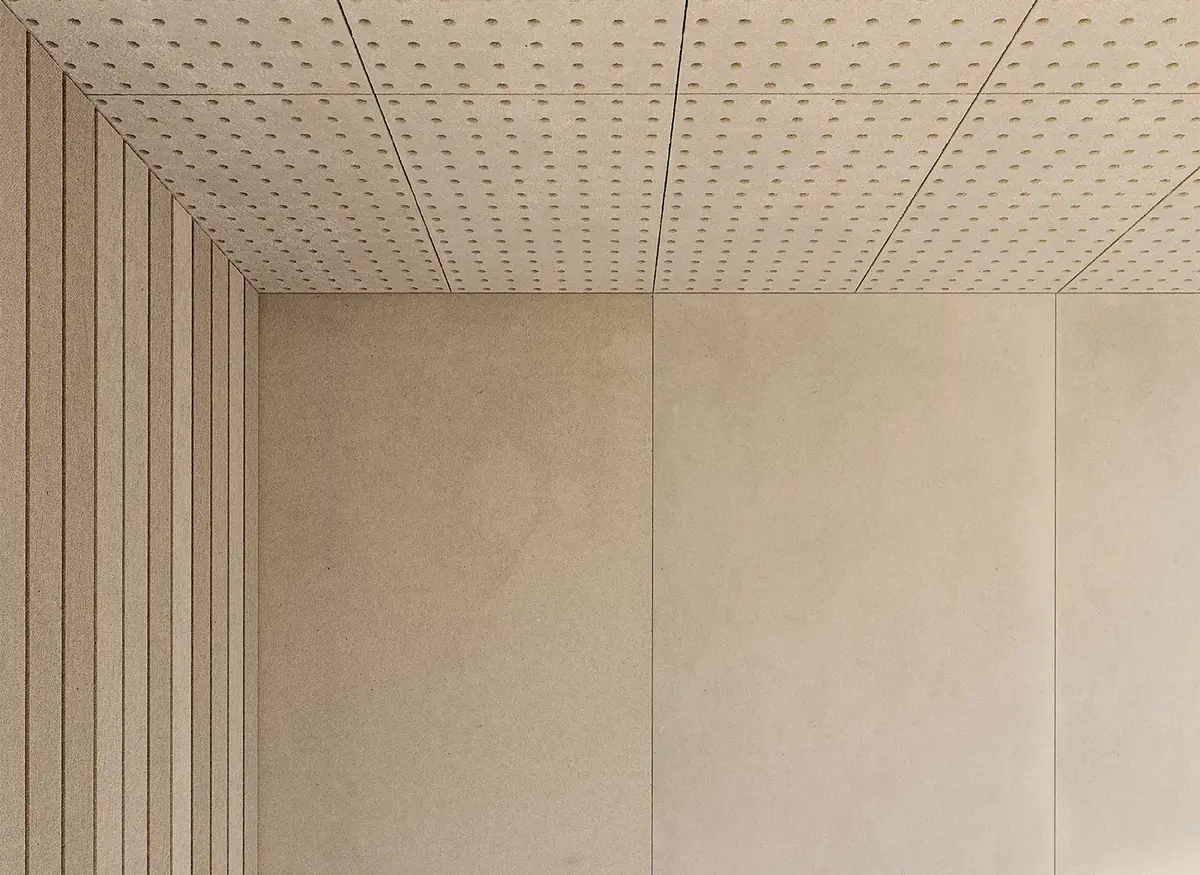
Projects with HONEXT
Two office projects show the material in use, as cladding and for acoustics.
Torre d’Ara coworking, Mataró
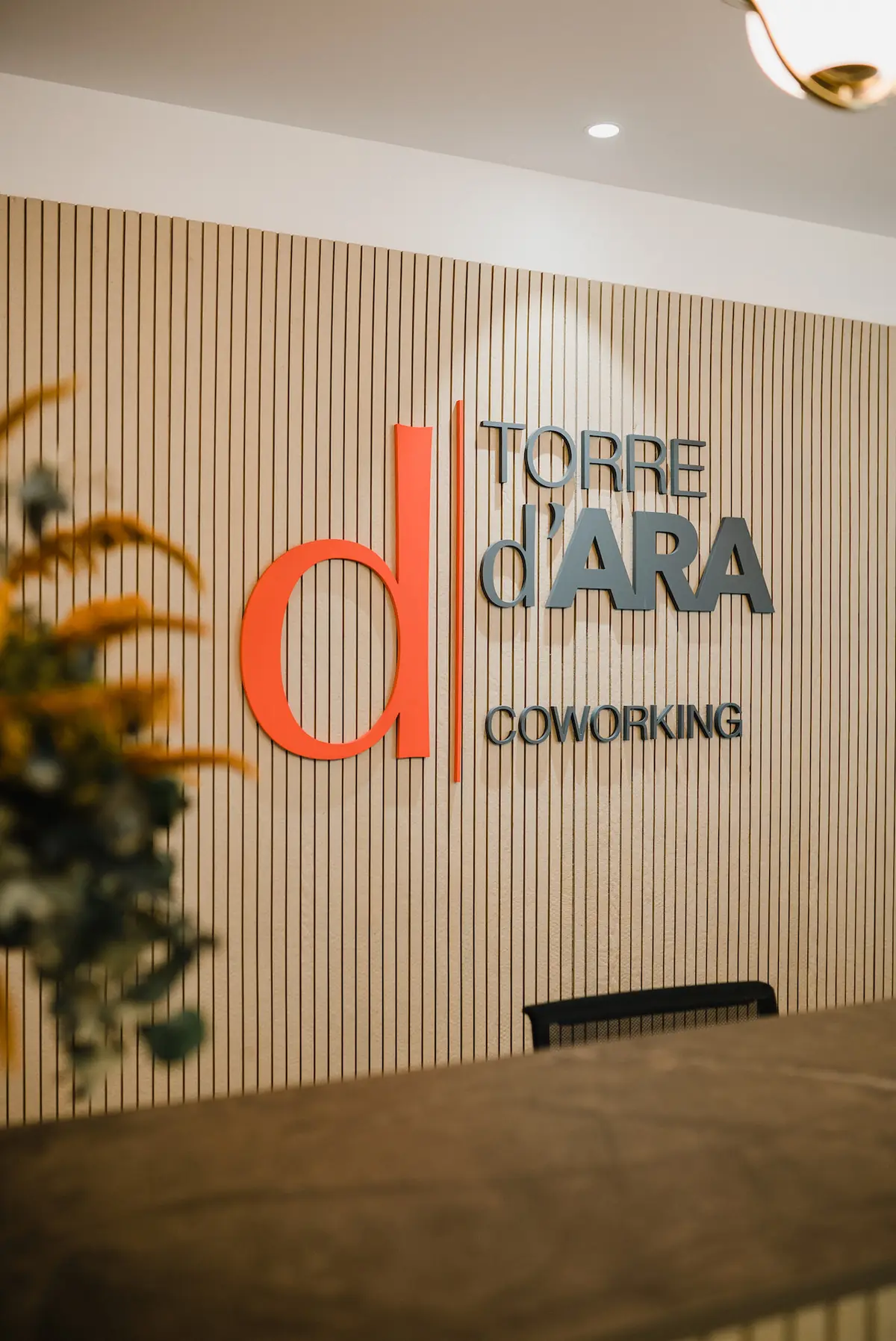
The contractor Construcía chose HONEXT for the coworking space in the Torre d’Ara building, on the seafront in Mataró. The raw boards were treated with a varnish of renewable origin and used as interior cladding and as a finish for the furniture. They were also used in the phone booths, taking advantage of their sound absorption. According to Honext, the project used 180 m² of board, equivalent to 1,296 kg of recovered waste.
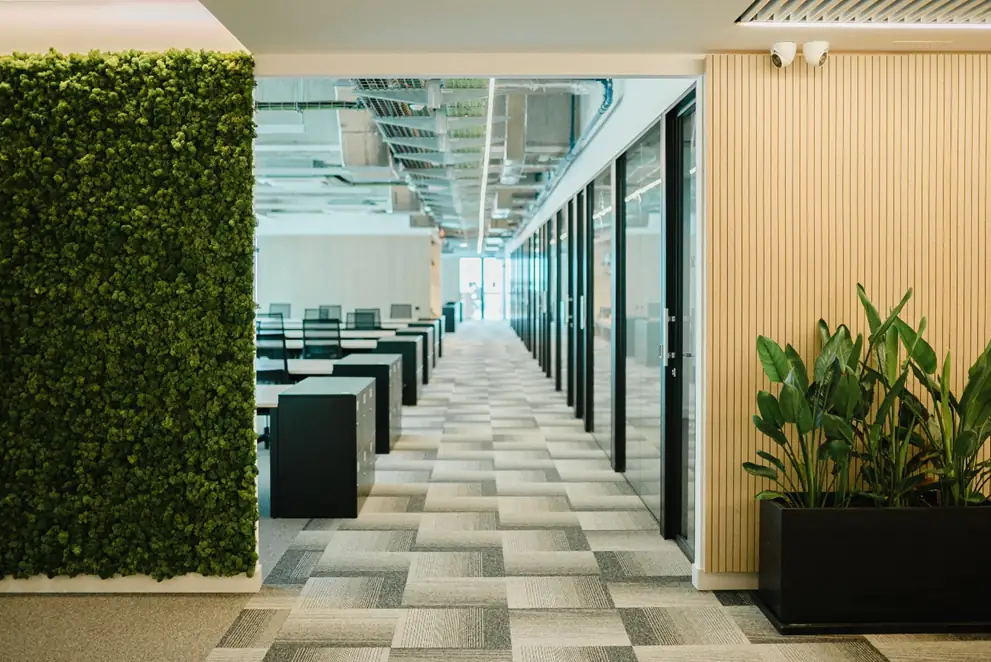
Wallbox offices
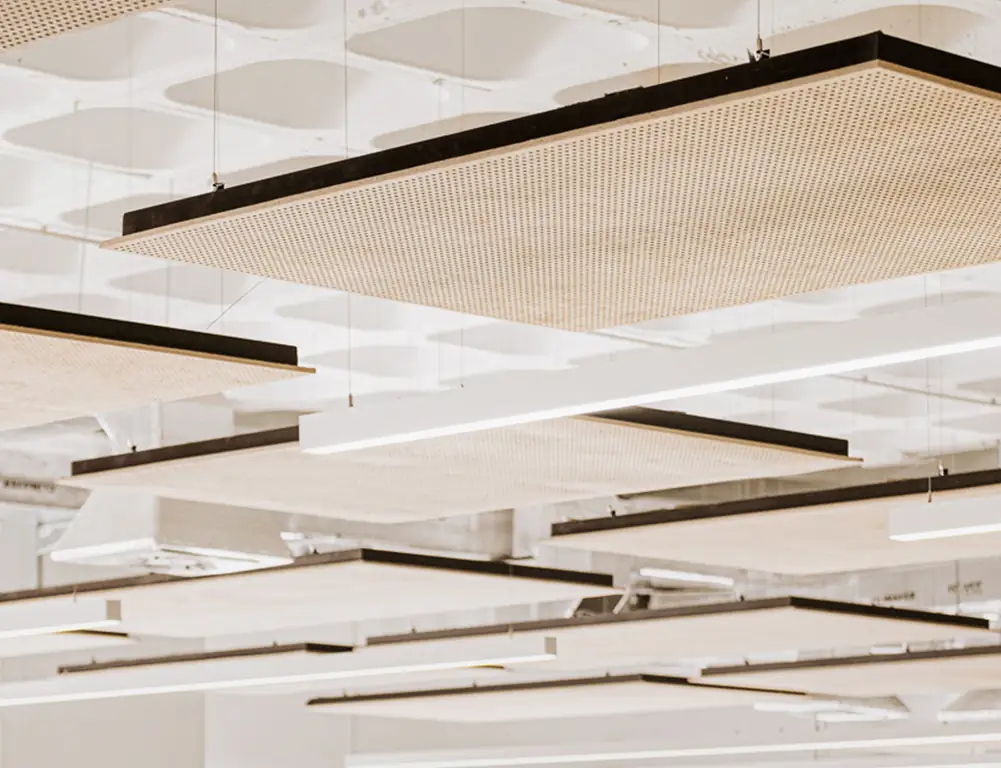
For the headquarters of Wallbox, a manufacturer of electric vehicle chargers, Construcía used HONEXT to build suspended acoustic islands that improve the acoustics of the offices. According to Honext, 192 m² of board were installed, representing 1,383 kg of recovered waste.
Frequently asked questions
- What is the HONEXT board made of?
- Cellulose fibres recovered from primary sludge from paper mills and from post-consumer cardboard, mixed with additives that the manufacturer describes as non-toxic. It contains no resins.
- Can it be used outdoors or in wet areas?
- No. According to Honext’s manual, it is intended for interior use only. It resists moisture and water vapour, but it must be protected on both faces and stored without sudden changes in temperature and humidity.
- Can it be painted, varnished or laminated?
- Yes, like any wood-based board. Honext recommends water-based products applied in thin coats, a white primer if you want to cover the natural colour and, for laminating, sanding the board first.
- What happens to the board at the end of its service life?
- It can go back into the manufacturing process to produce new boards, provided that adhesives and finishes do not exceed 5% of its volume. In 2022 recycling was only carried out at the Vacarisses plant.
- What was its reaction to fire?
- C-s1,d0 under EN 13501-1, according to the data published by the manufacturer in early 2022. For a current project, it is advisable to check the up-to-date technical data sheet.
Honext presents its board as a natural, recyclable material designed for the wellbeing of the people who occupy a space. If you are considering circular, low-emission materials for a project, at Matter we can help you compare alternatives and understand what each one offers.
Book your visit to Matter’s Materioteca to discover healthier materials in person.
Book a visit