Materials as the ingredients of a restaurant project
Matter Atelier suggests which materials pair with each type of restaurant, from Japanese to gourmet: clay, terracotta, moss, metal or reclaimed wood.
EventsAtelier Series7 of 79 min read
Restaurant spaces are constantly evolving. Today they are seen as places in which to socialise, share moments with your loved ones, work or study, and also have experiences. They are places with soul, in which every element, internal and external, is consistent with the others and gives the venue its own atmosphere, one that connects with its customers and makes them feel comfortable and attached to it. Interior design is the key that defines that atmosphere and, consequently, so is the materialisation of this kind of project.
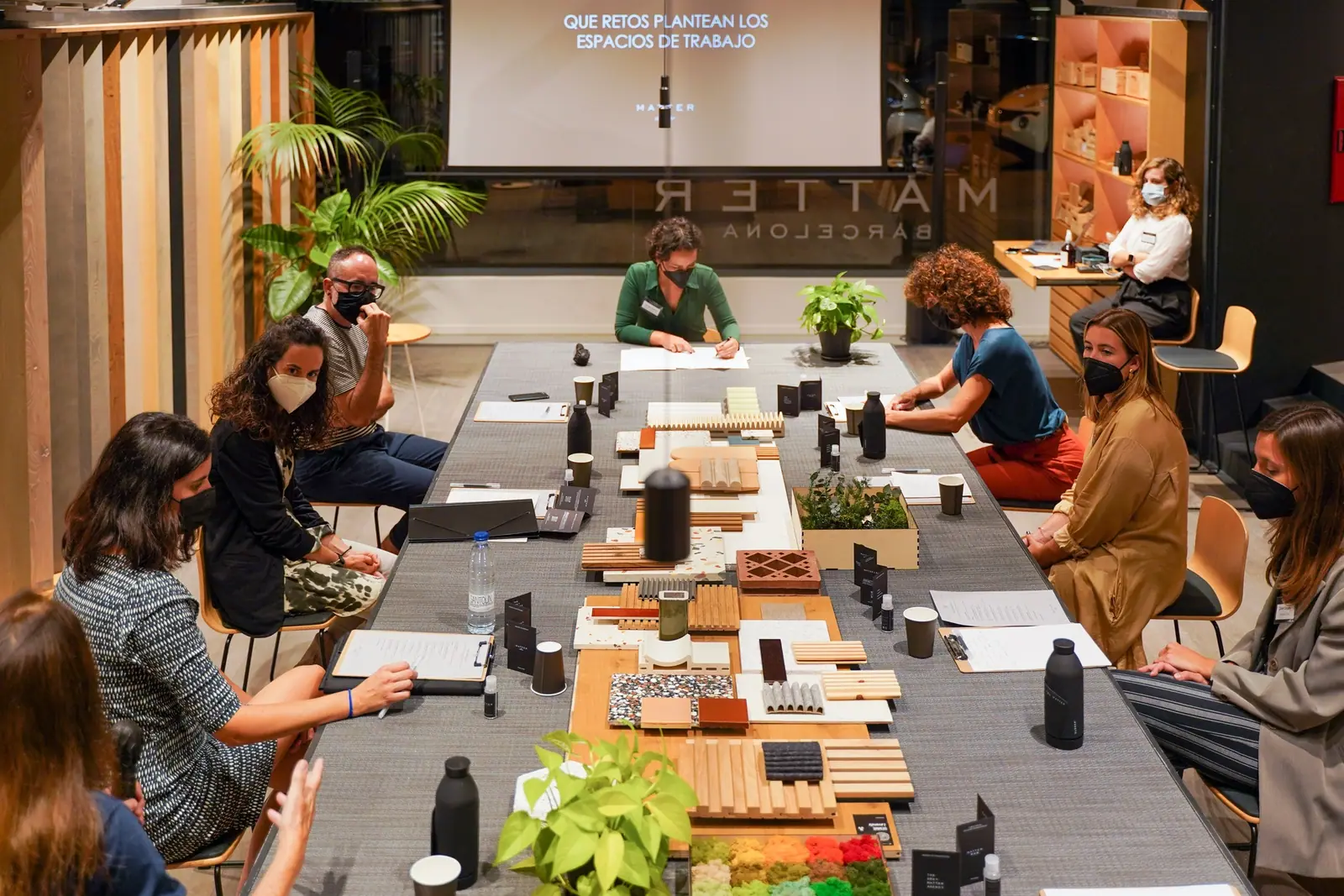
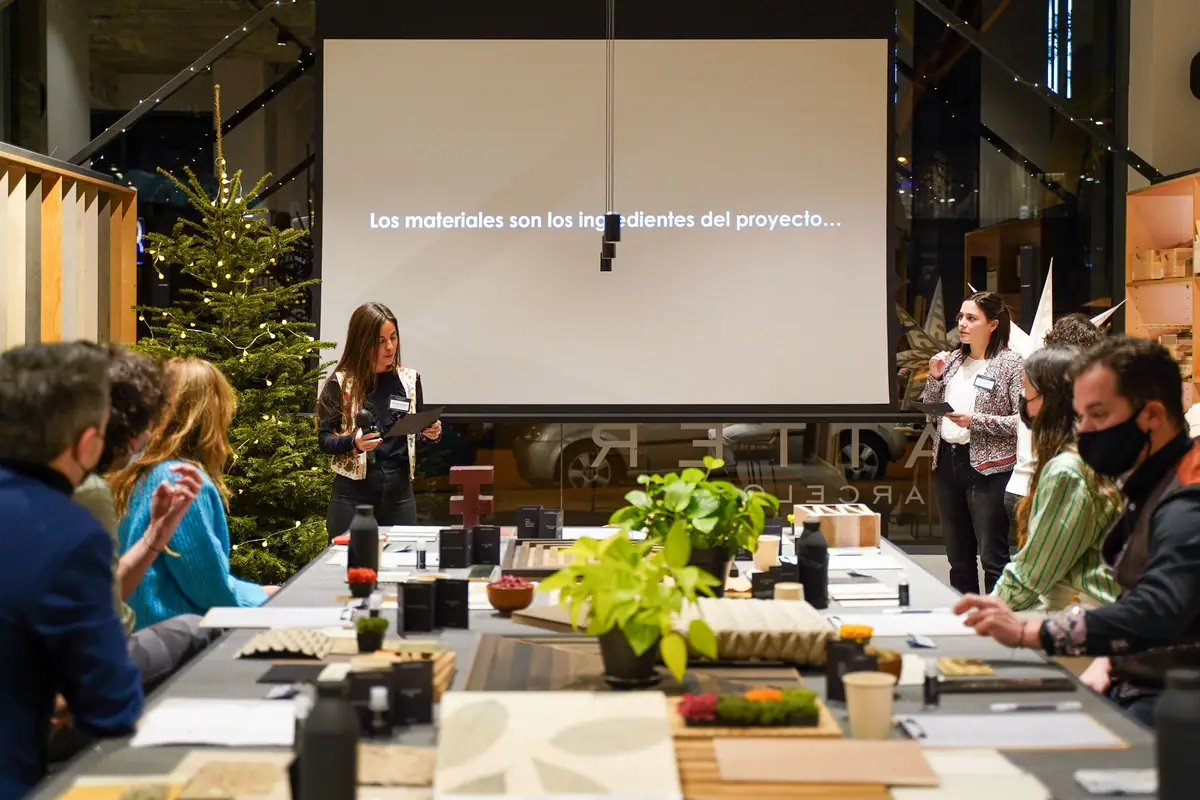
With this idea in mind, Carmen Maestu and Iris Fuentes, Project Consultants in the Matter Atelier team, shared at Atelier Series: About restaurant spaces —the edition of the series devoted to restaurant spaces— the keys to selecting the most suitable materials for each type of restaurant. Their conclusion: what matters most is finding coherence and harmony among all the elements and ingredients that make up the space. In this article we summarise their proposal, cuisine by cuisine, with the materials they cited and what is worth knowing about each one when specifying it.
Materials as the ingredients of a recipe
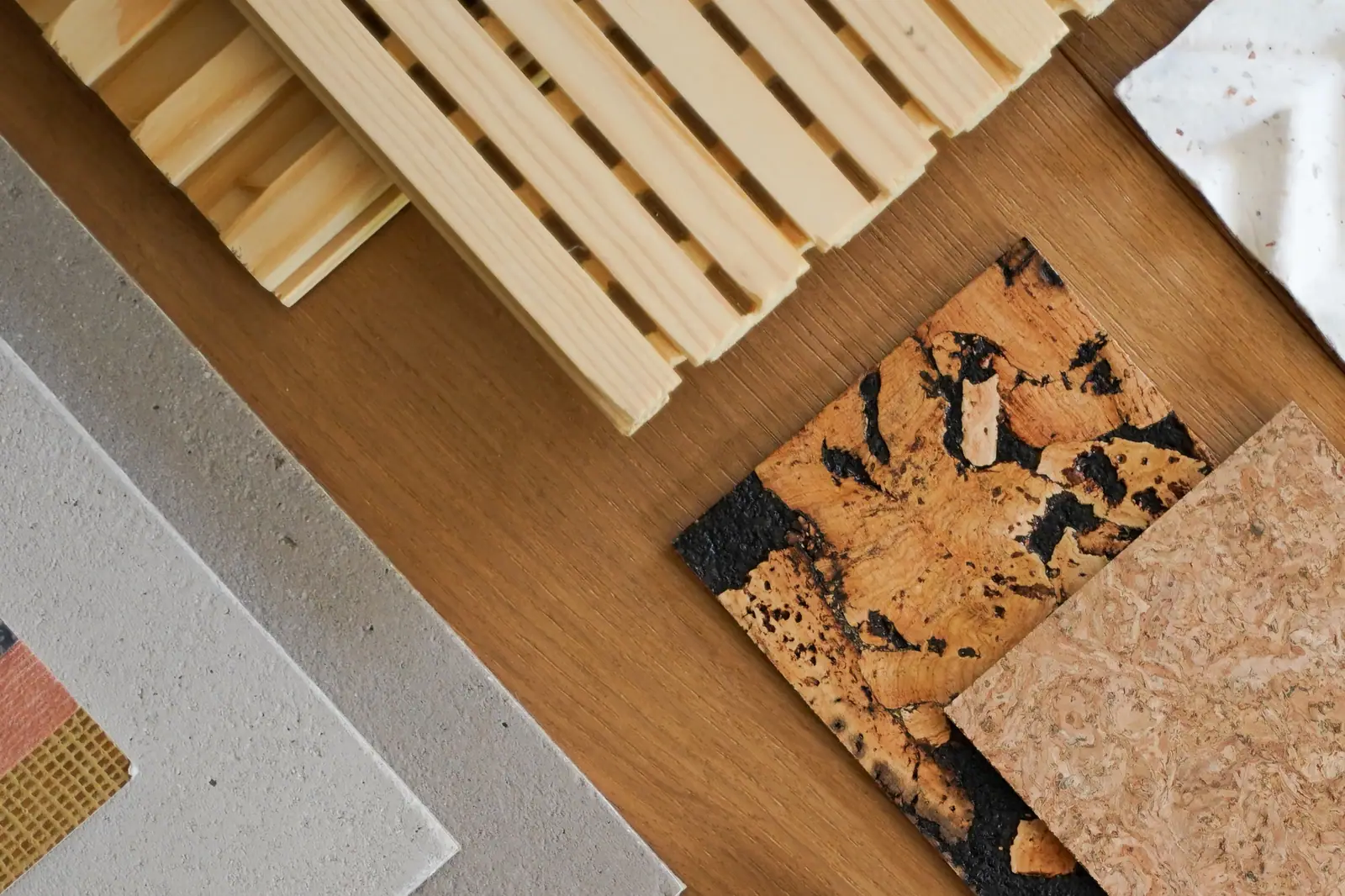
Talking about materiality in restaurant projects is like defining the ingredients of a recipe. They are the elements that set the identity and character of the space, give it personality and distinguish it from the rest. Just as a culinary creation has key ingredients, the design of a restaurant has materials suited to it: from a fast-food outlet to a restaurant built around a particular theme, each has its own recipe. The coherent, precise combination of these base elements dresses the space and gives it its essence and a particular style.
Starting from this premise, at Matter Atelier we analyse which materials pair best with restaurant spaces according to their culinary offer. The proposal is organised into four cuisines and one common requirement:
- Japanese cuisine: simplicity and elegance; materials that highlight colour, form and texture, and lattice screens that divide without closing off.
- Mediterranean cuisine: variety, balance and honest produce; clay, terracotta and handmade ceramics.
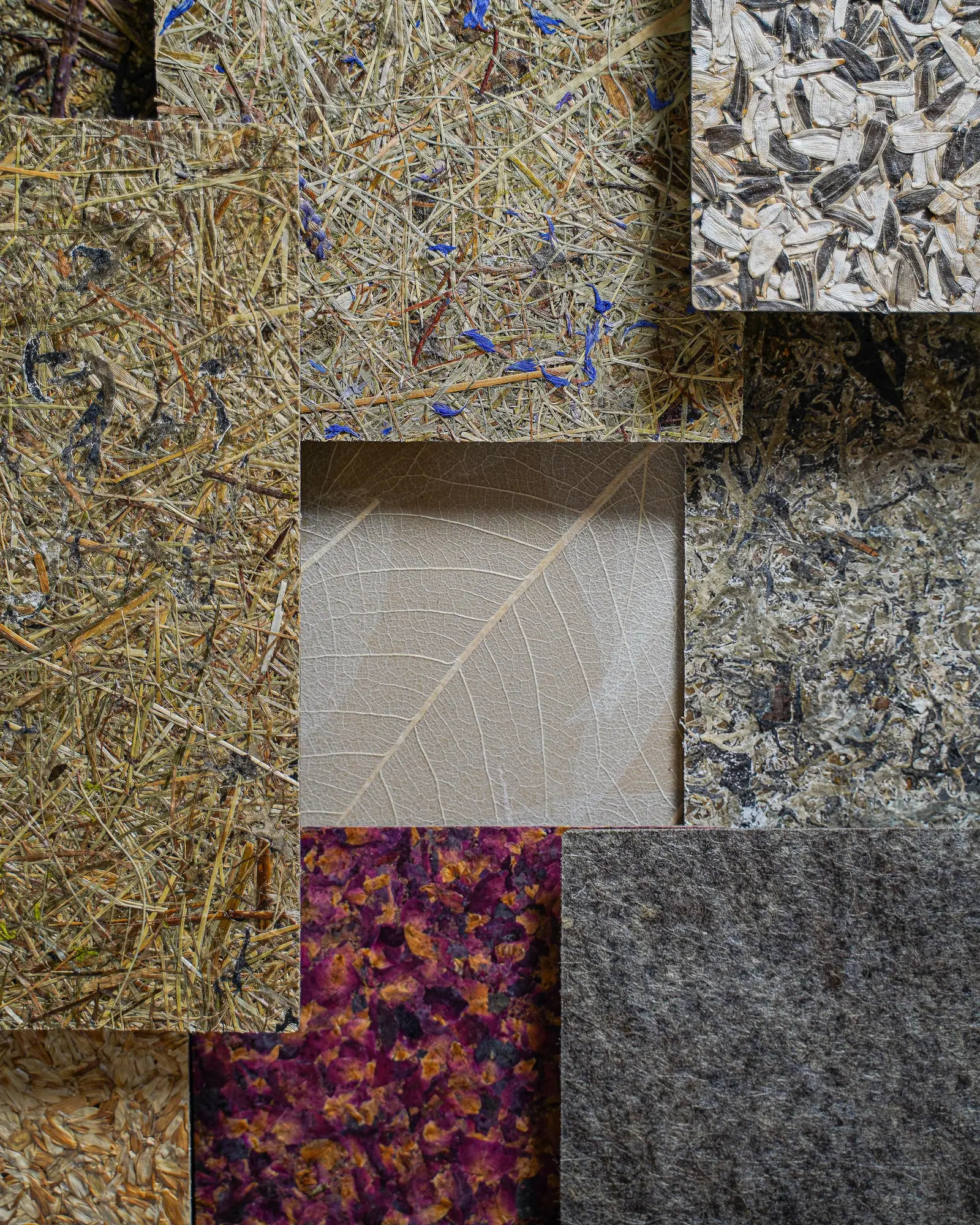
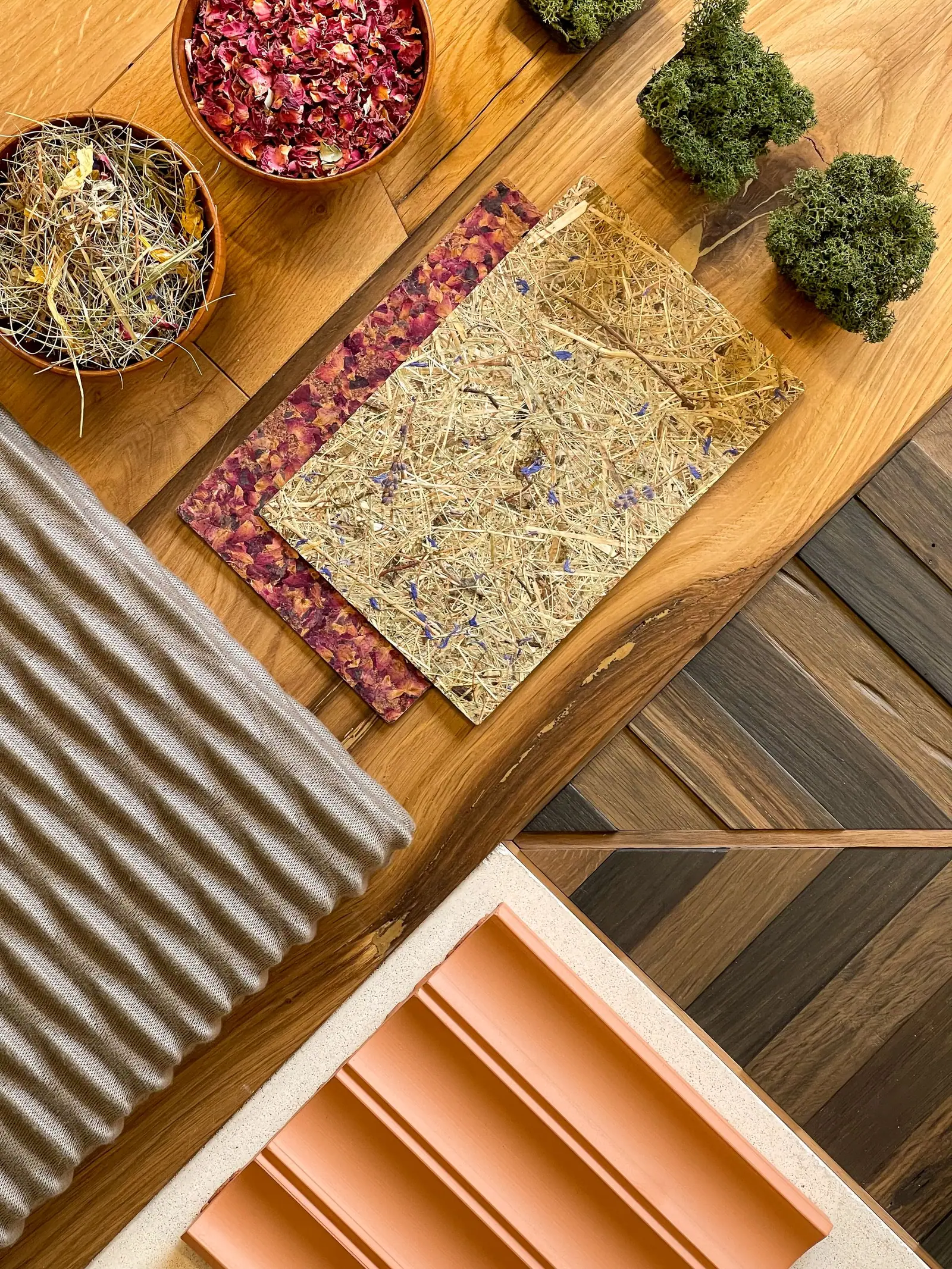
- Vegetarian cuisine: produce of the land; moss, hay and flower coverings.
- Gourmet restaurant: inspiration and refinement; handcrafted metal and reclaimed wood.
- In every case: good acoustics.
“Making the right decision when choosing materials and finishes is very important.”
Japanese cuisine: colour, texture and permeability
Simplicity and elegance, with the colour palette and textures taking the lead.
Japanese cuisine is a cuisine of colours and textures. That is why we recommend materials that highlight the colour palette, forms and textures, such as Naturtex fabrics. The company, founded in 1993 in Crevillente (Alicante), designs and manufactures fabrics and rugs combining tradition and innovation, experiments with new materials —including some unusual in textiles, such as stainless steel— and adapts the product to the needs of the architect or interior designer and of each project. At the time of the meeting it organised its fabrics into three ranges: natural, leather and metallic, suitable for wall coverings, furniture upholstery and panels, as well as indoor and outdoor rugs. According to the manufacturer, it works mainly with natural fibres such as cellulose, cane, raffia, linen and cotton.
Lattice screens that divide without closing off
To continue the analogy, Japanese architecture makes use of permeability, views and light. Lattice screens are the solution, as they make it possible to divide spaces without closing them off. They are a traditional architectural device for creating ventilated walls on façades or shaded partitions outdoors and, indoors, for separating areas and creating intimate zones that are aesthetically distinctive and highly functional.
Mediterranean cuisine: clay, terracotta and handmade ceramics
Variety, balance and produce shown just as it is.
Mediterranean cuisine is defined by the variety and balance of all its elements. The presentation stands out, with produce shown in its essence, honest and without pretending to be anything more. The materials that go best with these spaces are natural ones, starting with clay, the natural building material par excellence.
Matteo Brioni: clay for wall finishes
Matteo Brioni makes clay finishes for walls. Depending on the minerals it contains, the manufacturer attributes properties to clay such as being remineralising, antibacterial, absorbent and anti-toxic. Its colours contain no added pigments, natural or synthetic: they depend on where the clay is extracted and express the qualities of the soil it comes from. The company offers a palette of fourteen natural colours and the option of customising the mix for an exclusive finish.
We highlight two of its products. TerraEvoca is a made-to-measure artistic clay decoration applied only by Matteo Brioni’s craftsmen, in several layers and always in a custom colour, worked in relief, playing with textures and tones as the light changes. MultiTerra is a coarse-grained clay finishing plaster supplied dry pre-mixed, in three textures: Smooth, Structured and Wabi. An important point for restaurants: the standard version is designed for interior vertical surfaces with no contact with water; for wet environments and for covering furniture, the manufacturer offers Plus versions, with additives such as synthetic resins.
Mutina Celosia: terracotta reinterpreted
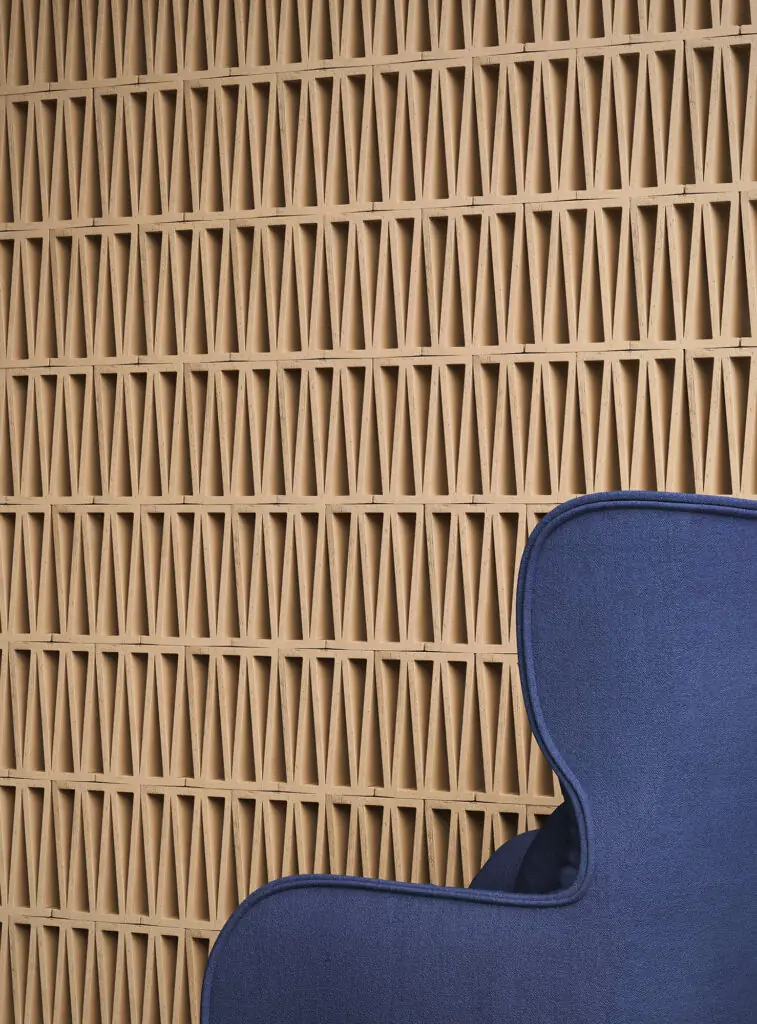
Terracotta also fits this recipe. Celosia, designed by Patricia Urquiola for Mutina in 2018, reinterprets the artisanal production process of terracotta: roof tiles, bricks, hollow bricks and partition blocks are taken apart, deconstructed and reinterpreted in new forms, while keeping the handcrafted element. The result is three-dimensional bricks for creating partitions for indoor and outdoor spaces; in its shape, the piece evokes Roman numerals.
Handmade fired-clay ceramics
Handmade ceramics are an intrinsically Mediterranean element. Small-format fired-clay pieces lend themselves to both traditional and modern designs thanks to their compatibility in geometry and tone, and offer a handcrafted look that stands out on its own. They come in a wide variety of tones and organic formats, as the glaze allows almost infinite customisation of colour. They are suitable for walls and floors, indoors and outdoors, and easy to maintain.
Vegetarian cuisine: moss, hay and flowers
Materials that come straight from nature for a cuisine of the land.
The vegetarian diet is characterised by natural produce, from the land. That is why manufacturers such as Nordgröna and Organoid are well suited to dressing this kind of restaurant.
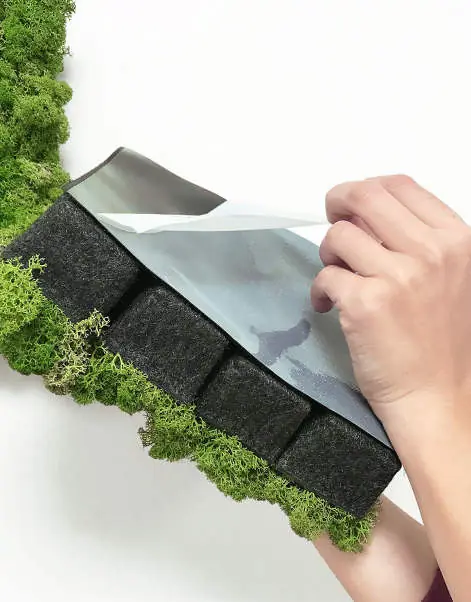
Sweden’s Nordgröna makes acoustic and decorative panels from reindeer moss, which is hand-harvested in Sweden and Norway and preserved with sea salts and additives. According to the manufacturer, the material has a class A reaction-to-fire classification and requires no watering or maintenance; the talk also pointed out that it is hypoallergenic. Being hygroscopic, it absorbs and releases ambient moisture: when the air is dry, the moss temporarily dries out and regains its softness as humidity rises. The Pixel collection is made up of small cubes of moss supplied on self-adhesive pads: you simply peel off the protective film and press them onto a smooth, clean surface. Nordgröna gives Pixel a noise reduction coefficient (NRC) of 80%.
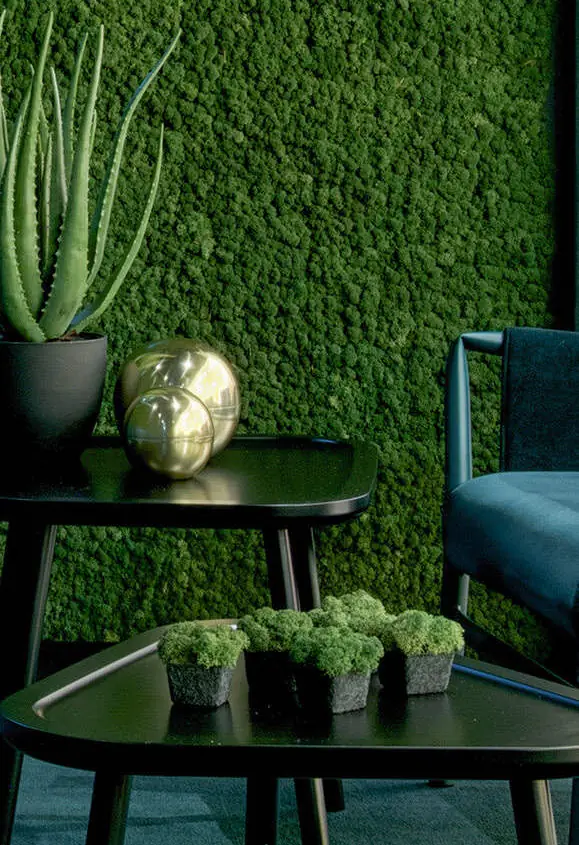
Organoid, an Austrian manufacturer, offers natural coverings made from alpine hay, daisies, petals of various flowers, lichens and mosses, vanilla stems, wool, leaf skeletons, sunflower seed husks, lavender, coffee or spelt, among others. The material itself plays on the senses: it can be seen, touched and smelled.
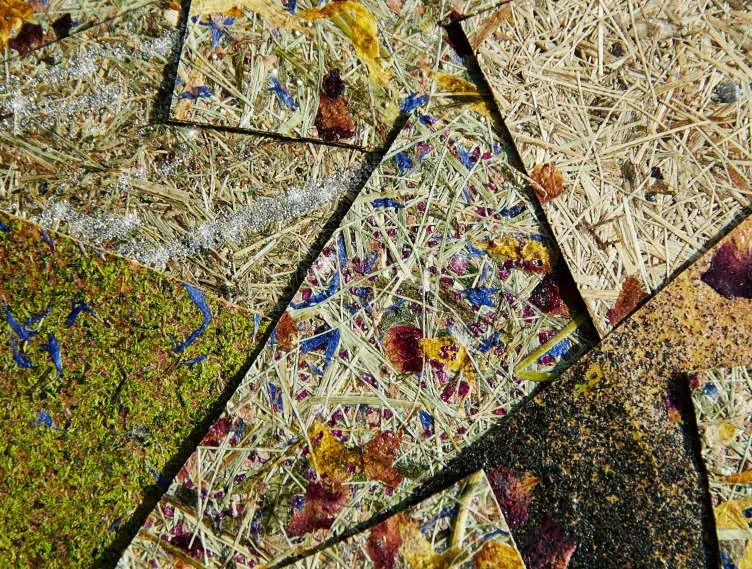
Gourmet restaurant: metal and reclaimed wood
Handcrafted surfaces for spaces that aim for refinement.
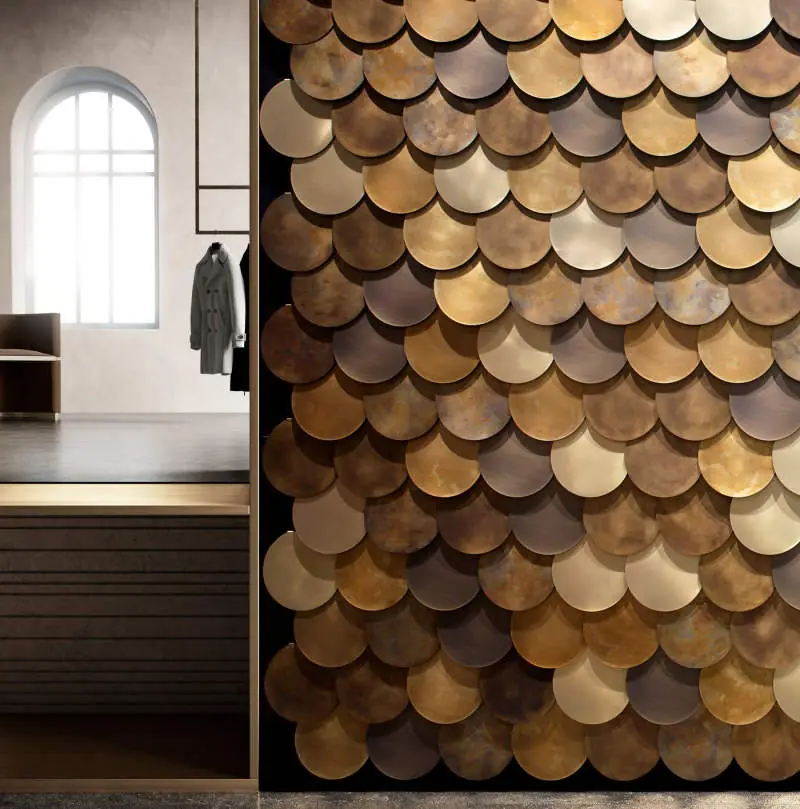
Inspiration and refinement are two attributes to bear in mind when materialising a gourmet restaurant. These are spaces in which metal plays a privileged role in design experimentation. De Castelli applies craftsmanship to industrial processes to create products that are both serial and unique. It works copper, brass, stainless steel and iron in countless textures, from smooth surfaces to geometric forms, to clad furniture, walls and ceilings, and even to give metal organic forms and create sculptural pieces. Its Circle Wall collection is a cladding of overlapping round modules, with different metallic finishes in tones ranging from gold and bronze to toasted and dark brown.
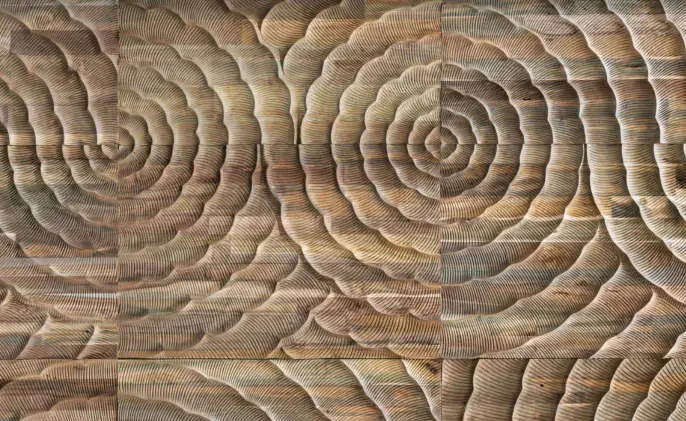
Reclaimed wood is the other key ingredient. Wonderwall Studios rescues timber and gives new life to something old, worn and degraded: it works with wood from abandoned houses and sheds, railway sleepers, bog oak, teak root from felled plantation trees or surplus walnut and olive, in collaboration with a cabinetmakers’ workshop in Java with which it has worked since 2010. Its collections are characterised by sanded and polished panels with crisp lines and forms. Current, for example, is a panel carved from teak reclaimed from abandoned houses which, according to the company, evokes classic Japanese tattooing: flowers, waves, moving water.
Acoustics: the invisible ingredient
Whatever the cuisine, ensuring good acoustics is essential.
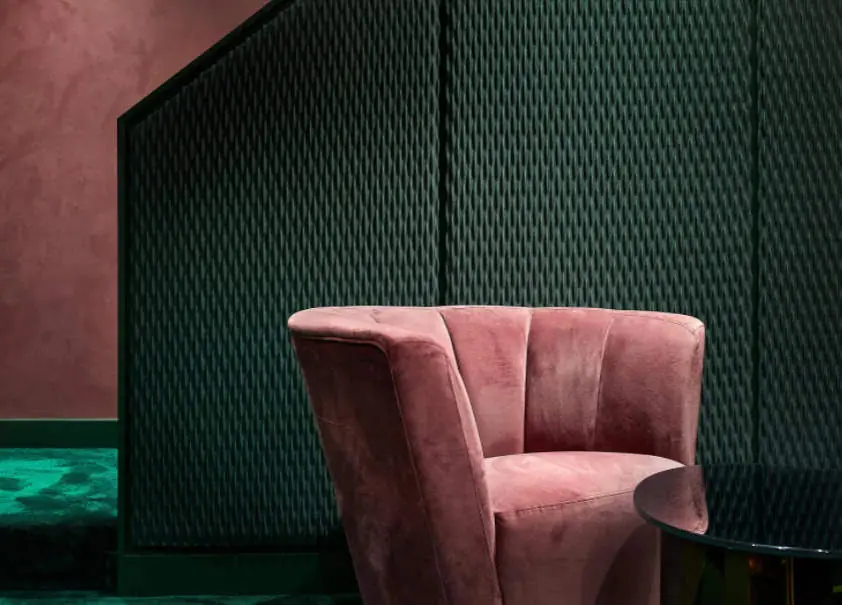
Casalis, a textile company based in Kortrijk (Belgium), offers everything from rugs to acoustic panels and decorative fabrics. Its Ondo collection, designed by Aleksandra Gaca, is a 3D fabric that dampens and absorbs sound. It is woven from Trevira CS polyester, which according to the manufacturer is permanently flame-retardant thanks to a modification of the polymer, with no added surface treatments, and is available in a range of fourteen colours.
Summary: which materials for each restaurant
Frequently asked questions
- Can a clay finish be used in wet areas of a restaurant?
- It depends on the version. Matteo Brioni’s MultiTerra, in its standard version, is designed for interior vertical surfaces with no contact with water or oil. For wet environments and for covering furniture, the manufacturer offers Plus versions with additives such as synthetic resins.
- Do moss panels need maintenance?
- According to Nordgröna, no: the reindeer moss is preserved, is not watered (water can wash out the preservatives) and needs no maintenance. It is hygroscopic, so it temporarily dries out when the air is dry and regains its softness with humidity.
- How can a restaurant’s acoustics be improved without sacrificing aesthetics?
- With materials that absorb sound while forming part of the design: 3D textiles such as Casalis’s Ondo, as wall panels or dividers, or moss panels such as Nordgröna’s, which the manufacturer presents as sound absorbers.
The speakers
The two authors of the proposal are part of Matter Atelier’s team of Project Consultants, specialising in retail.

- Iris Fuentes: interior designer who graduated from the Elisava school, with a master’s degree from ESDesign. She has worked at various interior design studios, an experience that enables her to take every stage of a project into account and understand the client’s needs.
- Carmen Maestu: building engineer (arquitecta técnica) from the Escuela Politécnica Superior de Burgos, with a master’s degree in interior design and decoration from INNADI in Madrid. She has worked with interior design studios and has been involved in every stage of the architectural project.
Video, full document and sponsorship
The summary video of Atelier Series: About restaurant spaces captures the meeting’s reflections on soul, concept, interior design, gastronomy and social experiences in restaurant spaces.
In the full eight-page document, Carmen Maestu and Iris Fuentes develop the proposal with images of each material.
This event was sponsored by the Selected Brands That Matter: Argenta, Bauwerk, Butó, Catalano, Cea Design, Cielo, Dornbracht, Florim, Hager, Laufen, Living Ceramics, Mapini, Museum, Noesis, Peronda, Quadro, Ritmonio and Waterevolution.
Just as every recipe has its essence, so does every restaurant, and creating it means dressing the space according to its style. At Matter Atelier we want to facilitate and support projects that improve people’s quality of life. Every effort counts.
Book your visit to Matter to discover our Materioteca and talk about the materials for your next restaurant project.
Book a visit