Materials that enhance brand values and wellbeing
Microcement, terrazzo, bespoke ceramics, lichen and acoustic panels: Matter Atelier’s selection for offices with identity and wellbeing.
EventsAtelier Series4 of 78 min read
Workspaces have changed and evolved along with the world and with us. This evolution involves a new arrangement of elements, attention to emotional aspects, new materials and designs that encourage creativity, and a sharper ability to listen to and understand clients in depth so as to grasp their needs at every moment, in a world that is changing ever faster.
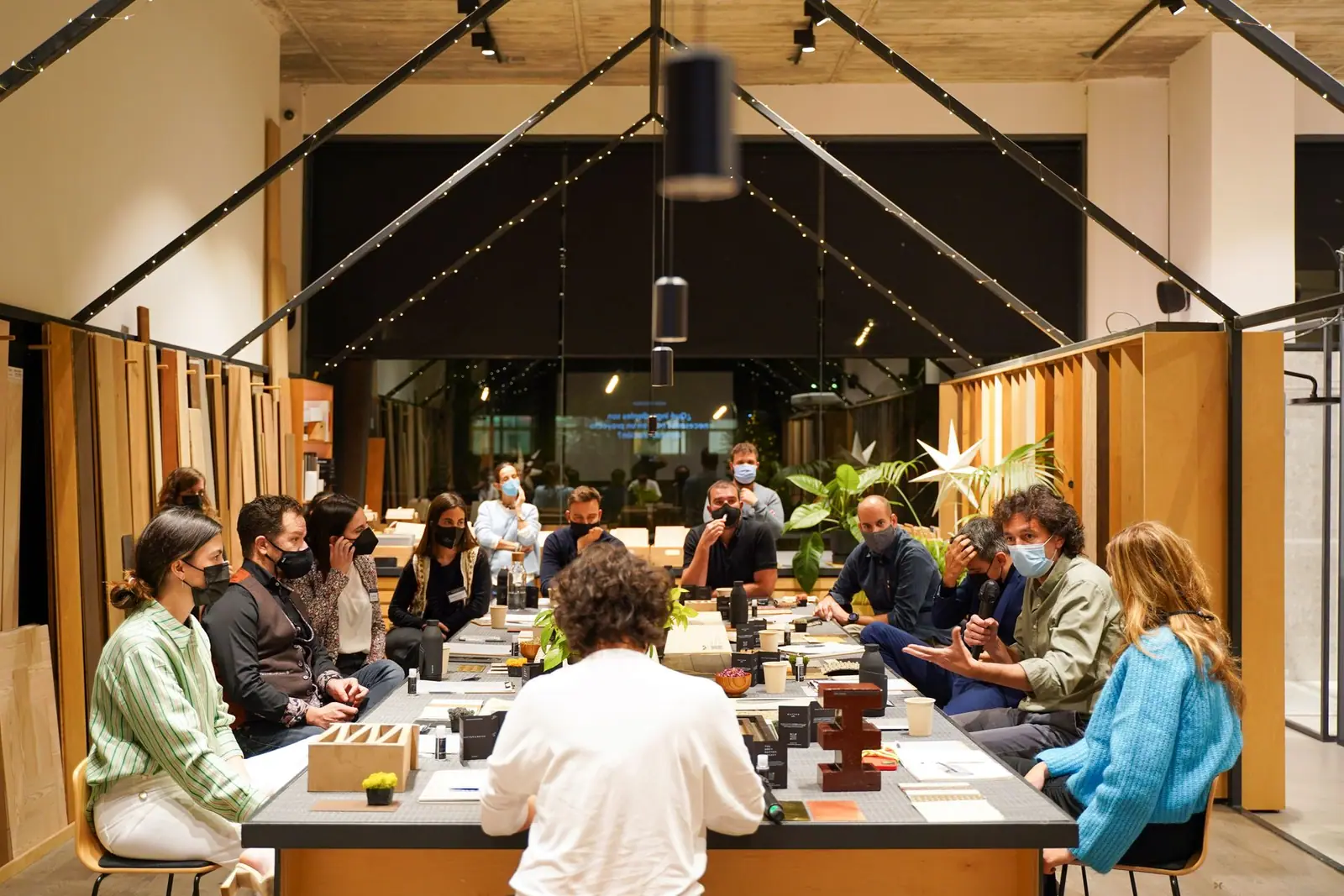
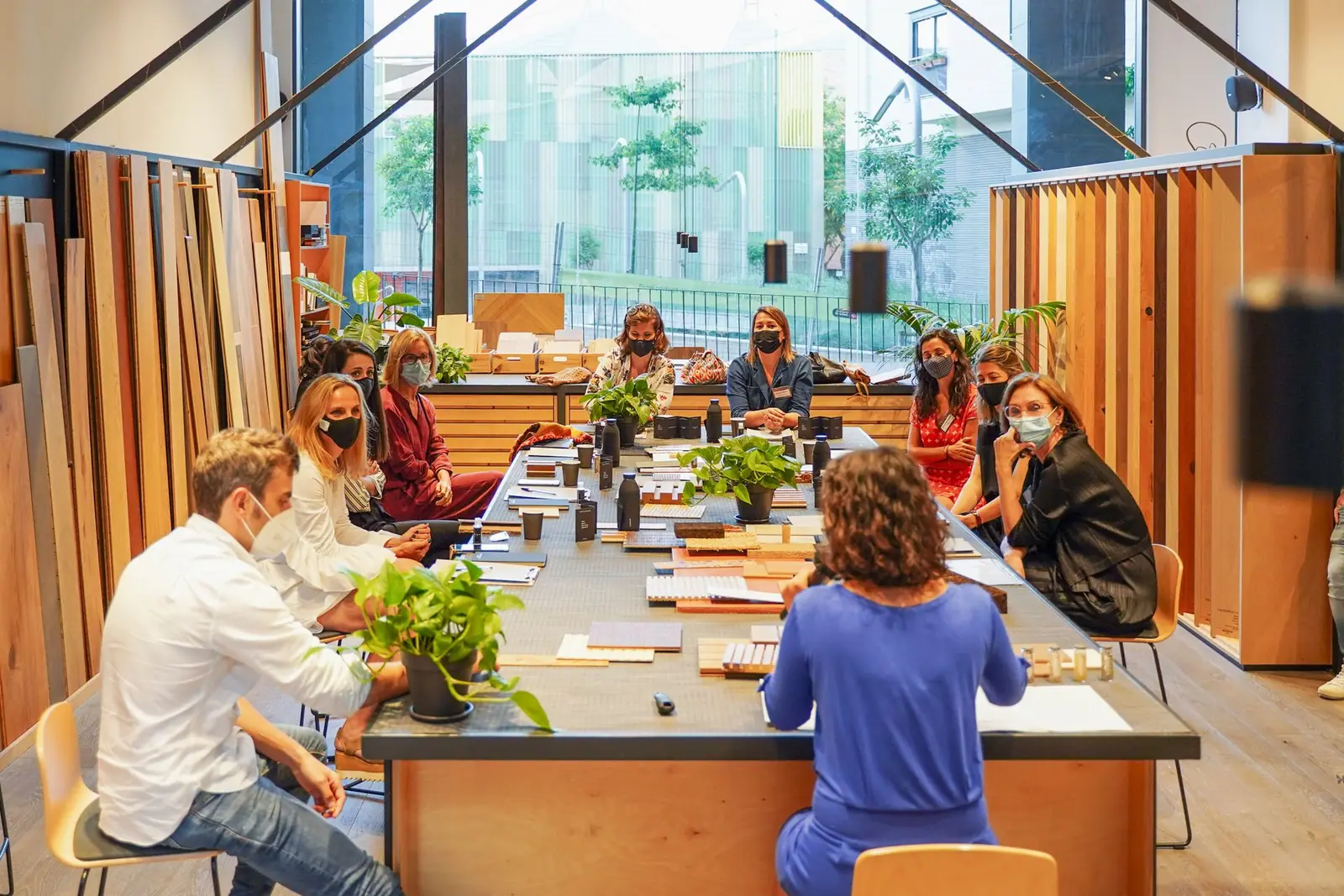
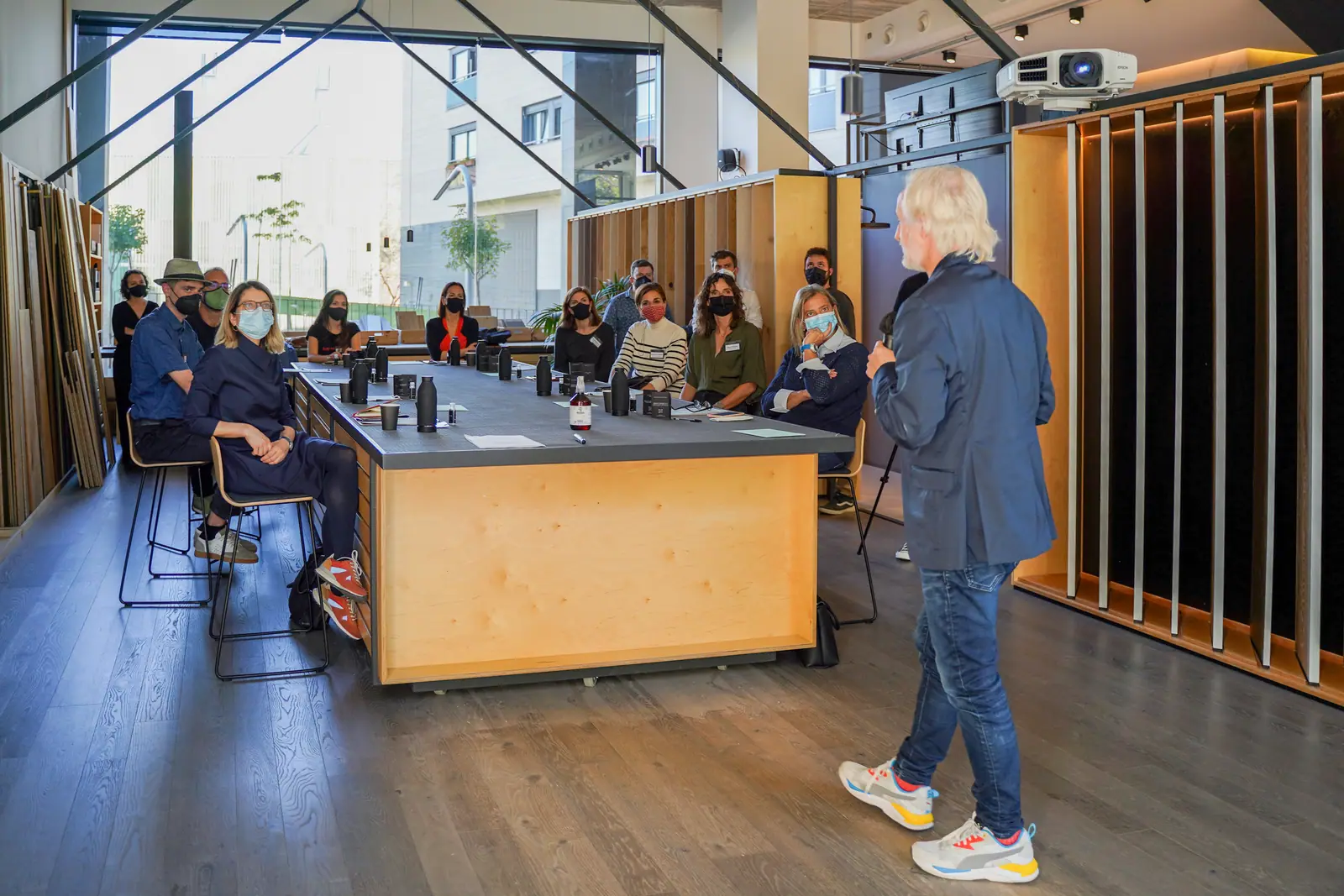
Following the gathering ATELIER SERIES: About working spaces, organised in October 2021 by Matter Atelier, the architects Judit Ollé and Marc Chela of the Matter Atelier team prepared an article on materiality in workspaces. Here we summarise it: customisable solutions that reinforce brand identity, comfortable solutions that improve wellbeing and acoustics, and solutions for washrooms; at the end you will find the full document.
Why materials matter in the office
We spend roughly a third of our time in workspaces or offices. That is why, the authors point out, we need to be aware of the value of having suitable spaces that ensure people’s wellbeing – an idea reinforced by a number of studies on how the working environment affects health and professional performance.
For decades, corporate and office spaces were closed and offered little interaction. Over time they have been transformed and adapted to society’s needs, and today they are more flexible and open. The values they convey stem from each company’s core principles, which calls for coherent design so that those values can be experienced by the people who occupy them.
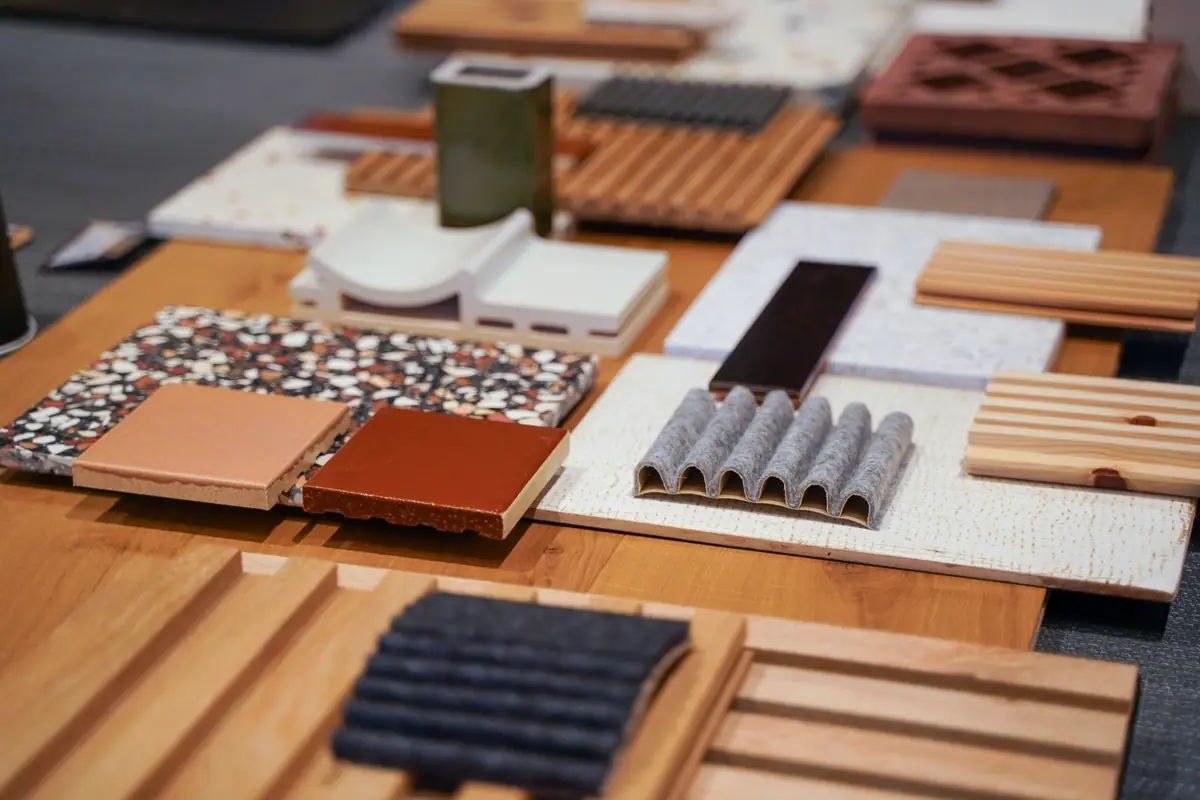
2020 brought new challenges, such as the desire for more flexible, homely spaces in which comfort is an essential value for the worker. Designing and executing these spaces well is paramount, and so the choice of materials and finishes is decisive. Matter Atelier looks for solutions with finishes that convey ease and comfort and, without ignoring trends, proposes two broad families: customisable solutions and comfortable solutions.
“Making the right decision in choosing materials and finishes is very important.”
— Judit Ollé and Marc Chela
Customisable solutions: the brand made material
Four systems for adapting colour, format and texture to each project.
Workspaces increasingly require flexibility without losing the idiosyncrasy that makes the essence of a brand recognisable. Customisable systems offer great versatility in laying pattern, colour, size, finish and texture. Matter Atelier groups them into four types: seamless solutions, hard-wearing seamless solutions, hard-wearing tile solutions and small-format solutions.
Seamless solutions: microcement
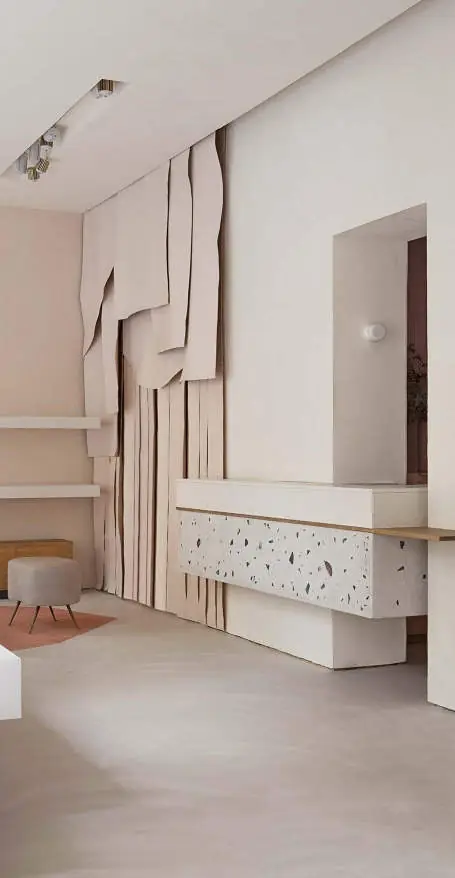
Seamless floor and wall finishes, best exemplified by microcement or decorative cement, can cover large surfaces with minimal thickness. It is applied by hand and can go over existing substrates – ceramics, wood, plaster and so on – so it can be used for floors, walls, ceilings and even furniture. Cement Design, for example, specifies thicknesses of 1 to 3 mm, a chart of 120 customisable colours and a composition of cement, minerals, water-based resins and aggregates sourced mostly from recycled compounds.
Because it is applied over the substrate, without demolition, it generates no rubble and makes for clean, quick works. On the other hand, it is not suitable for intensive use or heavy-traffic areas, as it can crack.
Hard-wearing seamless solutions: in-situ terrazzo
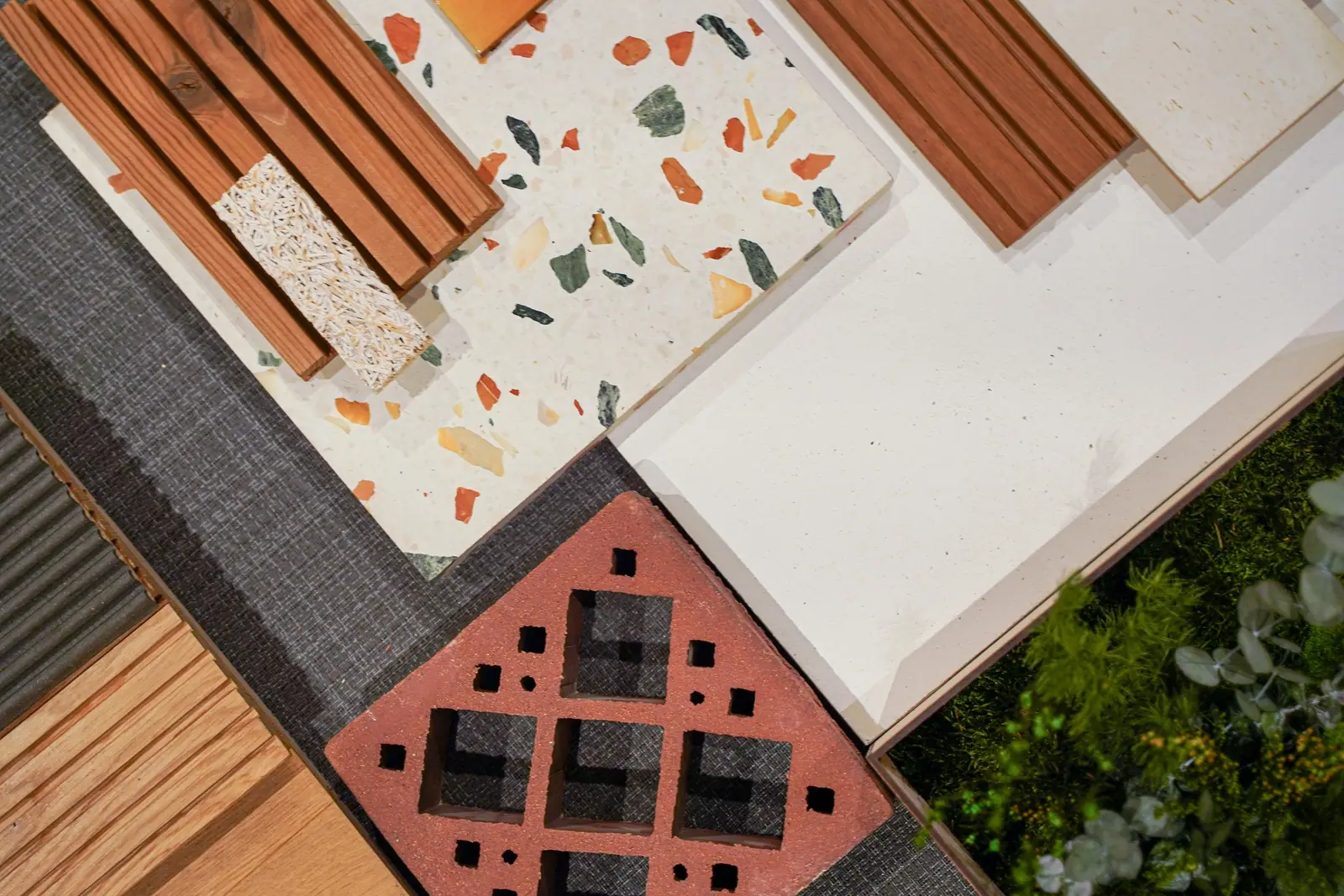
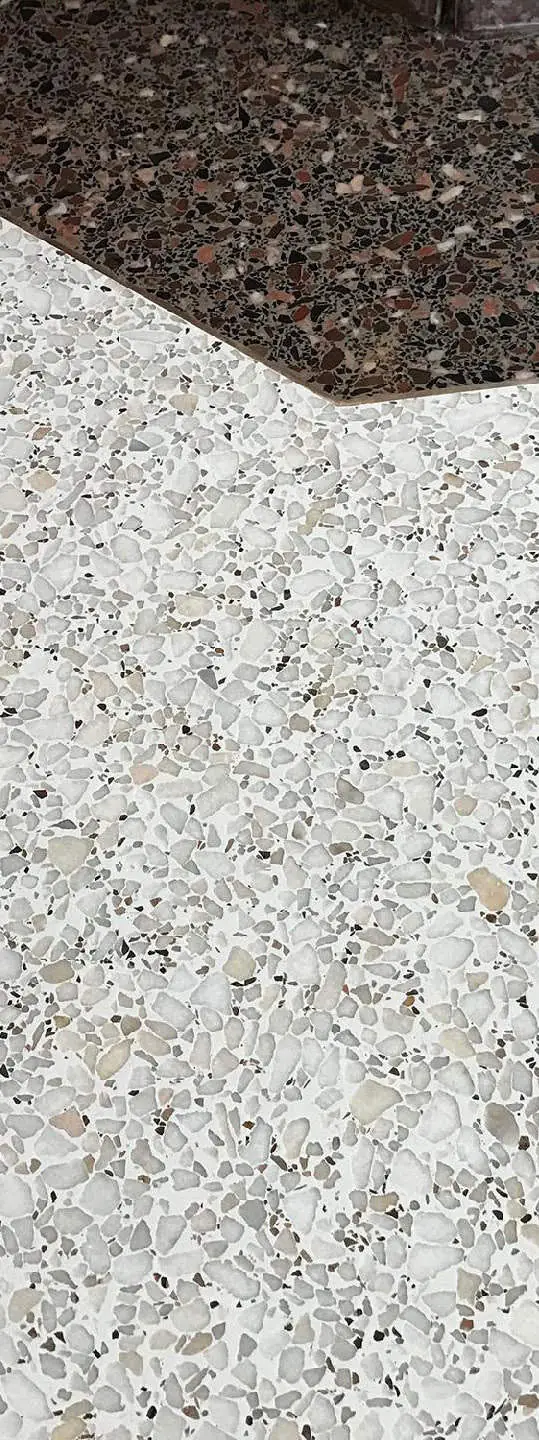
When it comes to hard-wearing seamless floors, the first thing that comes to mind is in-situ terrazzo. According to Terraconti, terrazzo was born in the 15th century, when Venetian marble workers from the Friuli area found a use for discarded marble offcuts. Today it is laid on site, with a ground and polished finish, and its mix incorporates many recycled components.
Seamless terrazzo allows a high degree of customisation: density, size and distribution of the aggregate, colour of the binder and colour of the stone, with made-to-order finishes in colour, texture and appearance. The result is a hard-wearing, jointless material that offers design flexibility, durability and simple maintenance and cleaning.
Hard-wearing tile solutions: block terrazzo
Continuing with hard-wearing materials, terrazzo tiles are obtained by cutting large blocks of binder and stone, and are worked as if they were a block of stone. It is a technical, hard-wearing and durable material, recommended for heavy traffic and intensive use. It can be produced in any format, from 30×30 cm pieces to large slabs of more than 3 m, with thicknesses from 1 cm.
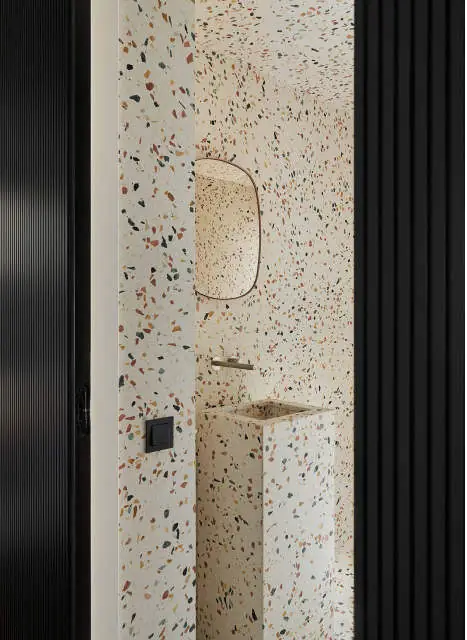
It comes in a wide range of colours, aggregate sizes and finishes, and allows floors, walls, stairs, worktops and furniture to be formed and clad in the same material.
Small-format solutions: bespoke ceramics
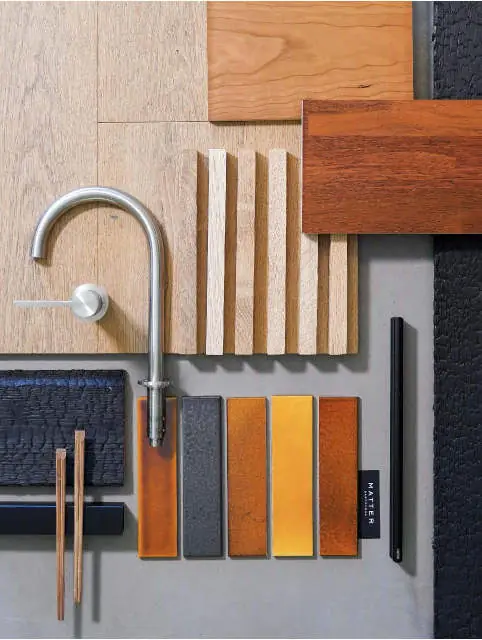
Bespoke ceramics are a tool for strengthening the corporate element of projects and brand value. This is small-format ceramic that is highly customisable in size, texture, colour and finish, making it possible to reproduce original features of buildings or to produce pieces that reinforce the brand. A great variety of geometries can be achieved: screens, reliefs and custom shapes.
Comfortable solutions: nature, acoustics and wood
Plant-based, acoustic and timber finishes for worker wellbeing.
Worker comfort is one of the most important values in enabling people to do their work well, and it must go hand in hand with the right choice of materials and elements to make them part of the space they occupy. In this selection, Matter Atelier brought together brands that promote comfortable solutions through their materials.
Greenarea: lichen and Moss&Plants
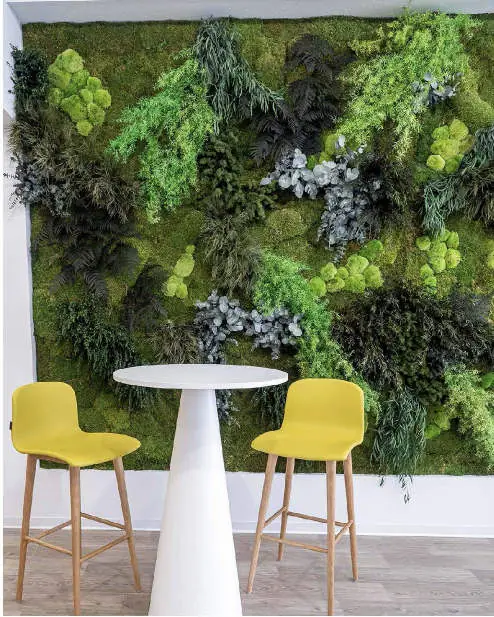
Greenarea works with preserved natural species – lichens, mosses, plants and flowers – to bring nature inside buildings without the need for watering or sunlight. Its lichen comes in a chart of 20 colours and is offered in standard 78×38 cm panels on 4 mm MDF, in bespoke compositions or as logos. Moss&Plants combines flat moss, ball moss and stabilised plants at different levels of volume, up to panels that approach a vertical garden. The manufacturer presents them as sound-absorbing materials.
Nordgröna: Pixel and Saga
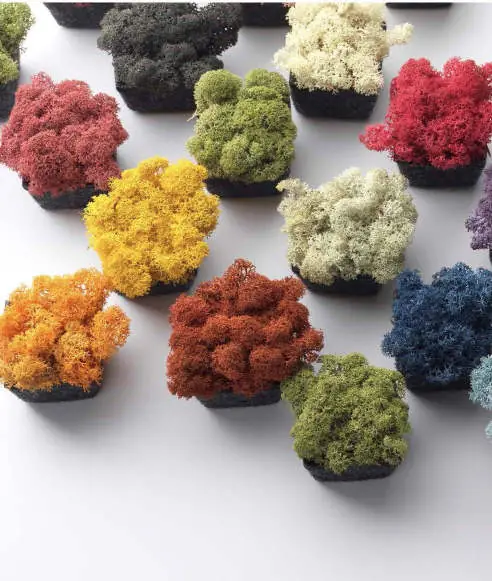
Along the same lines of natural finishes, the Swedish company Nordgröna uses reindeer moss and cork. Pixel consists of small reindeer-moss modules that act as natural pixels of colour to create continuous surfaces, patterns, images or logos; according to the manufacturer, it has a noise reduction coefficient (NRC) of 0.80. Saga is an agglomerated cork finish in several combinable shapes that doubles as a noticeboard and, according to Nordgröna, diffuses sound and improves the acoustics of the space.
Baux: Acoustic Wood Wool and Acoustic Pulp
For acoustic treatment, the Swedish company Baux works with two materials. Acoustic Wood Wool is made of spruce shavings, cement and water; it is recyclable and is produced as tiles and as wall and ceiling panels in various reliefs and colours. Acoustic Pulp is, according to the manufacturer, the first 100% bio-based and biodegradable acoustic panel: Swedish spruce and pine fibres, recycled water, wheat bran, potato starch, plant wax and citrus peel.
ECOcero: recycled PET panels
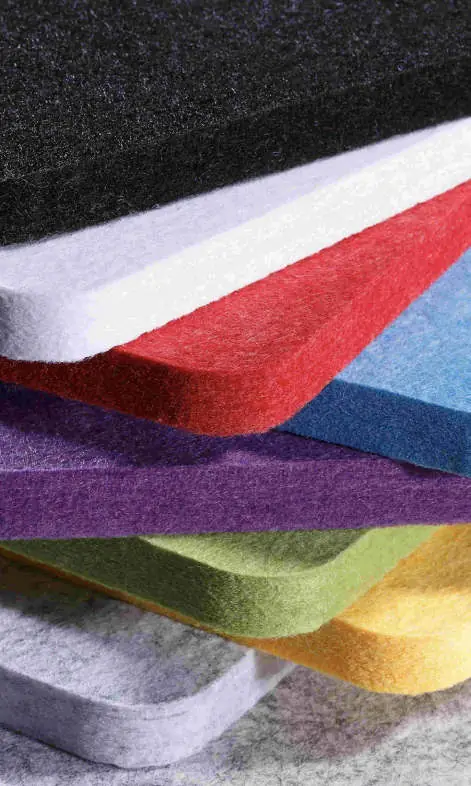
ECOcero, founded in Alicante in 2017, manufactures sound-absorbing acoustic panels from PET fibre made from recycled plastic bottles: according to the company, each square metre recycles 75 bottles. The panels reduce the reverberation time of the space in which they are installed and can be made in whatever shape, size, colour and finish each project requires, for walls, ceilings or as desk dividers.
Molduras del Noroeste: timber cladding
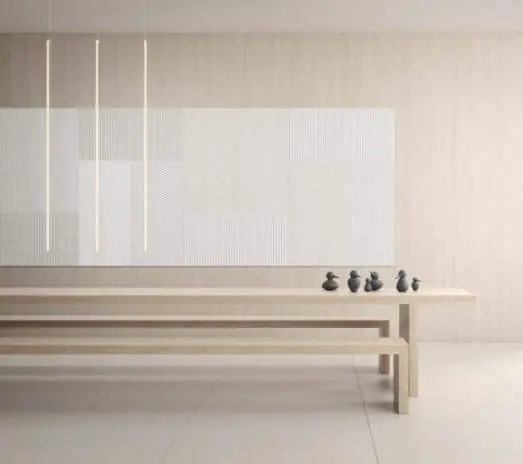
Natural elements such as wood appear in comfortable spaces. Molduras del Noroeste, based in Cambre (A Coruña), manufactures timber profiles for interior cladding in pine and fir, as well as oak, cedar, beech, sapele, iroko and ayous, and for exterior use it also works with heat-treated red pine. Its tongue-and-groove boards are made in various widths and thicknesses to create relief, with stain and varnish finishes, and the company holds PEFC and FSC chain-of-custody certification.
Touch-free washrooms in the workplace
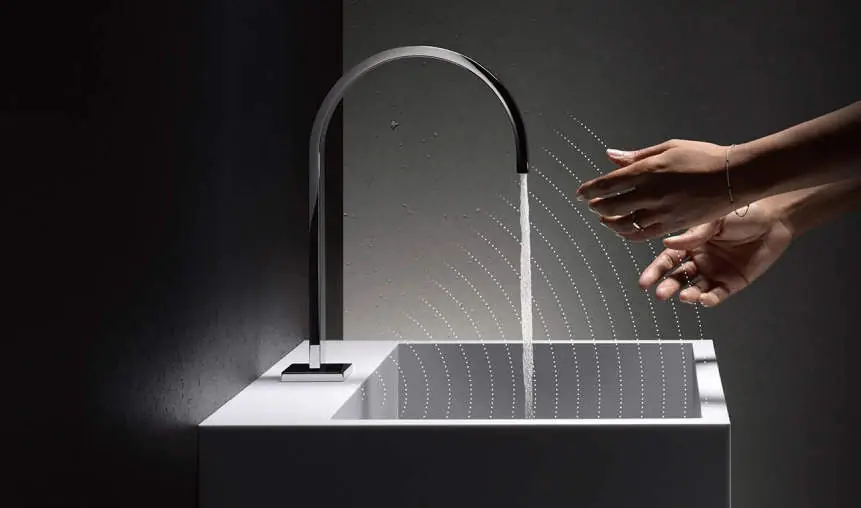
Since the arrival of Covid-19, the sector has made progress so that we can share workspaces without direct contact with surfaces posing a risk of infection. In areas such as washrooms, solutions began to be introduced to make them safe for workers to use: concealed installation systems, taps for communal use and sensor-operated products that promote a ‘non-touch’ approach.
Conclusions
A good choice of materials contributes to a better quality of life at work: comfort and wellbeing depend to a large extent on the material versatility the sector offers as a solution. These are the article’s main ideas:
- Identity: customisable systems (microcement, terrazzo, bespoke ceramics) allow brand values to be carried into the space.
- Use: each solution has its limits; microcement is not designed for heavy traffic, whereas terrazzo tiles are.
- Comfort: plant-based, cork, timber or recycled-fibre finishes add warmth and improve acoustics.
- Sustainability: materials with recycled or bio-based components, always checking the data with each manufacturer.
- Hygiene: in washrooms, concealed installation and sensor-operated products reduce contact with surfaces.
Frequently asked questions
- Can microcement be used in heavy-traffic areas?
- It is not the best choice: it is a very thin finish that can crack under intensive use. For heavy-traffic floors, seamless in-situ terrazzo or terrazzo tiles are a better fit.
- What is the difference between seamless terrazzo and terrazzo tiles?
- Seamless terrazzo is laid on site, without joints, using a bespoke mix that is ground and polished in situ. Terrazzo tiles are cut from manufactured blocks and laid like stone, in formats from 30×30 cm up to slabs of more than 3 m.
- Do preserved lichen or moss finishes need maintenance?
- According to the manufacturers, they need no watering, sunlight or maintenance. They are products for indoor use only.
- Which materials help improve an office’s acoustics?
- The article mentions Baux’s wood wool and pulp panels, ECOcero’s recycled PET fibre panels and Nordgröna’s reindeer-moss finishes, among others.
The authors
Marc Chela graduated in architecture from ETSAB. Before joining Matter he worked with various architecture and interior design studios and as a property surveyor. At Matter Atelier he is Supplier Manager, responsible for suppliers and for the ceramics area, as well as Project Consultant.
Judit Ollé graduated in architecture from ETSAB. She spent an Erasmus year at ENSA Toulouse, where she did an internship focused on urban planning, and during her final-year project she worked in the urban planning department of the AMB (Barcelona Metropolitan Area). At Matter Atelier she is Project Consultant – Corporate Specialist.
The gathering, the document and the sponsors
About working spaces brought together workspace design professionals such as Esther Roselló (Balet Roselló Arquitectes), Ana García (NeuronaLab), Clara Ocaña (Estudio CO-A), José Manuel Fernández (La Granja Design), Elena del Pozo (META Studio) and Patricia Von Arend (Denys&Von Arend). The report on the gathering, with the summary video, is in the Journal.
The full document, Materialidad en espacios de trabajo (Materiality in workspaces), contains the article by Judit Ollé and Marc Chela with images of each solution.
This event was sponsored by the Selected Brands That Matter: Argenta, Bauwerk Parquet, Butó, Catalano, CEA, Cielo, Dornbracht, Florim, Laufen, Living Ceramics, Mapini, Museum, Noesis, Peronda, Quadro, Ritmonio and Waterevolution.
Designing workspaces carries a great responsibility towards the people who use them every day and towards the environment. Every effort in this direction adds up and benefits us all. At Matter Atelier we want to facilitate and support projects that contribute to and improve people’s quality of life. Every effort counts.
Book your visit to Matter to discover our Materioteca and talk about the materials for your next workspace.
Book a visit