Domestic materiality
Júlia Anglí and Lucía Sanz of Matter Atelier look at how materials affect the health of the home and propose five groups of healthy materials.
EventsAtelier Series3 of 78 min read
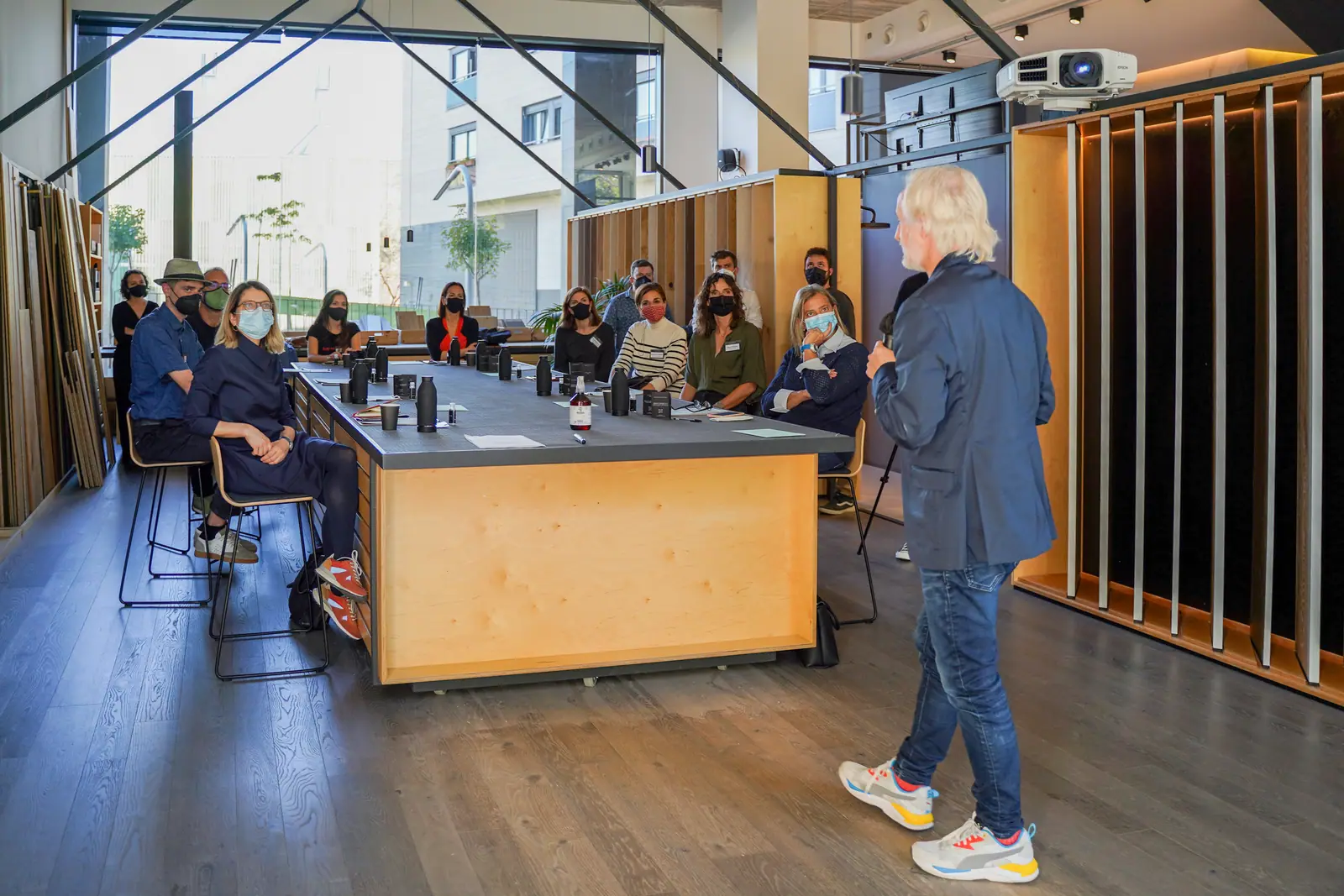
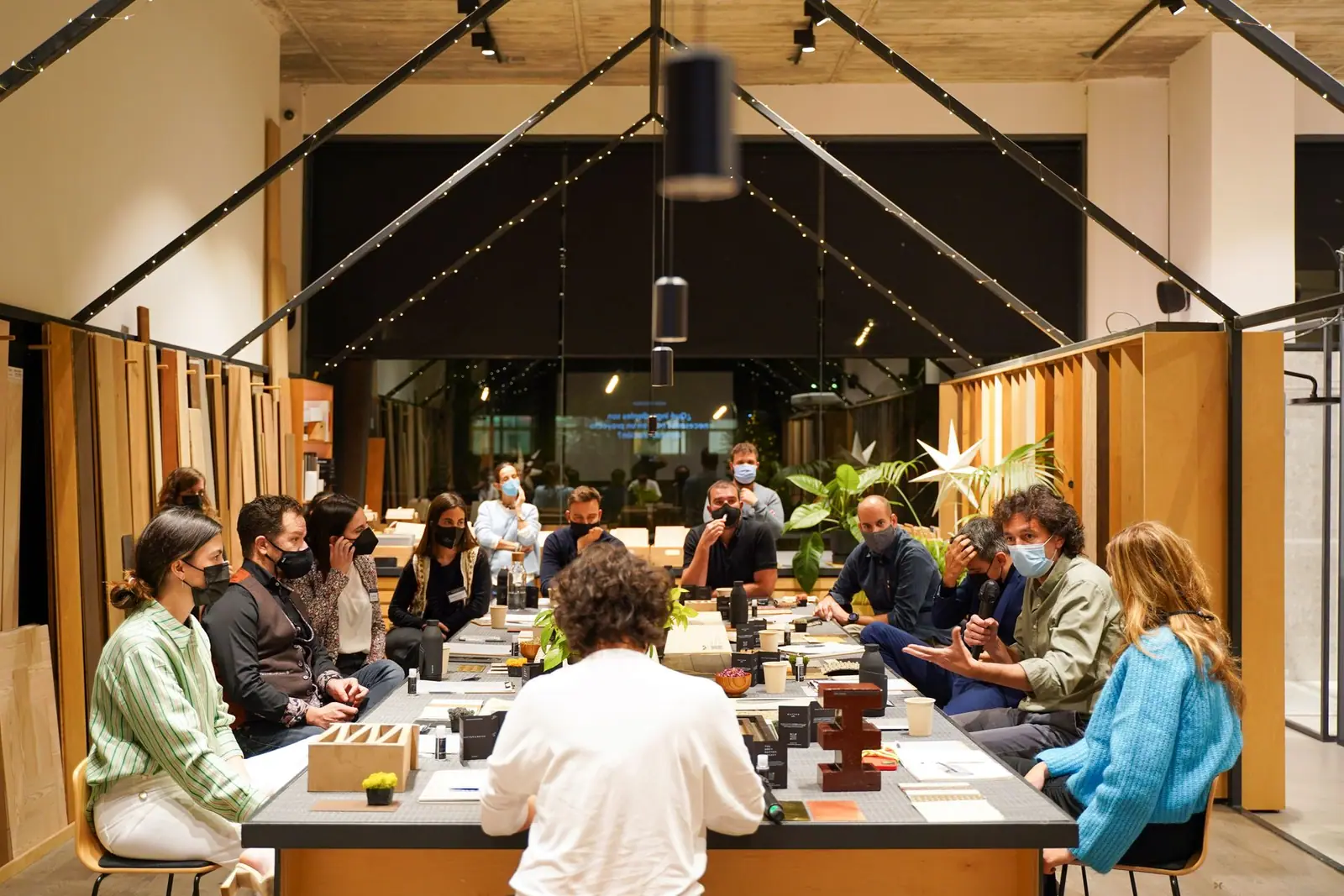
We spend many hours a day in our homes, especially this past year, when the pandemic has forced us to stay at home for long periods. The materials and design of a home have a direct effect on our health, a fact that heightens the responsibility of the professionals who design it. With a view to contributing to ever more conscious projects, in July we organised a first gathering to reflect on what homes need today.
Following that gathering, Atelier Series: About domestic spaces, organised by Matter Atelier at Matter Barcelona, our colleagues Júlia Anglí and Lucía Sanz, architects and Project Consultants – Residential Specialists at Matter Atelier, prepared an article on the importance of domestic materiality. Here we summarise their ideas – the relationship between materials and health, indoor pollutants, how we select materials and five groups of healthy materials – and at the end you can download the full document.
Materiality and health
We spend most of our time indoors.
For people, the built environment is the life-support system of their ecosystem: it is where we carry out the vast majority of our physiological and emotional activities. Over the decades it has gone from a natural environment to a transformed, built and artificial one, and that shift directly affects the relationship between people and buildings.
That bond explains the importance of the indoor environment. According to the United Nations, 55% of the world’s population lived in urban areas in 2018. And the US Environmental Protection Agency (EPA) estimates that Americans spend on average around 90% of their time indoors, where concentrations of some pollutants are often 2 to 5 times higher than outdoors.
Besides meeting our basic needs, we regulate ourselves and adapt to the conditions around us. Architecture is the protective barrier against external agents and the place where we rest, socialise, work, learn and live. Because the relationship is so close, a project should contribute to the quality of spaces and reduce pollutants in enclosed environments as far as possible. Designing and building the envelope correctly is essential, which is why choosing the right materials and finishes matters so much.
Indoor pollutants and their impact
The industrial revolution and new production processes have brought an almost infinite market of materials and finishes for homes and workplaces. The problem arises when aesthetic demands and lower cost take precedence over a natural, more durable material: the artificiality of those finishes becomes a new source of pollutants inside our spaces.
These agents, widespread in our society and with health effects that have been extensively studied, fall into three categories:
- Chemical agents: particles, volatile organic compounds (VOCs), CO₂ or CO.
- Physical agents: radioactivity, static electricity, ionisation or electromagnetic fields.
- Biological agents: bacteria, viruses or fungi.
The greatest difficulty is that many of them cannot be perceived by our senses: we are barely aware of them, and we let the finished result take precedence over our comfort and our own health. The EPA notes, for example, that paints, varnishes and waxes emit VOCs, and that concentrations of many of these compounds are consistently higher indoors than outdoors.
The public health situation brought about by the pandemic has put people’s health at the centre of many areas of daily life. At Matter Atelier we set out to analyse the relationship between the built environment and the healthiness of spaces, and to help improve it. But these agents are not the only thing that affects our wellbeing: several interrelated social trends point in the same direction – the pursuit of people’s wellbeing.
Sustainability and wellbeing at home
Alongside widely known problems such as the climate emergency and resource scarcity, counter-trends have emerged, such as the move away from cities to the countryside and the disconnection between people, the result of overcrowded cities and the constant presence of technology in our daily lives.
Sustainability and health must go hand in hand. To move towards more humane, healthy, productive and self-sufficient buildings and cities, at Matter Atelier we select the materials we add to our product library carefully and rigorously, with the aim of offering a broad selection that responds to this change. Each type of material is analysed in four stages:
- Origin: where the raw material comes from.
- Handling and processing: how the product is obtained and manufactured.
- Application: how it is installed and used in the project.
- Impact: its effect on the quality of the space and any possible effect on the human body.
Five healthy materials for the home
Clay, gypsum, wood, natural fibres and cork.
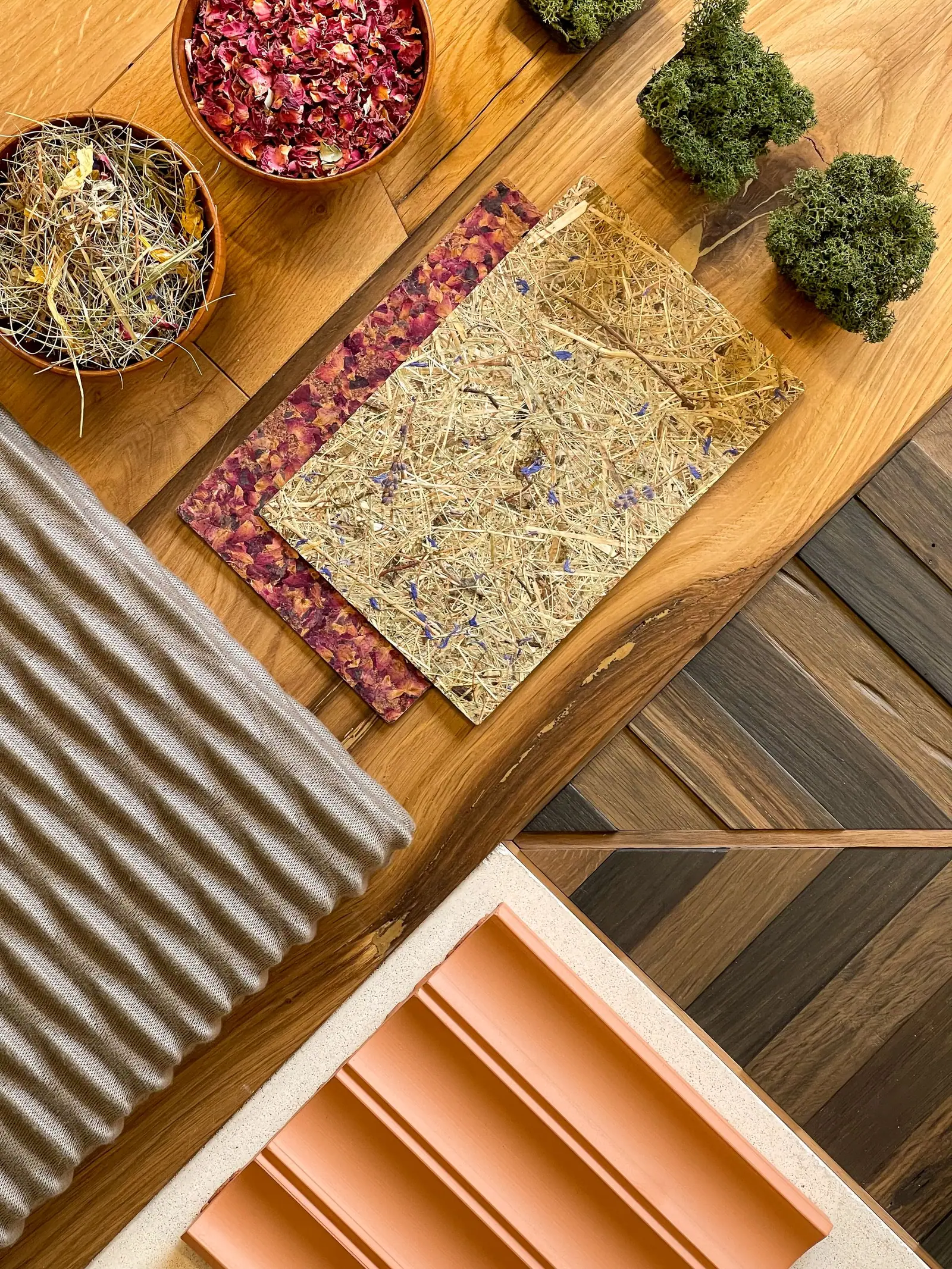
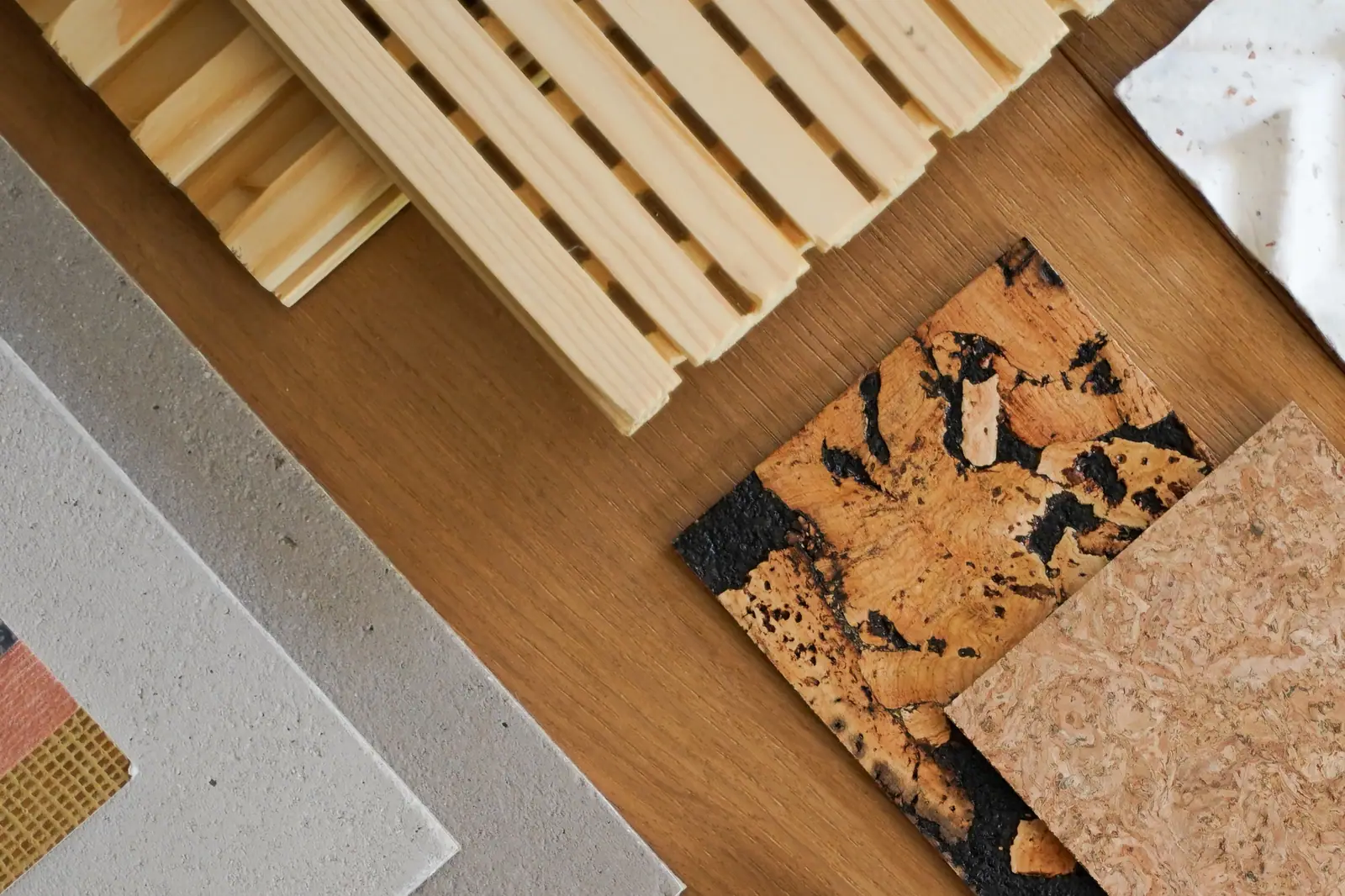
Matter Atelier has selected five broad groups of materials to bring into domestic spaces, for their many advantages in creating spaces for wellbeing: clay plasters, gypsum paints, wood, natural fibres and cork.
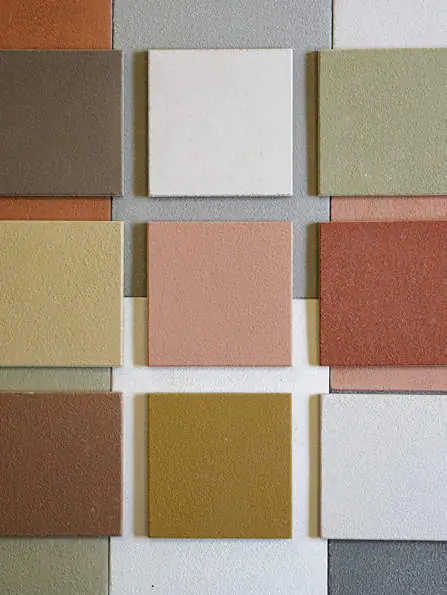
Clay plasters and boards
According to the document, clay plasters are made of natural clay without additives, with only natural mineral pigments added to achieve the colour range. Thanks to this simple composition, they are considered a VOC-free material. Clay is highly valued in natural building and in dry construction systems: boards made of clay, mineral aggregates and plant fibres can be used to build partitions as an alternative to plasterboard. Its breathability also allows it to regulate humidity in indoor spaces.
Gypsum paints
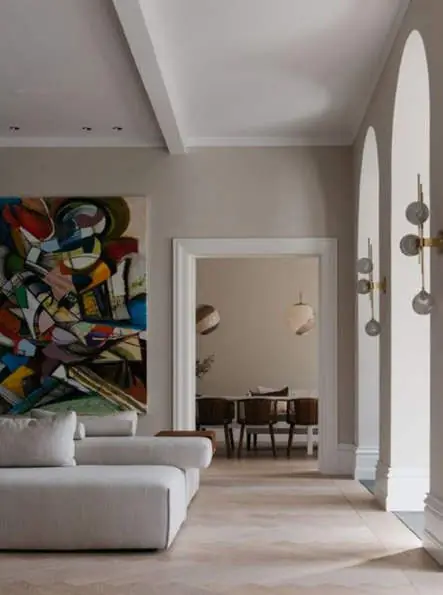
Where only a surface finish is needed, the authors suggest considering gypsum paints. Made from dolomite stone powder, according to the document they contain no harmful components in their pigments, binders or solvents, something hard to find in acrylic emulsion paints. Their extraction and production process is considered sustainable, so they are presented as an environmentally friendly alternative.
Thermally modified wood
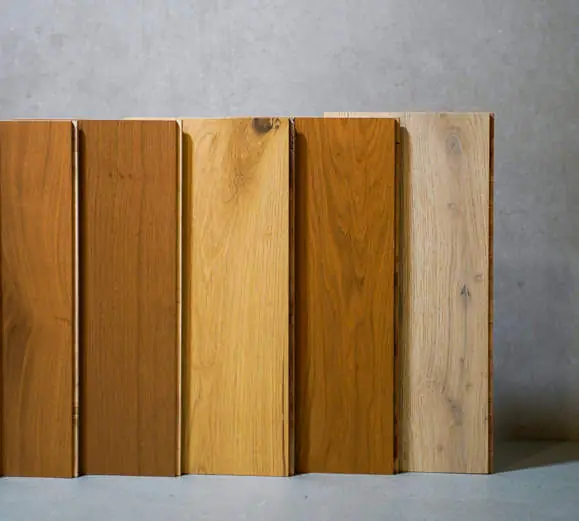
In the vast majority of projects, wood is a good ally: it brings warmth and thermal and acoustic comfort, can be tailored to the design and accepts countless finishes. The authors highlight thermally modified wood, which performs better in construction without the need for chemicals.
In the ThermoWood process, the wood is heated in a chamber to between 160 and 230 °C, protected by steam. The treatment lowers its equilibrium moisture content and improves its dimensional stability and resistance to biological decay, so it can be used both indoors and outdoors.
Natural fibres
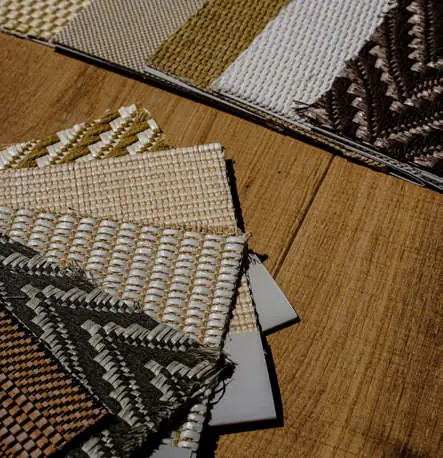
Other highly versatile materials of natural origin are natural fibres such as rattan, bamboo, wicker, raffia, cellulose and seaweed. These are raw materials taken directly from nature in their primary form, from which weaves are made for interior wall coverings, decorative elements or upholstery. Their natural origin makes them organic and recyclable materials.
Cork
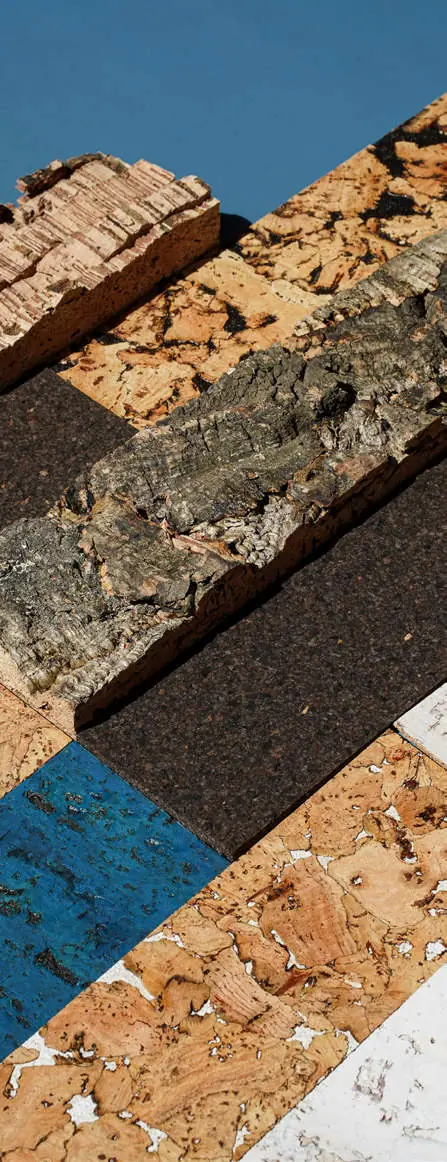
Cork is a natural material that comes from the bark of the cork oak. It is made up of airtight, impermeable air cells that make it light, waterproof and thermally and acoustically insulating, qualities that are highly valued for indoor comfort. It is available as floor and wall tiles, 3D wall coverings, insulation products and even furniture and decorative objects.
Its carbon balance also counts in its favour. The industry uses cork dust as biomass to produce energy: Amorim, for example, says it meets more than 60% of its energy needs this way. And, as the researcher Luís Gil explains, cork products are long-lasting and retain, throughout their service life, the carbon fixed by the cork oak.
Health as an indicator of sustainable architecture
In conclusion, the authors highlight the growing concern about how indoor spaces affect the health of the people who use them. We spend most of our time in semi-natural or wholly artificial spaces, which make up a habitat that is modified and, in evolutionary terms, alien to the body.
Architecture is a complex, multifactorial influence on the human body. Some describe it as people’s third skin – the idea goes back to the five skins of Friedensreich Hundertwasser, for whom the house is the third, after the epidermis and clothing – and this is where concern for the quality of the places we live in comes from.
In the European Union, health and wellbeing are already among the core sustainability indicators for buildings: the European Commission’s Level(s) framework devotes one of its six macro-objectives to healthy and comfortable spaces, with indicators for indoor air quality, thermal comfort, lighting and acoustics. It is therefore a key factor in design.
- Envelope: designing and building it well is the first barrier against external agents.
- Finishes: prioritise natural, durable materials over solutions that respond only to appearance or cost.
- Emissions: reduce sources of indoor pollutants, such as VOCs from paints and varnishes, as far as possible.
- Selection: analyse each material from its origin to its effect on the space and on people.
Frequently asked questions
- What are VOCs and why do they matter in a home?
- Volatile organic compounds are gases emitted by certain solids and liquids, such as paints, varnishes, waxes and cleaning products. According to the EPA, concentrations of many VOCs are consistently higher indoors than outdoors, which is why the choice of finishes has such an effect on indoor air quality.
- Can clay boards replace plasterboard?
- In drywall partitions, yes: boards made of clay, mineral aggregates and plant fibres are fixed to a timber or metal frame for partitions, wall linings and interior wall finishes, and provide thermal mass and humidity regulation.
- How does thermally modified wood differ from untreated wood?
- In the process: it is heated to between 160 and 230 °C with steam and without chemicals. The treatment lowers its equilibrium moisture content and improves its dimensional stability and resistance to biological decay, so it can be used indoors and outdoors.
- What is Level(s)?
- It is the European Commission’s framework for assessing and reporting on the sustainability performance of buildings. One of its six macro-objectives is healthy and comfortable spaces, with indicators for indoor air quality, thermal comfort, lighting and acoustics.
The authors
Júlia Anglí and Lucía Sanz are part of the Matter Atelier team as Project Consultants – Residential Specialists.
- Júlia Anglí: architect from ETSAB, with a master’s in Architecture from University College Dublin. She has worked on retail interior design and residential architecture.
- Lucía Sanz: architect from ETSAB (UPC), with an Erasmus year at the Glasgow School of Art and a master’s in integrated construction management and interior design from La Salle Barcelona. She has worked in urban planning and construction management.
Full document
Designing domestic spaces carries a great responsibility towards the people who live in them and towards the environment. Every effort in this direction adds up and benefits us all. At Matter Atelier we want to support and accompany projects that improve people’s quality of life. Every effort counts.
The full document contains the complete text by Júlia Anglí and Lucía Sanz, with images of each material.
If you are designing a home, book your visit to Matter to see our Materioteca and talk to our team about the materials for your project.
Book a visit