Material trends for 2026: rethinking matter through technique and use
CIMENTO, Durat, HempWood, Muratto and Formma: five materials that turn waste, plant fibres, cork and lime into technical surfaces.
Products10 min read
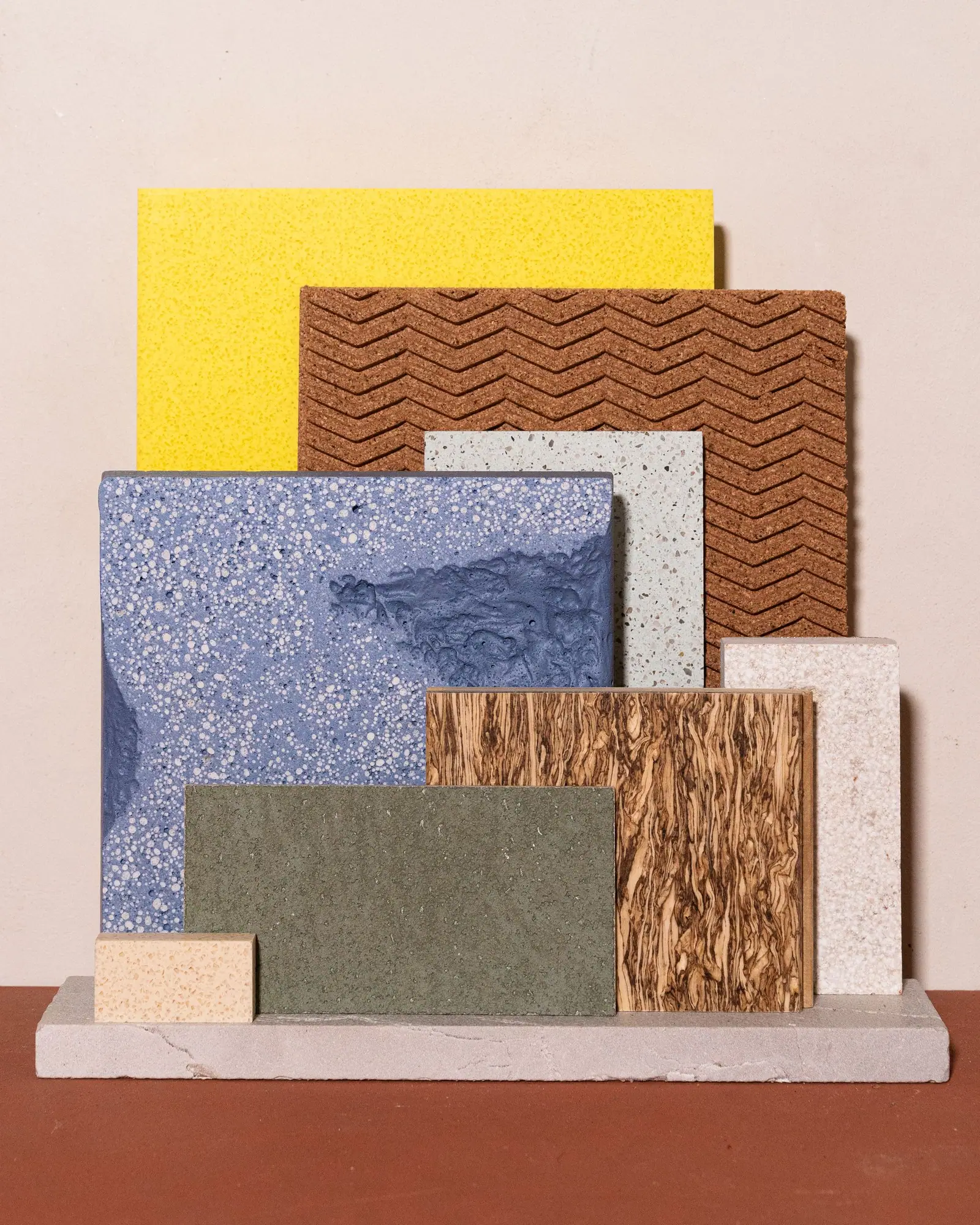
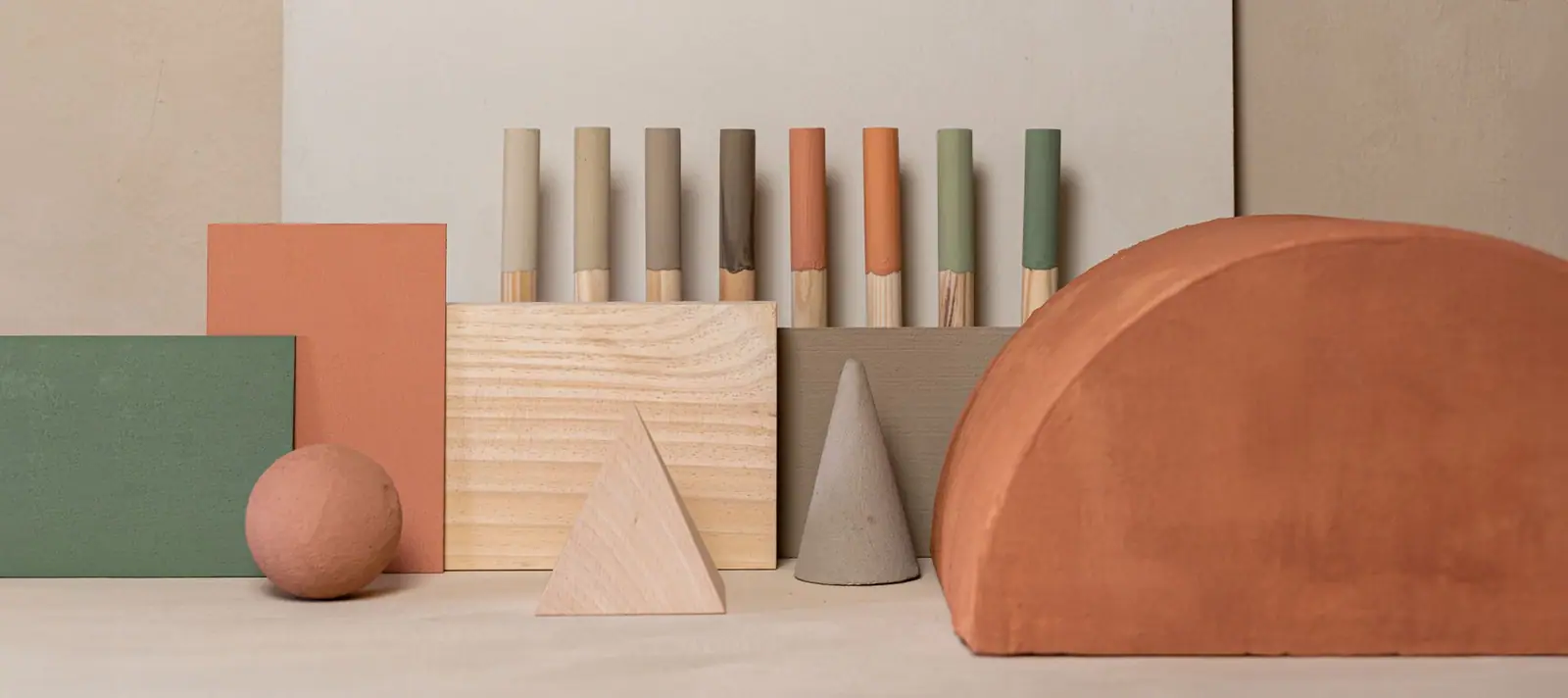
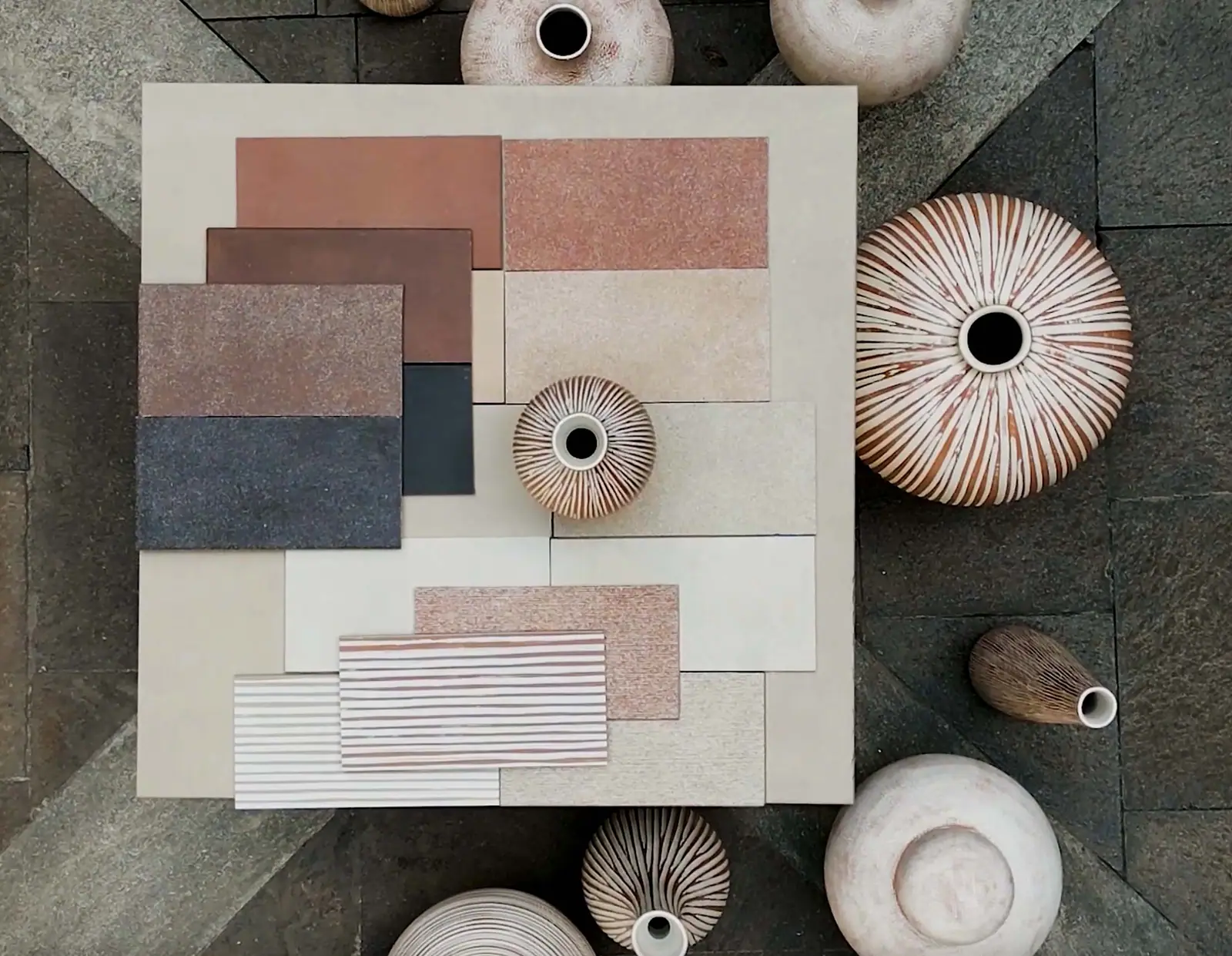
In 2026, the evolution of finishes puts the focus on matter as a system: on how it is made, how it ages and how it contributes to spatial quality. Materials are no longer a purely aesthetic resource but a technical, sensory and responsible decision, in which texture, finish and origin define their value in the project. These materials do not seek to stand out through excess, but to integrate coherently into architecture and interior design projects that understand the finish as an active part of the spatial experience.
From this perspective, we review five proposals that approach the contemporary finish in different ways: CIMENTO's lightweight cementitious compound, Durat's recycled solid surface, HempWood's engineered hemp wood, Muratto's cork and Formma's lime and limestone. For each one we explain what it is made of, which systems it offers, where it is used and what to bear in mind when specifying it.
Five criteria shaping the 2026 material trends
More than a style, what these materials share is a way of understanding matter. These are the criteria worth keeping in mind when choosing finishes:
- Waste as raw material: recycled content is no longer an add-on but part of the composition, like CIMENTO's quarry aggregates or Durat's recycled plastic.
- Lightness and systems: thin slabs, panels and ventilated façades that reduce loads and are installed dry or with concealed fixings.
- Continuous, repairable surfaces: materials that can be sanded, repaired or fed back into production, extending their service life.
- Renewable origin: plant fibres and bark that regenerate, such as hemp or cork.
- Mineral, breathable matter: lime coatings and natural stone that contribute to the hygrothermal balance of the space.
CIMENTO: lightweight technical cements and continuous systems
A cementitious compound that keeps the presence of exposed concrete at a fraction of its weight.
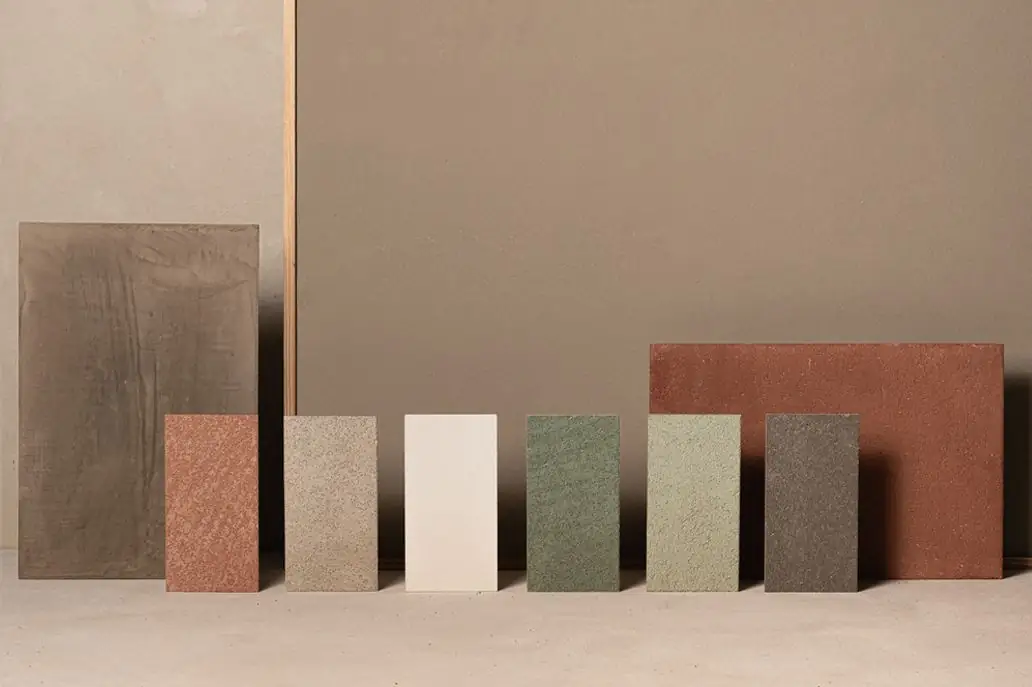
CIMENTO has developed a system of architectural and design products based on an advanced cementitious compound, formulated from mineral aggregates and binders. The result is a lightweight material with good dimensional stability, mechanical strength and a high capacity for shaping, applied to different substrates to create flat, curved and relief surfaces. The brand was born in Italy in 2010 with its first product, a wood panel clad in cement mortar, and today carries out its research and production at three plants in the province of Venice.
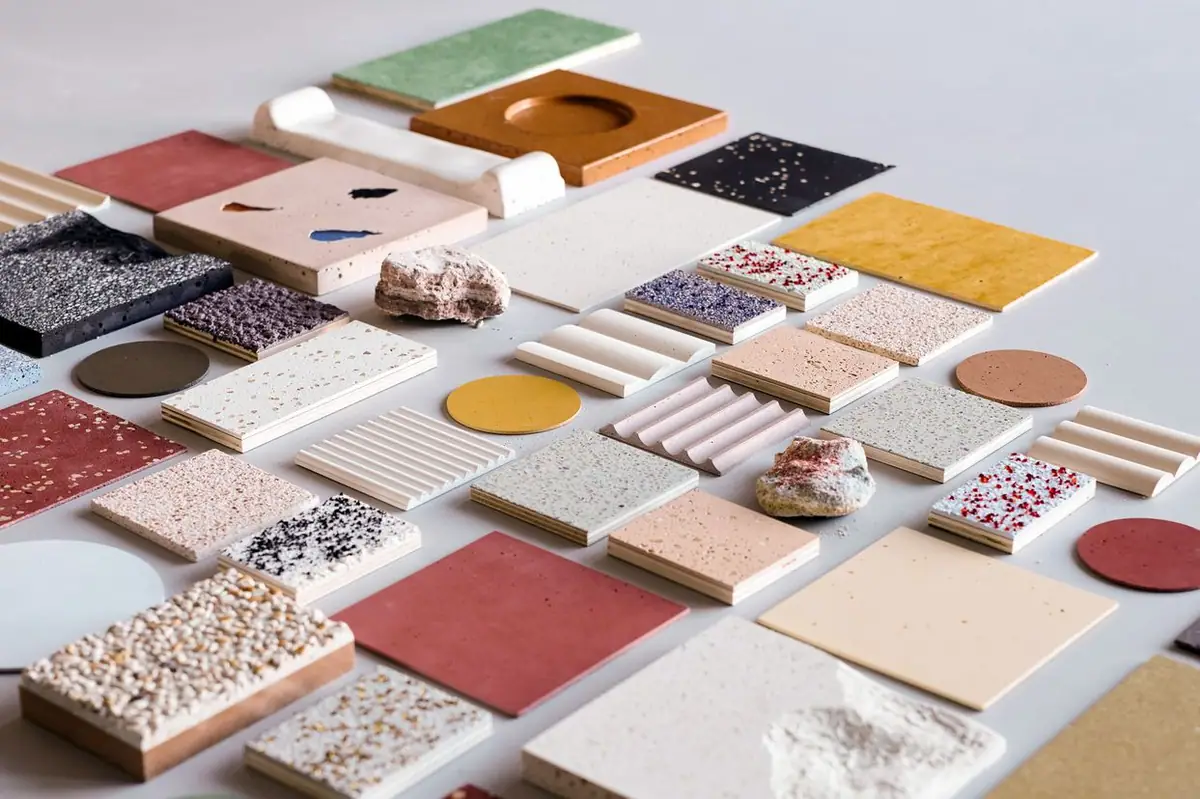
Production process
According to the manufacturer, the formulation incorporates over 90 % mineral aggregates sourced from the production waste of large quarries. The brand also reports ISO 14001 and ISO 14064 certification and carbon neutrality since 2022. From this material base, four main product types are developed:
- Tiles and slabs: Flooring & Cladding (Corte, Le Veneziane), for floors and walls, with or without grout, and Formelle, modular pieces for interior and exterior vertical surfaces.
- Flexible coverings: Will, 3 mm slabs for walls, ceilings, furniture and curved surfaces.
- Panels for interior cladding: Panels, with a 100 % recycled wood core, for partitions and wall linings.
- Panels for ventilated façades: Rialto, on a fibre cement substrate with concealed fixing.
Rialto complies with the UNI EN 12467 product standard and achieves an A2-s1,d0 reaction to fire under EN 13501-1; it is fixed to an aluminium substructure that allows ventilated cavities from 70 to 225 mm. Will is presented as a non-combustible cladding. The Rilievi collection completes the range with fluted panels up to 3500 mm high, for cladding walls without intermediate joints.
In tiles and slabs, the material has a strongly volumetric character, with controlled variations in texture and composition depending on the finish. Adjusting the proportion and type of aggregate modulates both the technical behaviour and the material expression of the surface. An example of its scale: bespoke Formelle are the protagonists of the Bottega Veneta stores, a project the brand puts at 34 stores worldwide.
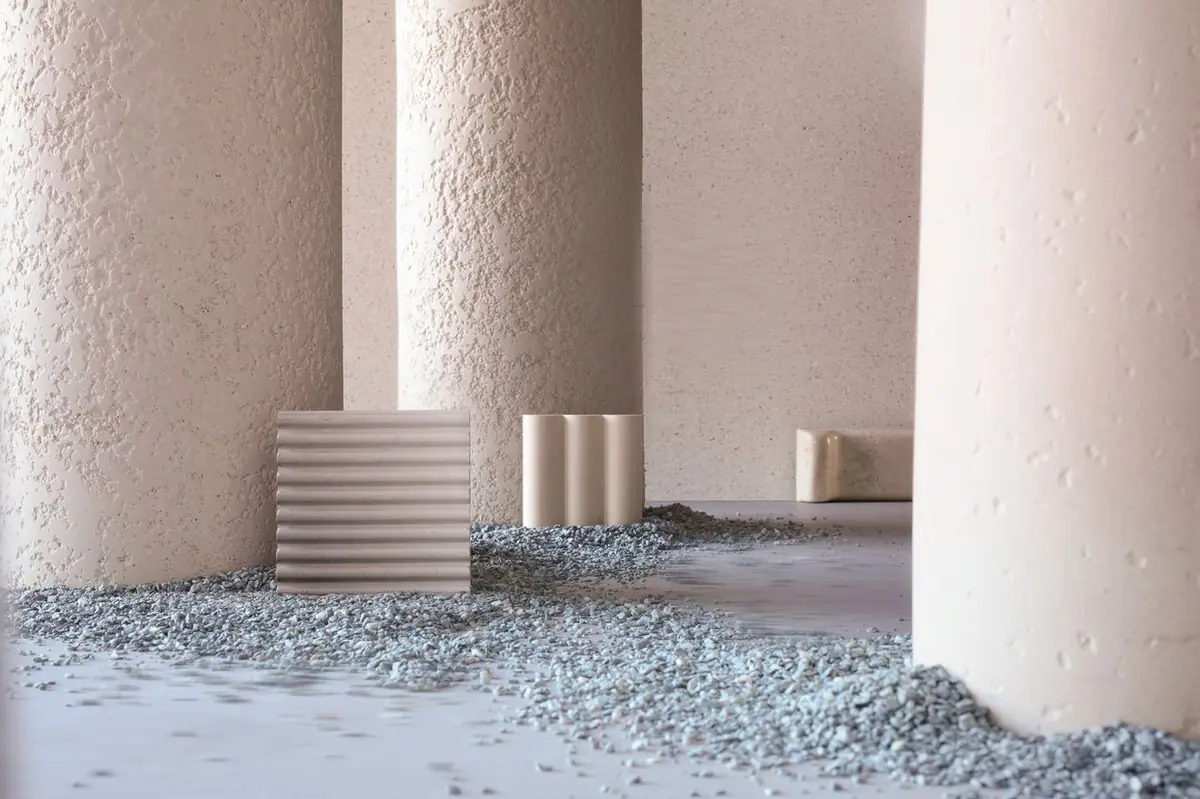
Durat: solid materials with integrated waste
A solid surface that incorporates recycled plastic and goes back into the loop at the end of its life.
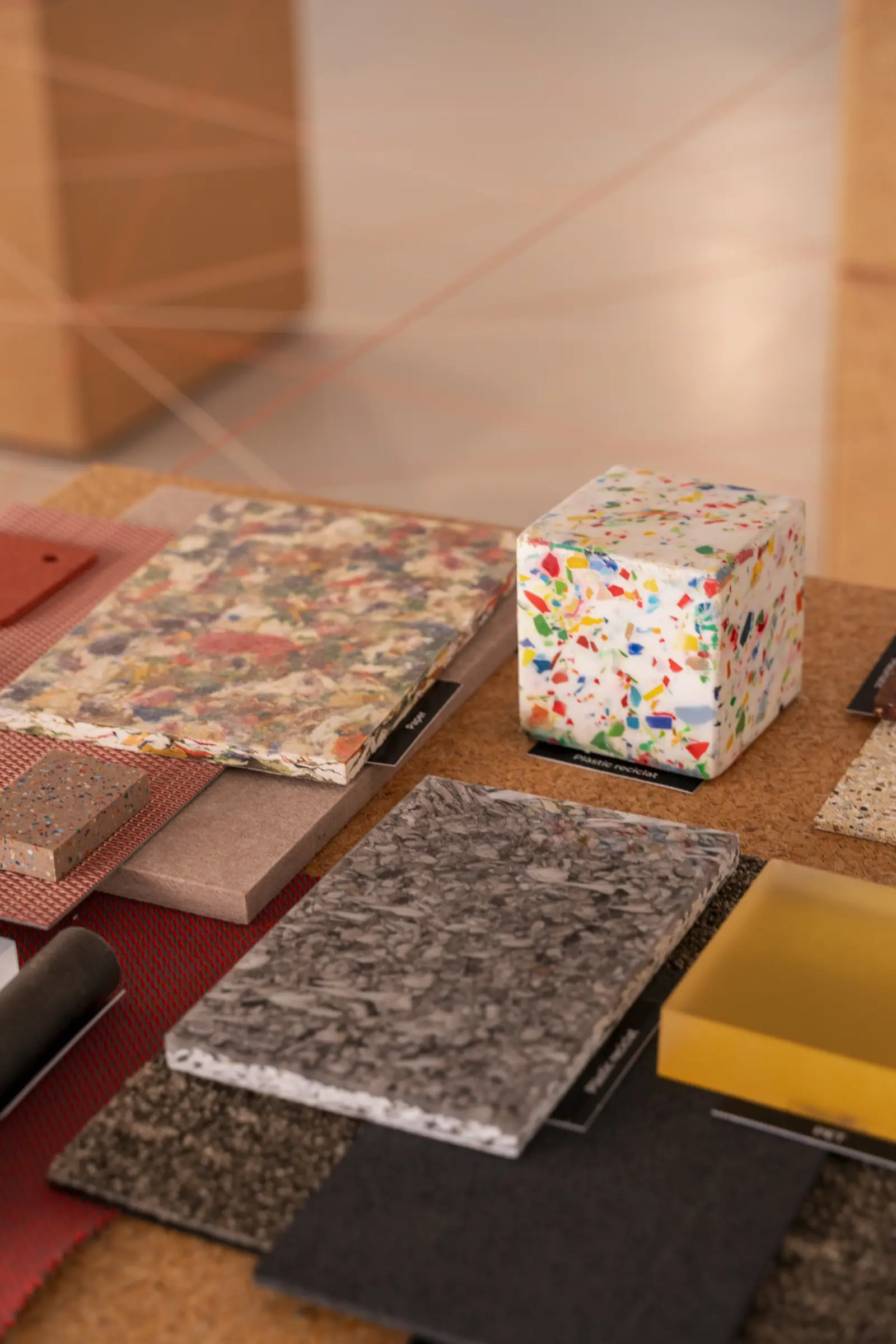
Integrating waste as part of the material is one of the most established lines among the 2026 material trends. In solid materials, waste is no longer an added selling point but becomes a constituent, visible and stable matter. Durat, founded in Finland in 1990, makes a polyester-based solid surface containing at least 30 % recycled industrial plastic: the waste is granulated and gives the material its characteristic speckles. Its Durat Plus line, which combines recycled PET resin and recycled solid surface, contains around 55 % recycled material.
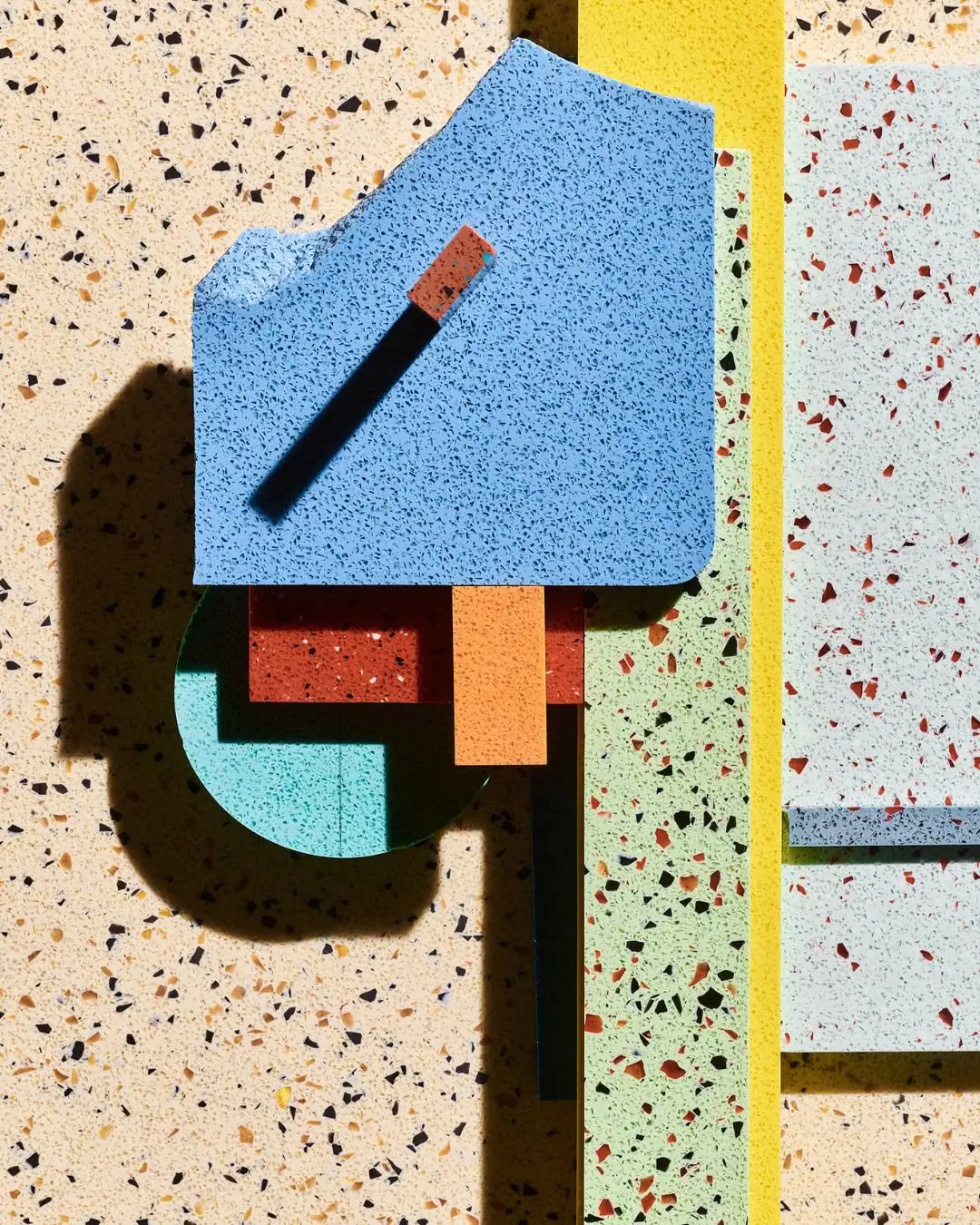
Custom colour and hygienic surfaces
Durat is cast into sheets (the standard sheet measures 2900 × 800 × 12 mm and thickness can range from 9 to 18 mm) or moulded into pieces such as washbasins, sinks and bathtubs, allowing seamless worktops with integrated basins. Its colour chart exceeds 300 colours and includes almost the entire RAL Classic chart; small or large terrazzo-style speckles can be added to each base colour, and the brand offers custom colours.
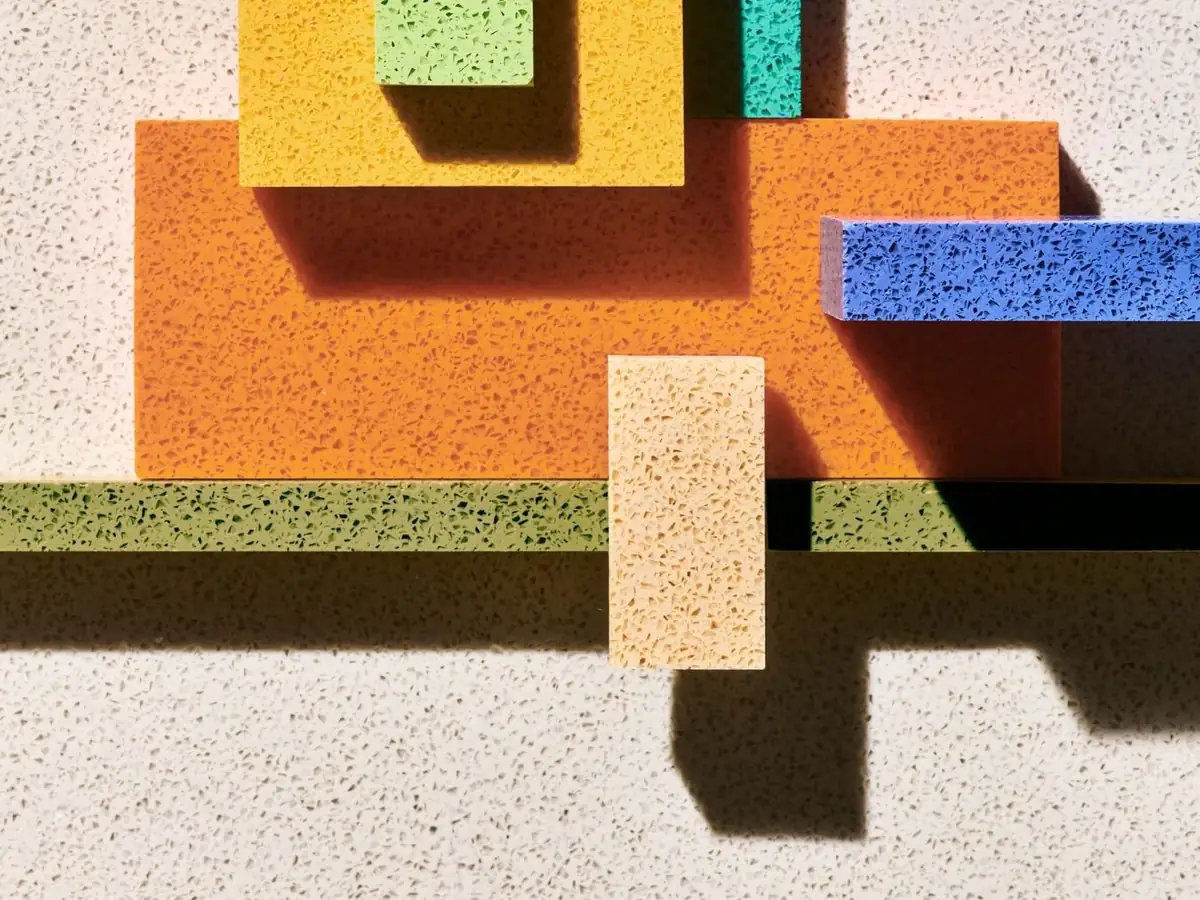
Its dense, continuous surface is hygienic and easy to clean, a quality much valued in high-use spaces such as kitchens, bathrooms, hospitality and public areas. The material can be renewed with light sanding and repaired with its own adhesive, and it holds the M1 emission classification. The manufacturer advises against dark colours in high-traffic areas, as they show wear sooner. In terms of application, it is commonly used for:
- Worktops and horizontal surfaces: kitchens, bathrooms and counters.
- Moulded washbasins, sinks and bathtubs that can be integrated into the worktop.
- Built-in furniture and bespoke elements for hospitality, retail and public spaces.
A closed material loop
Durat is 100 % recyclable and has adopted a circular approach: it buys back offcuts from fabrication workshops and end-of-life furniture, which is refurbished and resold or crushed as raw material for new sheets. In 2025 it bought back 2,720 kg of offcuts, enough according to the brand for around 180 new sheets. It has an Environmental Product Declaration (EPD), which provides transparency on its environmental performance across the life cycle.
HempWood: engineered wood from plant fibres
Pressed hemp fibre for flooring and panels with predictable behaviour.
Engineered wood formulated from plant fibres introduces a contemporary reading of the material, in which stability and repeatability matter as much as appearance. Compared with traditional solid wood, these solutions allow greater dimensional control and more predictable behaviour indoors. HempWood, made in Kentucky (United States), combines hemp stalks with a soy-based plant adhesive and presses them into blocks, from which it obtains veneers, boards and panels.
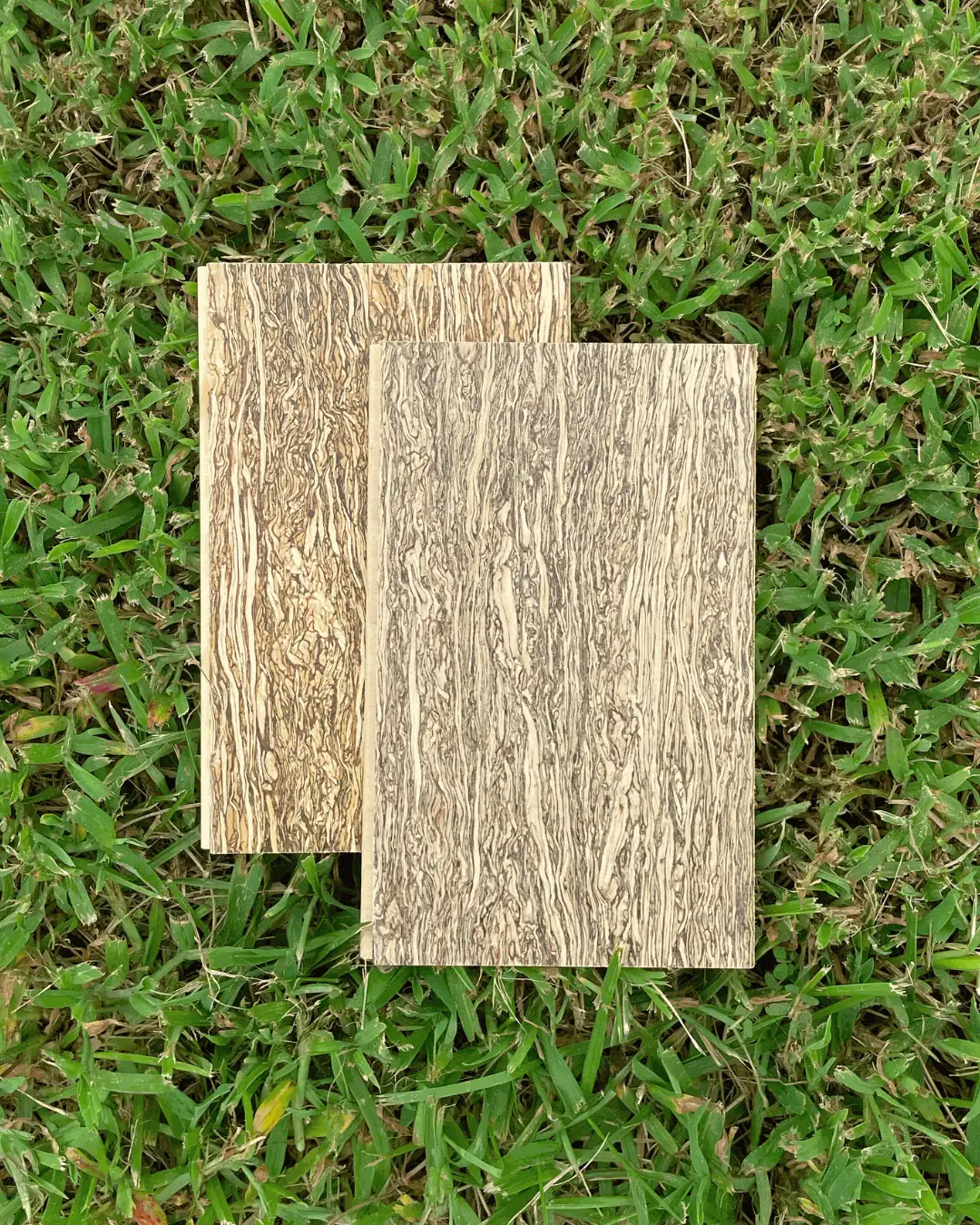
Its flooring is an engineered board: a HempWood layer over a base board, a multi-layer construction that contributes to dimensional stability and makes it easier to use where technical control of the material is decisive. On its website, the brand offers it 16 mm thick, in boards 11.5 or 13 cm wide and 183 cm long, prefinished or for finishing on site. According to the manufacturer, its hardness is around 2,200 Janka, higher than oak. The brand also makes panels for cladding, furniture, table tops and interior joinery. Its typical applications include:
- Interior flooring, including hospitality, retail and offices.
- Wall cladding and decorative panelling.
- Furniture, table tops and interior joinery.
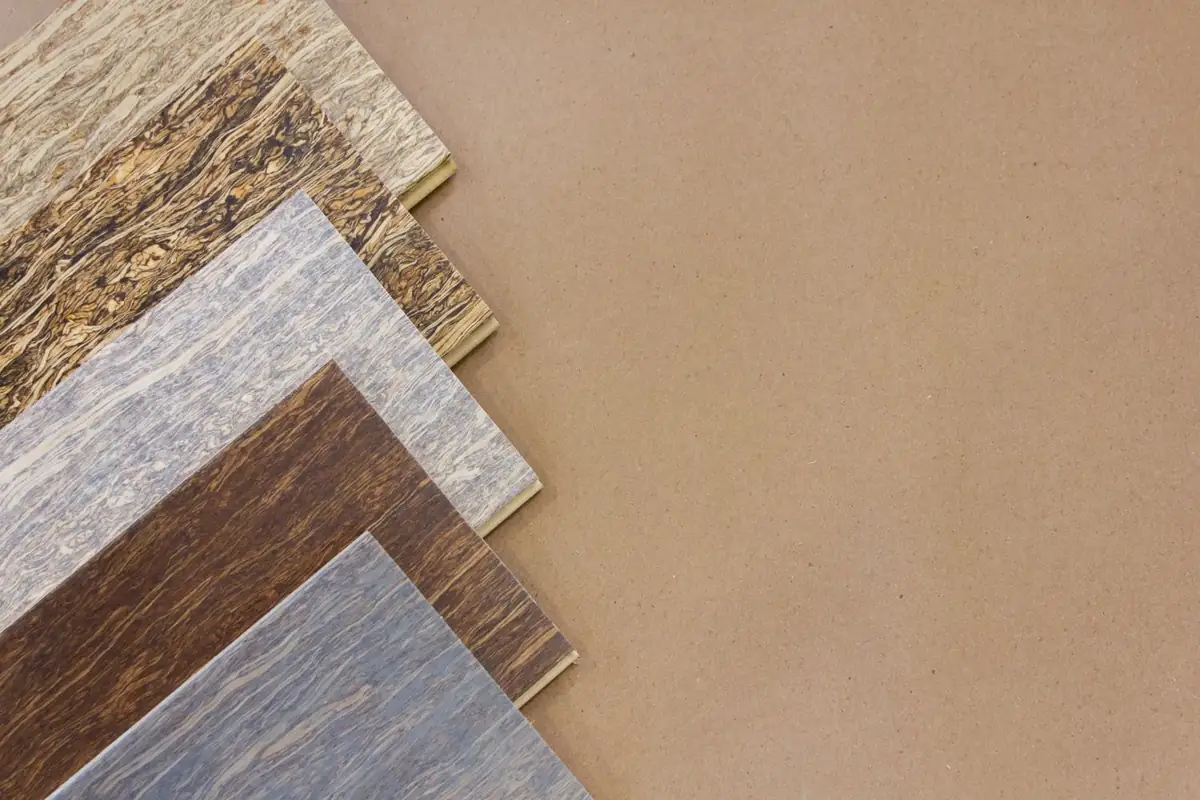
The range of shades varies by market: the brand's website shows Natural, Oak, Ice, Taupe and Bourbon, and its UK distributor also Granite. It is a durable finish of renewable origin that brings comfort and character to the interior; formats, thicknesses and available shades should be confirmed when specifying it.
Muratto: natural cork as an environmental comfort system
Cork panels that work on acoustics, temperature and indoor air quality.
Muratto is a Portuguese brand founded in 2013 that develops natural cork coverings for walls and ceilings. The cork comes from sustainably managed cork oak forests in Portugal: the bark is harvested every nine years without harming the tree, which keeps growing. The brand presents it as a 100 % natural, renewable and recyclable material. In addition to their aesthetic contribution, these systems offer thermal and acoustic insulation, antimicrobial and antistatic properties and low emissions (VOC Class A under French regulations), reinforcing the idea of the material as an active element in the comfort of the space.
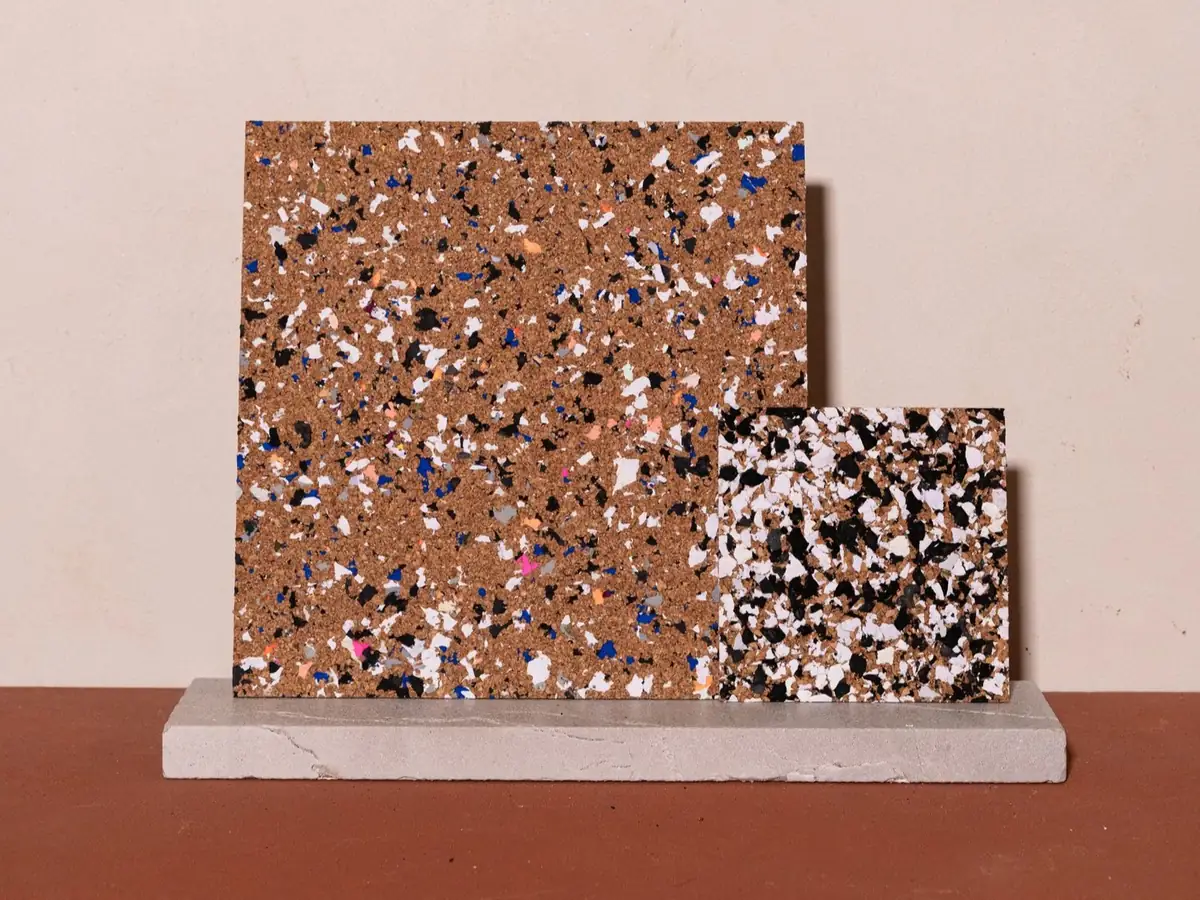
Muratto offers panels with different geometries, thicknesses and finishes (blocks, strips, bricks, bark and large-format panels) that adapt to walls and ceilings in both residential and contract projects. The possibility of working with modular pieces and custom solutions reinforces a reading of the material as a system, facilitating its integration into more complex spatial and acoustic strategies. They are installed with adhesive and, in some collections, with the Clip2Fix system, which needs no tools and allows pieces to be repositioned.
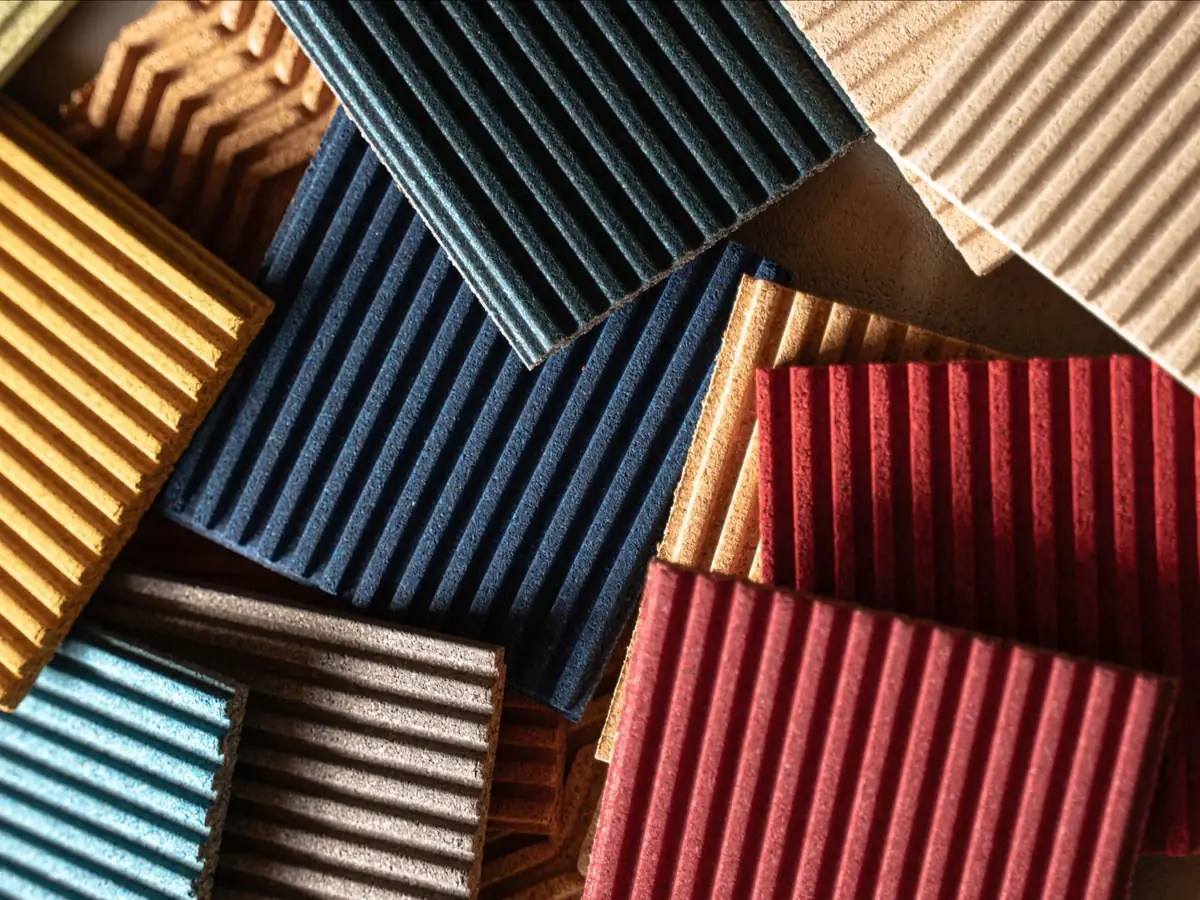
As for fire, most of its collections achieve a B-s1,d0 classification (EN 13823 test), with low smoke emission and no flaming droplets. Cork withstands ambient humidity well but should not be in direct contact with water: in kitchens and bathrooms, the brand recommends a water-based varnish suitable for cork. Before installation, the panels should be left to acclimatise for at least 72 hours. Their most common uses are:
- Interior wall cladding in homes, offices, hotels and shops.
- Acoustic ceilings and suspended ceilings.
- Acoustic treatment of rooms, studios and workspaces.
The cork finish is defined by its own texture and, in some cases, by three-dimensional geometries that reinforce its active role in the space.
Formma: lime, mineral coatings and limestone
Formma structures its offering around mineral materiality, with two complementary lines: Limecoat, continuous lime-based coatings, and Limestone, a specific selection of limestones. Two approaches that place the material at the core of the architectural project, from continuous application to the use of natural stone linked to place.
Limecoat: lime paints, stuccos and micro-mortars
Limecoat is a line of paints, stuccos and micro-mortars made with lime and natural minerals, which finish walls, ceilings and, in the case of the micro-mortar, floors, with continuous surfaces that work the material from its own composition. LimePaint is a matt, VOC-free air lime paint; LimeDolomite adds dolomitic aggregate for a structured texture; LimeStucco is a decorative stucco in two grain sizes (below 100 µm and around 700 µm); and LimeTech is a 2 mm lime micro-mortar for interior and exterior floors and walls, with a Bfl-s1 fire classification. Formma works only with mineral pigments, with a palette of around 25 colours and a custom option.
These lime-based solutions are characterised by their breathability, their contribution to hygrothermal stability and their durability, qualities inherent to mineral systems. They reflect a conscious revival of traditional materials reinterpreted through contemporary technique, in which the coating is no longer a decorative layer but an active part of the performance of the space. One note on use: LimePaint is not recommended in showers or on kitchen splashbacks exposed to water or heat.
Limestone: limestone as a building material
Complementing this, Limestone brings together a selection of limestones (LimeAurea, LimeIvory and LimePearl) with low porosity and a marble-like appearance. It is not an applied coating but natural stone, selected and used as a building material, reinforcing the relationship between territory and architecture. It comes in rectangular and square formats, in variable lengths and small decorative sizes, with up to ten finishes depending on the stone: sawn, honed, bush-hammered, sandblasted, flamed or aged, among others.
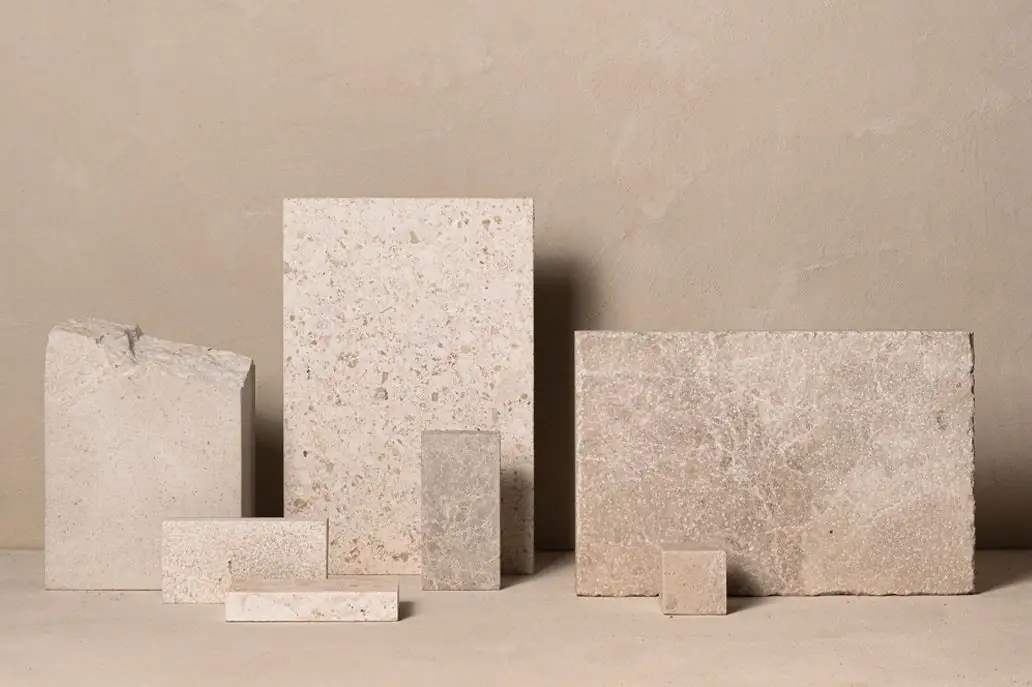
These finishes allow the stone to be adapted to different uses, including:
- Interior and exterior wall cladding.
- Interior flooring.
- Exterior flooring, depending on finish and context.
Overall, Formma offers a reading of materiality that combines continuous mineral application with the direct use of stone, in line with a timeless, durable architecture rooted in its context. An approach that positions the material not as a finish, but as a project criterion.
Materiality as a design tool
The material trends for 2026 point to a deeper understanding of matter: materials formulated through technique, designed to last, to optimise resources and to respond to the real demands of use, maintenance and comfort. More than an aesthetic question, materiality is consolidating its role as a design tool that enables more informed and coherent decisions in architecture and interior design.
Frequently asked questions
- Which of these materials can be used outdoors?
- According to the manufacturers, CIMENTO has exterior solutions such as the Rialto ventilated façade and Formelle pieces; Formma's lime paints, stuccos and micro-mortar are suitable for interiors and exteriors, and Limestone adapts to exterior use depending on the finish. HempWood and Muratto are designed for interiors.
- How much recycled material does Durat contain?
- Durat's standard solid surface contains at least 30 % recycled industrial plastic, and Durat Plus around 55 %. The material is 100 % recyclable and the brand buys back offcuts and end-of-life furniture to bring them back into the loop.
- Can cork be used in bathrooms or kitchens?
- Yes, with precautions. Muratto states that cork should not be in direct contact with water and recommends applying a water-based varnish suitable for cork in humid areas.
- How do they perform in fire?
- According to the manufacturers, CIMENTO's Rialto achieves A2-s1,d0 (EN 13501-1) and Will is non-combustible; most Muratto collections achieve B-s1,d0, and Formma's LimeTech micro-mortar Bfl-s1 as flooring. Ask for the documentation of the specific product when specifying.
Textures, speckles, grains and reliefs like these are best appreciated with samples in your hands rather than in a catalogue. At the Matter Materials Library you can see and compare materials with your technical team and work through the specification questions of your project with us.
Book your visit to Matter or write to us to talk about your project.
Book a visit