4D technology, ceramics that express textures
What Peronda's 4D technology is, how its Shaped Tech relief works and which formats, thicknesses and finishes its five porcelain collections offer.
Products6 min read
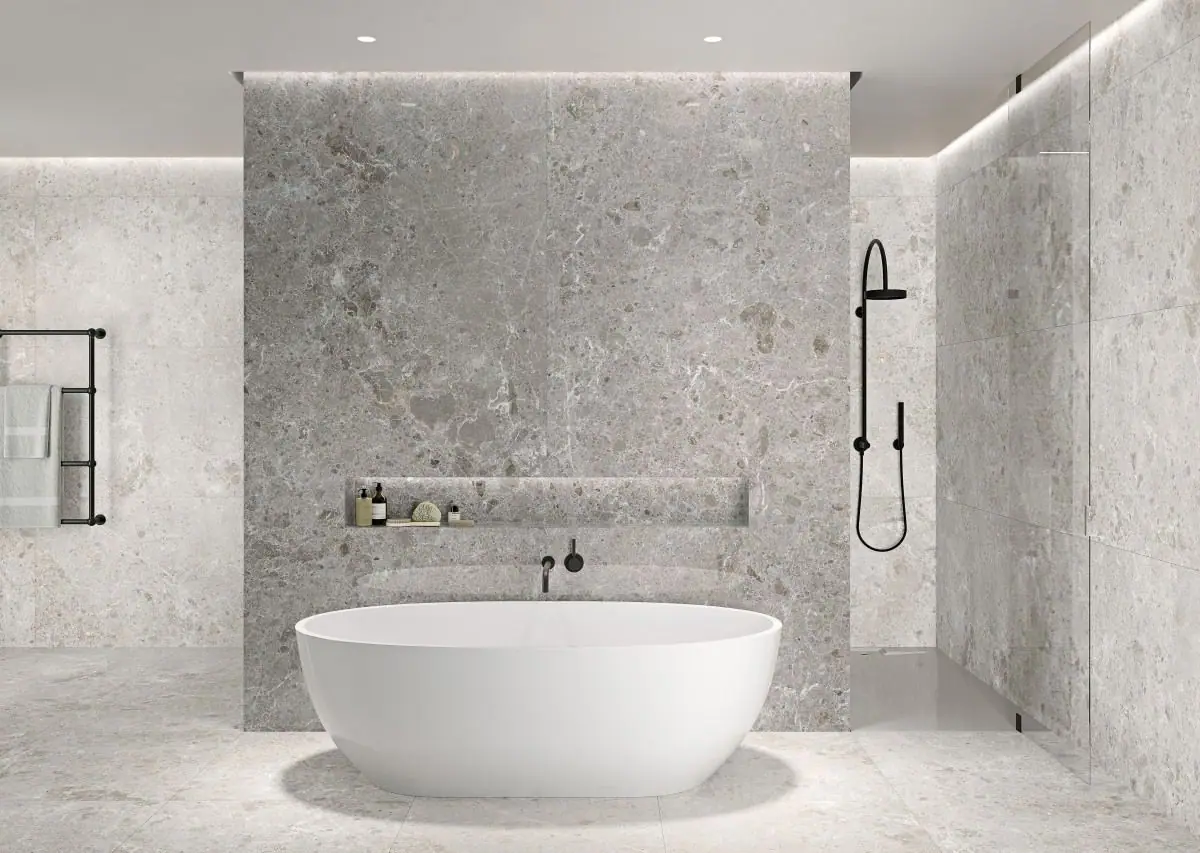
4D is a pioneering technology from Peronda, a Spanish ceramics manufacturer based in Onda (Castellón), born of its passion for detail. That commitment has allowed it to develop a digital print that comes to life and evokes sensations in the user. The aim is to reproduce the material nature of its sources of inspiration —stones, marbles and cements—, capturing every last detail in strength, luminosity and even relief.
In this article we explain what lies behind 4D technology and the Shaped Tech relief that accompanies it, review the formats, thicknesses and finishes of the five collections in which Peronda applied it when we published this article —Alley, Mystic, Alpine, Lucca and Downtown— and note what to bear in mind when specifying them.
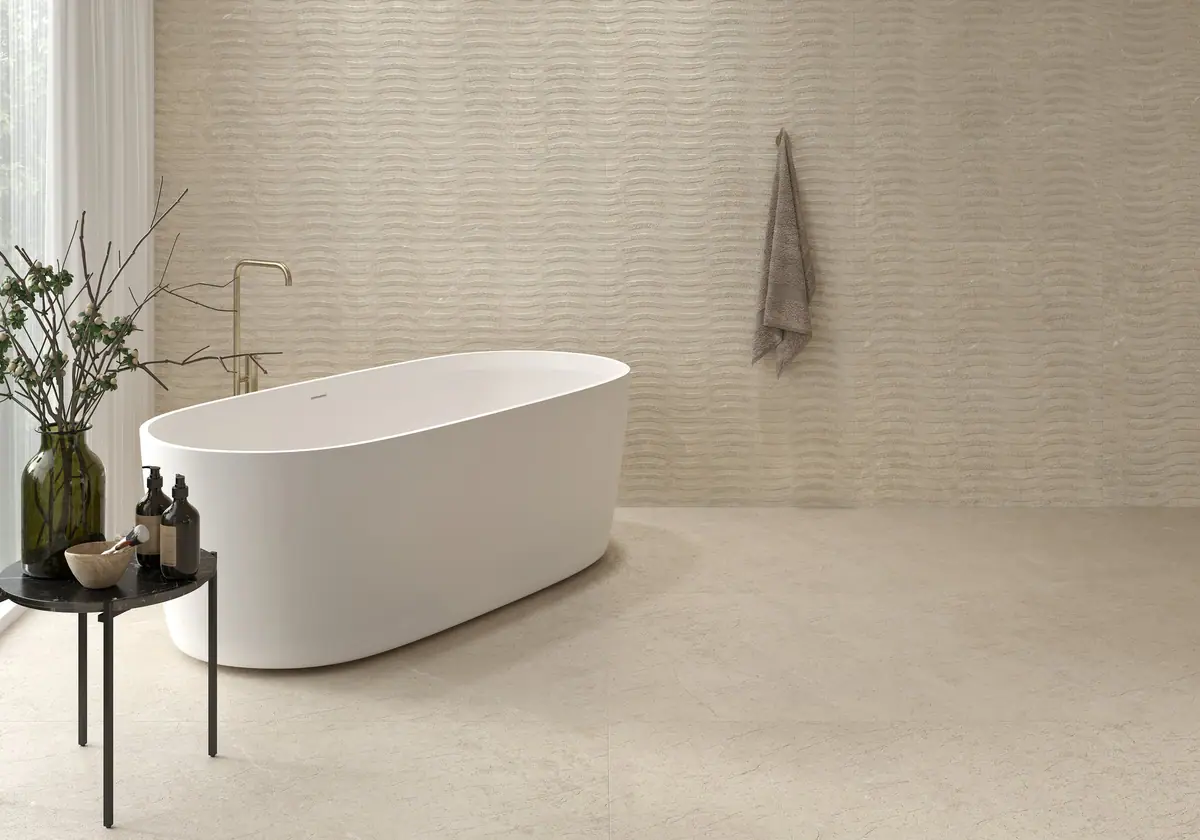
What Peronda's 4D technology is
Peronda presented 4DTech as a continuous flat-production technology with which it opened up new porcelain formats, “not only larger, but also in a greater variety of sizes”, according to the brand itself. The first collections developed with it were already made in 100×100 and 50×100 cm with an 8 mm thickness, and the manufacturer highlighted two further advantages: more material possibilities for design and greater definition in the details.
The pieces are porcelain stoneware and are reinterpreted somewhere between a love of the vintage and the versatility of the contemporary. All the 4D collections are porcelain; white body only appears in some wall tiles that Peronda offers as a complement, such as Downtown Wall. Their formats are rectified squares and rectangles with 100 cm sides, conceived as a continuous floor and wall solution, with special pieces and several finishes to suit many types of project.
Shaped Tech: the relief follows the graphics
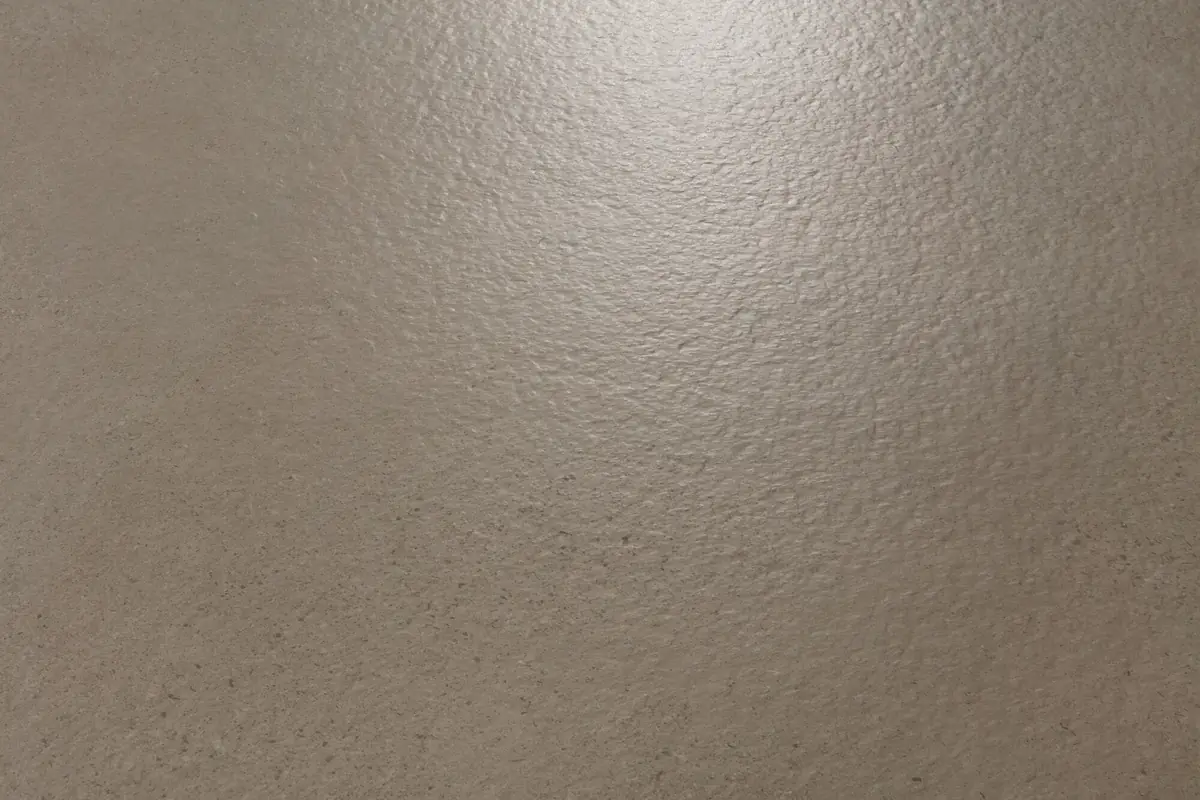
The tactile character of several of these collections comes from Shaped Tech. With this technology, Peronda creates the relief digitally and coordinates it with the graphic print, so that the vein, the pore or the wear are exactly where the relief is. The brand sums it up like this: what you see and what you touch are the same. The texture is not an optical effect: you can touch it.
According to Peronda, the Shaped finish was first launched by the brand with the Alpine 4D collection, and was then applied to Lucca 4D and Downtown 4D. Mystic 4D and Alley 4D work the material in a different way: Mystic with a double load of clays and textured inks that give it luminosity, and Alley with a matt finish that is silky to the touch and a bush-hammered version.
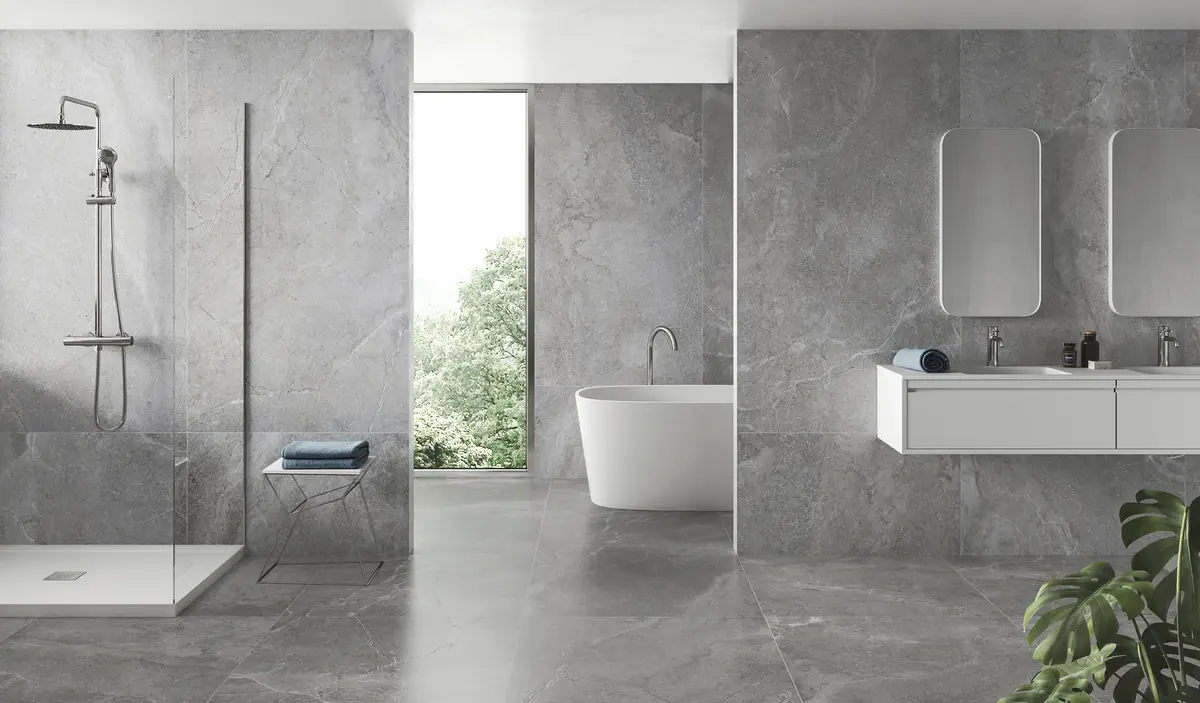
Formats, thicknesses and finishes of the five collections
The table brings together the data Peronda published for each collection at the time of this article. The 100×180 cm formats were then the brand's largest, and the 50×100 cm formats and special pieces made it possible to compose floors and walls with the same material.
Three stones: Alpine, Lucca and Mystic
Three stone materials with very different characters.
Alpine 4D
The graphics of Alpine 4D come from a stone from the Apuan Alps, with a compact, fine grain and marble-like veins that give it dynamism. Peronda presented it in four colours (White, Beige, Grey and Anthracite), in 100×100 and 100×180 cm and 8 mm thick, as well as a Decor version in 100×180 cm. It was the collection with which the brand debuted the Shaped finish: relief and graphics coincide on every piece to give a natural stone appearance.
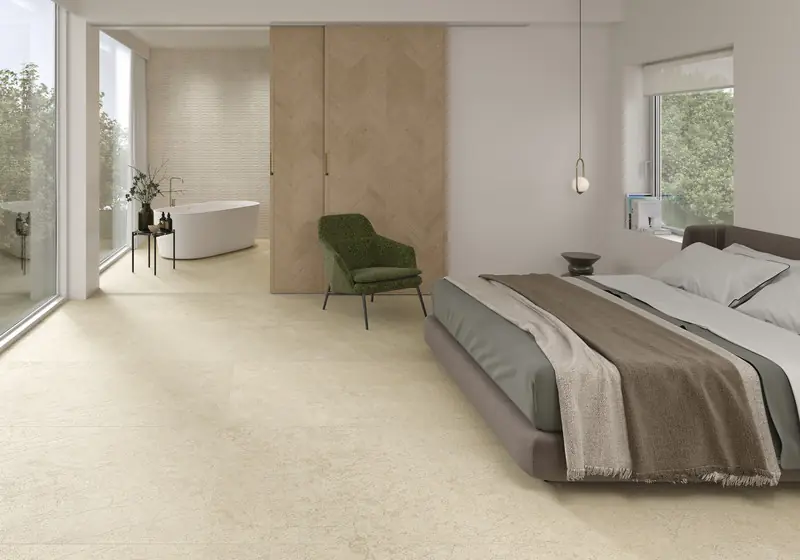
Lucca 4D
Lucca 4D is inspired by a stone from the Lucca region of Tuscany which, according to Peronda, is found only in the small village of Villa Collemandina and has historically been used to pave and decorate spaces of high aesthetic value because of its white veins. Shaped Tech synchronises the printing of the relief with the graphics to reproduce that stone precisely.
It was offered in four colours, in a 100×180 cm format and 8 mm thick. Peronda recommended it for contemporary spaces because of its generous size and, in particular, for refurbishing flats on upper floors, because, although it is an extra-large piece, it does not generate additional logistics costs.
Mystic 4D
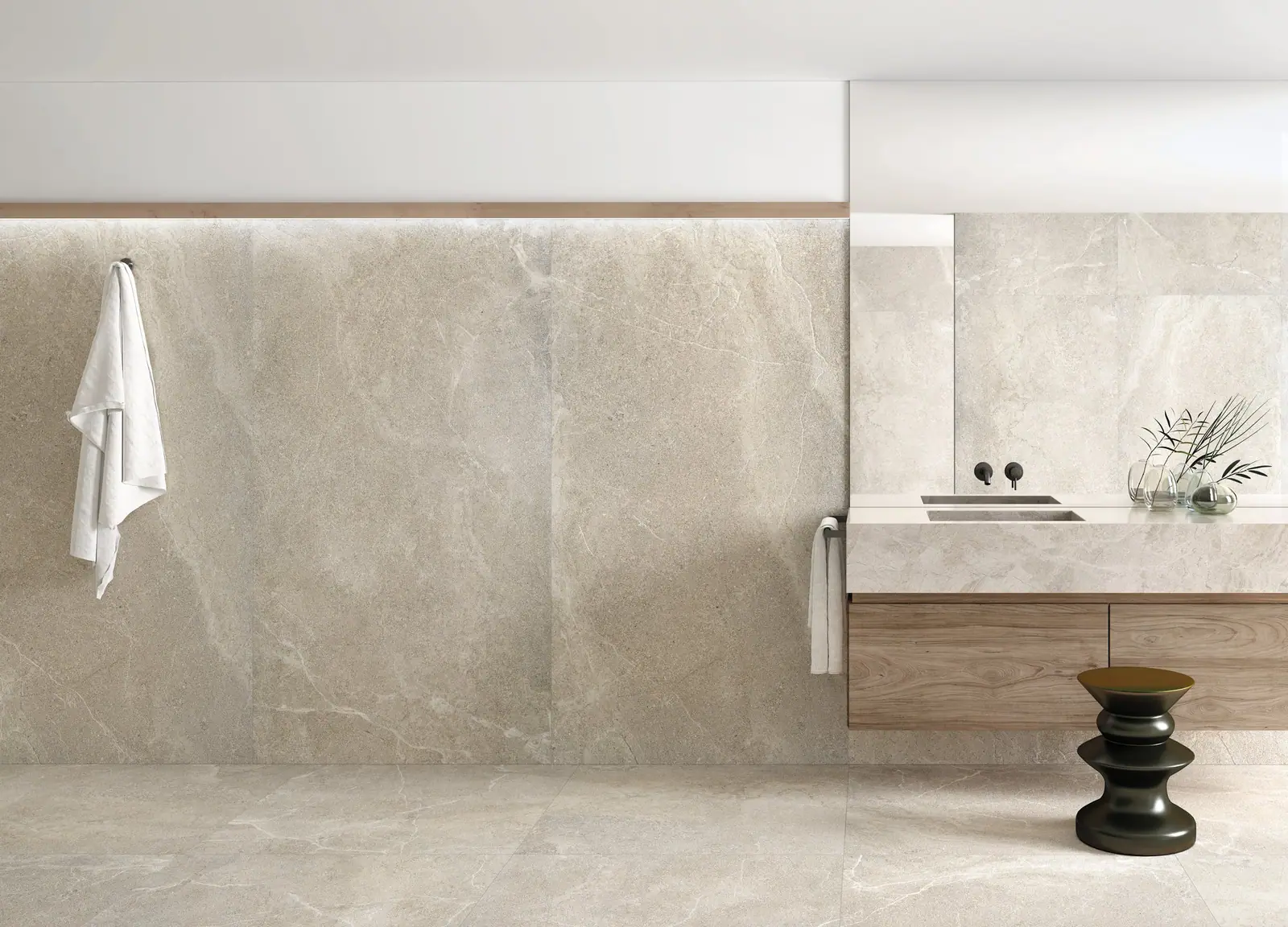
Mystic 4D reproduces a basaltic stone of volcanic origin, solid and compact in appearance, with veins that give the whole movement. It is made with Peronda's 4D technology, with a double load of clays and textured inks that give it luminosity, in 100×100 and 50×100 cm and four colours. With its three finishes —natural, bush-hammered and anti-slip bush-hammered—, Peronda presents it as a solution for all kinds of spaces and uses, and it is complemented by 15.5×100 and 24×100 cm listellos and Mosaic and Brick decors.
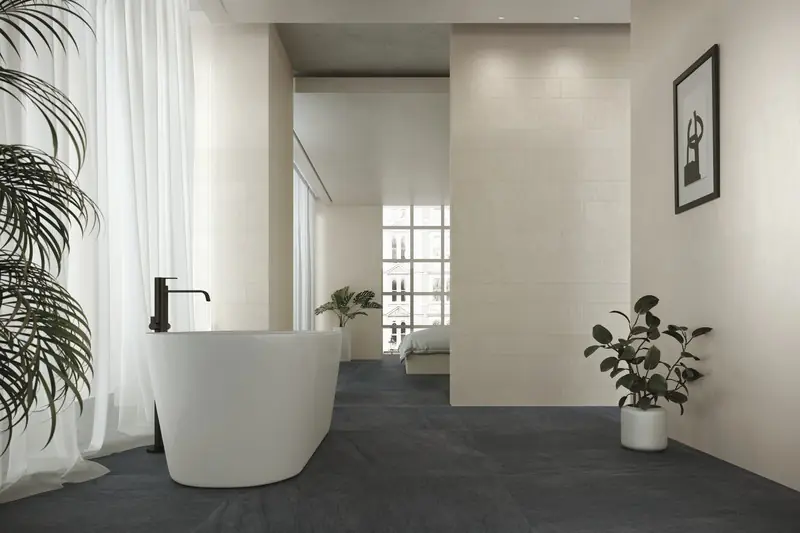
Two cements: Downtown and Alley
Cement, read from two different sensibilities.
Downtown 4D
In Downtown 4D, the irregularities typical of cement —salts, shade variations, chips and cracks— are defined by the Shaped relief, which marks the most worn areas with a bas-relief aligned with the graphics of each piece. Peronda adds the rullato effect, the marks left by the roller when these materials are applied.
The collection is 6 mm thick and was offered in 100×100 cm and in 100×180 cm, the brand's largest format at the time, in four colours. According to the manufacturer, it is suitable for new build and refurbishment because it simplifies logistics and installation. It is complemented by Downtown Wall, a coordinated white-body wall tile in 33×100 cm with reliefs.
Alley 4D
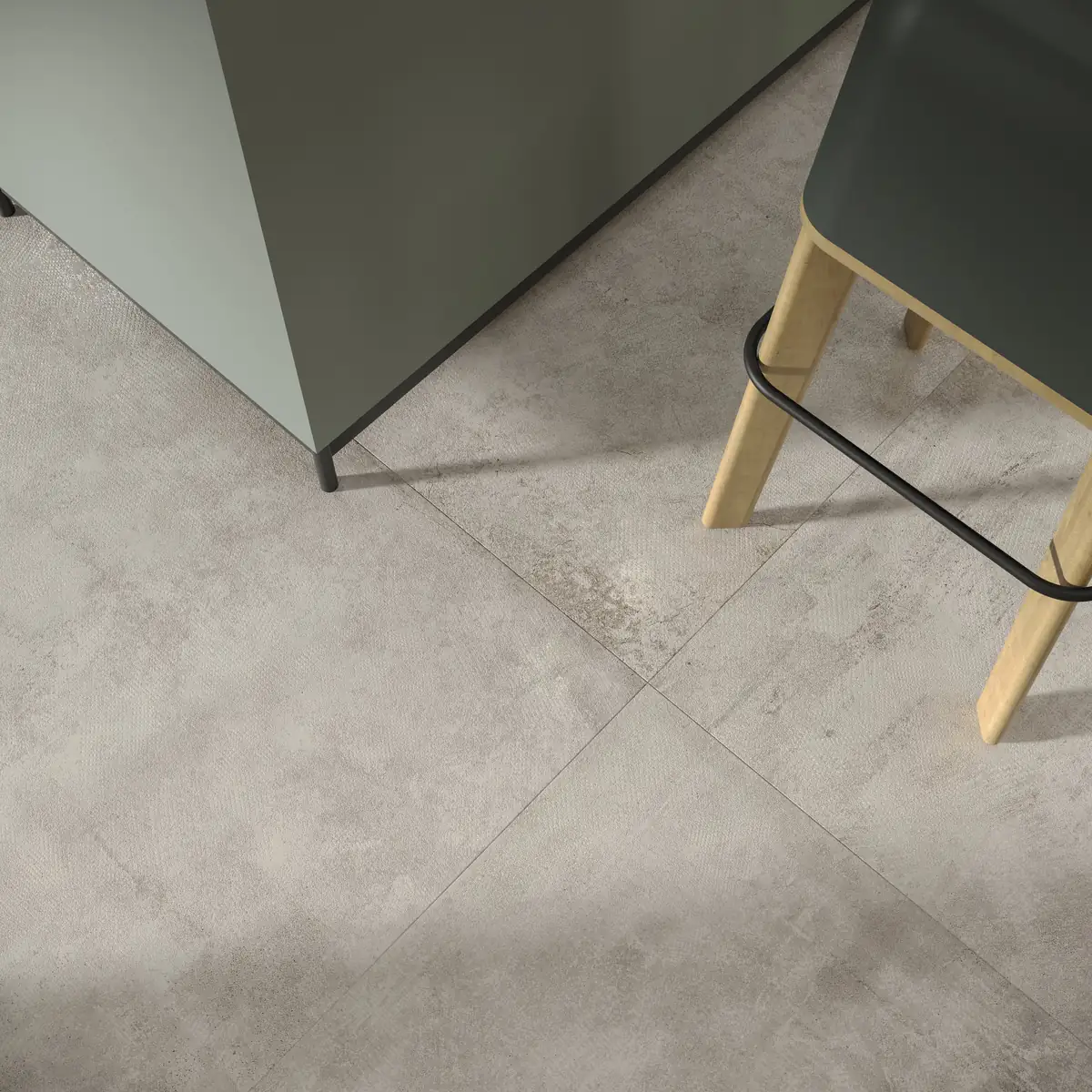
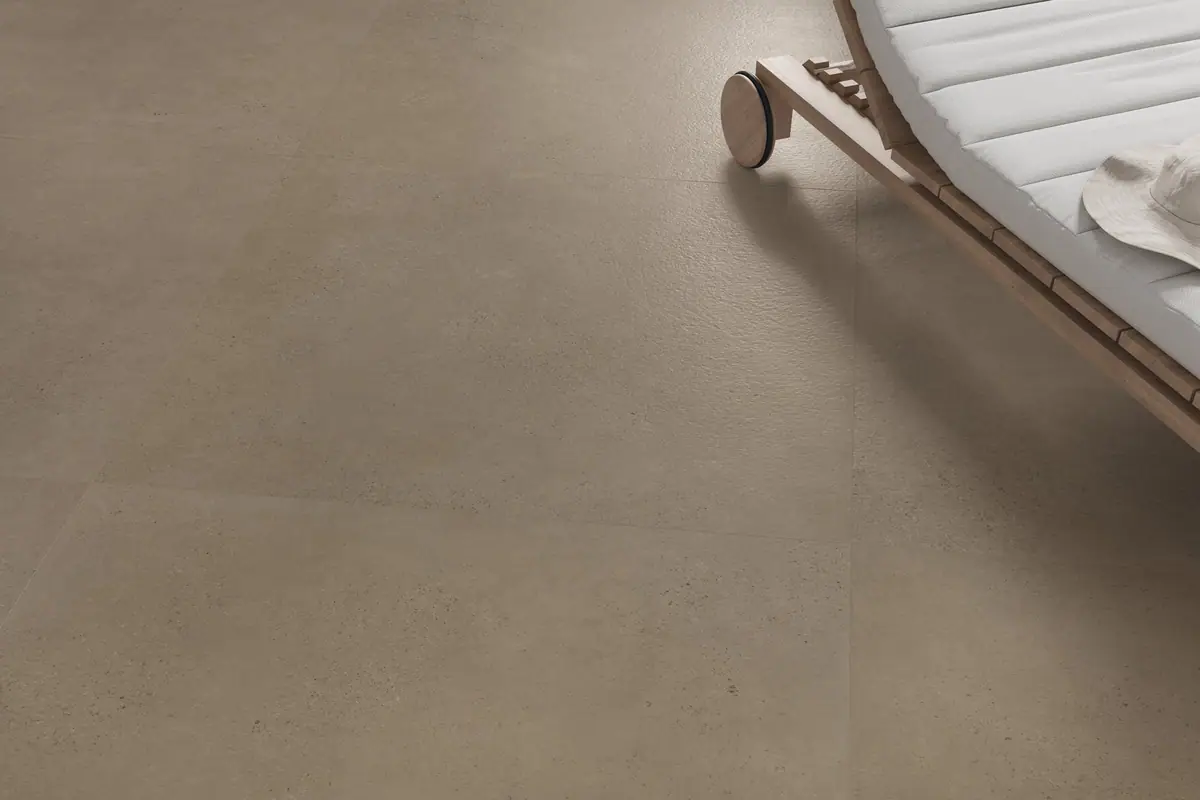
Alley 4D is a collection with a cement-like appearance and an urban character, with graphics that are continuous across the surface but with slight shade variation between pieces. Its matt finish is offered in a Natural version, silky to the touch (Class 1 and R9), and a Bush-hammered, anti-slip version, in five colours (White, Bone, Grey, Mud and Anthracite) and in 100×100 and 50×100 cm, both 8 mm thick. The Mosaic and Brick decors, made on the same base, extend its composition possibilities.
Key points for specifying the 4D collections
Before choosing a collection and format, these points are worth resolving at project stage:
- Relief or smooth surface: Alpine, Lucca and Downtown have Shaped relief; if a more even surface is wanted, Mystic and Alley work texture through natural and bush-hammered finishes.
- Thickness: Downtown is the thinnest, at 6 mm, and Peronda recommends it for new build and refurbishment; Alpine, Lucca and Alley are 8 mm thick.
- Slip resistance: Alley Natural is classified as Class 1 and R9. Under the Código Técnico de la Edificación (CTE, Spain's building code), Class 1 is sufficient in dry interior areas with a slope of less than 6%; bathrooms, kitchens and entrances require at least Class 2, and exteriors and showers Class 3. For wet or exterior areas, the class of the anti-slip bush-hammered versions of Mystic and Alley must be checked in the technical data sheet.
- Large pieces, prepared site: the 100×180 cm formats require a flat substrate, a suitable adhesive and the means to handle them; access and the setting-out plan should be planned at project stage.
- A single language: listellos, decors and coordinated wall tiles (such as Downtown Wall) make it possible to carry the floor material up onto the wall.
Frequently asked questions
- Are 4D and Shaped Tech the same thing?
- No. 4D is Peronda's manufacturing technology with which it produces porcelain in large formats and with greater definition. Shaped Tech is the digital relief synchronised with the graphics, which, among these five collections, is found in Alpine, Lucca and Downtown.
- What formats and thicknesses did the 4D collections come in?
- All had 100 cm sides: 100×100 and 100×180 cm in Alpine and Downtown, 100×180 cm in Lucca, and 100×100 and 50×100 cm in Mystic and Alley. Downtown was 6 mm thick; Alpine, Lucca and Alley 8 mm.
- Can they be used on floors and walls?
- Yes. Peronda conceived them as a continuous floor and wall solution, with rectified pieces and, in some collections, listellos, decors or coordinated wall tiles.
- Which collections have an anti-slip version?
- Mystic 4D and Alley 4D have an anti-slip bush-hammered finish. Before specifying them in wet or exterior areas, their slip resistance class must be checked in the technical data sheet.
At Matter we help you compare large-format porcelain, textures and relief finishes for your project. Come to our material library to see and touch the surfaces and compare them with your technical team.
Book your visit to Matter.
Book a visit