The faces of wood
The seventeen oak finishes of Noesis’s Appennini collection: formats, surface treatments, heat-treated oak and fumed oak.
Products6 min read
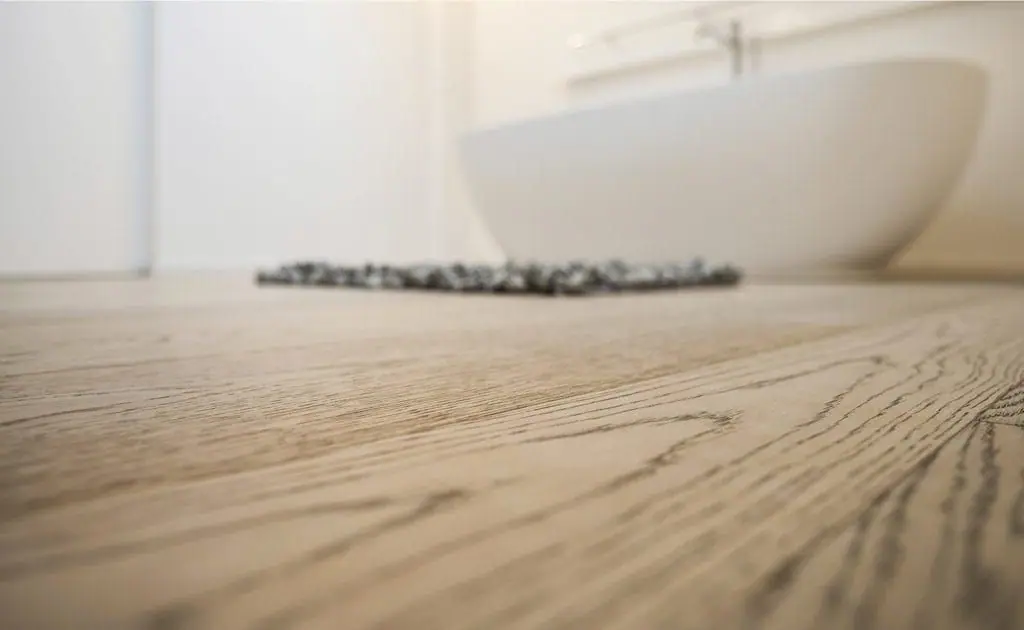
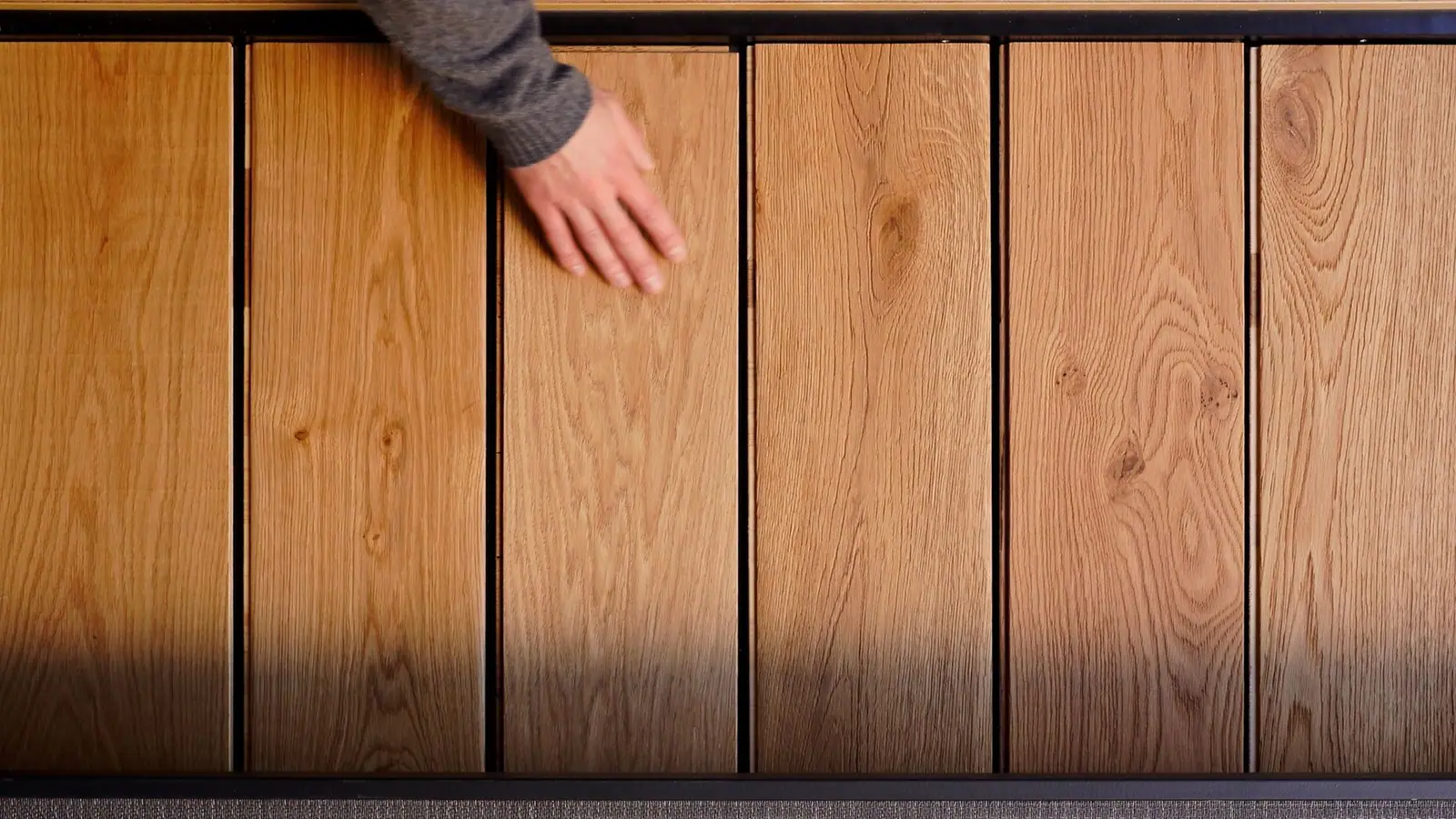
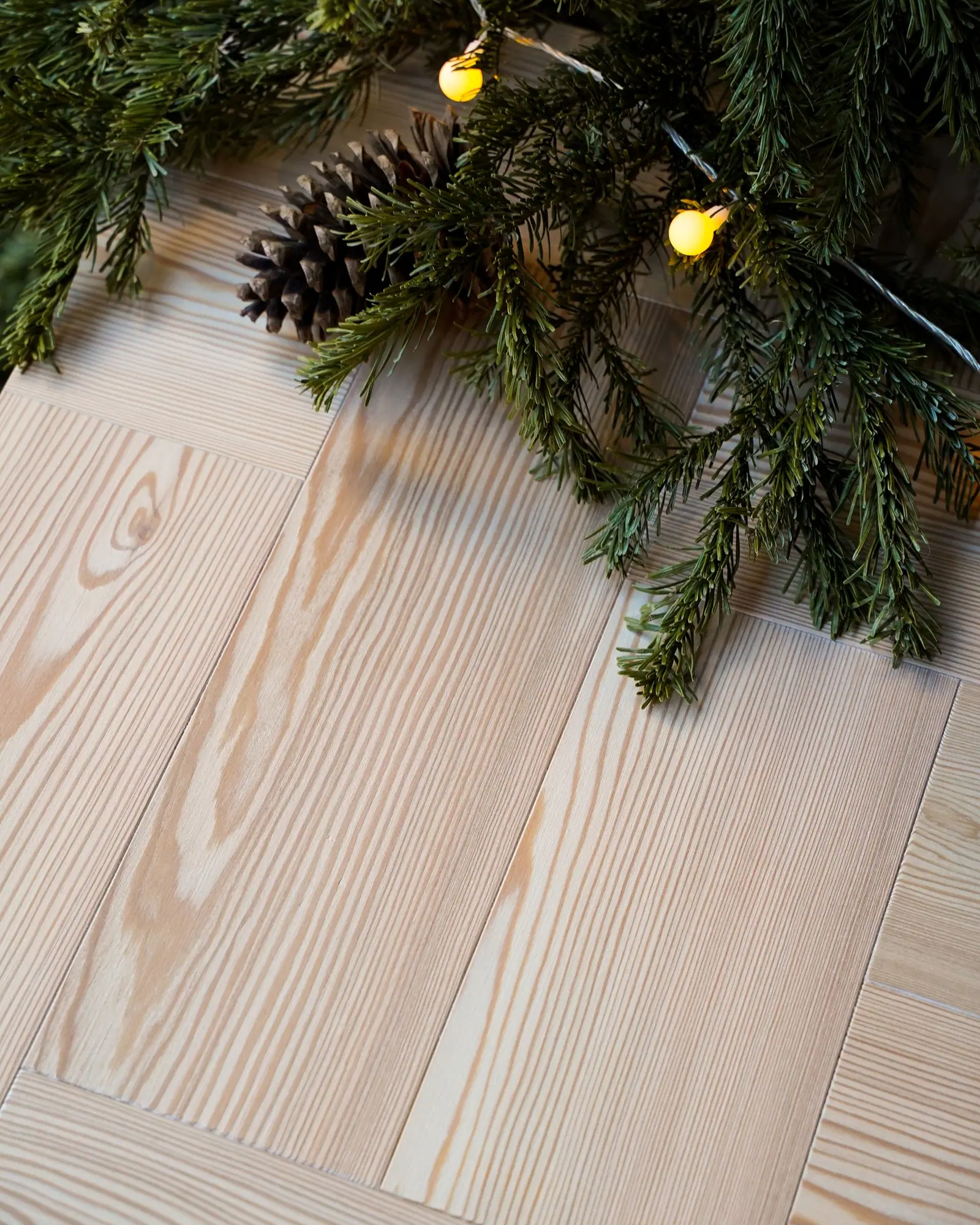
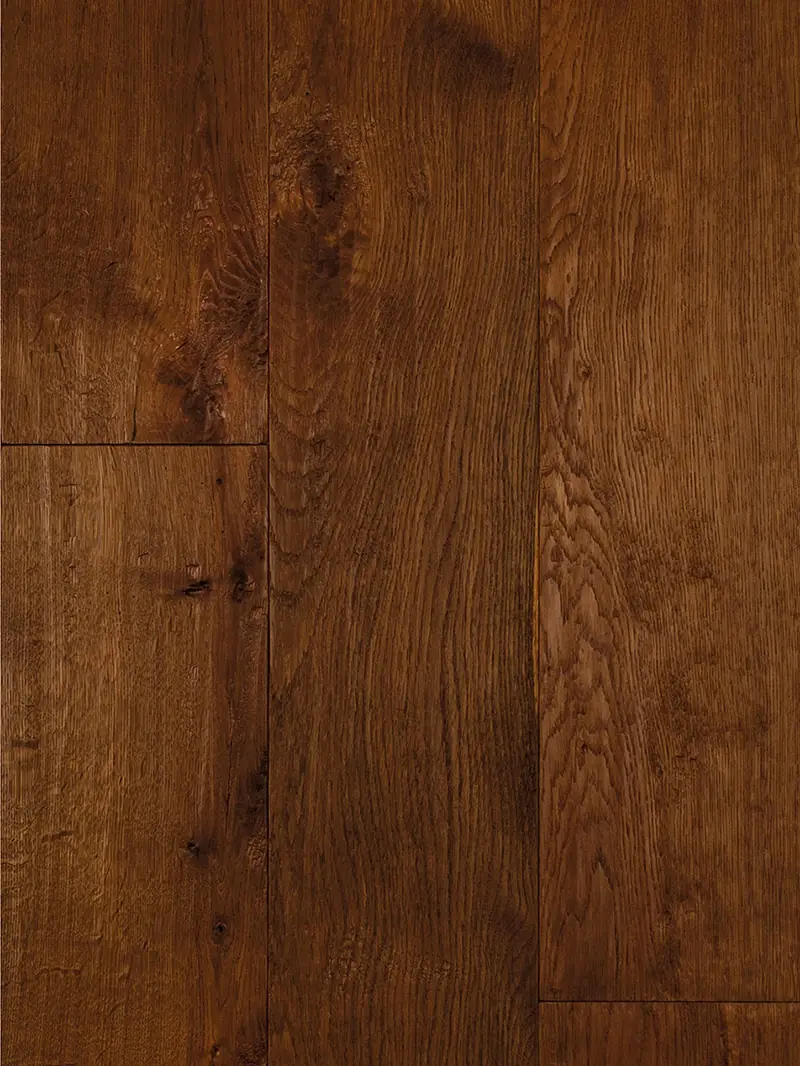
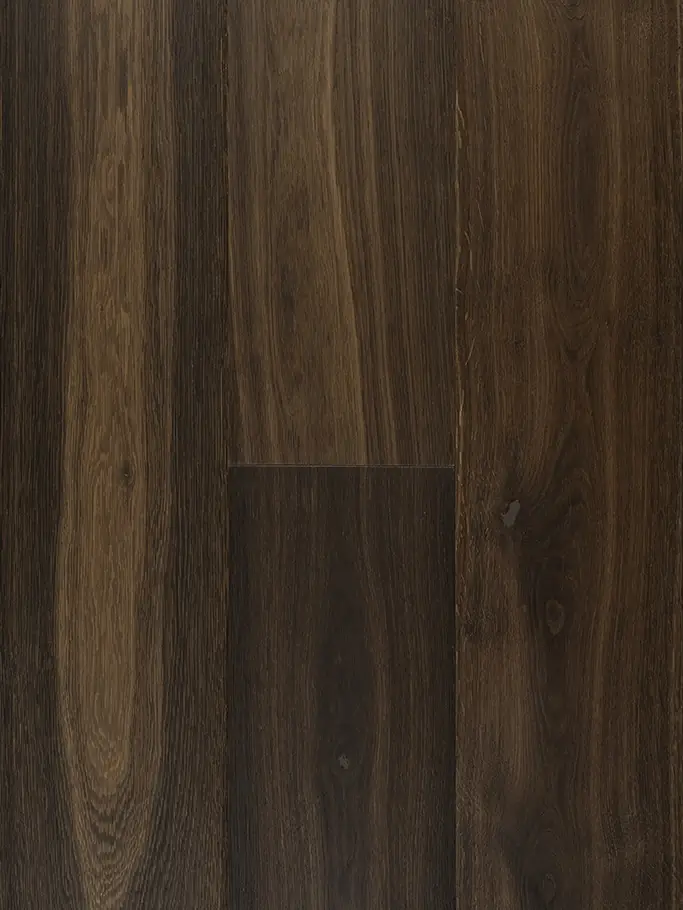
Seventeen finishes that tell the story of rocky landscapes through the character of wood. The oak of the Appennini collection, by the Italian company Noesis, expresses all its versatility thanks to the different types of treatment applied. The colours of tundra and rock, captured in oak boards, give the feeling of being immersed in nature.
In this article we look at the collection as Noesis presented it in 2021: its two-layer formats, the finishes and the surface treatments that define them, what heat treatment and fuming bring to oak — two processes that are often confused — and what to bear in mind when specifying it.
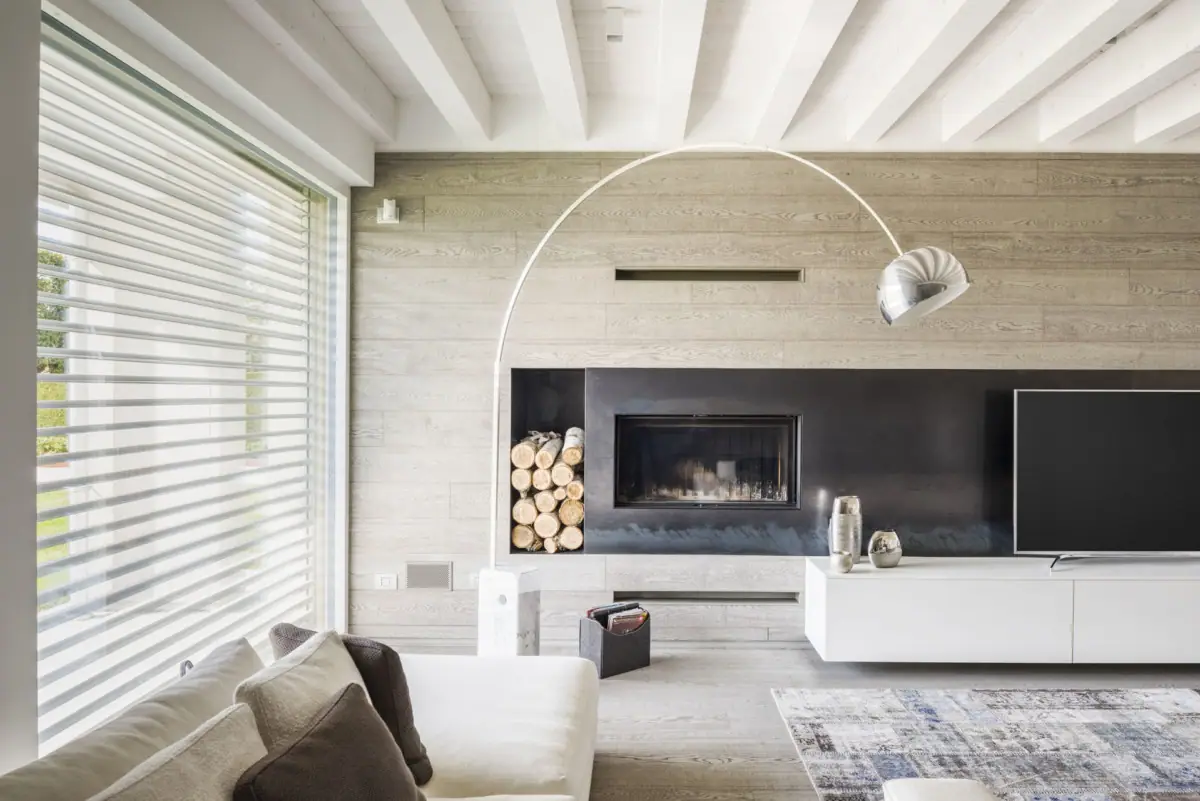
Appennini: oak as landscape
The finishes include hand-painted, heat-treated and varnished, combined with processes such as brushing, hand scraping, fuming and deep brushing. Noesis’s knowledge and experience in manufacturing, always aimed at enhancing the raw material and the natural beauty of wood, are even more recognisable in a line that sets out to evoke a landscape and a natural setting.
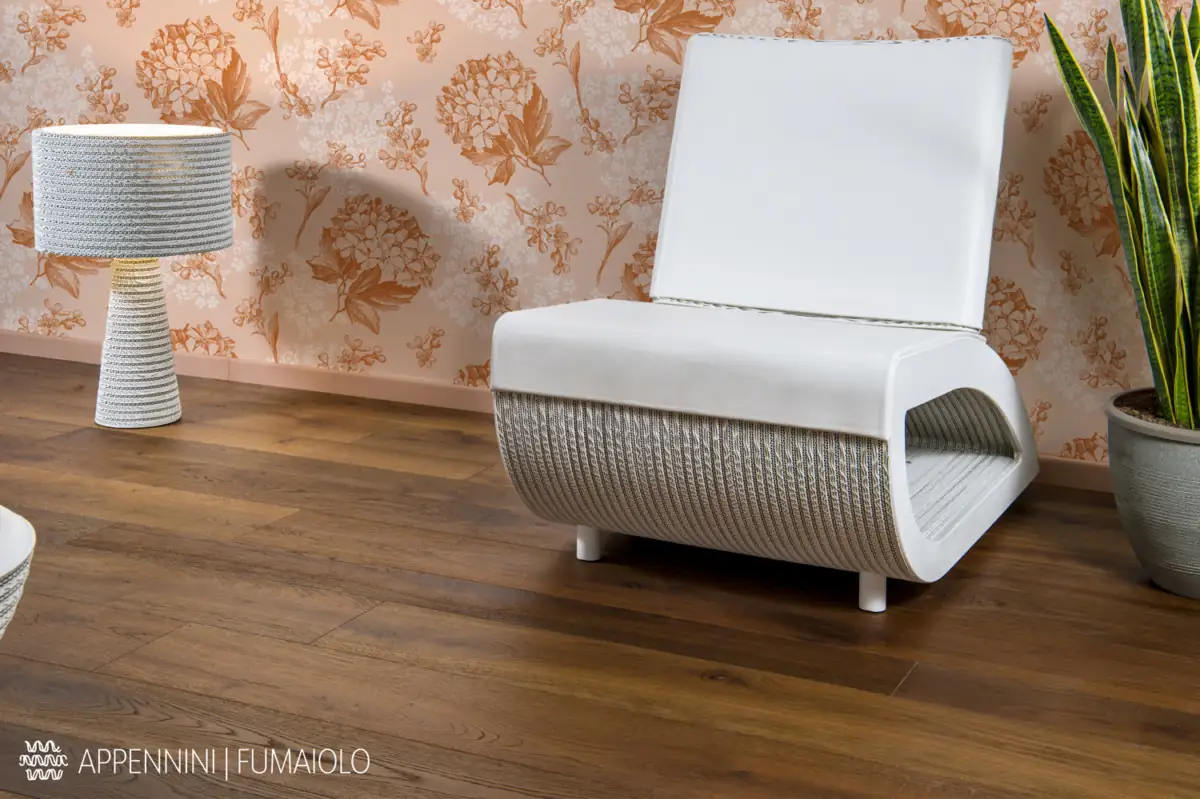
The entire collection is oak, in two-layer construction: a top layer of oak over a multilayer backing. The boards are up to 2.4 m long and 24 cm wide, a scale that lets the grain, knots and colour of each finish be read.
Formats: two-layer board and strip
In 2021, Noesis offered Appennini in three formats: a 15 mm board, a 10 mm strip, narrower and shorter, and a specific board for the two heat-treated finishes, Fumaiolo and Montenero.
According to Noesis’s formats sheet, the oak board has a phenolic birch plywood backing, can be glued down or floated and is well suited to underfloor heating. For the strip, also on phenolic birch plywood, the brand specifies glued installation, likewise compatible with underfloor heating.
Seventeen finishes from the same wood
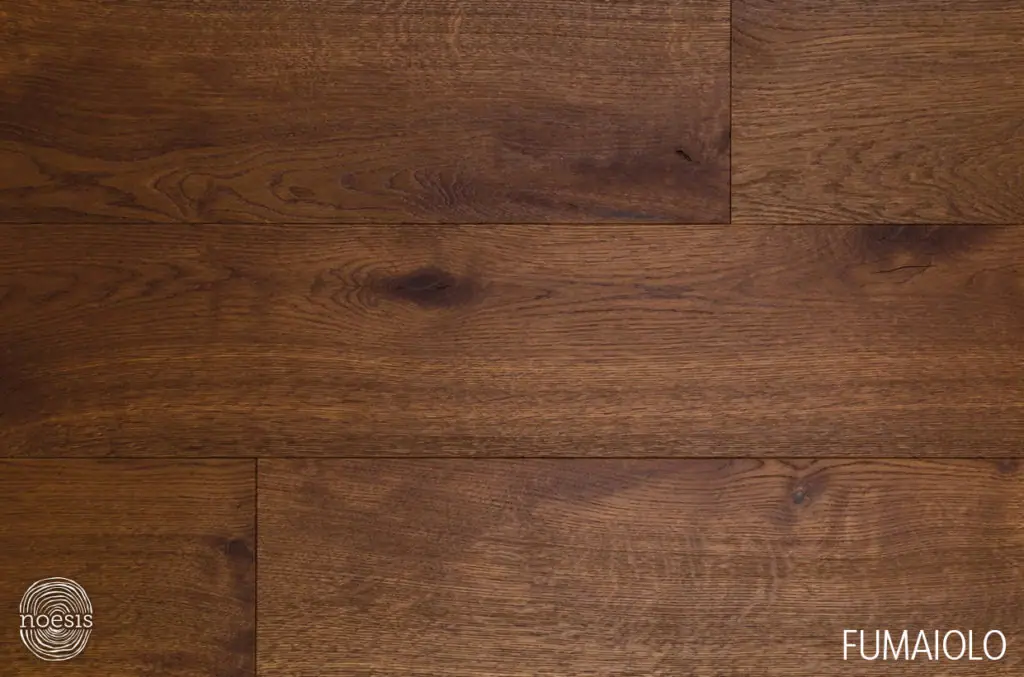
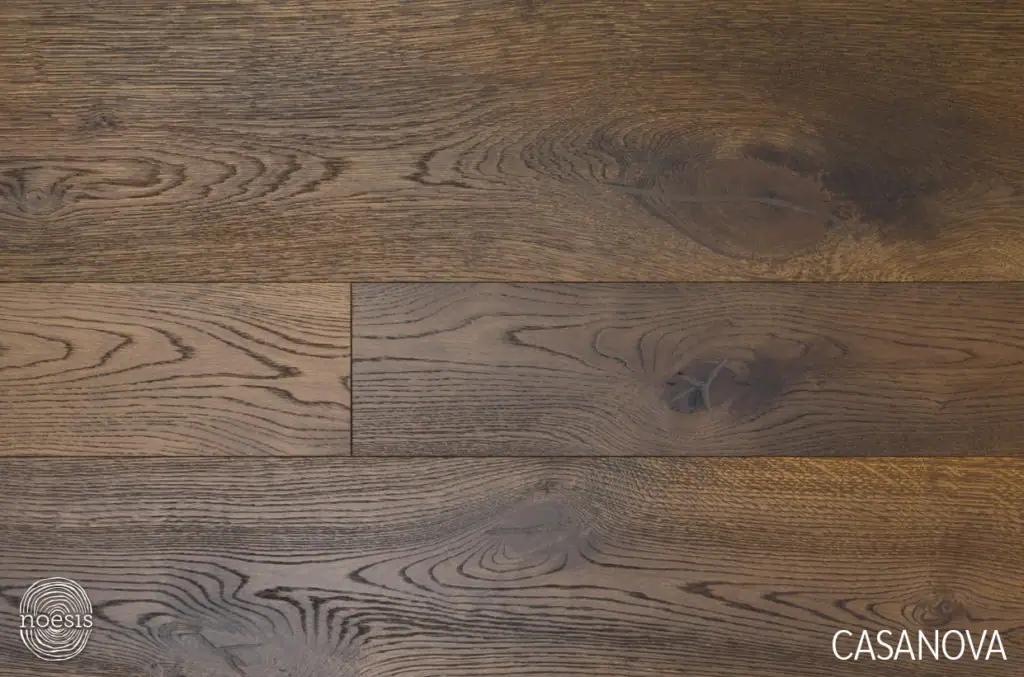
All the finishes start from oak. What changes is the surface treatment — brushed, deep-brushed, hand-scraped, hand-sawn — the colour treatment — natural, stained, pickled or hand-painted — and, in some cases, the treatment of the wood itself: heat-treated in Fumaiolo and Montenero, fumed in Falco and Fosco. All are supplied varnished.
Surface treatments
Noesis describes the surface treatments it applies to its boards as follows:
- Brushed: brushes remove the softer part of the grain and leave the harder fibre in relief. The result is natural and pleasant to the touch.
- Extra brushed: the brushing is repeated several times, slowly, until the softest fibre is removed; the surface gains relief and a look shaped by the passage of time.
- Hand-sawn: retains the mark of the traditional saw cut, with no subsequent sanding, with irregular marks in orientation, depth and width that cannot be reproduced mechanically.
- Hand-scraped: until the middle of the last century, floors were smoothed by hand with carpenters’ planes; Noesis revives this work to give the boards a lived-in, antique look.
These treatments are complemented by colour treatments — staining, pickling, hand-painting — and the varnish that protects every finish in the collection. According to the brand, the intensity of some treatments can be adjusted to each project: hand scraping, for example, can be made gentler or more pronounced.
Heat-treated oak: more stable in the face of moisture
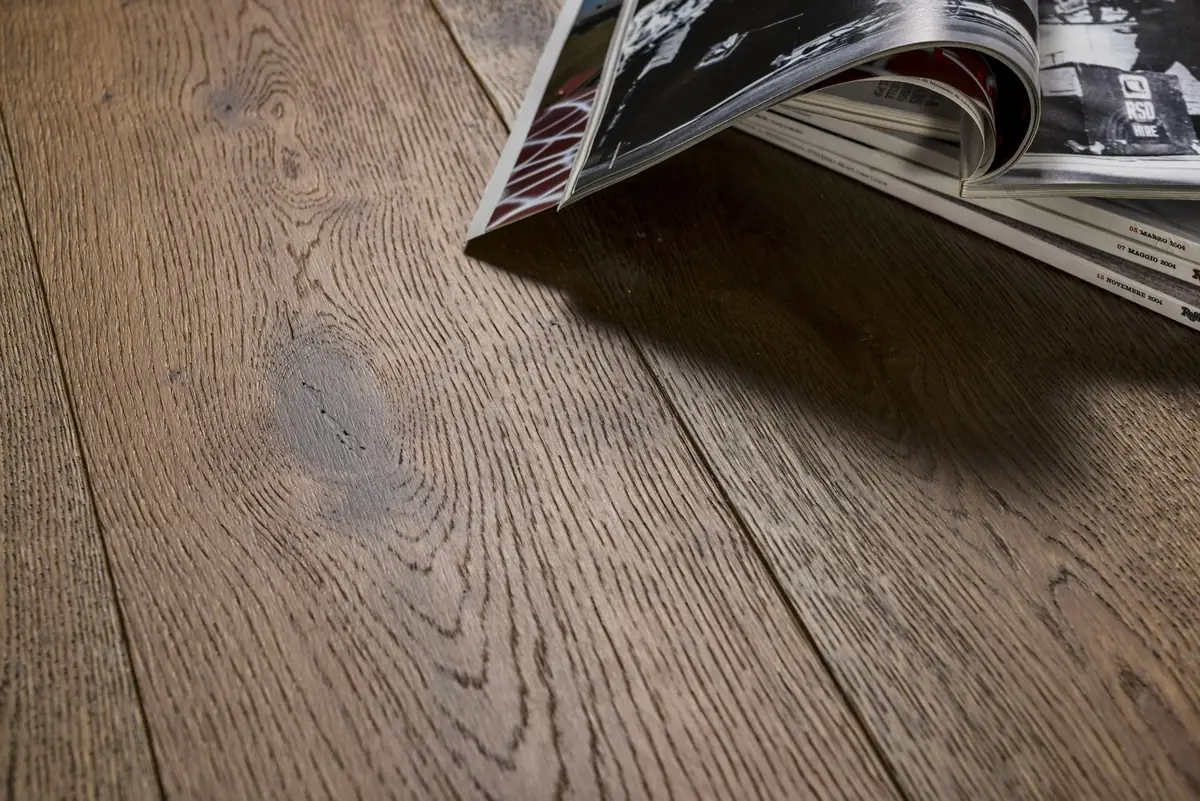
Two processes define some of the finishes in the collection: heat treatment and fuming. The first is a modification of the wood by heat. According to the handbook of the International ThermoWood Association, which brings together manufacturers of heat-treated wood, the wood is subjected to temperatures of at least 160 °C in the presence of steam, and the changes to its structure are permanent.
The main effect is that the wood absorbs less moisture: it swells and shrinks less, gains dimensional stability and becomes more durable against decay fungi. Its colour also darkens throughout, not just on the surface. It should not be confused with an insecticide treatment: according to the same handbook, the studies carried out do not show that heat-treated wood resists termite attack. In Appennini, the heat-treated finishes are Fumaiolo and Montenero.
Fumed oak: colour drawn from tannin
The other treatment is fuming, which has nothing to do with pest fumigation. In this technique, known as fumed oak, the wood is exposed to ammonia vapours, which react with the tannins and darken it. The tone penetrates some depth below the surface and brings out the grain.
The technique works particularly well on oak because of its high tannin content. In Appennini, the fumed finishes are Falco, with a natural finish, and Fosco, with a rough-hewn effect.
Noesis: eight ranges of Italian parquet
Noesis is the parquet brand of Spazio Legno, a company based in Scorzè (Venice) that in 2021 presented itself as having more than twenty years’ experience in the sector. The name comes from the Greek nóesis, knowledge, and the brand associates it with its way of working: putting the knowledge and experience accumulated in working wood at the client’s service.
With that experience, Noesis tells the many ‘faces’ of the beauty of wood through its eight ranges — Vulcani, Alpi, Dolomiti, Appennini, Colli, Rifugi, Gocce and Gemme — and more than fifty finishes, according to the brand.
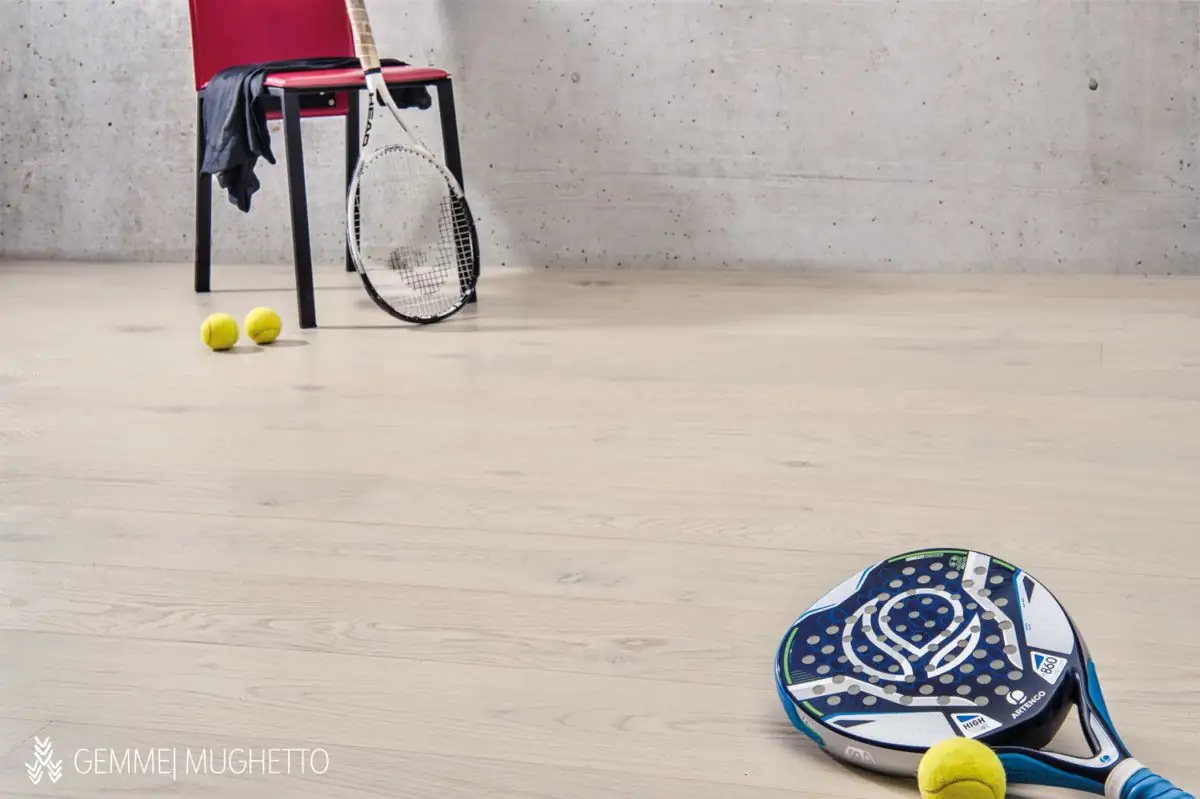
Gemme was then the most recent line: a two-layer oak board, 14 mm thick and 190 mm wide, with six warm-toned finishes — Malva, Iperico, Timo, Lavanda, Mughetto and Arnica — named after mountain flowers.
As for certifications, Noesis stated in 2021 that its two-layer boards are FSC-certified in both the top layer and the multilayer backing, and that its products carry CE marking, are classified Cfl-s1 for reaction to fire and meet CARB requirements on formaldehyde emissions and low emissions of volatile organic compounds (VOCs). All production takes place in Italy.
Key points when specifying Appennini
Before settling on a finish from the collection, these points are worth checking:
- Format and installation: the 15 mm board can be glued down or floated; the 10 mm strip is glued. The heat-treated finishes had their own widths (130 and 200 mm), so it is worth confirming them when choosing Fumaiolo or Montenero.
- Underfloor heating: Noesis declares its floors suitable for radiant heating and cooling systems, glued or floated.
- Physical sample: the brand itself warns that the images of the finishes are for guidance only. For stained, pickled, fumed or hand-painted finishes, the choice should be made on a real sample.
- Public spaces: according to Noesis, the Cfl-s1 classification allows its floors to be used in public buildings and spaces without additional certification. Ask for the declaration of performance for the chosen format: the brand published separate declarations for the board, the strip and the heat-treated board.
- Heat-treated is not insecticidal: heat treatment improves stability and durability against fungi, but does not protect against termites.
Frequently asked questions
- What is the difference between heat-treated oak and fumed oak?
- Heat treatment modifies the wood with heat (at least 160 °C, with steam): it makes it more stable in the face of moisture and darkens it throughout. Fuming darkens oak with ammonia vapours that react with its tannins. In Appennini, Fumaiolo and Montenero are heat-treated; Falco and Fosco are fumed.
- Does fuming protect the wood against pests?
- No. Despite the name in Spanish (ahumado, ‘smoked’), fuming is a colour treatment, not an insecticidal fumigation. Nor does heat treatment guarantee resistance to termites, according to the International ThermoWood Association.
- Can it be laid over underfloor heating?
- Yes, according to Noesis. The 15 mm board can be glued down or floated, and the 10 mm strip glued; the brand considers its floors suitable for radiant heating and cooling.
- Is the Appennini collection still available?
- In 2026 Appennini is still on Noesis’s website, but with a revised range: some finishes and formats have changed from those described here. Before specifying, check the current technical sheet.
At Matter we help you choose the right wood flooring for each project: format, finish, installation system and how it relates to the other materials. Come to our material library to compare materials and finishes with your technical team.
Book your visit to Matter.
Book a visit