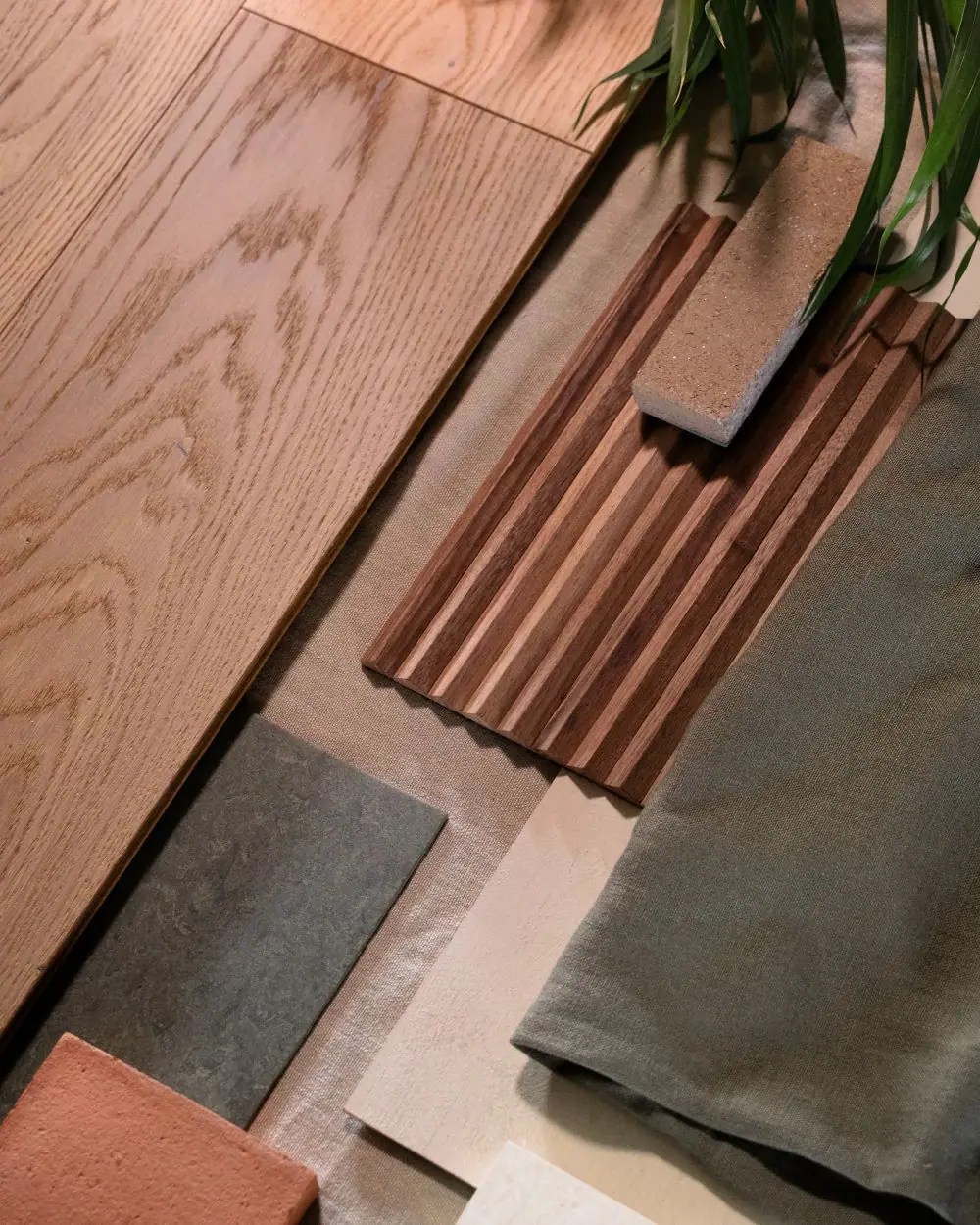
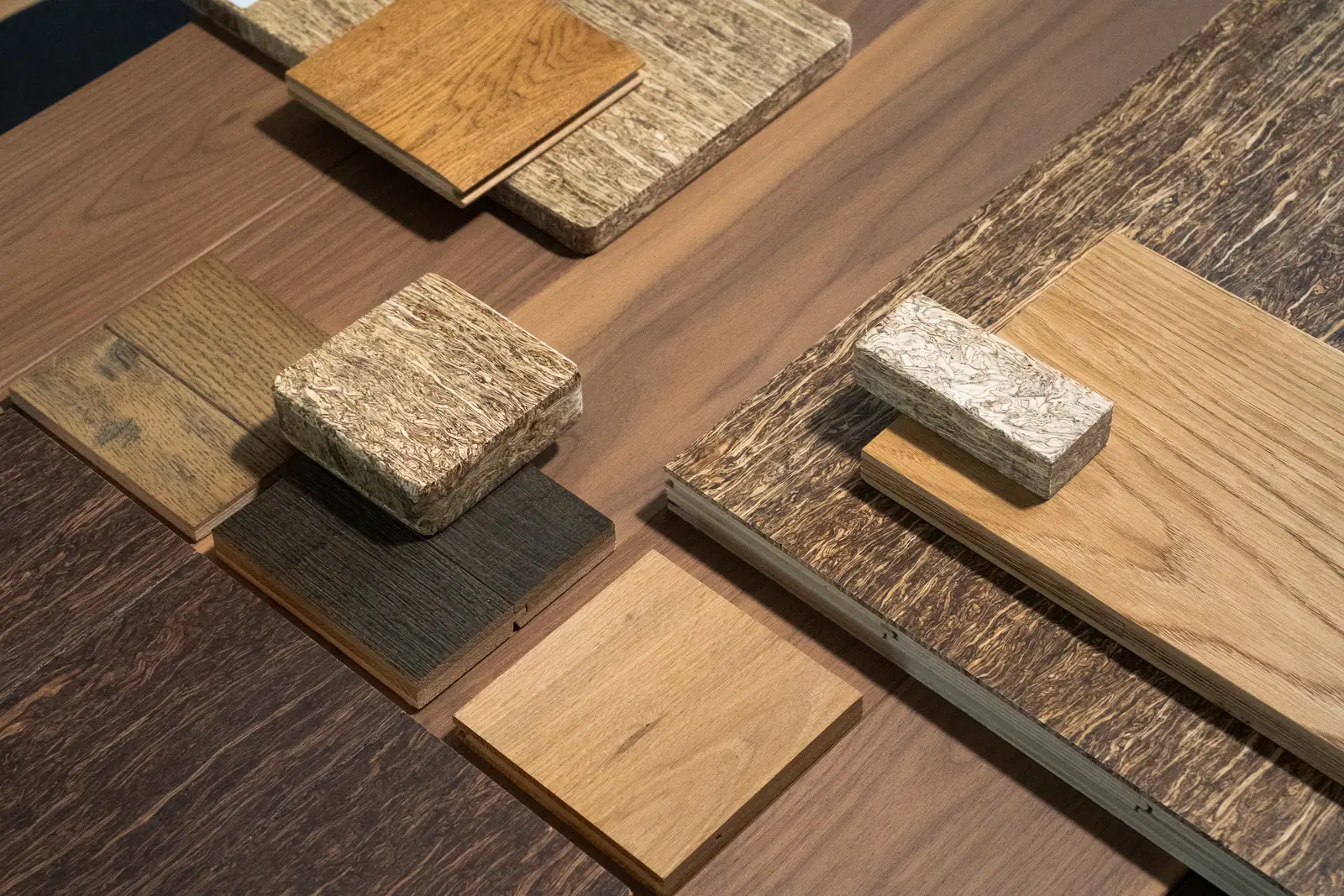
Mardegan Legno: craftsmanship and innovation in wood
From Slavonian oak to hand finishing: what Mardegan Legno's engineered parquet is like, its formats, surface finishes and thirteen collections.
Products9 min read
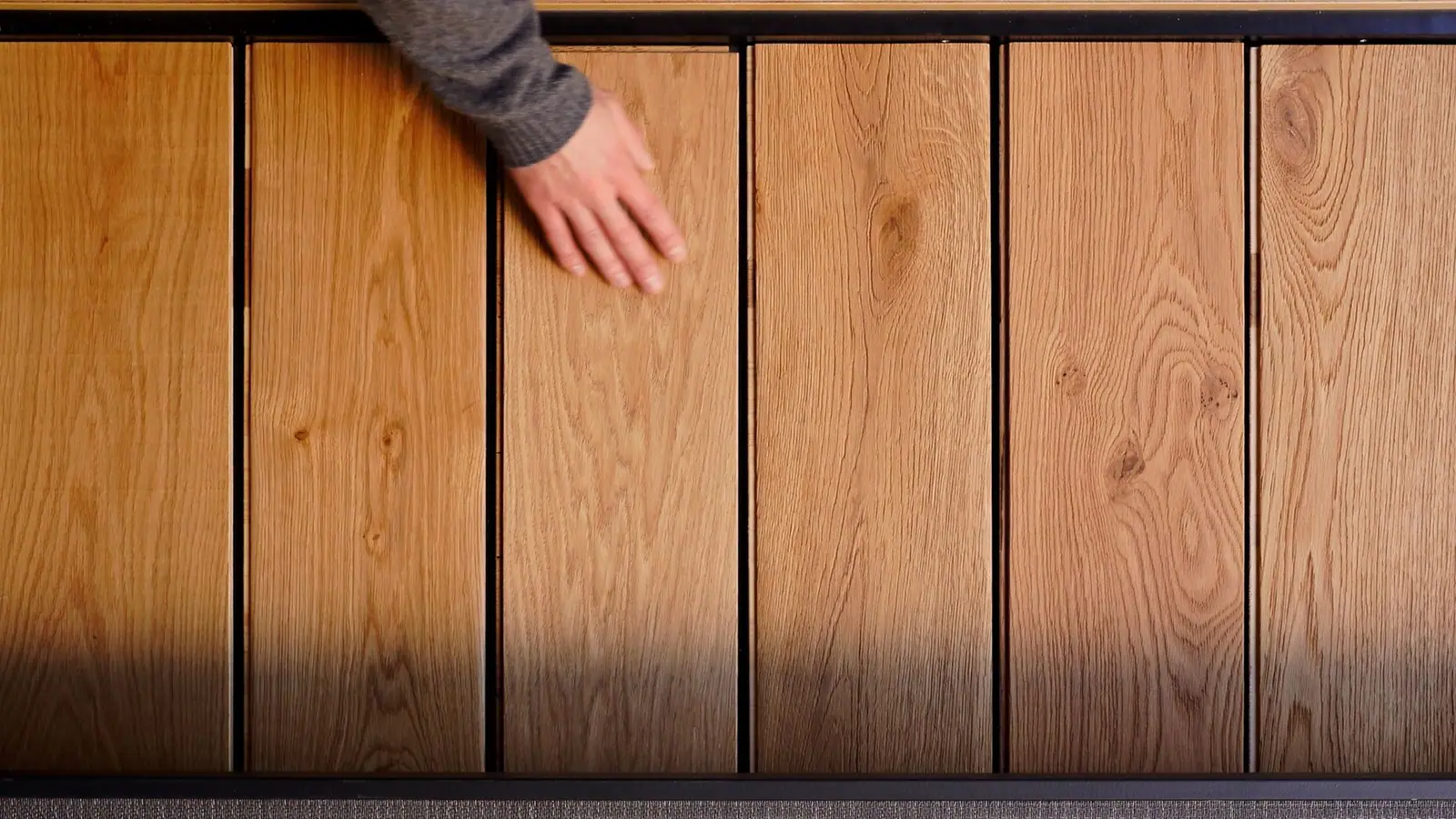
Natural wood takes centre stage: a raw material worked with respect, bringing out the value and unrepeatable character of each plank. This approach gives rise to floors and wall coverings that combine artisanal tradition and technical innovation: wooden surfaces with their own identity, conceived for architecture and interior design projects in which the material takes a leading role. This is the essence with which Mardegan Legno shapes each collection.
In this article we look at where Mardegan Legno's wood comes from, how its parquet is built and in which formats it is made, which surface finishes and colours it offers, how its thirteen collections are organised and what to plan for when specifying and maintaining it.
From log to finished floor
Mardegan Legno was born in Hungary, in Barcs, close to the forests where Slavonian oak, its main raw material, grows. The company chose to get as close as possible to the source of the wood: there, in a 70,000 m² plant, its craftsmen turn logs into floors and wall coverings. The Italian headquarters is in Fanzolo di Vedelago (Treviso), and the research into colour, one of the brand's hallmarks, bears the signature of Giuseppe Mardegan.
The company follows every stage of the process. Logs are debarked and cut into lamellas of different sizes and thicknesses, which are dried in kilns fuelled by the offcuts themselves. The lamellas are then graded by eye into three selections according to the grain pattern, assembled in layers and taken through surface working, colouring, finishing and quality control. To avoid waste, the manufacturer offers planks in different sizes, just as the cut of each log produces them.
The raw material
The quality of the final product begins long before the manufacturing process. Everything starts with a careful selection of wood, sourced from responsibly managed forests and subjected to strict quality controls to guarantee its stability, durability and performance over time.
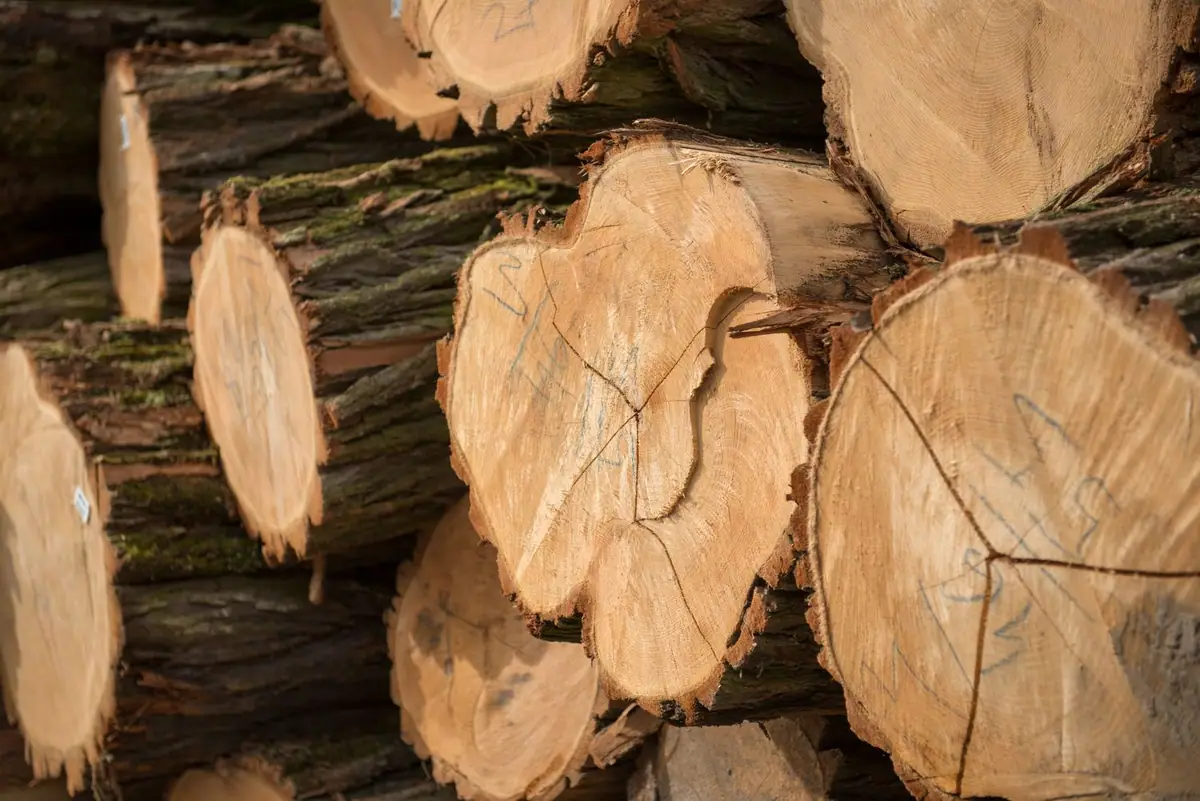
European oak, in its Slavonian selection, is the main species Mardegan Legno works with: a hard, wear-resistant wood prized in architecture and interior design for its chromatic richness and for the way it gains character over time. Alongside oak, the Natural Wood collection offers five other species, undyed and unmodified: American walnut, European walnut, European elm, European cherry and acacia (robinia, according to the technical sheet). The manufacturer explains that they differ in maturation, hardness and tone, and recommends the hardest, such as oak or acacia, for high-traffic hallways and entrances.
According to the manufacturer, sustainability begins with this choice: wood from sustainably managed forests, in line with the EU Timber Regulation (EU 995/2010), and use of the whole tree. The Barcs plant is certified to ISO 9001 and ISO 14001, the finishes are formaldehyde-free and the company works with Treedom on agroforestry projects. The Bihoma collection takes this idea a step further with a plant-based varnish with low CO2 emissions.
How it is made: engineered parquet and formats
Mardegan Legno floors are prefinished engineered parquet, compliant with EN 13489 and EN 14342. A solid-wood top layer —4 to 5.2 mm, and 7.2 mm for sawn finishes— sits on a backing of fir or the same species in three-layer planks, or birch plywood in two-layer ones. This construction keeps long, wide planks stable and allows glued or floating installation. These are the formats in the manufacturer's technical sheet:
Modulo and Palatino dimensions come from their catalogues; the rest from the manufacturer's 2020 technical sheet. It is worth confirming the availability of each format for the chosen colour and finish.
The value of craftsmanship
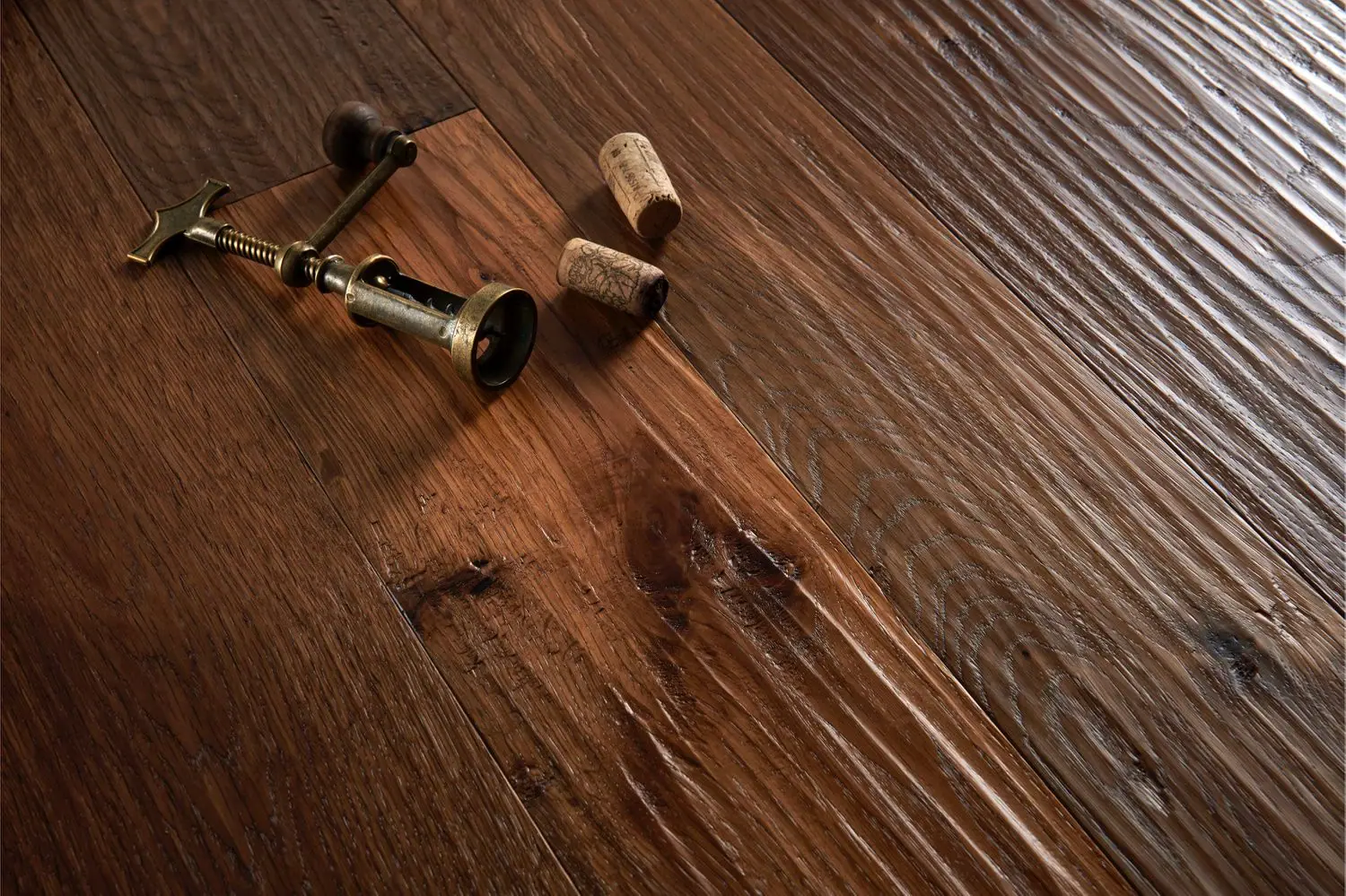
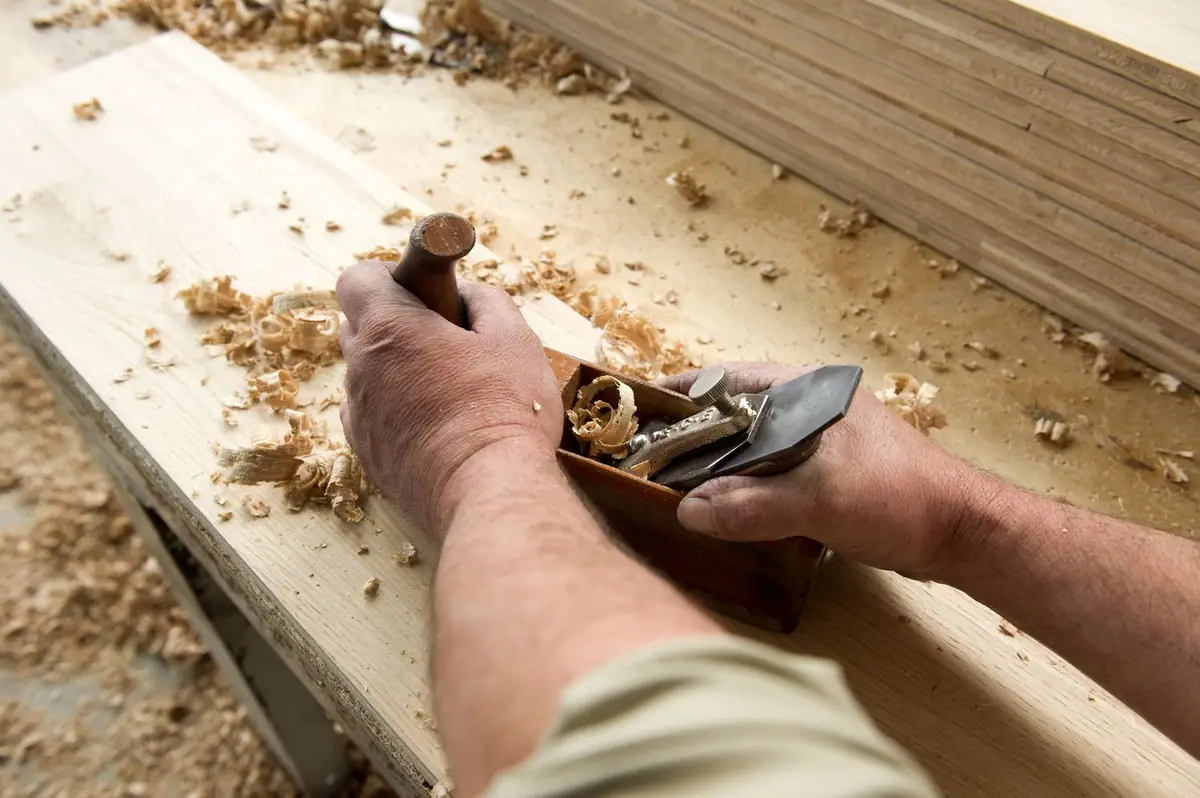
Behind each collection lies intensive manual work, and it is one of the traits that best define Mardegan Legno. The surface finishes revive traditional techniques —hand planing, sawing, sandblasting, edge rounding, ageing and carving— that bring out the natural structure of the wood and create a surface of unrepeatable character.
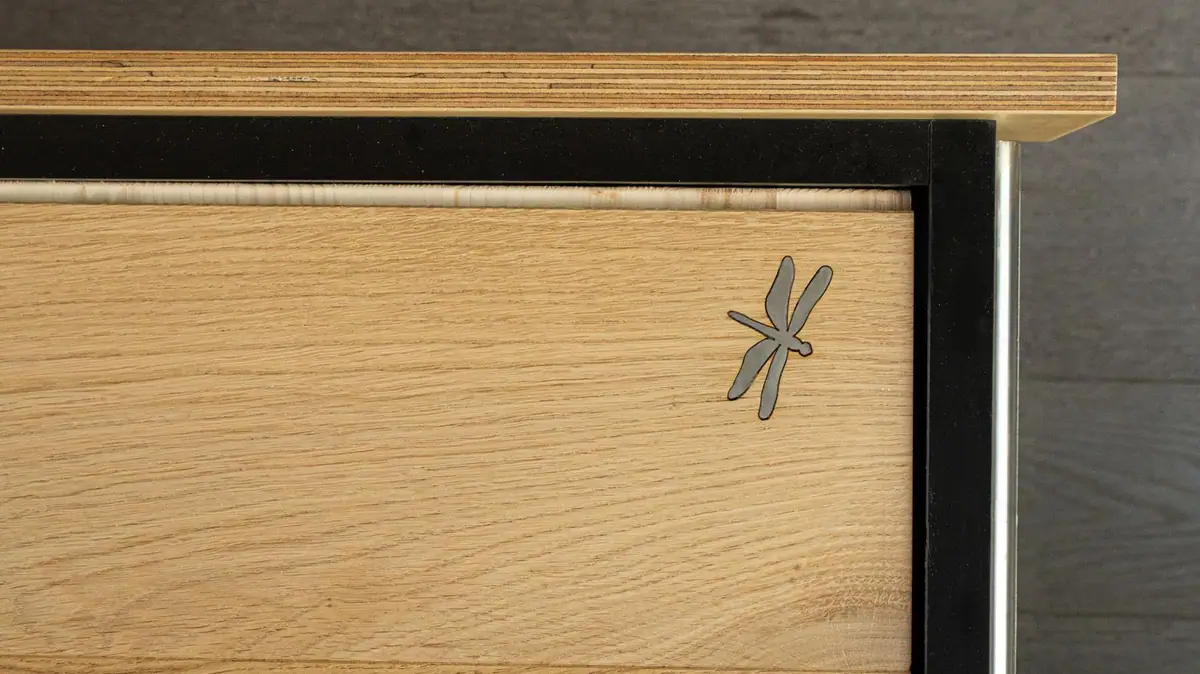
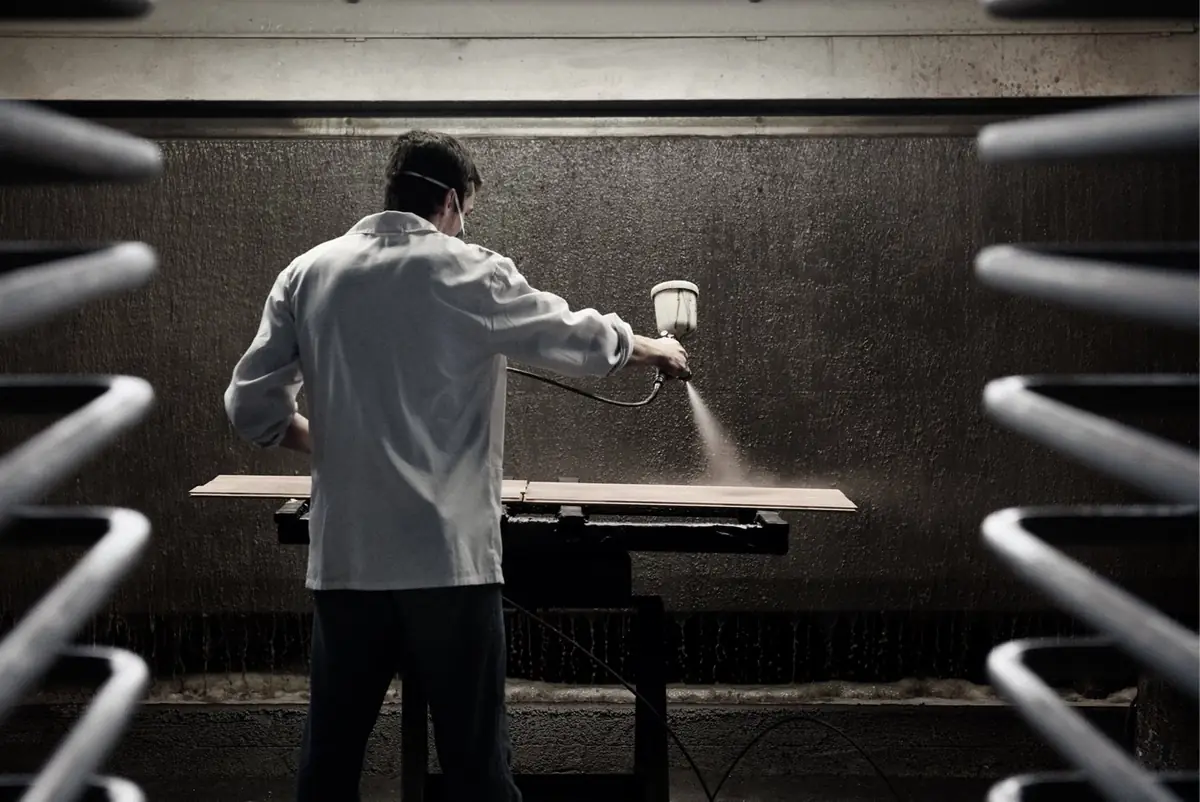
Then comes colour, which is also applied by hand. Each shade is built up by layering nuances, with a brush, spray gun or rag depending on the case, which is why the manufacturer stresses that its colours cannot be reproduced mechanically: each plank has its own variations. The final finish is a UV-cured water-based varnish or a blend of oils, in both cases free of formaldehyde and harmful substances, according to the manufacturer. As a mark of quality, every production bears the dragonfly, the brand's emblem.
Design through surfaces
One of Mardegan Legno's great strengths is the design freedom it offers, the result of combining four independent variables:
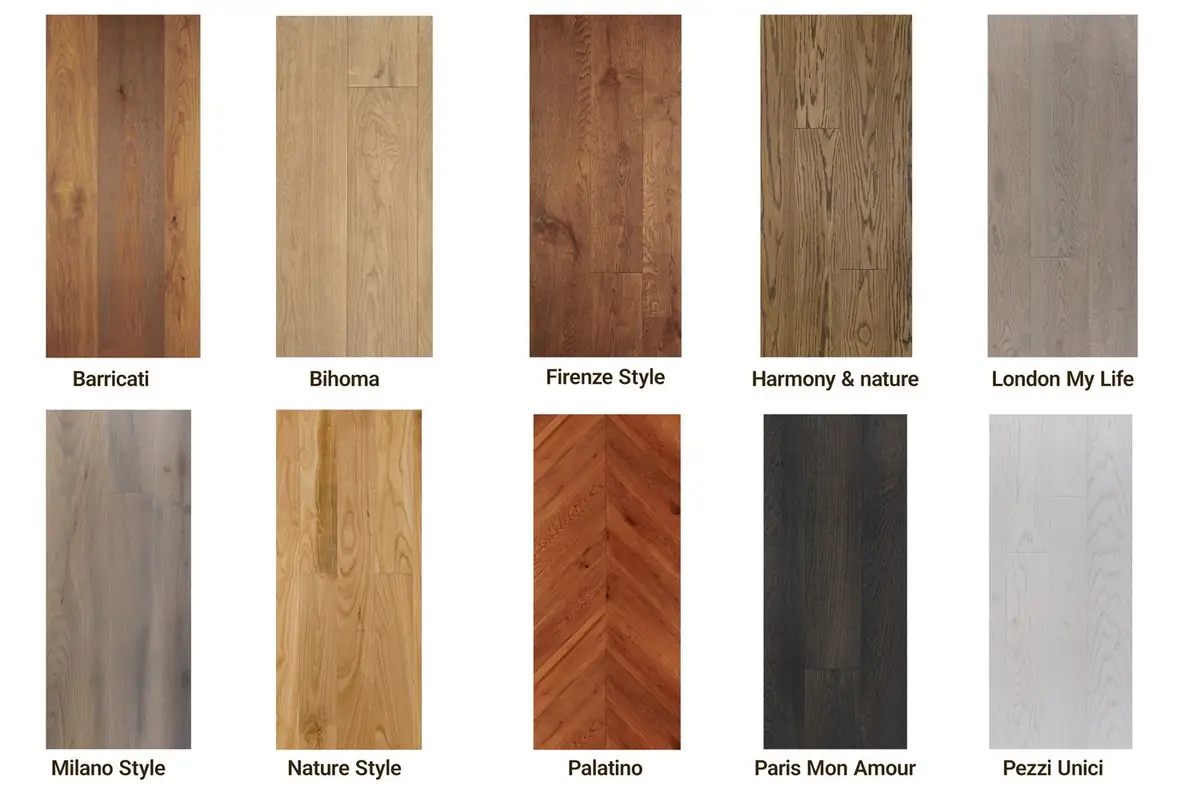
- Colour: more than a hundred shades —128 in the current catalogue— across 13 collections, applied by hand. Some lines also work on the wood itself: Barricati starts from heat-treated Slavonian oak, while Harmony & Nature and Sounds of Danubio use oiled finishes with a matt, natural look.
- Surface finish: thirteen different treatments, from smooth sanding to brushing, sandblasting, saw marks or hand carving, each with its own effect on touch and on light.
- Shape: planks in several widths and lengths, herringbone and chevron, quadrotte panels, the Damasco hexagon and the Casablanca format.
- Laying pattern: layouts that reorder the reading of the floor according to each space, from parallel laying to herringbone.
This versatility allows the floor to be adapted to the language of each project, from contemporary and minimalist spaces to interiors with a warmer, more timeless aesthetic. The manufacturer puts the number of surface options that result from combining them at more than 3,700.
Thirteen surface finishes
The names are those in the catalogue, in Italian. Almost all have a micro-bevel on all four sides. We group them by effect:
- Smooth and brushed: Prelevigato, machine-sanded for a very smooth surface, and Spazzolato, in which brushes remove the softest part of the wood and bring out the grain.
- Hand-planed: Piallato a mano, in which craftsmen plane each plank with blade planes; Piallato anticato, the most complex manual finish, which adds ageing; and Stondato e piallato a mano, with the long edges rounded by hand to create a 'wave' effect.
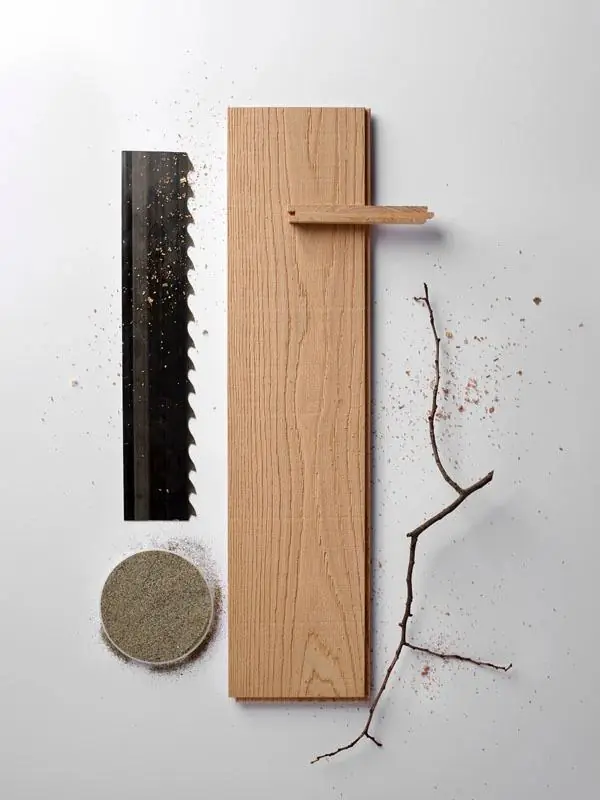
- Sawn and sandblasted: Segato reproduces saw marks on 7.2 mm lamellas and softens them by hand sanding; Sabbiato removes the softest fibre with a very high-pressure jet; Segato e sabbiato, Stondato e sabbiato and Piallato morbido e sabbiato combine both effects (the latter only on large planks).
- Aged and carved: Consumato, hand-sanded with hollows along the plank and its edges; Scolpito a mano, made by master craftsmen with chisel-blade planes; and Scavato, with deep incisions along the plank, exclusive to the Palatino collection.

Shapes and laying patterns
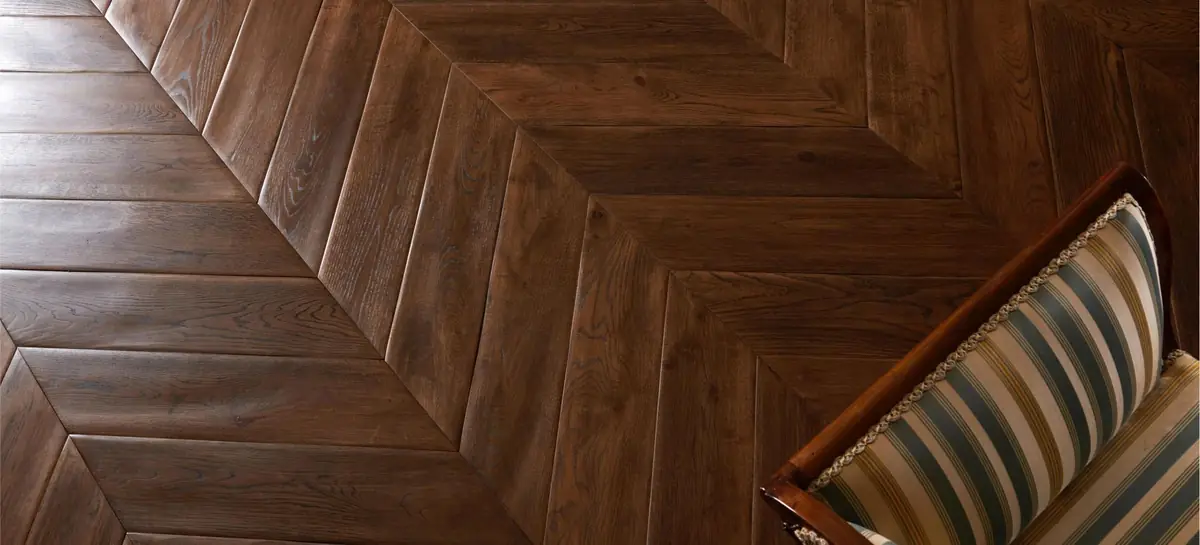
The plank is the basic shape and can be laid in a regular brick pattern, in random lengths with one or several widths, parallel or parallel with a border. The herringbone and chevron patterns —Italian herringbone at 90°, Hungarian chevron at 45° and 30°, Trenta90 and Quadrupla— recall the floors of historic palaces. The quadrotte, in large and small sizes, are square compositions assembled by hand that can be made in any catalogue colour or, on request, from a bespoke design. Damasco is a hexagon-based surface and Casablanca a chequerboard of lines and volumes.
The thirteen collections
Each collection combines a colour palette with a selection of surface finishes and shapes. The table summarises them with data from the manufacturer's website:
Modulo: Carlo Scarpa's measure
Modulo is inspired by the geometric proportions and the wood-and-concrete textures of Carlo Scarpa, who worked with a 55 mm module; the collection adopts a fixed width of 45 mm, with strips 930, 1,230 and 1,530 mm long. Its six colours —Vivo, Natura, Grafite, Rovere naturale, Betonbrut and Atmosfera— and the Spazzolato, Segato and Sabbiato finishes recall brutalist exposed concrete. It is made of oak, with a 5.2 or 4.3 mm top layer on birch plywood (15 or 14 mm in total), and can be laid parallel, in random lengths, in a brick pattern, and as herringbone or chevron.
Palatino: the large-format chevron
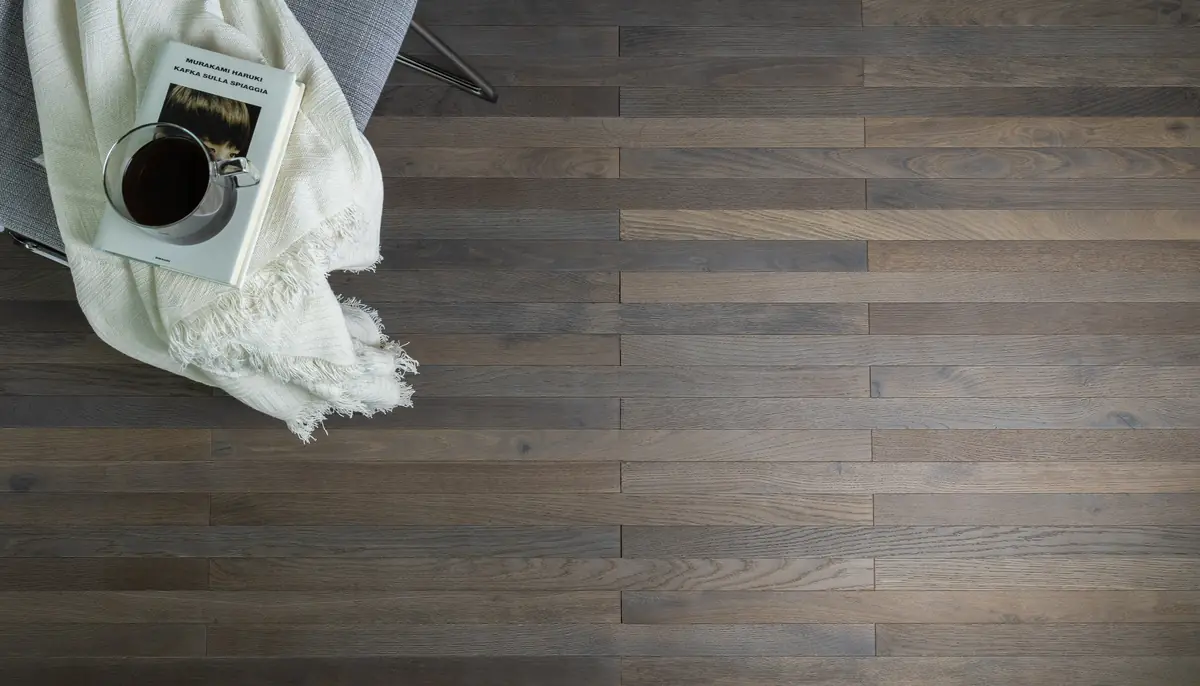
Palatino takes its name from the high dignitaries of the former Kingdom of Hungary. It is a chevron of wide pieces —760 × 180 mm according to its catalogue— with the exclusive Scavato finish, which leaves deep incisions along each plank. The manufacturer's website currently offers it in three colours: Broccato, Organza and Raso.
Barricati and the oiled finishes
Barricati starts from Slavonian oak subjected to a natural heat treatment that, according to the manufacturer, produces rich decorative effects, with natural, toned and shaded colours; its ten shades are named after Italian wines, from Amarone to Verdicchio. Harmony & Nature and Sounds of Danubio, by contrast, work with oils: matt colours that let the wood show through and, in Sounds of Danubio, a tone that deepens over time, gaining brightness and warmth.
Projects: from historic palace to cultural centre
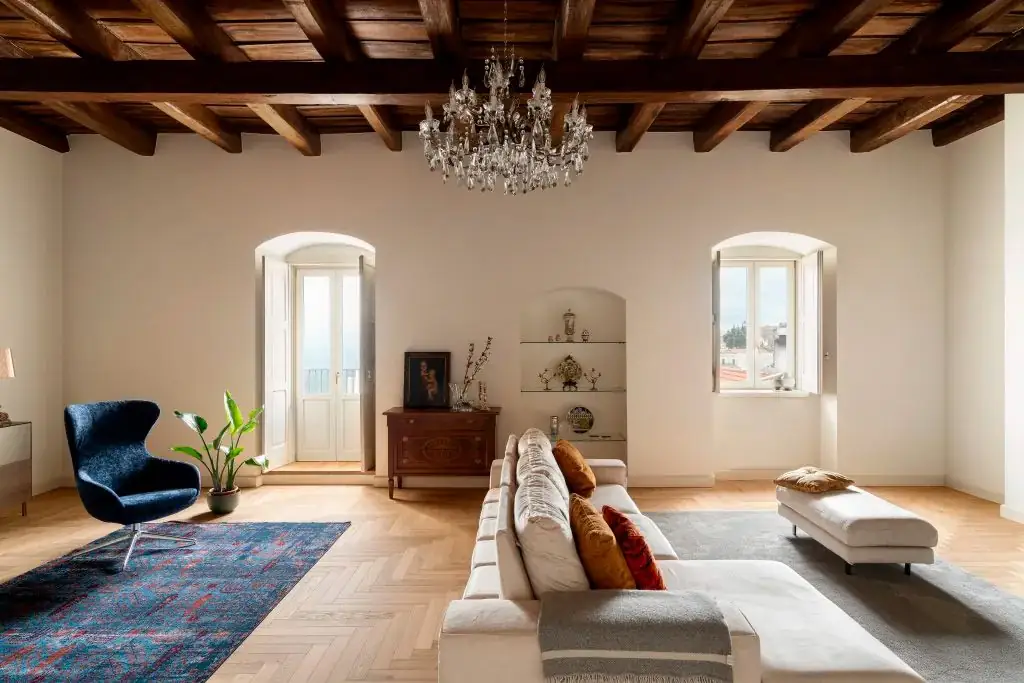
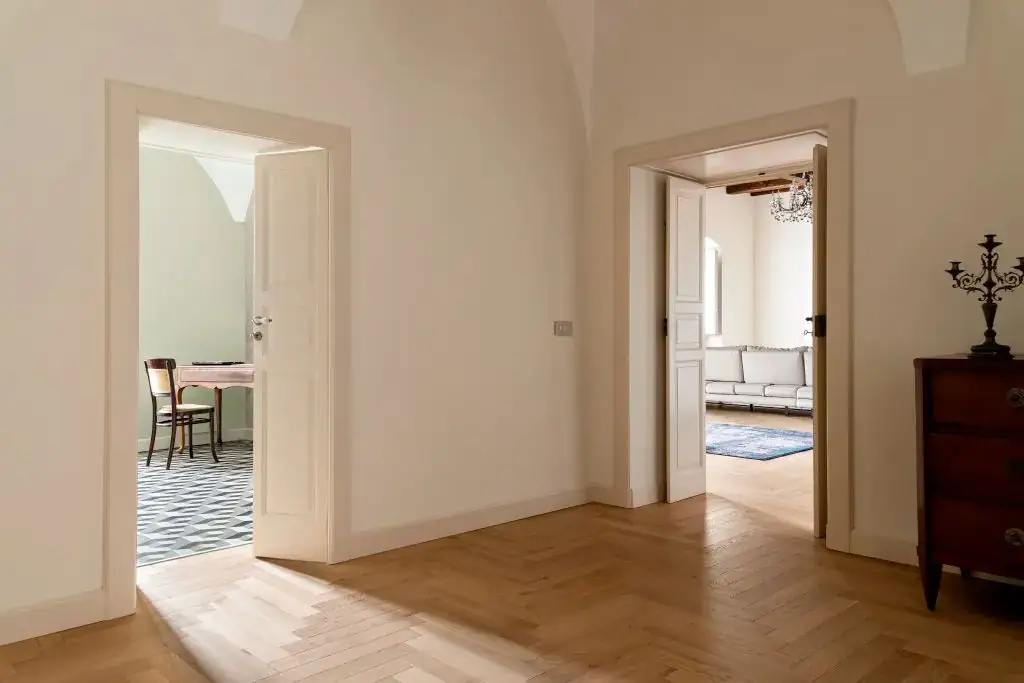
At Palazzo Doria in Candela (Foggia), the interiors have been restored while preserving the vaults and large openings of the historic building. The floor is Milano Style in the Malto shade, with a warm, golden hue, laid in Italian herringbone: the same floor runs through different rooms and gives them continuity. The project is by Michele Vietri and architect Nicolina Zannella, with photography by Carlo Oriente.
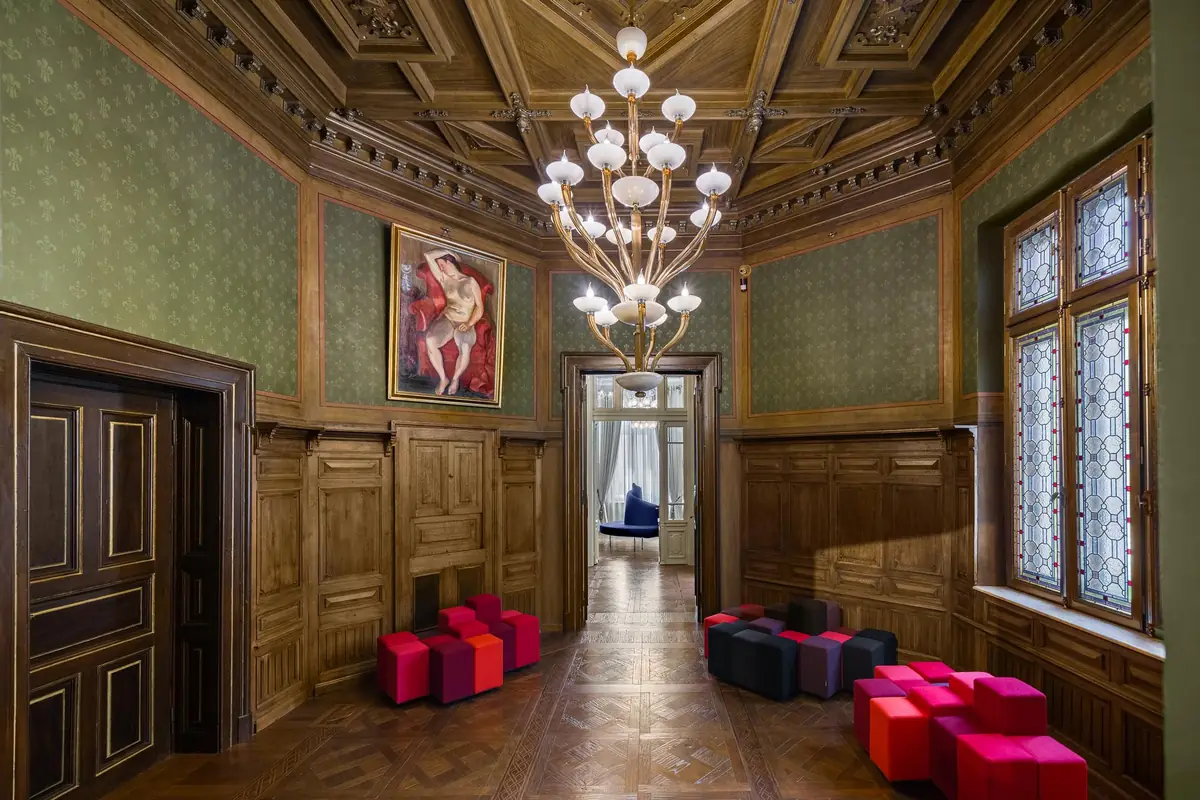
In Bucharest, Plan Patru has turned an 1891 building into a cultural and exhibition centre. The exhibition area features 'Brindisi' quadrotte from Firenze Style, in the Noce colour with the Piallato a mano finish; the more contemporary spaces have more understated planks.
Key points for specification and maintenance
According to the manufacturer's technical sheet and care guidelines, these are the points to plan for from the design stage:
- Use: indoor flooring, glued or floating. For glued installation the manufacturer specifies a two-component adhesive; for floating installation, vinyl glue in the joints.
- Subfloor: dry screed with a vapour barrier. Maximum moisture, measured with a carbide hygrometer: 2% for cement screeds and 0.5% for anhydrite screeds (1.7% and 0.2% with underfloor heating, which is permitted).
- On site: install once external doors and windows are fitted and plaster is dry, with the room at 18–21 °C and 45–60% relative humidity. Leave an 8–10 mm perimeter gap, covered by the skirting.
- Maintenance: in use, keep the room at 16–21 °C and 45–60% humidity. Oiled floors need a protective coat after installation and periodic maintenance; varnished floors are revived with wax when they lose their sheen.
Each floor is supplied with its product sheet and declaration of performance. The sample published by the manufacturer states Cfl-s1 reaction to fire and E1 formaldehyde emission; it is worth requesting it for the specific product.
Frequently asked questions
- Is Mardegan Legno parquet solid or engineered?
- It is prefinished engineered parquet (EN 13489): a 4 to 5.2 mm wood top layer —7.2 mm for sawn finishes— on a two- or three-layer backing. This construction keeps long, wide planks stable and allows glued or floating installation.
- Can it be installed over underfloor heating?
- Yes. The technical sheet permits it as long as the screed is dry: maximum moisture of 1.7% for cement screeds and 0.2% for anhydrite screeds, measured with a carbide hygrometer.
- Varnished or oiled?
- Varnish —water-based and UV-cured at Mardegan Legno— offers more protection and needs less maintenance, but if it is damaged the whole room has to be sanded and revarnished. Oil gives a more natural, matt look and allows spot repairs, although it needs a protective coat after installation and periodic maintenance.
- Which wood is best for high-traffic areas?
- The manufacturer recommends hardwoods such as oak or acacia for hallways and entrances.
- Can bespoke designs be ordered?
- Quadrotte are made in every catalogue colour and, on request, from exclusive designs. For everything else, combining colour, surface finish and shape gives, according to the manufacturer, more than 3,700 options.
In a market where most floors aim for uniformity, Mardegan Legno is committed to precisely the opposite: preserving the authenticity of wood and turning each surface into a piece with its own identity. Its combination of craftsmanship, innovation, design freedom and environmental commitment means that its collections not only meet a technical need but also bring architectural value to the project.
If you would like to see the samples available or explore possible applications for your project, you can visit us at Matter: the feel of each surface finish and the colour variation between planks are best appreciated with the wood in your hands.
Book your visit to Matter.
Book a visit