Naif Lab
Coffee-ground signage for Conscious Materiality and Lunar Matter for Casa Arkhé: how Naif Lab, a Barcelona biomaterials lab, works.
Products7 min read
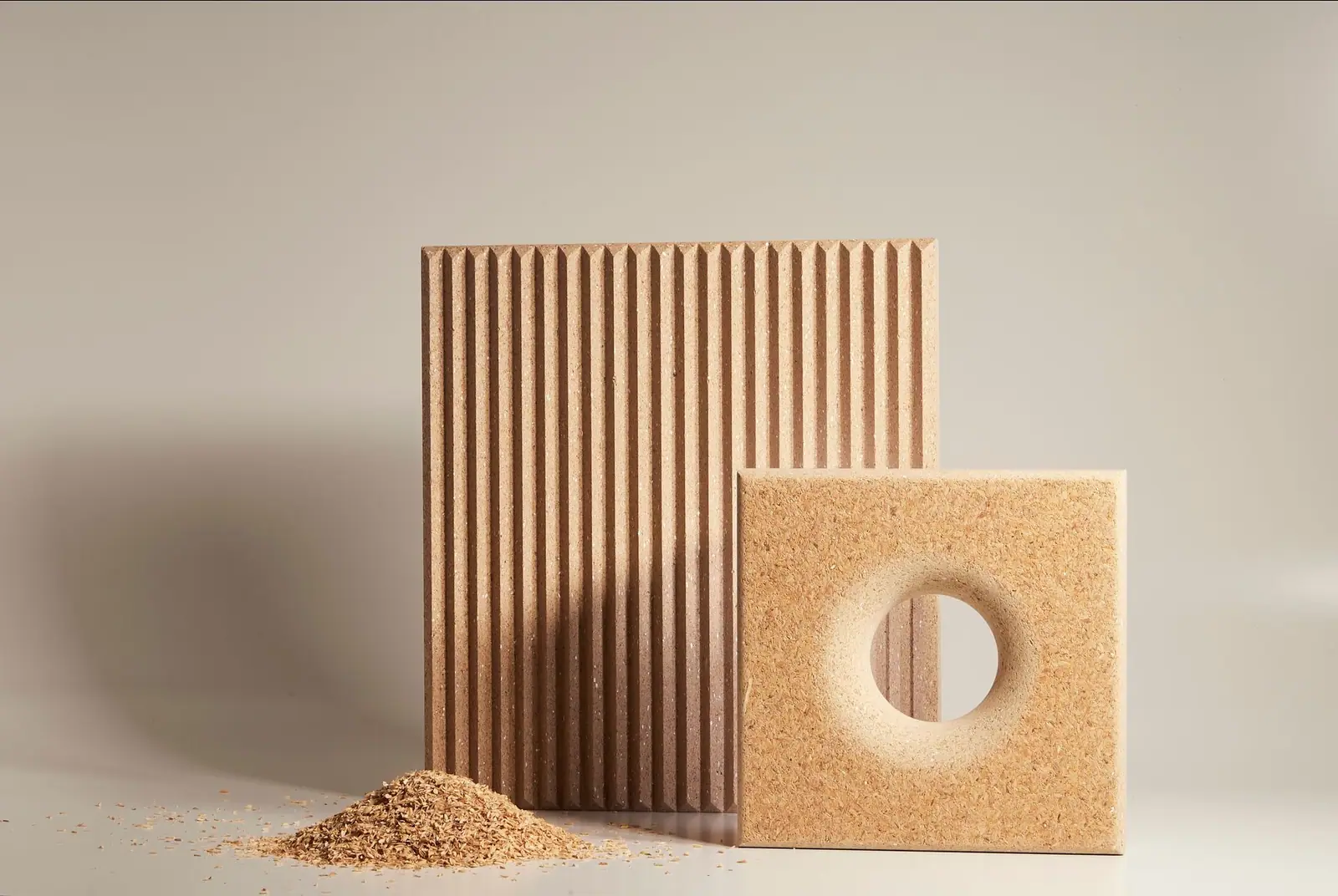
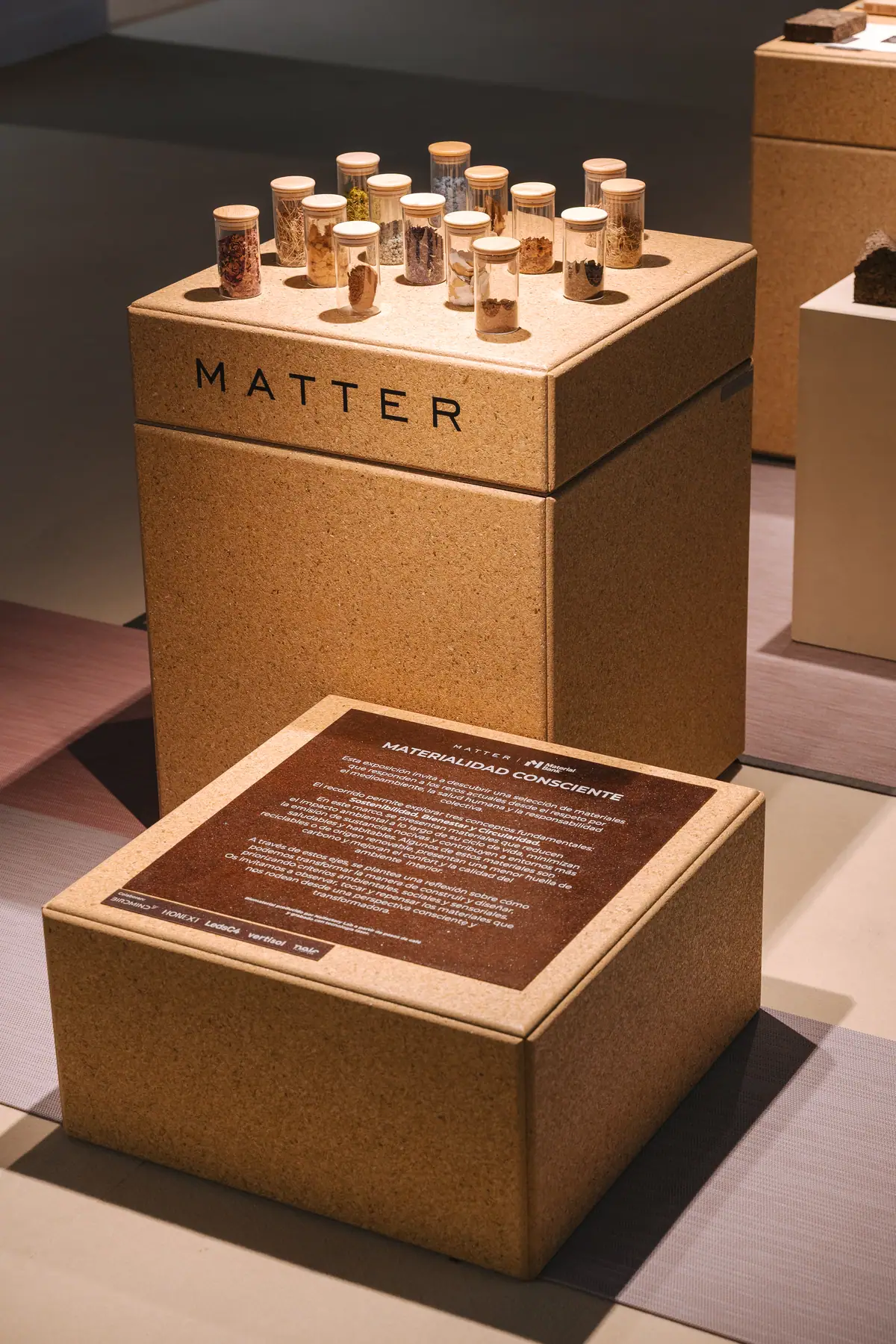
Work around circularity and the optimisation of resources in materiality is now a reality. One example is Naif Lab's collaboration with Matter on the signage for the Conscious Materiality exhibition: panels made from a biomaterial based on coffee grounds.
In this article we explain how that signage was made and how the system Naif Lab uses to produce it works, who is behind the studio and which families of biomaterials it develops, and how it has taken that research into an interior design project: Lunar Matter, the biomaterial created for the Casa Arkhé Experience Hub in Barcelona. We close with the points worth considering when designing with biomaterials.
Coffee-ground signage for Conscious Materiality
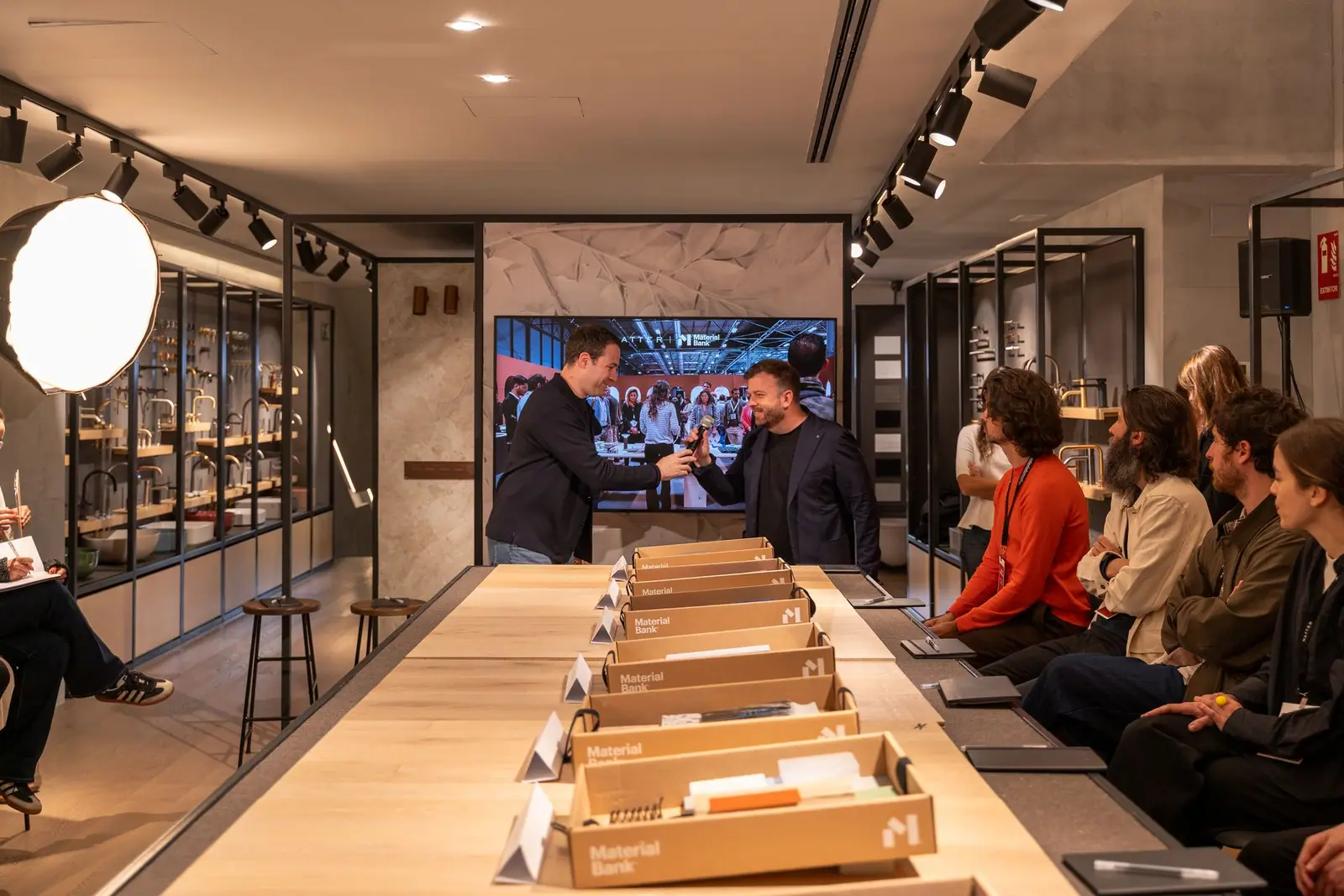
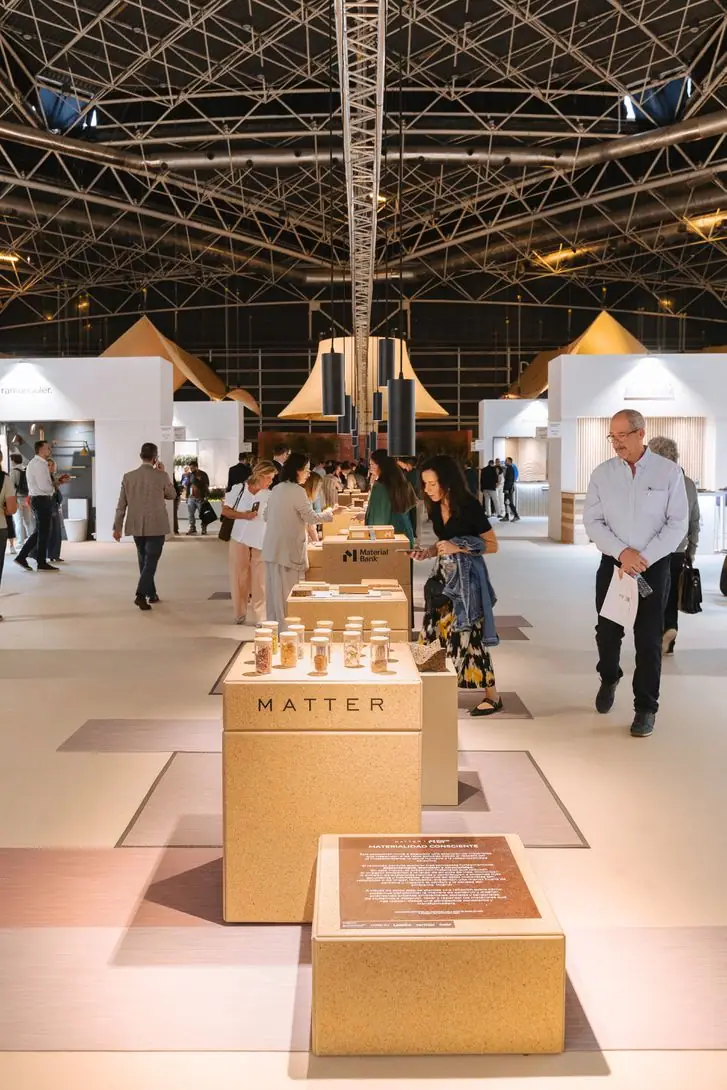
Conscious Materiality is the exhibition with which Matter, together with Material Bank, invites visitors to discover a selection of materials that respond to today's challenges with respect for the environment, human health and collective responsibility. The route is organised around three concepts —sustainability, wellbeing and circularity— and was presented, among other events, at Feria Hábitat València 2025, from 29 September to 2 October.
To shape the wayfinding and narrative elements of the show, we used a bespoke solution created from a circular logic. This biomaterial, made from coffee grounds and developed by Naif Lab, shows how material research can become a transformative tool: the signage itself becomes part of the exhibition's message.
CIBICO: graphic communication without inks
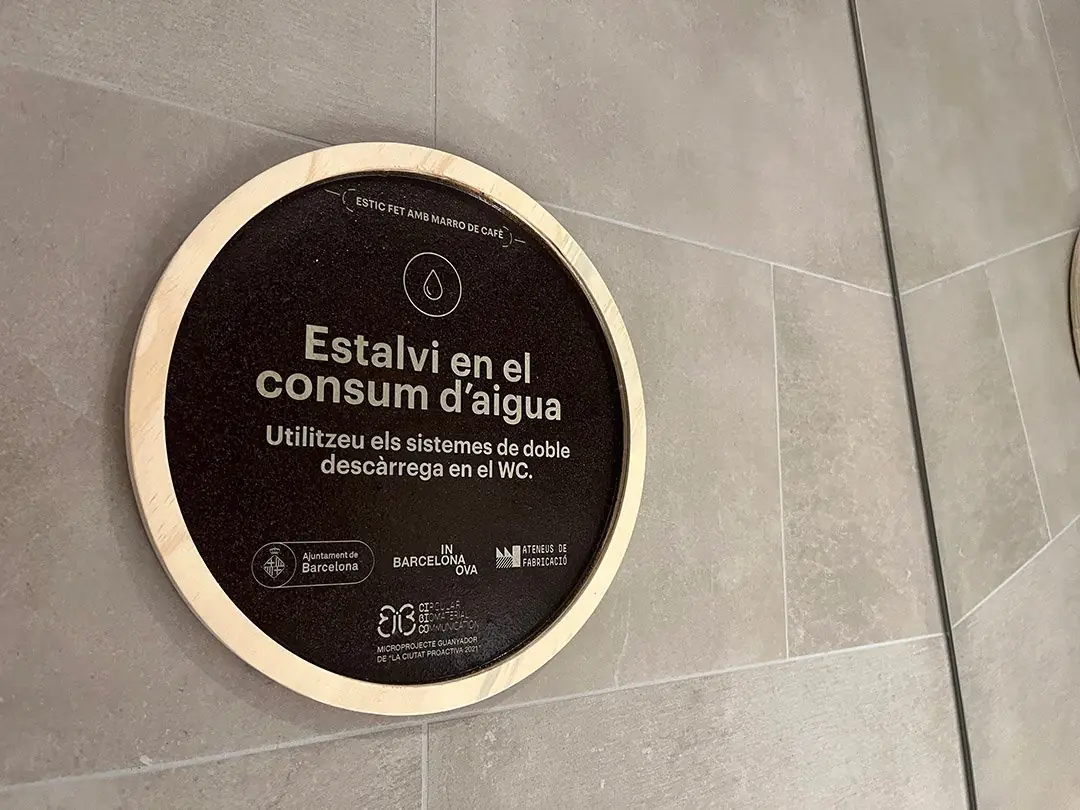
Naif Lab's signage is based on CIBICO®, the studio's own system combining biomaterial supports made from organic waste with digital fabrication. Graphics are laser-engraved directly onto the material, with no inks, and according to the studio the pieces can biodegrade or be composted at the end of their life. CIBICO was one of the winning micro-projects of La Ciutat Proactiva 2021, run by BIT Habitat (Barcelona City Council). These are some of the projects in which the studio has applied it:
- Disseny Hub Barcelona: temporary signage for World Environment Day, made with coffee and orange peel waste from the building's own café and engraved at the Ateneus de Fabricació.
- Ca l'Alier: permanent interior signage for Barcelona City Council's urban innovation centre, based on coffee waste on circular plywood frames, with a screwless, reversible and removable fixing.
- Landares Festival 2023: 14 × 14 cm signs pigmented with cochineal and a turquoise food colouring to guide visitors through the forest of Alcalá de la Selva (Teruel).
- Interihotel Awards 2023: trophies co-designed with the Ámbit Cluster, with a translucent CIBICO disc pigmented with cochineal on a base of Ulldecona stone.
Naif Lab, design that returns to nature
Naif Lab is a material design laboratory based in the Born neighbourhood of Barcelona. It is founded and directed by multidisciplinary designer Silvana Catazine, who trained in graphic design in Recife (Brazil), and architect Josean Vilar, who studied architecture and landscape design in Valencia and Barcelona. Its practice sits at the intersection of science, creativity and sustainability.
According to its founders, the studio grew out of a change of direction: after more than twenty years in design, fifteen of them devoted to ephemeral spaces, they asked themselves how design could create beauty without generating waste. Back in Barcelona they began researching materials made from organic waste, first as Naifactory Lab and today as Naif Lab.
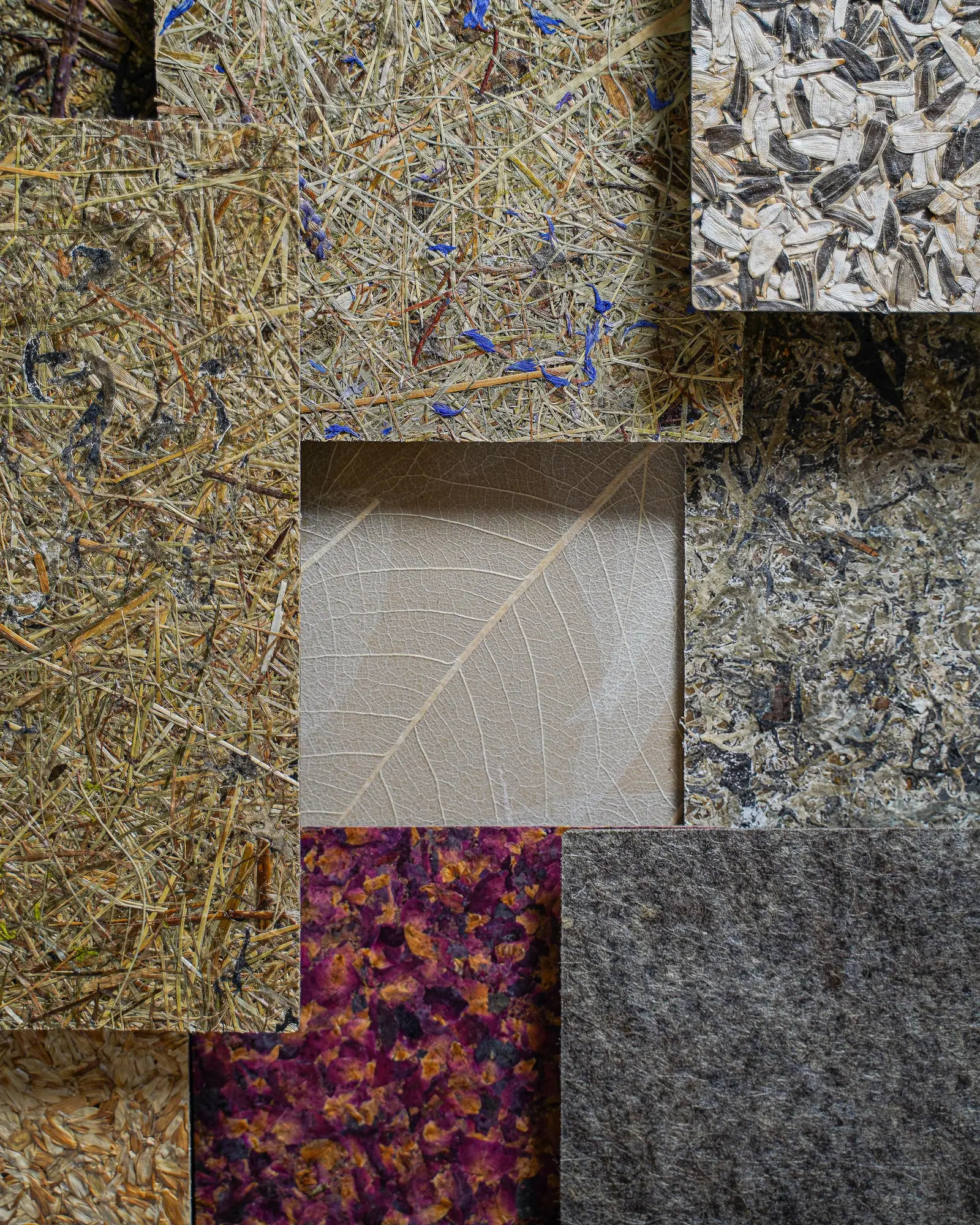
Naif Lab develops circular biomaterials obtained from organic waste such as coffee grounds and orange or onion peel, combined with natural pigments. Their applications span surfaces, installations, signage, experimental furniture and interior design projects that seek to bring together sustainability, innovation and visual expression.
Its work starts from a clear premise: reuse to regenerate, creating new biomaterials that are aesthetically appealing, technically functional and fully circular. Among its clients and partners it lists Mango, IKEA and the city councils of Barcelona and São Paulo, and among its awards, the Barcelona Agenda 2030 special mention (2023) and the Conama Ecodesign jury prize (2022).
The biomaterial families
Alongside its bespoke developments, the studio works with several material families. The table summarises those described in its projects and on its website:
Lunar Matter, the biomaterial for Casa Arkhé
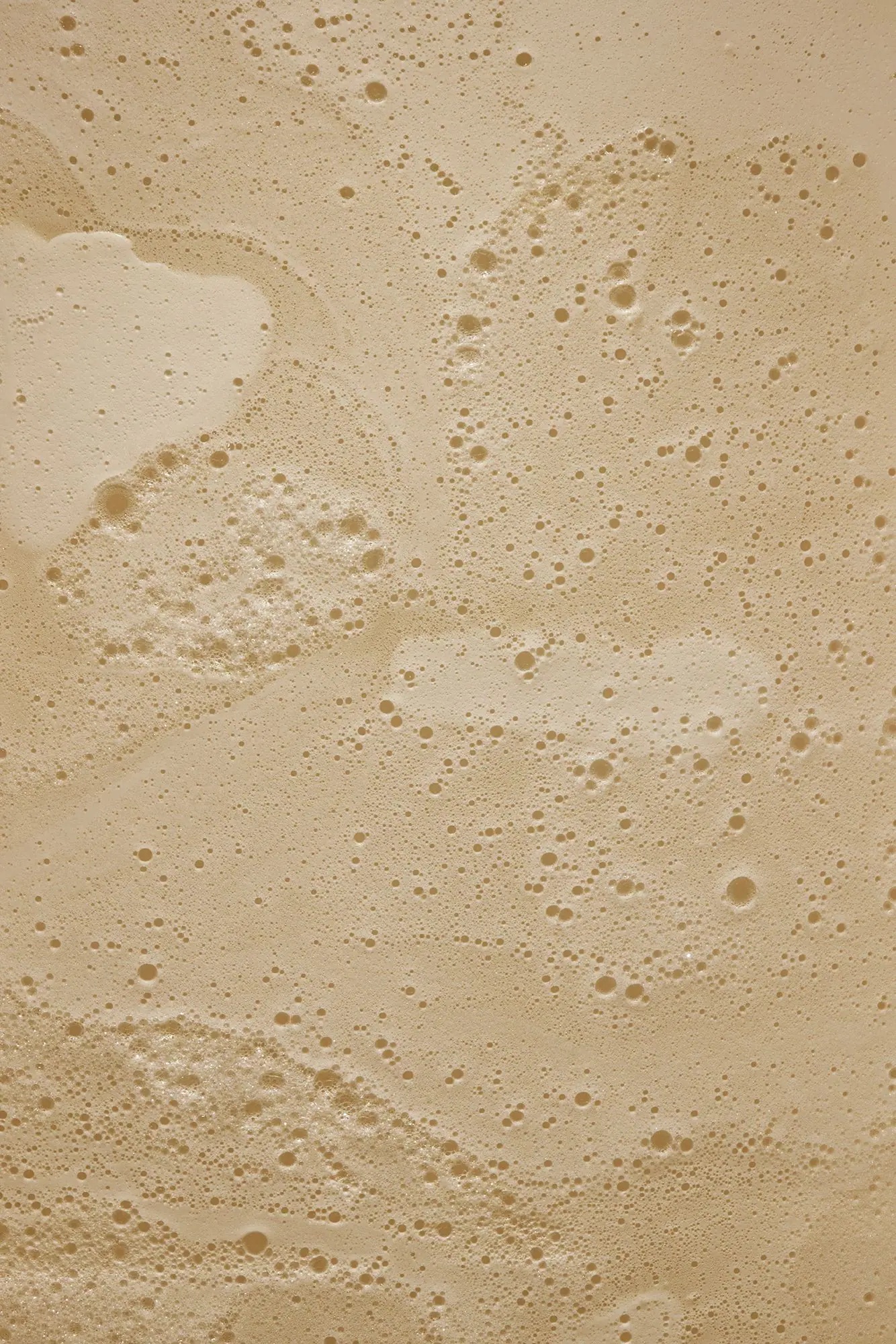
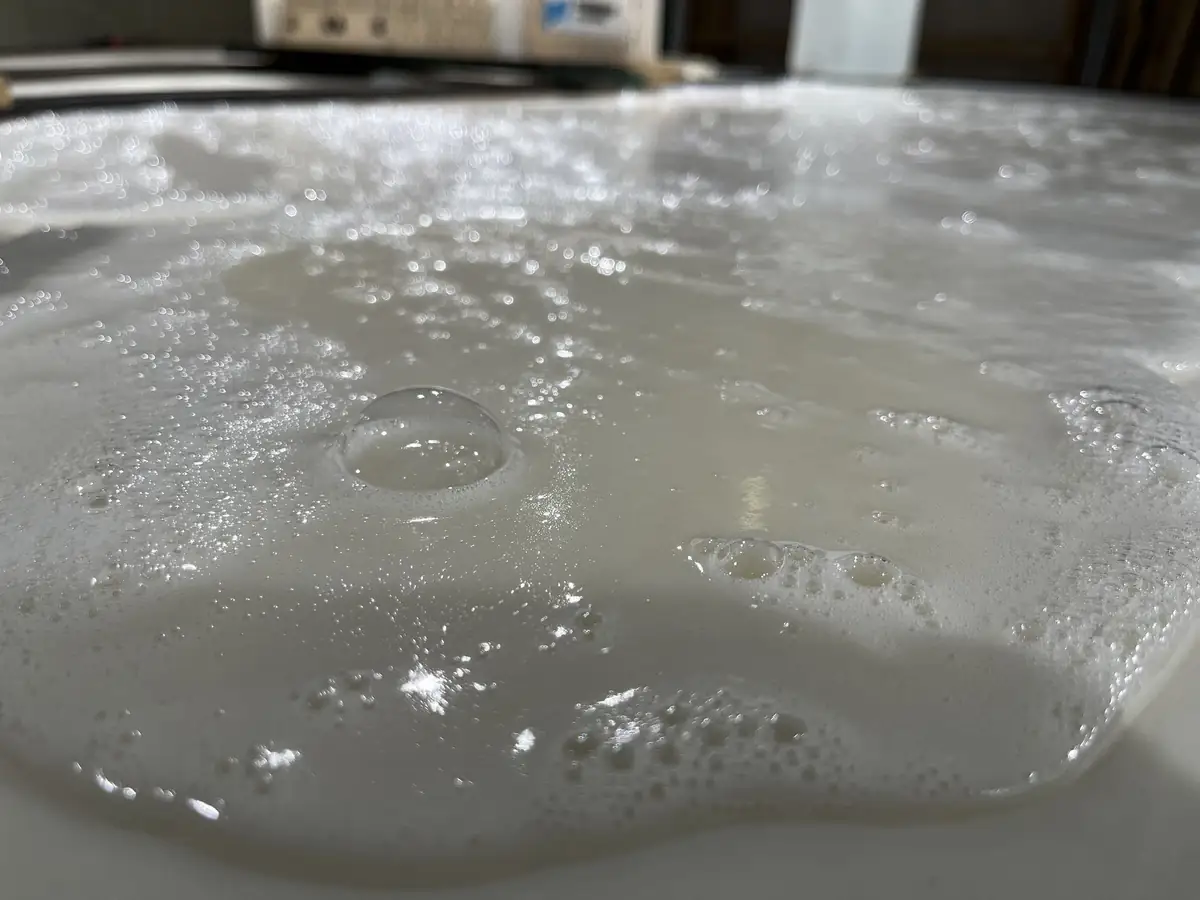
A collagen and soap biofoam for an interior design project.
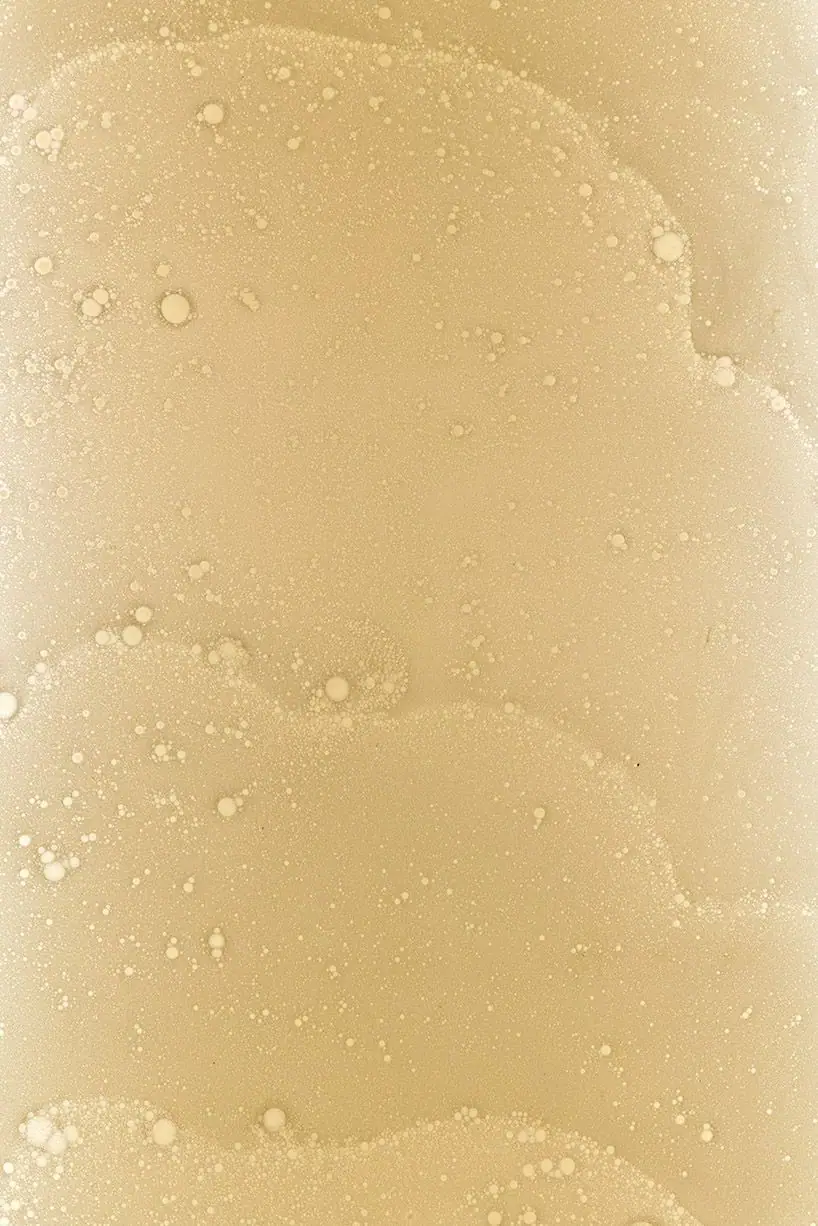
As part of its material research, Naif Lab has developed proposals that explore new aesthetics and applications. Notable among them is Lunar Matter, the biomaterial created for Casa Arkhé. To develop it, the team drew inspiration from the brand's cosmetic universe, exploring a bespoke material language that is subtle, mineral and almost ethereal.
The result is an experimental biomaterial formulated with soap and collagen: a light, translucent and soft material whose organic texture reacts delicately to light, transforming the perception of the space as visitors move through it.
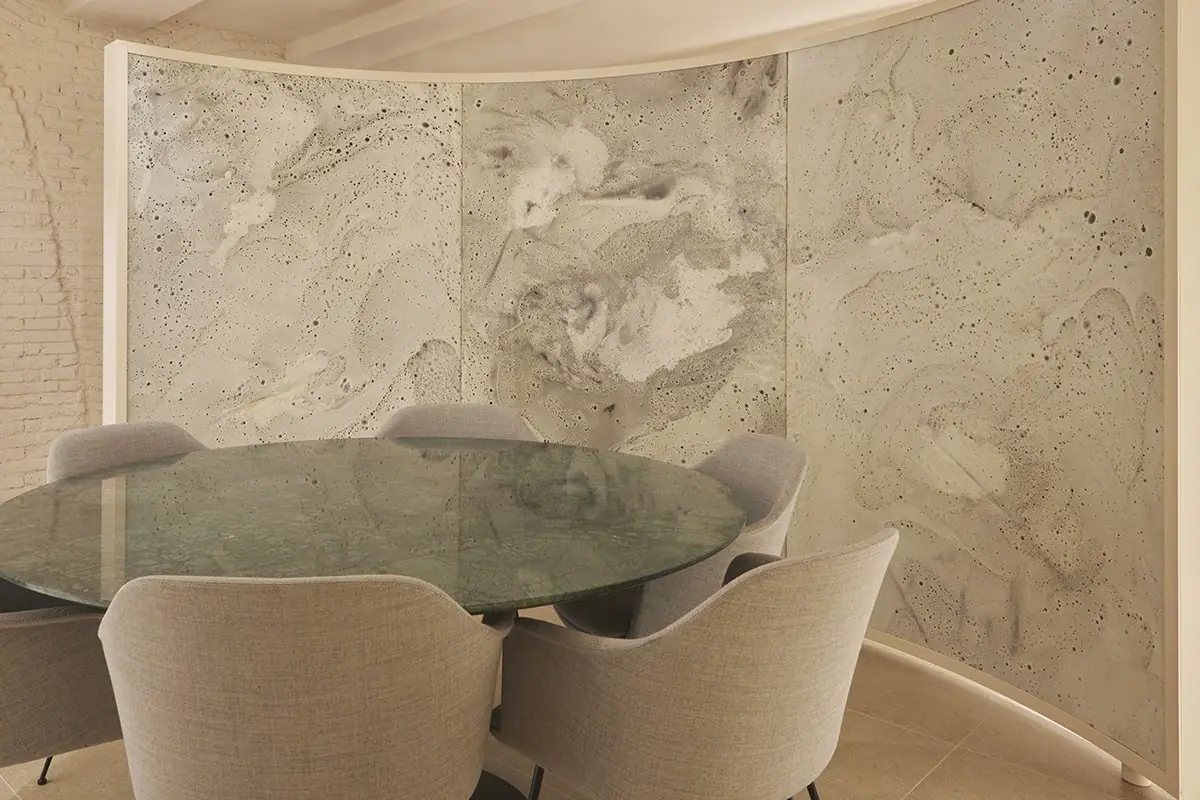
Casa Arkhé is the space of Arkhé Cosmetics, the professional haircare brand of VMV Cosmetic Group, opened on 10 November 2025 in Casa Ramón Oller, a modernista building in Barcelona. Its Experience Hub, designed by interior designer Alejandra de la Hoz, is devoted to exploring materials, light and the senses. The challenge she set Naif Lab was to create a new biomaterial and produce it in large-format pieces —up to 1.50 × 2 m— with stability, uniformity and a controlled interaction with light.
Screens, a circular element and five light panels
The collaboration took shape in two main interventions:
- Curved screens: two large-scale pieces that follow the flow of the space. The first works as a projection screen; the second encloses a meeting room at the back of the Experience Hub.
- Circular element: between the two screens, a sculptural piece in the same material supports a projection and acts as the sensory core of the installation.
- Backlit panels: five panels that wrap visitors in a luminous atmosphere; the light from behind reveals the internal structure of the biofoam.
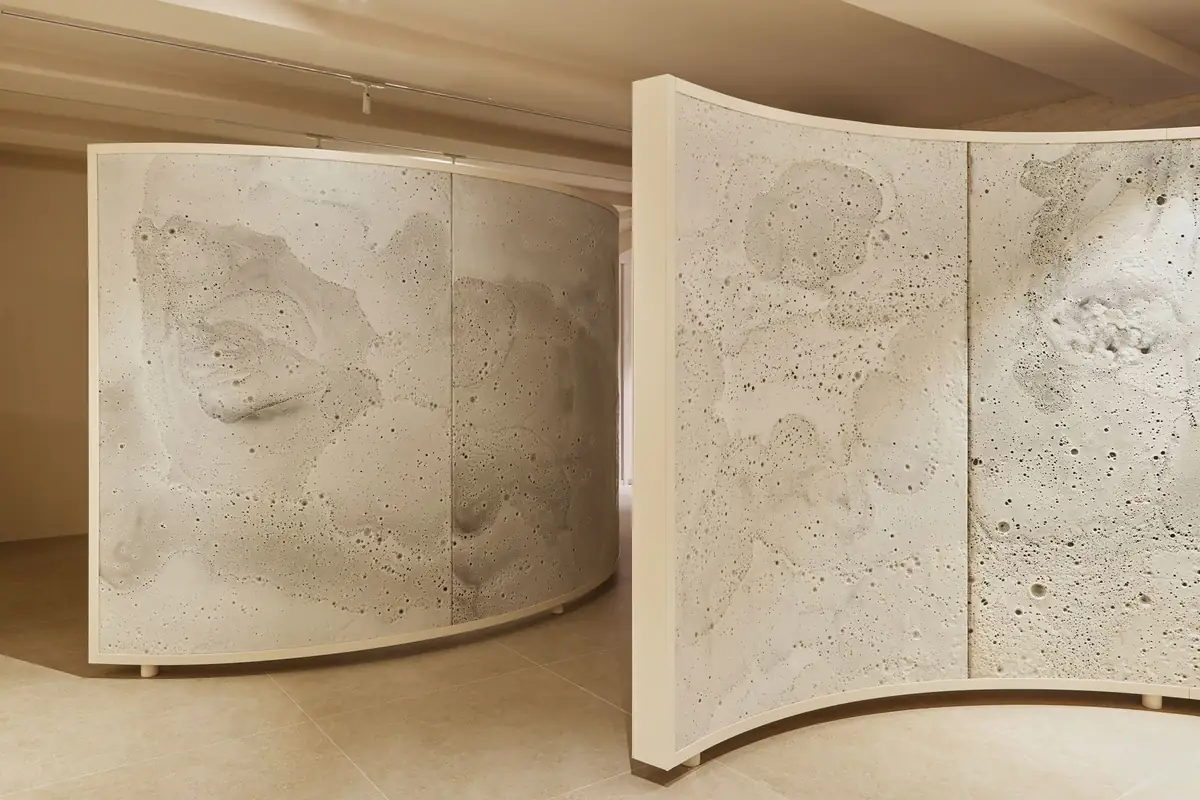
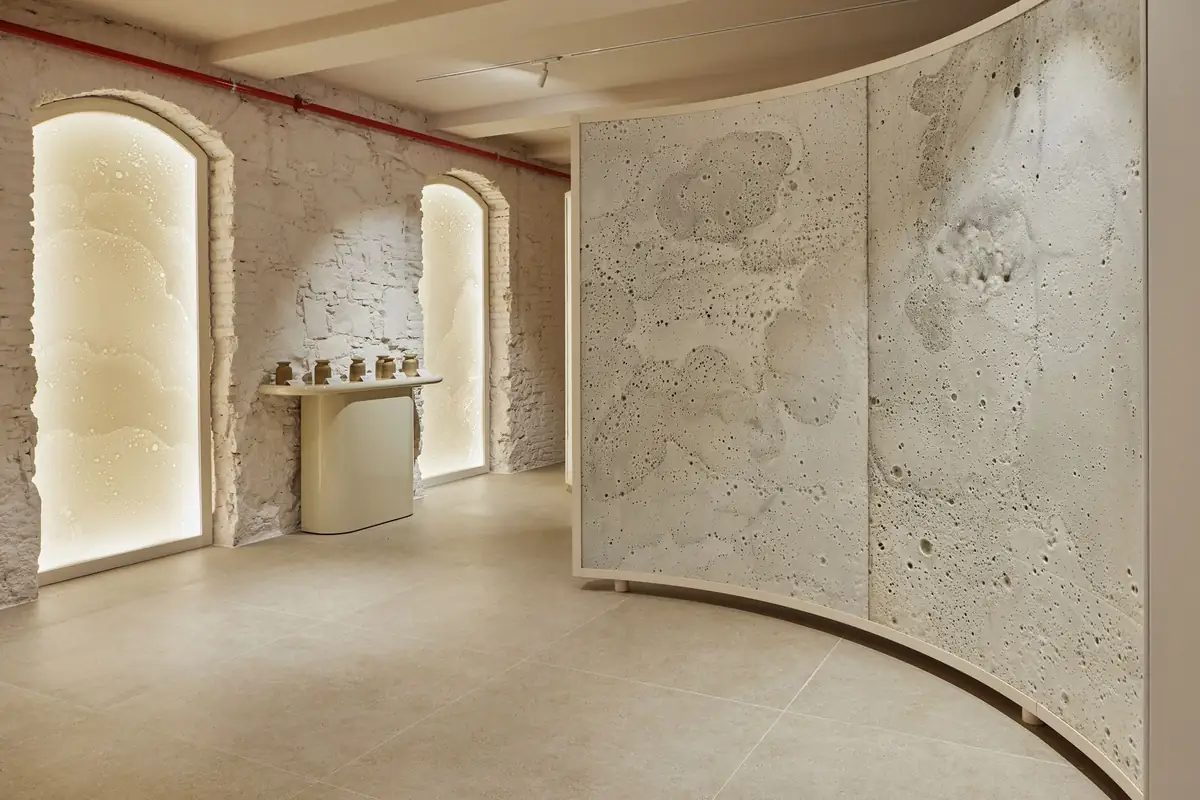
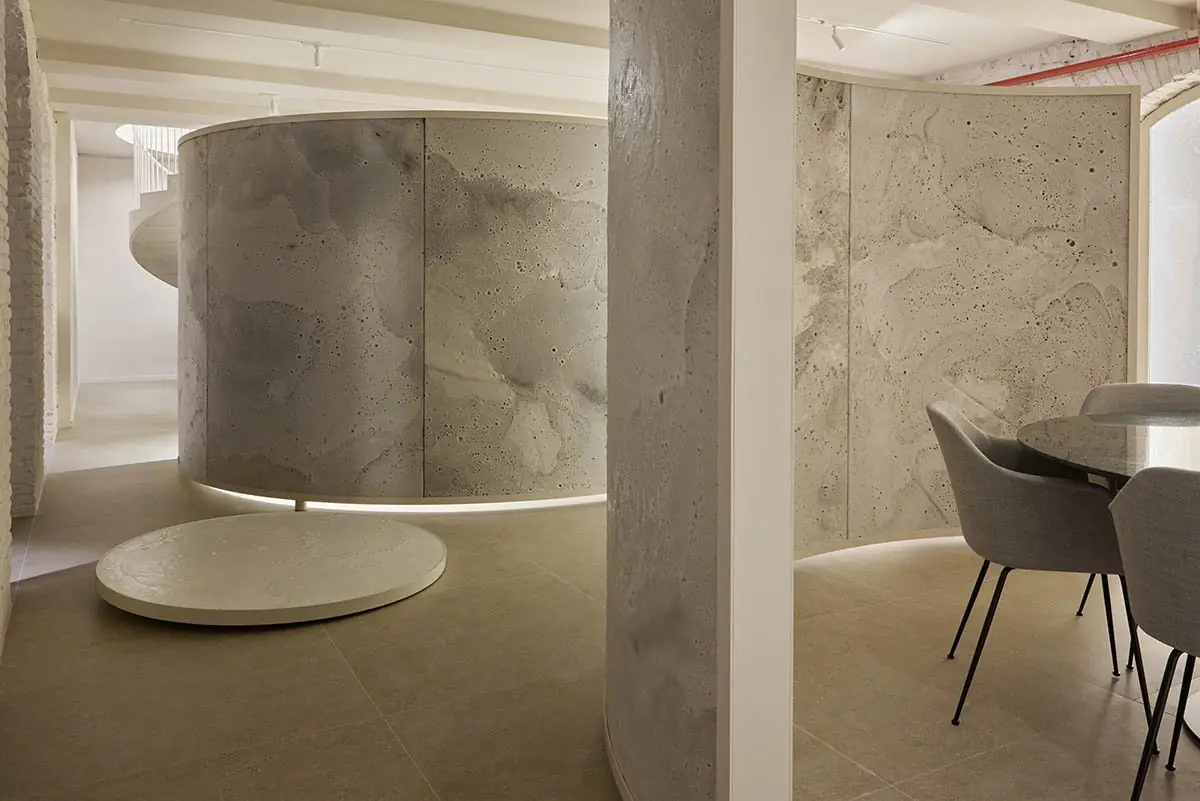
According to the studio, each piece was made through a process of material research, controlled drying and discreet reinforcement to ensure stability without losing visual purity. For Naif Lab, the project shows that biomaterials can reach architectural dimensions with stability and lightness.
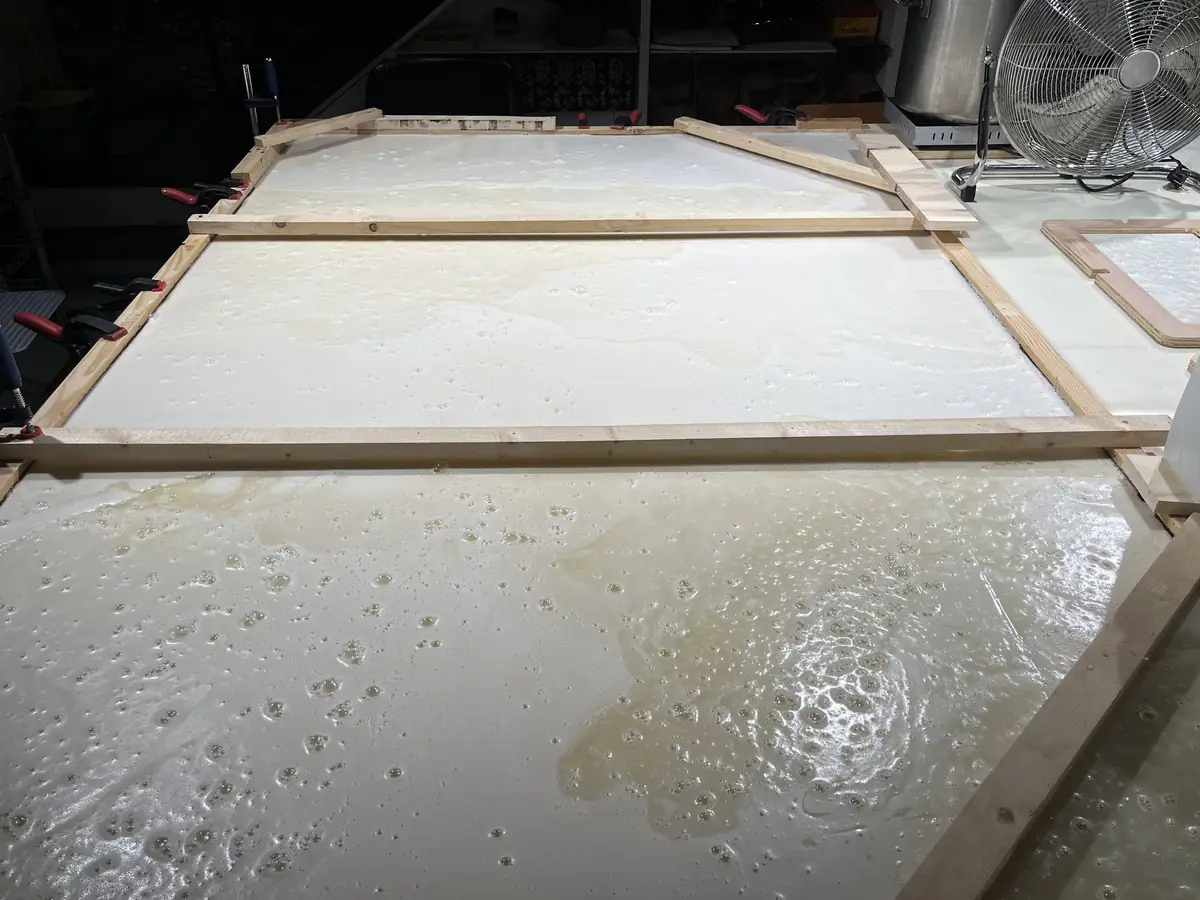
Casa Arkhé is conceived as a space in which architecture, light, objects and materiality build a unified sensory narrative. Lunar Matter becomes part of that narrative, bringing innovation, sustainability and an emotional dimension that places matter at the centre of the experience.
What to consider when designing with biomaterials
Biomaterials from a laboratory such as Naif Lab are not specified like a catalogue product. These are the points worth settling from the outset:
- Bespoke development: formula, colour and texture are adjusted to each commission. Allow time for research, prototypes and validation before production.
- Size and stability: Lunar Matter has been produced in pieces of up to 1.50 × 2 m with internal reinforcement; for larger sizes or other uses, check with the studio.
- Use and performance: the published projects are interiors, temporary or permanent. Reaction to fire and resistance to moisture or wear should be requested and checked for each application.
- Light: translucent materials, such as Lunar Matter or some CIBICO formulas, call for the lighting to be designed together with the piece, because light is part of the result.
- End of life: according to the studio, its biomaterials are compostable or biodegradable at the end of their useful life. Define in the project what will happen to the pieces once dismantled.
Frequently asked questions
- What is Naif Lab?
- A material design studio and laboratory based in the Born, Barcelona, led by Silvana Catazine and Josean Vilar. It develops biomaterials from organic waste and applies them to signage, installations, experimental furniture and interior design.
- What was the Conscious Materiality signage made from?
- From a Naif Lab biomaterial made from coffee grounds. The studio produces its signage with the CIBICO® system, which laser-engraves the graphics onto the biomaterial, without inks.
- What is Lunar Matter made of and where has it been used?
- It is a light, translucent biofoam formulated with collagen and soap. It was developed for the Casa Arkhé Experience Hub in Barcelona, where it forms two curved screens, a circular element and five backlit panels.
- Is biomaterial signage suitable for a permanent space?
- The studio has used it both in temporary installations (Disseny Hub Barcelona, Landares Festival) and in the permanent interior signage of Ca l'Alier. In each case, use, location and maintenance should be validated with Naif Lab.
Through collaborations such as this one with Naif Lab, at Matter we reaffirm our commitment to promoting materials that not only meet technical needs, but also expand the sensory and circular vocabulary of contemporary design. Our philosophy is based on clarifying materiality and enabling better-informed decisions in architecture and interior design projects.
Book a visit to Matter to discover circular materials and biomaterials and to discuss with our consultancy team how to bring them into your project.