Textile comfort in interior spaces
Nine architecture and interior design studios and Lamadrid Contract explain at Matter Barcelona how textiles create comfort in hotels, shops and homes.
EventsBest Practices Matter5 of 1212 min read
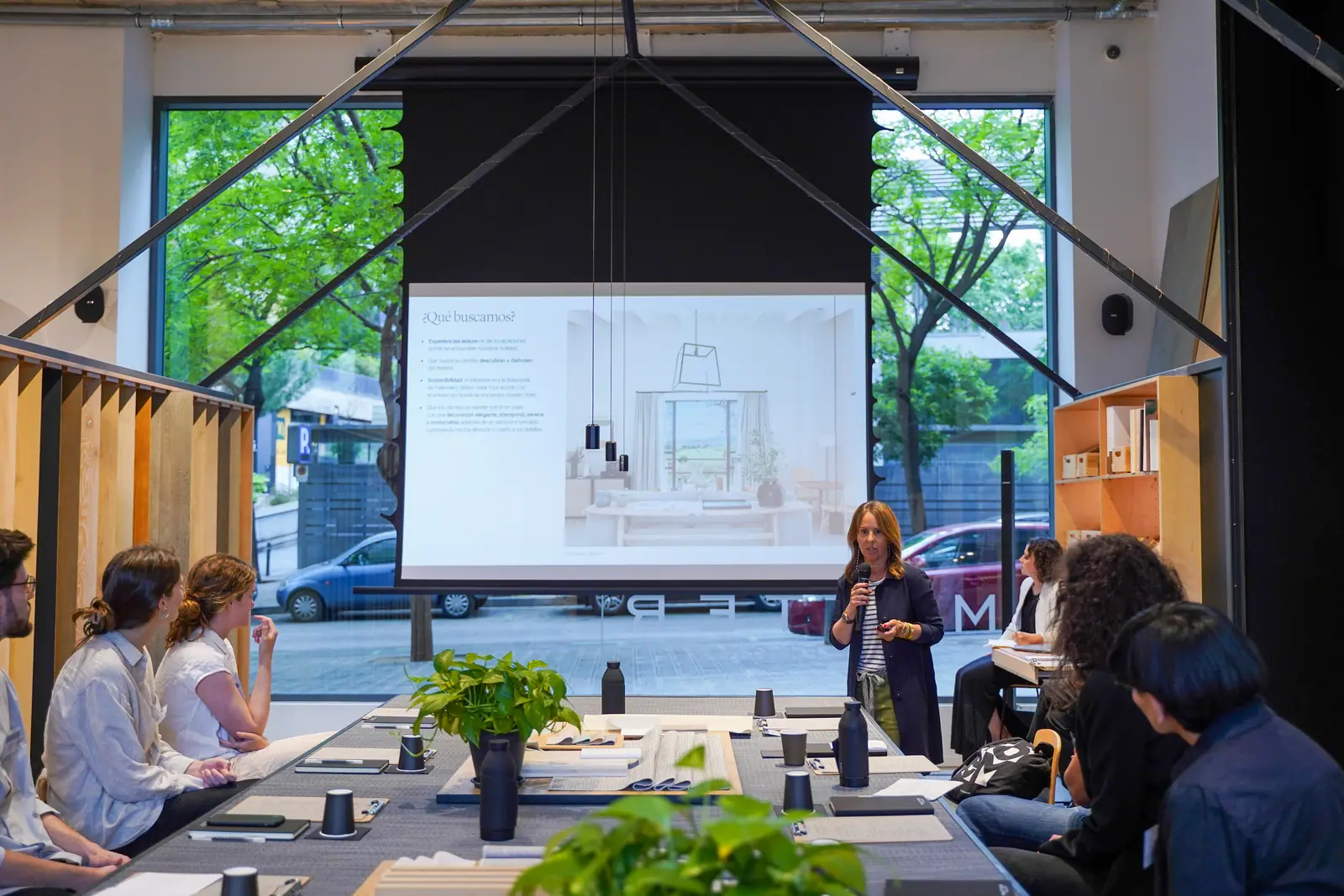
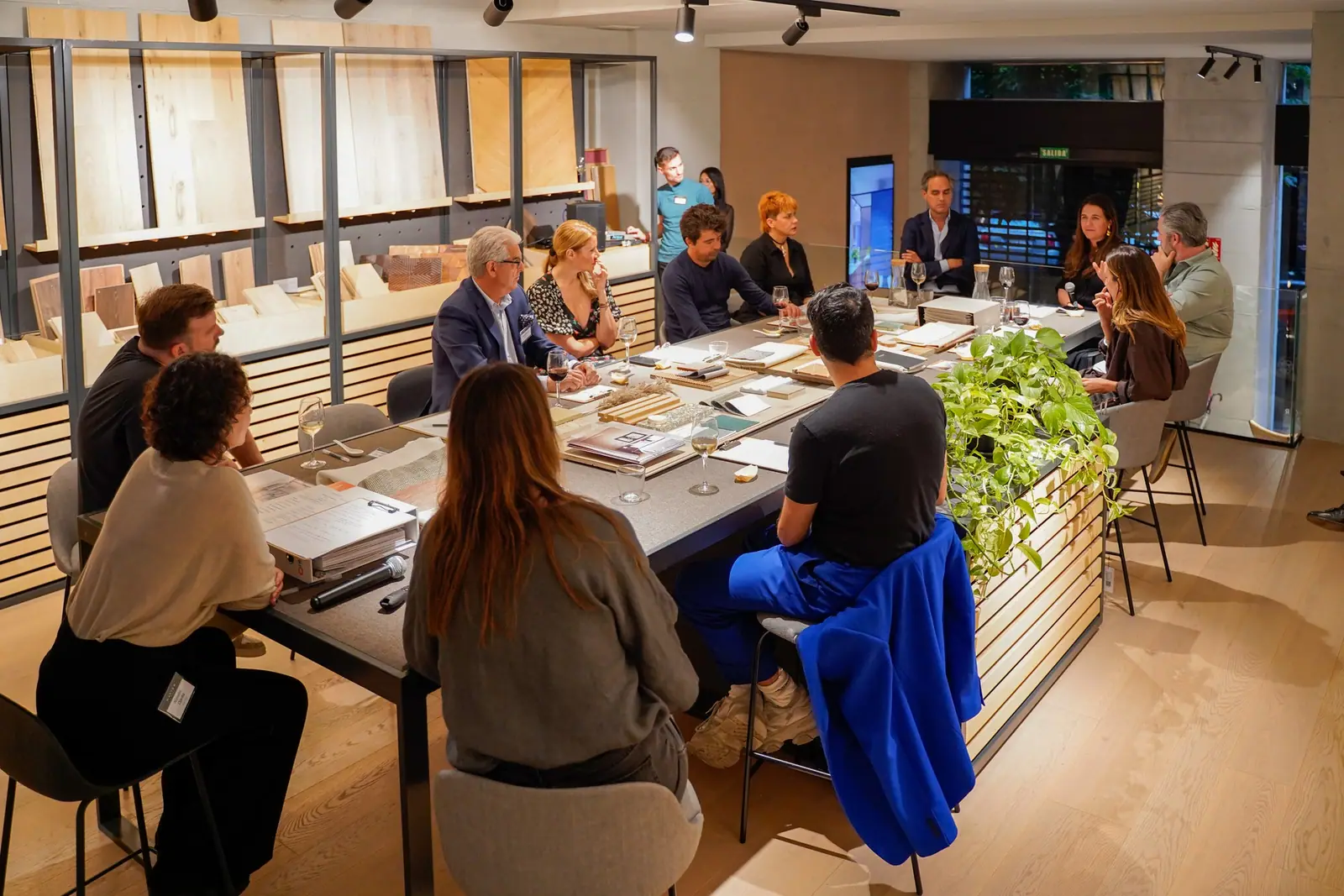
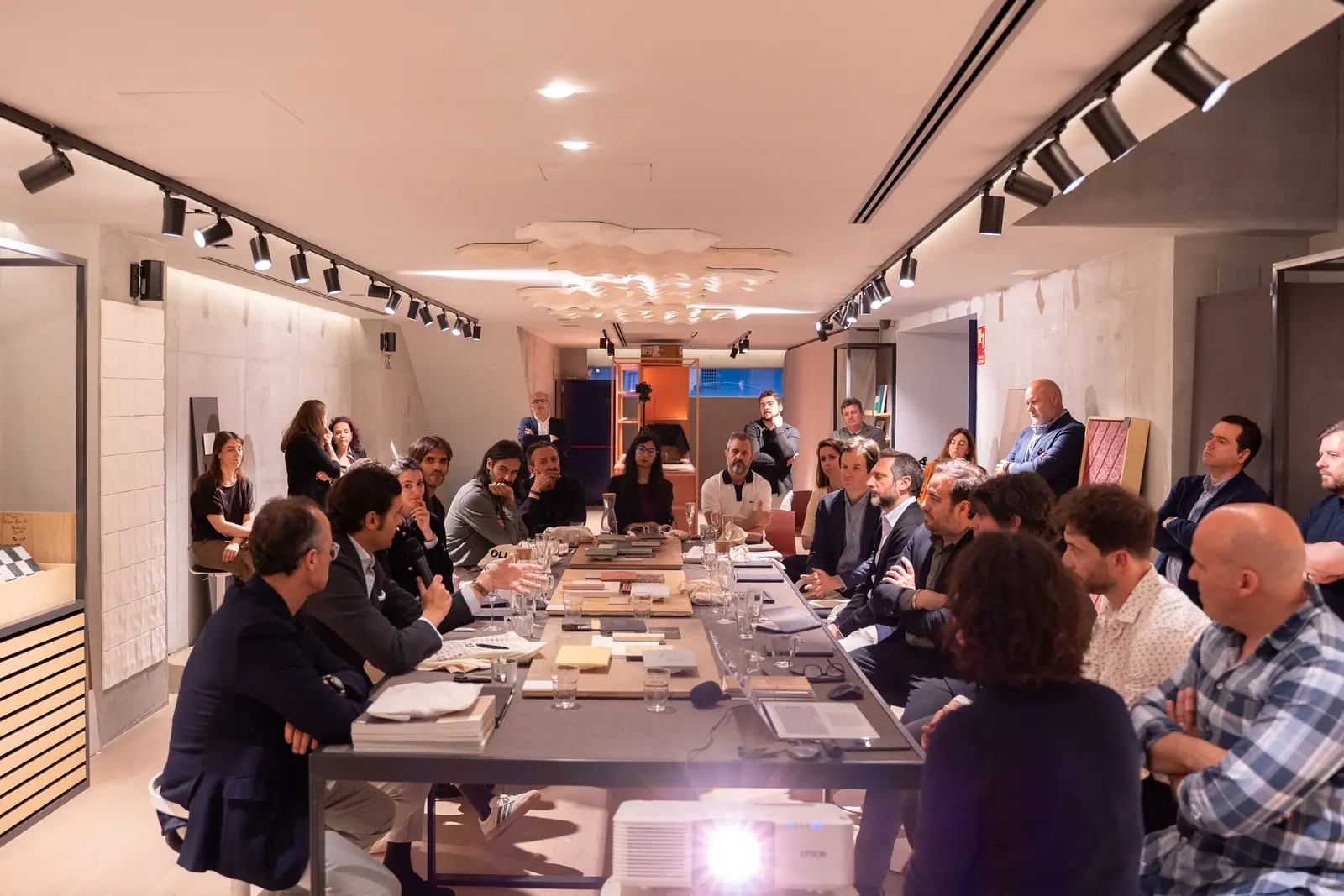
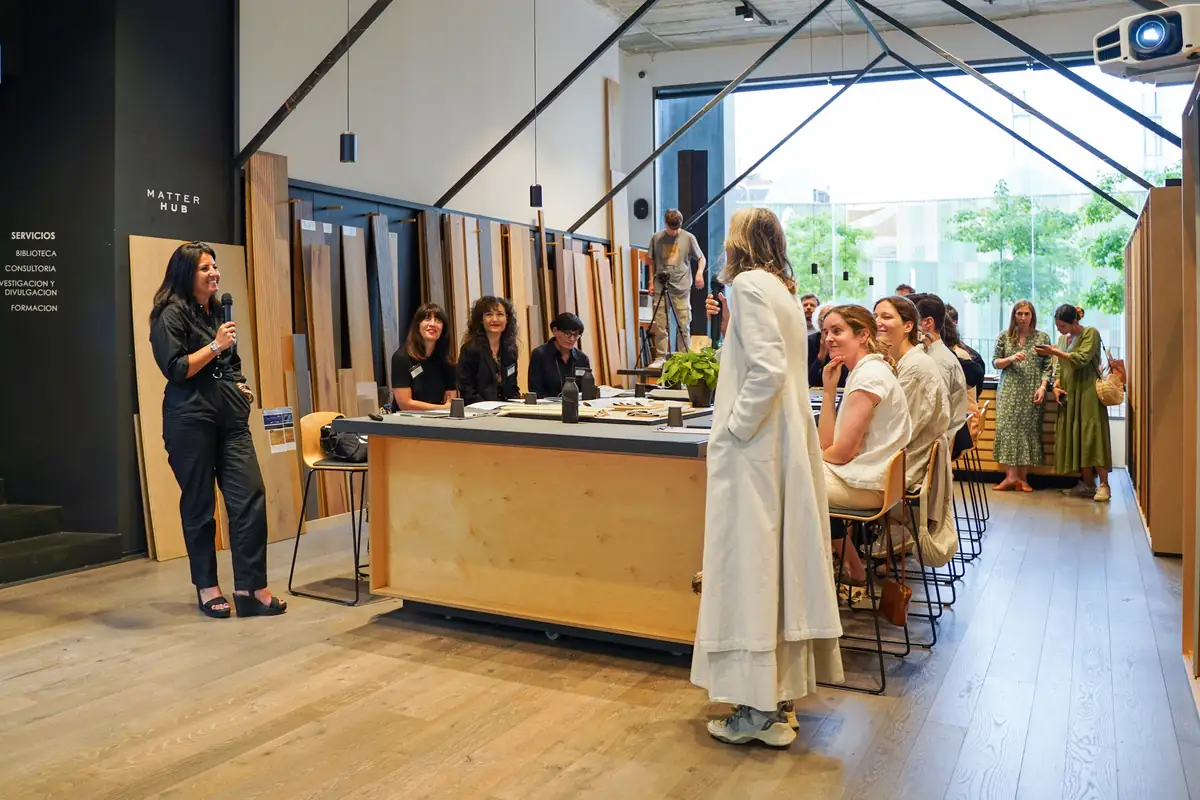
Working with textile elements, we can build a space visually and convey feelings through touch. This edition of Best Practices Matter, held at Matter Barcelona with the sponsorship of Lamadrid Contract, explores the importance of textiles in new-build and refurbishment projects in creating wellbeing and comfort for users, through the experience of nine architecture and interior design studios.
Most of the projects presented were hotels — in Mallorca, the Costa Brava, Seville, Barcelona, Ibiza, Marbella, Georgia, Morocco and the Bahamas — along with shops, stands and homes. From this variety of perspectives, we see how fabrics offer multiple creative resources for design, with a broad range of applications from decoration to the creation of architectural elements. Here we summarise the ideas of each presentation, the technical criteria that came up repeatedly and the conclusions of the final round table.
Why textiles are key to interior comfort
The aim of interior design is to create pleasant spaces that offer a harmonious environment to the people who inhabit them, and textiles are one of the resources most relied upon to achieve it: they bring softness, warmth or coolness, control light and privacy, and can act both as a finish and as an element that organises space.
Best Practices Matter is our series of meetings between architecture, interior design and industry: a space for dialogue in which professionals share projects around a common theme to exchange experiences and discover new perspectives together. In this session, the common thread was fabric understood both as a sensory material and as a technical one, with requirements for safety, durability and maintenance.
Speakers and projects
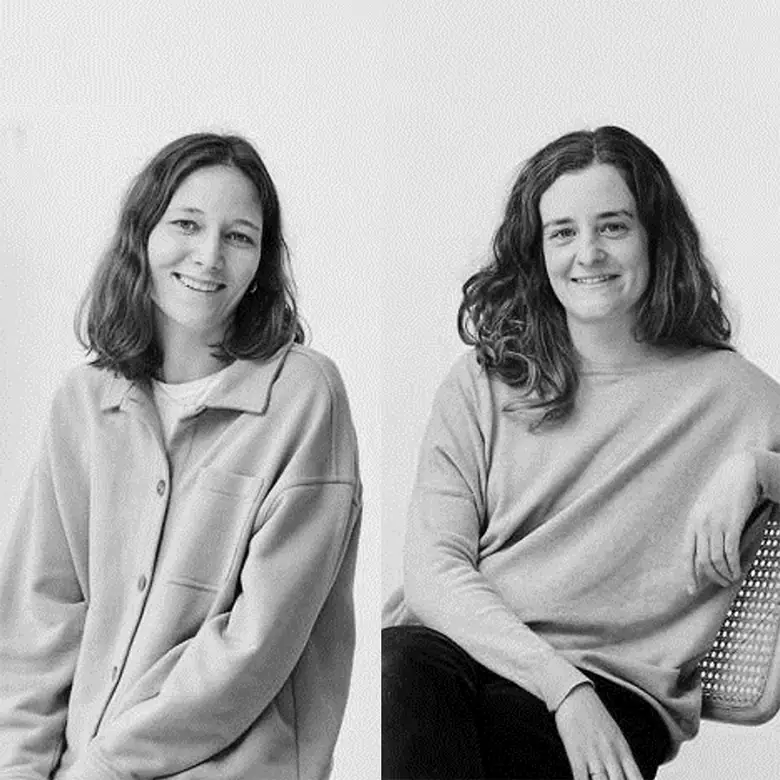
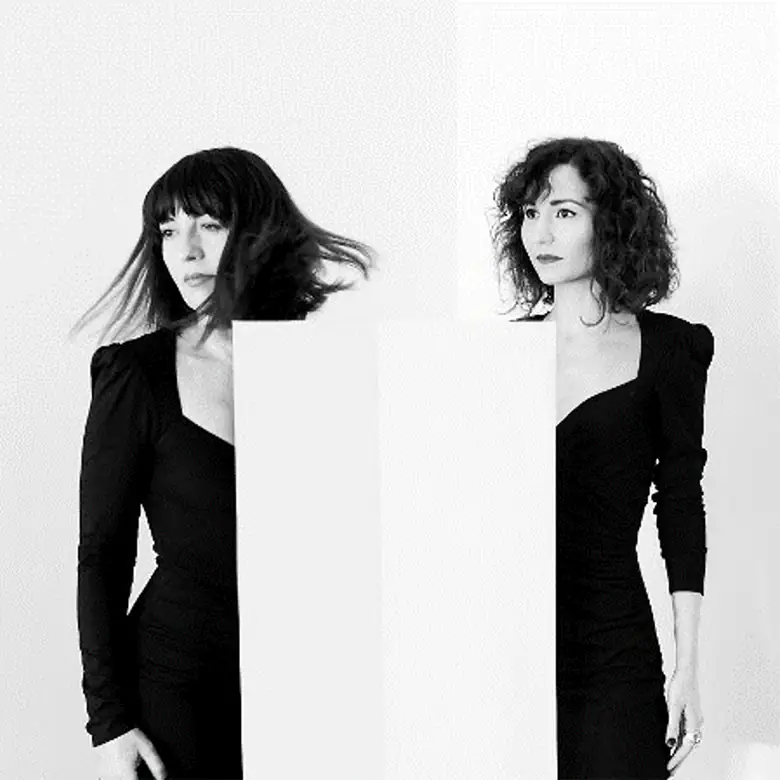
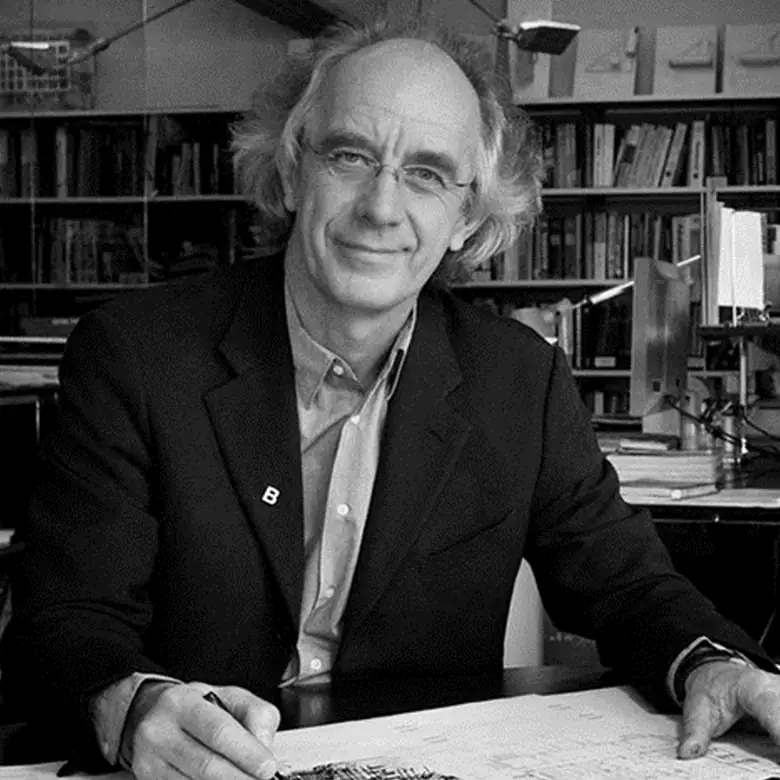
Nine studios took part in the session, together with Arantxa Esnaola and María José Alasa of Lamadrid Contract:



Textiles for hotels: comfort, regulations and maintenance
Four presentations on fabrics that have to withstand intensive use.
Único Hotels — Mas de Torrent and Finca Serena
Choosing fabrics is an essential part of any project, and of a hotel in particular. As interior designer Pilar García-Nieto of Único Hotels put it, they are a key family of materials for providing comfort through their softness and coolness.
“We always want guests to find an elegant, timeless and serene decor, but each with its own personality and style.”
— Pilar García-Nieto
The materials of each hotel are approached through an understanding of its surroundings. Único Hotels has worked with Grupo Lamadrid, which advised on and supplied the textiles for two of the chain’s projects: Mas de Torrent Hotel & Spa, in Girona, and Finca Serena, in Mallorca. Both are dominated by a range of neutral colours, such as ecru and taupe, with touches of colour — copper, green or mustard — mainly in elements that can easily be changed over time.
Mas de Torrent keeps the essence of a country house with contemporary decor: lime-washed walls combined with linen fabrics and cotton sheets, contrasting with the Catalan tufa floor and its original patina. Finca Serena draws on wabi-sabi, with an image that could be described as rustic minimalist: natural fabrics combined with natural stone, solid wood and other local materials.
For curtains, indoor and outdoor upholstery and bed linen, the team highlighted three requirements from its experience:
- Regulations: meeting all the required standards, especially fire protection.
- Durability: high-resistance fabrics designed for intensive use.
- Maintenance: easy washing and ironing; stain-resistant treatments extend their resistance and improve their aesthetic and environmental performance.
Bedwell Studio — Rockwell Island Resort, Bahamas
Bedwell Studio, the architecture and design studio Katherine Bedwell runs in Barcelona, also highlighted the importance of textiles in hotel projects: a continuous dialogue between materials, textures, tones and fabrics that encourages rest and wellbeing.
“We select materials and treat them honestly, creating spaces that invite you to contemplate, live and feel them fully.”
— Katherine Bedwell
The studio prioritises three aspects. Sensoriality, which connects with users through warmth, softness and coolness. Integrated solutions that regulate light and sound — filtering or blocking them as needed — to allow truly restorative rest. And functionality, associated with durability and sustainability: easy-to-maintain, natural materials and fabrics with a low ecological footprint and a positive impact on health.
This is reflected in the Rockwell Island Resort project, developed with Oppenheim Architecture in the Bahamas. Surrounded by tropical vegetation, the design uses lattices that filter light and provide privacy, and cool, light-coloured fabrics: cotton and linen bed linen and, outdoors, Trevira fabrics with a natural finish and high weather resistance.
Verum — From the decorated hotel to architectural textiles
Jordi Cuenca, founder of Verum Hotel Development, traced the evolution of hotel interior design through his own projects. The older ones, such as Hotel Gran Derby or Hotel Banke in Paris, show a tendency towards elements laden with detail and decoration in finishes, furniture and lighting.
Today, by contrast, the tendency is towards more minimalist spaces, with elements that are not only aesthetic but functional, and textiles are once again an architectural element. Hotel Aguas de Ibiza, in Santa Eulària des Riu, uses curtains on the canopies and on the building’s façade; the Amàre Beach Hotel Marbella defines space with textiles, creating a flexible environment that can be opened or closed to the outside as the occasion requires.
Moem Studio — Hotel Villa Emilia, Barcelona
“That was when we realised how important textiles are, and the difference a simple curtain can make.”
— Emma Redondo and Montse Garrigós
Villa Emilia is a 53-room urban hotel in Barcelona’s Eixample, a family business owned by a Franco-Catalan family, whose first interior scheme of textiles, finishes and furniture was done by the owners themselves. Moem Studio was later commissioned to refurbish the rooms, corridors and events room to bring harmony to the whole. The owners asked to keep certain elements, in particular some aubergine-purple curtains, which determined the choice of all the new finishes and furniture.
In the rooms, a chaise longue upholstered in stain-resistant, flame-retardant velvet serves as an extra bed: its cushion has a latex layer on the underside that allows it to be used as a mattress. The headboard was designed in two modules to make maintenance easier, with a flame-retardant faux-leather finish and cushions on the front.
All the textile elements were designed with maintenance in mind: cushions fixed with Velcro and fabrics with removable, machine-washable covers, so as not to depend on dry cleaning. Together with the colour scheme, the lighting and the timber in finishes and furniture, the result is a French-inflected, contemporary and fresh aesthetic, consistent with the common areas that had already been refurbished.
Fabric as an architectural element
When fabric stops being a finish and defines the space.
Francesc Rifé Studio — Vibia, Cosmic and ASH Mallorca
“We always aim for all our projects to be deeply sensory; to tell stories of light and materiality.”
— Jaume Abril
That pursuit is the origin of Francesc Rifé Studio’s relationship with textiles, understood as a versatile element in design and architecture. On the stand for the lighting brand Vibia at Euroluce 2015 in Milan, fabric is used with varying degrees of translucency: the play of transparencies hints at shadows and movement behind a fully translucent façade that invites visitors in. In the project for the Cosmic brand in Frankfurt, fabric becomes an architectural element that organises the space and divides areas in a gentler, more flexible way than conventional partitions.
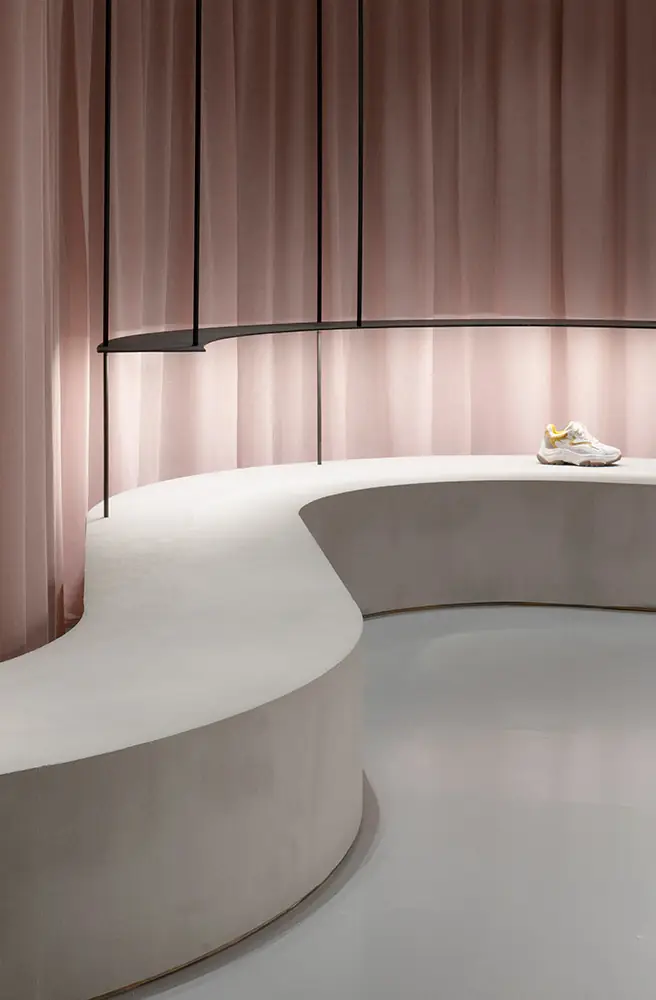
In the ASH Mallorca shop, fabric becomes the core of the concept. Starting from a requirement for short build times and low costs, textile is used as the boundary and final finish of the premises: a continuous, lightweight pink curtain running around its perimeter. A curved timber system that snakes through the space gives the curtain a clean, even drop, brings movement to the whole and, together with the lighting, creates a stage set against the hardness of the microcement.
Septiembre Arquitectura — Tsinandali Hotel, Georgia
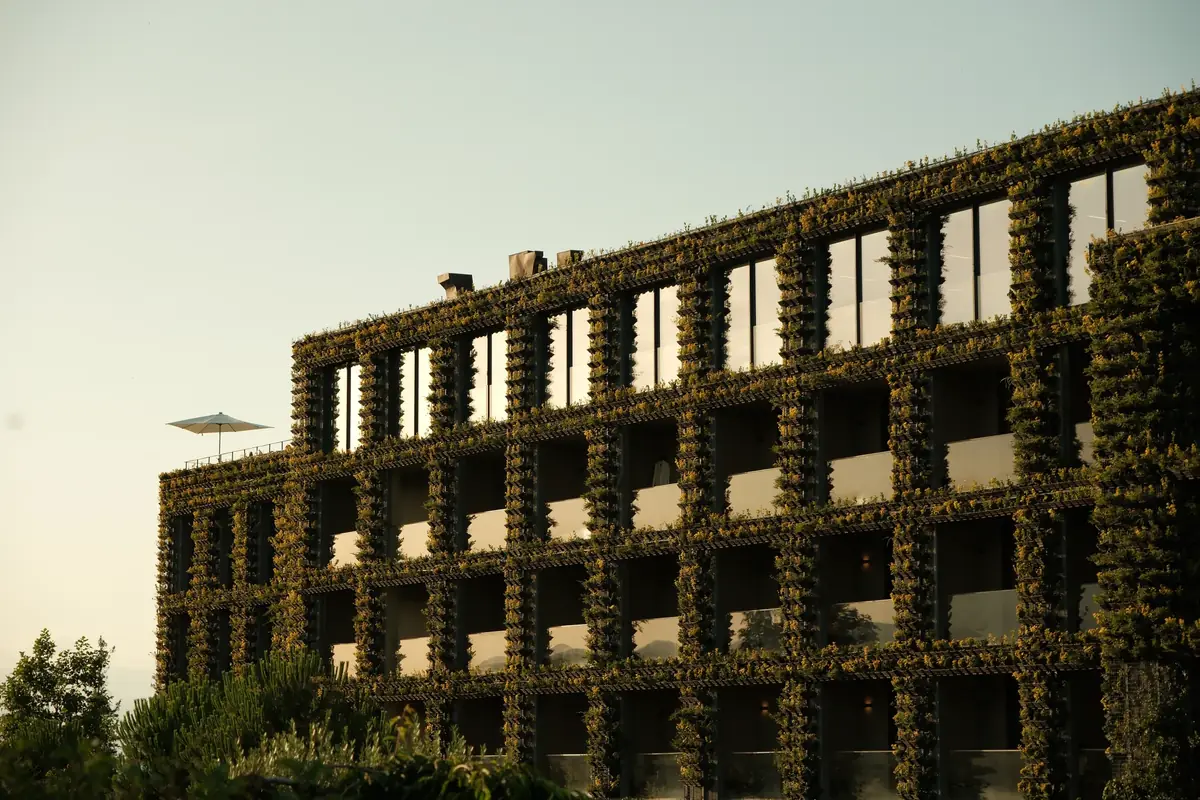
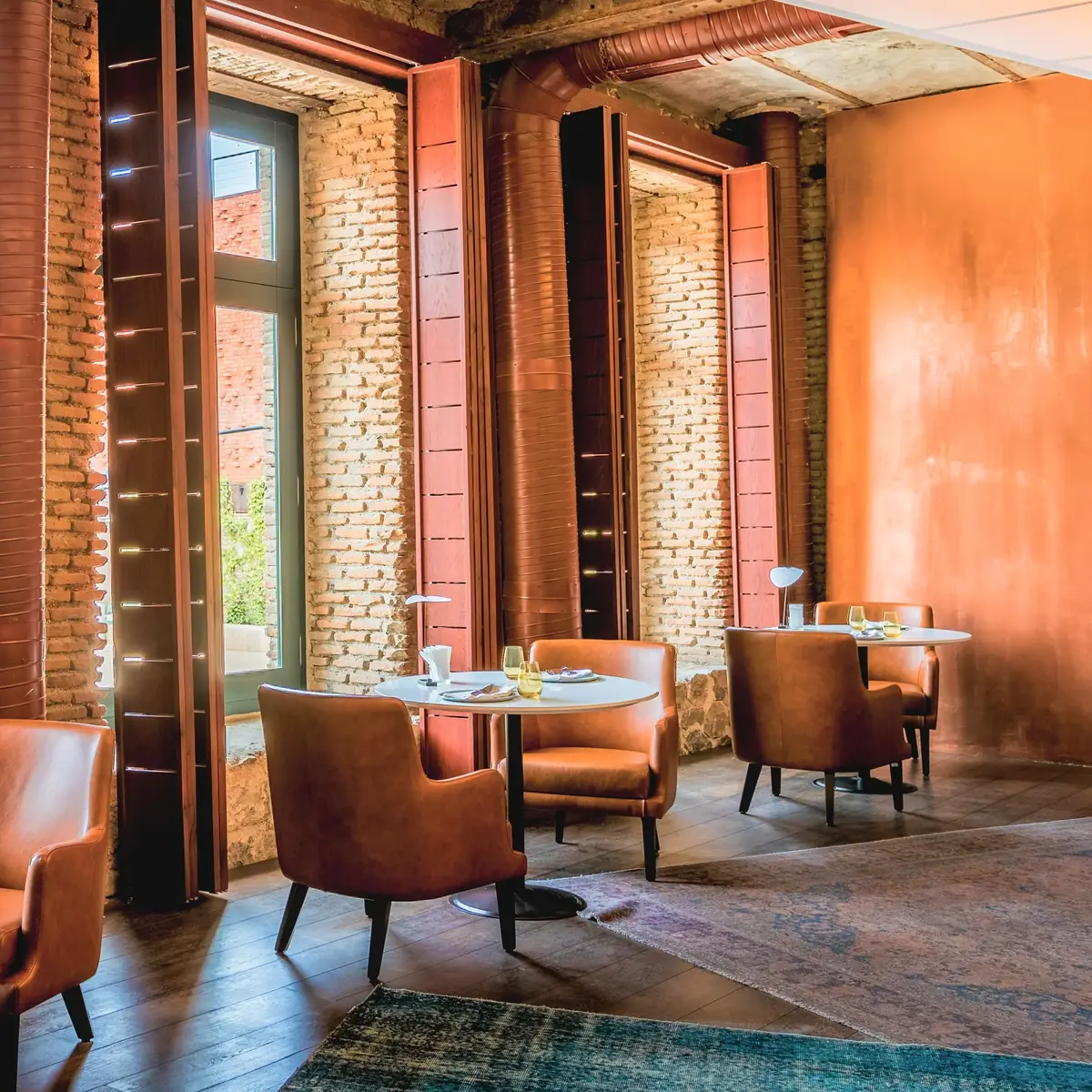
At the Radisson Collection hotel in Tsinandali, in Georgia’s Kakheti region, fabrics take on particular importance and give the project its character. Next to the historic estate, Septiembre Arquitectura was responsible for the interior design of a new annexe building housing the rooms, lobby, library and spa.
The project rests on three pillars — culture, technology and nature — and proposes an abstraction of the seasons of the year, one for each of the building’s four floors. The concept extends from the main decisions to the nuances: the choice of colours, metals and textures in each room.
“Fabric ended up becoming the art, what you touch. It is that transition between the human body and the physical world around you.”
— Damian Figueras
Fabrics thus became a basic resource for expressing a visual and tactile concept without being too obvious. In the rooms they are part of the bespoke dressing of each one, with velvets, natural fibres, rugs and furniture: an eclectic mix of traditional Georgian, European and contemporary design.
Trestrastos — Textures that build atmosphere
“Comfort is the sum of small details that create atmospheres consistent with the project.”
— Júlia Garcia
To achieve a feeling as intangible and subjective as comfort, Trestrastos uses two tools: textures, what we can touch, and lighting, what shows us the way and helps us understand space. Textiles are combined to create an architectural texture that envelops the user, as at Spa Aire Copenhagen, or work as a source of colour, as at Jardín de Can Marc, where each area corresponds to a particular combination of fabrics.
In a detached house in Tamarit, the studio based the entire intervention on textiles to build the atmosphere of the home. As a lesson learnt, Trestrastos explained that early in its practice it saw textiles as a detail, almost secondary, and that today they are among the essential tools for approaching any project.
Textiles, climate and local culture
Two hotels in which fabric responds to place.
Your Living Space — Hotel Plácido y Grata, Seville
“Our intention was always to connect the textiles with everything that was already in the building.”
— Marta Santana and Carlota Ruiz
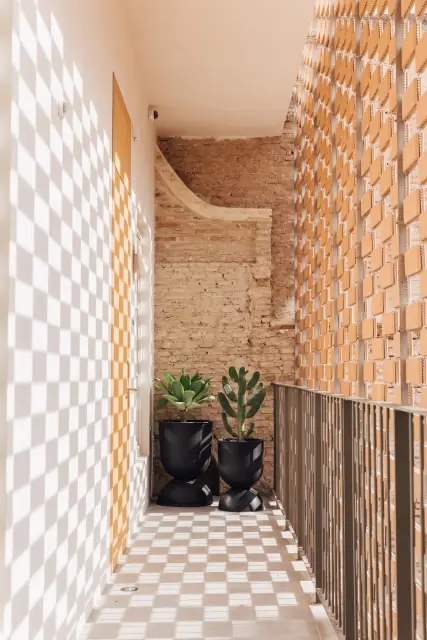
Hotel Plácido y Grata occupies a late-19th-century manor house in Seville’s historic centre. To highlight the existing materials, Your Living Space takes brick, characteristic of Andalusia, as its common thread: the original brick is combined with a brick lattice that adds a contemporary identity. As it is a listed building, every room is different, and the design unifies them with a neutral palette of materials and colours.
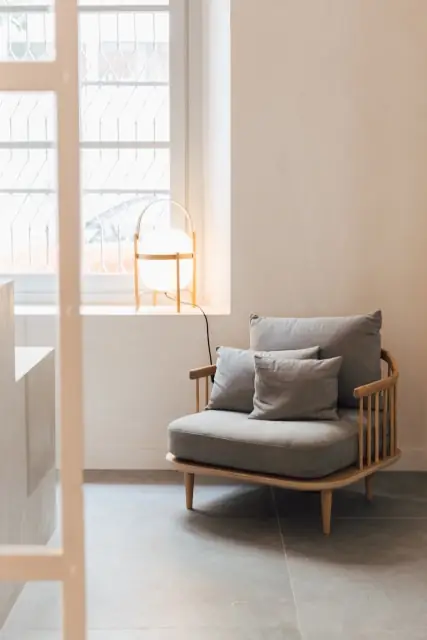
The textiles combine natural fibres and, outdoors, soft-touch fabrics made from recycled plastic, with touches of colour in the showers and in elements such as vases and flowers. The studio highlighted a key criterion in a city with high temperatures like Seville: considering how the fabric reflects light and what temperature it conveys on contact with the skin. Just as we adapt our clothes to the weather, the textiles in an interior must adapt to increasingly frequent climatic variations.
Patrick Genard & Asociados — Hotel Barceló Anfa, Casablanca
Patrick Genard explained the refurbishment of the Hotel Barceló Anfa Casablanca, in Morocco. The intervention starts from the geometry of the existing building: it opens up the façade to let more light into the rooms, with a large curtain wall acting as a barrier against the street, and the composition of volumes makes it possible to create urban terraces and gardens that give the hotel the feel of an oasis. The oblique grid of the structure becomes a pattern that runs through the project from the architecture to the detailing of the furniture.
A floor combining three marbles in white and grey tones provides a neutral backdrop for the warmer elements: rugs, curtains and furniture. Drawing on Morocco’s great textile tradition, the design proposes rugs of different sizes, shapes and patterns that create sub-spaces within the large lobby. The palette combines the coolness of marble, stone and brass with the warmth of wood, leather, wool and velvet.
“At heart, the project was a contemporary reinterpretation of the very special and beautiful geometries that are part of Morocco.”
— Patrick Genard
Lamadrid Contract: textile advice for the project
As every presentation showed, choosing a textile requires not only an aesthetic eye but also technical knowledge. Grupo Lamadrid, a textile company founded in 1973, publishes fabrics and also offers advice through its Lamadrid Contract division, which supports professionals in selecting the right textile for each project.
“Grupo Lamadrid is a compendium of many things, and above all of passion and love for fabrics.”
— Arantxa Esnaola
Its catalogue brings together technical, flame-retardant, stain-resistant and high-performance textiles for indoor and outdoor use. Three brands were presented at the session:
- FR-One: flame-retardant fabrics in inherently FR polyester, that is, with fire resistance built into the fibre itself.
- FibreGuard: fabrics with high-performance stain-resistant technology.
- Lamadrid Contract: own-label collections with resistance to the spread of fire.
This range makes it possible to work with a single supplier on anything from hotels to homes. In terms of innovation, the group offers digital textures of its products to make project proposals and visualisations easier and, according to the company, is committed to incorporating recycled fibres to reduce the environmental footprint of its fabrics.

Conclusions of the round table
Textiles are a vital tool for creating comfortable spaces: a family of materials that brings richness to the touch as well as technical properties, and the material par excellence with which we protect the body through clothing. These were the main conclusions of the final conversation:
- An element of interaction: textiles are no longer static; we move curtains according to light and privacy, we recline on furniture and we sleep between sheets.
- An architectural counterpoint: they allow more fluid, organic spaces in contrast to the solidity of concrete, metal or glass, and create balance.
- From nuance to identity: the evolution of yarns, colours and weaves allows textiles to range from a very subtle element to a component of vitality and art, a reflection of local culture.
- Maintenance as a design criterion: ease of cleaning and resistance to external agents extend the life of a fabric and reduce its ecological footprint.
- Life cycle: fibres and composition should be optimised — recycled content or sustainably sourced natural fibres — and the fabric’s impact assessed over its whole service life.
Frequently asked questions
- What should be required of a textile for a hotel?
- According to the studios that took part in the session, three things: that it complies with the applicable regulations, especially on reaction to fire; that it is very durable, because it will be used intensively; and that it is easy to wash and maintain. Stain-resistant treatments and removable covers help to extend its service life.
- How are textiles used as an architectural element?
- As curtains that define areas or envelop a space, as translucent façades or as flexible partitions that open or close according to use. The Francesc Rifé Studio and Verum projects presented at the session are examples.
- How does climate influence the choice of fabrics?
- In warm climates, what matters is how the fabric reflects light and what temperature it conveys on contact with the skin: natural fibres, light colours and cool fabrics, as Your Living Space explained with regard to Seville. Outdoors, the fabric must also withstand the weather.
Full document
The full document gathers the projects and reflections shared during the session, with images of each presentation and the conclusions of the round table.
Our special thanks go to Lamadrid Contract for supporting this event. Sessions like this are part of Matter’s work as a materials consultancy for architecture and interior design projects: spaces for exchange between professionals to make better decisions based on knowledge of materials.
Book your visit to Matter to discover our Materioteca and talk about the textiles and materials for your next project.
Book a visit