CRÜ STUDIO
Clàudia Raurell, co-founder of CRÜ, explains how the studio starts from the client and the existing building, and why it chooses craft-based, raw materials.
InterviewsWorkflows That Matter38 of 586 min read
CRÜ is a Barcelona architecture studio which, in its team’s words, is growing up after the deluge –and the delusions– of another generation. We spoke with Clàudia Raurell, who told us about the studio’s outlook and way of working: following projects closely, questioning accepted models and redrawing the possible relationships between the architect, the space and the person who lives in it.
In this instalment of Workflows That Matter we talked to Clàudia Raurell, co-founder of CRÜ, about how a studio is born in the hangover of the property crash, how each project begins —first the client, then the place— and why its materials look more to the handmade and the raw than to technological novelty. She also told us what role Matter plays when her clients have to decide what they are going to live with.
CRÜ: a studio that works with what already exists
CRÜ is a Barcelona-based architecture studio founded in 2014 by the architects Clàudia Raurell and Joan Astallé, both trained at the Escola Tècnica Superior d’Arquitectura La Salle (ETSALS), where they also taught between 2014 and 2016. Its work focuses mainly on housing, at different scales and of different types, and starts from a deliberate dialogue with what already exists: bringing out the value of the original materials and integrating them with the new elements of the project, with attention to detail from the structure to the furniture.
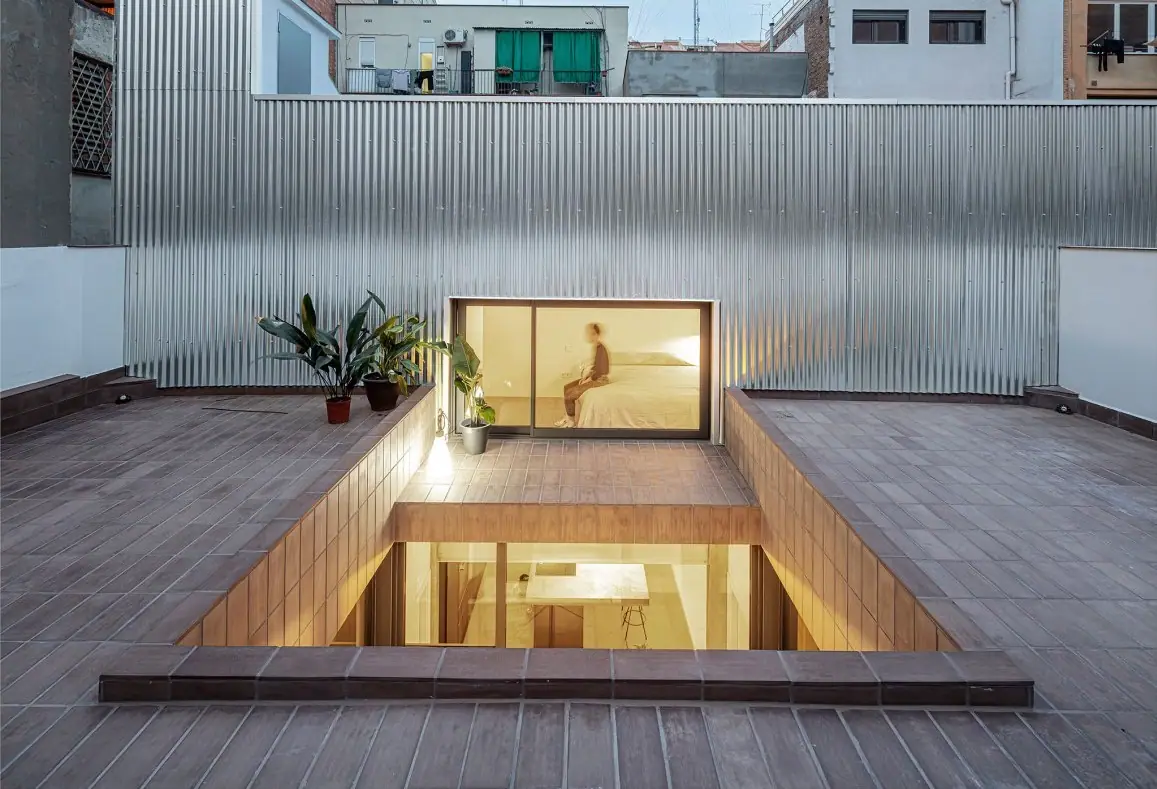
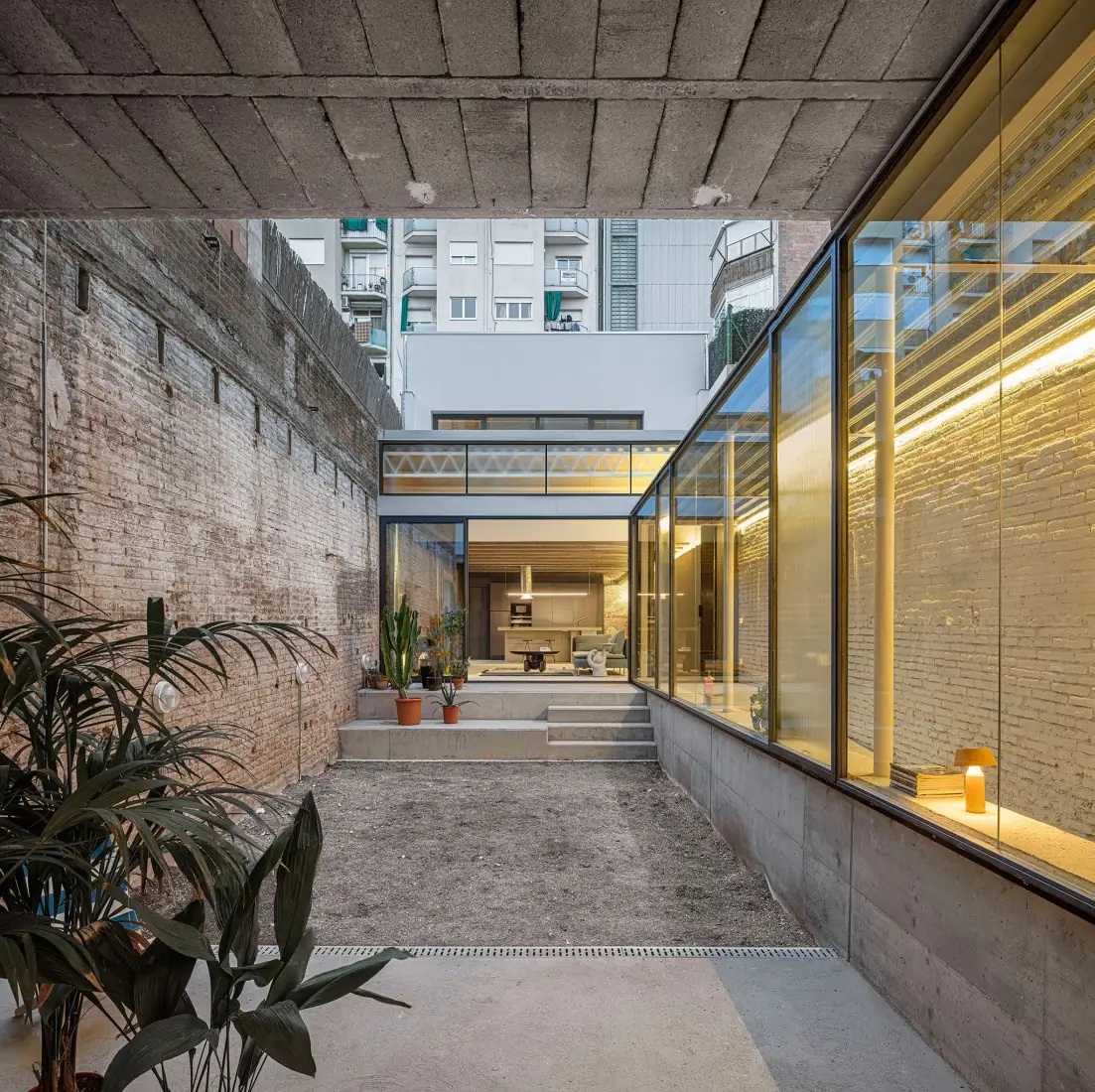
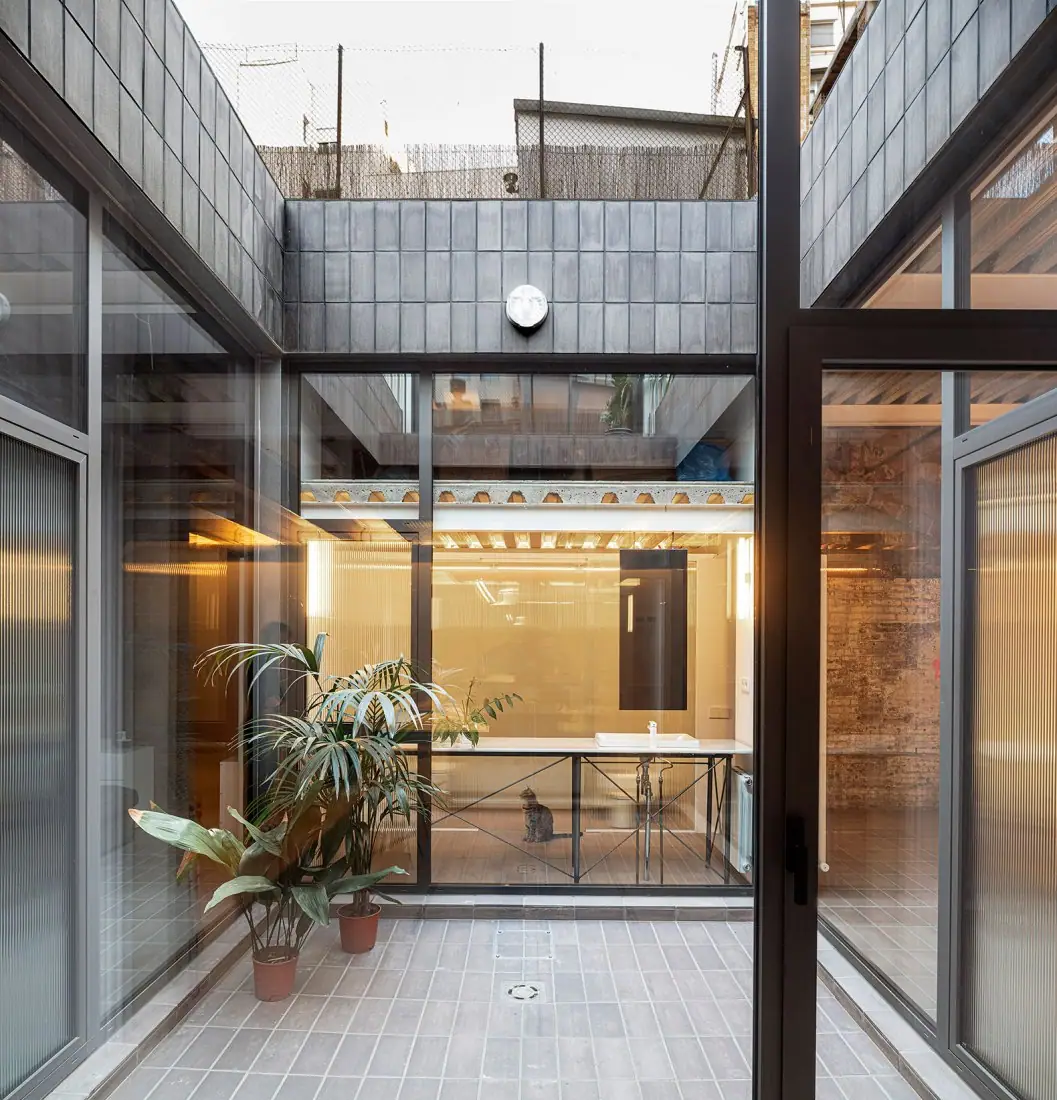
A good example of this approach is La Clara (2020-2021), in the Les Corts neighbourhood: a house of around 300 m² built in a former public laundry. The studio hollowed out the premises with two courtyards that arrange the programme from the most public to the most private, and left the existing brick walls, stairs and concrete beams exposed. On the ground floor, the floor is power-floated concrete; on the upper floor, traditional terracotta was chosen to reduce loads.
A practice born after the crisis
How did CRÜ studio come about, and what defines the way you design?
Clàudia Raurell: “CRÜ is an architecture studio that, having been born after the 2008 property crash, somehow had to find its place in a context where architecture had become precarious. It ended up in a much more dramatic position than the one our preceding generations had been in.
And in a way we reacted to this context, understanding that the relationships between the client, the building work and ourselves had to be reformulated. What we try to do is understand the contexts our clients create for us. For us it is very important to be contemplative, sensitive and empathetic, to take these parameters around us and react to them. We are not creators of forced storytelling. We are a young team that tries to understand, observe, contemplate and react to the information the setting is giving us.”
The process: first the client, then the place
How does your creative process unfold? What steps characterise it?
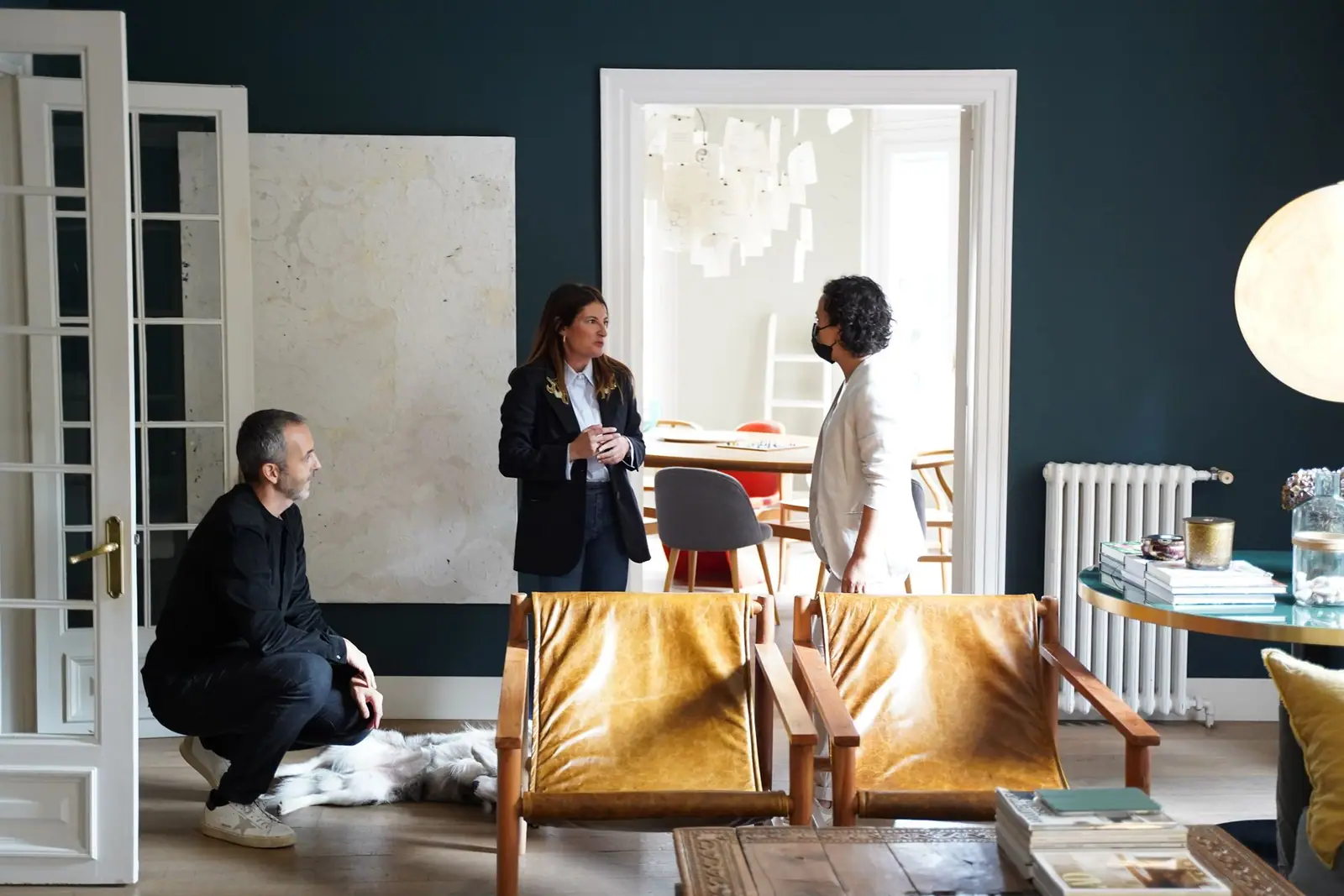
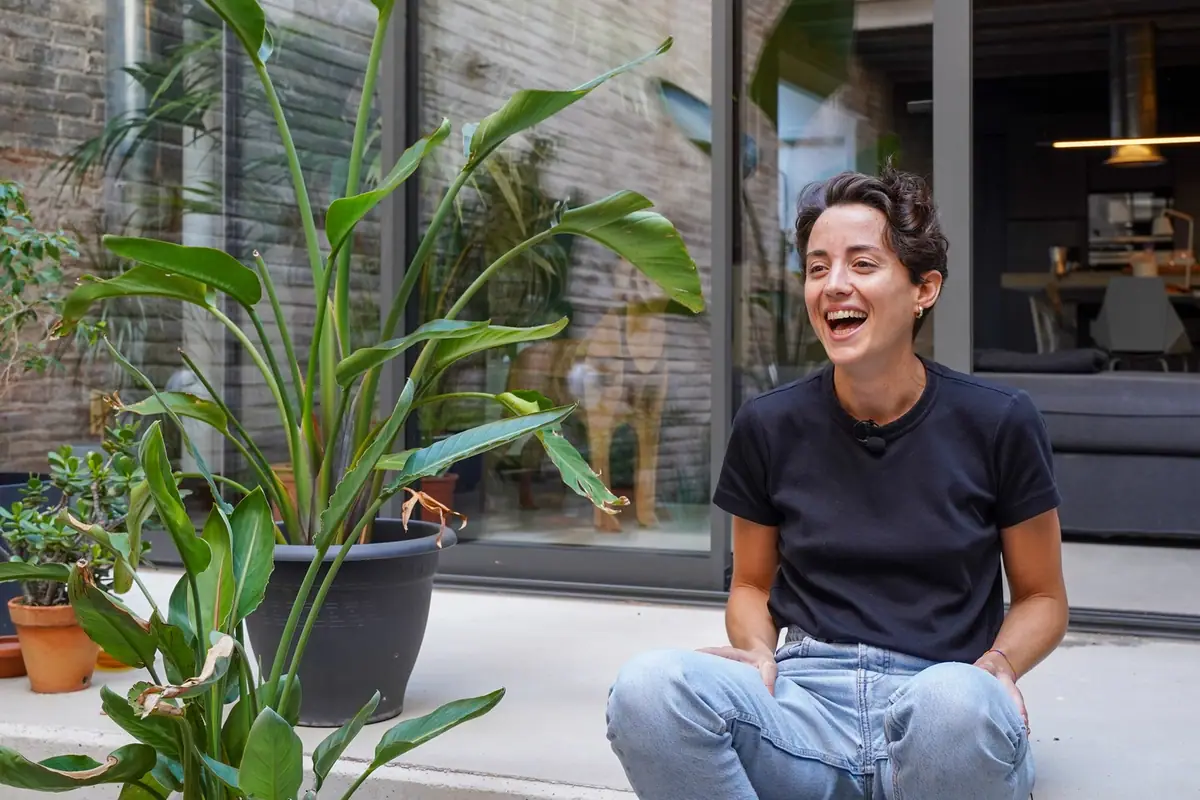
Clàudia Raurell: “A project always begins with a client. Without the client the project doesn’t exist. So the first thing we do is immerse ourselves in all the history the client brings with them.
Our first meeting is hugely important. It’s about sitting down and talking through all the folds and unfoldings of their life so that we can react to them. Understanding which places matter to them, how they occupy their spaces, what makes up their family.
For us, each client is a kind of black hole we dive into, and in a way we scrape out all the information this first layer gives us to start a project. From there, the next step is to understand the space. The place is hugely important, and we go through the same process as with the client: we immerse ourselves. We always deal with what we call the pre-existing, something that exists, that has a history.
Many things have happened here before us, and we like to do the anthropological work, to come and search for the innards. And once we have managed to draw out all the information from the place, we weave together the information we have extracted from the client and the place, and somehow, through this small fitting-together, the project happens in a very organic way.”
“Many things have happened here before us, and we like to do the anthropological work, to come and search for the innards.”
— Clàudia Raurell
Materials that come from the earth
And how do you relate to materials?
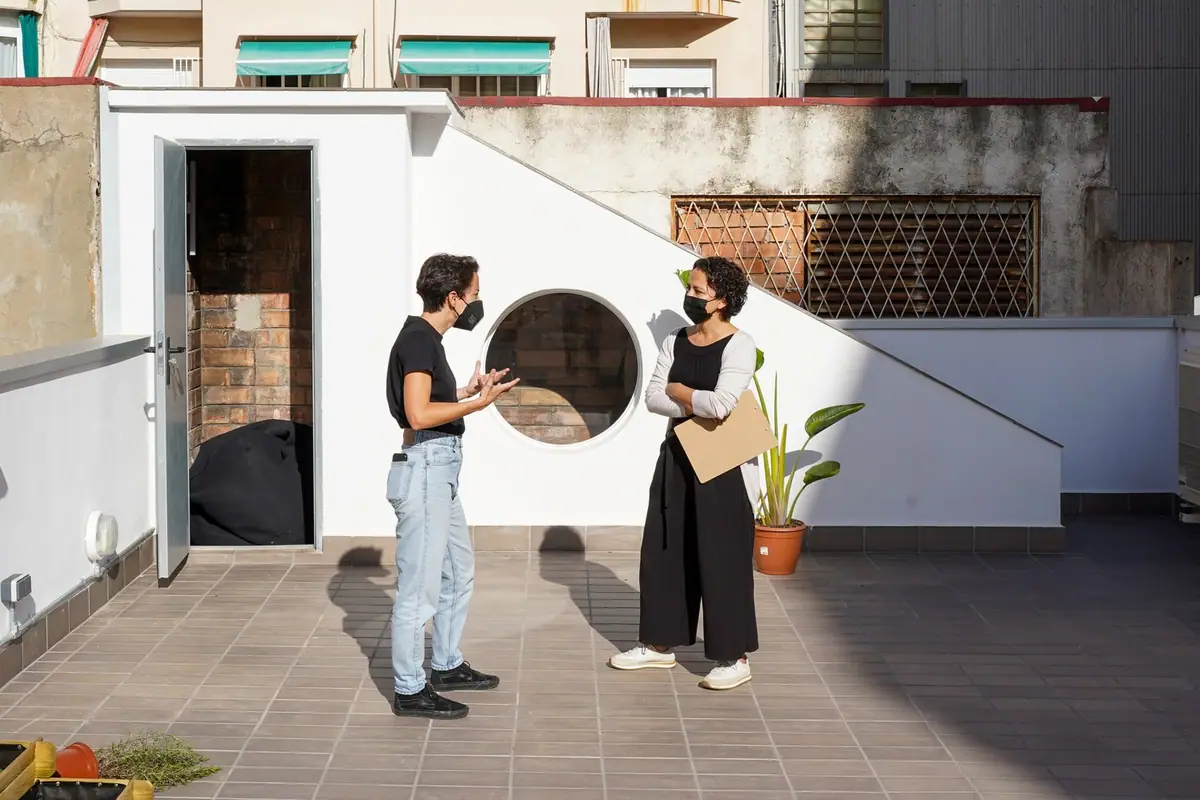
Clàudia Raurell: “We have a very particular relationship with materials, given that our whole discourse and the way we develop a project are based on this bareness of the place. That already gives us a patina; it already gives us a setting that, in a way, we haven’t contributed: it is given to us.
And from that setting, what we try to do is be very consistent with these skins, with these textures the existing building gives us. In our projects you will always find materials that are not big technological flourishes, but that have a great deal to do with, and are very attuned to, the handmade, the raw, what comes from the earth. A craft reading of the material, closely linked to how it is produced, transformed and handled on site.”
Matter, ‘The Perfect Playground’
In the process of defining the materiality of your projects, what stands out about your experience with Matter? What does it give you?
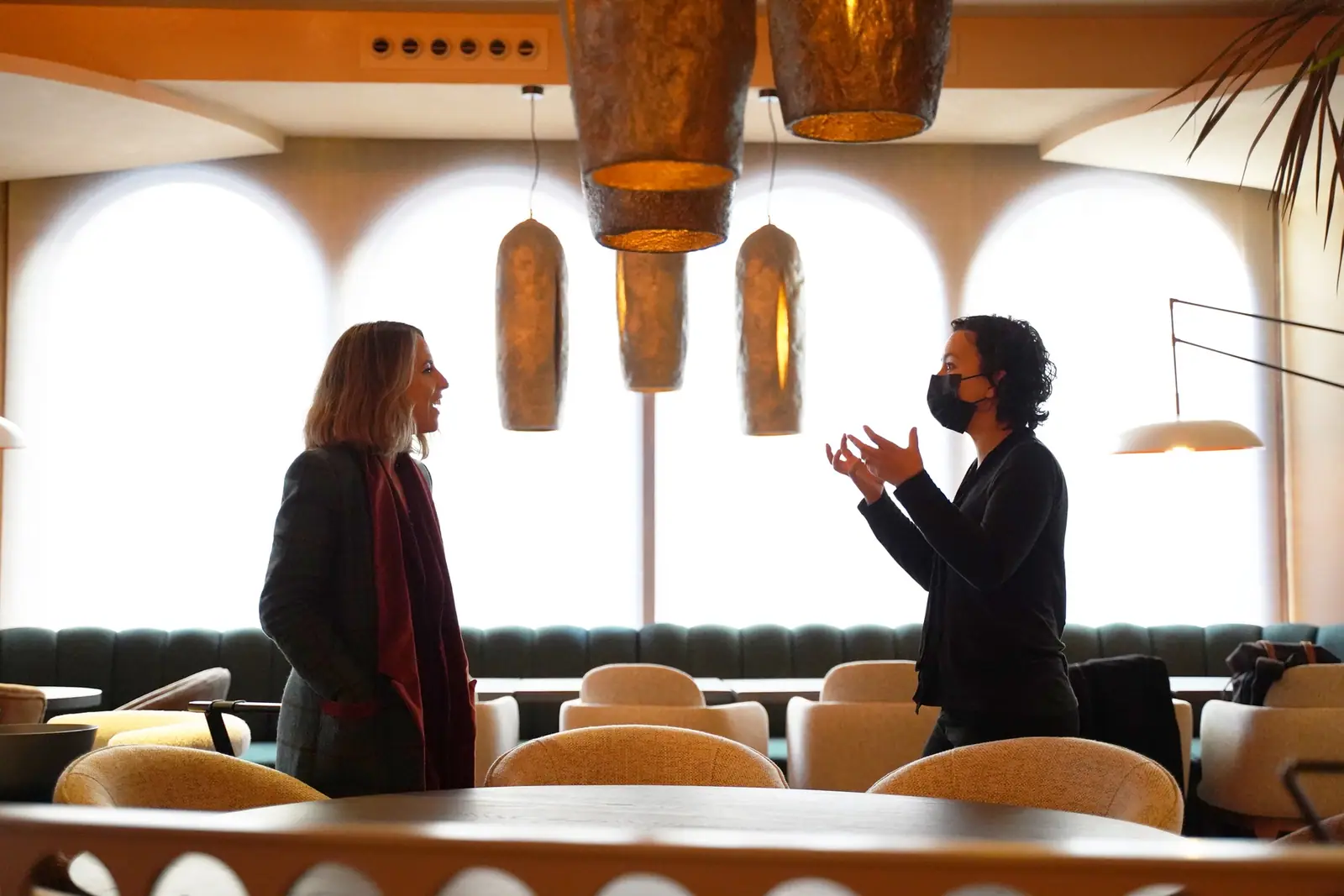
Clàudia Raurell: “For me, Matter is like The Perfect Playground. I’d put on some roller skates and skate up and down. I don’t think there’s anything like it in Barcelona, in terms of both volume and the range of materials. There are lots of things you can find.
And there’s an experiential side to Matter that I really like, which is also very much tied to the moment: I bring clients. For me it adds a lot that clients can have a place to understand, touch and experience the material. For me it’s indispensable. In a project, materials should never be bought without the client having gone through that porous process of understanding what they are putting into their home or their project. In terms of experience, I think offering that platform not only to us as architects but also to end clients, so as to make that step of connecting with reality, is very valuable.”
“For me it adds a lot that clients can have a place to understand, touch and experience the material.”
— Clàudia Raurell
After the interview
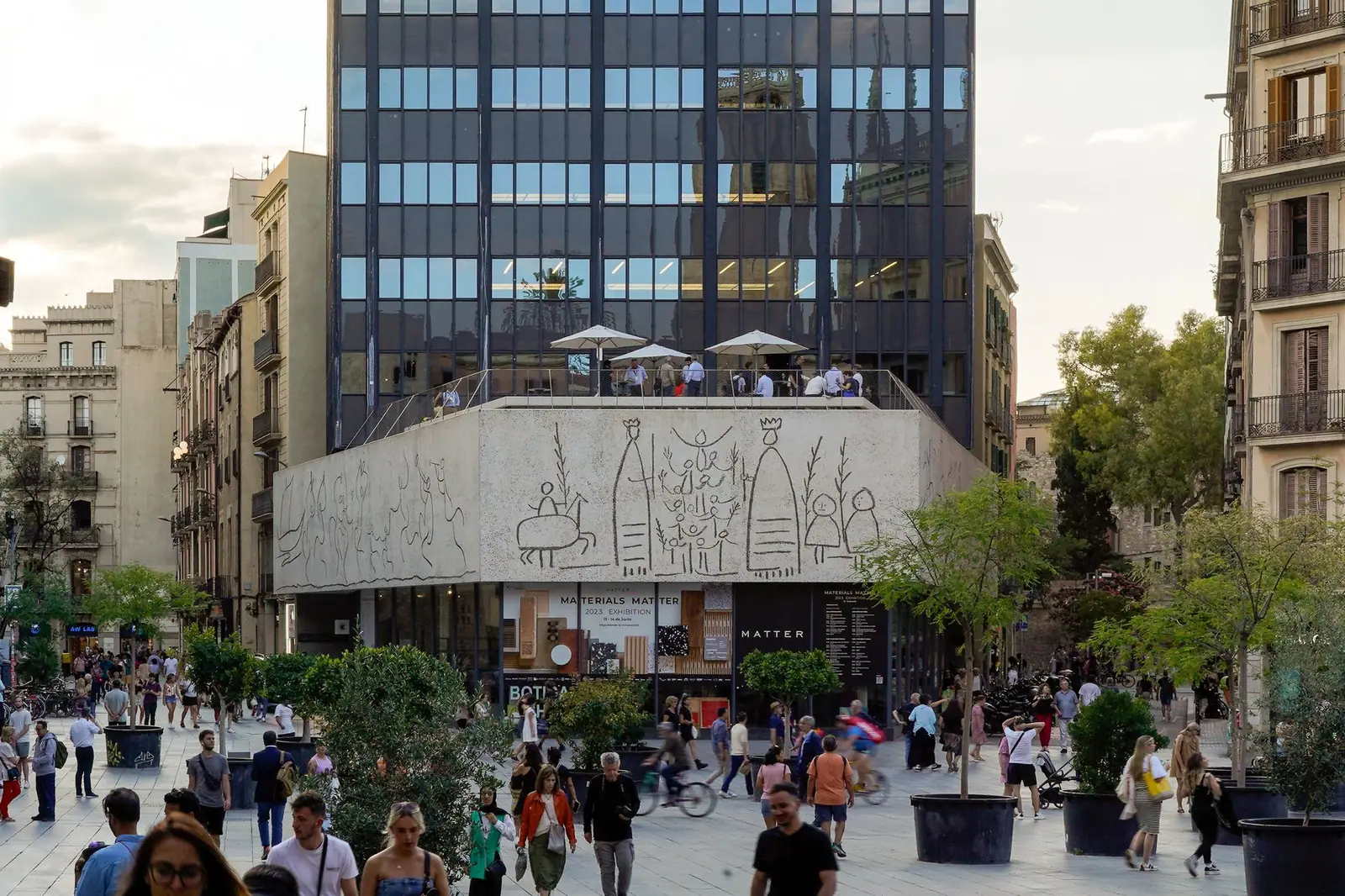
In 2022 Clàudia Raurell founded her own studio, Architecture Office Clàudia Raurell. CRÜ, which she co-founded and whose projects she co-authored until that year, has since been led by Joan Astallé. La Clara was shortlisted in the FAD Awards in the interior design category and in 2023 was a finalist in the Dezeen Awards in the housing renovation category, according to the studio. In June 2023 Clàudia Raurell spoke at the Materials Matter 2023 Exhibition, at the COAC headquarters in Barcelona.
As Clàudia Raurell says, a material is understood when it is touched. At Matter’s Materioteca you can see and compare full-size materials with your team and your clients before deciding.
Book your visit to Matter and we will help you choose the materials for your next project.
Book a visit