ALEJANDRA POMBO
Interior designer Alejandra Pombo explains how she organises her studio, how she gets to know clients before designing, and how she designed La Única restaurant in Madrid.
InterviewsWorkflows That Matter46 of 587 min read
“The textures of materials are key to expressing what you want and the sensations you want to create in each space.”
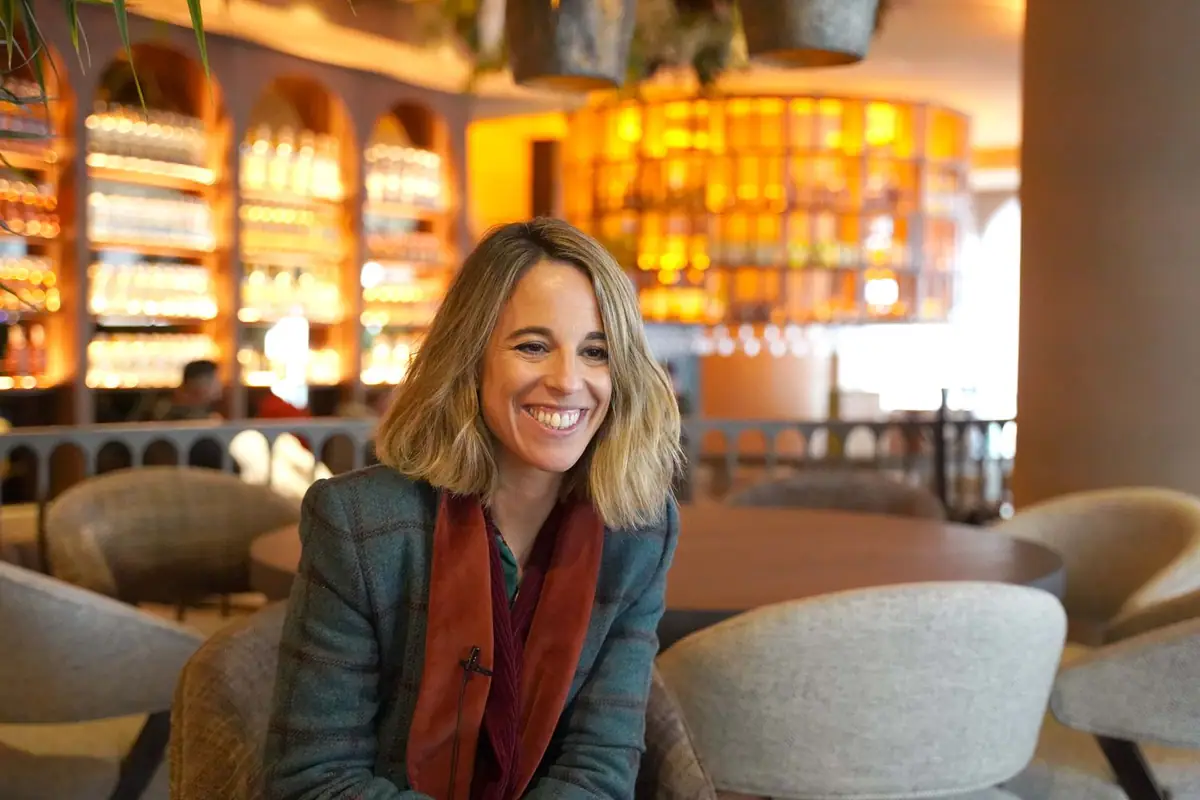
Alejandra Pombo founded her interior design studio in Madrid in 2010. Her aim, and her team’s, is to create spaces — homes, hotels and restaurants — with an identity of their own for each client. In this instalment of Workflows That Matter we talked to her at La Única, the restaurant on Calle Claudio Coello designed by her studio, about her intentions, her projects and her plans for the future.
It is a conversation about method: how a fifteen-person studio is organised, how to get to know a client in depth before designing, why light and texture weigh as much as form, and how hard it is to choose materials for restaurants, where what works in one venue cannot be repeated in the next.
Alejandra Pombo: career and studio
According to her studio’s website, Alejandra Pombo received the Premio Extraordinario de Fin de Carrera (the top graduating award) in Interior Architecture at the Universidad Politécnica de Madrid. She began in the site management department of the architecture practice DECO and, two years later, joined Pascua Ortega’s decoration studio, where she worked for more than six years. In 2010 she founded her own studio.
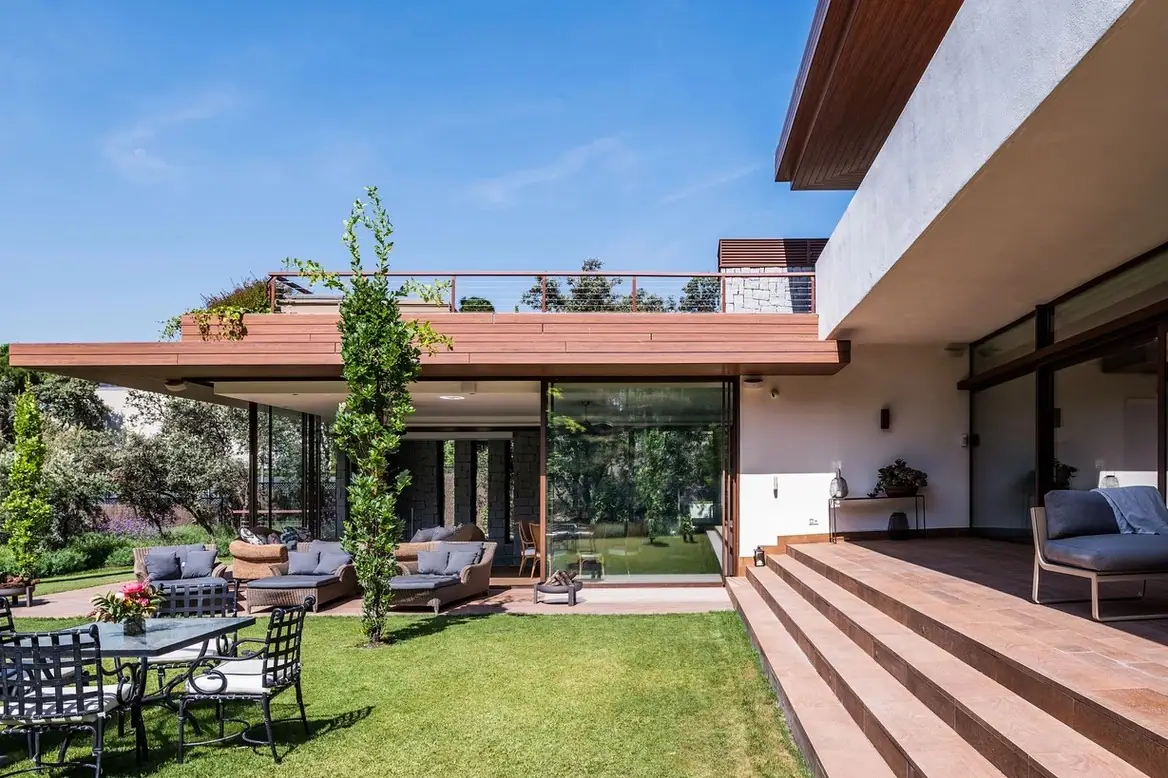
Since then she has designed homes, offices, hotels and restaurants. The restaurants include Ôven Mozzarella and Numa Pompilio, and the hotels several for the Vincci chain, such as the Vincci Soho, the Vincci Capitol and the Vincci Posada del Patio. The studio sums up its language as volumes, combinations of light, natural textures and neutral colours, and sees the key to its work as keeping the project’s common thread with the client from the outset to the last detail.
A team of fifteen in three departments
We know you greatly value the work of your whole team. How is it structured and organised?
“We are a team of fifteen people, divided into three departments. We have the hotels department, the restaurants department and the residential team. All three teams work a lot on every project, but we are organised so that each project is led by part of the relevant team. There is always a team leader and a team assigned to the project, but everyone in the studio contributes ideas to it.”
You founded your studio ten years ago and in that time you have built up extensive experience with projects that are now landmarks in Madrid. How have you built the trust that leads more and more clients to choose you?
“When someone has a great deal of enthusiasm and passion for what they do, it shows; work done well comes across. When I work on a project I give it 200%. My dedication is total. When you are that dedicated, the client feels reassured, and when there is reassurance everything runs smoothly. Trust comes first.”
Materials, light and textures: what her projects share
Each of your projects has a very different and original character. What are the common features that recur in all your projects?
“I would say that our aesthetic hallmarks are the use of different materials, a precise play of lighting and the use of different textures. All of that is present in one way or another in each of our projects. I am always saying that function and aesthetics go hand in hand. If it is beautiful but doesn’t work, it is no use, and we always bear that in mind.”
“If it is beautiful but doesn’t work, it is no use, and we always bear that in mind.”
— Alejandra Pombo
You value every project you have worked on, but is there one with a special value, one that marked a turning point in your career?
“We have grown very quickly thanks to certain projects. For example, we got into restaurants thanks to Ôven and Numa Pompilio, two projects that helped us enter that market. As for hotels, the first were for the Vincci chain, which took a chance on us and for which we feel great affection and gratitude. They were clients who trusted us blindly, when we did not yet have projects to show what we were capable of.”
From concept to material: the process with the client
When a project comes into the studio, what is the process and how does it take shape?
“Our projects are very chameleon-like, and it is hard to recognise a signature of our own. In the end, we work on a concept, an experience, and through architecture and interior design we express each client’s personality. From that concept, the range of materials is easy to apply, because each material helps to express those ideas. A natural stone is not the same as a polished stone or a sandstone. The textures of materials are key to expressing what you want and the sensations you want to create in each space.”
“Getting to know the client, talking to them, having them tell you about their lives, their private matters, their relationship, their children and so on — all of that shapes a project, and it is a part of the process to which we give enormous importance.”
Speaking of clients, what is your relationship with them like, and how does it affect the final result of the project?
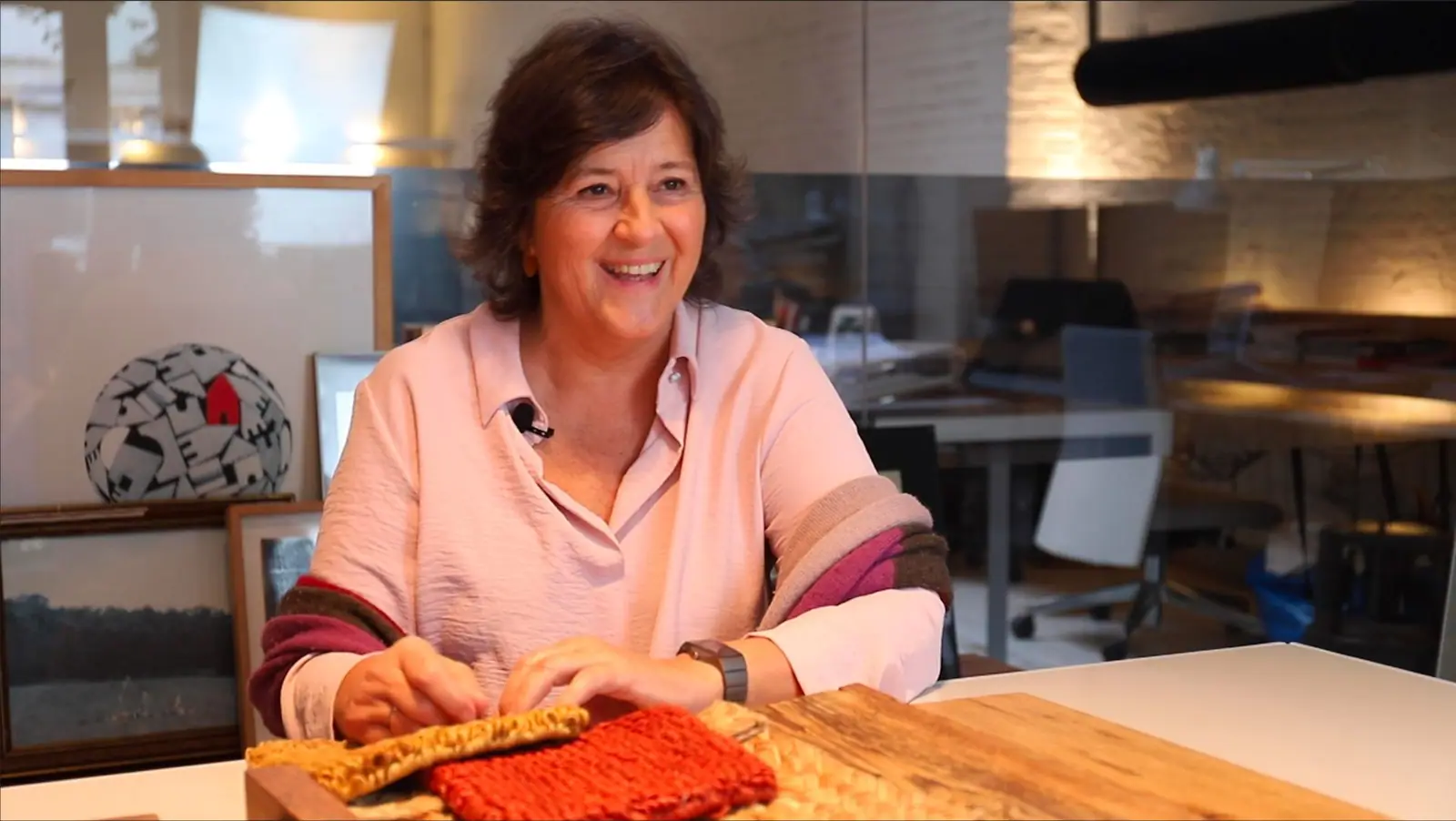
“The first and most important thing is to get to know the client. We have several meetings with them and produce a preliminary design. I like to create debate with the client, and I do it to understand their personality. It is a barrage of ideas, of discussion, of things they like and things they don’t. Once we have that first sketch, we start designing, trying to be practical and avoiding overwhelming the client. For example, to choose a material, they just come to the studio and choose from four materials we have already prepared and selected, with the idea of the project in mind. We go in with a very clear and coherent objective.”
The difficulty of choosing materials
What difficulties do you find when selecting materials?
“We often want to do impossible things, especially in restaurants. New and original materials are the key, because what you use in one place you don’t repeat in the next. You have to keep up with everything all the time.”
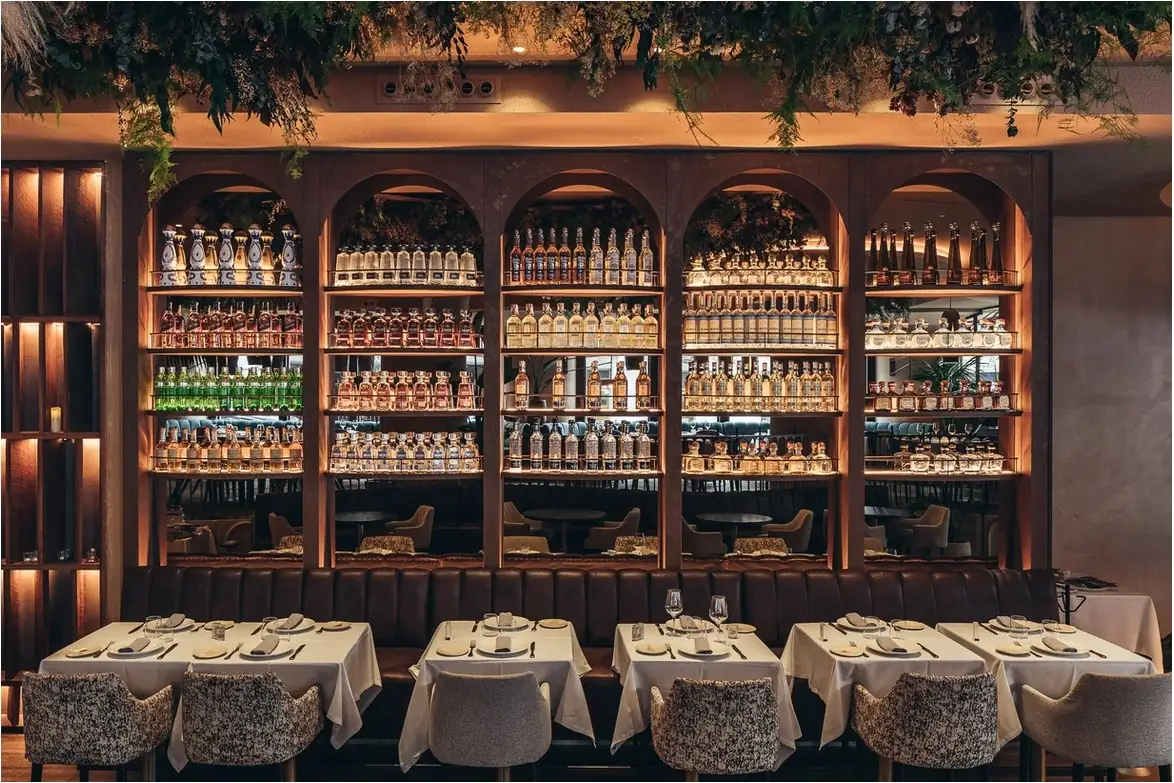
La Única: fire, earth and curved geometries
La Única opened at the end of 2021 at number 10 Calle Claudio Coello, in the Salamanca district. It was the first restaurant in Europe for Grupo La Única, which already had venues in Mexico and in Cartagena de Indias (Colombia), and its cuisine, which the group calls ‘mexiterránea’, combines the flavours of Mexico and the Mediterranean, with the grill as the common thread. When it opened, the kitchen was led by chef Andrés Madrigal and the restaurant seated 140 diners.
The refurbishment was carried out by Grupo Archarray and the interior design by Alejandra Pombo’s studio. The Workflows That Matter conversation was recorded in the restaurant itself.
We are at La Única restaurant today. Can you tell us how this project came about and what the main ideas behind its design were?
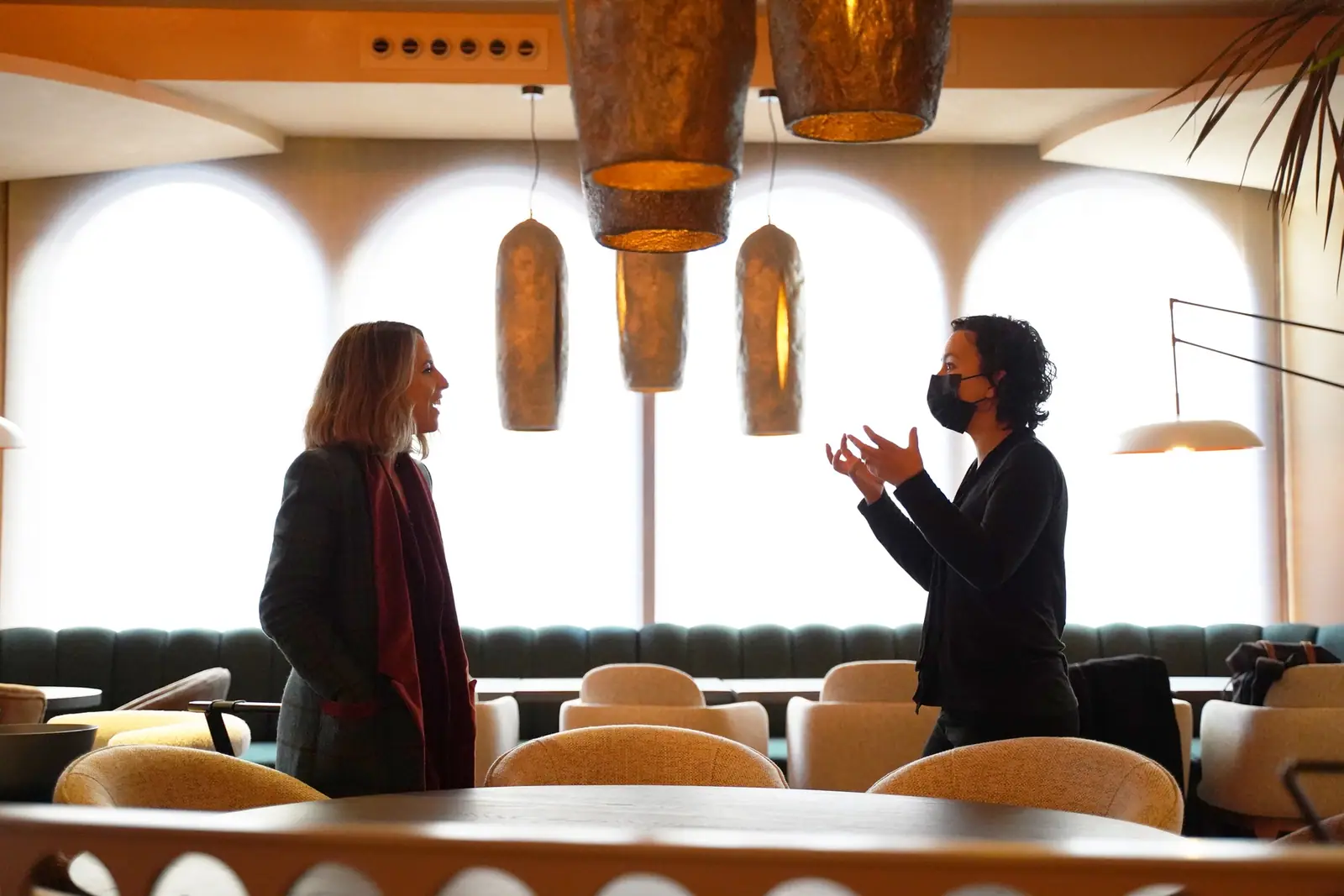
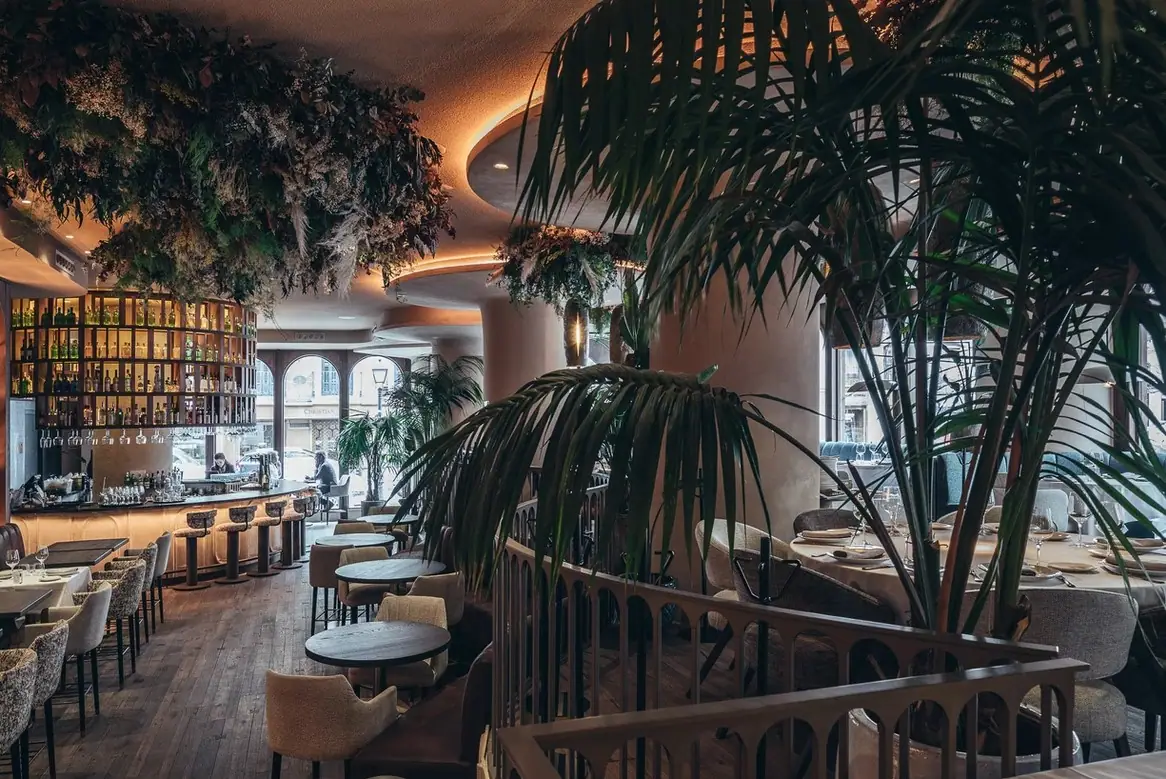
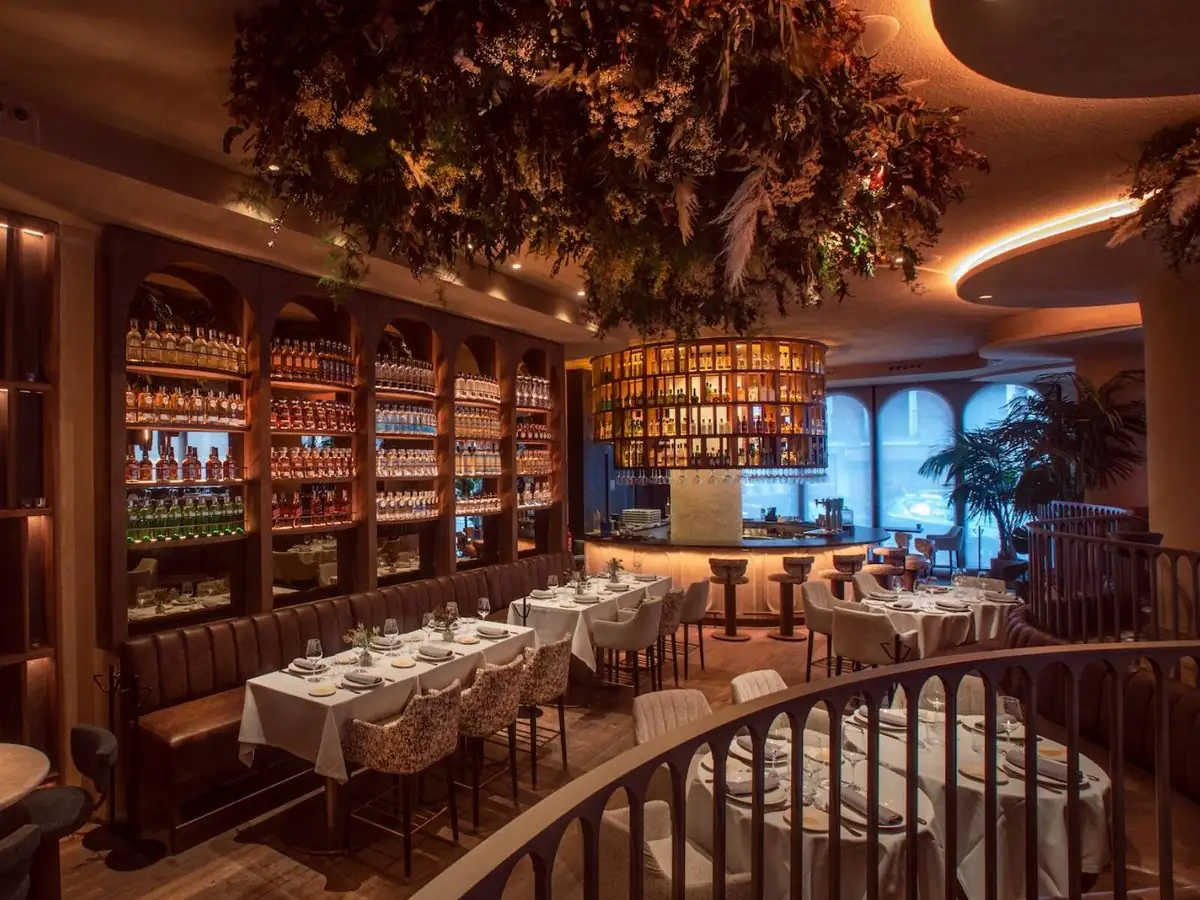
“It is a restaurant that fuses traditional and Mediterranean food from Spain and Mexico. The clients trusted our studio and told us about their culinary philosophy and the importance and meaning of fire and the grill. The overall aesthetic revolves around those two pillars, which inspired us a great deal. The lighting is designed to convey the relationship with fire; the intensity of the light in the lamps and the wood help to emphasise it. The relationship with the earth, meanwhile, we worked into the walls using sandy, earthy materials, and natural stone was also used. It was a very rectangular, rigid, grid-like space, and we turned it into a space with curved geometries, where plants also play a very important role.”
The studio in five years’ time
How do you see your studio’s future five years from now? Where do you want to take your way of working?
“My life is chaotic, but I have learnt to be comfortable in chaos, so all I ask is that things stay as they are, that we keep the work we have, which is wonderful, and that people go on trusting us. I get dream projects — I would do half of them for free — but I have a studio of 15 people to keep going, and I really do this for the love of it. Like a child on the night before the Three Kings, I don’t sleep when a great project comes in; I lie awake thinking about how I am going to tackle it the next day.”
Thank you, Alejandra, for welcoming us to La Única and telling us how you work. If you are choosing materials for your next restaurant, hotel or residential project, book your visit to Matter to discover our Materioteca.